
Stellantis N.V.

Search documents
Michelin, Forvia, Stellantis seal restructuring deal for Symbio
Yahoo Finance· 2025-12-04 12:58
Core Insights - Michelin, Forvia, and Stellantis have reached an agreement on a restructuring and refinancing package for their hydrogen fuel cell joint venture, Symbio, amid uncertainty regarding its future [1][2] - Stellantis previously accounted for approximately 80% of Symbio's business volumes, making the joint venture vulnerable after Stellantis halted its hydrogen fuel cell technology program [2] - Symbio plans to reduce its workforce to 175 as part of the restructuring, which management describes as essential for the company's survival [2][3] Business Strategy - Symbio aims to adapt its strategy and organization to align with its new scope of activities following the restructuring [2] - The company will continue to develop its core hydrogen technologies, including a 75kW fuel cell system for buses, coaches, and data centers [3][4] - Symbio targets a production capacity of 10,000 systems per year at its SymphonHy gigafactory in Saint-Fons by 2028-2030 [4] Future Developments - Research and development efforts will focus on a next-generation 150kW fuel cell system for heavy-duty vehicles, with a potential commercial rollout expected around 2030 [4]

特朗普政府放宽燃油经济性标准以促进汽油车发展 欧洲汽车股应声走高
智通财经网· 2025-12-04 11:06
Core Viewpoint - The proposed reduction of fuel economy standards by former President Trump has led to a significant increase in the stock prices of European automakers, indicating a positive market reaction to the potential easing of regulations [1] Group 1: Stock Market Reaction - Stocks of major European automakers saw notable increases, with Porsche rising over 5%, Mercedes-Benz and Volvo nearly 4%, and Renault over 3%. Stellantis also experienced gains of over 3% in both Italy and France [1] Group 2: Regulatory Changes - Trump's proposal aims to lower the average fuel economy standard for light vehicles to approximately 34.5 miles per gallon by 2031, a significant decrease from the current requirement of 50.4 miles per gallon [1] - The U.S. Department of Transportation estimates that the new standards could save car buyers $109 billion over the next five years, with an average reduction of $1,000 in the purchase cost of new vehicles [1] Group 3: Industry Perspectives - Stellantis' CEO expressed a desire to collaborate with the National Highway Traffic Safety Administration to create policies that balance environmental responsibility with affordability for consumers [2] - Volvo acknowledged the uncertainty surrounding the regulatory changes but remains committed to becoming a fully electric vehicle company by 2040, while also planning to introduce several hybrid models in the U.S. by 2029 [2] - An automotive analyst from Equita noted that the proposed standard changes were not unexpected and are likely to have a positive impact on the industry, with speculation that the EU may soften its electrification targets by 2035 [2]
特朗普宣布:将降低汽车燃油经济性标准
Zheng Quan Shi Bao· 2025-12-04 10:41
Core Viewpoint - The Trump administration announced a reduction in fuel economy standards for vehicles produced in the U.S., aiming to lower costs for consumers and protect jobs in the automotive industry [2]. Group 1: Fuel Economy Standards - The new average fuel economy standard for light vehicles is set to reach approximately 34.5 miles per gallon (about 6.9 liters per 100 kilometers) by the 2031 model year, significantly lower than the current requirement of 50.4 miles per gallon (about 4.7 liters per 100 kilometers) [2]. - The U.S. Department of Transportation estimates that the new standards will save car buyers $109 billion over the next five years, with an average reduction of $1,000 in the purchase cost of each new vehicle [2]. Group 2: Industry Reaction - Executives from major automakers, including Ford, General Motors, and Stellantis, attended the announcement ceremony, with Stellantis shares rising over 3% and Toyota shares increasing nearly 2% in pre-market trading [3]. - Ford and General Motors also experienced slight increases in their stock prices during the same period [3].


Joe Biden Credited GM CEO Mary Barra For EVs, But She Said Credit Should Go To Elon Musk - Tesla (NASDAQ:TSLA)
Benzinga· 2025-12-04 10:19
Core Insights - General Motors CEO Mary Barra attributes the growth of the U.S. electric vehicle (EV) market primarily to Elon Musk and Tesla, rather than herself [1][3] - During a past meeting with President Joe Biden, Barra corrected him on the credit for the EV sector's surge, emphasizing Musk's contributions [2][3] - The Biden administration previously excluded Musk from an EV event, a decision that was later criticized by former Vice President Kamala Harris [4] Company Developments - GM announced layoffs of 3,400 workers, including 1,200 at the Detroit EV plant and over 550 at the Ohio Ultium Cell plant [4] - The layoffs coincide with a $1.6 billion charge related to EVs, with $1.2 billion attributed to changes in EV capacity and $400 million due to contract cancellations [5] Market Performance - GM's stock increased by 1.40% to $74.69 at market close and further rose by 0.28% to $74.90 in pre-market trading [8]



拯救燃油车!特朗普拟大幅放宽油耗标准
Guo Ji Jin Rong Bao· 2025-12-04 09:26
Core Viewpoint - The Trump administration plans to roll back the Corporate Average Fuel Economy (CAFE) standards, marking a significant shift in U.S. automotive regulation aimed at easing environmental regulations and promoting affordability in the automotive sector [1][3]. Group 1: Regulatory Changes - The new proposal requires that vehicles manufactured for 2031 achieve an average fuel efficiency of 34.5 miles per gallon (mpg), significantly lower than the 50.4 mpg target set by the Biden administration [1]. - The rollback eliminates the mechanism that allowed automakers to purchase fuel efficiency credits, which had previously benefited electric vehicle manufacturers like Tesla [1]. Group 2: Economic Implications - The Trump administration claims that the new regulations will save American consumers $109 billion over the next five years [1]. - The automotive industry supports the changes, arguing that the previous targets were unrealistic without a substantial increase in electric vehicle production, which faces uncertain consumer demand [3]. Group 3: Industry Reactions - Ford CEO Jim Farley described the new regulations as a "victory for common sense and affordability," emphasizing the need for more vehicle choices for consumers [3]. - Environmental organizations criticize the rollback, warning that it could lead to increased fuel demand and higher gasoline prices, potentially costing drivers hundreds of dollars more annually at the pump [4]. Group 4: Long-term Considerations - Industry experts note that once the relaxed fuel economy standards are codified into federal law, reinstating stricter standards could be challenging, even with a change in administration [4]. - The rollback of CAFE standards is part of a broader trend of deregulation in climate policy, following previous actions by the Environmental Protection Agency to revoke key regulations [4].
特朗普给油车送大礼!
第一财经· 2025-12-04 08:09
Core Viewpoint - The article discusses President Trump's announcement to revoke the fuel efficiency standards set by the Biden administration, claiming it artificially raised new car costs and would allow consumers to save at least $1,000 on new vehicles [3]. Group 1: Trump's New Regulations - The fuel economy standards, established by the U.S. Department of Transportation, set minimum miles per gallon for passenger cars and light trucks [5]. - The Biden administration's 2022 standards aimed for an average fuel economy of approximately 49 miles per gallon for 2026 models, with annual efficiency improvements of 8% for 2024-2025 models and 10% for 2026 models [6]. - Trump's proposal suggests restoring average fuel economy to the 2022 model standards, requiring manufacturers to increase efficiency by only 0.5% annually until 2026, and then by 0.25% annually, leading to an expected average of 34.5 miles per gallon by 2031 [7]. Group 2: Reactions from the Automotive Industry - Ford's CEO praised the new regulations as aligning fuel economy standards with market realities, emphasizing progress in carbon emissions and energy efficiency while maintaining consumer choice and affordability [9]. - General Motors' CEO highlighted the challenges faced before the revocation of California's zero-emission vehicle regulations, indicating potential factory closures due to production limitations [9]. Group 3: Opposition to the New Standards - Critics argue that the previous fuel economy standards could have saved Americans $23 billion in fuel costs and reduced national fuel consumption by 70 billion gallons [10]. - Environmental advocates express concern that weakening clean car standards will allow manufacturers to produce less fuel-efficient and more polluting vehicles, potentially costing consumers an additional $35 billion at the gas station [10].

特朗普大幅放宽汽车燃油效率标准 美汽车行业不确定性加剧
Xin Lang Cai Jing· 2025-12-04 07:25
当地时间周三,美国总统特朗普公开表态,让联邦政府全力支持燃油车而非电动汽车。这一举措不仅彻 底搁置了美国为应对气候变化推行的一项关键举措,还让美国汽车行业陷入了更大的不确定性之中。 当天,特朗普在椭圆形办公室会见了各大汽车制造商的高管。他在众人簇拥下宣布,运输部将大幅放宽 数千万辆新款轿车及轻型卡车的燃油效率标准。其政府声称,这一调整在五年内可为美国民众节省1090 亿美元开支,同时每辆新车的均价能降低1000美元。 拜登政府此前推行的更为严格的燃油效率标准,本意是推动更多美国人选择电动汽车。但特朗普对此抨 击道:"那些标准逼迫汽车厂商采用昂贵技术造车,既推高了生产成本与车辆售价,还导致车辆性能大 打折扣。这就是一场绿色新政骗局,民众花了大价钱,买到的却是辆性能堪忧的车。" 过去半个世纪以来,美国燃油效率标准一直促使汽车制造商不断提升车辆的每加仑燃油行驶里程,这一 要求既减少了汽车的燃油消耗量,还催生出电动汽车、混合动力汽车等各类创新车型。 拜登政府此前采取了 "胡萝卜加大棒" 的策略以减少该领域排放。一方面,政府提供税收抵免优惠,鼓 励民众购置电动汽车;另一方面,强制要求汽车制造商达到严苛的燃油效率标准,以 ...
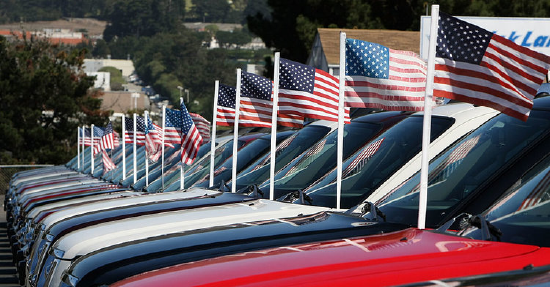
特朗普给油车送大礼!“松绑”美国汽车燃油效率标准
Di Yi Cai Jing· 2025-12-04 07:15
Group 1 - President Trump announced the rollback of fuel efficiency standards set by the Biden administration, claiming it artificially raised new car costs and would reduce prices for consumers by at least $1,000 [1] - The Biden administration's standards required an average fuel economy of approximately 49 miles per gallon for 2026 models, with annual improvements of 8% for 2024-2025 models and 10% for 2026 models [2] - The Trump administration proposed to restore average fuel economy to 2022 model standards, requiring only a 0.5% annual increase until 2026, leading to an expected average fuel efficiency of 34.5 miles per gallon by 2031 [3] Group 2 - Reactions to the new standards were mixed, with Ford's CEO praising the alignment of standards with market realities, while GM's CEO highlighted the previous requirement for a significant percentage of electric vehicles [4] - Critics argue that the previous standards could save Americans $23 billion in fuel costs and reduce national fuel consumption by 70 billion gallons [4] - Environmental organizations criticized the new regulations, stating that weakening clean car standards would allow manufacturers to produce less fuel-efficient and more polluting vehicles, potentially costing consumers an additional $35 billion at the pump [5]
Trump’s Market Mayhem: A Rollercoaster Ride for the Ages
Stock Market News· 2025-12-04 06:00
Fuel Economy Regulations - Former President Trump announced plans to roll back Biden-era fuel efficiency standards from approximately 50 miles per gallon (mpg) to 34.5 mpg by 2031, along with the elimination of the Corporate Average Fuel Economy (CAFE) credit trading program by 2028 [2][3] - The rationale for this rollback is centered around "affordability" and "consumer choice," with claims that it will save American families an average of $1,000 on car prices and a total of $109 billion over the next five years [3] Automotive Industry Reaction - The automotive industry, particularly the Detroit Three (Ford, General Motors, and Stellantis), expressed strong support for the rollback, viewing it as a victory for common sense and market alignment [4] - Following the announcement, traditional automakers saw stock price increases, with Stellantis surging 7.64%, Ford and General Motors both gaining less than 2% [5] Impact on Electric Vehicle Manufacturers - The elimination of the CAFE credit trading program is expected to create a regulatory advantage for traditional automakers while potentially harming electric vehicle manufacturers like Tesla and Rivian [6] - Despite this, Tesla's stock rose by 4.08% following the announcement, indicating that market reactions can be unpredictable [6] Trade and Tariff Developments - President Trump has renewed threats of tariffs on China, which has historically affected the soybean market, with soybean futures showing slight increases amid ongoing trade tensions [8] - Costco is suing the U.S. government for refunds on tariffs, with $90 billion in tariffs collected, reflecting broader concerns about tariff legality and market implications [9] Market Volatility and Reactions - The market has shown predictable volatility in response to Trump's tariff announcements, with significant drops in major indices following threats of increased tariffs [10] - The "Trump effect" on stock markets illustrates a cycle of immediate reactions to policy changes and trade rhetoric, with markets adapting to this volatility [14]



"拯救"燃油车?特朗普宣布拟大幅放宽油耗标准
Hua Er Jie Jian Wen· 2025-12-04 04:52
Core Viewpoint - The Trump administration's proposal to significantly relax Corporate Average Fuel Economy (CAFE) standards is expected to reshape the U.S. automotive market, moving from a target of approximately 50 miles per gallon set by the Biden administration to a new target of about 34 miles per gallon by 2031 [1][2]. Group 1: Policy Changes - The core of the policy adjustment is the substantial reduction of future CAFE standards, which have been tightened since their implementation in 1975 to encourage manufacturers to produce more fuel-efficient vehicles [2]. - The new regulation is part of a series of actions by the Trump administration aimed at rolling back pollution regulations, with the automotive industry expressing support for the new standards [2]. Group 2: Market Demand and Affordability - Supporters of the plan argue that relaxing fuel efficiency standards is based on realistic business considerations and will help address the ongoing concern of vehicle affordability in the industry [3]. - Many officials, including U.S. dealers, believe the new standards align better with consumer preferences for vehicle types, rather than forcing manufacturers to produce more expensive vehicles under regulatory pressure [4]. - The average purchase price of new cars in the U.S. is around $50,000, and the new regulations are claimed to enhance vehicle affordability [4]. Group 3: Impact on Electric Vehicle Market - Analysts suggest that the Trump administration's actions will create a new market environment that could pose challenges for companies focused on electric vehicles, such as Tesla [5].