奇安信

Search documents
奇安信(688561) - 2025 Q4 - 年度业绩预告
2026-01-30 09:10
Revenue Projections - The company expects to achieve approximately CNY 4.391 billion in revenue for the year 2025, representing a year-on-year increase from CNY 4.349 billion in 2024[4][6]. - The company anticipates a total sales collection of approximately CNY 5.14 billion for 2025, reflecting a year-on-year growth of about 8.03%[8]. Profit and Loss Forecast - The net profit attributable to the parent company is projected to be between CNY -1.358 billion and CNY -1.134 billion, indicating a reduction in losses by CNY 20.56 million to CNY 244.95 million, a year-on-year improvement of 1.49% to 17.76%[4]. - The net profit attributable to the parent company after deducting non-recurring gains and losses is expected to be between CNY -1.595 billion and CNY -1.332 billion, with a reduction in losses of CNY 16.51 million to CNY 279.96 million, a year-on-year improvement of 1.02% to 17.37%[4]. Cash Flow and Expenses - The net cash flow from operating activities is expected to be around CNY -61 million, showing an improvement of approximately CNY 281 million, marking the best cash flow level since the company went public[8]. - The company has reduced its three major expenses (selling, research and management) by approximately 16% year-on-year[8]. Business Strategy and Operations - The company has focused on large customers and core products, successfully securing multiple large orders worth tens of millions[8]. - New products such as AISOC and the Large Model Guardian have been successfully scaled in application among customers[8]. Financial Reporting and Audit - The performance forecast has not been audited by a registered accountant and is based on preliminary calculations by the company's financial department[10]. - The company has made provisions for asset impairment based on cautious principles, which will impact the current profit[9].

奇安信:预计2025年净亏损11.34亿元-13.59亿元 同比减亏
Di Yi Cai Jing· 2026-01-30 09:06
Group 1 - The company expects to achieve an annual revenue of approximately 4.391 billion yuan in 2025 [1] - The projected net profit attributable to the parent company's owners for 2025 is estimated to be between -1.3588076 billion yuan and -1.1344174 billion yuan, indicating a reduction in losses compared to the previous year [1] - The expected reduction in losses ranges from 20.5643 million yuan to 244.9545 million yuan, representing a year-on-year decrease in losses of 1.49% to 17.76% [1]
齐向东聚焦“三个认识” 解析“十五五”期间的网络安全变局
Jin Rong Jie· 2026-01-30 07:32
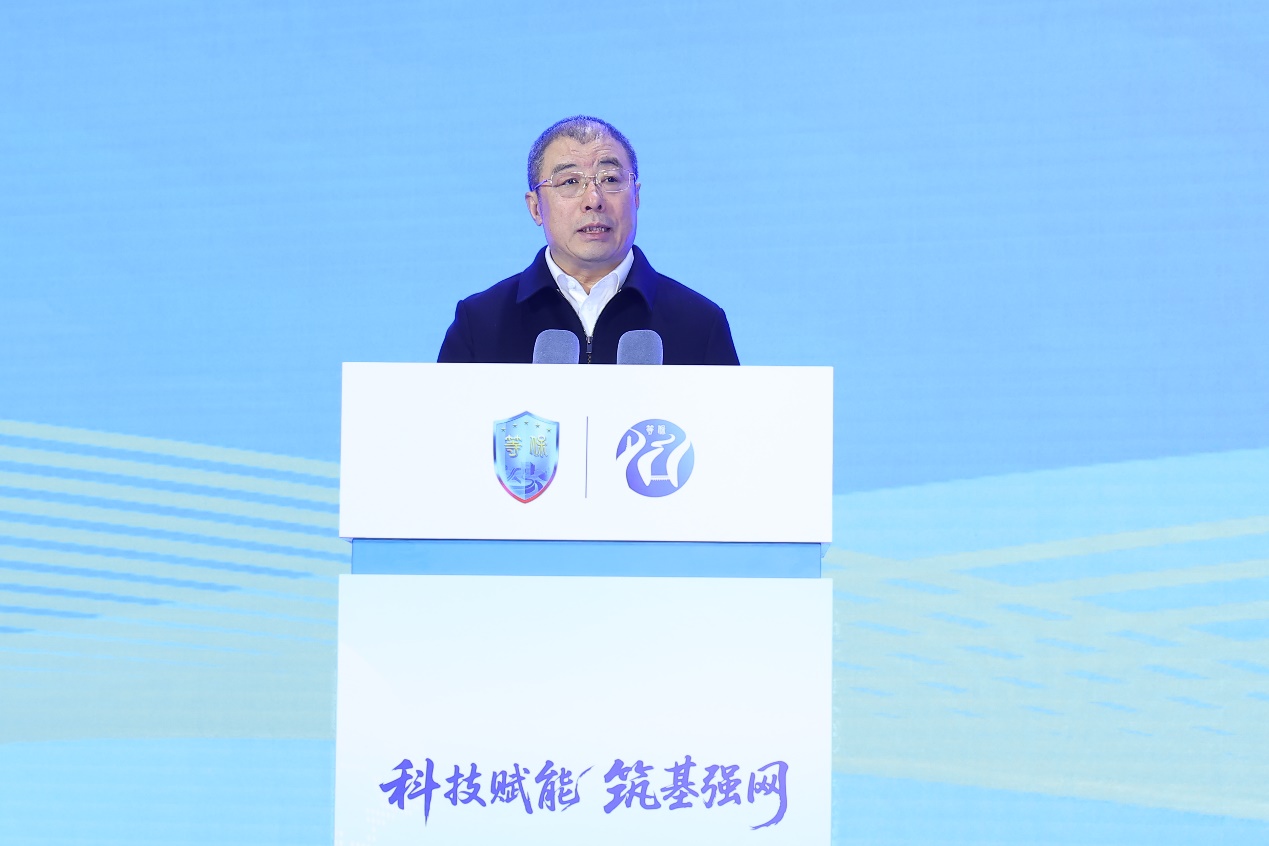
在2026年网络安全等级保护技术学术交流活动上,全国政协委员、全国工商联副主席、奇安信集团董事长齐向东发表主题演讲指出,面向"十五五",要提高 三个认识、建设四个平台、划定五条红线,加快网络安全升级改造。他特别强调,提高对漏洞、攻击者与损失的"三个认识"是实现精准防御、有效应对"十 五五"期间各类新型威胁的首要逻辑前提。 齐向东首先详尽拆解了对漏洞的认识。他指出,网络安全问题的核心是漏洞。软件漏洞、硬件漏洞、机器漏洞、人性漏洞、体系漏洞、运营漏洞六大方面的 安全风险不容忽视。他特别指出,机器漏洞是综合性的,随着场景延伸而持续泛化。 比如,无人机后台管理系统的漏洞,一旦被敌对势力控制,可以非法入侵敏感空域、用于定向监控,甚至实施恶意操控引发重大公共安全事件。智能汽车的 车厂云平台、终端服务器、汽车主机三个环节的漏洞也不容忽视。奇安信对国内主流汽车厂商的云平台进行了分析,93.3%的厂商云平台存在安全漏洞,其 中76.7%的厂商云平台存在超危或高危级漏洞,直接危害车企和用户数据安全、车辆安全。 更值得警惕的是"人性漏洞",贪婪、仇恨与急难等本能弱点,极易被黑灰产或境外情报机构精准利用,成为撬动整个防御体系的支点。 ...

服务构建更为紧密的中国—东盟命运共同体,广西这样落子
Guang Xi Ri Bao· 2026-01-30 03:00
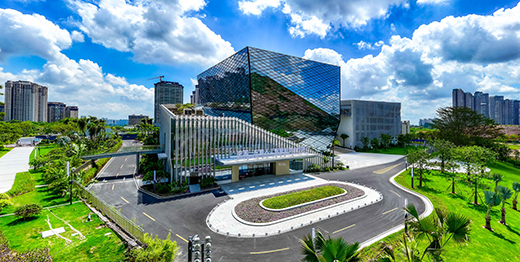
位于南宁市五象新区的中国—东盟国家人工智能应用合作中心展示中心。周军 摄 2025年11月25日,自治区工信厅等六部门印发《关于促进机器人产业发展的若干政策措施》,大力 打造面向东盟的机器人示范应用高地。图为繁忙的柳州优必选智能科技有限公司人形机器人生产线。梁 凯昌 摄 近日,一列满载货物的中越快速通关班列从南宁国际铁路港发车。徐天保 摄 2025年12月10日,广西援柬埔寨现代农业技术合作减贫项目智慧蔬菜大棚及其附属设施移交仪式在 柬埔寨磅清扬省罗列巴尔县乌塔赛村举行,工作人员介绍智慧大棚功能和使用方法。刘建文 摄 2025年10月28日晚,中国—东盟(南宁)戏剧周首场演出在广西艺术中心上演。该活动汇聚中国与 东盟多国优秀剧团与艺术家,共展戏剧艺术的多元魅力与时代风采。梁凯昌 摄 2025年3月26日,中越界河山歌会激情开唱。中越两国山歌手以中越德天(板约)瀑布为背景,乘 坐竹筏进行山歌对唱。管林华 雷丽军 摄 虽至深冬,绿城南宁,依然万物勃发。 高空俯瞰,中国—东盟国家人工智能应用合作中心(简称"南A中心")展示中心在阳光照射下,如 一枚闪亮棋子,嵌在五象新区的苍翠绿意中。 这枚关键落子,既是新时代沿边开 ...
(经济观察)成渝双城低空经济走廊如何“起飞”?
Zhong Guo Xin Wen Wang· 2026-01-28 06:40
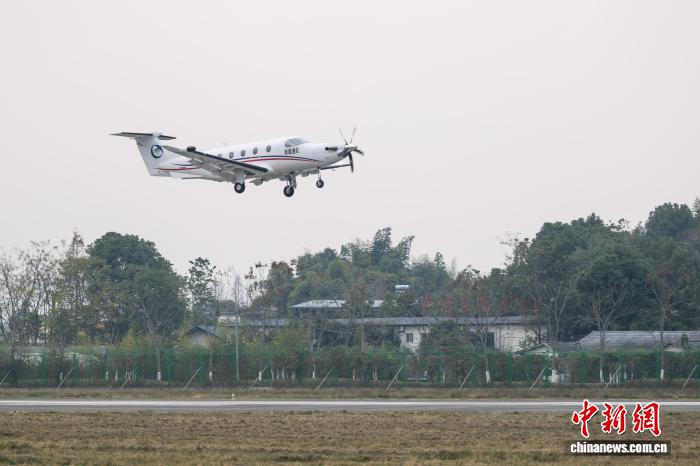
Core Viewpoint - The Chongqing and Sichuan regions are collaboratively developing the Chengdu-Chongqing low-altitude economic corridor, transitioning from initial cooperation in "opening routes" to deeper integration in "industrial ecosystem co-construction" [1] Group 1: Low-altitude Economic Development - The first general aviation short-haul transport routes connecting Chongqing and Sichuan successfully launched on December 27, 2024, marking the official opening of the first batch of routes [3] - The trial flight of the Sichuan Anyue to Chongqing Dazhu low-altitude route in December 2025 opened a low-altitude corridor for the Sichuan Stone Carving Temple National Park [3] - The "low-altitude sky road" is forming, with multiple cross-province low-altitude routes already opened, involving various locations in Chongqing [3] Group 2: Industrial Parks and Ecosystems - The Bishan District is constructing the "Dream Space" digital economy industrial park, focusing on low-altitude economy and attracting leading companies in the industry [4] - Dazhu is accelerating the planning and construction of a low-altitude economic industrial park, aiming to create a comprehensive industrial base integrating manufacturing, operation, and services [5] - The Liangping District is developing a low-altitude economic industrial park with a focus on the drone industry and related supply chains [5] Group 3: Future Prospects and Challenges - The Chongqing Liangjiang New Area is leveraging the Chengdu-Chongqing economic circle to establish a leading demonstration area for low-altitude economy in Western China [5] - The future development of low-altitude economy will require closer integration with various industries and cross-regional collaboration [9] - Current airspace management, legal frameworks, and infrastructure are becoming inadequate to meet the demands of the growing low-altitude economy, necessitating collaborative governance and unified technical standards [9]
北京两会 | 齐向东:促进“四链”协同,激活现代化首都都市圈新动能
Jin Rong Jie· 2026-01-26 10:09
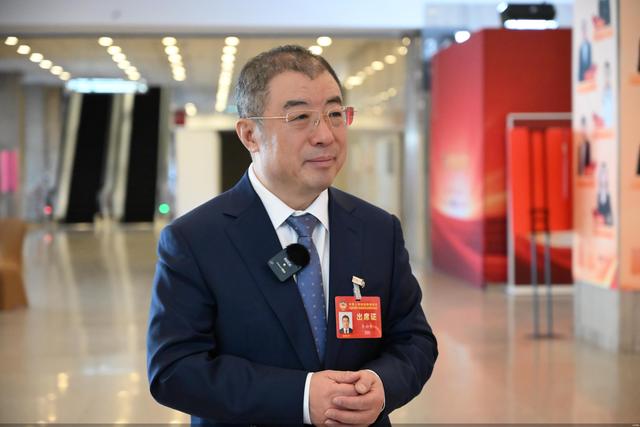
在北京市政协十四届四次会议期间,北京市政协委员、奇安信集团董事长齐向东提交了《关于促进"四 链"协同,激活现代化首都都市圈新动能的提案》。他建议,推动产业链、资金链、创新链、人才链深 度融合,通过精准施策,打破政策协同不足、融资壁垒未破、成果转化不畅、人才保障薄弱等难题,助 力首都都市圈从"要素集聚"向"生态共荣"跨越。 齐向东强调,网络安全是数字经济的底板,作为在京发展的科技企业,奇安信将积极响应"四链"协同号 召,以技术创新助力现代化首都都市圈的安全发展。 现代化首都都市圈是京津冀世界级城市群的核心支撑。随着《中共中央关于制定国民经济和社会发展第 十五个五年规划的建议》明确提出"加强重点城市群协调联动发展",京津冀协同发展已进入深水区。齐 向东表示,在这一国家战略背景下,"四链"融合不仅是产业升级的抓手,更是撬动都市圈高质量发展 的"金钥匙"。 当前,京津冀协同发展已取得显著成效,但面对新形势,仍有潜力可挖。齐向东指出,三地在资源禀赋 上各具特色,如何进一步降低制度性交易成本、提升要素流动效率,是下一阶段的破题关键。 三是强化"技产融合",打造创新链。针对科技成果转化中"中试"环节成本高、风险大的痛点,建 ...
两会声音 | 齐向东:建议设立京津冀科创担保基金,开通信用修复“绿色通道”
Jin Rong Jie· 2026-01-26 10:09
Core Viewpoint - The financing cost for private technology innovation enterprises averages between 8% and 15%, while state-owned enterprises can secure medium to long-term loans at rates below 3%, creating a disparity that stifles innovation vitality [1] Group 1: Financing Challenges - Private technology innovation enterprises face high financing costs, which are significantly higher than those of state-owned enterprises [1] - The proposal includes establishing a financing guarantee fund for technology innovation in the Beijing-Tianjin-Hebei region to lower financing costs for private enterprises [1] - A mechanism for credit repair for technology innovation enterprises is suggested to prevent non-malicious overdue credit from affecting their financing opportunities [1] Group 2: Policy Recommendations - There is a call to break down administrative barriers and improve the industrial collaboration mechanism among Beijing, Tianjin, and Hebei [2] - The proposal advocates for consensus on industrial management standards, definitions, and approval processes to reduce institutional costs for enterprises operating across regions [2] - The ultimate goal is to facilitate the free flow of resources within the urban agglomeration, transitioning from mere physical assembly to effective collaboration [2]
“AI+”遇上“本土化”,产业因地“智”宜正当时
Xin Hua Ri Bao· 2026-01-25 19:09
Group 1 - The AI investment sector is experiencing significant growth, with 2,081 financing events and a total disclosed financing amount of approximately 4,759 billion yuan in 2025 [1] - The AI+ robotics, sensors, and aerospace applications have attracted the highest financing amount of 282 billion yuan, with AI+ intelligent robotics being the hottest sector, raising 117 billion yuan, nearly doubling from 2024 [1] Group 2 - Nanjing's Patience Capital has supported GPU-focused startup Muxi Integrated Circuit (Nanjing) Co., Ltd., which successfully went public on the STAR Market, becoming the second domestic GPU company listed in A-shares [2] - In 2025, nearly ten companies in the GPU sector have raised over 30 billion yuan, with Muxi receiving approximately 800 million yuan in funding from local government funds [2] Group 3 - Changzhou has established a 5 billion yuan AI special fund focusing on smart manufacturing and smart transportation, providing financial support to top talent and startups [3] - Suzhou is planning to gather over 50 billion yuan in AI funds by the end of 2026, focusing on AI+ manufacturing and supporting the establishment of over 3,000 AI companies [3] Group 4 - The "investment and loan combination" mechanism in Nantong has provided 30 million yuan in R&D funding to Yuan Shi Intelligent, which has seen over 50% annual revenue growth [4] - Yangzhou has introduced a "tolerance list" for technology innovation, allowing for responsibility exemption in case of unmet investment expectations, encouraging high-risk AI projects [4][5] Group 5 - Local industry characteristics and precise support are crucial for AI projects to take root, as highlighted by the need for stable power supply and cost reduction measures in Wuxi [6][7] - Wuxi has implemented a "computing power coupon" policy to lower costs for local enterprises, establishing a robust infrastructure for AI model deployment [7] Group 6 - Changzhou has set up a synthetic biology industry fund of over 2 billion yuan to support seed and early-stage companies in the biomedicine sector [8] - The application of AI in biomanufacturing has been recognized by the Ministry of Industry and Information Technology, with a project from Chuangjian Medical being one of the few selected cases in Jiangsu Province [8]
对话市政协委员齐向东:AI助力京津冀科技成果转化“弯道超车”
Xin Lang Cai Jing· 2026-01-25 17:16
Core Insights - The construction of smart cities in Beijing has entered a deep integration phase, with smart governance, transportation, energy, and healthcare becoming core engines for high-quality development [1][5] - AI is seen as a key driver in transforming scientific and technological achievements into marketable products, addressing information gaps between small and medium-sized tech enterprises and pilot testing platforms [6][10] Group 1: Innovation Chain and Challenges - The innovation chain is crucial for linking the industrial, financial, and talent chains, and its effective transformation is essential for high-quality urban development [4][5] - Beijing faces challenges in the "last mile" of technology transfer, particularly in pilot testing, compared to regions like the Yangtze River Delta and the Pearl River Delta [5][6] Group 2: Role of AI in Innovation - AI can bridge the information gap between pilot testing platforms and small tech enterprises, enhancing search and matching capabilities for better collaboration [6][10] - AI also helps reduce secondary development costs and shorten cycles in the pilot testing phase, improving compatibility and adaptability of research outcomes [6][10] Group 3: AI Safety Governance - AI safety governance should be proactive, establishing dynamic governance mechanisms that evolve alongside technology development [9][11] - The governance strategy should incorporate smart techniques, embedding safety and reliability into every stage of AI development and deployment [9][12] Group 4: Smart City Security Challenges - Beijing's smart city security faces four main challenges: real-time protection difficulties, comprehensive protection issues, precision protection challenges, and the need for continuous upgrades to counter evolving cyber threats [10][12] - AI can enhance security by enabling real-time responses, cross-system monitoring, and precise matching of protection strategies to specific scenarios [10][12] Group 5: Future Directions - Within five years, significant breakthroughs in AI safety governance are anticipated, with the potential to create a new benchmark for smart city security in Beijing [11][12] - The establishment of a collaborative response mechanism and the development of a scene-based intelligent security solution system are recommended to enhance the city's safety operations [11][12]
2026北京两会丨对话市政协委员齐向东:AI助力京津冀科技成果转化“弯道超车”
Bei Jing Shang Bao· 2026-01-25 13:42
Core Insights - The article discusses the importance of AI in enhancing the innovation chain and addressing the challenges faced by small and medium-sized tech enterprises in Beijing's smart city development [3][4][9]. Group 1: Smart City Development - The "14th Five-Year Plan" period is crucial for Beijing to achieve socialist modernization, with smart city construction entering a phase of deep integration [3]. - Key areas of smart city development include smart governance, smart transportation, smart energy, and smart healthcare, which are essential for high-quality growth in the capital [3]. Group 2: Innovation Chain Challenges - Despite being an international tech innovation center, Beijing faces challenges in the "last mile" of technology transfer, particularly in the pilot testing phase [3][8]. - The city has introduced policies to support industrial cluster development and encourage the establishment of pilot testing platforms, aiming to bridge information gaps for small and medium-sized tech enterprises [3][8]. Group 3: Role of AI - AI plays a critical role in addressing information disparities between pilot testing platforms and small tech enterprises, enhancing search and matching capabilities [9]. - It also helps reduce secondary development costs and shorten cycles in the pilot testing phase, improving compatibility and adaptability of research outcomes [9][10]. Group 4: AI Safety Governance - The article highlights the need for proactive governance of AI technologies, emphasizing the establishment of dynamic governance mechanisms and safety buffers in high-risk sectors [12]. - It suggests that AI safety governance should incorporate real-time monitoring and precise regulatory measures to ensure responsible development and application [12][13]. Group 5: Future Outlook - The article anticipates significant breakthroughs in AI safety governance within five years, proposing that AI can empower smart city safety operations and establish a new benchmark for security in the capital [14]. - Recommendations include creating a collaborative response mechanism across regions and industries, and developing a standardized approach to risk management in smart city scenarios [14].