
诺泰生物

Search documents
医药深度复盘-最新观点-风险落地-需求共振-CXO行情蓄势待发
2025-12-29 01:04
Summary of Conference Call Records Industry Overview - The pharmaceutical sector is experiencing structural heat, with certain stocks entering a value range, indicating potential for rebound. The focus for 2026 includes three main narratives: innovation going global, turnaround from difficulties, and impulse-driven growth, particularly in BD 2.0, small nucleic acids, and supply chains [1][2] Key Insights and Arguments - The CRO (Contract Research Organization) industry has seen short-term risks largely mitigated, with limited impact from the U.S. NBA 2026 Act. The CRO supply chain is expected to experience a resonance of internal and external demand starting in 2024, leading to a strong fundamental outlook by 2026 [1][4] - In the clinical CRO space, companies like Tigermed are showing significant order growth, with EPS expected to experience nonlinear growth, enhancing stock price elasticity. The peptide CDMO (Contract Development and Manufacturing Organization) sector is also expected to grow at least 25% by 2026, with companies like WuXi AppTec and Notch being noteworthy [1][4][5] - CDMO companies are driven by large product orders, with ADC (Antibody-Drug Conjugates) and small nucleic acids identified as key future growth areas. ADC commercialization is entering a boom phase, benefiting companies like WuXi Biologics, Haoyuan, and Kelaiying [1][6] Additional Important Content - The Ant Group's healthcare model, Antifufu, aims to become a leading health service consultation platform, targeting 500 million registered users and over 100 million monthly active users by the end of 2026. The healthcare team has been elevated to a business group, aiming for revenue exceeding 100 billion [2][7] - Antifufu's technology is based on the "Bailing" general model, integrating Deepseek and Tongyi Qianwen technologies, utilizing proprietary medical data from various sources, including 700 million medical insurance users and 40,000 doctors from acquired platforms [2][8] - User retention strategies for Antifufu include health goal setting and integration with wearable devices, aiming for increased interaction frequency [2][9] - The commercialization strategy includes paid consultations, medication purchases, and health membership services, with B2B collaborations with insurance companies for disease-specific insurance products [2][10] - Collaboration with Alibaba Health leverages a vast user base and medical data, enhancing competitive advantages in the healthcare sector [2][11] - The AI-powered "Famous Doctor Avatar" service is currently in a testing phase, with plans for monetization contingent on achieving high diagnostic accuracy [2][12]
ST诺泰“戴帽”背后:资本腾挪、内控失守与增长隐忧
Xin Lang Cai Jing· 2025-12-25 09:40
Core Viewpoint - The investigation into Notai Bio revealed significant financial misconduct, leading to severe penalties for the company and its executives, including a total fine of 76.2 million yuan and a change in stock status to "ST Notai (Rights Protection)" [1][8]. Group 1: Financial Fraud and Regulatory Penalties - Notai Bio was found to have inflated its revenue by 30 million yuan in its 2021 annual report through a capital maneuver involving Zhejiang Huabei Pharmaceutical, which lacked the financial capability to pay for the technology transfer [2][9]. - The inflated financial data resulted in a 25.95 million yuan overstatement of total profit, accounting for 20.64% of the reported profit for that period [2][9]. - The fraudulent financial practices led to a chain reaction, culminating in the issuance of a convertible bond prospectus in December 2023 that contained significant false financial information [10]. Group 2: Historical Internal Control Issues - Notai Bio's internal control problems are not new, with previous regulatory warnings dating back to its time on the New Third Board, including a 2016 incident involving retrospective adjustments to financial data [3][11]. - In 2019, the company received another warning for failing to disclose related parties in a major asset restructuring, indicating a pattern of governance issues [3][11]. - The current financial misconduct was facilitated by the actions of the actual controller, Zhao Dezhong, who played a key role in managing the company's operations and orchestrating the fraudulent activities [4][11]. Group 3: Financial and Operational Risks Amidst Growth - Despite the financial fraud, Notai Bio reported strong revenue growth, primarily driven by the popularity of GLP-1 weight loss drugs, with revenue increasing from 1.034 billion yuan in 2023 to 1.048 billion yuan in the first half of 2024 [5][12]. - The company's overseas revenue has become a significant growth driver, with 74% of the 10.48 billion yuan revenue in the first half of 2024 coming from international markets [6][12]. - However, the company's debt levels are rising sharply, with the debt-to-asset ratio increasing from 23.69% in 2022 to 49.53% in the first half of 2024, indicating growing financial pressure [6][12]. - The inability to refinance due to regulatory penalties poses a significant threat to the company's future growth, especially as competition in the market intensifies with the impending expiration of key patents [7][13].

监管重拳出击!证监会2025年“手术刀”精准切除上市公司违规病灶
Xin Lang Cai Jing· 2025-12-25 07:42
Core Viewpoint - The regulatory environment for listed companies in China has intensified in 2025, with over 80 companies facing penalties for information disclosure violations, reflecting a shift from lenient to strict enforcement by the China Securities Regulatory Commission (CSRC) [1][6] Group 1: Regulatory Actions - The CSRC has maintained a high-pressure stance on information disclosure violations, with penalties reaching up to 10 million yuan for companies and 500,000 yuan for responsible individuals, a significant increase from previous years [1][6] - Various types of violations have been identified, including failure to disclose periodic reports, financial fraud, and misuse of funds by actual controllers [1][6] Group 2: Financial Fraud Cases - Notable cases of financial fraud include: - Notai Bio, which inflated revenue by 30 million yuan through a closed-loop funding operation and faced a fine of 76.2 million yuan [2][8] - *ST Zitian, which reported inflated revenue of 2.499 billion yuan over two years, with 78.63% of its 2023 revenue being fictitious [2][8] - *ST Suwu, which failed to disclose its actual controller for several years and inflated revenue by 1.771 billion yuan while concealing 4.755 billion yuan in non-operating fund occupation [2][8] Group 3: Consequences of Violations - The implementation of a strict delisting mechanism has led to over 10 companies facing mandatory delisting due to severe violations, with *ST Yuancheng being the 13th company to face such consequences in 2025 [2][8] - The involvement of third-party entities in fraudulent activities has also been addressed, with penalties imposed on accomplices, such as the case of Nanjing Qingya Trading Co., which faced a fine of 7 million yuan and a 10-year market ban [2][8] Group 4: Shareholder Rights and Legal Actions - The regulatory framework now includes comprehensive accountability measures for not only the companies but also responsible individuals and intermediaries involved in fraudulent activities [4][11] - Shareholders affected by violations have successfully pursued legal actions, with several cases resulting in compensation for investors, highlighting the importance of active participation in seeking redress [4][11]


上市公司财务造假,财务总监和实控人都干了什么?
Sou Hu Cai Jing· 2025-12-24 16:08
Core Viewpoint - Financial fraud has severely undermined the principles of fairness and transparency in the A-share market, harming the legitimate rights and interests of investors, with over 10 listed companies facing penalties and forced delisting since 2025, including five companies receiving fines exceeding 100 million RMB [1][3]. Group 1: Financial Fraud Cases - Numerous typical cases of financial fraud in listed companies over the past three to five years have been identified, including companies like Zijing Storage, Kangde Xin, Guizhou Bailing, and Yili Clean Energy, revealing complex relationships between actual controllers and financial directors, as well as chaotic corporate governance [3][4]. - In the case of Kangde Xin, the actual controller and financial director conspired to implement systematic financial fraud for seven years, while Zijing Storage's actual controller organized high-level executives to inflate revenue through fake contracts and falsified documents [4][5]. - The financial fraud methods commonly employed include inflating profits, manipulating costs, and creating fictitious assets, often involving collusion among key personnel [6][8]. Group 2: Penalties and Consequences - The penalties for financial fraud have been severe, with individuals facing both administrative and criminal consequences. For instance, Kangde Xin's actual controller received a 15-year prison sentence and a fine of 202 million RMB, while the financial director received a 13-year sentence and a fine of 10.15 million RMB [5][9]. - Companies involved in financial fraud face significant repercussions, such as ST Gaohong, which reported a cumulative litigation amount of 3.511 billion RMB, representing 427.64% of its latest audited net assets [9][10]. - The ongoing issues of financial fraud and deceptive practices are seen as major threats to the healthy development of China's capital market, undermining investor confidence and market fairness [9][10]. Group 3: Systemic Issues and Recommendations - The prevalence of financial fraud highlights systemic issues within corporate governance, including failures in internal controls and potential negligence by auditing firms, with some cases involving extensive collusion with third parties [10]. - Experts suggest that regulatory oversight of listed companies should be strengthened, with increased penalties for fraudulent activities and accountability for auditing firms and colluding third parties to maintain the integrity of the capital market [10].



3000万收入造假、甩锅会计师、7620万重罚!
Xin Lang Cai Jing· 2025-12-23 12:14
Core Viewpoint - The case of Jiangsu Nuotai Aosaino Biopharmaceutical Co., Ltd. involves systematic financial fraud led by the actual controller and senior executives, resulting in a total fine of 76.2 million yuan due to inflated revenue and profits in their financial reports [1][21]. Group 1: Background of the Case - Nuotai Biopharmaceutical, established in 2009 and listed on the Sci-Tech Innovation Board in May 2021, faced performance pressure shortly after its IPO, leading to a scheme to inflate revenue at year-end [2][22]. - The company raised approximately 550 million yuan during its IPO, focusing on a dual-driven model of "innovative drugs + CDMO" [2][21]. Group 2: Fraud Techniques Revealed - The company reported a 30 million yuan revenue from a technology transfer agreement with Zhejiang Huabei, which was later found to be a facade for financial manipulation [3][23]. - Investigations revealed that Zhejiang Huabei lacked the financial capability, production capacity, and sales channels to engage in a legitimate transaction, indicating the transaction's fraudulent nature [4][5][25]. - A closed-loop funding flow was established where Nuotai Biopharmaceutical injected capital into Zhejiang Huabei, which then returned the funds as a "technology transfer fee," violating accounting standards [6][28]. - The company manipulated the valuation of Zhejiang Huabei to make the transaction appear legitimate, further confirming the fraudulent nature of the deal [8][29]. Group 3: Responsibility Attribution - The China Securities Regulatory Commission (CSRC) identified a collective violation involving seven responsible individuals, all of whom signed off on the financial reports without raising concerns [30]. - Zhao Dezhong, the actual controller, played a leading role in orchestrating the fraud and was fined 13 million yuan [31]. - Other executives, including Zhao Deyi and Jin Fuqiang, faced fines for their roles in approving and executing the fraudulent transactions [32][33]. Group 4: Fraud in Public Offering Documents - In December 2023, Nuotai Biopharmaceutical issued 434 million yuan in convertible bonds, referencing inflated financial data from 2021, which misled investors [14][36]. - The CSRC imposed additional penalties for the fraudulent public offering documents, resulting in a total fine of 4.34 million yuan for the company and individual fines for several executives [15][39]. Group 5: Regulatory Logic - The CSRC firmly rejected the defense of relying on external auditors, emphasizing that the company and its executives are responsible for accurate information disclosure [17][41]. - The case serves as a warning about the importance of truthful financial reporting, especially under the current registration system, where any attempts to manipulate financial statements will be scrutinized [19][42].
抗病毒药需求爆发,康缘药业等多家上市公司加速布局
Huan Qiu Wang· 2025-12-23 02:41
Core Insights - The flu epidemic in China has reached a high prevalence level, with a positive rate of over 51% among flu-like cases in emergency departments, leading to a surge in demand for antiviral drugs [1][3] - Companies such as NuoTai Bio, Kangyuan Pharmaceutical, and China Resources Sanjiu have seen significant increases in demand for respiratory products, with some experiencing supply shortages [1][3] - The market for antiviral drugs is shifting towards a combination of classic medications and innovative therapies, with a notable increase in demand for traditional Chinese medicine products [6][7] Group 1: Market Demand and Trends - The demand for flu antiviral drugs has surged, with purchases of Mabalosavir increasing by over 600% in the past two weeks [1] - The flu season is expected to peak in mid-December, with the H3N2 subtype being the dominant strain [3] - Companies are implementing priority supply mechanisms to meet the rising demand for flu medications [3] Group 2: Product Performance and Innovation - Kangyuan Pharmaceutical has demonstrated strong product synergy, with a comprehensive range of products covering the entire treatment process from acute symptoms to recovery [3][4] - Traditional Chinese medicine products like Jinzhen Oral Liquid and Xingbei Cough Granules have seen order increases exceeding 100% [6] - The market is witnessing a shift towards a dual approach of classic and innovative therapies, enhancing the overall treatment landscape for respiratory diseases [6][7] Group 3: Strategic Positioning of Companies - Companies like Zhongsheng Pharmaceutical are positioning their innovative flu drugs to strengthen their market leadership in respiratory treatments [7] - The collaborative growth model driven by innovative products is enhancing the operational capabilities of domestic pharmaceutical companies [7] - The respiratory product system is expected to maintain its strategic value in managing flu seasons and respiratory diseases in the future [7]

诺泰生物(688076)收到证监会正式处罚,投资者索赔已获立案
Xin Lang Cai Jing· 2025-12-22 07:31
Core Viewpoint - The article discusses ongoing legal actions against Nuotai Bio (688076) for false statements made in their financial reports, particularly regarding a technology transfer that inflated their reported revenue and profits in 2021 [1][2][3][4] Group 1: Legal Proceedings - The Shanghai Jucheng Law Firm, represented by lawyer Xu Feng, is handling the investor compensation case against Nuotai Bio, which has been officially filed in the Shanghai Financial Court [1][2] - The law firm is continuing to accept claims from other investors who have suffered losses due to the company's actions [1][2] Group 2: Financial Misconduct - Nuotai Bio's 2021 annual report contained false records, specifically a technology transfer transaction with Zhejiang Huabei, which was reported to generate revenue of 30 million yuan [3][4] - The transaction was deemed lacking commercial substance, as Zhejiang Huabei did not have the financial capability or operational capacity to utilize the technology, leading to an artificial inflation of revenue by 30 million yuan and a profit increase of 25.9516 million yuan, which accounted for 20.64% of the total profit reported for that period [3][4] Group 3: Investor Compensation Eligibility - Investors who purchased Nuotai Bio shares between April 28, 2022, and October 24, 2024, and sold or continued to hold them after October 24, 2024, are eligible to file for compensation [2][4]
上市公司虚增收入3000万,公开发行文件造假!合计被罚7620万!
梧桐树下V· 2025-12-20 12:04
Core Viewpoint - Jiangsu Nuotai Aosaikeno Biopharmaceutical Co., Ltd. (ST Nuotai) has been penalized by the China Securities Regulatory Commission (CSRC) for falsifying financial statements, including inflating revenue by 30 million yuan and profit by 25.9516 million yuan, which accounted for 20.64% of the total profit disclosed for the period [1][8][11]. Summary by Sections Administrative Penalty - The CSRC issued an administrative penalty decision against ST Nuotai, ordering it to correct its actions, issuing a warning, and imposing a fine of 47.4 million yuan. Six responsible individuals were fined between 1.5 million and 13 million yuan, totaling 28.8 million yuan [1][20]. Violations Identified - ST Nuotai's 2021 annual report contained false records, specifically regarding a technology transfer to Zhejiang Huabei Pharmaceutical Co., Ltd., which lacked commercial substance and should not have been recognized as revenue. This transaction was linked to a capital increase from ST Nuotai to Zhejiang Huabei [8][11][12]. - The company’s public offering documents also contained significant false information, particularly in the financial accounting section, which misrepresented the 2021 financial data [10][11]. Responsible Individuals - Key individuals involved included Zhao Dezhong (Vice Chairman), Zhao Deyi (Chairman), Jin Fuqiang (General Manager), and others, who failed to ensure the accuracy of the financial reports and were found to have participated in the misleading transactions [9][12][17]. Company Response and Future Actions - ST Nuotai acknowledged the violations and expressed intentions to strengthen internal controls and compliance processes. The company aims to improve the quality of information disclosure and maintain the interests of shareholders [25][26].
诺泰生物收超四千万元罚单 蹭上“减肥神药”拔高业绩
Xin Jing Bao· 2025-12-19 17:13
Core Viewpoint - The regulatory penalties against NuoTai Bio have been finalized due to inflated performance and significant false content in public offering documents, resulting in a fine exceeding 40 million yuan [2][5]. Group 1: Regulatory Actions - NuoTai Bio received a fine of 47.4 million yuan from the China Securities Regulatory Commission (CSRC) for inflating its performance and providing false information in its fundraising documents [5]. - The company was previously under investigation for information disclosure violations and had its stock labeled with risk warnings, changing its name to "ST NuoTai" [2][4]. - Multiple executives from NuoTai Bio were publicly reprimanded by the Shanghai Stock Exchange, with one executive being deemed unsuitable for senior management roles for three years [6]. Group 2: Financial Impact - The fine imposed on NuoTai Bio represents approximately 11.72% of its projected net profit for 2024, which is estimated at 4.04 billion yuan [6]. - In 2025, NuoTai Bio reported a revenue of 15.27 billion yuan for the first three quarters, reflecting a year-on-year growth of 21.95%, and a net profit of approximately 4.45 billion yuan, up 26.92% [6]. Group 3: Business Operations - NuoTai Bio has benefited from the booming "weight loss drug" market, collaborating with several leading generic drug companies on projects involving semaglutide and terzepatide [2][6]. - The company is also developing a semaglutide injection project, currently in the verification clinical stage, with a total investment of 183 million yuan, aimed at diabetes and weight loss applications [7].
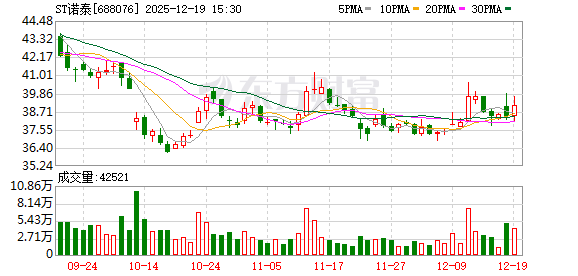
诺泰生物收超四千万元罚单,蹭上“减肥神药”拔高业绩
Bei Ke Cai Jing· 2025-12-19 17:09
Core Viewpoint - The regulatory penalties against NuoTai Bio have been finalized, resulting in significant financial repercussions for the company due to inflated performance and false disclosures in public offering documents [2][6]. Group 1: Regulatory Actions - NuoTai Bio received a fine exceeding 40 million yuan from the China Securities Regulatory Commission (CSRC) for inflating performance and fabricating significant false content in public offering documents [2]. - The CSRC's administrative penalty included a fine of 47.4 million yuan and a warning, with additional penalties imposed on six responsible individuals totaling 28.8 million yuan [6]. - The Shanghai Stock Exchange publicly reprimanded NuoTai Bio and several executives, with specific restrictions placed on the company's ability to submit listing applications for a defined period [7]. Group 2: Financial Impact - The fine imposed by the CSRC represents approximately 11.72% of NuoTai Bio's projected net profit attributable to shareholders for 2024, which is estimated at 404 million yuan [3][7]. - The company reported a revenue of approximately 1.625 billion yuan and a net profit of about 404 million yuan for 2024, indicating a growth trend in recent years [7]. - For the first three quarters of 2025, NuoTai Bio achieved revenues of 1.527 billion yuan, reflecting a year-on-year growth of 21.95%, and a net profit of approximately 445 million yuan, up 26.92% [7]. Group 3: Business Operations - NuoTai Bio has been benefiting from the booming "weight loss drug" market, engaging in collaborations with several leading generic drug companies for the production of active pharmaceutical ingredients and formulations related to Semaglutide and Tirzepatide [3][8]. - The company is also developing a pipeline for Semaglutide injection, currently in the verification clinical stage, with a total investment of 183 million yuan aimed at applications for diabetes and weight loss [9].