Sony

Search documents
Wall Street Breakfast Podcast: TikTok's U.S. Survival Plan Is Locked In
Seeking Alpha· 2025-12-19 11:12
TikTok and ByteDance - TikTok's parent company ByteDance has signed binding agreements to establish a U.S. joint venture that will be majority-owned by American investors, involving partners such as Oracle, Silver Lake, and MGX [3][4] - The new joint venture will focus on U.S. data protection, algorithm security, content moderation, and software assurance, operating as an independent entity [4] Instacart - Instacart has reached a $60 million settlement with the U.S. Federal Trade Commission (FTC) over claims of deceptive consumer practices, including misleading advertising regarding free delivery services [5][6] - The settlement prohibits Instacart from making misrepresentations about delivery costs and requires clear disclosure of subscription terms, with the $60 million to be offered as refunds to consumers [7] Nike - Nike reported better-than-expected fiscal second quarter results, driven by strong wholesale and North America sales, which account for 40% of its total business [8] - Despite a profit of $0.53 per share, down 32% year-over-year but 16 cents above expectations, Nike faces challenges from tariffs and margin compression, leading to a gross margin decline of over 300 basis points to 40.6% [9][10]




深圳华强(000062.SZ):积极拓展光模块、应用于高速光模块的光电芯片等产品的授权分销业务
Ge Long Hui· 2025-12-17 07:12
Group 1 - The company has a stake in Star Semiconductor, which focuses on 5G/6G communication technology, with products like satellite baseband chips applicable in satellite communication and IoT scenarios [1] - As a leading authorized distributor of electronic components in China, the company operates in mainland China, Hong Kong, Macau, Taiwan, and Southeast Asia, with a holding subsidiary in Taiwan [1] - The company supplies various components such as Murata's MLCC and silicon capacitors to customers in the optical module sector, while actively expanding its authorized distribution business for optical chips used in high-speed optical modules, having secured agency rights for products from Sony, Litrinium, and HiSilicon [1]

深圳华强:积极拓展光模块、应用于高速光模块的光电芯片等产品的授权分销业务
Ge Long Hui· 2025-12-17 07:12
Group 1 - The company has a stake in Star Semiconductor, which focuses on 5G/6G communication technology, with products like satellite baseband chips applicable in satellite communication and IoT scenarios [1] - The company is a leading authorized distributor of electronic components in China, covering regions including mainland China, Hong Kong, Macau, Taiwan, and Southeast Asia, with a holding subsidiary in Taiwan [1] - The company supplies various components such as Murata's MLCC and silicon capacitors to clients in the optical module field, while actively expanding its authorized distribution business for optical chips used in high-speed optical modules, having secured agency rights for products from Sony, Litrinium, and HiSilicon [1]
GTA 6? PlayStation Handheld? What to Expect in Gaming in 2026
CNET· 2025-12-16 13:00
Gaming Hardware & Technology - Valve is releasing three new devices in early 2026: Steam Frame (a standalone VR headset with improved specs), Steam Machine (a hybrid PC console six times more powerful than Steam Deck), and a new Steam Controller with dual trackpads [3][4][5] - Sony is launching a 27-inch gaming monitor with 1440p resolution, HDR support, up to 120Hz refresh rate for PS5/PS5 Pro (240Hz for PC), and a built-in PS5 controller charging hook [6] - Sony is also releasing new wireless speakers with planar magnetic drivers and PlayStation Link technology, compatible with PS5, PC, and PlayStation Portal [7] - Nintendo is releasing a Virtual Boy remake as a Switch accessory, requiring a Nintendo Switch Online Plus expansion pack subscription, launching on February 17th for $100 [11][12] Game Releases & Industry Trends - Grand Theft Auto 6 is slated for release on November 19th, 2026, but potential delays are possible due to studio issues [13][14] - The industry anticipates new handheld devices from Nintendo (Switch 2) and Xbox in 2025 [1] - Speculation exists regarding a new Sony handheld console that can play games offline, potentially with a docking feature similar to the Nintendo Switch [8][9]

Nasdaq International Patent Leaders™ Index: Tracking Top Innovators Outside the US
Yahoo Finance· 2025-12-15 22:30
R&D Spending and Performance - R&D spending has significantly increased in the 21st century, with total R&D spending in the Nasdaq Global Large Cap™ Index tripling from $342 billion in 2008 to over $1 trillion by 2023 [1] - The top quartile of R&D spenders increased their R&D as a percentage of sales from approximately 13% in 2008 to around 18% in 2024, reinvesting six times more of their revenue into R&D compared to the bottom three quartiles [1] - Companies in the top quartile experienced revenue growth of approximately 115%, compared to 27% for others, indicating a strong correlation between R&D intensity and revenue growth [1] - An equal-weighted portfolio of top R&D spenders outperformed bottom spenders by about three times, achieving a total return of 713% versus 271% from July 2009 to December 2024 [1] - Companies in the bottom three quartiles of R&D spending showed performance nearly identical to those that spent nothing on R&D, suggesting that R&D intensity is more critical than nominal spending [1] Nasdaq International Patent Leaders Index (NQIPL) - The NQIPL consists of the top 100 companies ranked by patent valuation in the Nasdaq Global Ex United States Large Mid Cap™ Index, capturing over 80% of aggregate patent value generated outside the US [4] - The index was launched on June 24, 2024, to provide a benchmark for innovation-driven companies based outside the US, reflecting significant international R&D spending and patent filings [4] - As of June 30, 2025, the NQIPL had a price-to-earnings ratio of 17.6, which is 28% lower than the S&P 500, indicating a valuation discount for innovative companies outside the US [19] - The index's top 20 constituents represent approximately 65% of total exposure, including major companies like Taiwan Semiconductor and Tencent, with a combined market value of $5.4 trillion as of June 30, 2025 [13] Geographic and Sector Exposure - The NQIPL has a significant concentration in Japan, which accounts for nearly 25% of the index weight, with major companies like Sony and Toyota leading in patent development [11] - Technology companies make up about 36% of the index weight, followed by Industrials at 18%, and Consumer Discretionary and Healthcare at 14% each, reflecting a focus on innovation-driven sectors [12] - The index has shown a trend of increasing exposure to Taiwan, South Korea, and China, while Japan and Switzerland's exposure has generally trended lower [24] Performance Analysis - Since its launch, the NQIPL has generated a price return of 11.3% and a total return of 13.9%, with significant contributions from Technology and Industrials sectors [15] - In the first half of 2025, the NQIPL achieved a price return of 15.8%, slightly outperforming the MSCI ACWI Ex-USA [16] - Backtested performance from June 21, 2013, to June 21, 2024, indicates a total return of 202%, significantly outperforming leading international equity benchmarks [21]
X @Bloomberg
Bloomberg· 2025-12-11 19:55
The video-game industry gathers for its annual awards show in Los Angeles, and the favorite for the year’s top prize isn’t an epic from Ubisoft, EA, Nintendo or Sony. It’s from a tiny 30-person studio in the south of France. https://t.co/Mlx10CiqPp ...
Netflix should walk away from the Warner Bros. deal and buy Sony Pictures, says GAMCO Investors CEO
CNBC Television· 2025-12-11 16:30
It's fairly uncomplicated. Corporate lovemaking, M&A. Okay, this is a book we wrote. We both wrote both books on M&A.This was the third one written since Ivan Bowki went off uh to somewhere. And uh basically uh the notion of company A and company B having a bidding war. Come on.That's what we like as part of the free market system. It is appropriate. Then you look at the this deal at $30 a share cash.You don't worry about spin-offs. You don't worry about a wrap fee around this Netflix stock. So, what Netfli ...

Israeli tech cos wield aggressive end-of-year axe
En.Globes.Co.Il· 2025-12-11 07:38
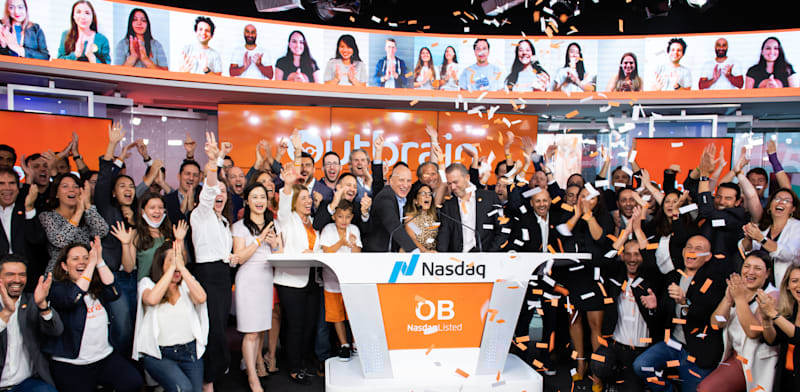
Core Insights - Israeli tech companies are implementing significant layoffs as part of a strategic shift, particularly at the end of the year [1][6] Group 1: Layoffs and Workforce Changes - Outbrain (Teads) announced layoffs of 180 employees, representing 10% of its workforce, while Mobileye cut 200 employees, or 4% of its workforce [2] - Other companies like Fiverr, Varonis, Cellebrite, and Payoneer have collectively announced hundreds of layoffs, with Israeli unicorns such as Lusha, Axonis, and Lightricks also reducing headcounts [3] - Approximately 1,800 employees have been laid off in the Israeli tech sector over the past month, marking the largest wave of layoffs since the end of 2022 [4] Group 2: Nature of Layoffs - Many layoffs are occurring in administrative, software testing, analysis, and product roles that are not central to the company's core strategy [5] - The layoffs are part of a broader trend where companies are recalibrating their focus and cutting outdated projects due to changing market conditions [6][7] Group 3: Impact of AI on Employment - AI is a significant catalyst for layoffs, with roles such as analysts, testers, and sales development representatives being replaced by AI technologies [8] - By the end of the year, 70% of companies are expected to have established AI departments, up from 30% at the beginning of the year, indicating a rapid shift in hiring towards AI-related roles [9] Group 4: Market Dynamics and Future Outlook - The tech industry is experiencing a shift from growth to profitability, with companies looking to cut expenses to improve their bottom line [11] - The end of the year is a critical time for startups to prepare for the upcoming year and demonstrate profitability to investors [13]

From Anime To Gaming: Sony Planning Stablecoin To Power Digital Media Empire
Yahoo Finance· 2025-12-11 03:00
Group 1 - Sony is planning to launch a U.S. dollar stablecoin in 2026 to enhance its digital ecosystem, allowing users to pay for games, anime, and subscriptions [1][2] - The stablecoin aims to bypass credit card fees, with expectations that most U.S. users will adopt the service [2] - Sony Bank has applied for a national banking charter in the U.S. to enable its Connectia Trust unit to engage in cryptocurrency activities, including issuing dollar-pegged stablecoins [3] Group 2 - The stablecoin infrastructure will be provided by Bastion, which raised $14.6 million in a seed round led by Coinbase Ventures, with participation from Sony's venture arm [2] - The GENIUS Act, signed into law in April, has encouraged a surge in stablecoin interest from traditional financial institutions and tech companies [3] - Stablecoin issuers typically hold reserves in short-term treasury bonds, generating significant profits without sharing with users, as evidenced by Tether's reported net profits of over $13 billion for 2024 [4]
Ad fatigue crisis hits Indian streaming services: Repetitive, low-cost ads drive viewers away
MINT· 2025-12-09 09:08
Core Insights - The increasing reliance on advertising by video-streaming services in India is leading to viewer fatigue due to repetitive and unskippable ads, negatively impacting the viewing experience [1][5][6] Advertising Challenges - Poor ad experiences must be urgently addressed for advertising to effectively capture viewer attention [2] - The cost per mille (CPM) model used by OTT platforms results in low ad rates in India, as advertisers perceive a limited audience [3][4] - Ad rates for OTT platforms in India are over 90% lower than in North America, leading to a lack of diverse advertisers and repetitive ad exposure for viewers [5] Viewer Experience - Lengthy and repetitive ads, often lasting two to three minutes, contribute to a frustrating viewing experience, with limited options for viewers to opt out [6] - The fragmented OTT landscape complicates ad policies, with many platforms using advertising-based video-on-demand (AVoD) models that lack transparency [7] Revenue and Business Models - To improve ad experiences, CPM rates need to rise to attract more advertisers, or platforms may need to adopt direct selling models similar to traditional television [8] - Companies with both TV and OTT services often bundle deals, limiting direct ad sales for OTT alone [8] Consumer Trust Issues - Many viewers feel misled by subscription tiers that do not clearly differentiate between ad-free and limited-ad plans, leading to frustrations and potential subscription cancellations [12] - Platforms are losing user trust due to hidden fees, difficult cancellation processes, and streaming glitches, prompting users to seek alternatives [12] Recommendations for Improvement - Platforms should prioritize viewer experience by implementing smarter ad tools that ensure ads are short, skippable, and relevant, while also clarifying subscription policies [13] - Offering genuinely ad-free premium tiers and setting fair limits on ad loads can help rebuild subscriber confidence and enhance the overall viewing experience [13]