
Zara

Search documents
“面容憔悴、锁骨突出”,Zara广告因模特“瘦得不健康”被禁播并下架,公司回应:她们状况良好,有医疗证明
新浪财经· 2025-08-07 09:29
Group 1: Advertising Controversy - Zara's advertisements featuring models deemed "unhealthily thin" have been banned in the UK, sparking discussions on fashion standards and health [2][4][5] - The UK Advertising Standards Authority (ASA) ruled that the images exaggerated the models' thinness through lighting and styling, promoting an unhealthy aesthetic [4][5] - Zara has removed the controversial images and stated that the models were in good health during the shoot, with only minor adjustments made to the images [8] Group 2: Financial Performance - Inditex, Zara's parent company, reported a 1.5% year-on-year revenue increase to €8.27 billion for Q1 2025, which was below analyst expectations, leading to a stock price drop of over 6% [11] - The company's net profit for the same period was €1.305 billion, a slight increase from €1.299 billion in Q1 2024, but overall performance showed signs of decline [11] - Inventory levels increased by 6.3% to €3.791 billion, outpacing revenue growth, indicating potential issues in sales performance [11][13]



热搜!Zara广告因模特太瘦被禁,最新回应:广告已删除
Xin Lang Ke Ji· 2025-08-07 01:39
8月7日,#Zara广告因模特太瘦被禁#话题登上微博热搜。 近日,时尚品牌 Zara 的两则广告因模特看起来"瘦得不健康"在英国被禁播。英国广告标准局表示,一 名模特因身体上的阴影和光滑的后发髻发型显得憔悴,另一张照片中模特的姿势和服饰露出了她突出的 锁骨。当地监管机构裁定,这些"不负责任"的广告不得以目前的形式再次出现。 目前,Zara已删除这些广告,并表示涉事两位模特均有医疗证明,证明她们在拍摄照片时身体状况良 好。 责任编辑:王翔 ...

226家首店抢滩南京!JLC、德基“争霸”,玄武花园城紧追
3 6 Ke· 2025-07-24 02:21
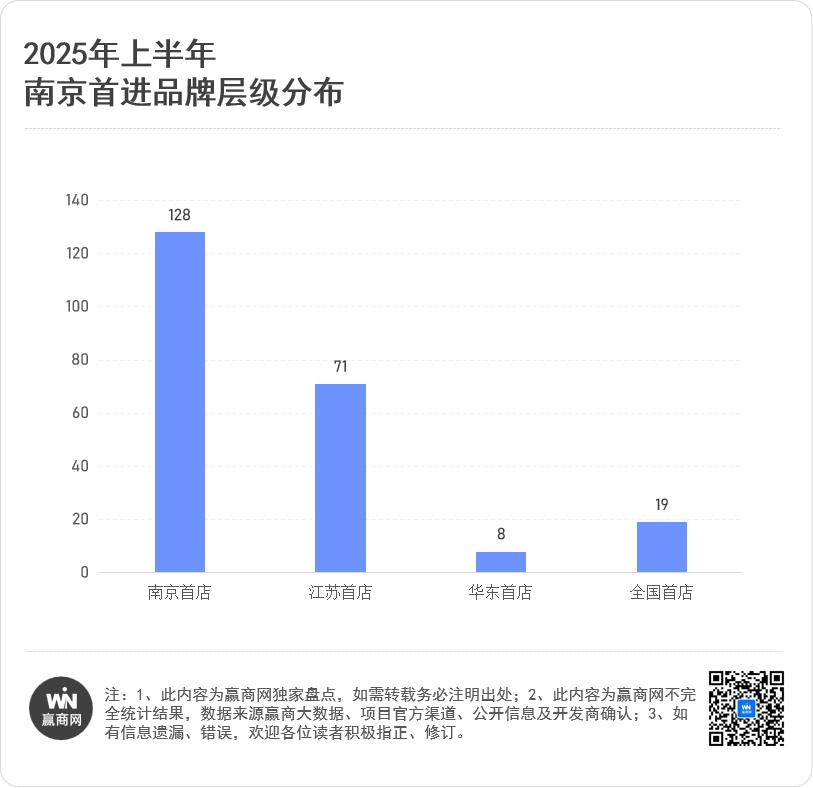
Core Insights - Nanjing's first-store economy is experiencing rapid growth, with 226 new stores introduced in the first half of 2025, doubling the number from the previous year and setting a historical record [1][3][24] - The city has established a favorable business environment through supportive government policies, enhancing the attractiveness for brands to launch their first stores [3][26] - The retail and dining sectors are the main drivers of this growth, with significant contributions from new brands in both categories [4][5][8][9] Group 1: First-Store Economy Overview - Nanjing introduced 226 first stores in the first half of 2025, with a breakdown of 128 city-level stores, 71 provincial stores, 8 regional stores, and 19 national stores [1][3] - The concentration of new projects, such as JLC Jinling Center and Xuanwu招商花园城, is enhancing the city's commercial ecosystem and attracting more first stores [1][4][12] - The government has implemented measures to support the first-store economy, including over 10 million yuan in funding for various initiatives [3][26] Group 2: Sector Performance - The dining sector accounted for 50% of new first stores, while retail made up 41%, indicating a dual-driven growth model [5][8] - In the dining segment, beverage and dessert brands are particularly prominent, with 23 and 15 new brands respectively, reflecting a trend towards experiential and niche offerings [8][9] - The retail sector is characterized by a strong presence of fashion and lifestyle brands, with clothing stores making up 51% of new retail entries [9][20] Group 3: Key Projects and Locations - Major commercial projects like JLC Jinling Center, Deji Plaza, and Xuanwu招商花园城 are leading the first-store introductions, with JLC alone accounting for over 40% of new brands being first-time entrants in the region [12][14][16] - Deji Plaza recorded 42 new first stores, including 9 national and 4 regional stores, showcasing its strong brand attraction and high-quality offerings [19][20] - Xuanwu招商花园城 is enhancing regional commercial capabilities by introducing over 240 brands, including significant first stores in various categories [22][23] Group 4: Brand Dynamics - Local brands dominate the first-store landscape, with 186 Chinese brands opening stores, representing 83% of the total [24][25] - International brands are also increasingly entering the market, with 40 overseas brands launching in Nanjing, indicating the city's growing appeal [24][26] - The emergence of non-standard stores, such as themed and concept stores, is becoming a key driver of consumer engagement and brand differentiation [24][25]
好好的大公司,怎么就病了?
3 6 Ke· 2025-07-23 02:45
Core Insights - The concept of "big company disease" refers to large, once-successful enterprises that gradually lose vitality and competitiveness, leading to stagnation or decline [2][14] - The article discusses the symptoms of "big company disease," including strategic misalignment, organizational dysfunction, and innovation stagnation [2][11] Strategic Misalignment - The first symptom of "big company disease" is strategic misalignment, where companies lose focus on their core mission and begin to expand into unrelated markets without a unified strategy [2][5] - Frequent changes in strategic direction can lead to confusion and resource misallocation, as seen in companies like HTC and Meituan [3][5] - Companies that maintain a clear strategic focus, like Nintendo, are more likely to succeed [2][5] Organizational Dysfunction - The second symptom is organizational dysfunction, characterized by slow decision-making processes and a lack of effective communication within the organization [7][8] - As companies grow, their decision-making structures can become cumbersome, leading to missed opportunities, as illustrated by Giordano's slow response to e-commerce challenges [7][8] - Internal competition for resources can create inefficiencies, as seen in companies like Vanke and Wang An Computer, where departments operate in silos [8][9] Innovation Stagnation - The third symptom is a decline in innovation capabilities, where companies become risk-averse and fail to pursue groundbreaking ideas [11][12] - Companies may continue to release new products, but these often lack true innovation and merely extend existing lines, as demonstrated by Blackberry and Sony [11][12] - The article emphasizes that true innovation requires a willingness to explore new possibilities rather than relying solely on past successes [16][21] Underlying Mechanisms - The article identifies three interrelated mechanisms that contribute to "big company disease": success traps, internal drive imbalance, and short-termism [14][18][21] - Success traps occur when companies become overly reliant on past successful strategies, leading to a decline in adaptability [15][16] - Internal drive imbalance arises from bureaucratic structures that prioritize risk avoidance over value creation, resulting in a lack of responsiveness to market changes [18][19] - Short-termism manifests as a focus on immediate financial performance at the expense of long-term strategic goals, stifling innovation and growth [21][23] Conclusion - The article concludes that while "big company disease" is a real phenomenon, it is not insurmountable. Companies can still become great by embracing self-renewal, maintaining customer sensitivity, and fostering a culture of innovation [23][24]

X @Bloomberg
Bloomberg· 2025-07-18 08:06
Zara founder Amancio Ortega’s private investment firm is on a global deal spree, picking up a string of trophy assets in recent weeks as he seeks to deploy his expanding fortune to avoid wealth taxes https://t.co/p3h5SokvWT ...
X @Bloomberg
Bloomberg· 2025-07-11 11:18
Fashion billionaire Amancio Ortega bought a hotel in Paris for $113 million, the Zara brand founder’s second property acquisition in the French city in the past year https://t.co/EnXXqMj0uJ ...
花旗:消费者盘点_Shein 和 Temu 应用数据显示,在美国 “最低豁免” 影响消退后,对欧洲的关注增加
花旗· 2025-07-07 15:44
Investment Rating - The report does not explicitly state an investment rating for the industry or specific companies mentioned Core Insights - Shein and Temu are shifting their marketing focus towards Europe due to declining performance in the US market, particularly after the end of de minimis exemptions [1] - App downloads for Shein and Temu in the US have sharply declined, while the rate of decline in Europe has slowed, indicating a potential strategic pivot [3][5] - Weekly active users for Shein and Temu in the US began to decline in April, suggesting a negative trend prior to the regulatory changes [6] Summary by Sections Market Performance - Shein and Temu's app downloads in the US via paid traffic have closely tracked those in five key European markets until recently, with a notable decline in the US [3] - The decline in app downloads for Shein and Temu in the US was approximately 62% in May compared to previous months, while the decline in Europe was less severe [5] Competitive Landscape - Increased competition from online discounters has been noted, with Sainsbury's reporting accelerated sales for Argos, indicating a shift in consumer behavior [1] - H&M and Zara have not experienced a significant increase in app usage or web traffic following the changes affecting Shein and Temu, suggesting that the competitive dynamics may not favor them in the current environment [9]
小米回应“前总监大瓜”:系小米食堂切菜工,因旷工被开除;作家蔡澜去世,享年83岁;苹果考虑自建电影发行部门丨邦早报
创业邦· 2025-06-28 01:11
Group 1 - New security regulations for carrying power banks were implemented at airports, but camera batteries remain unaffected [2] - Dongfeng Nissan's executive apologized for inappropriate comments regarding Xiaomi's YU7 vehicle orders [2] - Duoyi Network announced plans to cut over 1,000 jobs and relocate its headquarters due to a court ruling that it deemed unfair [3] Group 2 - The passing of writer and food critic Tsai Lan was announced, who died at the age of 83 [4] - Xiaomi clarified rumors about a former director, stating the individual had a brief employment period and was never in a director position [4] Group 3 - Pop Mart was included in TIME's list of the "100 Most Influential Companies" for the first time, marking a significant achievement for a Chinese toy company [5] Group 4 - Xibei issued an apology for unauthorized use of customer photos by a former employee and emphasized the importance of customer privacy [7] Group 5 - Haier established a robotics division and plans to explore collaboration opportunities with Yuzhu Technology [10] - Tesla announced the completion of its first fully autonomous highway driving, achieving a top speed of 72 mph [11] - ByteDance's Seed team is recruiting for leadership positions in robotics, indicating a strategic focus on this sector [11] Group 6 - Ideal Auto announced a new organizational structure and personnel changes, projecting Q2 deliveries of approximately 108,000 vehicles [15][16] - Lexus's new energy project in Shanghai is set to be completed by August 2026, with an annual production capacity of 100,000 vehicles [18] Group 7 - The revised Anti-Unfair Competition Law will take effect on October 15, 2025, aiming to enhance market competition regulations [35] - The National Bureau of Statistics reported that China's cultural and related industries are expected to generate over 19 trillion yuan in revenue in 2024, marking a 7.1% increase from the previous year [35]




为什么人人都爱COS?
36氪未来消费· 2025-06-27 06:05
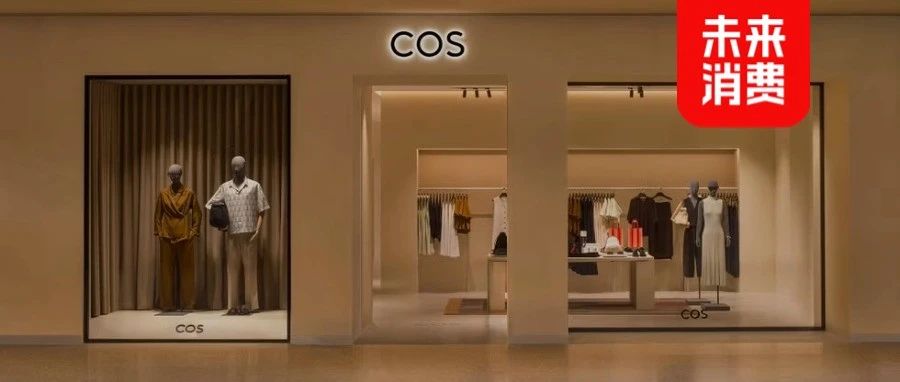
Core Viewpoint - COS, a brand under H&M, was launched in 2007 to create a distinct high-end identity separate from the main brand, aiming to mitigate risks and expand market reach [3] Group 1: Brand Development and Market Positioning - COS quickly gained recognition, with its U.S. launch in 2013 being highlighted by VOGUE as a highly anticipated brand [3] - In 2017, COS's revenue surpassed $1 billion, accounting for 5% of H&M Group's total income [3] - The brand faced challenges during the pandemic but has recently regained growth momentum as consumer trends shift back to rationality [3] - In Q1 2025, COS ranked sixth in the LYST's top ten hottest brands, being the only non-luxury brand on the list [3] Group 2: Pricing Strategy and Target Audience - COS's pricing strategy positions it between high street fashion and luxury brands, with products like a shearling collar jacket priced around £1,000 (approximately ¥9,770) [4] - The brand targets aspirational consumers who seek quality and design at a more accessible price point, filling a gap left by rising luxury prices [6] - COS is increasingly compared to high-end designer brands rather than mid-range ones, reflecting a shift in its market perception [6] Group 3: Expansion and Market Strategy - COS has accelerated its store openings in China, with new locations in major cities, indicating that China remains its largest market [7][9] - The opening of the first store in Xi'an marks a significant milestone in COS's expansion strategy in China [9] - The rise of brands like COS is partly attributed to the consolidation of luxury brands into a few major groups, which has shifted focus from product quality to profit [9] Group 4: Industry Trends and Designer Movement - Many designers are leaving traditional luxury brands for fast fashion groups, indicating a trend where creative talent is increasingly attracted to larger fashion companies [10] - COS's management emphasizes a lifestyle attitude rather than targeting younger generations specifically, focusing on cultural sensitivity and urban thinking [11]
SHEIN全球公关总监自曝杀手锏和软肋
Qi Lu Wan Bao· 2025-06-25 09:24
Core Insights - SHEIN's rapid growth is attributed to its low-cost business model, driven by real-time data insights and a pure online operation [1][2] Group 1: Business Model - SHEIN employs a small-batch, quick-response model for garment design, allowing it to respond swiftly to market demands and minimize excess inventory, maintaining surplus inventory at a low single-digit percentage compared to the industry average of 40% [1] - The company's online-only operation saves on costs associated with physical stores, which can range from $50,000 to $100,000 for a single location in Singapore [1] Group 2: Digital Marketing Strategies - SHEIN's pop-up stores create a sense of urgency and generate user-generated content (UGC), directing consumers back to the website for purchases without offering discounts on-site [2] - The company focuses on collaborating with nano and micro-influencers rather than relying on top-tier influencers, as these smaller influencers tend to have higher engagement rates and a more trustworthy connection with their audience, achieving an average conversion rate of about 22% [3]