南方电网

Search documents
新股探寻(山大电力、技源集团、华电新能)
2025-07-14 00:36
Summary of Key Points from Conference Call Records Industry and Company Overview - **Electric Power Monitoring Companies**: These companies rely on a partnership with Shandong University and have established long-term cooperation with the State Grid, which contributes nearly 70% of their revenue [2][5]. - **Dietary Supplement Supplier (Jiyuan Group)**: This company is a leading global supplier of dietary additives, with over 50% of the global supply of HMB. Major clients include Abbott [6][8]. - **China Huadian New Energy**: This is the only integrated platform for wind and solar energy under China Huadian, ranking among the top in installed capacity [3][15]. Core Insights and Arguments - **Electric Power Monitoring Companies**: - Revenue growth over the past three years has been between 10% and 20%, with net profit showing stable growth, expected to reach 130 million in 2024 [1][5]. - The company plans to raise 590 million yuan for projects including fault analysis, R&D centers, and new energy vehicle charging stations [1][4]. - The market capacity for the substation side is approximately 2 billion yuan, while the transmission and distribution side ranges from 29 billion to 38 billion yuan [2]. - **Jiyuan Group**: - The company plans to raise 540 million yuan to enhance production capacity for HMB and other health food products [1][7]. - Revenue is projected to grow from 950 million yuan in 2022 to 1 billion yuan in 2024, with net profit increasing from 140 million yuan to 174 million yuan in the same period [12]. - The global HMB production is expected to reach 3,572 tons by 2024 and over 3,000 tons by 2030, with a compound annual growth rate of 11.5% [8][9]. - **China Huadian New Energy**: - The company is expected to complete projects with an installed capacity of over 17 million kilowatts by 2025-2026 [3][16]. - The fundraising of 18.2 billion yuan will be directed towards wind and solar base construction [3][15]. Additional Important Information - **Financial Performance**: - Electric Power Monitoring Companies: Revenue for the last three years was 480 million, 550 million, and 660 million yuan, with net profits of 80 million, 100 million, and 130 million yuan respectively [5]. - Jiyuan Group: Revenue is expected to grow by 15% to 27% in the first half of 2025, with net profit growth of 8.6% to 19.2% [12]. - China Huadian New Energy: Revenue from 2022 to 2024 was 24.7 billion, 29.6 billion, and 34 billion yuan, with stable growth around 15% [17]. - **Risks**: - Jiyuan Group faces risks related to dietary supplement quality, market acceptance of new products, and uncertainties in partnerships with key clients like Abbott [13]. - China Huadian New Energy is exposed to risks from changes in power generation policies and renewable energy subsidies, as well as potential natural conditions affecting power generation [18].
国网、南网联手 电力全国“大循环”时代来临
Zhong Guo Dian Li Bao· 2025-07-14 00:31
Core Viewpoint - The establishment of a normalized electricity trading mechanism across different grid operation areas marks a significant step towards building a unified national electricity market in China, facilitating the efficient flow and optimization of electricity resources nationwide [1][5][10]. Group 1: Market Structure and Changes - The electricity market in China has historically been divided between the State Grid and the Southern Grid, which has led to market isolation despite physical connections [2][3]. - The new trading mechanism allows for the seamless flow of electricity resources across these two major grids, overcoming previous market segmentation and enhancing the utilization of transmission channels [2][5]. Group 2: Implementation and Mechanism - The plan outlines a phased approach to establish a cross-grid trading mechanism, starting with foundational work and gradually expanding to a fully integrated system [5][6]. - Key features of the mechanism include differentiated trading rules for various scenarios, ensuring efficient resource allocation while maintaining operational flexibility [6][7]. Group 3: Economic and Environmental Impact - The normalized trading mechanism is expected to significantly enhance market vitality and expand market space, allowing diverse power generation resources to flow efficiently across the country [8][9]. - It aims to improve the consumption of clean energy by creating stable and efficient channels for hydropower and wind resources to reach high-demand areas, addressing issues of resource wastage [8][9]. Group 4: Future Developments - The government plans to construct more cross-grid transmission channels to further enhance the interconnectivity and mutual support of electricity resources, promoting the large-scale development of renewable energy [10]. - The mechanism is seen as a crucial step towards achieving a clean, low-carbon, and efficient modern energy system, reshaping the green landscape of China's economy [10].
山东大学旗下“小巨人”、雅培集团“小伙伴”,两只新股今日申购
2 1 Shi Ji Jing Ji Bao Dao· 2025-07-13 23:08
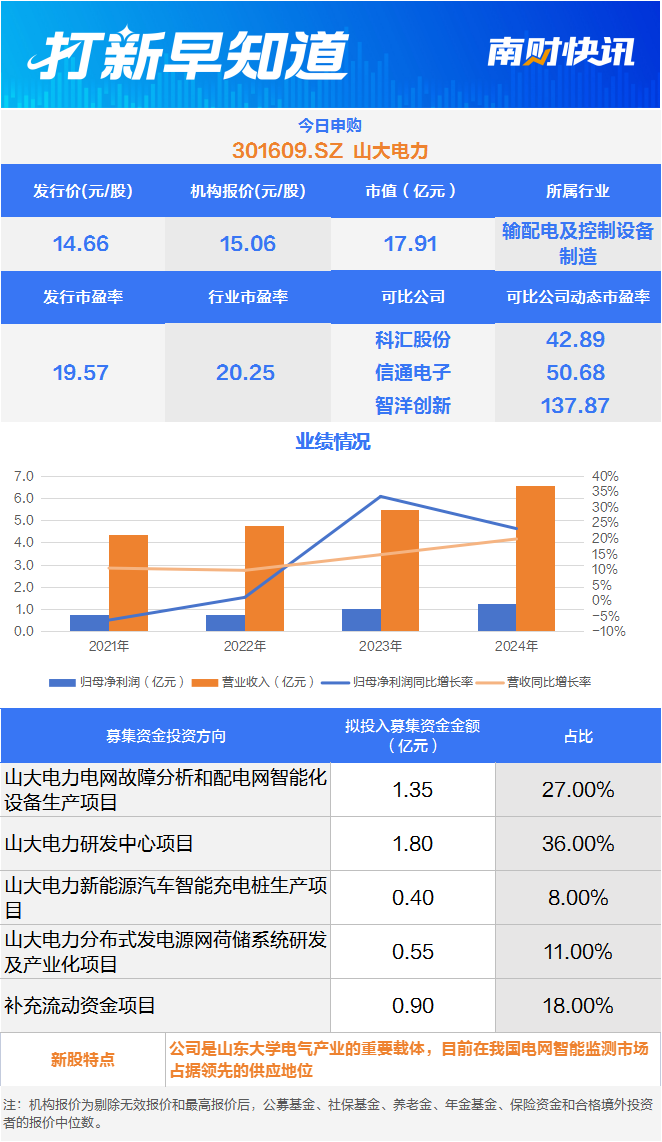
Group 1: Shanda Electric Power (山大电力) - Shanda Electric Power is an indirect holding enterprise of Shandong University, focusing on the research, manufacturing, sales, and service of smart grid monitoring and new energy products [1][3] - The company has a market capitalization of 17.91 billion yuan and an issuance price of 14.66 yuan per share, with an issuance P/E ratio of 19.57 [2] - The revenue structure is stable, with the smart grid monitoring sector contributing 87.94% of the total revenue in 2024, while the new energy sector accounts for 12.06% [4] - The company has established long-term partnerships with major clients such as State Grid and Southern Power Grid, enhancing its competitive edge in the smart grid monitoring and new energy sectors [3][4] - The company plans to invest 1.35 billion yuan in smart grid fault analysis and distribution network intelligence projects, and 1.80 billion yuan in R&D center projects [2][3] Group 2: Jiyuan Group (技源集团) - Jiyuan Group specializes in the research and industrialization of dietary nutritional supplements, with a focus on products like HMB and glucosamine [5][10] - The company has a market capitalization of 38.08 billion yuan and an issuance price of 11.09 yuan per share, with an institutional offering price of 10.88 yuan [6] - Jiyuan Group is the largest global supplier of HMB raw materials and has established partnerships with major companies such as Abbott and Nestlé [10][11] - The revenue from nutritional raw materials is projected to be 5.71 billion yuan in 2022, increasing to 6.47 billion yuan by 2024, maintaining a revenue share of over 60% [10][11] - The company plans to invest 2.06 billion yuan in the construction of a nutritional health raw material production base and 1.47 billion yuan in the expansion of its production line [9][10]

光伏电站资产“大流转”:央企民企后退,地方国资补位
Sou Hu Cai Jing· 2025-07-13 11:51
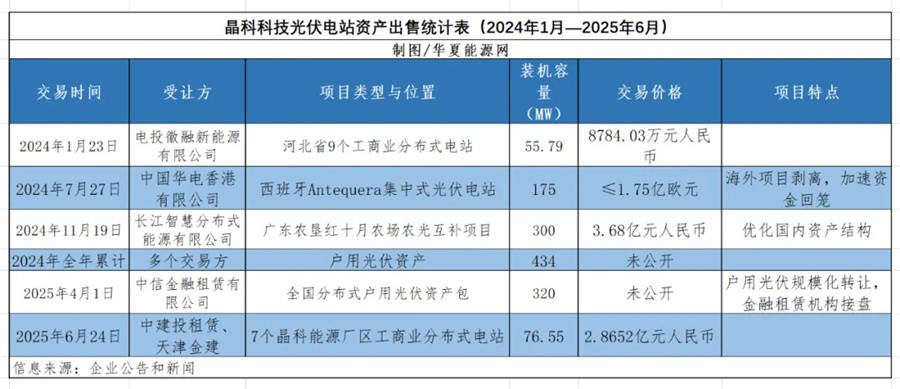
Core Viewpoint - The photovoltaic power station assets, once considered "cash cows," are now being sold off in large quantities due to a significant revaluation of their worth, driven by declining electricity prices and reduced profitability [1][6][12]. Group 1: Asset Sales and Market Dynamics - JinkoSolar announced the sale of its photovoltaic power station equipment and 100% equity of its subsidiary for a total price of 287 million yuan, involving a capacity of approximately 76.55 MW [1]. - Since the introduction of the "Document No. 136," which announced the full marketization of new energy grid connection prices, the turnover of photovoltaic power station assets has accelerated, with over 10 photovoltaic listed companies selling assets totaling around 36 GW in 2024 [1][3]. - Major state-owned enterprises, which were previously the main acquirers of photovoltaic power stations, are now also selling off assets, with over 70% of the more than 100 transactions from January 2024 to April 2025 involving state-owned enterprises [1][5]. Group 2: Declining Profitability - The profitability of photovoltaic power stations has decreased significantly, with many projects unable to meet the promised return rates, leading to a situation where new projects are often unprofitable [6][7]. - In 2024, the average trading price for photovoltaic electricity fell to between 0.2 and 0.4 yuan per kWh, with some projects experiencing price drops exceeding 40% [7][8]. - The decline in electricity prices has resulted in widespread losses for photovoltaic power stations, prompting companies to consider asset sales as a strategy to mitigate losses [8][9]. Group 3: New Acquirers - Local state-owned energy companies and investment platforms have emerged as the primary acquirers of photovoltaic power station assets, with significant acquisitions reported in 2024 [9][10]. - These local enterprises are motivated by the need to fulfill local energy transition responsibilities and to create stable income sources through green energy assets [10][12]. - The restructuring of local energy companies has led to the emergence of large provincial energy groups, which are aggressively expanding their renewable energy portfolios [11][12].

国家电网“小伙伴”,来了!
中国基金报· 2025-07-13 07:36
Group 1: Key Points on Jiyuan Group - Jiyuan Group is the largest global supplier of HMB raw materials, focusing on the research and development of dietary nutritional supplements [3][4] - The company has a total issuance of 50.01 million shares, with an online issuance of 12 million shares at an issuance price of 10.88 CNY per share and a P/E ratio of 25.51 [4] - In recent years, over 90% of Jiyuan Group's revenue has come from overseas markets, with projected revenues of 1.02 billion to 1.12 billion CNY for the first half of 2025, representing a year-on-year growth of 8.56% to 19.20% [5][13] Group 2: Financial Performance of Jiyuan Group - The company's revenue for 2022, 2023, and 2024 was 947 million, 892 million, and 1 billion CNY respectively, with net profits of 142 million, 160 million, and 174 million CNY [10] - The total assets are projected to reach 1.186 billion CNY in 2024, with a debt-to-asset ratio of 20.23% [11] - The company has maintained a consistent R&D investment ratio of around 4.96% of its revenue [11] Group 3: Key Points on Shanda Electric - Shanda Electric's issuance code is 301609, with an issuance price of 14.66 CNY per share and a P/E ratio of 19.57 [16] - The company primarily serves the State Grid and Southern Power Grid, with approximately 80% of its revenue derived from electric grid enterprises, 70% of which comes from the State Grid [18] - Shanda Electric's revenue for 2022, 2023, and 2024 was 478 million, 549 million, and 658 million CNY respectively, with net profits of 76.99 million, 103 million, and 127 million CNY [20] Group 4: Financial Performance of Shanda Electric - The total assets of Shanda Electric are expected to reach 1.127 billion CNY in 2024, with a debt-to-asset ratio of 45.37% [21] - The company anticipates a revenue of 280 million to 300 million CNY for the first half of 2025, reflecting a year-on-year growth of 13.55% to 21.66% [22]
7月12日晚间央视新闻联播要闻集锦
Yang Shi Xin Wen Ke Hu Duan· 2025-07-12 13:09
Group 1 - The Chinese government has increased fiscal investment in the livelihood sector this year to address urgent public concerns and improve the policy framework for people's well-being [1][3] - The emphasis is on enhancing the social security system and ensuring equitable access to basic public services [3] Group 2 - The State Grid and Southern Power Grid will implement normalized cross-grid electricity trading to support the establishment of a unified national electricity market [6][9] - This mechanism allows registered entities in one region to conduct trading activities flexibly across both grids [9] Group 3 - During the 14th Five-Year Plan period, China's grassland ecological quality has significantly improved, with an average reduction of 5 million acres of degraded grassland per year [5][8] - The annual fresh grass output has exceeded 600 million tons [5] Group 4 - The global first intelligent unmanned docking system has been put into operation at Lanzhou Airport, enhancing operational efficiency by 65% [17] - This system allows for remote, unattended operation of all boarding bridges at the airport [17] Group 5 - The China Agricultural Development Bank issued over 500 billion yuan in green loans in the first half of the year, focusing on ecological protection and infrastructure upgrades [16]
7月12日周六《新闻联播》要闻24条
news flash· 2025-07-12 12:08
Group 1 - During the "14th Five-Year Plan" period, the average annual reduction of degraded grassland in China is 50 million mu [3] - The Ministry of Finance allocated 197 million yuan to support post-disaster agricultural production recovery from floods and typhoons [9] - The National Standard for the "Guidelines for the Classification and Coding of Enterprise Procurement Materials" has been officially released [10] Group 2 - This year, the Agricultural Development Bank has issued over 500 billion yuan in green loans in the first half of the year [12] - The global first batch of intelligent unmanned docking systems has been put into operation [13] - The box office for the summer film season in 2025 is expected to exceed 3 billion yuan [14]
破壁垒、扩空间 全国统一电力市场建设按下“加速键”
Yang Shi Wang· 2025-07-12 04:27
Core Viewpoint - The establishment of a normalized electricity trading mechanism across power grid operating areas in China aims to accelerate the construction of a unified national electricity market, enhancing the free flow of electricity resources nationwide [1][3]. Group 1: Trading Mechanism - The new trading mechanism breaks down barriers between the two major power grid operating areas, allowing for clear trading rules for various types of electricity, including long-term, green power, and spot trading [3][5]. - Cross-grid trading will not incur transaction fees, and electricity prices will fluctuate according to market conditions, preventing significant price volatility [4]. Group 2: Green Power Expansion - The normalized trading mechanism will significantly expand the trading space for green electricity, facilitating better absorption of renewable energy [6][8]. - Green electricity is recognized as a key component of the trading mechanism, allowing renewable energy projects to be treated as basic units for green power trading [8][10]. Group 3: Implementation and Infrastructure - The trading mechanism will rely on the Fujian-Guangdong interconnection project to facilitate cross-operating area electricity trading, which has already demonstrated success with the first cross-operating area green electricity transaction [12][14]. - From July 1 to September 15, the interconnection will support electricity supply to East China, with expected total electricity deliveries from Guangdong to Fujian at 892 million kilowatt-hours [14]. Group 4: Future Outlook - In the long term, as cross-regional transmission projects are put into operation, the trading range will gradually expand, creating a new pattern for the free flow of electricity resources across the country [16].
重磅!西部电直送东部常态化
21世纪经济报道· 2025-07-12 04:11
Core Viewpoint - The article discusses the approval of a new cross-grid electricity trading mechanism in China, which aims to enhance the efficiency of electricity distribution from renewable sources across different regions, particularly from the northwest to the eastern load centers [2][3]. Summary by Sections Cross-Grid Electricity Trading Mechanism - The National Development and Reform Commission and the National Energy Administration have approved a new trading mechanism that allows for long-term, green, and spot electricity trading across different grid operating areas [2][3]. - This mechanism is a significant step towards breaking down barriers between the State Grid and Southern Grid, facilitating better resource allocation nationwide [3]. Current Infrastructure and Transactions - Currently, there are two established interconnection channels between the State Grid and Southern Grid, with ongoing construction of additional channels [5]. - In 2023, pilot cross-regional electricity transactions have already taken place, including significant transfers of green electricity to major cities [6]. Trading Rules and Structure - The new mechanism outlines various trading rules for different types of electricity transactions, including long-term, green, and spot trading [7][8]. - It introduces a "two trading, two scheduling" model, which involves collaboration between multiple trading centers to ensure technical feasibility under physical constraints of the grid [7]. Green Electricity Trading - The mechanism emphasizes green electricity trading, allowing companies to purchase renewable energy more easily and market-driven [11][12]. - Specific rules for green electricity transactions include entry conditions, trading methods, and the transfer of green certificates [11][13]. Future Goals and Developments - The plan sets short-term, medium-term, and long-term goals, including pilot projects for electricity trading and green electricity transactions by 2025 [9]. - It aims to enhance the utilization of transmission channels and balance demand across the grid, addressing the needs of high-energy-consuming industries [9][14]. Market Dynamics and Challenges - The article highlights the increasing demand for green electricity driven by national policies and global trends towards decarbonization [11][12]. - Challenges include price formation mechanisms and the need for a transparent green certificate market to facilitate trading [14].
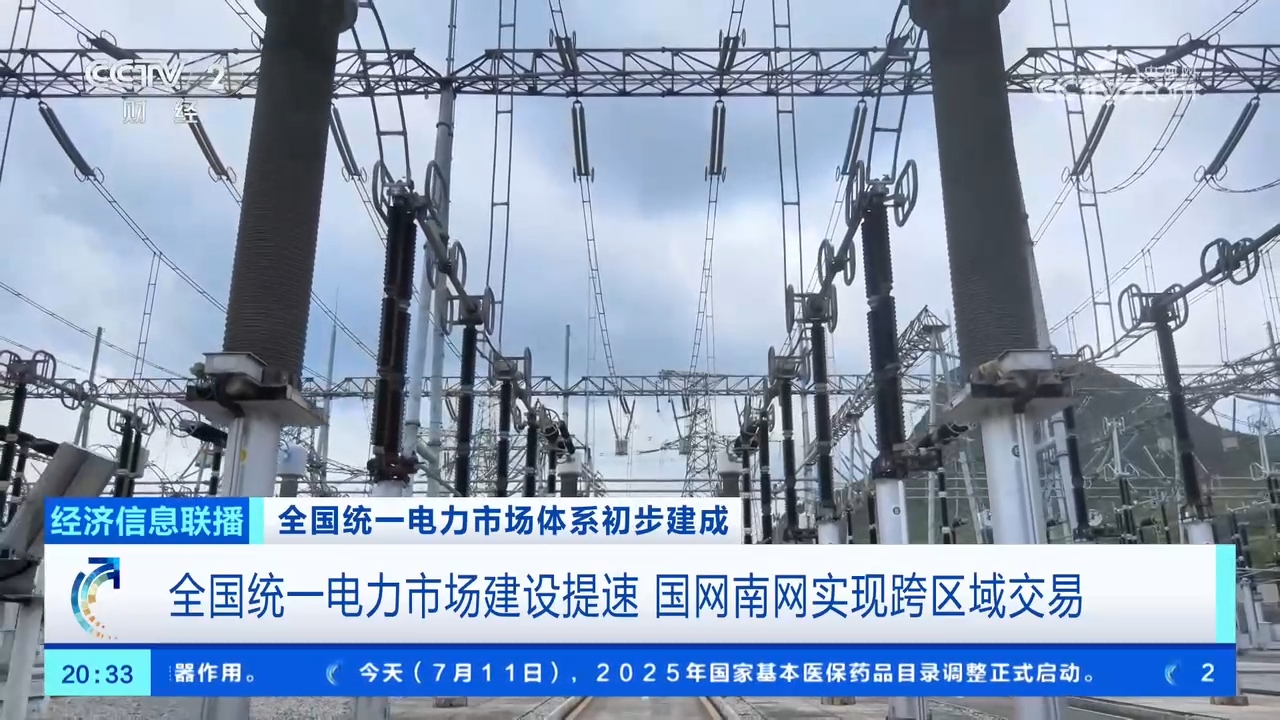
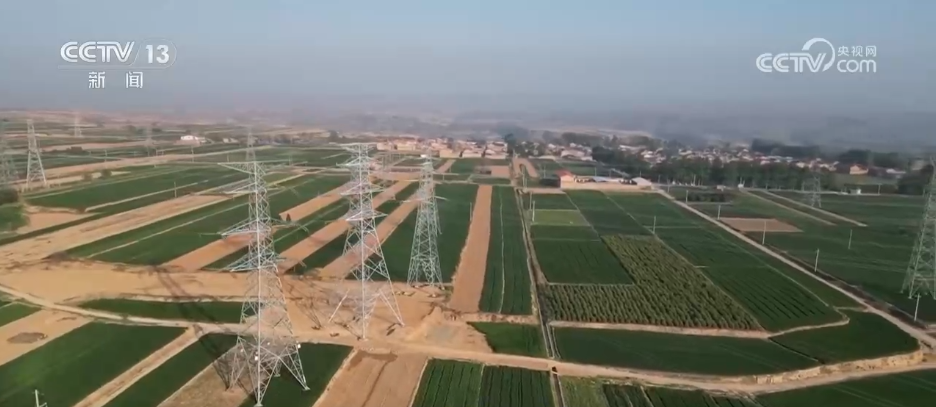
全国统一电力市场建设提速 国网南网实现跨区域交易
Yang Shi Wang· 2025-07-11 17:33
Core Viewpoint - The National Development and Reform Commission and the National Energy Administration have accelerated the establishment of a nationwide unified electricity market by issuing a response to the mechanism for normalized electricity trading across grid operating areas, aiming for completion by 2025 [1] Group 1: Market Structure and Mechanism - The new mechanism will break down institutional barriers between the State Grid and Southern Grid, facilitating the optimization of electricity resource allocation nationwide [3] - The establishment of important "electricity highways" between the State Grid and Southern Grid has enabled physical interconnection, while the new trading mechanism will provide a "soft connection" for electricity trading [5] Group 2: Demand and Supply Dynamics - There is a strong demand for green electricity, particularly in regions like the Greater Bay Area and the Yangtze River Delta, where companies seek to reduce carbon content in their products [5] - The new trading mechanism is likened to a nationwide "online electricity mall," allowing for smooth flow of electricity resources under unified trading rules [7] Group 3: Market Benefits - The mechanism will enhance market vitality, provide more choices for enterprises, and ensure more economical and stable electricity consumption, akin to opening a highway for electricity [9]