
邮储银行

Search documents
赛力斯港股跌2.75%创新低 林园基金广发基金浮亏22%
Zhong Guo Jing Ji Wang· 2026-01-22 09:03
中国经济网北京1月22日讯 赛力斯(港股代码09927.HK)港股收报102.50港元,跌幅2.751%,创 港股上市以来新低。赛力斯港股上市累计跌幅22.05%。 赛力斯的基石投资者为重庆产业母基金、林园基金及华泰资本投资(与华泰背对背总回报掉期及林 园总回报掉期有关)、广发基金管理有限公司及广发国际资产管理有限公司(统称为"广发基金")、 New China Asset Management、BESS Broadway、Sanhua (Hong Kong)、中升、Zhink International、Gold Wings、达安投资、Hichain Logistics HK、施罗德、Mirae Securities、New Alternative、中邮理财、Skyler International、星宇香港、中国美东、Ghisallo Fund、Jump Trading、 Jain Global Master Fund Ltd、China Alpha Fund。 其中,New China Asset Management由新华人寿保险股份有限公司(简称"新华保险", 1336.HK,601336.SH)直 ...

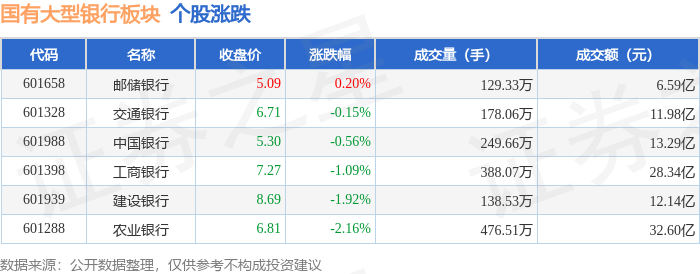
国有大型银行板块1月22日跌1.3%,农业银行领跌,主力资金净流出2.09亿元
Zheng Xing Xing Ye Ri Bao· 2026-01-22 09:01
Group 1 - The core viewpoint of the article indicates that the state-owned large bank sector experienced a decline of 1.3% on January 22, with Agricultural Bank leading the drop [1] - The Shanghai Composite Index closed at 4122.58, up 0.14%, while the Shenzhen Component Index closed at 14327.05, up 0.5% [1] - The trading volume and turnover for major state-owned banks are detailed, showing varying performance among individual banks [1] Group 2 - Agricultural Bank's stock price fell by 2.16% to 6.81, with a trading volume of 476.51 million shares and a turnover of 32.60 billion [1] - The net outflow of main funds from the state-owned large bank sector was 209 million, while retail investors saw a net inflow of 38.81 million [1] - The table shows the net inflow and outflow of funds for individual banks, highlighting the performance of each bank in terms of main, retail, and speculative funds [2]





2025年12月普惠金融-景气指数:融资精准有力 经营温和回暖
Jing Ji Wang· 2026-01-22 08:03
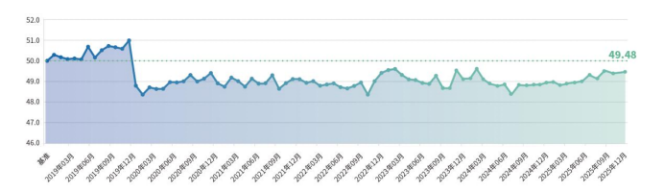
融资景气度保持平稳 分维度来看,12月,融资景气度指数为54.82点,较11月下降0.01点。信贷规模持续增长,融资成本 维持在历史低位,信贷结构优化趋势显著。中国人民银行数据显示,2025年全年新增贷款16.27万亿 元,适度宽松的货币政策发力显效,企业和居民有效信贷需求持续释放。其中,企(事)业单位贷款新 增15.47万亿元,金融服务精准对接了企业需求,科技、绿色、普惠、养老产业和数字经济产业等重点 领域贷款都保持了两位数增长。 经营景气度温和回升 12月,经营景气度指数为48.44点,较11月上升0.16点。12月制造业PMI、非制造业PMI、综合PMI 均升至扩张区间,市场主体经营活力增强,为上下游小微企业带来订单增量。同时,12月全国居民消费 价格指数同比上涨0.8%,一定程度上改善了企业的盈利预期,提振了市场信心。在政策红利持续释放 与市场内生动力逐步修复的双重驱动下,小微企业的经营韧性正逐步增强。 行业景气度:九大行业6升3降 2025年12月,普惠金融-景气指数达49.48点,较11月上升0.12点,高于去年同期0.61点。融资端政 策效能持续释放,金融支持精准有效,信贷规模稳步增长,为小微企 ...
中国邮政在福建成立新科技公司,注册资本1000万
Zhong Guo Neng Yuan Wang· 2026-01-22 08:01
天眼查工商信息显示,近日,福建十睿科技有限公司成立,法定代表人为吕佳宜,注册资本1000万人民 币,经营范围含科技推广和应用服务、信息咨询服务、人工智能应用软件开发、信息技术咨询服务、智 能输配电及控制设备销售、计算机软硬件及辅助设备零售、信息系统集成服务、数据处理和存储支持服 务、人工智能行业应用系统集成服务等。股东信息显示,该公司由中国邮政旗下辽宁鸿宇企业管理有限 责任公司全资持股。 ...
新华指数|2025年12月普惠金融-景气指数:融资精准有力 经营温和回暖
Xin Hua She· 2026-01-22 06:09
Core Insights - The Inclusive Finance Prosperity Index reached 49.48 points in December 2025, an increase of 0.12 points from November and 0.61 points higher than the same period last year, indicating a stable financial support for small and micro enterprises [1] Financing Dimension - The financing prosperity index stood at 54.82 points in December, a slight decrease of 0.01 points from November, with continuous growth in credit scale and historically low financing costs [2] - In 2025, new loans totaled 16.27 trillion yuan, with corporate loans accounting for 15.47 trillion yuan, reflecting effective credit demand from enterprises and residents [2] Operating Dimension - The operating prosperity index increased to 48.44 points in December, up by 0.16 points from November, with manufacturing and non-manufacturing PMIs indicating expansion [3] - The consumer price index rose by 0.8% year-on-year in December, improving corporate profit expectations and boosting market confidence [3] Industry Prosperity - Among nine major industries, six showed an increase in operating prosperity, particularly in agriculture and transportation due to seasonal demand, while three industries experienced a decline [6] - The real estate sector showed some improvement, while industrial, construction, and wholesale retail sectors saw a decrease in operating prosperity [6] Regional Prosperity - Among seven regions, three experienced an increase in operating prosperity, specifically Northeast, South China, and Southwest regions, while four regions saw a decline [7] - The indices for North China, East China, Central China, and Northwest regions were lower, indicating regional disparities in economic performance [7]
邮储银行新乡市分行:金融“活水”护航粮食产业
Huan Qiu Wang· 2026-01-22 05:34
Core Viewpoint - Food security is a critical pillar for national stability and people's livelihoods, and financial support during the autumn grain harvest season is essential for strengthening this security [1] Group 1: Financial Product Introduction - Postal Savings Bank's Xinxiang branch launched the "Grain Cluster e-loan" product to address the financial needs of local grain enterprises, providing timely financial support for the grain industry [1][2] - The "Grain Cluster e-loan" product allows for the recognition of personal business transaction records and integrates tax data to assess enterprise income, easing the stringent requirements of traditional credit products [1] Group 2: Impact on Local Enterprises - A grain purchasing company in Fengqiu County faced significant funding pressure during the peak grain purchasing season, requiring daily advances of hundreds of thousands of yuan, which was insufficient for their operational needs [1] - After applying for the loan, the company received 3 million yuan within three days, enabling them to increase their temporary grain storage capacity and enhance their daily purchasing volume from 50 tons to 80 tons [2] Group 3: Broader Agricultural Development - Xinxiang's agricultural modernization is crucial for the agricultural development of Henan and the entire country, with the bank's financial innovations playing a vital role in this process [2] - The bank's proactive service approach through the "Thousand Enterprises, Ten Thousand Households" initiative has effectively addressed funding bottlenecks for grain storage enterprises, fostering a positive interaction between finance and the grain industry [2] Group 4: Future Plans - The bank plans to continue enhancing inclusive financial services and optimizing specialized financial products, focusing on the entire grain production, storage, processing, and sales chain to ensure efficient financial support for agricultural development [2]
数字人民币2.0:从M0到M1的质变
GF SECURITIES· 2026-01-22 05:07
Investment Rating - The report provides a "Buy" rating for all major banks analyzed, indicating a positive outlook for the banking sector [7]. Core Insights - The digital renminbi has entered its 2.0 era, transitioning from a central bank liability (M0) to a commercial bank liability (M1), allowing it to earn interest and be included in deposit insurance and reserve requirements [6][14]. - This transformation positions China as the first economy to offer interest on its central bank digital currency (CBDC), fundamentally altering its monetary attributes and creating a new financial paradigm in the digital economy [27]. - The digital renminbi's interest-bearing feature enhances user motivation to hold it, shifting its perception from a mere payment tool to a viable store of value, thus promoting its integration into everyday financial activities [27][28]. Summary by Sections 1. Digital Renminbi 2.0 Era - The digital renminbi (e-CNY) is now classified as a digital deposit currency, which can earn interest and is managed under a new regulatory framework [14]. - Major state-owned banks have begun offering interest on digital renminbi wallet balances, marking a significant shift in its utility and appeal [14][27]. 2. Development Progress and Application Status - The development of the digital renminbi began in 2014, with significant milestones including pilot tests in various cities and the establishment of a comprehensive operational framework by 2025 [32][33]. - As of November 2025, the digital renminbi has processed 34.8 billion transactions amounting to 16.7 trillion yuan, with extensive coverage across multiple provinces and cities [37]. 3. Global CBDC Development Trends - The report identifies three main trends in global CBDC development: active retail CBDC initiatives, innovation in payment systems, and cautious approaches in some countries like the U.S. [6]. - China's proactive stance in developing its CBDC positions it favorably in the global digital economy landscape, particularly in cross-border trade applications [30].



中国银河证券:财政金融六项政策落地 关注结构调优和息差改善
智通财经网· 2026-01-22 03:44
智通财经APP获悉,中国银河证券发布研报称,财政金融协同扩内需直接利好信贷增长、结构优化与风 险预期改善,同时稳息差导向不变,叠加负债成本优化提供缓冲,银行息差改善确定性增强。在低利率 与中长期资金加速入市的环境下,银行板块高股息、低估值的红利属性仍对险资等长线资金具备持续吸 引力,加速估值定价重构。该行继续看好板块配置价值,维持"推荐"评级。 中国银河证券主要观点如下: 财政贴息将对银行优结构、稳息差形成积极支撑 贴息幅度多在1-1.5个百分点之间,旨在进一步降低社会综合融资成本,撬动投资和消费需求,同时引 导金融资源加码支持扩内需、科技创新、中小微企业等重点领域,为银行信贷投放和结构优化带来空 间,短期有利于激活本已疲弱的零售消费贷和经营贷需求,同时为对公领域带来设备更新、民间投资、 重点产业链相关项目储备和投放增量,进一步助力银行信贷开门红。与此同时,稳息差政策导向不变, 本轮财政贴息叠加近期的结构性降息,一定程度上可对冲资产收益率下行压力,有助于呵护银行净息 差。结合2026年银行体系有较大规模高息定期存款到期重定价、负债成本加速优化考虑,银行息差降幅 进一步收窄、企稳改善确定性增强,对利息净收入的负 ...

固收专题报告:银行自营债券投资有何特征?
Hua Yuan Zheng Quan· 2026-01-22 03:37
1. Report Industry Investment Rating No relevant content provided. 2. Core Viewpoints of the Report - In 2025, the bond market may mainly rely on increased allocation by bank self - operations. The balance of China's bond market increased by 19.7 trillion in the first 11 months of 2025, and the incremental investment in self - operated bonds by the banking industry in the same period reached 14.3 trillion, accounting for 72.7% of the bond scale increment [2][31]. - Bank self - operated bond investment is mainly in interest - rate bonds, which have a significant impact on the pricing of interest - rate bonds. As of Q3 2025, the proportion of interest - rate bond holdings in bank self - operated bonds was 80.7% [36]. - The bond investment behavior of banks is mainly affected by three types of indicators: capital adequacy ratio requirements, liquidity regulatory indicators, and bank book interest rate risk indicators [3][45]. - Joint - stock banks are the main players in the secondary trading of interest - rate bonds, while the trading scale of large - state - owned banks and policy banks is relatively small. Since Q1 2023, the overall market trading activity has increased, especially significantly after 2025 [3][52]. 3. Summary by Relevant Catalogs 3.1 Bank Self - Operated Financial Investment Composition, Scale Changes, and Structural Characteristics - **Composition and Scale Changes**: As of Q3 2025, the total financial investment scale of 42 listed banks was 101.5 trillion yuan. By statement account, the FVTPL account was 13.23 trillion yuan (13.0%), the FVOCI account was 29.87 trillion yuan (29.4%), and the AC account was 58.40 trillion yuan (57.5%). By asset category as of Q2 2025, bond investment was 79.08 trillion yuan (84.46%), equity investment was 0.86 trillion yuan (0.91%), and funds and other investments were 13.07 trillion yuan (13.96%). From Q4 2023 to Q3 2025, the investment scale of the FVOCI account increased significantly, mainly due to the growth of bond investment [8]. - **Structural Characteristics**: Credit bonds are mainly placed in the FVOCI account, and interest - rate bonds are mainly placed in the AC account. Among different types of banks, the proportion of the three accounts of large - state - owned banks and joint - stock banks is relatively stable, while the proportion of the AC category of city and rural commercial banks has decreased, and the FVOCI category of city commercial banks has increased, indicating a shift from allocation to trading thinking [2][14]. 3.2 Bond Market in 2025 - In 2025, the bond market may rely on increased allocation by bank self - operations. The government issued more bonds in 2025, and the weak credit demand led banks to significantly increase their bond investment. The year - on - year growth rate of the bond investment balance of various types of banks has increased significantly, and bond investment may become the main driving force for the expansion of bank asset scale [31][33]. 3.3 Bank Bond Investment Characteristics - **Investment Portfolio**: As of Q3 2025, bank self - operated bond holdings were 96.5 trillion yuan, mainly interest - rate bonds. Interest - rate bonds accounted for 80.7%, credit bonds accounted for 11.7%, negotiable certificates of deposit accounted for 5.7%, and other bonds accounted for 1.8%. Among interest - rate bonds, treasury bonds accounted for 33.3%, local government bonds accounted for 48.3%, and policy - bank bonds accounted for 17.8% [36]. - **Pricing Influence**: As of Q3 2025, bank self - operated bond holdings accounted for 48.21% of the total bond custody, having a significant impact on the bond market pricing, but the degree of influence varies by bond type. Bank self - operated interest - rate bond holdings accounted for 63.6% of the total interest - rate bond custody, having a significant impact on pricing [44]. 3.4 Bank Bond - Allocation Indicator Constraints - **Capital Adequacy Ratio Requirements**: The risk weights of treasury bonds and policy - bank bonds are 0, the risk weights of local general bonds and special bonds are 10% and 20% respectively, and the risk weights of general corporate bonds and non - bank financial institution ordinary bonds are 75% - 100% [3][47]. - **Liquidity Regulatory Indicators**: The liquidity coverage ratio is relatively relevant to bank self - operated bond investment behavior. Treasury bonds are included in qualified high - quality liquid assets at market price, while credit bonds are given a discount coefficient according to credit ratings [47]. - **Bank Book Interest Rate Risk Indicators**: For large - state - owned banks, joint - stock banks, and Postal Savings Bank, when the maximum economic value change exceeds 15% of their Tier - 1 capital (ΔEVE > 15%), regulatory attention will be drawn [47]. 3.5 Bank Self - Operated Secondary Trading Characteristics - **Interest - Rate Bond Secondary Trading**: Joint - stock banks are the main players in the secondary trading of interest - rate bonds. The trading activity of the whole market has increased since Q1 2023, especially significantly after 2025. The trading scale of large - state - owned banks and policy banks is relatively small [3][52]. - **Credit Bond Secondary Trading**: The trading scale of credit bonds is relatively limited, and the single - quarter trading amount of bank self - operations is generally below 1 trillion yuan [54]. - **Ultra - Long - Term Interest - Rate Bond Secondary Trading**: The secondary trading of ultra - long - term interest - rate bonds in the banking system shows the characteristics of "net reduction trend remains unchanged, and selling pressure converges marginally". Different types of banks have different trading behaviors [56].

消费贷贴息政策升级 多家银行明确操作细则、迭代系统
Xin Lang Cai Jing· 2026-01-22 03:29
上证报中国证券网讯(记者 黄坤)信用卡分期、消费贷利息能省多少钱,直接关乎老百姓的"钱袋 子"。 财政部等三部门1月20日发布优化实施个人消费贷款财政贴息政策后,当日晚间以及21日,工商银行、 农业银行、中国银行、交通银行、邮储银行等大行以及部分股份行火速响应,相继发布了优化实施个人 消费贷款财政贴息政策细则。上海证券报记者还自业内获悉,部分城商行已开始迭代系统、制定贴息业 务流程,便于消费者及时快捷享受贴息红利。 最新发布的消费贷贴息政策有多项升级,包括期限延长至2026年底、扩大经办机构覆盖面,信用卡账单 分期亦首次被纳入贴息范围,颇受行业关注。受访专家和行业人士认为,这些贴息优化举措均为着力降 低居民消费信贷成本,激活信贷投放积极性。金融机构火速发布优化实施细则,有望提振消费活力。 信用卡账单分期可享受贴息 记者梳理来看,多家银行在实施细则中明确,居民在政策实施期内使用个人消费贷款进行的各领域消 费,以及新办理的信用卡账单分期业务且于政策实施期内生成的各期账单,在经办机构识别其真实性、 合规性后,可按规定享受贴息。 以农业银行为例,该行"信用卡账单分期贴息"操作指引显示,客户需与该行签署《信用卡账单分期 ...