
Circle

Search documents
Stablecoins will be a key element of banking infrastructure in 2026
American Banker· 2025-12-30 15:00
Core Insights - The article outlines five key trends related to stablecoins that are expected to impact U.S. banks in the coming year, emphasizing the shift towards nonbank issuers and the integration of stablecoins into traditional banking systems [2][3]. Group 1: Nonbank Issuers - More new nonbank issuers of stablecoins are anticipated compared to bank issuers due to nonbanks' ability to implement new technology systems more rapidly and their broader access to blockchain talent [4][5]. - Recent announcements for 2026 stablecoin launches include companies like Sony, Cloudflare, and Western Union, with traditional banks lagging behind in this space [6]. Group 2: Integration with Banking - Traditional banks are expected to partner with fintech firms to facilitate stablecoin transactions rather than issuing their own stablecoins, thereby meeting client demand and increasing transaction revenue [7]. - New financial entities with banking charters, such as digital bank Erebor, are emerging to issue deposit tokens and stablecoins, blending traditional and new banking activities [8][10]. Group 3: Blurring Boundaries - The distinction between deposit tokens and stablecoins is expected to continue to blur, with banks realizing they can retain deposits while offering stablecoin flexibility [15]. - Recent developments include Custodia Bank and JPMorgan launching deposit tokens with stablecoin-like functionalities, indicating a trend towards integrating these financial instruments [14]. Group 4: Decentralization Experiments - Some traditional institutions are likely to experiment with decentralized mechanisms, introducing aspects of smart contract functionality to enhance client service and reduce costs [16]. - Progress in identity technology may widen the scope for disintermediation in banking functions, despite KYC and AML requirements limiting peer-to-peer transactions [17]. Group 5: Agentic Payments - Machine-to-machine payments are emerging, with stablecoins playing a crucial role in their evolution as digital money that can be programmatically distributed [18]. - While banks may not directly engage in this area, fintechs are expected to provide the necessary services for businesses adopting AI and robotics, pushing traditional banks to innovate [19][20].



The Year in Stablecoins 2025: Record Growth as GENIUS Act Opens the Floodgates
Yahoo Finance· 2025-12-30 14:01
Core Insights - The stablecoin market capitalization has increased by 49% in 2025, rising from $205 billion in January to $306 billion by the end of November [1] Group 1: Market Growth - The growth of the stablecoin category has been fueled by strong catalysts, including the establishment of a U.S. regulatory framework and the rollout of MiCA in Europe [2] - Stablecoins are designed to maintain a 1:1 peg to fiat currencies, with issuers holding fiat reserves to ensure tokens can be redeemed for cash [3] Group 2: Regulatory Developments - The GENIUS Act, signed into law by President Trump in July, created a federal regulatory framework for stablecoins, providing market clarity and addressing some associated risks [4][5] - The institutional adoption of stablecoins was already in progress prior to the GENIUS Act, with companies like Stripe and PayPal expanding their support for stablecoin transactions [5] Group 3: Company Developments - Circle successfully went public through an IPO, with its token experiencing significant trading activity shortly after its debut on the New York Stock Exchange [6] - However, not all stablecoin issuers have had positive developments; Tether's USDT was downgraded by S&P Global Ratings due to concerns over its reserves, particularly the inclusion of Bitcoin [6]

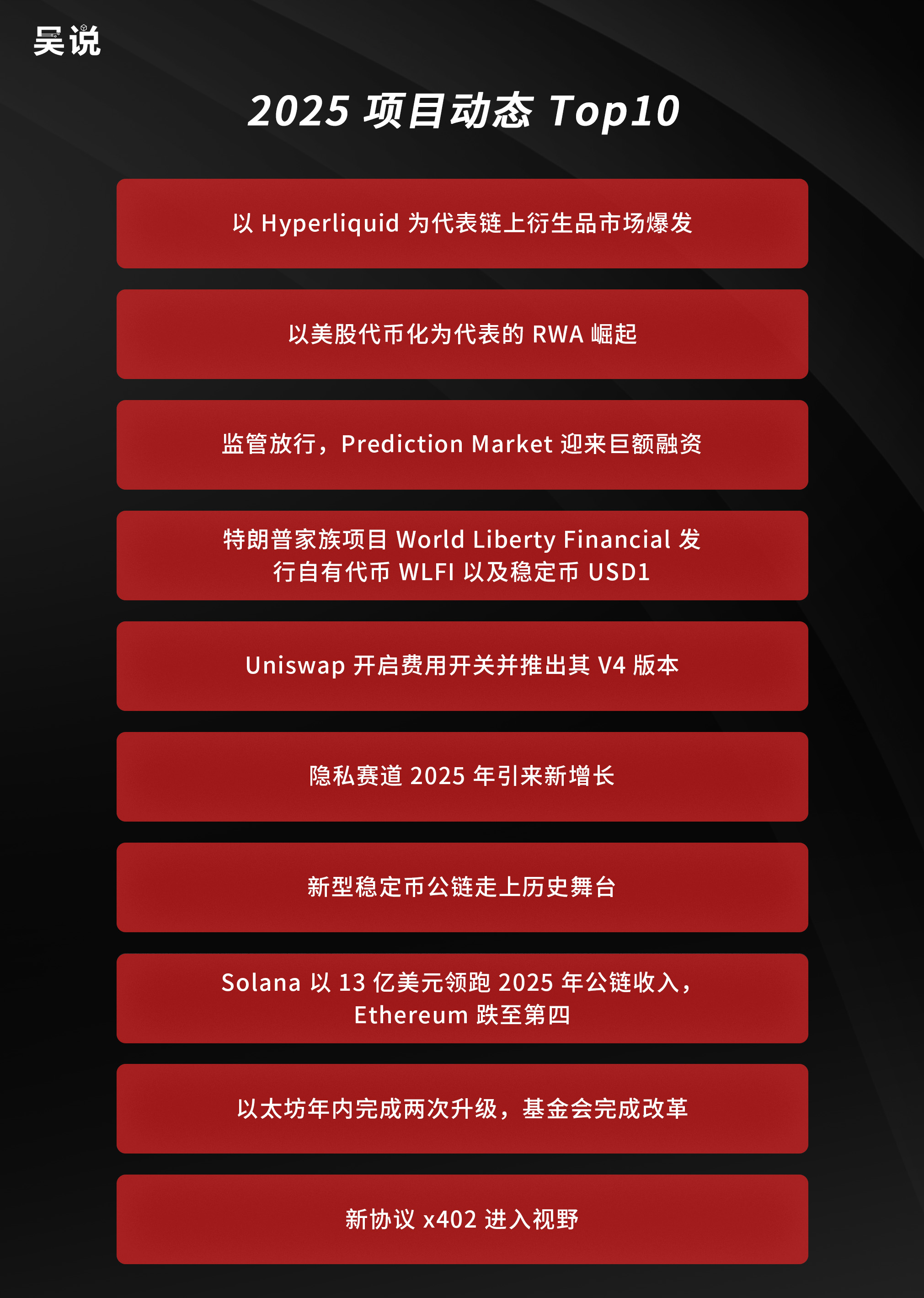
2025 项目动态 Top10:链上衍生品白热化、美股代币化崛起、预测市场吸引巨额融资等
Xin Lang Cai Jing· 2025-12-30 06:40
Group 1: On-chain Derivatives Market - Hyperliquid experienced significant growth in 2025, with approximately 609,700 new users, a total trading volume of about $2.95 trillion, and annual revenue of around $844 million [3] - During the market crash on October 11, Hyperliquid recorded the highest liquidation amount across exchanges, totaling $10.276 billion, with $9 billion from long positions [3] - Competitors Aster and Lighter are gaining market share, with Hyperliquid, Aster, and Lighter holding 47.6%, 15.9%, and 10.3% of the open interest market share, respectively [4] Group 2: Rise of Tokenized Real-World Assets (RWA) - Ondo Finance has launched over 100 tokenized U.S. stocks and ETFs on Ethereum, achieving a total trading volume exceeding $5.5 billion [5] - BlackRock's tokenized U.S. Treasury fund BUIDL has a total size of approximately $1.83 billion, with Ethereum leading at $572 million [6] - Predictions indicate that the market value of on-chain RWAs, excluding stablecoins, will grow from $35 billion to $2 trillion by 2028, primarily on Ethereum [7] Group 3: Prediction Market Developments - Regulatory relaxation in the U.S. has led to significant investments in the prediction market sector, with ICE investing $2 billion in Polymarket, raising its valuation to $8 billion [8] - Robinhood is launching a prediction market service through KalshiEX LLC, expected to open to eligible customers soon [9] Group 4: World Liberty Financial's Token Launch - World Liberty Financial, associated with the Trump family, launched its WLFI token and stablecoin USD1, with USD1's market cap reaching $3.199 billion [10] - A proposal to unlock up to 5% of WLFI tokens for partnerships has sparked internal community debate [11] Group 5: Uniswap's V4 Launch and Governance Changes - Uniswap Labs released Uniswap v4, introducing "hooks" contracts for developers and improving transaction efficiency [12] - A governance proposal to initiate a fee mechanism and reduce UNI supply was overwhelmingly approved, including the burning of 100 million UNI [13] Group 6: Growth in Privacy Sector - Zcash's token price surged by 375%, with a market cap exceeding $9 billion, while Monero's market cap reached $8 billion [14] - Vitalik Buterin emphasized the importance of privacy in crypto payments, advocating for a robust privacy solution [15] - The Ethereum Foundation is expanding its privacy technology efforts with a new "Privacy Cluster" [16] Group 7: Blockchain Innovations and Funding - Tempo, a blockchain startup supported by Stripe, raised $500 million in Series A funding, focusing on stablecoin payment infrastructure [17] - Circle launched the Arc blockchain for enterprise-level stablecoin payments, attracting participation from major institutions [18] Group 8: Solana's Revenue Leadership - Solana led public chain revenues in 2025 with $1.3 billion, while Ethereum fell to fourth place with $524 million [18] Group 9: Ethereum Upgrades and Foundation Reforms - Ethereum completed two major upgrades in 2025, Pectra and Fusaka, aimed at improving user experience and scalability [22] - The Ethereum Foundation underwent leadership changes and restructured its research and development teams [23][24]
Real-World Asset (RWA) DeFi Protocols Overtake DEXs in TVL—Here’s Why It Matters
Yahoo Finance· 2025-12-29 20:15
Core Insights - Real-world asset (RWA) protocols have surpassed decentralized exchanges (DEXs) to become the fifth-largest category in DeFi by total value locked (TVL), with approximately $17–30 billion now invested in tokenized Treasuries, private credit, and commodities [1][2][3] Group 1: Market Dynamics - More capital is now allocated to tokenized "real world" products than to many traditional token swapping applications, indicating a shift in DeFi from speculation to yield generation and stability amid a challenging macroeconomic environment and prolonged high interest rates [2][3] - The TVL of RWAs increased from around $12 billion in late 2024 to about $17 billion in 2025, with projections suggesting the broader tokenized RWA market could reach nearly $30 billion by Q3 2025 [3][4] - Tokenization of RWAs has grown almost fivefold in three years, with banks like Standard Chartered predicting that tokenized assets could reach $30 trillion by 2034 [3][4] Group 2: Product Offerings - Tokenized Treasuries are leading the growth, with products such as BlackRock's BUIDL fund and Franklin Templeton's tokenized money market funds offering U.S. government debt returns on-chain, often yielding more than traditional bank accounts [4] - Several of these funds have surpassed $1 billion in deposits each, indicating strong institutional interest in tokenized assets [4] - Private credit platforms and tokenized commodities, such as gold-backed tokens, are integrating traditional finance (TradFi) with crypto, enhancing the appeal of these products [4] Group 3: Implications for Investors - The evolving landscape of DeFi is transforming it into a digital bond and money-market marketplace rather than merely a speculative environment for meme coins, providing investors with more familiar yield sources [5] - On-chain products are now backed by traditional assets like Treasuries, corporate loans, and gold, making them more relatable for investors compared to complex yield farming mechanisms [5]
美股异动 | 部分加密货币概念股盘初走高 IREN Ltd(IREN.US)一度涨超4%
智通财经网· 2025-12-29 15:24
Core Viewpoint - Some cryptocurrency-related stocks experienced an initial rise on Monday, indicating positive market sentiment towards the sector [1] Group 1: Stock Performance - IREN Ltd (IREN.US) and Bitmine Immersion Technologies (BMNR.US) both rose over 1.7%, with a peak increase of over 4% earlier in the day [1] - Circle (CRCL.US) saw a slight increase, previously rising over 2% [1] - CleanSpark (CLSK.US) increased by 0.87% [1]



年终盘点之加密货币:2025年是走向“主流合规”的分水岭之年,比特币狂欢过后满地狼藉,稳定币开始走向舞台中心
智通财经网· 2025-12-29 07:12
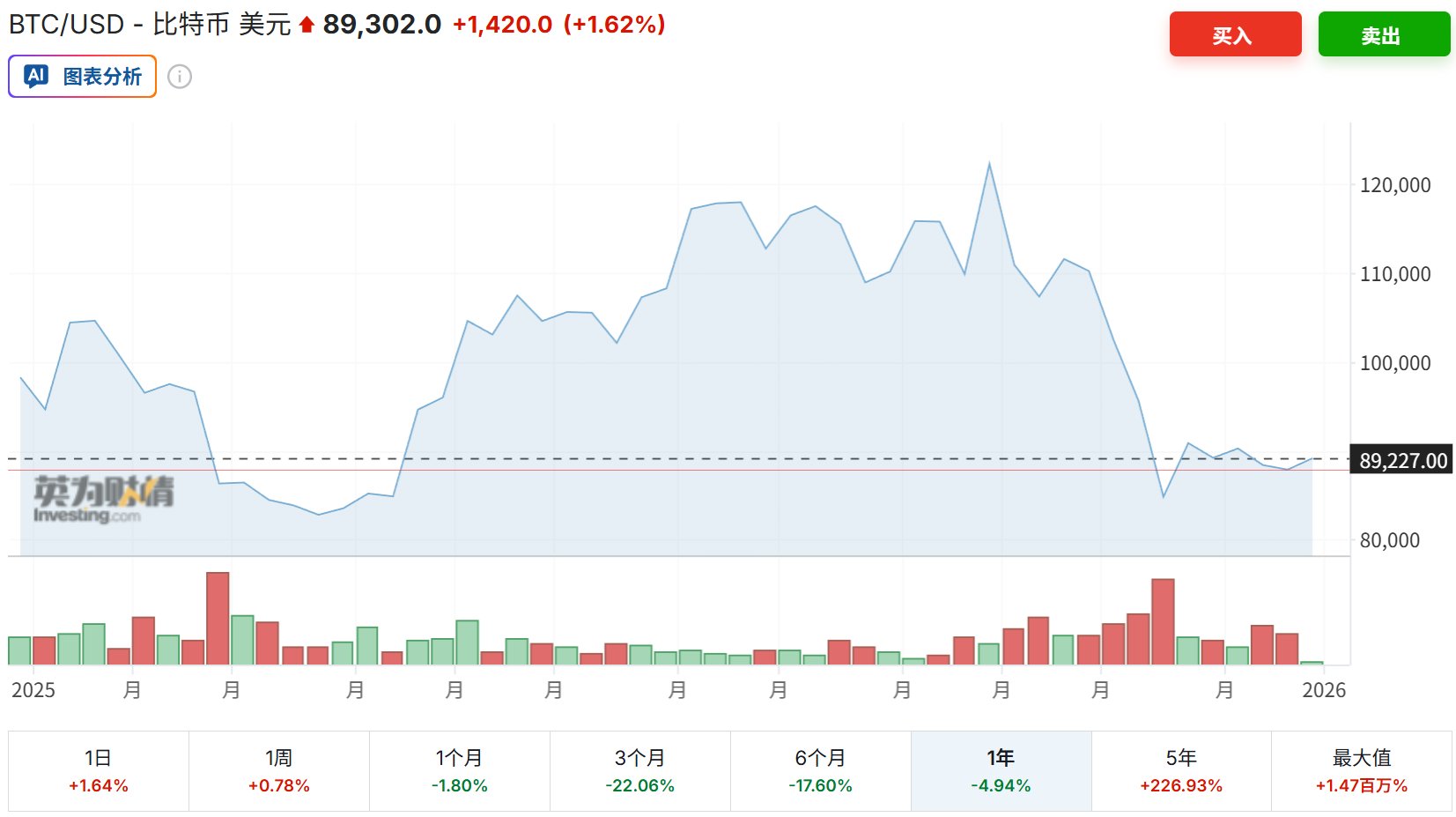
Core Insights - 2024 is seen as the year when cryptocurrencies enter traditional finance through spot ETFs, while 2025 is viewed as a watershed year for cryptocurrencies, marking their transition from speculative assets to core infrastructure for global finance [1] - The total market capitalization of cryptocurrencies surged from approximately $1.6 trillion at the beginning of the year to over $4 trillion, driven by institutional capital, regulatory policies, and practical applications [2][1] - Bitcoin's price fluctuated significantly, reaching a peak of $126,000 in October before dropping to around $89,000 by December, reflecting a volatile market influenced by macroeconomic factors [2][9] Market Dynamics - The volatility of the cryptocurrency market in 2025 shifted from erratic price movements to being influenced by Federal Reserve policies, non-farm payroll data, and legislative progress [5] - Bitcoin's price dynamics were characterized by a psychological battle, with a peak driven by the approval of spot ETFs and expectations of national strategic reserves, followed by a sharp decline due to tightening monetary policy [6][9] - Ethereum experienced dramatic price movements, rising nearly 200% from $1,646 to $4,946 before ending the year down approximately 12% at around $3,000, facing increased competition in the public blockchain space [10] Institutional Involvement - The bull market for major cryptocurrencies in 2025 was primarily driven by institutional participation, with ETFs and other institutional channels seeing a net inflow of $44.2 billion [15][16] - Regulatory clarity, particularly with the enactment of the GENIUS Act, allowed institutions to enter the cryptocurrency market legally and at scale, although it also introduced high compliance costs [17][16] - The correlation between cryptocurrencies and traditional equities, particularly the Nasdaq index, reversed, with cryptocurrency market downturns impacting stock markets due to forced liquidations by institutions [14] Stablecoins and Infrastructure - Stablecoins transitioned from being peripheral to becoming a core infrastructure for global capital flow, with a total market capitalization exceeding $310 billion and daily settlement volumes rivaling traditional payment giants [24][23] - The transaction volume of stablecoins reached $46 trillion, reflecting a 106% increase year-over-year, indicating their growing importance in the financial ecosystem [24] - The infrastructure supporting stablecoins improved significantly, reducing transaction costs and settlement times, which facilitated their integration into traditional financial systems [25] Future Outlook - The cryptocurrency market is expected to evolve from a speculative environment to one focused on compliance, value, and long-term capital, with institutionalization and mainstream adoption deepening [30][31] - Predictions for 2026 suggest a favorable market environment due to potential interest rate cuts and improved global liquidity, with a shift towards long-term stable asset allocation through ETFs and on-chain treasury solutions [31] - The integration of AI and blockchain is anticipated to accelerate, providing critical solutions for trust, payment, and decentralization, marking a significant narrative for the future of the industry [31]
Circle Explains How B2B Transactions Can Be Streamlined to Boost Operational Efficiency
Crowdfund Insider· 2025-12-29 02:35
Core Insights - Circle highlights the significance of B2B transactions, estimating ~$88 trillion in such transactions for 2024, while noting that existing systems are outdated and fragmented [1][1][1] Group 1: B2B Transactions and Current Systems - The B2B transaction landscape is characterized by outdated methods such as paper checks, legacy wires, and semi-manual ACH transfers, leading to inefficiencies [1][1] - The fragmented nature of intermediaries, message formats, and approval chains complicates money movement and reconciliation [1][1] Group 2: Circle Payments Network (CPN) - Circle Payments Network (CPN) aims to modernize enterprise finance by providing a programmable payment network that connects various financial entities on compliance-ready rails [1][1] - CPN facilitates real-time settlement using stablecoins like USDC and EURC, enhancing the efficiency of B2B payments [1][1] Group 3: Benefits of CPN - Corporate buyers can settle payments with suppliers almost instantly, with programmable rules governing fund movement, providing treasury teams with visibility and control [1][1] - The unified B2B payment ecosystem allows value to move as efficiently as data, strengthening business relationships [1][1] Group 4: Circle Technology Services (CTS) - Circle Technology Services, LLC (CTS) operates CPN and provides products and services to financial institutions for CPN access and integration [1][1] - CTS enables global financial institutions to connect, communicate securely, and settle transactions directly, without holding funds or managing accounts [1][1] Group 5: Transaction Rules and Participation - The usage of CPN is governed by CPN Rules and the CPN Participation Agreement between CTS and participating financial institutions [1][1]


特朗普政府上任一年:美国加密行业发生了哪些变化?
Sou Hu Cai Jing· 2025-12-28 05:42
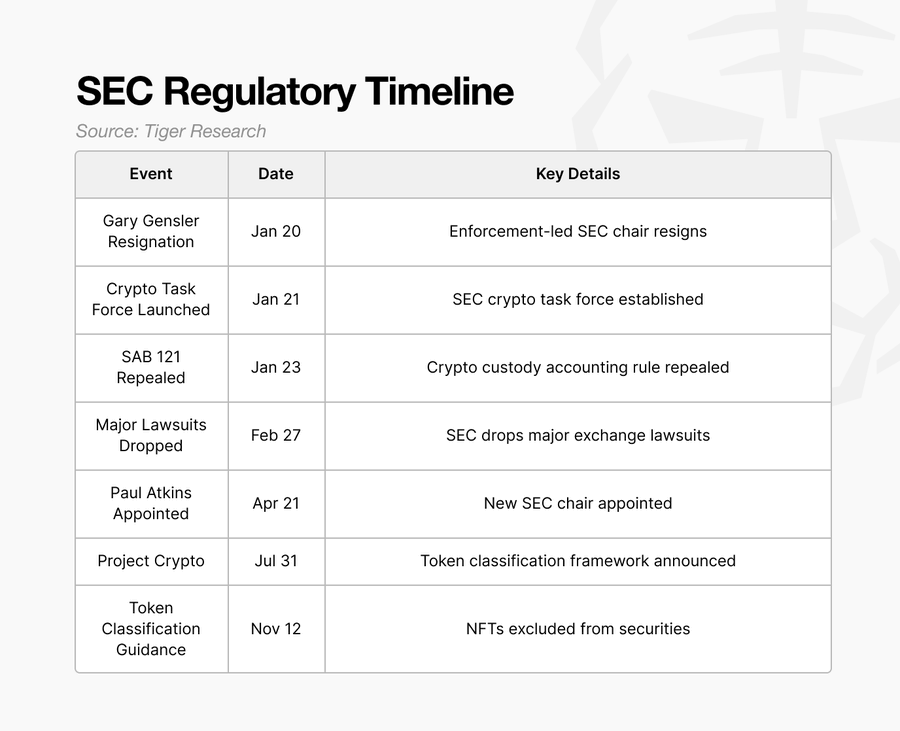
Group 1 - The U.S. government is implementing a policy to support the cryptocurrency industry, aiming to regulate it similarly to traditional financial sectors [1][4] - Over the past year, Congress, the SEC, and the CFTC have gradually integrated cryptocurrency into the existing financial framework [1][2] - Despite tensions among regulatory bodies, the U.S. is enhancing its regulatory framework while supporting industry growth [1][3] Group 2 - Following the re-election of President Trump, the government has introduced aggressive pro-cryptocurrency policies, marking a significant shift from previous regulatory stances [2] - The SEC and CFTC have shifted their positions, indicating a structural transformation within the cryptocurrency landscape [3] Group 3 - The SEC has transitioned from an enforcement-led approach to a more open policy under new chair Paul Atkins, focusing on establishing clear standards for token classification [6][7] - The CFTC has recognized Bitcoin and Ethereum as commodities and has initiated programs to treat them as stable collateral in derivatives trading [8][9] Group 4 - The OCC has changed its approach by integrating cryptocurrency companies into the existing banking regulatory framework, allowing them to operate under federal oversight [10][11] - The passage of the GENIUS Act has established clear requirements for stablecoin issuance and reserves, providing legal recognition for digital dollars [12][13] Group 5 - The U.S. cryptocurrency policy has a clear direction towards integrating the industry into the formal financial system, although internal disagreements persist [14] - The ongoing debates and tensions among regulatory bodies are seen as a characteristic of the U.S. decision-making process, which may lead to more precise regulatory standards over time [14][15] - The U.S. is not fully deregulating cryptocurrency nor attempting to suppress its growth, but is reshaping regulation, leadership, and market infrastructure to position itself as a global cryptocurrency hub [15][16]
From Circle to Bullish: Crypto Wraps Up 'Bellwether Year' for IPOs
Yahoo Finance· 2025-12-27 14:01
Core Insights - This year has seen a significant increase in crypto IPOs, driven by retail interest, political support, and a reopened U.S. IPO market [1] - Companies from various sectors, including exchanges and stablecoin issuers, are actively pursuing public listings, leading to a crowded IPO calendar [1] Group 1: Notable IPOs and Market Activity - Coinbase's Nasdaq debut in 2021 was the only major IPO success for the crypto industry until this year [2] - Circle, the issuer of USDC, and crypto exchange Bullish are notable companies that attempted to go public via SPACs before successfully listing [2] - Circle's initial SPAC merger attempt in 2021 valued the company at up to $9 billion but was terminated in late 2022 due to market conditions [3] Group 2: Market Reception and Performance - Circle's NYSE debut was highly popular, leading to trading halts within the first hour, although its momentum has since slowed due to Federal Reserve interest rate changes [4] - Bullish also experienced a significant increase in share price upon its public listing in August, following a similar SPAC background as Circle [5] - eToro, while not exclusively a crypto company, saw its valuation rise to $5.4 billion after its Nasdaq debut in May, despite scaling back its crypto offerings [5] Group 3: IPO Aspirations and Challenges - Not all companies have successfully completed their IPOs this year; FalconX is reportedly considering an IPO but has not filed any paperwork with the SEC [6]
Coinbase CEO Says Banks Will Eventually Demand Interest-Paying Stablecoins
Yahoo Finance· 2025-12-27 14:00
Core Viewpoint - Coinbase CEO Brian Armstrong predicts that US banks will eventually lobby for the ability to pay interest on stablecoins, reversing their current stance against it [1][2]. Group 1: Legislative Context - The GENIUS Act, signed in July 2025, prohibits stablecoin issuers from paying interest directly to holders, but allows intermediaries like exchanges to pass yield from Treasury reserves to users [3][4]. - Banking lobbyists are pushing to amend the GENIUS Act to close the loophole that allows non-bank platforms to offer competitive yields of approximately 4% to 5% on liquid cash equivalents [5]. Group 2: Industry Response - Armstrong criticizes the banking lobby's attempts to amend the law as a "red line" for the crypto industry, arguing that it reflects a contradiction in their safety concerns while maintaining a business model that pays depositors below-market rates [6]. - A coalition of 125 crypto companies, including Coinbase, has submitted a letter to the Senate Banking Committee opposing any revisions to the GENIUS Act, asserting that reopening the bill would undermine regulatory certainty [6].
