慧智微

Search documents
慧智微(688512) - 简式权益变动报告书
2026-01-27 11:32
股份变动性质:股份减少、被动稀释 签署日期:2026 年 1 月 27 日 广州慧智微电子股份有限公司 简式权益变动报告书 上市公司名称:广州慧智微电子股份有限公司 股票简称:慧智微 1 股票代码:688512 股票上市地点:上海证券交易所 信息披露义务人:国家集成电路产业投资基金二期股份有限公司 住所及通讯地址:北京市西城区真武庙 1 号职工之家 C 座 21-23 层 信息披露义务人声明 一、信息披露义务人依据《中华人民共和国证券法》(以下简称"《证券法》")、 《上市公司收购管理办法》(以下简称"《收购管理办法》")、《公开发行证 券的公司信息披露内容与格式准则第 15 号——权益变动报告书》(以下简称"《准 则 15 号》")及其他相关的法律、法规和规范性文件编写本报告书。 二、信息披露义务人签署本报告书已获得必要的授权和批准,其履行亦不违 反信息披露义务人公司章程或内部规则中的任何条款,或与之相冲突。 三、依据《证券法》《收购管理办法》《准则 15 号》的规定,本报告书已 全面披露信息披露义务人在广州慧智微电子股份有限公司中拥有权益的股份变 动情况。 四、截至本报告书签署日,除本报告书披露的持股信息 ...

慧智微(688512.SH):股东大基金二期累计减持0.57542%公司股份
Ge Long Hui A P P· 2026-01-27 11:26
格隆汇1月27日丨慧智微(688512.SH)公布,2026年1月12日至2026年1月27日,股东大基金二期累计减持 公司股份数量268.63万股,占公司当前总股本的0.57542%。本次权益变动后,大基金二期持有公司 23,342,117股,占公司当前总股本的4.99999%。 ...
慧智微:股东大基金二期累计减持0.57542%公司股份
Ge Long Hui· 2026-01-27 11:20
格隆汇1月27日丨慧智微(688512.SH)公布,2026年1月12日至2026年1月27日,股东大基金二期累计减持 公司股份数量268.63万股,占公司当前总股本的0.57542%。本次权益变动后,大基金二期持有公司 23,342,117股,占公司当前总股本的4.99999%。 ...
慧智微:国家集成电路产业投资基金二期股份有限公司持股比例已降至5.00%
2 1 Shi Ji Jing Ji Bao Dao· 2026-01-27 11:19
南财智讯1月27日电,慧智微公告,国家集成电路产业投资基金二期股份有限公司因集中竞价减持及公 司股权激励行权导致被动稀释,合计减持2,686,331股,持股数量由26,028,448股减少至23,342,117股,持 股比例由5.75%降至4.99999%,四舍五入后为5.00%。本次权益变动已完成。 ...
总投资252亿元 粤芯半导体四期项目启动
Zheng Quan Shi Bao Wang· 2026-01-22 08:01
1月22日,粤芯半导体四期项目启动仪式在广州市黄埔区举行。 "'十五五'时期,集成电路发展迎来全链条突破和制造多点开花的重要机遇期,我对行业的判断持乐观 态度并充满信心。"陈卫表示,粤芯半导体也在国家战略的持续引领与人工智能等市场需求的双重驱动 下,为广东建设现代化产业体系进步一夯实、壮大实体经济发挥好龙头带动作用。 目前,广州开发区、黄埔区内集聚集成电路企业超150家,2025年实现产值超340亿元,同比增长 17.1%。全区持续夯实集"芯片设计—晶圆制造—封装测试—设备材料零部件—终端应用"于一体的全产 业链,集聚粤芯、新锐光、广芯封装、安凯微、慧智微等一批优势企业。值得一提的是,黄埔区已为粤 芯半导体预留了五期项目的用地。 粤芯半导体技术股份有限公司总裁陈卫在现场介绍,粤芯半导体四期项目建设月产4万片的12英寸数模 混合特色工艺生产线,总投资约252亿元,工艺技术节点覆盖65nm至22nm,预计2029年底建成。 广州市2026年政府工作报告中明确提到,加快华星光电T8、粤芯四期等重大项目建设。作为广东省自 主培养且首家进入量产的12英寸晶圆制造企业,粤芯半导体四期项目的启动,是广州市集成电路产业发 展 ...


慧智微涨2.08%,成交额8719.92万元,主力资金净流出740.70万元
Xin Lang Cai Jing· 2026-01-21 03:42
Core Viewpoint - The stock of Huizhi Micro has shown a positive trend with a 10.04% increase year-to-date and a significant rise in revenue and net profit for the first nine months of 2025, indicating strong growth potential in the semiconductor industry [1][2]. Group 1: Stock Performance - On January 21, Huizhi Micro's stock rose by 2.08%, reaching 12.28 CNY per share, with a trading volume of 87.20 million CNY and a turnover rate of 2.22% [1]. - The stock has increased by 4.78% over the last five trading days, 13.39% over the last twenty days, and 5.41% over the last sixty days [1]. Group 2: Financial Performance - For the period from January to September 2025, Huizhi Micro achieved a revenue of 568 million CNY, representing a year-on-year growth of 48.04% [2]. - The company reported a net profit attributable to shareholders of -122 million CNY, which is a year-on-year increase of 58.98% [2]. Group 3: Company Overview - Huizhi Micro, established on November 11, 2011, is located in Huangpu District, Guangzhou, and specializes in the research, design, and sales of RF front-end chips and modules [1]. - The company's main revenue sources are 5G modules (55.01%) and 4G modules (44.80%), with technical services and others contributing 0.19% [1]. - Huizhi Micro is classified under the semiconductor industry, specifically in analog chip design, and is associated with concepts such as smartphones, IoT, and specialized small enterprises [1].
锐石创芯IPO:业绩持续亏损 主营业务毛利率显著低于可比公司均值
Sou Hu Cai Jing· 2026-01-19 06:18
Core Viewpoint - Ruishi Chuangxin has been accepted for IPO on the Sci-Tech Innovation Board, with ongoing financial challenges reflected in continuous net losses during the reporting period [2][3]. Financial Performance - The company's revenue for the reporting period (2022 to the first half of 2025) was as follows: 370 million CNY, 649 million CNY, 668 million CNY, and 377 million CNY respectively [3][5]. - The net profit during the same period showed consistent losses: -328 million CNY, -328 million CNY, -353 million CNY, and -148 million CNY [3][5]. Research and Development - Ruishi Chuangxin has invested heavily in R&D, with expenses amounting to 253 million CNY, 272 million CNY, 216 million CNY, and 100 million CNY during the reporting period, representing 68.52%, 41.97%, 32.30%, and 26.51% of revenue respectively [4][5]. - The company aims to maintain high R&D investment due to the high technical barriers and long development cycles in the RF front-end industry [4]. Profitability Challenges - The company's gross margin for its main business was significantly lower than the average of comparable companies, recorded at 7.95%, 13.90%, 8.79%, and 9.79% during the reporting period, compared to industry averages of 26.31%, 23.49%, 20.90%, and 21.09% [7][8]. - The low gross margin is attributed to product structure differences and strategic pricing to expand market share [8]. Fundraising and Investment Plans - Ruishi Chuangxin plans to raise 809 million CNY, which will be allocated to the second phase of the MEMS device production base, R&D center construction, and working capital [8][9]. - The total investment for the second phase of the MEMS device production base is 369 million CNY, while the R&D center construction is estimated at 330 million CNY [9].
中国不需要那么多“英伟达”
凤凰网财经· 2026-01-10 13:50
Core Viewpoint - The article discusses the current state and future prospects of the domestic GPU industry in China, highlighting the rapid growth driven by AI demand and the challenges posed by market saturation and competition among numerous companies [2][3]. Group 1: Market Dynamics - By the end of 2025, domestic GPU manufacturers are expected to experience a capital frenzy, with market valuations exceeding 440 billion yuan, driven by AI and domestic substitution trends [2]. - The influx of capital into the chip design sector has led to a significant increase in the number of companies, with nearly 600 new chip design firms established in 2021 alone, totaling around 4,000 companies currently [2]. - The domestic RF front-end chip sector has over 300 companies, yet holds less than 20% of the global market share, indicating a severe competitive landscape [3]. Group 2: Competitive Landscape - The RF chip market is characterized by intense price wars, with many companies facing losses due to product homogeneity and lack of differentiation [3][4]. - A notable example is the leading domestic RF chip company, which reported a loss of 147 million yuan in the first half of the year, reflecting the pressure from increased competition [4]. - The article emphasizes that many companies are producing similar products, leading to a race to the bottom in pricing, which is detrimental to profitability [4][5]. Group 3: High-End GPU Market - The high-end GPU market presents a larger growth opportunity compared to the saturated low-end market, but it also faces significant challenges [6]. - Domestic GPUs are currently in a "catch-up" phase, with performance still lagging behind Nvidia's latest offerings, indicating a systemic gap of one to two generations [6][7]. - Despite the challenges, the demand for AI computing power is increasing, particularly in inference scenarios, which domestic GPUs are targeting [7][8]. Group 4: Revenue Trends - Nvidia's revenue from mainland China has decreased by approximately 900 million dollars year-on-year, while domestic GPU companies are experiencing exponential revenue growth [8][9]. - Companies like Cambricon have reported a 24-fold increase in revenue, indicating a strong market response to AI chip demand [10]. - New entrants like Moore Threads and Muxi are also showing rapid revenue growth, with Muxi's revenue increasing fourfold year-on-year [10][11]. Group 5: Industry Consolidation - The GPU market is expected to consolidate to 2-3 leading companies, intensifying competition and reducing the survival space for smaller firms [13][14]. - The article notes that the GPU market is highly concentrated, with Nvidia and AMD dominating nearly 100% of the market share, which poses a challenge for new entrants [13]. - Domestic GPU companies face fragmented customer demands and limited R&D budgets compared to their global counterparts, which could hinder their long-term viability [14][15]. Group 6: Future Outlook - The ability to achieve mass production is critical for the survival of GPU companies, and finding a differentiated path is essential for success [15][17]. - Companies that can balance performance, delivery, ecosystem, and commercialization are more likely to thrive in the competitive landscape [17]. - The article concludes that the true winners in the domestic GPU market will be those who can effectively navigate the challenges of differentiation and market demands [17].


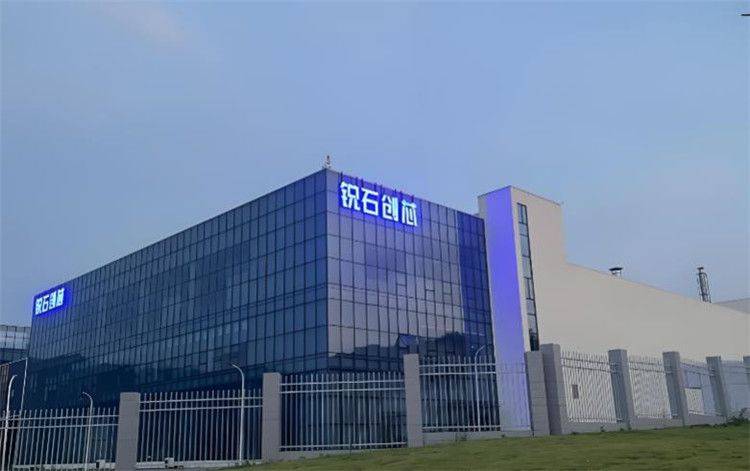
锐石创芯IPO:招股书表述或低估滤波器市场竞争程度 规模扩张期打“价格战”毛利率水平不及同业一半
Xin Lang Cai Jing· 2026-01-07 07:25
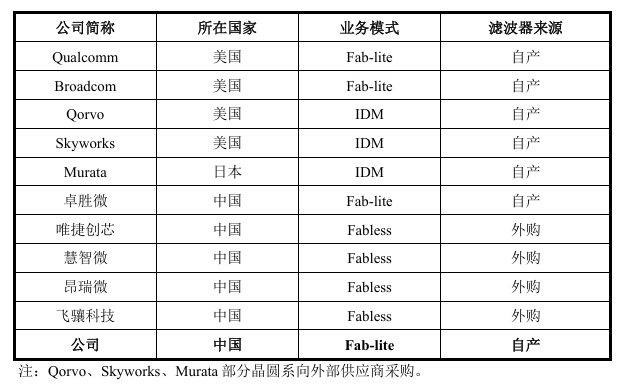
Core Viewpoint - The article discusses the recent developments regarding Ruishi Chuangxin's IPO and highlights the competitive landscape in the RF front-end module market, particularly focusing on the challenges posed by both domestic and international competitors in the SAW filter segment. Group 1: Company Overview - Ruishi Chuangxin, established in April 2017, focuses on RF front-end modules and RF discrete devices, recently included in the first batch of companies for IPO inspection by the China Securities Association [1]. - The company emphasizes its unique position as one of the few domestic manufacturers capable of producing RF filters, although it may overlook competition from third-party manufacturers [1][2]. Group 2: Market Competition - The RF front-end market is dominated by overseas giants like Qualcomm, Broadcom, and others, holding approximately 76% of the global market share [2]. - Domestic competitors such as Maijie Technology, Haoda Electronics, and Xinwei Communication are also entering the SAW filter market, potentially competing with Ruishi Chuangxin's planned production capacity [1][4]. Group 3: Financial Performance - Ruishi Chuangxin's gross profit margin has been significantly lower than its peers, with figures of 7.95%, 13.90%, 8.79%, and 9.79% from 2022 to the first half of 2025, compared to an average of 21.09% for comparable companies [6][7]. - The company reported a net loss of -16.80 billion yuan as of mid-2025, indicating ongoing financial challenges despite a revenue increase of 34.94% due to a pricing strategy aimed at gaining market share [10]. Group 4: Product Strategy - In 2024, Ruishi Chuangxin implemented a price reduction strategy for its core 5G RF front-end modules, resulting in an 11.90 percentage point drop in gross margin [1][9]. - The company aims to enhance its competitive edge by developing high-performance filter production lines, which is considered a core competency [2][5].
华为/OPPO/小米站台,8亿募资剑指 6G 射频前沿
是说芯语· 2026-01-01 00:40
Core Viewpoint - Chongqing Ruishi Chuangxin Microelectronics Co., Ltd. has officially been accepted for IPO on the Sci-Tech Innovation Board, marking its significant progress in the capital market as a leading domestic RF front-end chip and module enterprise [1] Industry Overview - The RF front-end chip is a core component of wireless communication devices, significantly impacting signal quality and communication performance. The market has long been dominated by international giants such as Broadcom, Skyworks, and Qorvo, particularly in the critical components like filters, where domestic companies have faced supply chain constraints [3] - Among domestic listed companies in the RF front-end chip and module sector, there are established leaders and emerging players, showcasing diverse market positions, technological characteristics, and recent performance trends [3] Company Development - Ruishi Chuangxin's breakthrough began in 2024 with the launch of its high-performance filter wafer manufacturing base, marking a strategic shift from a Fabless to a Fab-lite model. This transition enables the company to achieve independent R&D and mass production of filters, reducing reliance on external supply chains [5] - The company's shareholder structure includes major mobile manufacturers and investment institutions, such as OPPO (5.9431%), Huawei's Hubble Investment (5.7187%), and Lei Jun's Shunwei Capital (5.3964%), indicating strong recognition of its technological capabilities [5] - Ruishi Chuangxin's products have been successfully integrated into major mobile manufacturers like OPPO, Xiaomi, and ZTE, as well as various consumer electronics and IoT companies, demonstrating a diversified application of its products [5] Financial and Market Position - The company plans to raise 809 million yuan through its IPO, focusing on three main areas: the second phase of the MEMS device production base, the establishment of a research and development center, and supplementing working capital [6] - The second phase of the MEMS device production base will enhance the manufacturing capacity of filters and solidify its leading position in the domestic filter market [6] - The R&D center will focus on advanced 5G and 6G technologies, as well as RF module integration technologies, positioning the company for future communication advancements [6] Market Demand and Growth - The global RF front-end market is projected to grow from approximately $22 billion in 2023 to $30 billion by 2028, with a compound annual growth rate of about 6.4% [7] - Domestic companies are poised to benefit from dual opportunities: the significant increase in RF front-end demand due to 5G smartphones (which require about 50% more RF front-end chips than 4G smartphones) and the supply chain restructuring driven by domestic substitution policies [7] - Ruishi Chuangxin's vertical integration from chip design to filter manufacturing and module packaging allows for better cost control, capacity assurance, and rapid response to customer needs [7] - With a registered capital of 434 million yuan and nearly 500 employees, the company has achieved rapid revenue growth in just seven years, positioning itself favorably for resource support and accelerated technological development following its IPO [7]