拉普拉斯

Search documents
未知机构:电新周观点更新好看太空光伏储能锂钠电申万电新锂电全-20260202
未知机构· 2026-02-02 02:00
Summary of Key Points from Conference Call Records Industry Overview - **Industry Focus**: The records primarily discuss the lithium battery, sodium battery, wind power, and photovoltaic sectors, highlighting recent developments and future expectations in these industries. Lithium Battery Sector - **National Capacity Pricing Policy**: The introduction of the national capacity pricing policy is expected to increase the Internal Rate of Return (IRR) for energy storage by over 3%, with more provinces likely to adopt energy storage solutions by 2026 [1] - **Lithium Battery Production**: In February, lithium battery production is projected to decrease by over 10%, indicating that the production season is not as weak as anticipated [1] - **Sodium Battery Testing**: Ningde has initiated winter testing with multiple automotive companies for sodium batteries, with expectations for mass production in Q2 [1] - **Investment Focus**: The preferred investment hierarchy includes energy storage cells (Penghui) > lithium iron phosphate cathodes > energy storage integration (Haibo) > separators (Enjie), copper, and aluminum foil (Nord and Dingsheng) [1] Sodium Battery Sector - **Lithium Carbonate Price Adjustment**: A new round of price increases for lithium carbonate is anticipated following adjustments, with strong downstream purchasing activity observed after recent price drops [2] - **Wind Power Sector Performance**: Recent performance forecasts for the wind power sector have largely fallen short of expectations due to a decline in Q4 shipments and year-end impairments, indicating a confirmed bottom for the main engine sector [2] - **Investment Recommendations**: Recommended stocks include Jinlei Co., Daikin Heavy Industries, and major engine manufacturers (Goldwind, SANY, Yunda, Mingyang) [2] Photovoltaic Sector - **Space Photovoltaics**: The application by SpaceX to deploy 1 million satellites to create a space data center reinforces the logic behind space photovoltaics [3] - **Cost Reduction in Battery Production**: The high silver prices and technological breakthroughs have led to an average cost reduction of over 0.15 CNY/W in copper-based batteries, indicating a potential explosion in the no-silver industrialization [3] - **Investment Focus**: The preferred investment hierarchy includes equipment manufacturers (Liancheng, Lap, Maiwei, Yujing) and battery materials (Bojian, Foster, Kaisheng, Juhua, Dike, Risheng, Junda) [3] AIDC (Artificial Intelligence Data Center) Sector - **New Bidding Opportunities**: The domestic supply chain is entering a new round of bidding, with ByteDance shifting its focus to high-voltage direct current solutions and Nvidia tightening certification for liquid cooling [3] - **Production Increase**: The production capacity of Yingwei's QD is expected to increase by 20 times in Q1, indicating a strong alignment with Nvidia's ecosystem [3]




未知机构:电新周观点更新好看太空光伏储能锂钠电锂电全国容量电价-20260202
未知机构· 2026-02-02 02:00
Industry and Company Summary Industry: Lithium Battery and Energy Storage Key Points - **National Capacity Pricing Policy**: The introduction of the national capacity pricing policy is expected to increase the Internal Rate of Return (IRR) for energy storage by over 3%, with more provinces expected to adopt energy storage solutions by 2026 [1] - **Lithium Battery Production**: In February, lithium battery production is projected to decrease by over 10%, indicating that the production season is not as weak as anticipated [1] - **Sodium Battery Testing**: Ningde has initiated winter testing for multiple automotive companies regarding sodium batteries, with expectations for mass shipments in Q2 [1] - **Investment Focus**: The preferred investment hierarchy is as follows: energy storage cells (Penghui) > lithium iron phosphate cathodes > energy storage integration (Haibo) > separators (Enjie), copper and aluminum foils (Nord and Dingsheng) [1] Industry: Sodium Battery and Lithium Carbonate Key Points - **Lithium Carbonate Price Adjustment**: Following a price adjustment, there is a strong expectation for a new upward trend in lithium carbonate prices, with downstream procurement becoming more active after recent price drops [2] - **Wind Power Sector Performance**: The wind power sector has seen numerous earnings forecasts that fell short of expectations due to a decline in Q4 shipment volumes and year-end impairments, indicating a confirmed bottom for the main engine sector [2] - **Investment Recommendations**: Recommended stocks include Jinlei Co., Daikin Heavy Industries, and major turbine manufacturers (Goldwind, SANY, Yunda, Mingyang) [2] Industry: Photovoltaics Key Points - **Space Photovoltaics**: SpaceX's application to deploy 1 million satellites to create a space data center reinforces the logic behind space photovoltaics [3] - **Cost Reduction in Battery Production**: The high price of silver and technological breakthroughs have led to an average cost reduction of over 0.15 CNY/W in copper-based batteries, indicating a potential explosion in the no-silver production sector [3] - **Investment Focus in Photovoltaics**: The preferred investment hierarchy includes equipment manufacturers (Liancheng, Lap, Maiwei, Yujing) and battery and auxiliary material producers (Bojian, Foster, Kaisheng, Juhua, Dike, Risheng, Junda) [3] Industry: AIDC (Artificial Intelligence Data Center) Key Points - **New Bidding Round**: The domestic supply chain is entering a new round of bidding, with ByteDance shifting its bidding focus to high-voltage direct current solutions [3] - **NVIDIA Certification**: NVIDIA's GB300 liquid cooling certification is tightening, which may lead future investments to focus on core components and ASIC overflow [3] - **Increased Production Capacity**: The production capacity of Yingweike's QD is expected to increase by 20 times in Q1, strengthening ties with the NVIDIA ecosystem [3]

低轨星座竞赛与太空算力革命,引爆太空光伏需求新周期
GOLDEN SUN SECURITIES· 2026-02-01 10:08
Investment Rating - The report provides a positive investment rating for solar equipment suppliers, particularly highlighting companies like Maiwei Co., Ltd. and others with potential capabilities in the solar photovoltaic sector [7][33]. Core Insights - The demand for space photovoltaic systems is expected to surge due to the explosive growth in satellite deployment and AI computing power in space, with China planning to submit applications for 203,000 satellites by the end of 2025, while the U.S. has already launched over 10,000 satellites [1][10]. - New technological pathways such as P-type HJT and perovskite tandem cells are emerging, offering lower costs and improved performance compared to traditional gallium arsenide batteries, which are currently too expensive for large-scale deployment [2][27]. - The global manufacturing landscape is shifting, presenting historic opportunities for Chinese equipment and battery manufacturers to expand internationally, especially as the U.S. lacks capabilities in HJT and perovskite production lines [3][29]. Summary by Sections Section 1: Satellite Deployment and Space AI - The global low Earth orbit satellite deployment is entering a critical phase, with intense competition between China and the U.S. for orbital resources and frequency bands [10]. - The AI computing explosion is creating a new paradigm for space-based data centers, which can operate continuously under sunlight and utilize the cold of space for cooling, leading to exponential growth in demand for space photovoltaic systems [1][10]. Section 2: Technological Advancements - P-type HJT batteries and silicon/perovskite tandem cells are identified as the main directions for future space photovoltaic technology, with significant advantages in efficiency and cost [2][16]. - The report highlights the limitations of traditional gallium arsenide batteries, which are costly and reliant on scarce materials, making them unsuitable for large-scale satellite constellations [2][26]. Section 3: Global Market Dynamics - The report emphasizes that the demand for solar photovoltaic systems in space is set to enter a new cycle, benefiting domestic equipment and battery manufacturers as they transition from ground support to core space applications [29][30]. - Companies like Junda Co., Ltd., Trina Solar, and others are noted for their advancements in space-grade batteries and solar technologies, positioning them well for future growth in the space photovoltaic market [30][33].




光伏设备行业跟踪报告:SpaceX 申请百万卫星布局轨道 AI 数据中心,太空光伏与设备环节有望率先受益
国泰海通· 2026-02-01 03:04
Investment Rating - The report assigns an "Overweight" rating for the photovoltaic equipment industry, indicating a projected performance that exceeds the Shanghai and Shenzhen 300 Index by more than 15% over the next 12 months [4][12]. Core Insights - The report highlights that as SpaceX advances its satellite launches and related in-orbit applications, the trend of exploring orbital AI data centers is becoming evident. Photovoltaics are expected to gain more application opportunities in the construction of these data centers, benefiting related photovoltaic equipment manufacturers [2][4]. - The demand for photovoltaic solutions is anticipated to grow due to the increasing computational power requirements for data centers, shifting the logic of ground photovoltaic installations from power-driven to computation-driven [4]. - Key companies in the photovoltaic equipment sector are actively exploring opportunities in space photovoltaics, with notable advancements in technology and production capabilities [4]. Summary by Sections Investment Recommendations - The report recommends specific companies across different segments of the photovoltaic equipment industry: - **Cell Segment**: Recommended companies include Maiwei Co., Jiejia Weichuang, Laplace, and Dier Laser [4]. - **Module Segment**: Recommended company is Aotewei, with ST Jingji as a related company [4]. - **Wafer Segment**: Related companies include Gaoce Co., Jingsheng Mechanical & Electrical, Liancheng CNC, and Shuangliang Energy [4]. Company Profit Forecasts - The report provides earnings per share (EPS) forecasts for key companies in the industry: - **Maiwei Co.**: EPS forecast of 0.7 CNY for 2024, increasing to 1.3 CNY by 2026, with a PE ratio decreasing from 96.8 to 74.2 [5]. - **Aotewei**: EPS forecast of 4.0 CNY for 2024, remaining stable at 2.0 CNY for 2025 and 2026, with a PE ratio decreasing from 48.6 to 42.2 [5]. - **Jiejia Weichuang**: EPS forecast of 0.5 CNY for 2024, increasing to 0.9 CNY by 2026, with a PE ratio increasing from 16.9 to 33.9 [5]. - **Laplace**: EPS forecast of 0.7 CNY for 2024, increasing to 1.3 CNY by 2026, with a PE ratio decreasing from 33.6 to 25.5 [5]. - **Dier Laser**: EPS forecast of 1.9 CNY for 2024, increasing to 2.4 CNY by 2026, with a PE ratio decreasing from 36.8 to 27.0 [5].

“太空光伏”概念走热,业内:目前仍处于0到1阶段
Di Yi Cai Jing Zi Xun· 2026-01-30 13:27
Core Insights - The "space photovoltaic" concept has gained significant attention in the secondary market, largely influenced by Tesla CEO Elon Musk's endorsements [2] - The Wind Space Photovoltaic Index has risen by 19.83% over the past month, outperforming the Shanghai and Shenzhen 300 Index, which increased by 1.18% [2] - Several photovoltaic companies have experienced substantial stock price increases, with JunDa Co., Ltd. rising by 84.62% and Mingyang Smart Energy increasing by 60.22% in the last 20 days [2] Market Performance - The stock prices of companies like Dongfang Risen and Laplace have shown abnormal fluctuations, with price deviations exceeding 30% over consecutive trading days [3] - The space photovoltaic sector is characterized by its potential to harness solar energy in outer space, providing power to satellites and space stations [3] Industry Challenges - Despite the market enthusiasm, the commercialization of space photovoltaics faces significant uncertainties related to technology maturity and economic viability [4] - Industry insiders indicate that the application scenarios for space photovoltaics are still in the exploratory phase, with many companies not yet supplying products to commercial satellite firms [4] Technological Considerations - Current leading materials for space photovoltaics include gallium arsenide, which is costly at approximately 1000 RMB per watt, and perovskite, which faces stability issues in extreme space conditions [5] - The cost of electricity generated from space photovoltaics is estimated to be 2-3 USD per kilowatt-hour, significantly higher than the ground-based photovoltaic cost of 0.03-0.05 USD per kilowatt-hour [5] Future Outlook - Several A-share listed companies express optimism about the future of space photovoltaics, with potential market size reaching trillions as technology advances [5] - Companies like Trina Solar and HaiMuxing are actively collaborating with leading aerospace institutions to develop practical applications for space solar energy [5] - The commercialization of space photovoltaics is projected to gradually occur over the next 10 to 15 years as launch costs decrease and battery technologies improve [6]




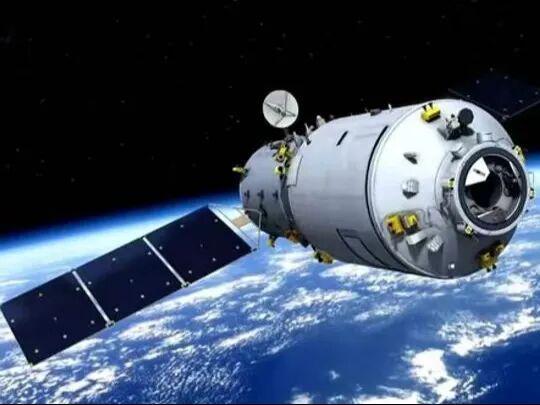
“太空光伏”概念走热 部分企业触发交易异常 业内:目前仍处于0到1阶段
Di Yi Cai Jing· 2026-01-30 12:05
Core Viewpoint - The "space photovoltaic" concept has become a major focus in the secondary market, significantly influenced by Tesla CEO Elon Musk's endorsements, with the relevant index rising 19.83% in the past month, outperforming the CSI 300 index by 18.65% [1] Market Performance - The space photovoltaic concept index has shown strong performance, with notable stock increases: JunDa Co., Ltd. up 84.62%, Mingyang Smart Energy up 60.22%, Jiejia Weichuang up 44.04%, Dier Laser up 41.54%, and Tuori New Energy up 35.94% over the past 20 days [1] - Several photovoltaic companies have experienced significant stock price surges, triggering trading anomalies, such as Dongfang Risheng and Laplace, both exceeding a cumulative price deviation of 30% within a short period [2] Industry Insights - Space photovoltaic energy refers to utilizing solar photovoltaic technology in outer space to generate and supply energy, with the potential to transmit power wirelessly to Earth or supply satellites and space stations [2] - The rationale for space photovoltaics includes abundant sunlight in space and the feasibility of deploying photovoltaic components on satellites, with near-Earth satellites experiencing over 60% sunlight exposure [2] Challenges in Industrialization - Despite the rising stock prices, the industry faces significant uncertainties regarding the industrialization of space photovoltaics, including technological maturity and economic viability for large-scale commercialization [3] - Current applications of space photovoltaics are still exploratory, with many companies in the secondary market not yet supplying products to commercial space satellite companies [3] - Analysts indicate that space photovoltaics are in the early stages of development, requiring validation of technology and economic benefits for large-scale applications [3] Technological Considerations - Gallium arsenide is the mainstream material for space photovoltaics, but its high cost (approximately 1000 RMB per watt) poses challenges for large-scale deployment [4] - Perovskite technology shows promise but has stability concerns in extreme space conditions, necessitating further validation [4] - Multiple technological routes are being explored, with a focus on solving power and cost issues as critical for the commercialization of space energy solutions [4] Cost Analysis - Current estimates suggest that the cost of electricity from space photovoltaics is around $2-3 per kilowatt-hour, compared to $0.03-0.05 per kilowatt-hour for ground-based photovoltaics, indicating a potential cost disparity of up to 100 times [5] - Companies like Trina Solar and HaiMuxing express optimism about the future of space photovoltaics, citing collaborations with leading aerospace institutions and advancements in reusable rocket technology [5] Commercialization Timeline - Predictions indicate that space photovoltaics may gradually commercialize over the next 10 to 15 years, contingent on decreasing launch costs and breakthroughs in battery technology [6]
“太空光伏”概念走热,部分企业触发交易异常,业内:目前仍处于0到1阶段
Di Yi Cai Jing Zi Xun· 2026-01-30 11:37
Core Viewpoint - The "space photovoltaic" concept has gained significant attention in the secondary market, largely influenced by Tesla CEO Elon Musk's endorsements, with the relevant index rising 19.83% in the past month, outperforming the CSI 300 index by 18.65% [1] Market Performance - The space photovoltaic concept index has seen a notable increase, with specific stocks like JunDa Co., Ltd. rising by 84.62%, Mingyang Smart Energy by 60.22%, and Jiejia Weichuang by 44.04% over the past 20 days [1] - Several photovoltaic companies have experienced stock price surges, triggering trading anomalies, such as Dongfang Risheng and Laplace, which saw price deviations exceeding 30% [3] Technology and Feasibility - Space photovoltaic energy involves utilizing solar photovoltaic technology in outer space to generate and supply energy, with the potential for direct power transmission to Earth [3] - The advantages of space photovoltaic systems include abundant sunlight and reduced atmospheric interference, making them a viable option for satellite power supply [3] Industry Challenges - Despite the market enthusiasm, the space photovoltaic industry faces significant uncertainties regarding technological maturity, long-term reliability, and economic viability for large-scale commercialization [4][5] - Current applications are still in the exploratory phase, with many companies not yet supplying products to commercial space satellite firms [5] Technological Development - Various technological routes are being explored, with gallium arsenide being the mainstream material, but its high cost poses challenges for large-scale deployment [5][6] - The cost of space photovoltaic energy is currently estimated at $2-3 per kilowatt-hour, significantly higher than ground-based photovoltaic costs of $0.03-0.05 per kilowatt-hour, indicating a need for cost reduction and efficiency improvements [6] Future Outlook - Companies like Trina Solar and HaiMuxing express optimism about the future of space photovoltaic technology, citing collaborations with leading aerospace institutions and advancements in reusable rocket technology [6][7] - The commercial viability of space photovoltaic systems is projected to develop over the next 10 to 15 years, contingent on decreasing launch costs and breakthroughs in battery technology [7]
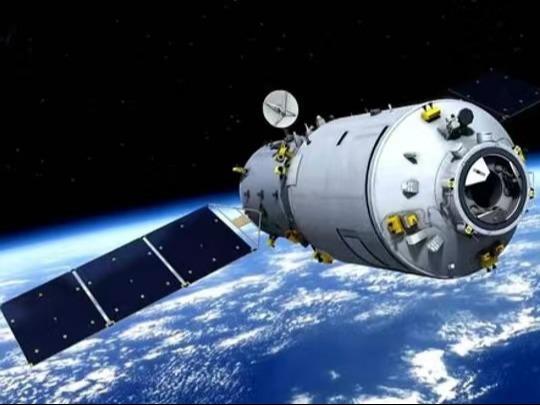
拉普拉斯1月30日现1笔大宗交易 总成交金额2264.15万元 其中机构买入2264.15万元 溢价率为-1.51%
Xin Lang Zheng Quan· 2026-01-30 10:19
第1笔成交价格为64.69元,成交35.00万股,成交金额2,264.15万元,溢价率为-1.51%,买方营业部为机 构专用,卖方营业部为华泰证券股份有限公司上海静安区广中西路证券营业部。 声明:市场有风险,投资需谨慎。本文基于第三方数据库自动发布,不代表新浪财经观点,任何在本文 出现的信息均只作为参考,不构成个人投资建议。如有出入请以实际公告为准。如有疑问,请联系 biz@staff.sina.com.cn。 责任编辑:小浪快报 进一步统计,近3个月内该股累计发生35笔大宗交易,合计成交金额为3.18亿元。该股近5个交易日累计 上涨18.26%,主力资金合计净流入1.19亿元。 1月30日,拉普拉斯收涨2.53%,收盘价为65.68元,发生1笔大宗交易,合计成交量35万股,成交金额 2264.15万元。 ...
拉普拉斯今日大宗交易折价成交35万股,成交额2264.15万元
Xin Lang Cai Jing· 2026-01-30 09:59
1月30日,拉普拉斯大宗交易成交35万股,成交额2264.15万元,占当日总成交额的1.36%,成交价64.69 元,较市场收盘价65.68元折价1.51%。 | 交易日期 | 证券简称 | 证券代码 | 成交价(元) 成交金额(万元) 成交量( *) 买入营业部 | | | | | 卖出营业部 | 是否为专场 | | --- | --- | --- | --- | --- | --- | --- | --- | --- | --- | | 2026-01-30 | 拉曾拉斯 | 688726 | 64.69 | 2264.15 | 35 | 机构专用 | 泰国语教学 | | Ka | ...

电力设备及新能源行业双周报(2026、1、16-2026、1、29):全国已建成投运新型储能装机规模达到1.36亿千瓦-20260130
Dongguan Securities· 2026-01-30 09:54
Investment Rating - The report maintains an "Overweight" rating for the power equipment and new energy industry [2] Core Insights - As of January 30, 2026, the installed capacity of new energy storage in China reached 136 million kilowatts, marking an 84% increase compared to the end of 2024 and over 40 times growth compared to the end of the 13th Five-Year Plan [2][40] - The report highlights significant growth in the photovoltaic and wind power sectors, with new installations expected to reach 315.1 GW and 119.3 GW respectively in 2025, representing year-on-year increases of 13.7% and 50.4% [42] - The report emphasizes the increasing flexibility of new energy storage systems, which play a crucial role in enhancing the stability and safety of the power system [42] Market Review - The power equipment sector experienced a decline of 0.47% over the past two weeks, underperforming the CSI 300 index by 0.53 percentage points, ranking 19th among 31 sectors [11] - In January 2026, the power equipment sector saw a monthly increase of 4.56%, outperforming the CSI 300 index by 1.88 percentage points [11] - The wind power equipment sector rose by 1.77%, while the photovoltaic equipment sector increased by 4.24% during the same period [18] Valuation and Industry Data - As of January 29, 2026, the price-to-earnings (PE) ratio for the power equipment sector was 34.76 times, with sub-sectors such as electric motors and other power equipment showing PE ratios of 59.88 and 59.64 respectively [24] - The report provides detailed valuation metrics for various sub-sectors, indicating significant variations in their market performance [25] Company Announcements - The report notes that several companies, including Gree and Enjie, are expected to turn profitable in 2025, with projected net profits ranging from 34 million to 164 million yuan [41][44] - The report highlights the importance of technological advancements and market strategies for companies in the power equipment sector to maintain competitive advantages [43]