银华基金

Search documents
2月5日港股消费(159735)遭净赎回595.65万元,位居当日跨境ETF净流出排名9/213
Xin Lang Cai Jing· 2026-02-06 02:59
来源:新浪基金∞工作室 规模方面,截止2月5日,港股消费(159735)最新份额为10.71亿份,最新规模为9.19亿元。回顾2025年 12月31日,港股消费(159735)份额为9.2亿份,规模为7.26亿元。即该基金今年以来份额增加 16.42%,规模增加26.60%。 流动性方面,截止2月5日,港股消费(159735)近20个交易日累计成交金额17.79亿元,日均成交金额 8897.32万元;今年以来,24个交易日,累计成交金额20.34亿元,日均成交金额8475.89万元。 港股消费(159735)现任基金经理为李宜璇。李宜璇自2021年5月25日管理(或拟管理)该基金,任职 期内收益-14.15%。 最新定期报告显示,银华基金(159735)重仓股包括泡泡玛特、百胜中国、安踏体育、农夫山泉、万洲 国际、海尔智家、申洲国际、美的集团、李宁、蒙牛乳业,持仓占比如下: 股票代码股票名称持仓占比持仓股数(股)持仓市值(元)09992泡泡玛特10.42%44.64万7568.02万 09987百胜中国9.09%19.83万6601.94万02020安踏体育7.76%77.46万5635.55万09633农夫 ...
基金分红:银华信用季季红债券基金2月10日分红
Sou Hu Cai Jing· 2026-02-06 01:53
证券之星消息,2月6日发布《银华信用季季红债券型证券投资基金分红公告》。本次分红为2026年度第 一次分红。公告显示,本次分红的收益分配基准日为1月1日,详细分红方案如下: 本次分红对象为权益登记日在本基金注册登记机构登记在册的本基金份额持有人,权益登记日为2月9 日,现金红利发放日为2月10日。选择红利再投资的投资者,其现金红利以2026年2月9日的基金份额净 值(NAV)转换为相应基金份额。根据财政部、国家税务总局的财税字[2002]128号《关于开放式证券投资 基金有关税收问题的通知》,基金向投资者分配的基金收益,暂免征收所得税。1)本基金本次收益分配 免收收益分配手续费;2)收益分配采用红利再投资方式免收再投资的费用。 以上内容为证券之星据公开信息整理,由AI算法生成(网信算备310104345710301240019号),不构成 投资建议。 ...


2/5财经夜宵:得知基金净值排名及选基策略,赶紧告知大家
Sou Hu Cai Jing· 2026-02-05 15:58
Core Insights - The article provides an overview of the latest fund net asset values, highlighting the top-performing and underperforming funds in the market [2][3]. Fund Performance Summary - The top 10 funds with the highest net value growth include: 1. Dachen Yixi Positive Pension Target Five-Year Holding Mixed Fund (FOF) with a net value of 1.3297 and a growth of 3.14% 2. Huatai-PineBridge Active Return One-Year Holding Mixed Fund (FOF) A with a net value of 1.1886 and a growth of 2.96% 3. Huatai-PineBridge Active Return One-Year Holding Mixed Fund (FOF) C with a net value of 1.1702 and a growth of 2.96% 4. Green Port Stock Connect Selected Mixed Fund A with a net value of 1.4196 and a growth of 2.85% 5. E Fund Huiyu Active Pension Five-Year Holding Mixed Fund (FOF) A with a net value of 1.4053 and a growth of 2.85% 6. E Fund Huiyu Active Pension Five-Year Holding Mixed Fund (FOF) Y with a net value of 1.4145 and a growth of 2.84% 7. Green Port Stock Connect Selected Mixed Fund C with a net value of 1.4255 and a growth of 2.84% 8. Huaxia Jusheng Preferred One-Year Holding Mixed Fund (FOF) C with a net value of 0.9555 and a growth of 2.81% 9. Huaxia Jusheng Preferred One-Year Holding Mixed Fund (FOF) A with a net value of 0.9707 and a growth of 2.81% 10. Huatai-PineBridge Core Preferred Six-Month Holding Mixed Fund (FOF) C with a net value of 1.2550 and a growth of 2.78% [2]. - The bottom 10 funds with the lowest net value growth include: 1. China Ocean Energy Strategy Mixed Fund with a net value of 0.8707 and a decline of 6.37% 2. Wanjia Cycle View Fund A with a net value of 1.2766 and a decline of 6.35% 3. Galaxy Core Preferred Fund C with a net value of 1.0901 and a decline of 6.35% 4. Wanjia Cycle View Fund C with a net value of 1.2748 and a decline of 6.35% 5. Galaxy Core Preferred Fund A with a net value of 1.1026 and a decline of 6.35% 6. Founder Fubon Strategy Fund C with a net value of 1.5041 and a decline of 6.06% 7. Founder Fubon Strategy Fund A with a net value of 1.5294 and a decline of 6.06% 8. Huaxia Low Carbon Economy Fund C with a net value of 1.0529 and a decline of 5.85% 9. Huaxia Low Carbon Economy Fund A with a net value of 1.0799 and a decline of 5.84% 10. Yinhua Growth Smart Fund A with a net value of 1.2629 and a decline of 5.82% [3]. Market Overview - The Shanghai Composite Index opened lower and experienced horizontal fluctuations, closing with a small decline. The ChiNext Index showed a similar trend, with a total trading volume of 2.19 trillion yuan. The number of rising stocks was 1,618, while declining stocks numbered 3,719, with a ratio of 56 to 23 for stocks hitting the daily limit [5]. Leading Industries and Concepts - The leading industries included daily chemicals and hotel catering, both showing growth of over 3%. Key concepts driving the market included duty-free shopping, internet celebrity economy, short drama concepts, gambling concepts, and pre-made dishes [6]. - The underperforming industries were non-ferrous metals, mineral products, and electrical equipment, all experiencing declines of over 3% [7].

宏信证券ETF日报-20260205
Hongxin Security· 2026-02-05 09:01
Report Summary on February 5, 2026 1. Market Overview - The Shanghai Composite Index fell 0.64% to close at 4075.92 points, the Shenzhen Component Index dropped 1.44% to close at 13952.71 points, and the ChiNext Index declined 1.55% to close at 3260.28 points. The total trading volume of A - shares in the two markets was 21945 billion yuan. The top - rising sectors were beauty care (3.21%), banking (1.57%), and food and beverage (1.31%), while the top - falling sectors were non - ferrous metals (-4.57%), power equipment (-3.41%), and communication (-2.39%) [2][6] 2. Stock ETFs - The top - trading volume stock ETFs: Huaxia CSI A500ETF fell 1.37% with a discount rate of -1.23%; Huatai - Ber瑞 CSI A500ETF dropped 1.22% with a discount rate of -1.16%; Southern CSI 500ETF declined 2.04% with a discount rate of -1.90% [3][7] - The top ten stock ETFs by trading volume are presented in detail in Chart 1, including their codes, prices, price changes, tracking indices, and other information [8] 3. Bond ETFs - The top - trading volume bond ETFs: Haifutong CSI Short - Term Financing Bond ETF remained unchanged with a discount rate of 0.00%; Bosera CSI Convertible and Exchangeable Bond ETF fell 0.63% with a discount rate of -0.78%; E Fund Shanghai Stock Exchange Benchmark Market - Making Corporate Bond ETF dropped 0.04% with a discount rate of -0.16% [4][9] - The top five bond ETFs by trading volume are shown in Chart 2, including their codes, prices, price changes, and trading volumes [10] 4. Gold ETFs - Today, gold AU9999 fell 3.05% and Shanghai Gold dropped 3.15%. The top - trading volume gold ETFs: Huaan Gold ETF fell 3.17% with a discount rate of -3.35%; Bosera Gold ETF dropped 3.29% with a discount rate of -3.46%; E Fund Gold ETF declined 3.30% with a discount rate of -3.50% [12] - The top five gold ETFs by trading volume are presented in Chart 3, including their codes, prices, price changes, trading volumes, and other information [13] 5. Commodity Futures ETFs - Dacheng Non - Ferrous Metals Futures ETF fell 3.70% with a discount rate of -3.83%; Jianxin Yisheng Zhengzhou Commodity Exchange Energy and Chemical Futures ETF dropped 1.70% with a discount rate of -1.36%; Huaxia Feed Soybean Meal Futures ETF rose 0.25% with a discount rate of 5.21% [13] - Information on commodity futures ETFs, including their codes, prices, price changes, trading volumes, and tracking indices, is presented in Chart 4 [14] 6. Cross - border ETFs - The previous trading day, the Dow Jones Industrial Average rose 0.53%, the Nasdaq Composite declined 1.51%, the S&P 500 dropped 0.51%, and the German DAX fell 0.72%. Today, the Hang Seng Index rose 0.14% and the Hang Seng China Enterprises Index rose 0.50%. The top - trading volume cross - border ETFs: E Fund CSI Hong Kong Securities Investment Theme ETF fell 1.20% with a discount rate of -0.88%; Huaxia Hang Seng Tech ETF dropped 0.42% with a discount rate of 0.38%; Huatai - Ber瑞 Hang Seng Tech ETF declined 0.57% with a discount rate of 0.26% [15] - The top five cross - border ETFs by trading volume are shown in Chart 5, including their codes, trading volumes, price changes, and discount rates [16] 7. Money ETFs - The top - trading volume money ETFs are Yin Hua Ri Li ETF, Hua Bao Tian Yi ETF, and Money ETF Jian Xin [17] - The top three money ETFs by trading volume are presented in Chart 6, including their codes and trading volumes [18]
机构称 14万亿存款或将搬家
2 1 Shi Ji Jing Ji Bao Dao· 2026-02-05 00:55
Core Viewpoint - The upcoming maturity of a significant amount of deposits in China, estimated at 55 to 60 trillion yuan by 2026, will create a historical peak in the banking system, leading to a potential reallocation of funds and a "re-pricing" wave in deposits [2][14]. Group 1: Deposit Rates and Trends - Major banks are offering low interest rates on large time deposits, with rates around 1.4% to 1.55%, a stark contrast to rates above 5% prior to 2021 [1][13]. - The deposit renewal rate has been approximately 90% in recent years, but a decline to 80% could result in a potential outflow of around 14 trillion yuan, while maintaining the current rate could lead to about 7 trillion yuan [3][15]. Group 2: Impact of Market Conditions - The surge in household savings, exceeding 17 trillion yuan annually during 2022-2023, was driven by market volatility, leading to a significant accumulation of "excess savings" locked in long-term deposits [2][14]. - The reallocation pressure from these long-term deposits will peak in 2026, coinciding with a changing interest rate environment [2][14]. Group 3: Fund Allocation Predictions - It is anticipated that over 90% of maturing deposits will remain in the banking system as new time deposits, but an estimated 2 to 4 trillion yuan may flow into wealth management products and public funds, with 300 to 600 billion yuan expected to enter public funds [3][15]. - The shift in funds is expected to primarily favor low-risk assets, reflecting a cautious approach from residents towards higher-risk investments [5][17]. Group 4: Public Fund Strategies - Public funds are likely to attract maturing deposits through conservative products, particularly money market funds and short-term pure bond funds, which offer liquidity similar to demand deposits [6][18]. - The total scale of public funds is projected to reach 37.71 trillion yuan by the end of 2025, with money market funds comprising a significant portion [6][18]. Group 5: Misconceptions about Deposit Movements - There is a misconception that maturing deposits will lead to significant outflows into the capital market; however, most funds are expected to remain within the banking system for marginal optimization [11][23]. - The release of large deposits does not necessarily correlate with increased consumer spending, as a cautious mindset persists among residents [11][23].



机构称14万亿存款或将搬家
Xin Lang Cai Jing· 2026-02-05 00:55
Core Viewpoint - The upcoming maturity of a significant amount of deposits in China, estimated at 55 trillion to 60 trillion yuan by 2026, will lead to a major reconfiguration of the banking system and investment landscape, with implications for asset management and financial products [3][16]. Group 1: Deposit Maturity and Market Impact - By 2026, approximately 55 trillion to 60 trillion yuan in deposits will reach maturity, marking a historic peak for the banking system [3][16]. - The surge in household deposits, exceeding 17 trillion yuan annually since 2022, has created about 8 trillion yuan in excess savings, primarily locked in one to three-year term deposits [3][16]. - The reconfiguration pressure from these maturing deposits will intensify as they face a different interest rate environment compared to when they were deposited [3][16]. Group 2: Deposit Reallocation Predictions - If the deposit renewal rate drops to 80%, around 14 trillion yuan may be reallocated, while maintaining a 90% renewal rate would result in about 7 trillion yuan being reallocated [2][15]. - It is anticipated that over 90% of maturing deposits will remain in the banking system as new term deposits, with an estimated 2 trillion to 4 trillion yuan potentially flowing into wealth management products and public funds [4][17]. Group 3: Asset Management Industry Response - The asset management industry is expected to see a structural optimization rather than a massive influx of new capital, as the reallocation primarily targets low-risk assets similar to deposits [6][19]. - Public funds are likely to attract the incoming capital, particularly through conservative risk products such as money market funds and short-term pure bond funds, which are favored for their liquidity and expected returns [20][21]. - Fund companies are focusing on safety and have established mechanisms to manage risk and returns effectively, with a range of products tailored to different risk appetites [21][23]. Group 4: Misconceptions About Deposit Migration - There is a misconception that maturing deposits will lead to significant capital outflows into the market; however, much of the capital will remain within the banking system for marginal optimization [12][25]. - The release of large deposits does not necessarily correlate with a surge in consumer spending, as a cautious mindset persists among residents [12][25]. - Historical data indicates no direct relationship between the maturity of deposits and stock market performance, suggesting that the impact on equity markets may be limited [12][25].
机构称14万亿存款或将搬家
21世纪经济报道· 2026-02-05 00:50
Core Viewpoint - The article discusses the impending maturity of a significant amount of deposits in China, estimated to be between 55 trillion to 60 trillion yuan by 2026, which will lead to a reallocation of funds within the banking system and potentially impact various financial products [3][4]. Group 1: Deposit Rates and Trends - Major banks are offering low interest rates on large deposits, with rates around 1.4% to 1.55%, a stark contrast to rates above 5% seen in 2021 [1][2]. - The shift to lower interest rates has led to a psychological erosion among savers, prompting a significant influx of funds back into fixed-term deposits as a safe haven amid market volatility [1][3]. Group 2: Future Implications of Deposit Maturity - By 2026, a large volume of deposits will mature, creating a potential "repricing" and "reallocation" wave in the banking sector, with estimates suggesting that if the renewal rate drops to 80%, around 14 trillion yuan could be at risk of moving out of banks [3][4]. - The People's Bank of China has indicated that the upcoming maturity of long-term deposits will occur in a very different interest rate environment compared to when they were initially deposited [3][4]. Group 3: Fund Reallocation and Market Impact - It is anticipated that over 90% of maturing deposits will remain within the banking system, but an estimated 2 trillion to 4 trillion yuan may flow into wealth management products and public funds, with public funds expected to attract 300 billion to 600 billion yuan [5][4]. - The reallocation of funds is expected to be more of a structural optimization rather than a massive outflow into higher-risk assets, as residents' risk preferences will dictate their investment choices [7][4]. Group 4: Public Fund Strategies - Public funds that are likely to attract the reallocated deposits include money market funds and short-term pure bond funds, which offer liquidity similar to demand deposits and typically yield better returns than one-year fixed deposits [9][4]. - The "fixed income plus" fund products are being tailored to meet varying risk appetites, with a focus on maintaining low volatility and predictable returns [10][11]. Group 5: Misconceptions About Deposit Movements - There are misconceptions regarding the relationship between maturing deposits and "funds moving out" or entering the capital market, as much of the maturing funds will remain within the banking system for marginal optimization [15][4]. - The release of large deposits does not necessarily correlate with increased consumer spending or stock market performance, as historical data shows no significant relationship between the two [15][4].

紧盯“盈利确定性+产业趋势” 基金提前埋伏绩优股
Zhong Guo Zheng Quan Bao· 2026-02-04 20:20
Core Insights - Over 2900 A-share listed companies have released their 2025 earnings forecasts, with high-performing companies attracting significant interest from fund institutions [1][2] - Notable companies with substantial profit growth include Zijin Mining, which is expected to achieve a net profit of 510-520 billion yuan, and Industrial Fulian, projected to reach 351-357 billion yuan [2][3] Company Performance - Zijin Mining is expected to see a net profit increase of 59%-62% in 2025, with 78 fund companies holding its shares, including well-known fund managers [2] - Industrial Fulian anticipates a net profit growth of 51%-54%, with 96 fund companies holding its shares, primarily managed by E Fund [3] - *ST Songfa is projected to turn a profit with a net profit of 24-27 billion yuan, attracting new institutional investors in Q4 2025 [4] - Tonghua Dongbao expects a net profit of 12.42 billion yuan, also turning a profit, with new institutional investors entering in Q4 2025 [4] - Honghe Technology forecasts a net profit of 1.93-2.26 billion yuan, showing a significant growth of 745%-889%, with new institutional investors in Q4 2025 [4] - Baiwei Storage anticipates a net profit of 8.5-10 billion yuan, with 40 fund companies holding its shares and several increasing their positions in Q4 2025 [5] Market Outlook - The release of earnings forecasts and annual reports is expected to lead to a focus on companies' performance, with a potential for market stabilization and upward movement [6] - Fund institutions suggest that the market may return to a structure driven by "profit certainty + industry trends," with opportunities in core technology and manufacturing sectors [6] - External factors may create short-term pressure, but domestic policy support and a stable capital market are expected to mitigate significant downturns [7] - Investment strategies are recommended to focus on growth sectors like AI and semiconductors, as well as areas benefiting from "anti-involution" policies, such as new energy [7]






泽润新能(301636) - 301636泽润新能投资者关系管理信息20260204
2026-02-04 12:36
江苏泽润新能科技股份有限公司 投资者关系活动记录表 编号:2026-001 投资者关系活动 类别 ☑特定对象调研 □分析师会议 □媒体采访 □业绩说明会 □新闻发布会 □路演活动 □现场参观 □其他 (请文字说明其他活动内容) 参与单位名称及 人员姓名 浙商证券 陈明雨 华泰资管 王笑 平安资管 马继愈 银华基金 范文韬 博时基金 叶丽、田俊维 德邦基金 申屠旺 万家基金 王立晟 永赢基金 普淞锐 博道基金 郭晓萱 摩根基金 许凡 申万菱信 王瀚 华泰柏瑞 刘腾飞 格传基金 杨扬 柏乔资产 马波 时间 2026年2月3日、4日 地点 公司会议室、线上电话会议、机构反路演等 上市公司接待人 员姓名 董事、董事会秘书、财务总监 王亮先生 投资者关系活动主 要内容介绍 1.2025年业绩预告情况? 2025年公司预计实现归属于上市公司净利润为4000-5500万元 ,同比下降58.12%-69.54%。 2025年,公司营业收入总体保持稳定。然而,受全球光伏行业 周期性调整影响,阶段性供需错配导致公司光伏产品市场竞争加剧 ,尽管行业启动反内卷举措,但供需失衡的局面尚未根本改善,公 司内销毛利率持续下滑。与此同时,由 ...
油气概念股走强,相关ETF涨超2%
Mei Ri Jing Ji Xin Wen· 2026-02-04 03:07
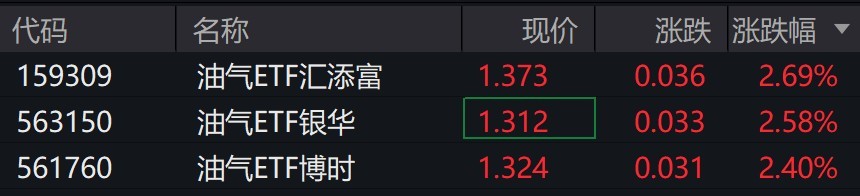
Group 1 - Oil and gas concept stocks strengthened, with China Petroleum & Chemical Corporation, China Merchants Energy Shipping Company, Guanghui Energy, and Intercontinental Oil & Gas rising over 3% [1] - Oil and gas-related ETFs increased by more than 2% due to market influences [1] Group 2 - Specific oil and gas ETFs showed positive performance: Huatai-PineBridge Oil & Gas ETF rose by 2.69% to 1.373, Yinhua Oil & Gas ETF increased by 2.58% to 1.312, and Bosera Oil & Gas ETF gained 2.40% to 1.324 [2] - Brokerages indicated that despite geopolitical uncertainties, the medium to long-term oil supply and demand dynamics remain favorable, maintaining a positive outlook on the "Big Three" oil companies and the oil service sector [2] - The recovery of the macro economy is expected to boost chemical demand, and in the long term, the clearing of chemical product capacity is beneficial for leading enterprises, with optimism for refining, coal chemical, and ethylene profitability [2]