
TDK

Search documents
研判2025!中国霍尔传感器行业市场规模、竞争格局、产业链及发展趋势分析:得益于下游行业不断发展,行业规模稳步扩张,国内企业积极布局[图]
Chan Ye Xin Xi Wang· 2025-09-25 01:19
Industry Overview - Hall sensors are based on the Hall effect principle, converting physical quantities such as current, magnetic fields, displacement, and pressure into electromotive force output. They can be categorized into linear and switch-type Hall sensors [1][3] - The Hall sensor industry chain consists of upstream raw materials, midstream design and manufacturing, and downstream applications in various sectors including automotive, consumer electronics, industrial, and renewable energy [1][10] Market Size - The global Hall sensor market is projected to grow from $7.83 billion in 2020 to $11.75 billion in 2024, achieving a compound annual growth rate (CAGR) of 10.7% [4][6] - In China, the Hall sensor market is expected to reach ¥6.55 billion in 2024, with a year-on-year growth of 17.2%, surpassing the global average growth rate [6] Competitive Landscape - Key global players in the Hall sensor market include Allegro MicroSystem, Infineon, AKM, TDK, and NXP, with companies from the US, Japan, and Europe holding a dominant position, especially in the high-end market [8] - The domestic market features a division between chip suppliers and integrated module providers, with local companies primarily adopting a Fabless model [8] Industry Chain - The upstream of the Hall sensor industry includes semiconductor materials (like silicon wafers), magnetic materials (such as rare earth), and packaging materials (ceramics and plastics), with silicon wafers accounting for approximately 45% of the total cost of chip production [10] - The automotive sector is the most significant application area for Hall sensors, used for wheel speed detection, position detection of crankshafts and camshafts, and electronic handbrake systems [10] Future Trends - The Hall sensor industry is moving towards high integration, low power consumption, and miniaturization, driven by the demand for smaller electronic products and the need for low-power solutions in line with carbon reduction strategies [12][13] - New materials such as graphene and topological materials are expected to enhance Hall sensor performance, enabling broader applications and improved capabilities [13]


受美股拉动,日经平均股指再创新高
日经中文网· 2025-09-22 08:00
Group 1 - The Nikkei average stock index rebounded to 45493.66 points on September 22, up 447.85 points (0.99%) from the previous weekend, surpassing the previous high of 45303.43 points on September 18 [2][3] - The rise in the Tokyo stock market is attributed to the positive performance of major US stock indices, with expectations that the US Federal Reserve will continue to lower interest rates, supporting a stable US economy [2][3] - Semiconductor-related stocks such as Tokyo Electron and Lasertec saw significant buying, driven by speculation of strong pre-order performance for Apple's new iPhone, leading to a notable increase in Japanese electronic component stocks like TDK [3] Group 2 - The Bank of Japan's decision to sell its holdings of exchange-traded funds (ETFs) was unexpected, but the market perceives it as a move to minimize its impact on the overall Japanese stock market [3] - Despite domestic institutional investors selling stocks due to high-risk concerns and seasonal factors, long-term overseas investors are buying undervalued stocks across various sectors [3]

行业聚焦:全球智能手机摄像头执行器市场头部企业份额调研(附Top10 厂商名单)
QYResearch· 2025-09-18 03:51
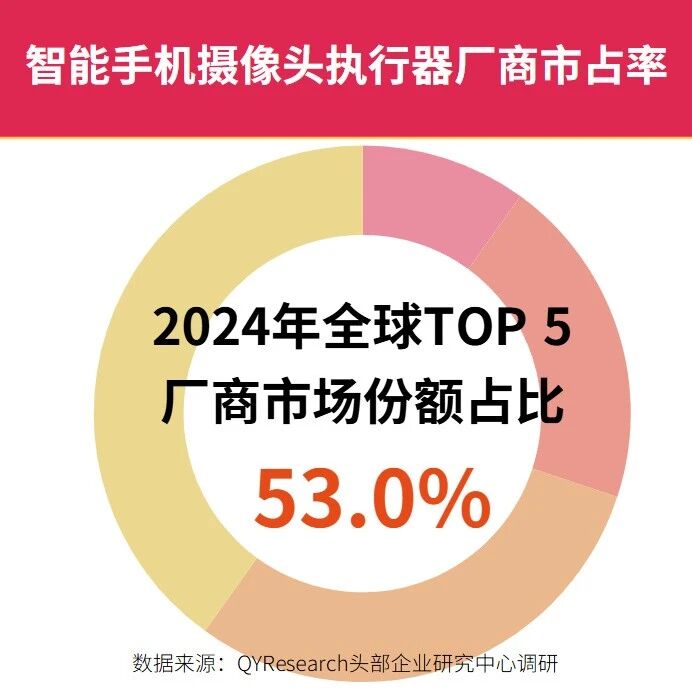
Core Viewpoint - The global smartphone camera actuator market is projected to reach USD 5.41 billion by 2031, with a compound annual growth rate (CAGR) of 3.9% from 2025 to 2031 [1]. Market Overview - The smartphone camera actuator is a micro-precision driving device used for automatic focusing (AF), optical image stabilization (OIS), and zoom functions [1]. - The market is dominated by VCM (Voice Coil Motor), which holds approximately 77.9% of the market share [6][5]. - The mid-range smartphone segment is the largest downstream market, accounting for about 52.6% of the demand [9][6]. Key Players - Major manufacturers in the global smartphone camera actuator market include Alps Alpine, MinebeaMitsumi, TDK, Jahwa Electronics, Samsung Electro-Mechanics, ActRO, and LG Innotek, among others [5][18]. - The top five manufacturers are expected to hold around 53.0% of the market share in 2024 [5]. Market Drivers - The growth of the smartphone camera actuator market is driven by the long-term trend of imaging upgrades in high-end and mid-range smartphones, with increasing reliance on high-performance actuators to ensure image quality [12]. - Consumer demand for mobile imaging experiences, including 4K/8K video recording and night scene optimization, is a significant growth factor [12]. - The rise of new smartphone forms, such as foldable screens and AI computational photography, is also boosting actuator demand [12]. Downstream Demand Trends - There is a growing emphasis on smartphone imaging capabilities among consumers, prompting brands to adopt higher-end camera module solutions [14]. - The penetration of triple-camera setups and beyond is expected to become standard in mid-to-high-end models, increasing the demand for actuators in terms of quantity and performance [14]. - The proliferation of AR/VR, social media short videos, and e-commerce live streaming is expanding the application scenarios for mobile imaging, driving the market towards higher precision, faster response times, and lower energy consumption [14].
龙磁科技(300835) - 300835龙磁科技投资者关系管理信息20250917
2025-09-17 11:24
Group 1: Market Overview and Production Capacity - The competition in the permanent magnet ferrite market is characterized by multi-level differentiation, regional concentration, and technology-driven dynamics. Japan's TDK and Hitachi Metals focus on the high-end market with limited capacity utilization, while China is the largest producer, with concentrated capacities in Anhui and Zhejiang, forming an industrial cluster [1] - The company aims to enhance its permanent magnet capacity to 60,000 tons, focusing on applications in automotive and variable frequency home appliances, while upgrading domestic production capabilities [1] Group 2: Vietnam Base and Performance Outlook - The Vietnam permanent magnet factory has completed technical upgrades and expansions, reaching a capacity of 12,000 tons. Due to rare earth control policies and trade regulations, overseas permanent magnet supply is tight, leading to increased demand from customers for the Vietnam base [2] Group 3: Chip Inductor Development - The chip inductor aligns with the growing demand for AI computing power and represents a high-end level of inductor technology. The product testing phase involves over 20 core parameter tests, with a typical testing cycle exceeding three months [3] - This year marks a pivotal year for customer development and validation for chip inductors, with recent small orders from a well-known international semiconductor power supplier and multiple products in the testing phase [3] Group 4: Value Contribution of Chip Inductors - The average value contribution of chip inductors in AI power modules is approximately 20%. This is expected to rise to around 30% as AI technology advances and higher power chips require better performance inductors [4] Group 5: TLVR Inductor Focus - TLVR inductors are designed for low voltage and high current environments, reducing the need for capacitors and lowering system costs. They are expected to see broader applications in AI and renewable energy sectors [5] - TLVR inductors have a value that is 2-3 times higher than traditional NON-TLVR inductors, leading to greater profit margins, prompting the company to invest more in TLVR development [5] Group 6: Vertical Power Supply Solutions - The company’s high-end molded inductors are used in vertical power supply modules, which offer advantages in power path, space utilization, heat dissipation, and integration compared to traditional planar solutions. Customer feedback indicates lower costs and energy consumption, enhancing acceptance of the company's products [6][7]

拆解Tesla Model 3逆变器,用了哪些芯片?
芯世相· 2025-09-12 04:31
Core Viewpoint - The article focuses on the disassembly and analysis of the Tesla Model 3 inverter, highlighting its simplified structure and engineering optimization approach. Group 1: Inverter Structure Characteristics - The Tesla Model 3 inverter is noted for its simple structure compared to similar products, reflecting an engineering optimization mindset [3]. - The inverter can be divided into key components such as control board, gate driver board, current sensors, thermal pads, insulation sheets, film capacitors, busbars, power semiconductors, and cooling fins, with a clear layout and assembly logic [5]. Group 2: Key Component Functions and Design Analysis - **Film Capacitor**: Manufactured by Nichicon, it has a rated voltage of 430VDC and a capacity of 550μF, used for electromagnetic interference suppression and stabilizing DC voltage [17]. - **Busbars**: Made of high-purity copper, the negative side busbar has a copper content of 95.26%, ensuring low-loss current transmission. The design allows for future current capacity upgrades, showcasing modular design thinking [23]. - **Power Semiconductors**: Utilizes SiC FETs (STGK026) for high-frequency switching and low conduction loss, arranged in a textbook layout for optimal performance [30]. - **Gate Drivers**: Six STGAP1AS driver ICs are used, with additional buffers to enhance driving signals, ensuring orderly switching of power devices [34]. - **Microcontroller**: The TI TMS320F28377DPTPQ serves as the control core, integrating energy conversion algorithms and fault diagnostics [37]. - **Current Detection**: Features a high-voltage sensor for two-phase current detection, simplifying hardware design while maintaining accuracy [40]. - **Cooling Structure**: The inverter employs a cooling system with high thermal conductivity to efficiently dissipate heat from the power semiconductors [41]. Group 3: Disassembly Summary and Outlook - The Tesla Model 3 inverter embodies the design principle of "simplicity is optimal," reducing production and maintenance costs through simplified component layouts while ensuring reliability with high-performance components [43]. - The PCB design, shaped like a map of the United States, adds a creative touch to the industrial product, although it does not enhance functionality [44].


14份料单更新!出售LATTICE、SKYWORKS、ADI等芯片
芯世相· 2025-09-12 04:31
Core Insights - The article discusses the challenges faced by companies dealing with excess inventory of electronic components, highlighting the financial burden of storage and capital costs associated with unsold stock [1] - It emphasizes the services provided by a company called "Chip Superman," which has successfully served 21,000 users and offers rapid transaction completion for inventory clearance [2][8] Group 1: Inventory Management - Companies are incurring significant costs due to excess inventory, with monthly storage and capital costs amounting to at least 5,000, leading to potential losses of 30,000 after six months [1] - The article lists various electronic components available for sale, indicating a strategy to clear out surplus stock at discounted prices [5][6] Group 2: Service Offerings - "Chip Superman" has a substantial inventory, boasting over 50 million chips across 1,000+ models and 100 brands, with a total inventory value exceeding 100 million [8] - The company operates a smart warehouse of 1,600 square meters and has an independent laboratory in Shenzhen for quality control of each component [8] Group 3: Market Demand - The article also mentions specific components that are in demand, indicating a proactive approach to sourcing and selling electronic parts [7] - The company encourages users to utilize their platform for better pricing and inventory management solutions [9]

亚洲 MLCC 行业 - 进入增长新阶段_ 解析未来五年需求驱动因素-Asian MLCC Industry_ Entering a new phase of growth_ demystifying the next five years‘ demand drivers
2025-09-11 12:11
Summary of J.P. Morgan's MLCC Industry Report Industry Overview - The MLCC (Multi-Layer Ceramic Capacitor) industry is entering a growth acceleration phase over the next five years, driven by new demand from AI, automotive, and robotics applications [1][4] - The industry experienced a 9% unit CAGR from 2016 to 2019, followed by a stagnation period with only 2% CAGR from 2019 to 2022 due to the pandemic [4] - A forecasted CAGR of 6-7% is expected from 2022 to 2025, with AI server adoption as a significant growth driver [4] Key Demand Drivers Automotive Sector - Demand for electric vehicles (EVs) and plug-in hybrid electric vehicles (PHEVs) is robust, with a 26% year-over-year growth despite policy challenges in the U.S. [4] - The forecast for automotive MLCC content is expected to increase from over 6,000 units in 2023 to 13,000 or more by 2030 [4] - Major automakers are expanding their advanced driver-assistance systems (ADAS), which will significantly increase MLCC consumption [4] High-Performance Computing (HPC) - AI servers are projected to consume 8-10 times more MLCC units than general-purpose servers, with a forecasted growth rate of 34% CAGR over the next five years [4] - A GB server rack consumes approximately 300-350k MLCC units, indicating substantial demand from AI applications [4] Robotics - The robotics sector, particularly humanoid robots, is anticipated to have high content consumption similar to vehicles, with projections of 300+ billion MLCC units by 2030 [5][4] Market Dynamics - The shift towards larger MLCC units is expected to tighten supply-demand dynamics, leading to improved pricing for commodity IT MLCCs [6] - Leading MLCC producers have reported an effective utilization rate (UTR) above 80%, indicating a recovery from previous lows [6] - The sales mix for automotive MLCCs has increased significantly, with SEMCO gaining market share and becoming the second-largest supplier [6] Investment Recommendations - J.P. Morgan recommends an "Overweight" (OW) rating on SEMCO and Yageo, citing their growth potential in the automotive sector and other components [6] - TDK is favored within the Japan component coverage due to strong fundamentals in battery operations, while Murata and Taiyo Yuden are rated Neutral due to concerns over margin recovery and inventory issues [6] Financial Projections - The MLCC industry is projected to see a revenue increase from $2.895 billion in 2024 to $6.334 billion by 2030, with a year-over-year growth rate of 12% in 2025 [27] - The automotive sector's share of total MLCC demand is expected to rise from 8.2% in 2016 to 19.7% by 2030, reflecting the growing importance of automotive applications [27] Conclusion - The MLCC industry is poised for significant growth driven by advancements in automotive technology, AI, and robotics, with favorable market conditions expected to support margin expansion and improved pricing dynamics [1][6]
15份料单更新!出售Microchip、TI、松下等芯片
芯世相· 2025-09-11 04:36
Core Viewpoint - The article discusses the challenges and opportunities in managing excess inventory of electronic components, highlighting the need for effective promotion and sales strategies to mitigate financial losses from storage and capital costs. Group 1: Inventory Management - A significant amount of obsolete inventory, totaling 100,000 units, incurs monthly storage and capital costs of at least 5,000, leading to a potential loss of 30,000 over six months if not sold [1] - The company offers discounted sales for excess inventory, aiming to clear stock quickly, with transactions completed in as little as half a day [2][8] Group 2: Inventory Listings - The article provides a detailed list of available electronic components for sale, including various models from brands like Microchip, TI, and ST, with quantities ranging from 600 to 90,000 units [5][6] - Specific models listed include the Microchip ATMXT2952T2-C2UR057 with 71,000 units and the VISHAY BAV103-GS08 with 170,000 units, indicating a diverse inventory [5][6] Group 3: Demand for Components - There is an active demand for specific components, with requests for large quantities of models from brands like Toshiba and Qualcomm, indicating a robust market for certain electronic parts [7] - The company emphasizes its capability to meet these demands through its extensive inventory and quick transaction processes [8] Group 4: Company Infrastructure - The company operates a 1,600 square meter smart storage facility with over 1,000 models and a total inventory of 50 million chips, valued at over 100 million [8] - An independent laboratory is established for quality control, ensuring that each component meets industry standards before sale [8]






丘钛科技(1478.HK):车载、IOT高速成长
Ge Long Hui· 2025-09-05 20:08
Core Viewpoint - The company reported strong financial performance for the first half of 2025, with significant growth in revenue and net profit, driven by advancements in camera module and fingerprint recognition module businesses [1][2][3]. Group 1: Financial Performance - In the first half of 2025, the company achieved revenue of RMB 8.832 billion, a year-on-year increase of 15.07% [1] - The net profit attributable to shareholders reached RMB 308 million, up 167.59% year-on-year [1] - The non-GAAP net profit attributable to shareholders was RMB 259 million, reflecting a substantial increase of 512.40% year-on-year [1] Group 2: Camera Module Business - The smartphone camera module segment saw a shift towards high-end specifications, with modules of 32 million pixels and above accounting for approximately 53.4% of total smartphone modules, an increase of about 5.5 percentage points year-on-year [1] - Sales of periscope camera modules reached approximately 10.6 million units, a year-on-year increase of about 5.9 times [1] - The average selling price of camera modules rose to approximately RMB 41.5, up 27.2% year-on-year and 16.1% quarter-on-quarter [1] Group 3: Non-Smartphone Camera Module Business - The company’s non-smartphone camera module business, particularly in automotive and IoT sectors, showed robust growth with shipments of 8.084 million units, a year-on-year increase of 47.9% [2] - The company has established partnerships with seven leading global automotive Tier 1 manufacturers and received supplier qualifications from 34 first-line automotive brands [2] - The sales guidance for non-smartphone camera modules has been revised from a year-on-year growth of no less than 40% to no less than 60% [2] Group 4: Fingerprint Recognition Module Business - The fingerprint recognition module business generated revenue of RMB 830 million, a year-on-year increase of 109.3% [3] - Shipment volume reached 94.36 million units, reflecting a year-on-year growth of 59.7% [3] - The average selling price increased by 31.1% year-on-year, contributing to improved sales revenue and gross margin [3] Group 5: Strategic Investments and Partnerships - The company increased its stake in New Giant Technology to 41.8%, enhancing its capabilities in smartphone, IoT, and NB lens technology [4] - New Giant Technology reported a revenue increase of 19.8% year-on-year, with a gross margin improvement from approximately 7.9% to 12.3% [4] - The company became the largest shareholder of Norwegian listed company poLight, focusing on TLens and semiconductor piezoelectric motors [4]
丘钛科技(01478):车载、IoT高速成长
China Post Securities· 2025-09-05 11:17
Investment Rating - The report assigns a "Buy" rating for the company, marking its first coverage [1]. Core Insights - The company has shown strong growth in its camera module business, particularly in the automotive and IoT sectors, with a significant increase in both revenue and profit margins [3][4][5]. - The company reported a revenue of RMB 8.832 billion for the first half of 2025, representing a year-on-year increase of 15.07%, and a net profit of RMB 308 million, which is a remarkable increase of 167.59% [3]. - The average selling price of camera modules has increased by approximately 27.2% year-on-year, driven by the optimization of product structure [4]. Company Overview - The latest closing price is HKD 14.16, with a total market capitalization of HKD 168.44 billion [2]. - The company has a debt-to-asset ratio of 65.06% and a price-to-earnings ratio of 32.96 [2]. Business Segments - The smartphone camera module segment has seen a shift towards high-end specifications, with modules of 32 million pixels and above accounting for about 53.4% of total sales, an increase of 5.5 percentage points year-on-year [4]. - In the non-smartphone sector, the company shipped 8.084 million camera modules for automotive and IoT applications, marking a year-on-year growth of 47.9% [5]. - The fingerprint recognition module business also experienced significant growth, with revenue reaching RMB 830 million, a year-on-year increase of 109.3% [6][8]. Financial Projections - The company is projected to achieve revenues of RMB 19.124 billion, RMB 21.705 billion, and RMB 24.472 billion for the years 2025, 2026, and 2027, respectively [10]. - The net profit forecast for the same years is RMB 745 million, RMB 938 million, and RMB 1.102 billion, indicating strong growth potential [10]. Strategic Developments - The company has deepened its vertical integration in smart vision systems, enhancing its capabilities in smartphone, IoT, and NB sectors through strategic investments [9]. - The company has established partnerships with seven leading automotive Tier 1 manufacturers, which supports its growth in the automotive camera module market [5].