
被动元器件

Search documents
电子行业双周报(2026/03/13-2026/03/26):村田宣布调涨MLCC-20260327
Dongguan Securities· 2026-03-27 12:24
Investment Rating - The report does not explicitly provide an investment rating for the industry, but it discusses the performance of the SW Electronics sector and its relative ranking against the CSI 300 index [4][11]. Core Insights - The SW Electronics sector has experienced a decline of 6.31% over the past two weeks and 11.43% in March, underperforming the CSI 300 index by 1.83 and 6.48 percentage points respectively [4][11]. - Murata has announced a price increase for MLCC products, with a range of 15%-35%, effective from April 1, 2026, due to increased demand from AI servers and high-end automotive applications [21][30]. - The demand for high-capacity, high-voltage, wide-temperature, and miniaturized MLCCs is expected to rise significantly due to AI applications, leading to potential supply-demand imbalances [30]. Summary by Sections Market Review and Valuation - The SW Electronics sector's PE TTM (excluding negative values) is 56.57 times, placing it in the 88.21 percentile over the past decade [11][17]. - The sector's performance ranks 13th among the Shenwan industries over the last two weeks and 21st in March [4][11]. Industry News - The National Bureau of Statistics reported that China's daily token usage is projected to increase from 100 billion in early 2024 to 100 trillion by the end of 2025, with a significant surge already observed in March 2026 [21]. - South Asia Plastics has raised prices for CCL and PP by 15% due to increased processing costs and material shortages [21]. Company Announcements - Huadian announced a revenue of 4.369 billion yuan for 2025, a year-on-year increase of 13.05%, with a net profit turnaround [21]. - Huitian reported a revenue of 18.945 billion yuan for 2025, up 42.00%, with a net profit increase of 47.74% [21]. Industry Data - Global smartphone shipments reached 336 million units in Q4 2025, a year-on-year increase of 2.28% [23]. - In February 2026, China's smartphone shipments were 16.26 million units, down 12.60% year-on-year [23]. Weekly Insights - The report highlights that AI's demand for MLCCs is expected to exacerbate supply constraints, with Murata's order inquiries being double its current capacity [30]. - Domestic manufacturers like Fenghua Advanced Technology and Sanhui Group are positioned to benefit from the price increases in high-end MLCCs due to supply-demand imbalances [30]. Key Stocks to Watch - Huadian (002463.SZ) is recommended due to its strong revenue growth driven by demand in AI servers and high-performance computing [31]. - Luxshare Precision (002475.SZ) is noted for its robust performance across consumer electronics and data centers, with significant revenue growth [31]. - Pengding Holdings (002938.SZ) is recognized for its steady revenue growth and strategic focus on emerging business areas [31].
电子行业双周报(2026、03、13-2026、03、26):村田宣布调涨MLCC-20260327
Dongguan Securities· 2026-03-27 06:27
Investment Rating - The report does not explicitly state an investment rating for the industry, but it provides insights into the performance of the electronic sector and its components [34]. Core Insights - The electronic sector has experienced a decline of 6.31% over the past two weeks, underperforming the CSI 300 index by 1.83 percentage points, ranking 13th among the Shenwan industries [11]. - The sector's cumulative decline in March is 11.43%, underperforming the CSI 300 index by 6.48 percentage points, ranking 21st among Shenwan industries [11]. - The current PE TTM for the Shenwan electronic sector is 56.57 times, which is at the 88.21 percentile of the past ten years [11][17]. Market Review and Valuation - The electronic sector's performance has been weak, with a year-to-date decline of 0.08%, outperforming the CSI 300 index by 3.22 percentage points, ranking 12th among Shenwan industries [11]. - The report highlights the price adjustments in the passive components market, particularly MLCCs, driven by increased demand from AI applications [30]. Industry News - Murata has announced a price increase for MLCCs, with hikes ranging from 15% to 35% for AI server and high-end automotive-grade products, effective from April 1 [21]. - The demand for high-capacity MLCCs is expected to rise due to AI applications, leading to longer delivery times and potential supply-demand imbalances [30]. - The report notes that the inquiry volume for MLCC orders is currently double the existing capacity, indicating strong market demand [30]. Company Announcements - Huadian announced a revenue of 43.69 billion yuan for 2025, a year-on-year increase of 13.05%, with a net profit turnaround [21]. - Huitian reported a revenue of 189.45 billion yuan for 2025, a 42% increase year-on-year, with a net profit growth of 47.74% [21]. - Nanya reported a revenue of 52.28 billion yuan for 2025, reflecting a 55.52% year-on-year increase [22]. Industry Data - Global smartphone shipments reached 336 million units in Q4 2025, marking a year-on-year growth of 2.28% [23]. - In February 2026, China's smartphone shipments were 16.26 million units, a decline of 12.60% year-on-year [23]. - The prices of LCD panels in March 2026 were reported as follows: 32-inch at $36, 50-inch at $94, 55-inch at $120, and 65-inch at $171, with slight month-on-month changes [27].
刚刚,MLCC龙头村田宣布涨价!
芯世相· 2026-03-17 07:12
Core Viewpoint - The article discusses the recent price increase announced by Murata, a leading passive component manufacturer, for AI server and high-end automotive MLCC products, indicating a new upward trend in the global passive components market [3][4]. Group 1: Price Increase Announcement - Murata has officially announced a price increase for AI server and high-end automotive MLCC products, with a price hike ranging from 15% to 35% [3]. - The new pricing structure will take effect on April 1, based on the orders received by the company [3]. - This marks Murata's first significant price adjustment in nearly three years, suggesting a potential new cycle of price increases in the passive components market [3]. Group 2: Market Position and Impact - Murata is the largest MLCC supplier globally, holding over 40% of the market share and 70% of the market share for AI servers [3]. - The price adjustment will affect several product categories, including multilayer-type chip ferrite beads, multilayer-type ferrite power inductors, multilayer-type RF inductors, and multilayer-type common mode choke coils [3]. Group 3: Drivers of Price Increase - The primary driver for this price increase is the rising cost of silver, which is widely used in various industrial applications such as solar panels, electric vehicles, semiconductors, AI devices, and medical equipment [4]. - The demand in these sectors has surged in recent years, contributing to the need for price adjustments [4]. Group 4: Future Considerations - In February, there were discussions within Murata regarding a potential price increase for high-end MLCCs due to the significant demand from AI servers [5]. - The company aims to complete its assessment by the fourth fiscal quarter of 2025 (first quarter of 2026) and make a final decision by the end of March this year [5].


运力紧张推升油轮运费 全球油轮费率续创六年新高丨A股明日线索
2 1 Shi Ji Jing Ji Bao Dao· 2026-02-26 11:22
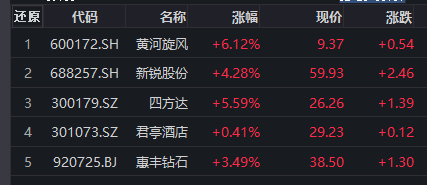
Group 1: Oil Shipping Industry - The recent tensions between the US and Iran have led to a significant increase in daily rental rates for Very Large Crude Carriers (VLCC), surpassing $200,000 per day, marking a new high since 2020 [1] - The increase in oil shipping costs is attributed to a rise in crude oil exports from the Middle East as traders seek to secure shipping capacity before potential conflicts [1] - Huayuan Securities predicts that the strong performance of VLCC rates in Q1 2026 will be driven by favorable trends in fundamentals, supply-side restructuring, and geopolitical changes, suggesting a prolonged "oil shipping boom" [1] Group 2: Smartphone Industry - The Chinese smartphone market is expected to experience a comprehensive price increase starting in March 2026, marking the first time multiple brands and categories will raise prices simultaneously [2] - New smartphone models released after March are anticipated to see price hikes of over 1,000 yuan, with high-end flagship models potentially increasing by 2,000 to 3,000 yuan compared to previous generations [2] - The price increases are driven by a sustained rise in upstream component costs, particularly storage chips, which have seen an over 80% increase in procurement costs compared to the previous year [2] Group 3: Semiconductor Industry - The demand for storage components is being driven by AI, with TrendForce forecasting a 144% increase in DRAM market value to $404.3 billion and a 112% increase in NAND Flash value to $147.3 billion by 2026 [3] - The semiconductor sector is experiencing a broader price increase for passive components, with major manufacturers like Murata discussing price hikes for MLCCs due to rising raw material costs and increased demand from AI and automotive sectors [4] Group 4: AI and Cooling Technology - Akash Systems has delivered the first commercial AI servers utilizing Diamond Cooling technology to NxtGen AI, marking a significant innovation in the AI chip market [6] - The potential market for diamond cooling solutions in AI chips is estimated to range from 7.5 billion to 150 billion yuan by 2030, depending on the penetration rates of this technology [6] Group 5: Commercial Space Industry - The commercial space sector is seeing renewed interest with the upcoming launch of the recoverable liquid rocket "Li Jian No. 2" by China Aerospace, scheduled for late March [7] - The company plans multiple launches throughout the year, including satellite internet deployment and significant national missions, reinforcing its position in the commercial launch market [7][9]
四大证券报精华摘要:2月26日
Xin Hua Cai Jing· 2026-02-26 01:56
Group 1 - The A-share market is experiencing a strong upward trend, with major indices rising and significant gains in the non-ferrous metals and chemical sectors, indicating a potential continuation of the spring rally supported by policy expectations, liquidity, and industry trends [1][5] - Public funds are actively positioning in Hong Kong stocks, particularly in technology and cyclical sectors, with a notable increase in ETF shares, reflecting a positive outlook for these investments [2] - The insurance sector is beginning to explore coverage for humanoid robots, which could support the healthy development of the robotics industry and enhance the integration of finance and innovation [3] Group 2 - The demand for passive components is expected to drive a comprehensive price increase, with major manufacturers like Murata discussing price hikes for MLCCs, influenced by rising raw material costs and AI demand [4][12] - The strong cyclical sectors in the A-share market have shown significant gains, with construction materials and metals outperforming major indices, suggesting a favorable environment for investment in these sectors [8] - Public funds are preparing for a substantial influx of capital, with nearly 140 new funds expected to bring in around 100 billion yuan, supported by favorable market conditions and trends in technology [9] Group 3 - The lithium battery index is rising, with upstream lithium prices increasing and affecting the entire supply chain, leading to intensified competition and pressure on downstream profitability [10] - The public fund industry has distributed over 36.4 billion yuan in dividends this year, with equity funds contributing more than half, reflecting a shift towards enhancing investor returns [11] - The tungsten market is experiencing a strong price increase, with core products reaching historical highs, indicating a tightening supply and rising prices across the industry [12][13]
四大证券报头版头条内容精华摘要_2026年2月26日_财经新闻
Xin Lang Cai Jing· 2026-02-26 00:34
Group 1 - The Hong Kong stock market is experiencing significant divergence, with the Hang Seng Tech Index declining while AI companies like Zhipu and MiniMax show strong stock performance, indicating a potential restructuring of investment logic [1][19] - Public funds are actively positioning in the Hong Kong market, focusing on technology and cyclical sectors, as they seek opportunities amid market fluctuations [2][19] - The A-share market is witnessing a strong performance in the non-ferrous metals and chemical sectors, with major indices rising and trading volume increasing, suggesting a continuation of the spring rally supported by policy expectations and liquidity [3][20][29] Group 2 - Shanghai has introduced new real estate policies to reduce housing purchase restrictions and optimize housing loan policies, effective from February 26, 2026, which may accelerate market activity [4][9][21] - The A-share market has seen over a hundred stocks hitting the daily limit up for two consecutive days, indicating a sustained bullish sentiment and increased trading volume [5][23] - The public fund industry is undergoing reforms, with institutions waiving direct sales fees and adjusting risk levels of their funds, reflecting a shift towards more investor-friendly practices [6][24] Group 3 - The demand for AI is driving a comprehensive price increase in passive components, with major manufacturers like Murata discussing price hikes for MLCCs, indicating a broader trend in the semiconductor industry [7][25] - The lithium battery index is rising, with raw material prices increasing and affecting the entire supply chain, leading to intensified competition between upstream and downstream players [10][27] - The strong cyclical sectors are outperforming the market, with indices for construction materials and non-ferrous metals showing significant gains, highlighting their investment value [12][29] Group 4 - The MLCC market is experiencing increased demand due to the growth of the AI industry, with prices for certain products already rising, indicating a favorable market environment for semiconductor companies [13][31] - The tungsten market is seeing a strong upward trend, with prices for key products reaching historical highs, reflecting robust demand in the non-ferrous metals sector [15][33] - The robot-themed funds have surpassed a total scale of 70 billion yuan, with significant net inflows in the days following the Spring Festival, showcasing investor interest in robotics [17][34]
AI需求拉动 被动元器件全面涨价即将到来
Shang Hai Zheng Quan Bao· 2026-02-25 17:32
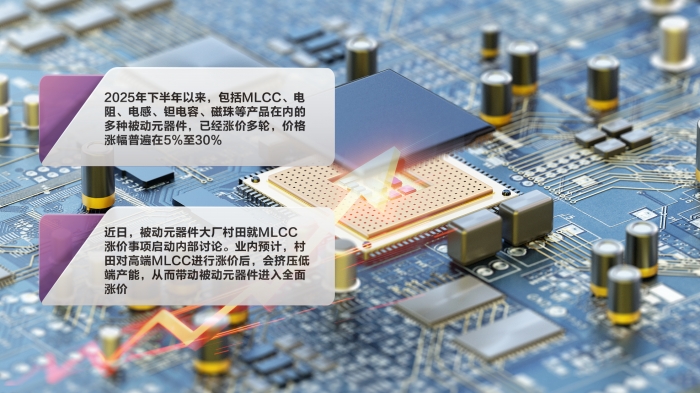
Group 1 - The core viewpoint of the articles indicates that the demand for passive components, particularly MLCCs, is set to increase significantly due to the rapid development of AI technology, leading to a confirmed price increase across the industry [2][3][5] - Murata, the largest MLCC supplier, is initiating discussions on price increases for MLCCs, with expectations to complete assessments of AI-driven demand by the end of Q1 2025 [3][5] - The price increase for passive components, including MLCCs, resistors, inductors, tantalum capacitors, and magnetic beads, is projected to range from 5% to 30% due to rising raw material costs and increased demand from AI and automotive sectors [2][5][6] Group 2 - The demand for high-end MLCCs is expected to grow significantly, with Murata's president stating that current orders for high-end MLCCs are double the company's production capacity, indicating a supply shortage that may persist for the next two years [3][4] - The passive components industry is entering a phase of multiple price increases across various regions and product categories, with several companies already announcing price hikes [5][6] - Analysts predict that the rapid advancement of AI technology will have a profound impact on the passive components industry, driving growth in high-end MLCCs and related materials [6]
指控对方恶意诉讼,顺络电子第二次对日本元器件龙头村田制作所提起反诉
Mei Ri Jing Ji Xin Wen· 2026-02-10 00:29
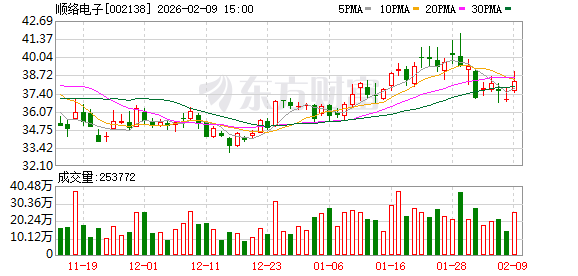
Core Viewpoint - The patent dispute between Chinese company Shunluo Electronics and Japanese company Murata Manufacturing has taken a dramatic turn, with Shunluo filing a counterclaim against Murata for malicious litigation [2][3]. Group 1: Legal Actions - Shunluo Electronics has officially filed a counterclaim against Murata Manufacturing, accusing it of maliciously initiating a patent lawsuit [2]. - The counterclaim seeks compensation of 1.5 million RMB for economic losses caused by Murata's alleged malicious litigation [3]. - Shunluo demands that Murata issue a public apology in multiple languages and in prominent media outlets to restore its reputation [3]. Group 2: Background of the Dispute - The legal conflict dates back to 2024 when Murata filed multiple patent infringement lawsuits against Shunluo [5]. - As of November 7, 2025, Murata had withdrawn all five patent infringement lawsuits it initiated in 2024 [4][5]. - Despite withdrawing previous lawsuits, Murata continued its legal actions by filing two new patent infringement lawsuits against Shunluo in March 2025 [5][6]. Group 3: Company Position and Actions - Shunluo Electronics emphasizes that its counterclaim is a legitimate action to protect its legal rights and will not affect its normal operations [3]. - The company has consistently invested in research and development, with a reported R&D expenditure of 505 million RMB in 2024, reflecting a year-on-year increase of 31.53% [6].

存储涨价潮蔓延 半导体行业发展气势如虹
2 1 Shi Ji Jing Ji Bao Dao· 2026-01-27 12:17
Core Viewpoint - The storage market is experiencing a significant price increase, with NAND flash contract prices rising over 100% as of January 2026, driven by strong demand for AI-related hardware and supply chain imbalances [1]. Group 1: Price Increases in Storage Market - Samsung Electronics has negotiated a price increase for NAND flash contracts with major clients, effective from January 2026 [1]. - The price increase is spreading from storage chips to the foundry and packaging/testing sectors, indicating a broader industry trend [1]. - Demand for AI computing power is driving the need for related hardware, leading to supply-demand imbalances across the semiconductor industry [1]. Group 2: Foundry and Testing Price Adjustments - The price increase in storage chips is affecting the foundry and packaging/testing sectors, with companies like TSMC and Samsung reducing production while AI-related Power IC demand remains strong [2]. - Some foundries are notifying clients of price increases ranging from 5% to 20% due to rising raw material costs and AI demand [3]. - Morgan Stanley has revised its price increase expectations for leading packaging companies, forecasting a rise of 5% to 20% in 2026, driven by strong AI semiconductor demand [4]. Group 3: Expansion in Packaging Industry - The packaging industry is entering an expansion phase, with companies like Yongxi Electronics planning to invest in new production facilities in Malaysia [5]. - Qizhong Technology is also increasing its investment in advanced packaging firms to enhance its competitive position in the high-end packaging sector [5]. Group 4: Passive Component Price Surge - Major passive component manufacturers, such as Huaxin Technology, have announced significant price increases for resistors due to rising costs of raw materials and labor [7]. - The price of key materials like silver and copper has surged, contributing to the overall increase in passive component prices [8]. - The demand for high-end capacitors in AI servers has led to a shift in production capacity, resulting in reduced supply of mid-to-low-end components and further driving up prices [8][9].
如何看待本轮被动元器件涨价行情
2026-01-26 02:49
Summary of Conference Call on Passive Component Price Trends Industry Overview - The passive components market is experiencing price increases across nearly all categories, including capacitors, resistors, diodes, inductors, and ferrite beads, driven primarily by raw material inflation [1][2][3] - The current price increase is characterized by a more rational market behavior compared to the previous cycle from 2017 to 2022, where speculative hoarding was prevalent [1][6] Key Points and Arguments - **Price Transmission**: Price increases are transmitted in layers; small and medium-sized end customers face price hikes of 30%-40%, while large customers with long-term contracts experience increases of less than 10% [4][2] - **MLCC Market Dynamics**: Although MLCC (Multi-layer Ceramic Capacitors) prices have not officially increased, high-capacity products have seen price rises. Manufacturers are cautious to avoid past mistakes of rapid price hikes [7][8] - **Market Share Concentration**: The MLCC market is dominated by four major players: Murata, Samsung, Yageo, and Sanhua, which together hold 80% of the market share. Strategies include reducing production and increasing agent thresholds [9] - **Domestic Brand Growth**: Domestic brands like Chaozhou Sanhua are gaining market share as customers shift from foreign brands to more cost-effective local options [10][12] - **Future Price Trends**: The trajectory of component prices will largely depend on raw material costs, with increases in silver and copper prices likely to push costs higher [13] Additional Important Insights - **Inventory Management**: Unlike the panic buying seen in previous years, current stakeholders are managing inventory more rationally, purchasing based on actual orders rather than speculation [5] - **Historical Context**: The last significant price surge occurred from July 2017 to the end of 2022, driven largely by human factors and market manipulation, whereas the current situation is primarily influenced by raw material costs [6][14] - **Cautious Market Sentiment**: Despite expectations of price increases, companies are hesitant to expand production capacity significantly, reflecting a cautious approach to market dynamics [11] - **Emerging Demand Areas**: While AI servers and storage are currently stable, the AI glasses sector may emerge as a new growth point in the future [18][16] Conclusion The passive components market is currently undergoing a price increase driven by raw material inflation, with a more rational market response compared to previous cycles. The focus on domestic brands and cautious inventory management reflects a significant shift in market dynamics. Future price trends will depend heavily on raw material costs and the evolving demand landscape, particularly in emerging technologies.
