亿境虚拟

Search documents
AI动态跟踪系列(十三)端侧AI:AI重塑智能硬件
Ping An Securities· 2026-01-13 09:28
Investment Rating - The industry investment rating is "Outperform the Market" [1][24]. Core Insights - The report highlights the significant breakthroughs in lightweight smart glasses and the emergence of "embodied intelligence" in robotic vacuum cleaners, showcasing the deep integration of AI with hardware at CES 2026 [2][4][5]. - AI is driving the upgrade of IoT across all scenarios, with strong support from chip manufacturers like Rockchip, Amlogic, and Tailing Micro, which are showcasing their capabilities in various fields [15][18]. - The report emphasizes the importance of AI in transforming smart hardware, suggesting that the integration of AI technology will enhance user experience and drive hardware upgrades [22]. Summary by Sections Smart Glasses and Robotic Vacuum Cleaners - The CES 2026 showcased lightweight smart glasses, with products like MoJie weighing only 25g and XGIMI at 28.9g, marking a significant reduction in weight through innovative optical technology and materials [6][10]. - The report notes that the application of smart glasses is expanding into various verticals such as professional translation, entertainment, outdoor sports, health maintenance, education, and industrial inspection, enhancing their competitive edge [8][9]. AI-Driven IoT and Chip Support - Rockchip presented a range of AI-driven IoT solutions, including consumer electronics and robotics, emphasizing the shift from passive to active service in hardware [15][18]. - Amlogic's focus on local computing and privacy-first solutions aims to enhance the performance of smart devices, with new chips like S905X5 and A311D2 set to launch in early 2026 [19][20]. - Tailing Micro's TL322X chip is designed to support high-end wireless gaming peripherals, showcasing advancements in wireless technology and low latency [21]. Investment Opportunities - The report suggests that investors should pay attention to the upgrade opportunities in smart hardware driven by AI, particularly in main control chips and semiconductor materials, as the demand for intelligent products continues to grow [22].


全球客商走进宝安,共绘投资新图景
Sou Hu Cai Jing· 2025-12-08 08:42
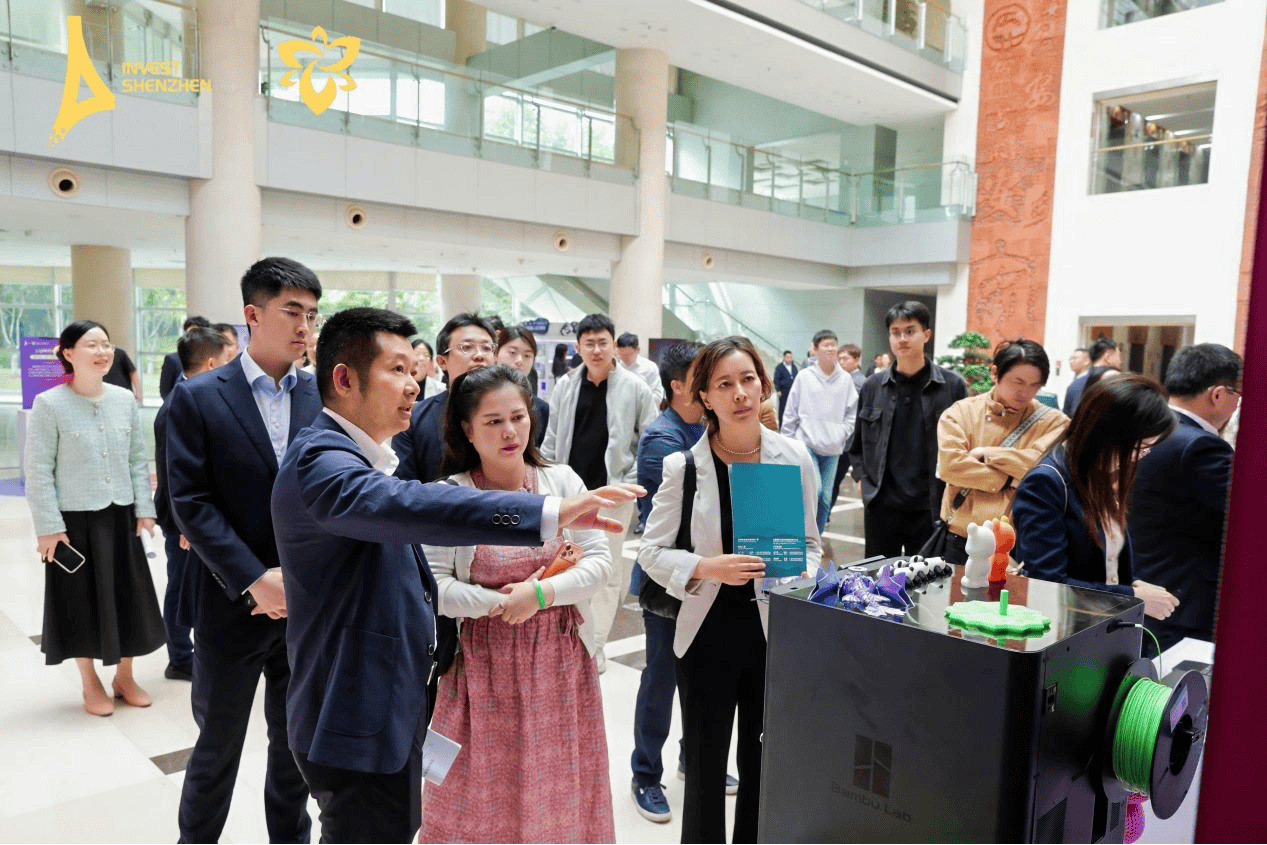
Group 1 - The core event is the investment inspection activity in Bao'an District, Shenzhen, which aims to attract global businesses and highlight the district's strategic importance in the Greater Bay Area development [1][2] - The inspection included a visit to the Jiuwai International Headquarters Zone, a 9 square kilometer area designed to attract multinational companies and international institutions [1] - The event showcased local enterprises, particularly in robotics and AI/AR technologies, demonstrating Bao'an's strong capabilities in advanced industries [1][2] Group 2 - A representative from Tianjian Co. emphasized the support provided by Bao'an District in terms of investment attraction, office space, and industry chain connections, indicating a commitment to expand operations [3] - The term "refreshing cognition" was frequently mentioned, reflecting a shift in perception regarding Bao'an's urban planning and its ability to attract headquarters economy [3]

AI眼镜中小ODM代工厂欲突破“魔界” 找品牌商“陪跑”
Di Yi Cai Jing· 2025-11-26 10:06
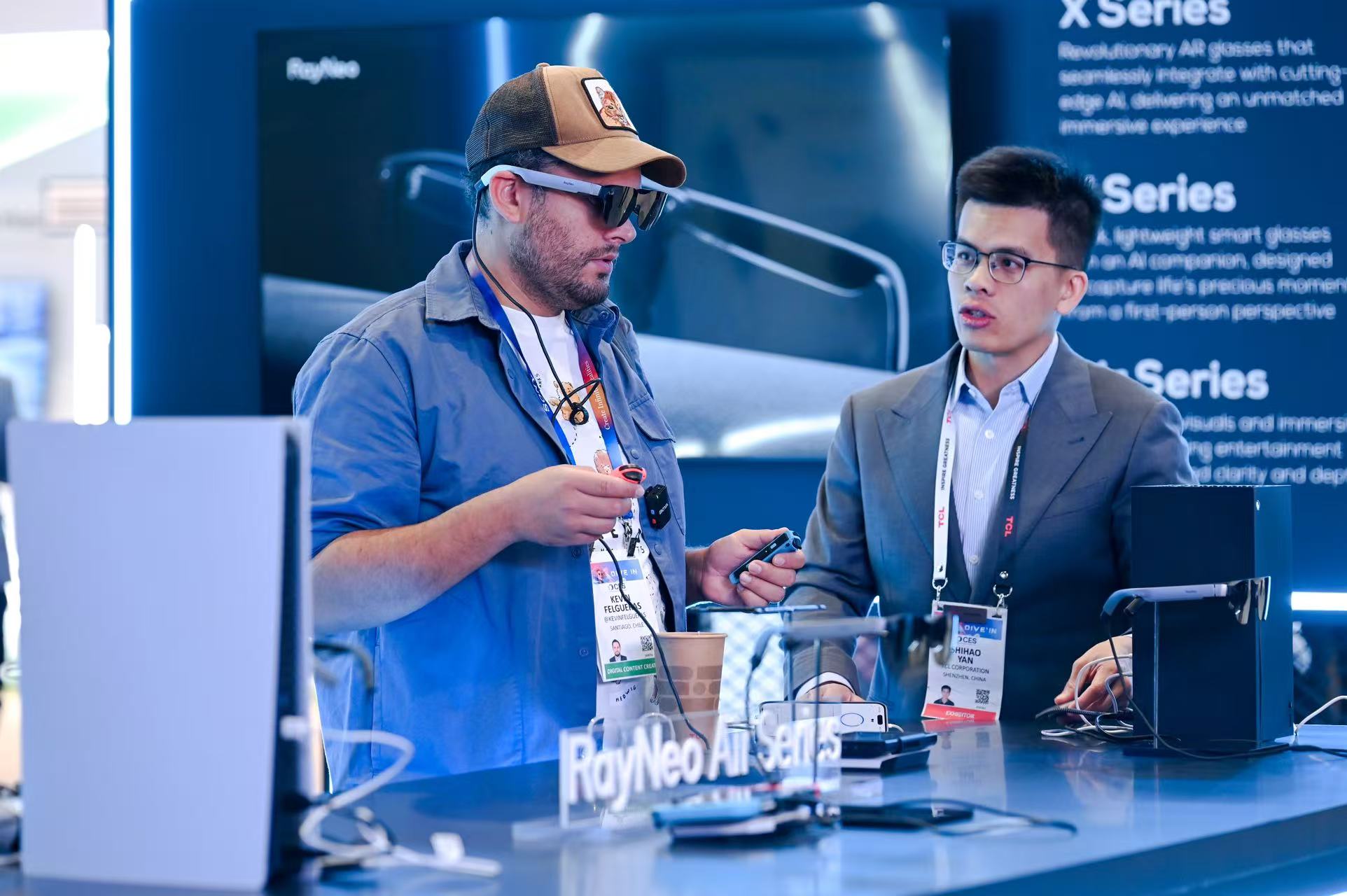
Core Insights - The article discusses the competitive landscape of the AI glasses market, highlighting the strategies of Antawave, a small to medium-sized ODM manufacturer in the Pearl River Delta, as it navigates challenges and opportunities in the industry [1][2][3]. Group 1: Company Strategies - Antawave's general manager, Yan Pengfei, is actively seeking to expand the scale of AI glasses production through partnerships with both B2B and B2C clients, despite facing financial pressures from inventory sales [1][3]. - The company has launched a low-cost AI translation glasses priced at 119 yuan during the Double 11 shopping festival, aiming for a sales target of 500,000 units [2][3]. - Antawave plans to introduce a new model priced at 399 yuan in December, which will feature improved AI translation and navigation capabilities compared to its previous 599 yuan model [2][3]. Group 2: Market Dynamics - The AI glasses market is seeing increased competition, with major brands like Xiaomi and Rokid focusing on higher-priced models, while Antawave and similar manufacturers target the budget segment [2][3]. - The emergence of domestic chip solutions is enabling smaller manufacturers to offer more affordable and lightweight AI glasses, enhancing their competitiveness against larger firms [3][4]. - IDC forecasts that by 2026, the global smart glasses market will exceed 23.68 million units, with China's market expected to surpass 4.915 million units, indicating significant growth potential in the sector [5][6]. Group 3: Technological Advancements - Antawave is leveraging local supply chains in the Pearl River Delta to reduce costs and accelerate product iterations, with a development cycle of approximately six months for new models [3][5]. - The article notes that advancements in domestic AI glasses chips are expected to lead to more diverse functionalities, including multi-modal interaction and improved power efficiency [4][5]. - Other companies in the sector, such as Yijing Virtual and Gudong Intelligent, are also innovating with lightweight designs and advanced features, indicating a trend towards more integrated and user-friendly AI glasses [6].
AI眼镜中小ODM代工厂欲突破“魔界”,找品牌商“陪跑”
Di Yi Cai Jing· 2025-11-26 09:50
小米、雷鸟、Rokid等主要做1500元以上AI眼镜,是在"仙界";中小代工厂做百元级的白牌AI眼镜,是在"魔界",一些有研发能力的中小代工厂想破界。 作为一家珠三角的中小型AI眼镜ODM代工厂的负责人,安塔威总经理鄢鹏飞今年过了双11仍然在忙碌。尽管他们双11在抖音上卖119元的AI翻译眼镜销量不 错,但是Rokid双11卖了5000万元、上万副眼镜,这在鄢鹏飞看来已是一家独大。 "我们如果现货卖,资金压力大",鄢鹏飞正积极与ToB、ToC和ODM的客户洽谈,以扩大代工AI眼镜的规模。安塔威在东莞正建设新厂,其科技园展厅即将 投入运营。11月21日,鄢鹏飞在深圳办公室已接待了包括品牌商在内的四家重要客户。 不甘心只做百元AI眼镜 以智能手表等可穿戴电子产品起家的安塔威,看好AI眼镜的新赛道,今年年初已开始研发搭载国产芯片方案的低成本AI眼镜。在7月小米推出近2000元AI眼 镜的次日,安塔威立马跟进推出了599元的带AI翻译和导航功能的AI眼镜。 这款百元级AI眼镜随后几个月在华强北、抖音直播间和代理商渠道销量猛增,月出货量曾突破2万台。前不久,大朋等纷纷跟进国产芯片方案,在双11也推 出599元的AI眼镜 ...
成立深圳首个AI智能眼镜产业联盟 宝安加速抢滩万亿新赛道
Shen Zhen Shang Bao· 2025-05-20 17:07
Core Insights - The recent launch of smart glasses by Huawei has garnered significant market attention, with the upcoming 2025 Shenzhen International Optical Expo focusing on the integration of traditional eyewear and smart wearables [2] - The year 2025 is anticipated to be a breakthrough year for smart glasses, with major tech companies like Apple, Facebook, and Google entering the market alongside domestic giants such as Huawei, Xiaomi, ByteDance, and Alibaba [2] - Shenzhen is emerging as a competitive hub for the smart glasses industry, with a growing number of companies and a robust industrial ecosystem, indicating the potential for a trillion-dollar new industry [2][4] Industry Developments - The concept of AI glasses is evolving, with advancements in VR, AR, and AI technologies leading to more intelligent and lightweight products [3] - Shenzhen's action plan for 2025-2026 aims to promote AI wearable devices, including smart glasses, smartwatches, and AR/VR equipment, focusing on high-cost performance for specific market demands [3] - The establishment of the AI Smart Glasses Industry Alliance in Bao'an district aims to integrate resources across the industry chain, fostering collaboration among companies [6] Competitive Landscape - Bao'an district is rapidly becoming a key player in the smart glasses industry, benefiting from a strong industrial foundation and policy support, with a complete supply chain from components to manufacturing [5][7] - Companies like Xianshun Technology and Yijing Virtual are making significant strides, with Xianshun developing the world's smallest near-eye display optical system and Yijing Virtual creating a commercial development board for smart glasses [5][7] - The smart glasses market is expected to see a surge in product launches this year, with various types of glasses, including audio glasses and multifunctional smart glasses, anticipated to enter the market [8] Future Outlook - The smart glasses industry in Shenzhen is projected to experience rapid growth, positioning the region as a global leader in smart wearable devices [4] - Bao'an district aims to cultivate 3-5 industry-leading companies and exceed 600 AI enterprises by 2026, with a target of achieving a scale of 55 billion yuan in the AI industry [7][8] - Predictions suggest that smart glasses could become an essential part of daily life and potentially replace smartphones by 2035 [8]
AI消费火热!粤企加速布局AI智能体,解锁人机交互新模式
Nan Fang Du Shi Bao· 2025-05-15 09:09
Core Insights - The article highlights the rapid development and integration of AI technologies in various sectors within Guangdong, particularly focusing on consumer electronics like AI smartphones, AI glasses, and AI toys [1][2][4][11]. AI Smartphones - The launch of AI smartphones marks the beginning of an "autonomous driving" era in mobile technology, with significant consumer interest reflected in a survey where over 70% expressed a willingness to purchase AI smartphones [4][5]. - Guangdong produced 683 million smartphones in 2024, accounting for 40% of the national output, with a target to manufacture over 100 large-scale AI-enabled devices by 2027, including 100 million AI smartphones [4][5]. AI Glasses - The AI glasses market is experiencing a surge, with nearly 90% of surveyed consumers showing interest in purchasing AI glasses, making it the highest among all categories [7][11]. - Companies like Huawei and OPPO are actively participating in the "hundred glasses battle," showcasing their AI glasses at international events like CES 2025, indicating a growing competitive landscape [7][8]. AI Toys - There is a rising consumer interest in AI toys, with 88.35% of respondents indicating a high willingness to purchase, particularly for products that offer emotional interaction [11][12]. - Companies in Guangdong are innovating in the AI toy sector, integrating advanced AI functionalities into traditional toys, leading to significant order increases, such as one company reporting over 2 million orders for AI-enabled plush toys [11][12]. Industry Trends - The integration of AI technologies across various consumer electronics is reshaping human-computer interaction, with predictions that AI glasses could eventually perform functions similar to smartphones [6][10]. - The AI toy market is projected to reach a scale of 30 to 40 billion RMB by 2028, indicating substantial growth potential in the emotional companionship segment [12].