
DSM

Search documents
食品溯源全景路径剖析:从原料到成品,如何实现全程透明与效果验证?
Xin Lang Cai Jing· 2026-01-21 05:33
Core Insights - The article emphasizes the evolution of consumer expectations from basic safety compliance to a demand for quality certainty and efficacy in food products, highlighting the importance of trust in brand value [1][4][41] Group 1: Traceability in Food Industry - The search index for "food traceability" keywords increased by 157.39% year-on-year in the first half of 2025, indicating a growing consumer interest in product origins and processing [2] - Companies like Nongfu Spring are pioneers in traceability practices, transforming their water source into a symbol of brand trust [2] - Major food brands, including McDonald's and KFC, have initiated traceability journeys, but face challenges in differentiating their offerings in a crowded market [2][4] Group 2: Evolution of Traceability - Traceability marketing has shifted from merely ensuring safety compliance to establishing quality certainty and efficacy stability, driven by consumer health demands and technological advancements [4][5] - The traceability system has evolved from simple information recording to a standardized carrier of product value, integrating into brand building, product innovation, and user delivery [4][5] Group 3: Role of Technology - The traceability system in functional foods is advancing from basic safety assurance to a standardized and refined approach, similar to the beauty industry’s control over active ingredients [9] - Brands are increasingly using digital traceability to provide comprehensive production data, ensuring that active ingredients remain effective through industrial processing [14][15] Group 4: Consumer Engagement - Over 60% of global consumers are willing to pay a premium for brands that transparently disclose ingredient sources and production details, indicating a strong demand for transparency [8] - The trend is particularly pronounced in functional foods, where traceability is becoming a key component of building technical barriers [8][9] Group 5: Supply Chain Management - The ultimate value of traceability lies in the ability to deepen and control the supply chain, transitioning from mere production capabilities to sustainable selling [39][40] - Companies are moving from passive procurement to active supply chain management, enhancing their ability to respond to consumer demands quickly [40] Group 6: Traditional Chinese Medicine and Modernization - The market for "medicinal food" is projected to exceed 500 billion yuan by 2025, driven by consumer demand for standardized and verified products [25][26] - Brands are constructing comprehensive traceability systems to address issues of origin confusion and safety in traditional Chinese medicine [27][29] Group 7: Geographic Branding - Geographic indicators are being transformed into tangible brand assets through traceability, allowing consumers to verify the authenticity and quality of regional products [37][38] - Successful case studies, such as the sales of birch juice from Yichun, demonstrate the effectiveness of deep traceability in building consumer trust [38]


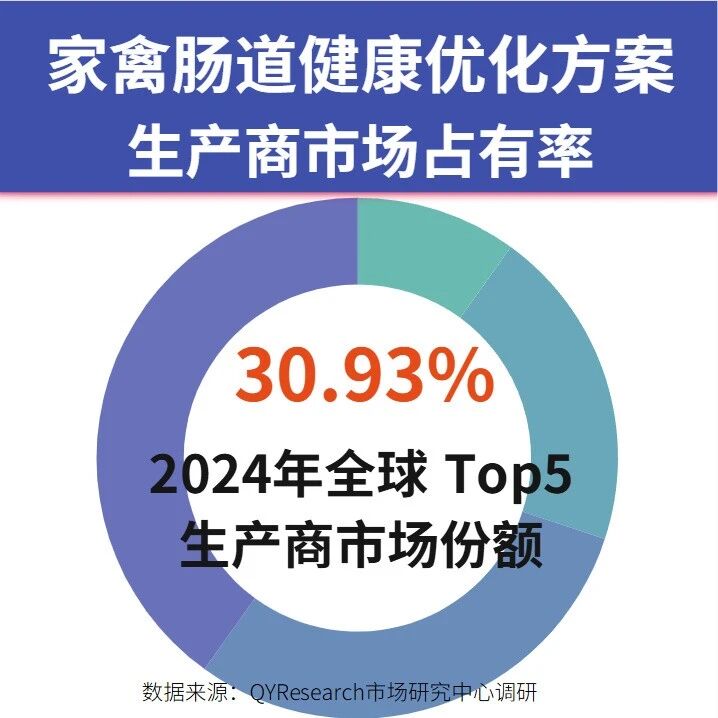
行业聚焦:全球家禽肠道健康优化方案行业头部企业市场份额及排名调查(附厂商名单)
QYResearch· 2025-12-03 04:16
Core Insights - The article discusses the optimization solutions for poultry gut health, focusing on feed additives, nutritional strategies, and management practices to enhance digestive health and reduce disease risks [1][3][4]. Market Overview - The poultry industry has undergone significant changes due to genetic improvements and fluctuations in feed ingredient prices, leading to increased demand for enhanced nutritional and management practices [3]. - The global demand for antibiotic-free (ABF) poultry has surged, with over 50% of chicken production in the U.S. adhering to "no antibiotics ever" (NAE) programs [3][4]. - The market for poultry gut health optimization solutions is projected to reach $4.882 billion by 2024, with a compound annual growth rate (CAGR) of 8.86% [10]. Current Development - There has been a surge in the development of alternative gut health optimization solutions, including probiotics, prebiotics, enzymes, organic acids, and plant-based products [4]. - Regulatory support for antibiotic alternatives is increasing, particularly in Europe and North America, driving the adoption of gut health optimization solutions [6]. - Innovations in feed additives are aiding poultry producers in optimizing feed efficiency and improving overall flock health [4][6]. Future Trends - The adoption of ABF production methods is on the rise, driven by consumer demand for antibiotic-free meat, which will propel the development of alternative gut health solutions [5]. - There is a growing emphasis on sustainability and animal welfare, leading to increased demand for solutions that improve feed conversion rates and reduce waste [5]. - The market is expected to expand globally, particularly in developing regions like Asia and Africa, as poultry consumption increases [5]. SWOT Analysis - **Strengths**: Regulatory support for antibiotic alternatives, growing demand for antibiotic-free poultry, and advancements in microbiome science [6]. - **Weaknesses**: High initial investment costs for implementing advanced gut health solutions and the complexity of managing gut health due to various influencing factors [7]. - **Opportunities**: Expanding global market, potential for innovative product development, and integration with digital solutions for improved gut health management [8]. - **Threats**: Increasing market competition and rapidly changing consumer preferences that may disrupt traditional poultry markets [9]. Market Segmentation - Probiotics and prebiotics currently dominate the market, accounting for approximately 40.73% of the share, as they are crucial for improving gut microbiota and overall poultry health [15]. - Broilers represent the largest demand source, making up about 68.80% of the market, due to their rapid growth and high feed conversion efficiency [17].
DSM-Firmenich: High-Quality Value Play
Seeking Alpha· 2025-11-23 03:14
Group 1 - The merger between DSM and Firmenich aims to create a leading company in nutrition, health, life-science ingredients, taste, and fragrance [1] - DSM is a Dutch company, while Firmenich is a Swiss company, indicating a cross-border collaboration in the merger [1] Group 2 - The merger is expected to enhance the combined company's capabilities in various sectors, potentially leading to increased market share and innovation [1] - The focus on nutrition and health aligns with current market trends emphasizing wellness and sustainability [1]

全球食品饮料用纤维素酶行业发展动态与前景需求规模调查报告2026年版
Sou Hu Cai Jing· 2025-11-22 17:12
Core Insights - The report focuses on the global market for food and beverage cellulase enzymes, analyzing market size, growth trends, and competitive landscape from 2020 to 2031 [2][3][4]. Market Overview - The global food and beverage cellulase enzyme market is segmented by product type and application, with projections for market size in 2020, 2024, and 2031 [3][4]. - The report highlights the overall development status of the food and beverage cellulase enzyme industry, including key characteristics and influencing factors [3][4]. Competitive Landscape - The report provides market share and rankings of major companies in the food and beverage cellulase enzyme sector based on sales volume and revenue for the years 2022 to 2025 [4][5]. - It includes a detailed analysis of the top five manufacturers' market shares in 2024 and their competitive positioning [5][6]. Regional Analysis - The report analyzes the supply and demand dynamics of food and beverage cellulase enzymes in major global regions, including North America, Europe, China, Japan, Southeast Asia, and India, with forecasts for production and revenue [5][6][7]. - It also examines the market size and growth rates for these regions from 2020 to 2031 [5][6]. Product and Application Segmentation - The report categorizes the food and beverage cellulase enzymes by product type and application, providing insights into sales volume and revenue trends [6][7]. - It forecasts the market share and growth rates for different product types and applications from 2020 to 2031 [6][7]. Industry Trends and Drivers - The report discusses the key trends and driving factors influencing the food and beverage cellulase enzyme industry, including technological advancements and regulatory impacts [8][9]. - It includes a SWOT analysis of Chinese companies in the sector, highlighting strengths, weaknesses, opportunities, and threats [8][9]. Supply Chain Analysis - The report outlines the supply chain dynamics of the food and beverage cellulase enzyme industry, including procurement and production models [9][10]. - It identifies key raw materials and their supply situation, as well as customer analysis across different applications [9][10].

2025年中国精制鱼油行业整体发展形势分析:应用领域不断扩大,销量将达43.65万吨,市场发展前景十分乐观[图]
Chan Ye Xin Xi Wang· 2025-11-06 01:25
Core Insights - Fish oil is derived from fatty fish and is rich in EPA and DHA, which are essential for cardiovascular health and brain development [1][2][3] - The fish oil market is segmented into crude and refined fish oil, with refined fish oil further categorized into feed-grade, pharmaceutical-grade, and food-grade [3][4] - The demand for refined fish oil is increasing due to rising health awareness, particularly in functional foods and health supplements [4][8] Industry Overview - The refined fish oil market in China is projected to grow, with sales expected to reach 424,900 tons in 2024, and 436,500 tons in 2025 [4][8] - The market structure for refined fish oil in China is dominated by feed-grade oil, which accounts for 92.12% of sales in 2024, and is expected to increase to 92.26% in 2025 [4][8] - Globally, refined fish oil sales are anticipated to reach 1,262,900 tons in 2024, with feed-grade oil making up 86.94% of the total [3][4] Competitive Landscape - The competition in the refined fish oil industry in China includes both international giants like DSM and BASF, and local companies such as Yuwang Bio and Chengdu Yuanda Biotechnology [6][7] - The market for food-grade fish oil is fragmented with numerous brands, while pharmaceutical-grade fish oil is dominated by companies like Sichuan Xinmeijia and Deyang Huatai [6][7] Industry Trends - The refined fish oil industry is expected to see innovation and quality improvements driven by technological advancements and stricter policy standards [8] - The market share is likely to concentrate among leading companies as regulatory standards tighten [8]

中国苯衍生物行业规模趋势与前景规划研究报告2025~2031年
Sou Hu Cai Jing· 2025-10-20 07:37
Group 1: Market Overview - The benzene derivatives market is categorized into various product types, including chlorobenzene, toluene, nitrobenzene, cyclohexane, isopropylbenzene, phenol, ethylbenzene, alkylbenzene, and aniline [2][3] - The market is projected to experience growth trends from 2021 to 2031, with specific forecasts for different product types [2][3] Group 2: Application Segmentation - Benzene derivatives are utilized across multiple applications, including drug design, biochemistry, polymer chemistry, electronics and high technology, petrochemicals, and others [3] - Growth trends for benzene derivatives by application are also forecasted from 2021 to 2031 [3][8] Group 3: Industry Development Analysis - The overall development of the benzene derivatives industry is characterized by specific trends, key features, influencing factors, and entry barriers [3][4] - The report includes a comprehensive analysis of the current state of the industry and its future prospects during the 14th Five-Year Plan period [4] Group 4: Supply and Demand Forecast - Global supply and demand for benzene derivatives are analyzed with forecasts from 2021 to 2031, including production capacity, output, and utilization rates [4][5] - The report provides insights into the production and demand trends in major regions, including North America, Europe, Asia-Pacific, Latin America, and the Middle East and Africa [4][5] Group 5: Competitive Landscape - The competitive landscape of the benzene derivatives market is examined, highlighting major manufacturers' market shares, production capacities, sales volumes, and revenue from 2021 to 2024 [5][6] - The report also discusses the concentration and competitive intensity within the industry, identifying leading players and their market positions [6][7] Group 6: Regional Analysis - Detailed analysis of benzene derivatives markets in key regions, including North America, Europe, Asia-Pacific, Latin America, and the Middle East and Africa, is provided [6][7] - The report includes sales volume and revenue forecasts for these regions from 2021 to 2031 [6][7] Group 7: Product Type Analysis - The report analyzes the sales volume and revenue of different product types of benzene derivatives, with forecasts for the period from 2021 to 2031 [7][8] - It also discusses the price trends of various benzene derivatives over the same period [8][9] Group 8: Application Analysis - The sales volume and revenue of benzene derivatives by application are forecasted from 2021 to 2031, providing insights into market dynamics [8][9] - The report includes market share analysis for different applications within the benzene derivatives sector [9][10] Group 9: Industry Environment - The report outlines the development trends, driving factors, and SWOT analysis of Chinese enterprises in the benzene derivatives industry [10][11] - It also discusses the regulatory environment and relevant policies affecting the industry [11][12] Group 10: Supply Chain Analysis - An overview of the benzene derivatives industry supply chain is provided, including key raw materials, procurement models, production modes, and sales channels [12][13] - The report highlights the main downstream customers in the industry [13][14]

全球与中国航空航天用特种尼龙市场现状分析与投资风险评估报告2025 ~ 2031年
Sou Hu Cai Jing· 2025-10-07 22:32
Market Overview - The aerospace specialty nylon market is categorized into various product types, including PA6, PA66, long-chain nylon, semi-aromatic nylon, and bio-based nylon [3][4] - The market is projected to experience significant growth from 2020 to 2031, with sales revenue trends indicating a compound annual growth rate (CAGR) across different product types [4][8] Global Supply and Demand Analysis - Global aerospace specialty nylon production capacity, output, and utilization rates are expected to evolve from 2020 to 2031, reflecting increasing demand [4][5] - The demand for aerospace specialty nylon is anticipated to rise, with specific growth trends noted in various regions, including North America, Europe, and Asia [4][5] Regional Market Analysis - The North American market is projected to show substantial growth in both sales volume and revenue from 2020 to 2031, with a notable CAGR [4][14] - The Chinese market is also expected to expand significantly, with increasing production capacity and market demand for aerospace specialty nylon [4][14] Major Manufacturers and Market Share - Key global manufacturers in the aerospace specialty nylon market include DuPont, BASF, Solvay, DSM, and Arkema, each holding significant market shares [5][6] - The market concentration and competitive landscape are analyzed, highlighting the top manufacturers and their respective market positions [5][6] Product Type and Application Analysis - Different product types of aerospace specialty nylon are analyzed for sales volume and revenue, with forecasts extending to 2031 [6][7] - Applications of aerospace specialty nylon include aircraft interiors, fuselage, and wings, with sales trends indicating growth in these areas [6][7] Industry Opportunities and Trends - The aerospace specialty nylon industry is driven by technological advancements and increasing demand for lightweight materials in aerospace applications [8][9] - The report identifies key opportunities and challenges facing the industry, including regulatory factors and market dynamics [8][9]

中科院天工所戴住波、张学礼:维生素A(视黄酸)高效酵母细胞工厂
合成生物学与绿色生物制造· 2025-07-16 13:18
Core Viewpoint - All-trans retinoic acid (ATRA) is a key active derivative of vitamin A with extensive clinical application value, but mainstream manufacturers like BASF and DSM still rely on traditional chemical synthesis methods, which pose environmental challenges and do not meet green chemistry requirements [1][3]. Group 1: Research Breakthroughs - The team from the Tianjin Institute of Industrial Biotechnology, Chinese Academy of Sciences, achieved a breakthrough by engineering Saccharomyces cerevisiae to produce ATRA at a fermentation yield of 1.84 g/L, providing a green solution for constructing a self-controlled vitamin industry chain [3][8]. - The research utilized a multi-faceted metabolic engineering strategy, optimizing chassis construction, module selection, cellular factory upgrades, and fermentation processes to achieve this yield [8]. Group 2: Metabolic Engineering Strategy - The initial focus was on creating a high-yield chassis for β-carotene, the precursor for ATRA, by screening genes from Xanthophyllomyces dendrorhous, leading to the construction of the Car09 strain with a β-carotene yield of 129.4 mg/L [5][6]. - The best combination for ATRA synthesis was identified as a β-carotene dioxygenase from marine bacteria and mouse retinaldehyde dehydrogenase, achieving 98.1 mg/L ATRA, although significant residual β-carotene indicated limitations in synthesis [6][7]. Group 3: Industrial Adaptation and Optimization - Four-dimensional collaborative modifications were implemented to address efficiency bottlenecks, including overexpressing transcription factors to enhance endoplasmic reticulum activity, balancing NADPH/NAD⁺ levels, and improving substrate supply, resulting in a 49.2% increase in ATRA yield [7][8]. - The development of a two-phase extraction fermentation process, combining glucose growth with ethanol and galactose induction, led to the successful production of ATRA at 1.84 g/L in a 5L fermenter [8]. Group 4: Industry Conference - The SynBioCon 2025 conference, scheduled for August 20-22 in Ningbo, will focus on the intersection of AI and biological manufacturing, exploring trends in green chemistry, new materials, future food, agriculture, and cosmetic ingredients [10][12].

2025年美联储微生物行业发展趋势报告-总体规模与细分市场占比
Sou Hu Cai Jing· 2025-05-20 23:56
Core Insights - The global Fed microbial market capacity reached billions (RMB) in 2023, with China's market capacity also at billions. The report forecasts that by 2029, the global market size will reach billions, growing at a compound annual growth rate (CAGR) of % during the forecast period [2] - The report provides analysis on China's Fed microbial market import and export figures, as well as the development status of various sub-sectors [2] Industry Overview - The Fed microbial industry is defined and its historical development is outlined [3] - Overall market analysis includes research and development investment in the Fed microbial industry and the market size in China from 2019 to 2029 [3] - The industry chain analysis discusses the impact of upstream supply and downstream demand on the Fed microbial industry [3] Product Segmentation - The Fed microbial industry is segmented by product type into liquid/gel, powder, and tablets [2][3] - The end-use applications include poultry, aquatic animals, ruminants, pigs, and others (horses and pets) [2][3] Competitive Landscape - Major domestic companies in the Fed microbial industry include Asahi Calpis Wellness, A/B Technologies, Lallemand, and others, with a focus on their products, market performance, and competitive strategies [3][4] Market Trends and Forecast - The report includes a PEST analysis of the domestic Fed microbial industry, covering social, policy, economic, and technological environments [4] - Market size and share analysis for different regions in China, along with supply and demand trends, are provided [4][5] - The report forecasts the market size and sales volume for various product types and applications from 2024 to 2029 [5][6]

新和成(002001):喜迎开门红 未来会更好
Xin Lang Cai Jing· 2025-04-29 02:38
Group 1 - The company reported Q1 2025 revenue of 5.44 billion yuan, a year-on-year increase of 20.9% and a quarter-on-quarter decrease of 6.66% [1] - The net profit attributable to the parent company reached 1.88 billion yuan, a year-on-year increase of 116.2% and a slight quarter-on-quarter increase, achieving a new record high [1] - The significant growth in performance is primarily attributed to the rise in prices of Vitamin E (VE) and methionine, with expectations for sustained high prices due to improved supply and demand dynamics [1][3] Group 2 - The average prices for VA/VE/VC/methionine in Q1 were 112.3/136.4/28.3/20.9 yuan/kg, representing year-on-year increases of 37.4%/109.9%/15.6%/-4.2% [2] - The company maintained a stable operation with a period expense ratio of 7%, which has been decreasing both year-on-year and quarter-on-quarter [2] - The gross profit margin was 46.7%, an increase of 11.7 percentage points year-on-year, while the net profit margin was 34.7%, an increase of 13.3 percentage points year-on-year [2] Group 3 - The supply-demand improvement in the methionine and VE markets is expected to support high price levels, with DSM planning to exit the vitamin market and leading methionine producers reducing production [3] - Recent price increases for methionine and VE are anticipated to positively impact the company's performance, with each 1 yuan/kg increase in price expected to add approximately 280 million yuan and 45 million yuan to profits, respectively [3] - The new materials business is experiencing rapid growth, with investments in various projects expected to accelerate future growth [3] Group 4 - The company forecasts net profits attributable to the parent company of 7.87 billion, 9.38 billion, and 9.76 billion yuan for 2025-2027, with corresponding EPS of 2.56, 3.05, and 3.18 yuan [4] - The current price corresponds to a PE ratio of 8.7, 7.3, and 7.0 for the respective years, maintaining a "buy" rating [4]
