West Fraser Timber Co. Ltd.

Search documents
West Fraser Timber (WFG) Reports $79M Adjusted EBITDA Loss in Q4 2025
Yahoo Finance· 2026-02-28 03:57
West Fraser Timber Co. Ltd. (NYSE:WFG) ranks among the best sustainability stocks to invest in. West Fraser Timber Co. Ltd. (NYSE:WFG) presented its fourth-quarter 2025 results on February 12, outlining current challenges in the wood products market while emphasizing its strategic positioning for long-term success. The company posted an adjusted EBITDA loss of $79 million during the quarter, an improvement from the $144 million loss in Q3 2025. Photo by René Schubert on Unsplash The company has transfer ...

West Fraser Timber Co. Ltd. (WFG) Earns Outperform Rating Amid Supply Constraints
Yahoo Finance· 2026-02-16 12:17
Company Overview - West Fraser Timber Co. Ltd. (NYSE:WFG) is a diversified wood products manufacturer established in 1955, headquartered in Vancouver, producing lumber, oriented strand board, plywood, pulp, and other building materials [4] Recent Performance - For Q4 2025, West Fraser reported sales of $1.165 billion and a net loss of $751 million, primarily due to $712 million in restructuring and impairment charges [3] - Full-year sales reached $5.462 billion with a net loss of $937 million, while adjusted EBITDA for the year was $56 million, impacted by oversupply in southern yellow pine and oriented strand board markets, elevated duties, and new U.S. tariffs [3] Market Outlook - Raymond James upgraded West Fraser to Outperform from Market Perform, raising the price target to $75 from $70, citing improving industry fundamentals and potential upside in 2026 [1] - The firm believes that forest products likely bottomed in 2025, with valuations compressed and a favorable risk/reward profile due to tightening lumber supply and limited new capacity [1] - Despite ongoing housing market volatility, West Fraser is positioned to benefit from a cyclical recovery in North American housing and construction demand, offering leveraged upside as pricing conditions normalize [3]
West Fraser Timber Q4 Earnings Call Highlights
Yahoo Finance· 2026-02-13 11:12
Core Insights - West Fraser Timber reported continued weak operating conditions in Q4 2025, with adjusted EBITDA of -$79 million, an improvement from -$144 million in Q3 2025, but a significant decline in full-year adjusted EBITDA to $56 million from $673 million in 2024, indicating a challenging downcycle in the lumber market [3][4][6]. Financial Performance - Adjusted EBITDA for the pulp and paper segment was -$1 million in Q4, improving from -$6 million in Q3, attributed to a major maintenance shutdown in Q3 [1]. - In the North American engineered wood products (EWP) segment, adjusted EBITDA was -$24 million in Q4 compared to -$15 million in Q3, impacted by a $239 million non-cash restructuring and impairment charge related to the High Level OSB mill [1]. - The lumber segment reported adjusted EBITDA of -$57 million in Q4, a significant improvement from -$123 million in Q3 when excluding a $67 million duty expense from the prior quarter [2]. Operational Actions - The company has removed over 1.1 billion board feet of lumber capacity, representing a 16% decrease in operating capacity, through mill closures and permanent shift reductions since 2022 [10]. - Management emphasized ongoing portfolio optimization, shifting output from closed mills to more modern and lower-cost mills, which has helped reduce costs [8][10]. - The ramp-up of the Allendale OSB mill in South Carolina has been largely completed, while the High Level OSB mill has been indefinitely curtailed to better align production with customer demand [11][9]. Liquidity and Capital Deployment - West Fraser ended the quarter with net debt of $131 million and cash flow from operations of -$172 million, but maintained over $1.2 billion in available liquidity despite significant capital expenditures and share buybacks [5][7]. - The company spent $139 million on capital expenditures and $32 million on buybacks/dividends during the quarter [5]. Market Dynamics and Future Outlook - The company noted that broader housing and repair-and-remodeling markets are facing affordability pressures, contributing to soft results across the business [3]. - Management indicated that the pricing dynamics are influenced by supply constraints and steady demand, although it remains early to assess spring demand due to recent weather conditions [14]. - West Fraser is focused on opportunities that strengthen its position during the downcycle, emphasizing asset quality for potential M&A activities [13].
【建投策略】商品:回调之后,聚光灯之外的机会
Xin Lang Cai Jing· 2026-01-19 23:47
Geopolitical Tensions - The geopolitical pressure between the US and Iran has significantly escalated, with the US State Department issuing a high-level security warning for citizens to evacuate Iran and threatening a 25% tariff on countries doing business with Iran [1][17] - Iran's response has been strong, with military readiness declared and warnings issued against US military bases and shipping targets, while also expressing willingness for negotiations [1][17] Impact on Global Commodity Markets - The tensions pose significant risks to the global commodity market, particularly concerning the Strait of Hormuz, which accounts for approximately 20% of global oil transport; any disruption could lead to a spike in oil prices [2][17] - Iran is a key exporter of methanol, LPG, and polyethylene, with methanol accounting for nearly half of China's imports, making the supply chain vulnerable to conflict [2][17] - Geopolitical risk premiums have driven prices of safe-haven assets like gold and silver to historical highs, potentially affecting the metals market as well [2][17] Greenland Dispute - The US has announced tariffs on eight European countries to pressure them into accepting the US's demands for the complete acquisition of Greenland, which has led to increased tensions with Europe [3][17] - Greenland holds about 32% of the world's rare earth reserves and significant amounts of copper, cobalt, and nickel, making the dispute impactful on key metal pricing [3][17] - The geopolitical tensions may lead to strategic reserve behaviors among countries regarding important metal raw materials [3][18] Structural Opportunities in Petrochemicals - The focus is on structural opportunities under the "reduce oil, increase chemicals" strategy, particularly concerning naphtha supply tightness due to peak gasoline demand and refinery capacity constraints [5][20] - The closure of high-cost refineries in Europe and Japan is expected to create market space for China's expanding chemical capacity, leading to discussions on potential volatility in ethylene supply [5][20] Pulp and Soybean Pricing Dynamics - The global supply of hardwood pulp is increasing, while softwood pulp supply remains limited, with a 9% year-on-year increase in shipments to China noted [7][21] - Domestic soybean prices have remained high following a significant price increase, driven by state grain reserves and cautious selling behavior from grain holders [15][29] - The potential for a release of social inventory post-Spring Festival could pressure soybean prices, alongside external factors affecting import dynamics [15][29]


热门商品集体回调后,关注聚光灯之外的机会
对冲研投· 2026-01-19 12:00
Geopolitical Tensions - The geopolitical pressure between the US and Iran has significantly escalated, with the US State Department issuing a highest-level security warning for citizens to evacuate Iran and threatening a 25% tariff on countries conducting business with Iran. The US military has increased troop presence in the Middle East and is considering various military strike options, including airstrikes on military facilities [5] - Iran has responded strongly, with its Supreme Leader calling for national unity and the military entering a state of maximum readiness, warning of retaliation against US military bases and shipping targets if attacked. Both sides are in a "testing state" on the brink of war, where any miscalculation could trigger conflict [5] - The tensions pose significant risks to the global commodity market, particularly concerning the Strait of Hormuz, which accounts for approximately 20% of global oil transport. A disruption could lead to a sharp spike in oil prices [5] - Iran is a key exporter of methanol, liquefied petroleum gas (LPG), and polyethylene, with Iran's methanol accounting for nearly half of China's imports. Conflict could directly threaten the supply chain of these chemical products [5] Greenland Dispute - Disagreements between the US and Europe regarding Greenland have increased, with the US imposing tariffs on eight European countries to coerce acceptance of its demands for the "complete acquisition of Greenland." European nations have expressed opposition and have sent symbolic military support to Greenland [6] - This geopolitical dispute directly impacts the pricing of key metals, as Greenland holds about 32% of the world's rare earth reserves and significant amounts of copper, cobalt, and nickel. The tensions have led to increased price volatility in rare earths and silver, and if the US gains control over the island, it could reshape the global rare earth supply chain [6] Structural Opportunities in Oil and Chemicals - The focus is on structural opportunities under the "reduce oil, increase chemicals" strategy. Naphtha, as the "mother of chemicals," is produced through steam cracking and is a key feedstock for olefins and aromatics. The supply of naphtha is expected to face long-term bottlenecks due to declining gasoline demand and domestic refining capacity nearing policy ceilings [8] - The closure of high-cost, outdated refineries in Europe and Japan is creating market space for China's expanding chemical capacity, which could lead to significant fluctuations in olefin supply and pricing [8] Pricing Dynamics in Pulp and Soybeans - The global market for pulp is experiencing a significant shift, with new capacity for hardwood pulp increasing while softwood pulp capacity remains limited. The strong demand from China is expected to support prices, especially for needle pulp, as supply bottlenecks become clearer [9] - Domestic soybean prices remain high due to strong purchasing activity from state reserves and a reluctance among grain holders to sell. However, high prices are suppressing purchasing enthusiasm among downstream enterprises, leading to a potential "price without market" situation [18]

全球木制包装行业调研报告(市场规模、行业趋势、产业链上下游)
QYResearch· 2026-01-06 09:29
Core Viewpoint - The wooden packaging industry is experiencing steady growth globally, driven by factors such as international trade, e-commerce, and sustainability trends, with significant opportunities for development in both global and Chinese markets [6][10][12]. Global Wooden Packaging Market Size and Forecast - The global wooden packaging market is projected to reach approximately $34.31 billion by 2024, with a compound annual growth rate (CAGR) of about 7.67% from 2020 to 2024, and is expected to approach $40.35 billion by 2031, with a future six-year CAGR of 1.88% [9]. - China's wooden packaging market holds about 16.38% of the global market share, with a forecasted market size of approximately $5.62 billion by 2024 and a CAGR of about 5.12% from 2020 to 2024, expected to grow to $7.31 billion by 2031, with a CAGR of 3.43% from 2025 to 2031 [10]. Driving Factors and Development Opportunities - The wooden packaging industry is significantly influenced by the growth of international trade and cross-border e-commerce, increasing the demand for wooden pallets and boxes due to their high strength and load-bearing capacity [12]. - The renewable and recyclable nature of wood aligns with global low-carbon trends, supported by sustainable packaging policies from international organizations and governments, enhancing industry demand [12]. - Technological advancements in automation, modular design, and functional treatments (e.g., moisture-proof, anti-corrosion) are improving manufacturing efficiency and product quality, creating new opportunities for customized solutions [13][14]. Industry Challenges - Fluctuations in raw material costs, particularly wood prices, are influenced by various factors, including supply, climate change, and international trade dynamics, which can increase manufacturing costs [15]. - Stricter environmental regulations and certification requirements, such as ISPM 15, raise production costs and compliance burdens for manufacturers [15]. - Competition from alternative materials like corrugated cardboard and plastic poses challenges to the wooden packaging sector [15]. Industry Trends - The industry is increasingly focusing on sustainability, promoting recyclable and biodegradable materials to meet global buyer demands for low-carbon packaging [16]. - The integration of smart technologies, such as IoT and RFID, is enhancing visibility and data management in the supply chain, providing added value to customers [16]. - The rise of rental and circular economy models for wooden pallets and boxes is transforming manufacturers into service-oriented providers [16]. Industry Chain Analysis - The wooden packaging industry chain consists of three main parts: upstream wood producers, midstream packaging manufacturers, and downstream users in various sectors such as food and beverage, machinery, and electronics [18][19]. - Key upstream players include major timber suppliers, while midstream manufacturers are concentrated in North America, Europe, and China, with a mix of companies producing new and recycled wooden packaging [19][20]. - The downstream market is diverse, with significant applications in food and beverage, machinery, electronics, and automotive industries, driven by the need for safe and efficient packaging solutions [23]. Policy Analysis in China - Recent policies aim to enhance logistics networks and promote standardized pallet transport, which will benefit the wooden packaging sector [25]. - The introduction of national standards for wooden pallets and encouragement of sustainable practices are expected to drive growth in the industry [25].



2026年全球木材市场预测
Sou Hu Cai Jing· 2026-01-04 13:39
Core Viewpoint - The global timber industry faced challenges in 2025 due to weak supply and demand, low price fluctuations, and ongoing trade tensions, with predictions for 2026 indicating continued structural issues in supply and pricing. North America Market: Price Fluctuations and Supply Tightening - The U.S. initiated an investigation into timber imports, raising tariffs on Canadian softwood to a mid-range of 30%, with additional tariffs pushing the total tax burden for some Canadian exporters above 40% [3] - Major Canadian companies like Canfor and West Fraser reduced production or shut down operations, leading to a significant drop in British Columbia's harvest volume [3] - The North American timber futures market experienced volatile price fluctuations in 2025, with expectations of continued supply tightening and price instability into 2026 [3] European Market: Tightening Softwood Supply - Germany, Czech Republic, and Norway face structural softwood shortages, with a reported shortfall exceeding 8 million cubic meters in 2024 due to pest control measures [5] - Sanctions against Russia and Belarus, along with the EU's Deforestation Regulation, have narrowed external timber supply channels, exacerbating supply-demand imbalances [5] - European softwood exports to China significantly decreased in 2025, with expectations of further declines in 2026 [5] Russian Market: Continued Industry Pressure - The Russian forest industry is in a structural downturn due to Western sanctions, high financing costs, and loss of export markets, leading to production cuts and losses among major producers [7] - Sanctions have restricted access to international markets, forcing Russian producers to rely on domestic demand and exports to China and the Middle East [7] African Market: Export Challenges - The African timber market faced production and export declines due to financial constraints and weak external demand, particularly from China and Europe [10] - Gabon's government investigations into financial compliance have disrupted supply chains, while Cameroon imposed bans on certain timber species during its presidential election [10] - Challenges in trade with China are expected to persist into 2026, with low import volumes likely to continue [10] Oceania Market: Price Pressure - New Zealand's timber industry reported continued price pressure on raw wood exports to China, with expectations that if import prices do not align with domestic prices, profit margins will be further squeezed [12] - Australia's timber exports to China showed no significant improvement, with expectations of continued low supply levels into 2026 [12] - Papua New Guinea's government reiterated its commitment to a complete ban on raw timber exports, which may lead to short-term supply shortages and price increases in China [13] Asian Market: Spreading Uncertainty - China's timber imports in 2025 experienced a dual decline in volume and price, driven by ongoing adjustments in the real estate sector and slowing infrastructure investment [15] - The timber import market in China is expected to face uncertainties in 2026, with demand for construction timber closely tied to new housing starts [16] - The establishment of the Hainan Free Trade Port is expected to reduce procurement costs for timber manufacturers, creating a differentiated market structure between high-value processing in Hainan and large-scale production in mainland China [16]
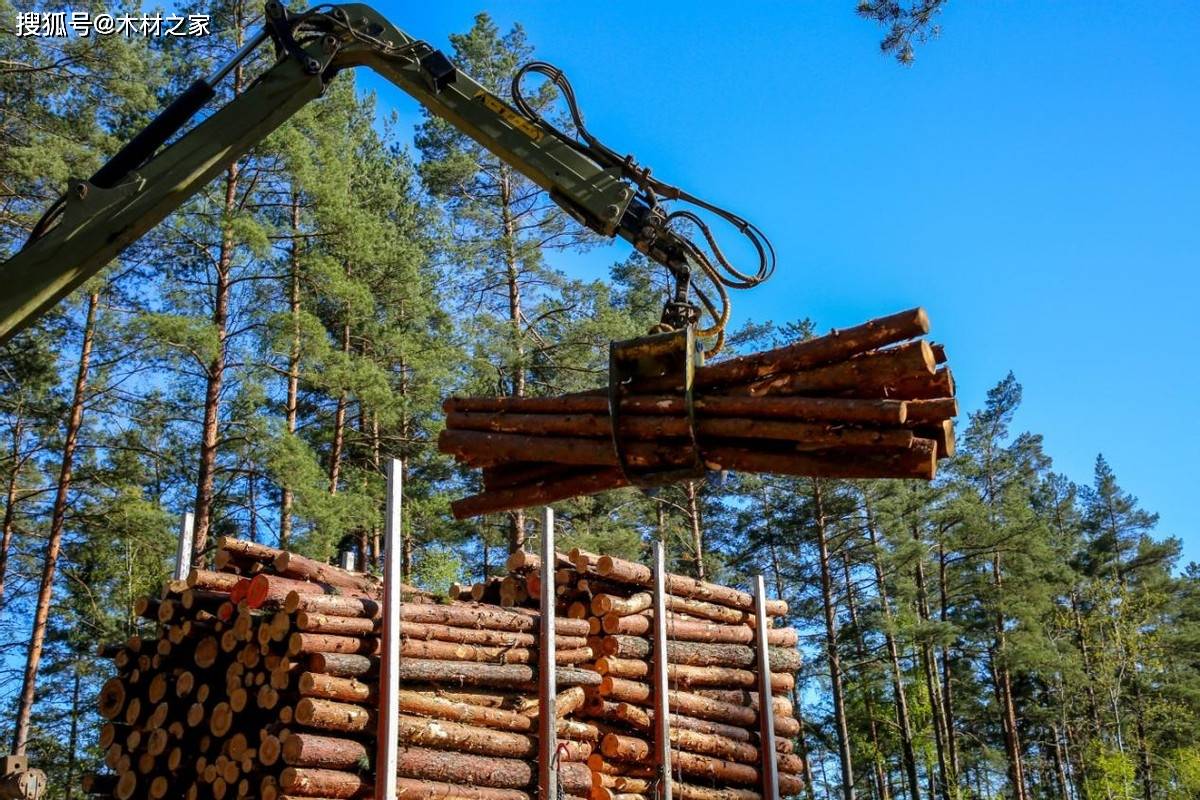
RBC Sees Acquisition Opportunities for West Fraser (WFG) as Wood Products Market Weakens Further
Yahoo Finance· 2025-11-19 05:25
Core Viewpoint - West Fraser Timber Co. Ltd. (NYSE:WFG) is recognized as a strong sustainability investment, despite facing significant financial losses in Q3 2025 due to challenging market conditions [1][2]. Financial Performance - The company's Q3 2025 earnings report indicated a substantial decline in financial metrics, with adjusted EBITDA margin dropping from 6% to -11% and sales decreasing from $1.532 billion in Q2 to $1.307 billion [2]. Market Position and Strategy - West Fraser's low-cost strategy, favorable softwood lumber duty rate, geographic diversification, and strong financial position are seen as advantages that will help the company navigate various market conditions through 2025 and 2026 [3]. - RBC Capital believes that West Fraser is well-positioned to potentially acquire premium assets if the market continues to decline [3]. Company Overview - West Fraser Timber Co. Ltd. is a diversified wood products company that produces a range of products including lumber, engineered wood products, pulp, newsprint, wood chips, and other residuals [4].
West Fraser Timber Co. Ltd. 2025 Q3 - Results - Earnings Call Presentation (TSX:WFG:CA) 2025-10-23
Seeking Alpha· 2025-10-23 16:01
Group 1 - The article does not provide any specific content or key points related to a company or industry [1]

‘PRETTY NERVOUS': Fed official explains the warning flags for inflation
Youtube· 2025-09-30 22:30
Tariffs Impact on Home Renovation Costs - President Trump has announced new tariffs, including a 10% levy on imported softwood lumber and a 25% duty on kitchen cabinets, bathroom vanities, and upholstered furniture manufactured outside the U.S. These tariffs will take effect on October 14th [1] Market Reactions to Tariffs - Lumber stocks such as Universal Forest Products and West Frasier Timber have seen slight increases, while cabinet manufacturers like Master Brand and American Woodmark Corporation, as well as Lazy Boy, have experienced declines, with Master Brand down 3% [2][3] - Notably, stocks like William Sonoma and RH, which dropped when tariffs were hinted at, have rebounded and are up today [3] Federal Reserve's Economic Outlook - The Federal Reserve is facing challenges in making decisions on interest rates due to potential government shutdowns affecting the release of key economic data, including jobs and inflation reports [5][6] - Chicago Fed President Austin Goulby emphasized the importance of data from the Bureau of Labor Statistics for understanding economic transitions and making informed decisions [6][8] Inflation Concerns - Goulby noted that inflation has been above the 2% target for over four years, complicating the Fed's outlook and making it difficult to predict future rate cuts [11][21] - The increase in inflation, particularly from tariffs, raises concerns about the persistence of inflationary pressures, which could impact the Fed's credibility if interest rates are cut while inflation remains high [22][20]