
Zeiss

Search documents
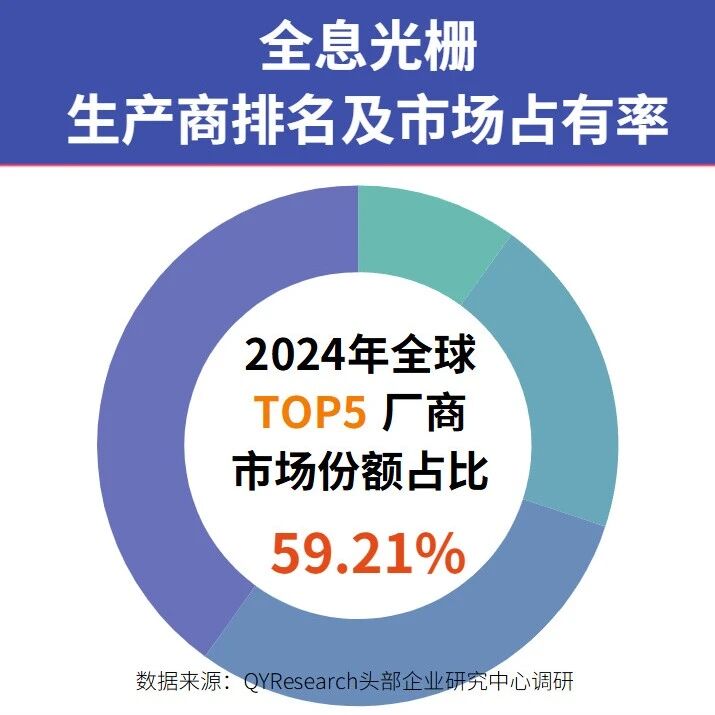
全息光栅行业洞察:2024年TOP5 企业占据全球59.21%的市场份额
QYResearch· 2025-10-14 02:16
Core Viewpoint - The holographic grating market is an emerging segment in advanced optics, driven by the increasing demand for high-precision optical components in fields such as spectroscopy, laser systems, telecommunications, and optical storage. The advantages of holographic gratings over traditional mechanical techniques include lower diffraction light scattering, higher diffraction efficiency, and more precise wavelength control, although high production costs and complex manufacturing processes remain challenges [3][4]. Market Overview - The holographic grating market is characterized by steady growth, with expanding applications in high-precision optics and continuous innovation in manufacturing technologies. Leading manufacturers are investing in advanced lithography, nanofabrication, and coating technologies to enhance diffraction efficiency and spectral resolution [4]. - North America and Europe maintain market leadership due to established research infrastructures, while the Asia-Pacific region is rapidly emerging as the fastest-growing market, driven by advancements in photonic technology and electronic manufacturing [4]. Future Trends - Integration with photonic devices is expected to increase, supporting applications in telecommunications, quantum computing, and next-generation data transmission [5]. - Advances in nanofabrication technologies will enable the production of higher precision and more flexible holographic gratings, lowering barriers for broader commercial applications [5]. - The Asia-Pacific market is projected to grow rapidly due to industrialization and increased investment in photonics technology [5]. SWOT Analysis - **Strengths**: Holographic gratings exhibit high precision and efficiency compared to ruled gratings, with broad applications in spectroscopy, laser tuning, and communication [6]. - **Weaknesses**: High production costs and low market awareness compared to traditional optical components limit widespread adoption [7]. - **Opportunities**: The growth of photonics and quantum technologies, along with expanding applications in medical and environmental monitoring, present significant opportunities [7]. - **Threats**: Competition from alternative technologies and supply chain risks related to specialized substrates and coatings could impact market share [7]. Market Size and Projections - According to QYResearch, the global holographic grating market is expected to reach USD 298.40 million by 2031, with a compound annual growth rate (CAGR) of 4.20% over the next few years [10]. - The leading manufacturers in the global holographic grating market include HORIBA, Newport Corporation, and Zeiss, with the top five companies holding approximately 59.21% of the market share [12]. Product Type and Application Segmentation - Currently, concave holographic gratings dominate the market, accounting for about 64.77% of the share, while laser applications represent the largest downstream market, comprising approximately 47.12% of the demand [15][16]. - Holographic gratings are essential components in laser systems, astronomical spectrometers, and optical communication systems, enhancing performance and reliability [16][17].

差距客观存在!中国目前被欧美卡脖子最严重的几个领域
Sou Hu Cai Jing· 2025-10-13 11:54
Core Insights - China's manufacturing industry has rapidly developed from a rudimentary stage to a global leader, facing numerous challenges along the way [1] - The "Made in China 2025" initiative aimed to transition from a manufacturing powerhouse to a manufacturing stronghold, but external factors like trade tensions with the U.S. have complicated this goal [3] - Despite achieving nearly 30% of global manufacturing value added, China still relies on imports for key technologies, indicating significant gaps in high-end manufacturing capabilities [5] Group 1: Development and Challenges - The introduction of foreign investment and technology has been crucial in building modern production lines, but trade disputes have disrupted supply chains [3] - Key sectors such as industrial software and aerospace face severe challenges due to reliance on foreign technology and patents, with domestic alternatives lagging behind [13][17] - The historical accumulation of technology and expertise in the West presents a significant barrier for China, necessitating a realistic approach to innovation and development [9] Group 2: Government and Policy Support - The Chinese government is actively supporting innovation through special funds and encouraging collaboration between academia and industry, emphasizing technological self-reliance [11] - In 2024, the central economic work conference highlighted the need for resilience in manufacturing, indicating a shift in focus towards domestic capabilities [11] Group 3: Sector-Specific Bottlenecks - The industrial software sector is heavily dominated by Western companies, with domestic alternatives still in their infancy, affecting product development efficiency [13][15] - The aerospace sector, particularly in engine manufacturing, continues to face challenges with high-end components still reliant on foreign imports [17][18] - High-end materials and components, such as bearings and optical lenses, are also areas where China struggles to achieve parity with international standards [20][22] Group 4: Progress and Future Outlook - Despite existing challenges, significant progress has been made in over 20 of the 35 key technologies identified, with increasing domestic production rates [24] - Collaborative efforts among small and medium enterprises are fostering a more integrated supply chain, particularly in the aerospace and industrial software sectors [26] - The ongoing development of domestic capabilities in high-end materials and components is expected to enhance competitiveness and reduce reliance on imports [27][29]
90nm只是起点!国产光刻机核心部件拆解与技术详解
材料汇· 2025-08-14 13:21
Core Insights - The report addresses key issues regarding the types and principles of core components in lithography machines, the market potential, ASML's industry collaboration model, and the current status and recommendations for domestic lithography machine components [1]. Investment Logic - Lithography machines are essential for chip manufacturing, directly influencing the miniaturization of chips. Key performance indicators include resolution, depth of focus, overlay accuracy, and yield. The global lithography machine market is projected to reach $29.37 billion by 2025, with specific segments such as illumination and optics, light sources, and stages having estimated market sizes of $4.78 billion, $2.86 billion, and $2.15 billion respectively [2]. - The EUV lithography machine market is expected to reach $9.6 billion by 2025, with its core components also showing significant market potential [2]. ASML's Success Factors - ASML's success is attributed to technological innovation and industry collaboration, with key partners including Zeiss, Cymer, Gigaphoton, and TRUMPF. The company has a global supply chain that enhances its competitive edge [3]. Core Components and Market Barriers - The core components of lithography machines, such as light sources, optics, and stages, represent significant barriers to entry in the industry. The complexity of manufacturing these components contributes to the competitive landscape [2][3]. - The report emphasizes the importance of domestic supply chains in China, particularly in light sources, optics, and stages, which are expected to benefit from government support [3]. Key Indicators of Lithography Machines - The report outlines critical indicators for lithography machines, including resolution, overlay accuracy, yield, and depth of focus. The resolution is determined by the Rayleigh formula, and advancements in technology are necessary to improve these metrics [11][14][36]. - The depth of focus is crucial for accommodating wafer surface irregularities, and improvements in immersion lithography technology have enhanced both resolution and depth of focus [34]. Core Component Analysis - The report details the main components of lithography machines, including light sources, illumination systems, optics, and stages. The collaboration among these components is essential for achieving high imaging quality [42][46]. - The light source is identified as a key factor influencing resolution, with various types of light sources being utilized over the years, including mercury lamps and excimer lasers [52][55]. Conclusion - The lithography machine industry is characterized by high technical barriers and significant market potential, particularly in the context of domestic supply chain development in China. The focus on core components and technological advancements will be critical for future growth and competitiveness in the semiconductor manufacturing sector [3][42].

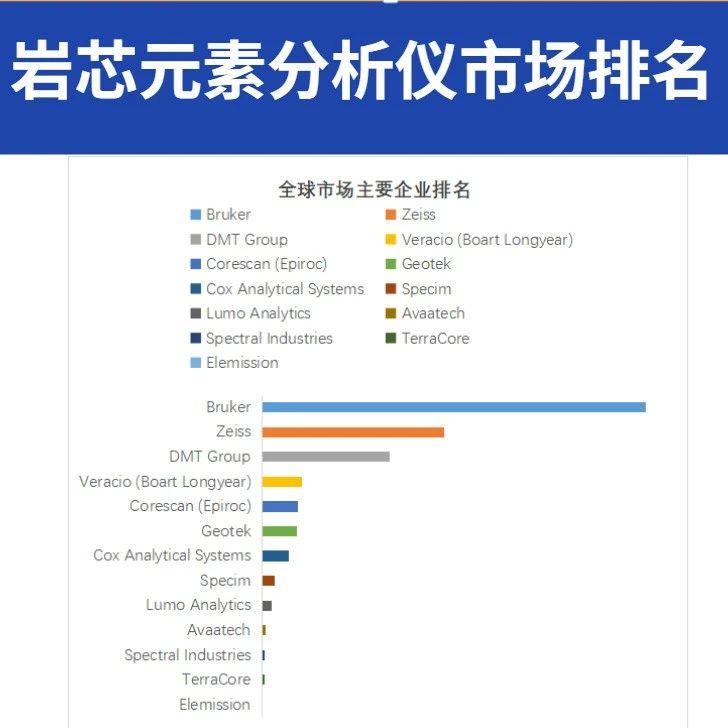
全球岩芯元素分析仪市场核心生产商排名及市场占有率
QYResearch· 2025-07-11 09:28
Core Viewpoint - The core viewpoint of the article emphasizes the growing importance and market potential of core element analyzers, driven by advancements in technology and increasing demand for mineral resource exploration and oil and gas reservoir characterization [3][4]. Market Overview - The core element analyzer market is experiencing significant growth due to the rising global demand for mineral resources and the need for high-precision data in shale oil and gas development [3][4]. - Traditional core testing methods are becoming inadequate, leading to a shift towards non-destructive and intelligent analysis technologies [3][4]. Current Development Status - The market is in a critical phase of technological iteration and application expansion, with a focus on non-destructive and intelligent upgrades [4]. - Major manufacturers are enhancing detection precision and efficiency through advanced technologies like X-ray fluorescence (XRF) and laser-induced breakdown spectroscopy (LIBS) [4][12]. - Challenges include reliance on imported core technology and the adaptability of different geological scenarios [4]. Future Trends - Industry standardization and data integration are accelerating, with geological big data platforms promoting the fusion of core element data with geophysical and remote sensing information [5]. - Emerging markets and collaborative innovation within the industry are expected to drive localized service networks and customized solutions [5]. - Applications are expanding into deep earth, deep sea, and space exploration, requiring instruments that can operate under extreme conditions [5]. Competitive Landscape - The global market is dominated by major manufacturers such as Bruker, Zeiss, and DMT Group, with the top five companies holding approximately 84.49% of the market share [9]. - XRF technology is the leading product type, accounting for about 64.65% of the market [12]. Application Segments - Mining and mineral exploration represent the largest downstream market for core element analyzers, comprising approximately 67.32% of the demand [15]. - These analyzers are crucial for real-time visualization and interpretation of geological structures, mineral distribution, and resource estimation [15]. SWOT Analysis - Strengths include advanced non-destructive testing technologies that enhance operational efficiency in mineral exploration and oil and gas reservoir evaluation [18]. - Weaknesses involve high costs due to reliance on imported components and the complexity of operations in varying geological conditions [19]. - Opportunities arise from increasing global mineral resource demand and the integration of AI and IoT technologies [20]. - Threats include competition from emerging detection technologies and economic fluctuations affecting procurement budgets [20].
国海证券:光刻机国产供应链有望优先受益 建议关注核心部件及加工设备标的
智通财经网· 2025-07-07 03:44
Core Insights - The report from Guohai Securities highlights a significant gap between China's lithography technology and the global advanced level, with the third phase of the National Integrated Circuit Industry Investment Fund focusing on supporting domestic enterprises and key technological bottlenecks [1] - The lithography machine is identified as a core device in chip manufacturing, with critical indicators including resolution, depth of focus, overlay accuracy, and yield [1] - The report recommends focusing on core components and processing equipment related to lithography machines, including light sources, illumination, objectives, and worktables [1] Industry Overview - The lithography industry has key barriers related to core components, which include light sources, illumination, objectives, worktables, and alignment systems, with EUV lithography machines having distinct characteristics [2] - The global lithography machine market is projected to reach $29.37 billion by 2025, with specific market sizes for illumination + objectives, light sources, worktables, and other components estimated at $4.78 billion, $2.86 billion, $2.15 billion, and $4.52 billion respectively [2] - The EUV lithography machine market is expected to reach $9.6 billion by 2025, with its components' market sizes estimated at $1.55 billion, $1.26 billion, $0.70 billion, and $1.15 billion for illumination + objectives, light sources, worktables, and other components respectively [2] Competitive Landscape - The success of ASML in the lithography machine market is attributed to technological innovation and industry collaboration, with a global supply chain involving key partners such as Zeiss, Cymer, Gigaphoton, TRUMPF, and Leibao [3] - ASML's acquisition of Cymer, a leader in the global lithography light source market, underscores the importance of strategic partnerships in the industry [3]

Exclusive look at the making of High NA, ASML's new $400 million chipmaking colossus
CNBC· 2025-05-22 12:11
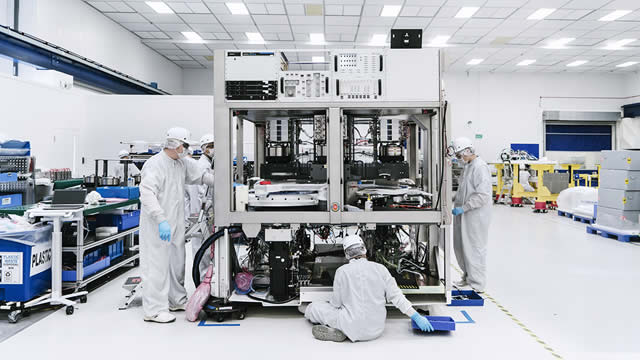
Core Insights - ASML has developed the High NA machine, the world's most advanced and expensive chipmaking machine, with a cost exceeding $400 million, which is set to transform microchip production [1][4][12] - The first commercial installation of High NA occurred at Intel's Oregon chip fabrication plant in 2024, with only five machines shipped to date [3][4] - High NA is expected to be utilized by all ASML's EUV customers, including major chipmakers like TSMC, Samsung, and Micron, enhancing chip production efficiency and yield [4][21] Technology and Development - High NA machines are larger than a double-decker bus and consist of four modules manufactured in different locations, requiring significant logistics for delivery [2] - The technology behind High NA allows for higher resolution projections of chip designs, reducing the need for multiple patterning and improving yield [7][13] - ASML's High NA machines have shown significant improvements over previous EUV machines, with Intel reporting a 100% increase in reliability and Samsung noting a 60% reduction in cycle time [6][7] Market Position and Strategy - ASML holds a dominant position in the EUV lithography market, being the exclusive manufacturer of these machines, which are essential for producing advanced microchips [4][5] - The company sold 44 EUV machines in 2024, with a starting price of $220 million, while its older DUV machines accounted for 60% of its business [16][17] - ASML's sales to China peaked at 49% of its business in Q2 2024, but are expected to normalize to 20%-25% in 2025 due to U.S. export controls on EUV technology [17][18] Future Outlook - ASML plans to ship at least five more High NA systems in the current year and aims to ramp up production capacity to 20 machines in the coming years [24] - The company is also developing the next generation of machines, Hyper NA, expected to be needed between 2032 and 2035, with draft optical designs already in progress [23][24] - ASML is establishing a training center in Arizona to train 1,200 individuals annually on EUV and DUV technologies, addressing the growing demand for skilled labor in the semiconductor industry [23]
China Healthcare_ Medical Devices_ Accelerating VBP expansion; focus on targets for next round, with direction likely to remain consistent
2025-03-14 04:56
Summary of the Conference Call on China Healthcare: Medical Devices Industry Overview - The report focuses on the **China Healthcare** sector, specifically the **Medical Devices** industry, and discusses the impact of **Volume-Based Procurement (VBP)** policies on various product categories from 2025 onwards [1][2]. Key Points and Arguments VBP Expansion and Product Coverage - VBP has expanded significantly since its initiation in 2020, now covering a majority of product categories including medical consumables, IVD, insulin, and TCM products [2][11]. - The **6th batch of national VBP** is set to launch in the second half of 2025, which may include high-value consumables and TCM products [2][11]. Policy Maturity and Pricing Impact - The VBP policy has matured, with established rules for initial coverage and renewals, including grouping, ceiling prices, and revival mechanisms [3][14]. - The impact on ex-factory prices for consumables is expected to be largely one-time, focusing on regulating channel markups rather than ongoing price erosion [3][19]. Market Dynamics and Consolidation - Leading domestic players are positioned to consolidate market share post-VBP, benefiting from increased hospital coverage and better alignment with incentives compared to multinational corporations (MNCs) [4][31]. - Smaller players are likely to lose market share due to the competitive pressures from larger domestic firms [4][31]. Stock Implications - Preference is given to companies where the VBP impact is already priced in, with expectations of normalized growth and market share gains, such as **Eyebright**, **SNIBE**, **AK Medical**, and **Weigao** [5]. Earnings Volatility and Inventory Management - Near-term earnings volatility is anticipated for products with high channel inventory, particularly in categories like artificial joints [21]. - Companies like **AK Medical** have issued profit warnings due to inventory destocking and impairment losses [21]. Pricing Trends and Margin Stability - Historical data shows that pricing cuts from VBP have become more moderate over time, with average cuts decreasing from 76% in 2020 to 41% in 2023 for drug-eluting stents [19][30]. - Post-VBP margins for Chinese players have stabilized at 15-20%, comparable to global peers [20][30]. Product Upgrades and Market Share Changes - There is a trend towards product upgrades post-VBP, with higher-end products gaining market share due to increased affordability and reimbursement coverage [32][34]. - MNCs have seen a decline in market share across various product categories, while domestic players have gained significantly [34][36]. Future Considerations - The report highlights the need for clarity on the impact of VBP on large-scale imaging equipment and the upcoming DRG/DIP rules set to roll out in 2025 [46][49]. - Potential savings from VBP are estimated at **Rmb 80 billion** for the insurance fund, contributing to overall healthcare expense reductions [50][53]. Additional Important Insights - The report emphasizes the importance of strategic shifts by MNCs, such as J&J's move to direct sales, which has not yielded expected results [31]. - Companies are advised to monitor the evolving landscape of VBP and its implications for pricing strategies and market positioning [59][64]. This summary encapsulates the critical insights from the conference call regarding the current state and future outlook of the medical devices sector in China, particularly in relation to VBP policies and their implications for market dynamics and company performance.