
人才生态

Search documents
聚界别智慧 护营商沃土
Xin Lang Cai Jing· 2026-02-09 22:25
Core Viewpoint - The continuous optimization of the business environment is crucial for activating market vitality and fostering development synergy in Yangzhou, Jiangsu Province [1] Group 1: Business Environment Initiatives - Yangzhou has prioritized the construction of the business environment, issuing optimization documents for 12 consecutive years and establishing the "Yangzhou Business Environment Optimization Regulations" [1] - During the Yangzhou Municipal Political Consultative Conference, members from various sectors provided targeted suggestions for improving the business environment, emphasizing the importance of professional insights in addressing development challenges [1] Group 2: Taxation Services - The quality and efficiency of tax services directly impact enterprise operational experiences and confidence in development [2] - The Yangzhou tax system has achieved notable results, including the establishment of a "half-hour" tax service circle and a national taxpayer satisfaction ranking of third overall and second in Jiangsu Province [1][2] Group 3: Dispute Resolution - The long duration, complex processes, and high costs associated with resolving business disputes are significant pain points for market entities [2] - The introduction of the "Commercial Mediation Regulations" is seen as a step towards creating an efficient and convenient multi-channel dispute resolution system, leveraging the unique advantages of commercial mediation [2][3] Group 4: Credit System and Regulation - A robust social credit system is essential for a market economy, and a new regulatory mechanism based on credit is key to optimizing the business environment [3][4] - Suggestions include enhancing graded and classified regulation, developing targeted evaluation criteria, and promoting credit building experiences from various sectors [4] Group 5: Talent Ecosystem - Talent is identified as the primary resource, with a high-quality talent ecosystem being a core competitive advantage for the business environment [4][5] - Proposed measures to address talent shortages include strengthening recruitment efforts, enhancing cross-provincial vocational education cooperation, and optimizing talent policy implementation [5] Group 6: Future Goals - The year 2026 is highlighted as a critical year for Yangzhou to achieve its goal of becoming a "trillion-yuan city," with a focus on addressing key challenges in business environment construction [6]
破解引才困局不能只靠补贴
Jing Ji Ri Bao· 2026-01-17 22:11
Core Viewpoint - Talent is a key factor for regional development, and the difficulty in attracting and retaining talent has long troubled the central and western provinces of China. Addressing this talent dilemma is crucial for both regional coordinated development and the overall quality of China's modernization [1][2]. Group 1: Challenges in Talent Attraction - Central and western provinces share common challenges in attracting talent, including a disparity in industrial capabilities, with a high proportion of traditional industries and slow development of emerging sectors, leading to insufficient high-end positions and development platforms [1]. - Limited resource investment in housing, healthcare, and other support systems makes it difficult for these provinces to compete with developed regions, resulting in a lack of competitive advantages [1]. - Institutional constraints exist, with rigid evaluation systems, limited promotion opportunities, and difficulties in converting achievements, leading to a low "ceiling" for talent growth [1]. Group 2: Strategies for Talent Attraction and Retention - To overcome these challenges, central and western provinces should avoid engaging in a "subsidy competition" and instead pursue a differentiated "ecological breakthrough" approach, such as implementing market-oriented talent incentive policies [1][2]. - Breaking down institutional barriers is essential, with a focus on flexible talent recruitment models and addressing the urgent needs of talent through a "three-line cost, one-line service" support system [2]. - Reforming talent evaluation systems to focus on innovation value, capability, and contribution rather than solely on academic qualifications and titles is crucial for empowering talent attraction and retention [2]. - Building a comprehensive talent ecosystem that includes attracting, nurturing, and utilizing local talent is necessary for achieving mutual growth between talent and regional development [2].
连续四年“最佳引才”,济南如何成为人才“强磁场”?
Feng Huang Wang Cai Jing· 2026-01-14 23:56
Core Insights - Jinan has been recognized as the "Best Talent Attraction City" for four consecutive years during the 14th Five-Year Plan period, with a total talent pool exceeding 3.1 million [4] Group 1: Talent Attraction Strategies - Jinan has developed 15 "five-dimensional databases" to accurately map and understand talent resources, focusing on both young talents and experts [4] - The "Talent Gathering in Spring City" initiative includes activities that attract over 160,000 young talents annually, emphasizing the integration of talent with projects, teams, and technological achievements [4] Group 2: Infrastructure and Platforms - The city boasts 221 postdoctoral platforms at the provincial level and above, along with a national-level entrepreneurial park for returned overseas students, and a high-standard incubation base for university students in the Yellow River Basin [4] - Jinan has hosted the Shandong Doctoral Innovation and Entrepreneurship Competition, leading to the establishment of over 100 quality projects in the city [4] Group 3: Talent Ecosystem and Services - Jinan has implemented a more scientific talent classification system, breaking away from the traditional focus on papers and titles, with over 95,000 individuals recognized under this new system [4] - The city offers personalized services through 527 service specialists and integrates over 20 green channels and more than 500 market-oriented services, aiming to create an environment where talents feel respected and needed [4]

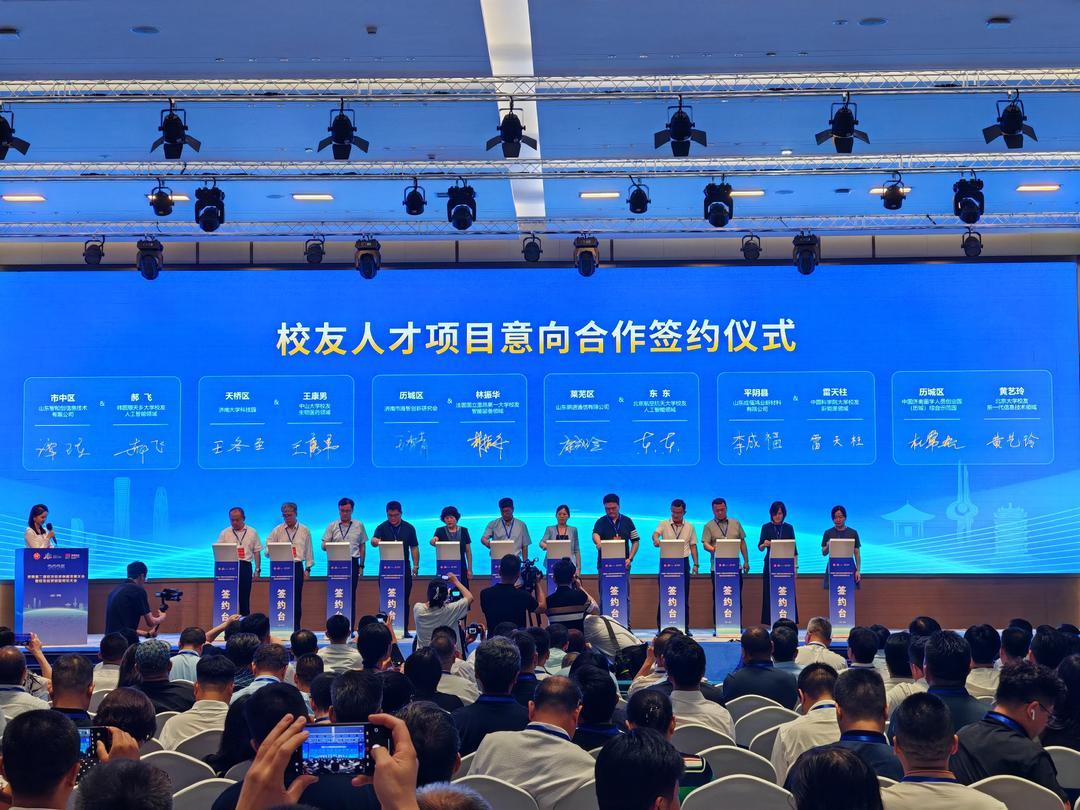
山区县引才,贵在打造“价值闭环”
Xin Lang Cai Jing· 2026-01-10 23:43
Core Insights - The story of Lin Benkun, a graduate student from Fuzhou, highlights the importance of creating a "value closed loop" in talent competition within county-level regions, where the core competitiveness is not just salary but the ability to build a system that integrates professional passion with personal growth and regional development [1][2] Group 1 - Lin Benkun's decision to become a grassroots baseball coach in Liancheng reflects a mutual commitment between him and the region, emphasizing the significance of a supportive ecosystem for professionals driven by pure passion [1] - Liancheng, known as a "baseball town," has developed a comprehensive plan that includes a three-step approach from elementary to provincial championship levels, which serves as a more meaningful initial attraction than salary alone [1] - The integration of talent into local development is crucial, as Lin's approach focuses on instilling responsibility and teamwork in students, thereby enhancing the soft power and brand of the "baseball town" [2] Group 2 - A sustainable talent attraction model must possess internal driving forces, and establishing a balanced and enduring incentive ecosystem is key to constructing the "value closed loop" [2] - Many regions currently rely on competitive special treatments to attract specific talents, but a healthy talent ecosystem should depend on universally fair rules to retain local talent [2] - Mountainous counties, with limited financial resources, can focus on institutional design to create a transparent environment where contributions and rewards are aligned, ensuring that every builder believes their efforts will be fairly recognized [2][3]
惠山举办“惠·鹏飞”人才赋能创新发展活动
Xin Hua Ri Bao· 2026-01-07 19:03
Core Viewpoint - The event "2026 Hui.Pengfei" in Wuxi Huishan focuses on integrating education, technology, and talent to foster innovation and entrepreneurship, aiming to establish Huishan as a preferred destination for innovation and entrepreneurship [1] Group 1: Event Highlights - The event gathered numerous academicians, experts, key enterprises, financial institutions, new R&D organizations, and high-level talent representatives, linking with several "Double First-Class" universities and renowned vocational colleges in China [1] - A total of 39 innovation and entrepreneurship projects received policy support amounting to over 287 million yuan [1] - A cooperation platform for technology transfer between universities such as Harbin Institute of Technology, Northeast University, and Nanjing University of Posts and Telecommunications was inaugurated [1] Group 2: Talent and Innovation Initiatives - The "Hui.Pengfei" Talent Plan 2.0 has attracted 59 domestic and foreign academicians and gathered 240,000 various talents over the past year [1] - The number of national-level specialized and innovative "little giant" enterprises in the district has increased to 60, while provincial-level specialized and innovative small and medium-sized enterprises have reached 469 [1] - Several innovative measures were announced, including the "Doctor Gathering" joint training program, "Hui Talent Loan" financial services, and the "Smart Home" brand [1]
南京招商引资、招才引智并举,打造“引育留用”全链条——
Nan Jing Ri Bao· 2026-01-06 03:29
Group 1 - Nanjing has launched three talent policies to enhance its talent attraction and retention system, aiming to create a dual pathway where talent attracts projects and projects retain talent [1] - The presence of top universities in Nanjing is a significant factor for companies like Jiangsu Zheta Technology and Guojiji Group, which have established operations in the city due to the high quality of local talent [2][3] - The establishment of the Nanjing Quantum Research Institute and the Intelligent Biological Manufacturing Innovation Center highlights the city's focus on attracting interdisciplinary talent essential for advanced technology sectors [3][5] Group 2 - Nanjing's talent policies are designed to address the concerns of incoming talent, providing support that encourages professionals to relocate and invest in the city [4][5] - The city has seen a significant number of projects and investments from existing companies, with over 40% of new signed projects in 2025 being reinvestments from established firms, indicating trust in the local talent ecosystem [3] - Initiatives like the "Zijin Mountain Talent Plan" and flexible recruitment mechanisms have proven effective in attracting and retaining high-level talent, facilitating collaboration between academia and industry [5][6] Group 3 - The establishment of various talent communities and support for individual entrepreneurs demonstrates Nanjing's commitment to fostering innovation and entrepreneurship [6] - Companies in Nanjing are actively engaging with local universities to create internship opportunities and collaborative projects, enhancing the skill development of young talent [10] - The city's focus on creating a supportive environment for both established companies and startups is seen as a strategy to ensure sustainable growth and development in the future [7][9]
推动新时代兵团人才工作高质量发展
Xin Lang Cai Jing· 2025-12-21 19:39
Core Viewpoint - The article emphasizes the importance of talent as the primary resource for promoting high-quality development, highlighting the need for a strategic approach to talent cultivation and utilization in various industries [1]. Group 1: Talent Development Strategy - The article outlines a comprehensive strategy for talent development, focusing on aligning talent acquisition with industry needs, particularly in key sectors such as renewable energy, new materials, and biomedicine [2]. - It advocates for innovative recruitment models that encourage enterprises to take the lead in talent acquisition, moving away from traditional reliance on public sector recruitment [2]. - The strategy includes expanding recruitment channels and utilizing existing talent policies to attract experts from both within and outside the region [2]. Group 2: Talent Cultivation Mechanisms - The article stresses the importance of creating high-end platforms for talent growth, such as innovation centers and research stations, to provide necessary support for talent to thrive [3]. - It calls for a collaborative talent training mechanism that promotes skills enhancement and knowledge updating, aiming to cultivate a skilled workforce [3]. - The article highlights the need for breaking down institutional barriers to facilitate talent mobility and exchange between research institutions and enterprises [3]. Group 3: Talent Utilization and Evaluation - The article advocates for a performance-oriented approach to talent utilization, emphasizing trust and empowerment for high-level talents [4]. - It proposes an innovative evaluation mechanism that focuses on contributions and capabilities rather than traditional metrics, aiming to recognize diverse talents across various fields [4]. - The article suggests that market and enterprise feedback should guide talent evaluation, ensuring that high-performing individuals receive appropriate recognition and rewards [4]. Group 4: Talent Ecosystem and Retention - The article discusses the importance of creating a supportive environment for talent retention, including providing affordable housing and addressing personal concerns such as family support [5]. - It emphasizes the need for a culture that respects and values talent, encouraging innovation and risk-taking among professionals [5]. - The article highlights the significance of integrating regional talent development efforts to enhance overall competitiveness and address employment challenges [6]. Group 5: Regional Collaboration - The article calls for breaking down regional barriers to enhance talent mobility and cooperation between different areas, promoting mutual benefits in employment and skills development [6]. - It suggests establishing a collaborative framework for talent policy alignment and resource sharing to facilitate efficient talent allocation [6]. - The article emphasizes the need for a multi-layered interaction model to stimulate innovation and drive regional economic growth [6].
山海情牵 青力青为
Xin Lang Cai Jing· 2025-12-21 19:38
Core Viewpoint - Qinghai is actively seeking talent through a series of recruitment events across major cities, showcasing its commitment to attracting skilled individuals to support its development goals [7][11]. Group 1: Recruitment Events - The recruitment campaign, themed "Soaring to the Sky, Renowned Worldwide," includes events in Lanzhou, Changsha, Kunming, and Xi'an, aiming to attract talent to Qinghai [7]. - The first recruitment event in Lanzhou saw a high turnout, indicating strong interest from students and graduates [8]. - A total of 12,400 graduates from over 140 universities participated in the recruitment activities, with 8,574 on-site consultations, of which 67% were master's and doctoral candidates [17]. Group 2: Talent Attraction Strategies - Qinghai's recruitment strategy emphasizes emotional engagement and service, aiming to create a welcoming environment for potential candidates [9][10]. - The province has implemented various policies to attract talent, including the "Kunlun Talent Card" service mechanism, which addresses various aspects of life for incoming talent [10]. - Qinghai is shifting from a broad recruitment approach to a more targeted strategy, focusing on precise matching of talent to job opportunities [12][14]. Group 3: Policy Support and Environment - The provincial government prioritizes talent as a key resource for economic and social development, implementing a series of supportive policies for talent cultivation and retention [10]. - Qinghai is enhancing its talent ecosystem by establishing high-level research platforms and promoting a culture that respects and values talent [16][17]. - The province's commitment to creating a supportive environment is reflected in its ongoing efforts to provide comprehensive services and address the concerns of potential recruits [10][15]. Group 4: Personal Stories and Testimonials - Personal accounts from participants highlight the appeal of Qinghai's natural beauty and the opportunities for professional growth, reinforcing the province's attractiveness as a destination for talent [15][16]. - The experiences shared by successful recruits illustrate the positive impact of Qinghai's talent policies and the supportive community for newcomers [15][17].
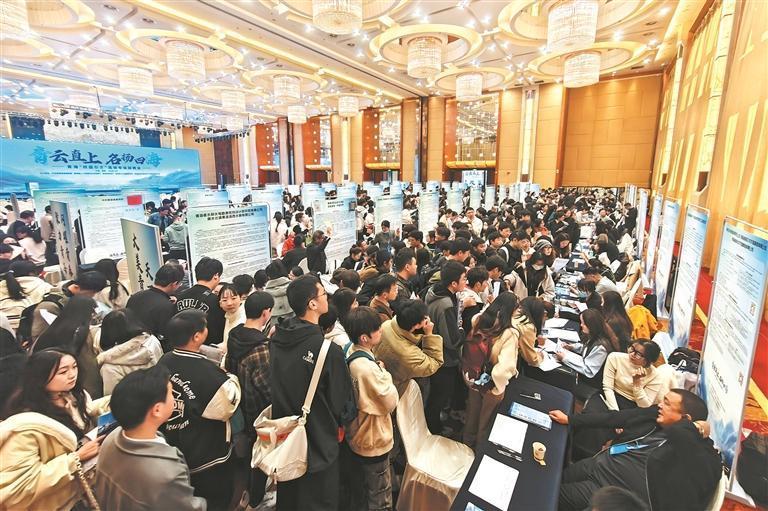
城市“引才”进入2.0时代,产业链协同与生态赋能破局
Di Yi Cai Jing· 2025-12-04 07:42
Group 1 - The core idea emphasizes the transformation of global top talent into a driving force for high-quality regional development, with cities like Shenzhen and Wuhan implementing strong policies to attract high-quality talent in key industries such as semiconductors and biomedicine [1][2] - Shenzhen focuses on the "20+8" industrial clusters, providing entrepreneurial subsidies and comprehensive supply chain support to become a hub for returning overseas talent [1][2] - Wuhan's Optics Valley targets hard technology sectors like optoelectronic information and new energy, offering substantial project funding to attract top innovation teams [1][2] Group 2 - The concept of "industry-oriented talent attraction" is highlighted, where industries serve as the core carrier for talent aggregation, and talent is seen as the fundamental driving force for industrial upgrades [2] - The "attract, cultivate, utilize, and retain" framework is being developed in the Hongqiao International Central Business District to create a multi-level international talent ecosystem [2] - Key industries such as biomedicine, new energy, and intelligent connected vehicles are forming clusters, with leading companies establishing a presence in the area, enhancing industrial agglomeration effects [2] Group 3 - The Hongqiao International Talent Service Center has introduced a platform for overseas talent to streamline work permits and residency applications, while also supporting domestic talent's international needs [3] - Companies are increasing their R&D investments significantly, with a focus on high-level technical talent to drive innovation, as seen in Ankai Micro's growth from under 300 to over 400 employees [3] Group 4 - Attracting talent is just the first step; the challenge lies in facilitating the transition from laboratory breakthroughs to industrial applications, which is crucial for building a tech innovation ecosystem [4] - Collaboration with upstream and downstream partners in the industry chain is essential for the successful development of hard technology, as highlighted by experts from Tsinghua University and Imperial College [4] - Long-term funding and market patience are necessary for hard technology startups, which need to connect with enterprises early for technology iteration under real operating conditions [4] Group 5 - The role of incubators is emphasized as platforms for nurturing innovation rather than just providing resources, with a focus on long-term support despite potential conflicts with short-term capital return demands [5] - New Micro Innovation Source is exploring a "investment-incubation linkage" model to transform incubators into "co-creation partners" with startups, sharing risks and incentives [6] Group 6 - Cultural differences pose challenges in cross-border entrepreneurship, with Western business being more transaction-oriented while Asian cultures prioritize building trust before collaboration [6] - Flexibility in addressing initial ambiguities in partnerships is recommended, along with leveraging high-quality content and deep interactions to activate the innovation ecosystem [6]
扎实推进教育科技人才深度耦合
Xin Hua Ri Bao· 2025-12-03 21:43
Core Viewpoint - The 20th Central Committee of the Communist Party of China emphasizes the integrated advancement of education, technology, and talent development as foundational and strategic support for building a modern socialist country [1] Group 1: Integration of Education, Technology, and Talent - The integration of education and technology is essential for cultivating high-end talent and driving innovation [2] - A systematic transformation of technological innovation activities into high-quality educational resources is necessary, creating a virtuous cycle of "technology supporting teaching, teaching feeding back into research, and results serving society" [2] - Establishing a dual empowerment model where research resources serve teaching and teaching practices feed back into research can enhance the scientific, cutting-edge, and practical nature of educational content [2][3] Group 2: Industry-Education Integration - Education serves as a strategic link for transforming technological achievements and promoting industrial upgrades [4] - A dynamic and open educational system must be established, focusing on industry needs and transitioning from "learning for application" to "learning through application" [4] - The establishment of a professional dynamic adjustment mechanism is crucial to align educational offerings with high-level technological self-reliance and industrial upgrade strategies [4] Group 3: Talent Ecosystem Development - Talent acts as a bridge connecting technology, industry, and education, and is the core engine driving the mutual promotion of these elements [7] - A comprehensive development system for talent that includes attracting, nurturing, utilizing, and retaining talent is essential for enhancing innovation efficiency [7] - The establishment of a "knowledge-capability-quality" three-dimensional talent cultivation system is necessary to ensure a precise match between talent supply and industry demand [7] Group 4: Digital Empowerment and Evaluation - Leveraging new information technologies such as artificial intelligence and big data can enhance the evaluation of talent, integrating formative, summative, and value-added assessments [8] - The deep coupling of education, technology, and talent forms a new paradigm for talent cultivation, necessitating the breaking down of barriers and strengthening linkages between education and industry [8]