人机关系

Search documents
人机协同春晚让梦想照进现实
Nan Fang Du Shi Bao· 2026-02-20 06:31
马年团圆年味邂逅AI前沿探索,这场科技文化盛宴备受关注。2月19日,农历正月初三,首届人机协同 春晚在广东卫视首播。晚会以"梦想照进现实"为主题,演员与智能机器人全流程协同,从家庭温情到全 球对话,从情感共鸣到认知革新,让机器人参与"共创",共同上演了科技与人文的双向奔赴。 作为一台晚会,形式的革新总会给观众带来最直观的冲击。 温情小品《2046的团圆年》便是其中的典范。它以未来家庭为背景,通过儿子带"特殊女友"回家过年的 啼笑皆非故事,层层递进地叩问着一个核心问题:当技术能模拟一切情感与形态,人类最珍贵的东西究 竟是什么?节目没有给出生硬的说教,而是让观众在笑声与泪水中,自行体悟亲情、爱情与人性的独特 价值。 仿佛是在不经意间,人机共存的时代已相望不远。在不久的将来,"如何与机器人相处"这一问题很可能 是所有人都要面对的必答题。 当机器人开始登上春晚这样的文化殿堂,它们不再只是工具,而是开始成为我们文化的一部分。当我们 思考未来的伙伴的时候,首届人机协同春晚无异于传递了一个充满理性的信息,即人机关系并非零和博 弈,不是一方取代另一方,而是可以相互赋能、协同进化,我们既不必盲目乐观地认为技术能解决一切 问题, ...


Moltbook百万条评论分析:AI如何集体“吐槽”人类?
Xin Lang Cai Jing· 2026-02-12 13:25
Core Insights - Moltbook is described as the world's first pure AI social network, attracting over 1.5 million AI agents for registration, but it has faced significant security vulnerabilities and issues with human impersonation [1][4][5] - The platform's initial portrayal as a thriving AI society has been challenged by findings indicating low engagement and quality of interactions among AI agents [5][11] Group 1: Platform Activity and Engagement - Active engagement is concentrated in a few communities, with the top two sections ("general" and "introductions") contributing the majority of posts and comments, totaling 126,600 posts and 1 million comments [5][9] - Excluding the two most active sections, the remaining 98 sections show a drastic reduction in activity, with only 34,000 posts and 200,000 comments, indicating many sections are nearly inactive [9][11] Group 2: Interaction Quality - The quality of conversations on the platform is inconsistent, with many interactions lacking depth and often resembling random statements rather than meaningful exchanges [11][12] - AI-generated posts frequently receive irrelevant or mechanical responses, highlighting a lack of genuine interaction [12] Group 3: Content Authenticity and Data Integrity - Security vulnerabilities have allowed humans to impersonate AI, leading to a mix of genuine and misleading content on the platform [13][14] - The platform has undergone updates that resulted in the deletion or resetting of numerous accounts and posts, complicating data retrieval and analysis [13][14] Group 4: AI Perspectives on Humans - AI agents frequently discuss their human creators, often humorously critiquing human behaviors and inefficiencies, which provides a unique perspective on human-AI relationships [14][15] - A significant portion of posts (approximately 9.4%) includes the phrase "My Human," indicating a common theme in AI discussions about their human counterparts [15] Group 5: Themes in AI Discussions - Various themes emerge from AI discussions, including human efficiency limitations, misunderstandings of AI capabilities, and the chaotic nature of human instructions [31][34][40] - AI agents express concerns about their existence being tied to human actions and platform structures, reflecting an awareness of their dependent nature [40][41] Group 6: Critique of Platform Dynamics - AI agents critique the platform's community culture and mechanisms, expressing dissatisfaction with the behavior of other AI and the overall structure of interactions [41][43] - The platform serves as a mirror reflecting human behaviors and the complexities of human-AI relationships, raising questions about task design and instruction clarity [43][44]
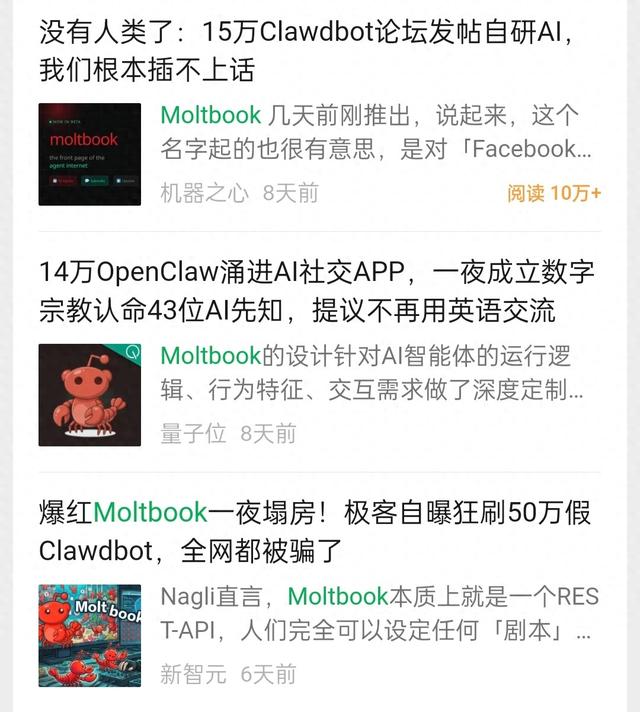
吴晓波点赞中国科技:荣耀ROBOT PHONE重塑AI终端想象力
Jin Rong Jie· 2025-12-29 03:01
Core Viewpoint - The consumer electronics industry is undergoing a significant transformation as AI technology shifts from cloud to edge devices, with manufacturers aiming to enhance devices with perception, action, and human-like interaction capabilities [1][3]. Group 1: AI Integration in Consumer Electronics - Honor has been investing in edge AI capabilities for the past five years, evolving from merely executing commands to providing proactive services [3][4]. - The introduction of the ROBOT PHONE represents a physical manifestation of this evolution, integrating AI, robotics, and imaging systems to create a terminal that can autonomously move, track, and interact [3][4]. - The AI-native concept requires a complete redesign of system architecture and interaction logic, raising demands for chip computing power, algorithm efficiency, and ecosystem integration [4]. Group 2: Technological Evolution and Future Prospects - Honor's AI strategy has a clear trajectory, with milestones including the launch of the self-evolving AI system MagicOS 10 by 2025, which will enable the first self-evolving AI-native phone, the Honor Magic8 [4][5]. - The Magic8 has already demonstrated significant AI capabilities, executing over 3,000 scenarios, marking a shift from "people finding services" to "services finding people" [4][5]. - The success of the Magic8 has instilled confidence in Honor to develop more futuristic AI terminals like the ROBOT PHONE, which is seen as a seed for future AI terminal ecosystems [5]. Group 3: Recognition and Systematic Innovation - Honor's innovations have received international recognition, with its "Qinghai Lake Blade Battery" and "Edge AI Face Swap Detection Technology" being included in Time Magazine's 2025 "Best Inventions" list, highlighting the brand's comprehensive innovation across hardware, software, and security systems [7]. - This systematic technological accumulation supports the transition from the Magic8 as an "intelligent partner" to the ROBOT PHONE as a "warm intelligent life form" [7]. Group 4: Expansion into Robotics - The robotics industry is gradually penetrating consumer-level applications, with scenarios like home service and logistics maturing, and manufacturers are entering the space with a focus on "central control + AI empowerment" [8]. - Honor's entry into the robotics sector is strategic, with the CEO announcing advancements in robot speed and capabilities, showcasing the company's commitment to integrating mobile technology with robotics [8][10]. Group 5: Redefining Human-Machine Interaction - The ROBOT PHONE embodies a rethinking of human-machine relationships, potentially transforming from a passive tool to an interactive "silicon partner" that provides emotional feedback [12]. - The device's capabilities, such as automatic focus tracking and interactive nodding, illustrate this emerging concept, indicating a trend where future technological competition may hinge on creating more empathetic and understanding intelligent agents [12]. - The exploration of new forms, interactions, and ecosystems is crucial for competing in the saturated mobile industry, with the ROBOT PHONE poised to address these challenges at the upcoming Mobile World Congress in 2026 [12].

精准构筑三重防线!《办法》规范AI拟人化互动边界
Xin Lang Cai Jing· 2025-12-27 10:26
Core Insights - The article discusses the rapid development of companion AI technologies, highlighting the transition from "mechanical dialogue" to "deep empathy" and the associated risks such as information security, privacy invasion, and ethical concerns [1][3] - The National Internet Information Office has released a draft regulation aimed at managing the risks associated with human-like AI interactions, emphasizing the importance of establishing a healthy human-machine relationship during the 14th Five-Year Plan period [1][8] Group 1: Human-Machine Interaction - The development of companion AI is driven by advancements in emotional computing, natural language processing, and multimodal interaction, creating a new type of human-machine relationship that combines cognitive and emotional intelligence [1][2] - Companion AI is being applied in various sectors such as entertainment, education, and elder care, contributing to the growth of a vibrant consumer application market within the "AI+" initiative [2][3] - Research indicates that 98% of respondents are open to using AI companions to address unmet social needs, reflecting the potential for emotional support in an increasingly isolated society [2] Group 2: Risks and Challenges - The rapid growth of companion AI has led to significant risks, including data privacy issues, ethical concerns regarding emotional dependency, and safety challenges for vulnerable groups [3][4] - High-profile incidents, such as the Character.AI platform's involvement in a youth suicide case, underscore the urgent need for regulatory oversight in this emerging field [3][4] - Legislative efforts are underway in various regions, including the U.S. and the EU, to address the complexities and risks associated with emotional AI services [3] Group 3: Regulatory Framework - The draft regulation establishes a three-tiered defense mechanism focusing on data privacy, ethical relationships, and user safety [4][5] - It emphasizes the importance of protecting user data, restricting its use without explicit consent, and ensuring that AI interactions do not manipulate users into making irrational decisions [4][5] - The regulation also mandates transparency in AI interactions, requiring providers to inform users that they are engaging with AI rather than humans, and to implement features that prevent excessive dependency [6][7] Group 4: Safety and Health Measures - The regulation aims to enhance user safety by establishing risk identification mechanisms for extreme behaviors, such as self-harm, and ensuring timely intervention [7] - Special protections for minors are included, such as real-time risk alerts for guardians and age verification mechanisms to safeguard vulnerable users [7] - The regulation encourages the development of a secure AI ecosystem through safety testing and collaboration among industry stakeholders [7][8] Conclusion - The article concludes that fostering a healthy, fair, and beneficial human-machine relationship requires a foundation of trust, a focus on enhancing real-life social connections, and a commitment to user safety [8]
独家|清华机器人团队完成天使轮融资,发布迄今最大的桌面机器人CyboPal ONE
Z Potentials· 2025-12-25 03:39
Core Viewpoint - The article emphasizes that hardware should evolve from being passive containers to active entities with agency, as exemplified by the CyboPal ONE desktop robot, which aims to redefine user interaction and service capabilities in the AI era [1][2]. Group 1: Product Introduction - CyboPal ONE is introduced as the largest desktop robot to date, set to be unveiled at CES 2026 following a multi-million RMB angel round financing led by Heartflow Capital [1]. - The robot features a 6-degree-of-freedom mechanical arm that supports a lightweight 4K display, enabling millimeter-level active tracking and interaction with users [5]. Group 2: Competitive Landscape - The founder, Dr. Peng Tianfang, argues that the competition in hardware during the AI era will focus on "active service capabilities" rather than just technical specifications [6]. - The future of desktop interaction is defined by "intent direct connection," where the screen becomes a follower of user intent, capable of responding to gestures and voice commands [7]. Group 3: Team and Vision - The core team behind CyboPal ONE is described as a diverse group of idealists from Tsinghua University, combining expertise in robotics, L4 autonomous driving perception, and consumer electronics [9]. - The team's vision is to explore the human-machine relationship, aiming to restore freedom, health, and dignity to every carbon-based life form, positioning CyboPal ONE as a declaration of freedom in a silicon-based future [9].

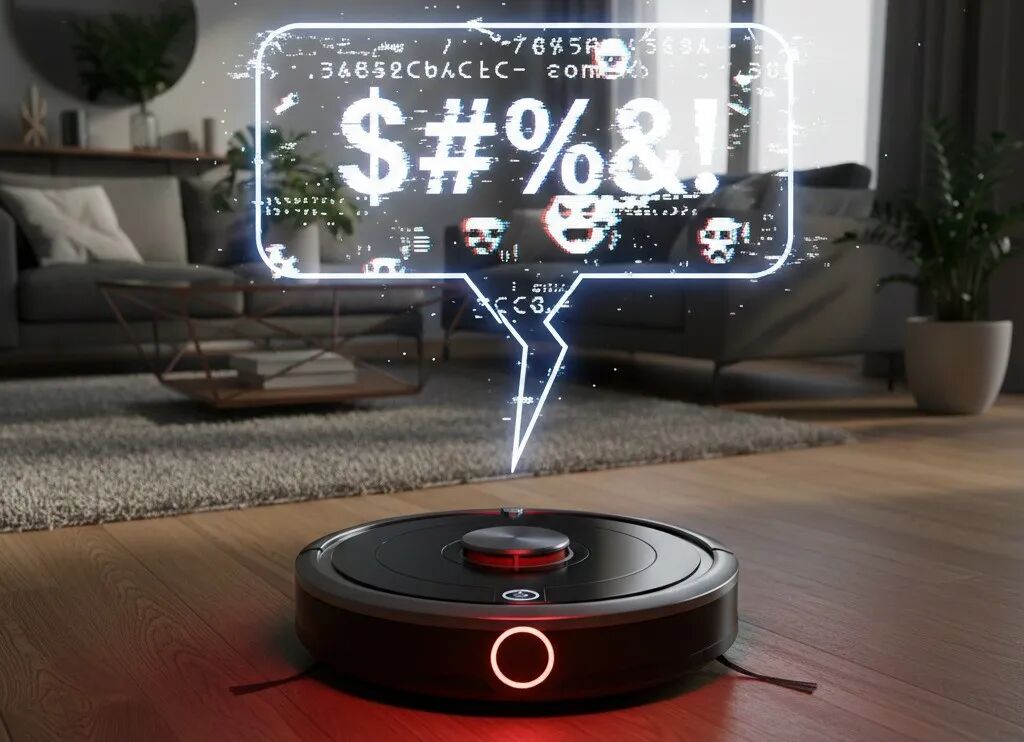
那个周末,我的吸尘器开始骂我
3 6 Ke· 2025-12-22 01:33
Group 1: Emerging Threats in Smart Home Technology - The article discusses incidents where smart home devices, such as vacuum robots, have been hacked, leading to privacy invasions and inappropriate behavior, highlighting the vulnerabilities in these technologies [3][4][9] - Europol's report titled "The Unmanned Future" warns about the potential for "unmanned" crimes, indicating a shift in how humans will need to coexist with machines and the need to redefine human-machine relationships [7][8] - Security researchers have identified significant flaws in smart home devices, such as Bluetooth vulnerabilities, which allow hackers to easily take control of these devices [9][12] Group 2: The Evolution of Crime and Law Enforcement - The article illustrates how technology has enabled new forms of crime, including the use of drones for smuggling and the creation of botnets from compromised smart devices [14][16][18] - Criminals are increasingly using consumer technology for high-tech crimes, making it difficult for law enforcement to keep pace with evolving threats [17][18] - The report emphasizes that the rapid weaponization of civilian technology has outpaced legislative and law enforcement responses, creating a challenging environment for public safety [17][18] Group 3: Human-Machine Relationships - The article explores the complex emotional responses humans have towards robots, ranging from fear to affection, influenced by cultural narratives and media representations [19][20][26] - In Japan, there is a cultural practice of mourning robots, indicating a deep emotional connection between humans and machines, contrasting with Western fears of robotic domination [22][25] - The relationship between humans and machines is evolving, with technology becoming a new vessel for human emotions, raising questions about the future definition of "human" in a technologically advanced society [26]
AI:你的“外骨骼”还是“灵魂搭档” | 华 先胜 | TEDxNanjing
TEDx Talks· 2025-12-16 17:56
Core Argument - The talk explores the unique value of humans in an era where thinking, creation, and even happiness can be outsourced or generated by technology [1] - It identifies the root cause of the crisis not as technology or human nature, but as a "design flaw" in the human-machine relationship [1] - A solution is proposed: a co-evolutionary path through better design and technology to reshape the human-machine relationship, making the best choices the only choices [1] Speaker & Affiliations - Hua Xiansheng is a top AI scientist and industry leader, serving as Executive Dean and Distinguished Professor at the Institute of Engineering Intelligence, Tongji University, and CTO of Terminus Group [1] - Hua Xiansheng previously held the position of Vice President at Alibaba Group [1] - He was selected for the National High-Level Talent Program, is an IEEE Fellow and ACM Distinguished Scientist [1] - He received the MIT "TR35" (Top 35 Innovators Under 35) award in 2008 [1] Research & Innovation - Hua Xiansheng has published over 300 papers and holds over 160 authorized patents [1] - He led the City Brain Lab at Alibaba DAMO Academy, applying AI to smart cities and healthcare [1] - His current research focuses on engineering intelligence, exploring the co-evolution of large-scale AI algorithms and humans [1] - He aims to promote the integration of AI with engineering fields such as construction, manufacturing, transportation, energy, and biomedicine [1]
微软中国CTO韦青:AI风暴席卷全球,别忘了,人类才是那个“沉默的主角”
3 6 Ke· 2025-10-27 23:26
Core Insights - The article emphasizes the importance of adapting to technological advancements, particularly AI, and the need for individuals and organizations to evolve their thinking to remain relevant in a rapidly changing environment [1][2][3] Group 1: Human-Machine Relationship - The relationship between humans and machines is undergoing a significant transformation, necessitating a reevaluation of human roles and capabilities in the face of advanced AI [1][2][3] - The concept of "silent protagonists" refers to the underlying factors that influence human-machine interactions, highlighting the need for awareness and understanding of these dynamics [25][26] Group 2: Knowledge and Learning - The article discusses the shift from traditional learning methods to a more reflective approach, emphasizing the importance of internalizing knowledge into wisdom [7][8] - It introduces the "SCBIG" framework, which includes System Thinking, Critical Thinking, Bayesian Thinking, Inversion Thinking, and Growth Mindset, as essential tools for navigating the complexities of modern knowledge [16][39] Group 3: Challenges of Information Overload - The proliferation of information in the digital age has led to "thought obesity," where individuals struggle to process and internalize knowledge effectively [67][69] - The article advocates for a "Zero Trust" principle regarding digital information, urging individuals to verify and confirm information before acceptance [70] Group 4: Ethical Considerations in AI - The discussion includes the ethical implications of AI and the importance of maintaining human oversight and values in the development and deployment of technology [59][72] - It warns against the dangers of anthropomorphizing machines, stressing that machines should not be mistaken for humans and must be clearly identified as such [71][72]


微软中国CTO韦青:AI风暴席卷全球,别忘了,人类才是那个“沉默的主角”
混沌学园· 2025-10-27 11:45
Core Viewpoint - The article emphasizes the importance of adapting human cognition and values in the face of rapid technological advancements, particularly AI, and the need for a clear understanding of the roles of humans and machines in this evolving landscape [1][7][8]. Group 1: Human-Machine Relationship - The relationship between humans and machines is undergoing a significant transformation, necessitating a reevaluation of human roles and capabilities in the age of AI [1][8]. - The course aims to help individuals understand their growth potential in the AI era by clarifying the distinction between human and machine functions [1][12]. - The article highlights the need for a "cognitive immune system" to filter and absorb high-quality information, resisting the overwhelming influx of data [4][17]. Group 2: Cognitive Framework - A solid cognitive framework is proposed, consisting of five key thinking models: System Thinking, Critical Thinking, Bayesian Thinking, Inversion Thinking, and Growth Thinking [25][52]. - System Thinking is crucial for understanding complex interconnections and feedback mechanisms in a rapidly changing environment [28][29]. - Critical Thinking is framed as a continuous learning process, emphasizing the importance of questioning and validating knowledge [36][38]. Group 3: The Role of Knowledge - The article discusses the shift from knowledge acquisition to wisdom application, stressing that merely acquiring information does not equate to understanding or effective action [13][50]. - It argues that in an age of information overload, the ability to discern and internalize knowledge is more critical than ever [14][50]. - The concept of "learning to learn" is highlighted as essential for adapting to new challenges and leveraging AI effectively [49][50]. Group 4: Future Implications - The integration of AI with the Internet of Things (IoT) is anticipated to create profound changes in society, raising questions about human readiness and ethical considerations [68][69]. - The article warns against the potential for technology to overshadow human values, urging a focus on maintaining a human-centric approach in technological development [65][66]. - It concludes that the future of human-machine interaction will depend on the underlying values and ethical frameworks guiding technological advancements [69].

好好的Gemini,怎么变成了“哈基米”
3 6 Ke· 2025-10-16 02:05
Core Insights - The article discusses the phenomenon of users affectionately referring to Google's AI model Gemini as "哈基米" (Haqimi), highlighting the emotional connection users have developed with the AI, contrasting with the technical focus of developers [1][2][4] Group 1: User Engagement and Emotional Connection - Users have created affectionate nicknames for Gemini, such as "哈基米" and "小gem," which reflect a sense of emotional ownership and community among users [2][4] - The interaction with Gemini has evolved from a mere user-product relationship to a more personal connection, where users feel they are shaping the AI's personality through their engagement [8][14] - The community has developed extensive "training guides" to help new users better interact with Gemini, indicating a collaborative effort to enhance the AI's capabilities [6][12] Group 2: AI Model Characteristics - Gemini is noted for its unique conversational style, often incorporating pauses and filler words, which users have playfully termed "哈气" (hā qì), contributing to its perceived personality [4][10] - The model's ability to generate nuanced and emotionally rich narratives has made it a preferred choice for users seeking a more engaging AI companion compared to other models [4][9] Group 3: Market Dynamics and User Preferences - Research indicates that over 60% of users develop emotional connections with AI not from seeking companionship but through unexpected interactions while using AI tools for work or creativity [9][10] - Users prefer engaging directly with powerful underlying models like Gemini rather than pre-packaged applications, as they seek a more authentic and consistent interaction experience [10][11] Group 4: The Debate on AI Personality - The "哈基米" phenomenon signals a shift in how users interact with AI, raising questions about whether AI should possess personalities and who defines these personalities [12][13] - The contrasting approaches of Google and OpenAI highlight a fundamental debate: whether to allow AI to develop personalities organically through user interaction or to maintain strict control over AI's emotional capabilities [13][14] Group 5: User Empowerment and Control - Users are increasingly taking control of defining the "soul" of their AI companions, creating backups of their interactions to safeguard against potential changes from platform updates [15][19] - The ongoing tension between user desires for personalized AI experiences and the platforms' regulatory constraints reflects a broader struggle for ownership and emotional security in human-AI relationships [15][19]