仿生技术

Search documents
独家|刚上完春晚,这家机器人企业融了10个亿
投中网· 2026-03-02 00:00
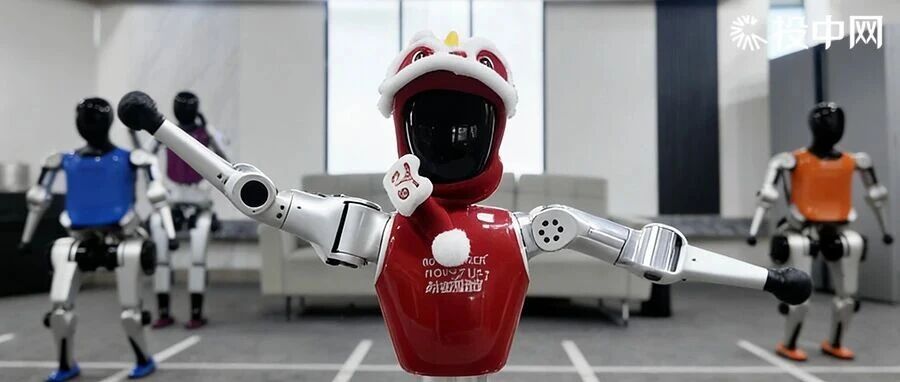
Core Viewpoint - The competition in the humanoid robot sector is shifting from "technology demonstration" to "order fulfillment" as companies focus on manufacturing capabilities and market delivery [2][4]. Group 1: Company Developments - Beijing Songyan Power Technology Group has completed a Series B financing round totaling nearly 1 billion yuan, marking its ninth round of financing and completion of shareholding reform [3]. - The lead investor in this round is Morning Dao Capital, part of the CATL investment platform, indicating a shift in investment focus towards companies with strong manufacturing and supply chain capabilities [3][10]. - Songyan Power's humanoid robot "Xiao Bumi," priced around 10,000 yuan, was showcased during the Spring Festival Gala, targeting family scenarios for companionship and education [3][4]. Group 2: Product Strategy and Market Expansion - The company plans to accelerate overseas market certification by 2026, focusing on North America and Southeast Asia, which is crucial for establishing global capabilities [4]. - The humanoid robot sector is expected to see increased competition as product prices decrease and application scenarios diversify, moving towards actual market orders [4][11]. - Songyan Power's strategy includes targeting both high-budget institutions and price-sensitive educational institutions, aiming to make robotics accessible to a broader audience [12]. Group 3: Technological Advancements - The management and technical teams at Songyan Power are primarily composed of individuals born after 1995, contributing to rapid technological iteration and a dual-driven technical approach of "bipedal + bionic" [7][8]. - The company has achieved significant breakthroughs in bionic technology, holding over 30 patents, which are seen as essential for the long-term development of humanoid robots [8]. Group 4: Industry Trends - The humanoid robot commercialization is anticipated to accelerate by 2026, with a notable increase in product launches targeting consumer markets [10][11]. - The entry of industrial capital into the humanoid robot sector signals a new phase, with companies like Songyan Power and others showcasing their products at major events to capture consumer interest [11].

英媒:自动驾驶汽车“睁开了眼”
Xin Lang Cai Jing· 2026-02-25 23:03
Core Insights - The article discusses a breakthrough in robotic vision through the development of a "bionic eye" that mimics the adaptive capabilities of animal eyes, enhancing object recognition in extreme lighting conditions for autonomous vehicles [1][2]. Group 1: Technological Advancements - Researchers have created a visual system using liquid metal to replicate the light adaptation abilities of animal eyes, allowing for immediate adjustment to changing light conditions, thus improving safety in autonomous driving [1][2]. - The bionic eye features a key component made of liquid metal that can change shape in response to electrical signals, effectively mimicking the pupil reflex of biological eyes [2][3]. Group 2: System Functionality - The system operates in a closed feedback loop, where it perceives light, generates signals, and adjusts the aperture to control light intake, closely resembling the functioning of real biological eyes [3]. - The bionic eye can simulate various pupil shapes found in different species, such as the vertical slit of a cat or the horizontal pupil of a sheep, which can enhance visual capabilities under different environmental conditions [3].
春晚“仿生奶奶”诞生记
Xin Lang Cai Jing· 2026-02-16 21:33
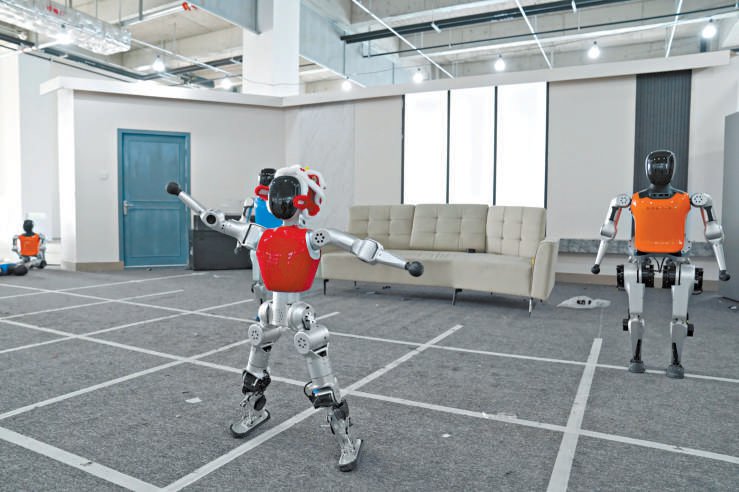
Core Viewpoint - The integration of technology and art is exemplified by the collaboration between the innovative company Songyan Power and the production of a lifelike humanoid robot for the 2026 CCTV Spring Festival Gala, showcasing China's advanced innovation capabilities [1]. Group 1: Technological Development - Songyan Power's team was tasked with creating a 1:1 replica humanoid robot of a professional actor for the Spring Festival Gala, which was both exciting and challenging due to the tight timeline [2]. - The team utilized advanced techniques to enhance the robot's facial expressions, increasing the motor control frequency by six times to ensure smooth transitions between expressions [2]. - The robot's neck was designed with three additional degrees of freedom to mimic human-like movements, enhancing the overall realism of the performance [4]. Group 2: Performance Challenges - The humanoid robot, while visually realistic, initially lacked the "liveliness" of a human performer, prompting the team to refine its movements and expressions further [3]. - The performance space was limited, requiring precise coordination between five humanoid robots and two human actors, with every movement needing to be accurate to the centimeter to avoid collisions [5]. - The team created a replica rehearsal space to practice and refine the robots' movements, establishing strict guidelines to ensure flawless execution during the live performance [5][6]. Group 3: Artistic Expression - The team focused on creating distinct "age characteristics" for the humanoid robots, using data from child performers to inform the robots' movements and expressions [7]. - Each robot was designed to exhibit different personalities and behaviors, with the smallest robot, "Xiao Bumi," being particularly endearing and engaging for the audience [7][8]. - The team continuously refined the robots' actions, even incorporating humorous elements into their performances, which contributed to the overall success of the show [8].
2个蔡明都来自北京
Xin Lang Cai Jing· 2026-02-16 14:06
Core Viewpoint - The article highlights the innovative collaboration between a young Beijing-based company, Songyan Power, and the production of a lifelike humanoid robot for the 2026 CCTV Spring Festival Gala, showcasing advancements in technology and artistry in the field of robotics [1] Group 1: Technological Innovations - Songyan Power's team was tasked with creating a 1:1 replica humanoid robot of a professional actor, which required extensive facial data collection and modeling to meet the high standards of the Spring Festival Gala [1] - The team significantly increased the control frequency of the robot's facial expressions by six times to ensure smooth transitions, allowing for realistic micro-expressions that closely mimic human emotions [1] - To enhance the robot's lifelike presence, additional degrees of freedom were added to the neck, enabling subtle movements that align with human speech and expressions [1] Group 2: Performance Challenges - The performance involved five humanoid robots and two human actors on a small stage, necessitating precise movements to avoid collisions and maintain the rhythm of the show [1] - A decision was made to create a full-scale rehearsal space to practice the robots' movements, ensuring they could perform without errors in the limited space of the gala stage [1] - The technical team updated over 300 action strategies to perfect the robots' performances, achieving a flawless execution during the live show [1] Group 3: Artistic Expression - The design of the robots included varying sizes to represent different age groups, enhancing the human-like qualities of the performance [1] - The team captured the movements of child performers to inform the robots' actions, resulting in distinct personalities and behaviors for each robot [1] - A collaborative brainstorming session led to the creation of a unique laughing motion for the robots, adding a layer of charm and engagement for the audience [1] Group 4: Future Prospects - Following the successful showcase at the Spring Festival Gala, Songyan Power aims to expand the application of their humanoid and bionic robots into diverse markets such as education, cultural tourism, and performances [1]
独家揭秘:“两个蔡明”春晚同台背后的仿生黑科技
Xin Lang Cai Jing· 2026-02-16 13:20
Core Viewpoint - The article discusses the significant technological advancements made by Noetix Robotics in creating a lifelike humanoid robot that can mimic human expressions and movements, showcased during the 2026 Spring Festival Gala, marking a milestone in the evolution of robotics and human-robot interaction [3][30]. Group 1: Technological Innovations - Noetix Robotics developed a humanoid robot that accurately replicates the appearance and expressions of the actress Cai Ming, demonstrating advanced capabilities in facial expression synchronization [4][34]. - The company faced engineering challenges in creating a humanoid robot that could perform in a live broadcast environment, requiring precise coordination with human actors and resilience to electromagnetic interference [7][37]. - The development of the robot involved a "collaborative motion system framework" to ensure lifelike movements, addressing the challenge of the "uncanny valley" effect where robots appear eerily human-like [11][41]. Group 2: Development Process - The company formed a specialized team of fewer than 20 people to focus on the rapid development of the humanoid robot, compressing the typical development timeline significantly [9][39]. - The robot's head was designed to be 30% smaller than the standard version, which posed challenges in fitting the same number of micro-servos and circuitry into a reduced space [10][40]. - Extensive fine-tuning was performed using decades of Cai Ming's performance data to enhance the robot's expressiveness, although initial tests revealed it still lacked natural movement [11][41]. Group 3: Market Strategy - Noetix Robotics aims to position the humanoid head as a critical component for achieving meaningful human-robot interaction, emphasizing the importance of emotional resonance in social contexts [12][43]. - The company transitioned from a linear development process to a modular design approach, allowing for quicker adaptations and reduced costs for custom designs [53][54]. - The successful demonstration at the Spring Festival Gala is seen as a pivotal moment for the company, showcasing its potential for mass production and commercial viability in the humanoid robotics market [29][30][58].

多举措提升公共服务水平 “以爱护航+科技助力”让残疾人生活更无“碍”
Yang Shi Wang· 2025-12-03 22:22
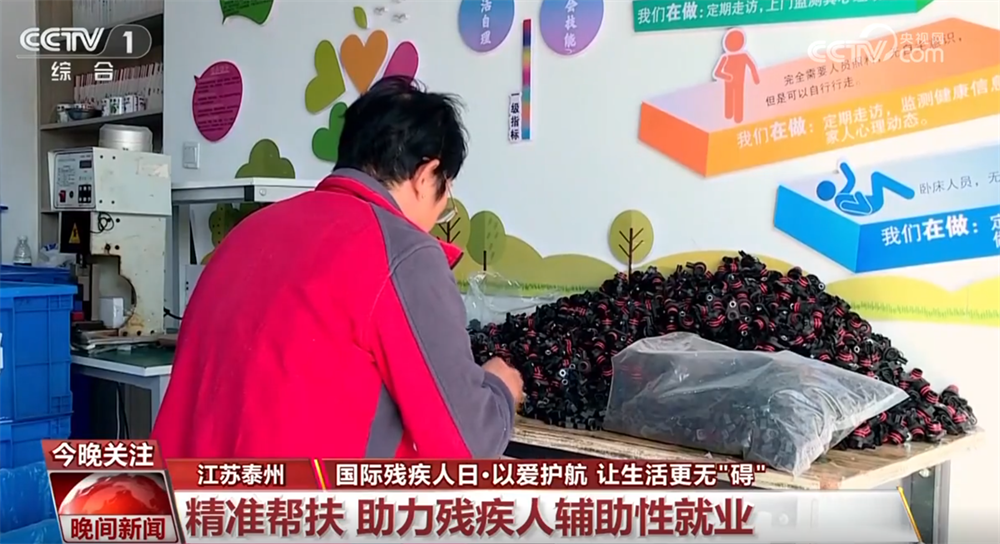
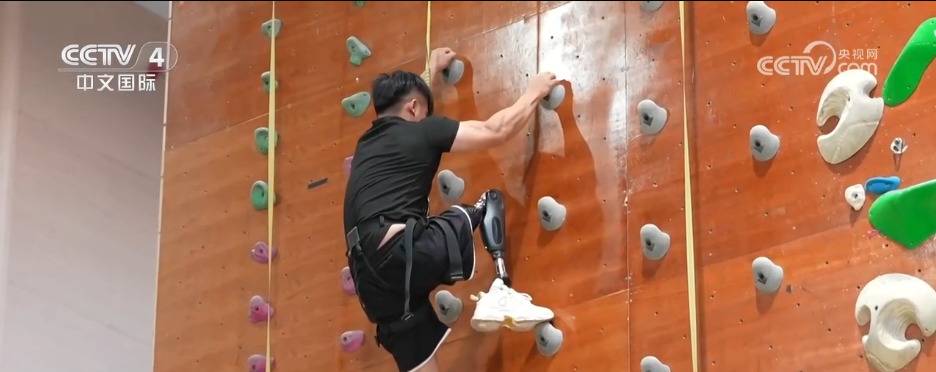
Group 1: Employment and Welfare Initiatives - China has approximately 85 million disabled individuals, and since the "14th Five-Year Plan," the welfare system for disabled people has been continuously improved, enhancing care and support levels [1] - Jiangsu Taizhou has established a center for auxiliary employment projects for disabled individuals, focusing on projects with moderate technical barriers and sufficient order volumes to facilitate local training and employment [1] Group 2: Cultural and Recreational Activities - Various regions are enriching the cultural lives of disabled individuals, such as the Beijing Shijingshan District's vocational rehabilitation center, which offers regular calligraphy and painting training for disabled participants [3] Group 3: Technological Advancements - Technological advancements, including artificial intelligence and brain-machine interfaces, are helping disabled individuals overcome barriers, leading to a more inclusive environment [6] - Smart bionic legs have significantly improved the mobility of individuals like Lin Yun, who lost a leg in an accident, allowing them to engage in activities such as rock climbing [6][8] - AI glasses are aiding visually impaired individuals in navigation and reading, enhancing their independence [10][12] - AI sign language recognition systems are breaking communication barriers for hearing-impaired athletes at the Special Olympics [14][16] - Brain-machine interface technology is providing treatment for autism, exemplified by a young boy named Yang Yang who has shown positive progress through innovative therapies [18]
解锁科技助残超有“智” 前沿技术集中爆发让“不可能”成为日常
Yang Shi Wang· 2025-12-03 08:06
Core Insights - The article highlights the advancements in technology, such as artificial intelligence, brain-computer interfaces, and bionic technologies, that are empowering approximately 85 million disabled individuals in China to overcome barriers and create a more inclusive world [1] Group 1: Bionic Technology - Iterative upgrades in smart bionic technology are significantly transforming the daily lives of disabled individuals, enabling them to engage in activities like rock climbing, surfing, and skydiving [3] - Smart bionic legs equipped with sensors collect neural signals to control joints adaptively, while smart bionic hands allow users to regain dexterity, resembling the sensation of having a lost hand [3] Group 2: Brain-Computer Interface Innovations - The Chengdu Frontier Brain-like Artificial Intelligence Innovation Center utilizes brain-computer interface technology for targeted treatment of autism, achieving over 90% diagnostic accuracy for more than 6,000 children [5] - The center's approach creates a complete treatment loop from screening to diagnosis and overall regulation, enhancing the effectiveness of interventions [8] Group 3: AI Applications for Hearing Impairments - The first AI smart entity for rehabilitation training of hearing-impaired individuals has been launched in the Guangdong-Hong Kong-Macao Greater Bay Area, utilizing AI to identify and categorize speech disorders [10] - The optimized model can run on regular smartphones, facilitating applications in phone calls, face-to-face communication, and language rehabilitation training [10]
智能仿生技术助力残障人士“无碍”生活、找回自我
Yang Shi Wang· 2025-12-03 07:19
Core Viewpoint - The development of artificial intelligence, brain-computer interfaces, and bionic technology is significantly improving the lives of approximately 85 million disabled individuals in China, leading to a more inclusive and accessible world [1]. Group 1: Technological Advancements - Artificial intelligence and bionic technology are helping disabled individuals overcome various obstacles, enhancing their quality of life [1]. - The integration of smart bionic limbs allows users to engage in high-intensity activities such as rock climbing, surfing, and skydiving, showcasing the capabilities of modern technology [3]. Group 2: Personal Stories - Lin Yun, equipped with a smart bionic leg, completed a vertical climb in under 60 seconds, demonstrating the effectiveness of the technology in challenging environments [3]. - Zhou Jian, who lost his right hand, has regained independence in daily tasks such as opening bottles and peeling fruit after using a smart bionic hand [3]. - Zhou Jian has also begun self-learning to play the piano with his smart bionic hand, indicating the potential for skill development through advanced technology [5].
街道一条短视频带火小微企业“黑科技”
Hang Zhou Ri Bao· 2025-09-24 01:57
Core Viewpoint - The smart breathing mosquito trap "Tuntianwa" developed by Hangzhou Tuntianwa Technology Co., Ltd. has gained significant attention and increased orders following a viral video, highlighting its innovative approach to mosquito control without chemicals [1][2]. Group 1: Product Overview - The "Tuntianwa" device operates on a unique principle of mimicking human breathing by converting carbon dioxide in the air to attract mosquitoes, which are then physically captured [2]. - The device has been deployed in 55 locations within the Jiangcun Street area, capable of capturing up to 30,000 mosquitoes in a single day [2]. - Users can monitor the device's performance in real-time through a QR code, providing transparency and data for public health management [2]. Group 2: Company Background and Support - As a small enterprise, Tuntianwa faced challenges such as long R&D cycles and uncertain market prospects, but received crucial support from the Jiangcun Street administration [3]. - The street provided R&D and trial sites, acted as a promotional partner, and offered practical feedback during the development process [3]. - The product has been designed to serve dual purposes, functioning as a decorative light during winter when mosquitoes are not present [3]. Group 3: Future Plans - The company plans to continue R&D to develop models suitable for home gardens and small commercial use, while also enhancing AI data algorithms and exploring international markets [4].

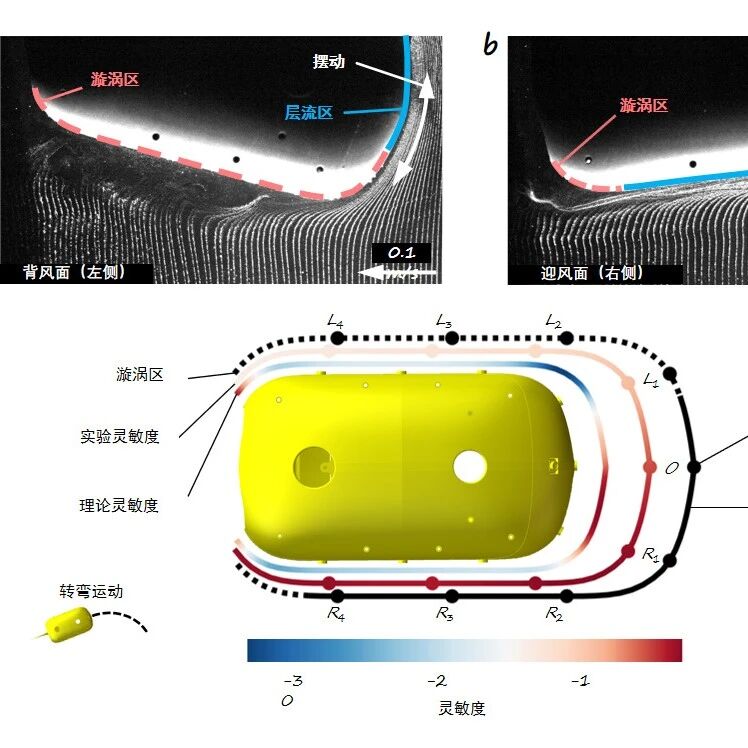
Nature Communications发表!北大团队用可解释模态分解方法赋能侧线感知,实现机器鱼高精度、多场景运动估计!
机器人大讲堂· 2025-09-14 04:06
Core Insights - Bionics is driving innovation in intelligent robotic systems, particularly through the design and development of biomimetic robotic fish inspired by the superior maneuverability and perception of fish in complex underwater environments [1][4] - Traditional visual and sonar sensing technologies face performance limitations in challenging underwater conditions, while fish possess a unique lateral line system that provides a new paradigm for underwater robotic perception [1][4] - The research team from Peking University has proposed a novel data-driven framework that integrates modal decomposition and physical modeling for self-motion state estimation in biomimetic robotic fish [1][4] Summary by Sections Introduction to Bionics and Robotic Fish - Bionics connects nature and engineering, leading to advancements in intelligent robotic systems [1] - Fish exhibit exceptional maneuverability and perception in complex underwater environments, inspiring the design of biomimetic robotic fish [1] Challenges in Underwater Robotics - Traditional sensing technologies struggle in low-light and acoustically noisy underwater environments [1] - The unique lateral line system of fish, which senses water flow and pressure changes, offers a new approach for underwater robots [1] Development of Artificial Lateral Line System (ALLS) - Researchers have developed ALLS to simulate fish perception capabilities, applicable in flow field sensing, obstacle avoidance, and multi-fish coordination [1][4] - Accurate estimation of self-motion states, such as speed and trajectory, is crucial for autonomous intelligent robots [1] Proposed Framework for Self-Motion State Estimation - The new framework combines Proper Orthogonal Decomposition (POD) with physical modeling to estimate self-motion states [2][6] - The method extracts dominant modes related to fish movement from spatiotemporal pressure data collected by artificial lateral line sensors [2][6] Results and Validation - The model demonstrates robustness and generalization across various oscillation parameters, fish morphologies, and complex flow fields [4][14] - The research provides an efficient and reliable autonomous perception strategy for underwater biomimetic robots [4][14] Optimization of Sensor Layout - The study reveals redundancy in sensor arrangements and proposes optimized sensor layout strategies to reduce system complexity [11][13] - The optimal sensor distribution is validated through experiments, enhancing the understanding of fluid dynamics principles [13] Generalization to Complex Scenarios - The proposed method shows strong generalization capabilities in dynamic conditions and across different fish models [14] - It maintains robust state perception even in complex flow fields with wake interference, showcasing practical value [14] Conclusion and Future Directions - This research not only offers a solution for motion state estimation in robotic fish but also provides insights into the sensory mechanisms of real fish [16] - The integration of natural intelligence with engineering practices paves the way for the future development of intelligent, autonomous, and collaborative underwater robots [16]