
分布式能源

Search documents
《分布式能源规划员》(综合能源服务方向)培训通知丨系列培训
中国能源报· 2026-03-23 12:10
Core Viewpoint - The article emphasizes the importance of developing distributed energy and integrated energy services as a crucial path towards carbon neutrality, highlighting the need for skilled professionals in energy planning and management to facilitate this transition [1]. Group 1: Training Overview - The training titled "Distributed Energy Planner (Integrated Energy Services Direction)" is organized to address the shortage of professionals in energy planning, conversion, and intelligent control, which is critical for the transformation of energy companies towards integrated energy services [1]. - The training will be conducted online from March 24 to March 29, 2026, and is organized by the Human Resources and Social Security Ministry's Social Security Capacity Building Center and the China Energy News Co., Ltd. [2]. Group 2: Target Audience - The training targets various stakeholders including provincial and municipal power companies, energy groups, oil companies, new energy enterprises (wind, solar, storage), energy service companies, and professionals interested in the integrated energy sector [2]. Group 3: Course Outline - The course covers several key areas including: - Overview of integrated energy services and its driving forces, along with the current development status and trends [3]. - Planning and operation of comprehensive energy service projects, focusing on customer demand analysis and service strategies [4]. - Applications of distributed photovoltaic projects, natural gas distributed energy, smart microgrids, hydrogen energy, new energy storage, and zero-carbon factory assessments [4]. Group 4: Training Fees - The training fee is set at 3600 yuan per person, which includes training, materials, and certification costs [5]. Group 5: Contact Information - For inquiries, contact details are provided for two instructors, Yang and Wang, with their respective phone numbers [6].


《分布式能源规划员》(综合能源服务方向)培训通知丨系列培训
中国能源报· 2026-03-21 00:40
Core Viewpoint - The article emphasizes the importance of developing distributed energy and integrated energy services as a crucial path towards carbon neutrality, highlighting the need for interdisciplinary talent in energy planning and management [1]. Training Details - The training will be conducted online from March 24 to March 29, 2026 [2]. - The training is organized by the Human Resources and Social Security Ministry's Social Security Capacity Building Center and hosted by China Energy News Co., Ltd [2]. Target Audience - The training is aimed at various stakeholders including provincial power companies, energy groups, and enterprises involved in renewable energy, energy efficiency, and integrated energy services [2]. Course Outline - The course covers a comprehensive overview of integrated energy services, including its development status and trends [3]. - It includes modules on distributed photovoltaic projects, natural gas distributed energy applications, smart microgrids, hydrogen energy applications, new energy storage, and zero-carbon factory assessments [4]. Training Fees - The cost of the training is 3600 yuan per person, which includes training fees, materials, and certification [5]. Contact Information - For inquiries, contact Yang at 15801248899 or Wang at 15201547047 [6].

《分布式能源规划员》(综合能源服务方向)培训通知丨系列培训
中国能源报· 2026-03-19 13:21AI Processing
关于 举办 《分布式能源规划员》(综合能源服务方向)培训通知 各企事业单位: 《中华人民共和国能源法》 提出,鼓励发展分布式能源和多能互补、多能联供综合能源 服务,提高终端消费清洁化、高效化、智能化水平。多能联供综合能源服务 成为现代能 源产业发展的重要方向和实现碳中和的重要路径。 电力、冷热、用户之间的关系变得越来越紧密,打破不同能源品种单独规划、设计、运行 的传统模式,实现横向 "电热冷气水"能源多品种之间、纵向"源网荷储用"能源多供应环 节之间的协同,以及生产侧和消费侧的互动 ,正成为行业趋势。 目前,在我国熟悉用户用能特性,掌握能源规划、转化、智能控制等技术,并具备能效 碳排放 评估,通晓末端节能 减碳 、投资、建设、运营等跨 学科专 业 应用 人才匮乏, 严重影响各能源企业向综合能源服务转型和发展的进程。为此,中国能源报社 特 开 展 《分布式能源规划员》(综合能源服务方向)培训 ,参加培训并经考核合格者,由人力资 源和社会保障部 社会保障能力建设 中 心 颁 发 《 分 布 式 能 源 规 划员 》 (综 合 能 源 服 务 方 向)培训证书。 一、培训 形式 及时间 培训 地点 : 线上 培训 ...

甲醇燃料电池全球市场规模、选型建议、产业链及发展趋势
QYResearch· 2026-03-19 01:08
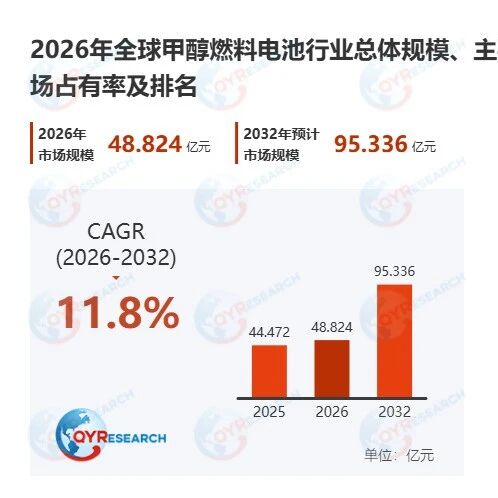
Market Overview - Methanol fuel cells convert chemical energy directly into electrical energy through electrochemical reactions, distinguishing them from traditional combustion methods [2] - They can be categorized into direct methanol fuel cells (DMFC) and reforming methanol fuel cells (RMFC), with the former being simpler and the latter offering higher power output but increased complexity [2] Structure and Technology - The main components of methanol fuel cells include the stack system, fuel supply system, air supply system, cooling and water management system, and control module [3] - Methanol fuel cells are more convenient for storage and transportation compared to hydrogen fuel cells, as methanol is a liquid at room temperature and pressure [3] - Key technological aspects include catalyst activity, electrolyte membrane performance, and fuel utilization efficiency, with advancements in materials technology contributing to miniaturization and portability [3] Application Fields - Methanol fuel cells are widely used in portable power sources, backup power, and small distributed generation systems, particularly in outdoor equipment and communication base stations [4] - They are also being explored for applications in drones, IoT devices, and remote monitoring systems due to their energy density and convenient fuel supply [4] Market Size - The methanol fuel cell market is projected to reach USD 654 million by 2025 and USD 718 million by 2026, with a compound annual growth rate (CAGR) of 11.8% over the next six years [6] Industry Chain, Policies, and Development Trends - The upstream supply chain includes methanol raw material supply, catalyst materials, and key components like proton exchange membranes [8] - The development of green and renewable methanol technologies is shifting the upstream material structure towards low-carbon solutions [8] - Downstream applications focus on portable power, backup power, and small distributed generation, with communication base stations being a significant market [8] - Industry policies supporting clean energy transitions and carbon reduction goals are crucial for the growth of methanol fuel cells [10] Development Trends - The industry is moving towards increasing power density, reducing precious metal catalyst usage, and extending lifespan [11] - Challenges include lower system efficiency compared to hydrogen fuel cells and the high cost of catalyst materials [11] - Methanol fuel cells are seen as advantageous in applications requiring convenient fuel storage and transportation [11] Entry Barriers - The methanol fuel cell industry has certain technical and capital barriers, requiring expertise in electrochemical materials, stack design, and system integration [12] - Establishing a stable customer base and experience with demonstration projects is essential for market entry [12]
《分布式能源规划员》(综合能源服务方向)培训通知丨系列培训
中国能源报· 2026-03-17 12:52
Core Viewpoint - The article emphasizes the importance of developing distributed energy and integrated energy services as a crucial path towards carbon neutrality, highlighting the need for interdisciplinary talent in energy planning and management [1]. Group 1: Training Information - The training titled "Distributed Energy Planner (Integrated Energy Services Direction)" will be held online from March 24 to March 29, 2026 [2]. - The training is organized by the Human Resources and Social Security Ministry's Social Security Capacity Building Center and hosted by China Energy News Co., Ltd [2]. Group 2: Target Audience - The training is aimed at various stakeholders including provincial and municipal power companies, energy groups, and enterprises in the oil and gas sector [2]. - It also targets new energy companies (wind, solar, storage), energy service companies, and professionals interested in the integrated energy services sector [2]. Group 3: Course Outline - The course will cover an overview of integrated energy services, including its driving forces and current development status both domestically and internationally [3]. - It will include modules on distributed photovoltaic projects, natural gas distributed energy applications, smart microgrids, hydrogen energy applications, new energy storage, and zero-carbon factory assessments [4]. Group 4: Training Fees - The training fee is set at 3600 yuan per person, which includes training, materials, and certification costs [5]. Group 5: Contact Information - For inquiries, contact Yang at 15801248899 or Wang at 15201547047 [6].

户储调研更新-德业-艾罗
2026-03-12 09:08
Summary of Conference Call Records Industry Overview - The household energy storage (户储) market is expected to maintain high growth rates in 2026, driven by demand in Asia, Africa, and Latin America, rising global electricity prices, and subsidies from multiple countries, including Australia in H2 2025 and the UK in early 2026 [1][2][3] Key Companies 德业股份 (Deye) - Deye's production in March 2026 reached a historical high, with Q1 demand primarily from household storage, projecting an annual revenue growth of 30%-40% [1][4] - The commercial energy storage business is expected to double in growth [1][4] - Strong demand for household storage is noted across multiple markets, including Africa, the Middle East, Australia, Ukraine, and Southeast Asia [4] - The company plans to shift focus to commercial energy storage in Q2 2026, anticipating significant growth in this segment [4] 艾罗能源 (Airo) - Airo's production in Q1 2026 was approximately 1.8 billion yuan, with Australia accounting for 20%-30% of this figure [1][5] - The company aims for 1.2 billion yuan in revenue from commercial energy storage and expects 1-1.5 billion yuan from large-scale storage [1][5] - Airo is transitioning its household storage products from 100Ah cells to 314Ah cells to significantly reduce costs, facilitating penetration into lower purchasing power markets in Asia, Africa, and Latin America [1][4][5] Market Dynamics - The core driving logic of the household storage sector is the increasing global energy security and independence awareness, particularly catalyzed by geopolitical events such as conflicts in the Middle East [2] - The market has significant potential, especially in Asia, Africa, and Latin America, where 90% of the global population resides and faces rigid electricity demand [2] - Global electricity prices are on the rise, enhancing the economic viability of household storage solutions [2] - Various countries are implementing subsidies and tax incentives for household storage, with Australia and the UK leading the charge, further stimulating demand [2] Catalysts and Risks - Potential catalysts for the household storage market include ongoing geopolitical conflicts that may lead to delayed demand realization, with orders expected to manifest quickly if conflicts persist [6] - The UK’s household storage subsidy policy is anticipated to roll out in April 2026, aligning seamlessly with Australia’s policies, which could further boost market expectations [6] Conclusion - The household storage market is poised for robust growth in 2026, supported by strong demand across various regions and significant company initiatives to enhance production and reduce costs. The interplay of geopolitical factors and supportive government policies will be crucial in shaping the market landscape.

《分布式能源规划员》(综合能源服务方向)培训通知丨系列培训
中国能源报· 2026-03-10 05:23
Core Viewpoint - The article emphasizes the importance of developing distributed energy and integrated energy services as a crucial path towards carbon neutrality, highlighting the need for interdisciplinary talent in energy planning and management [1]. Training Details - The training will be conducted online from March 24 to March 29, 2026 [2]. - The training is organized by the Human Resources and Social Security Ministry's Social Security Capacity Building Center and hosted by China Energy News Co., Ltd [2]. Target Audience - The training is aimed at various stakeholders including provincial and municipal power companies, energy groups, oil companies, new energy enterprises, and individuals interested in the fields of new energy and integrated energy services [2]. Course Outline - The course covers a comprehensive overview of integrated energy services, including its development status and trends [3]. - It includes modules on distributed photovoltaic projects, natural gas distributed energy applications, smart microgrids, hydrogen energy applications, new energy storage, and zero-carbon factory assessments [4]. Training Costs - The training fee is set at 3600 yuan per person, which includes training materials and certification costs [5]. Contact Information - For inquiries, contact Yang at 15801248899 or Wang at 15201547047 [6].

南华期货光伏产业周报:行业底部,静待东风-20260308
Nan Hua Qi Huo· 2026-03-08 11:15
1. Report Industry Investment Rating No relevant information provided. 2. Core Viewpoints of the Report - The current photovoltaic industry is at the bottom of the capacity cycle, showing a "weak supply and demand" characteristic. The supply side of polysilicon has seen a decline in production, and the demand side of downstream silicon wafers, cells, and components is also under pressure. The industry is in a contraction state, and the inventory is at a historical high. It is necessary to wait for capacity clearance and improvement of the supply - demand pattern [3]. - The Middle East war may increase the demand for distributed energy in various countries. Photovoltaic, as the core supply pillar of distributed green power, will become the main incremental force of the distributed power grid along with wind power. The global energy transformation trend is irreversible, and photovoltaic is the core track of energy structure transformation [4]. - In the short - term (before mid - 2026), the trading logic focuses on changes in technical trends and supply - side production reduction. In the long - term (after mid - 2026), it focuses on the anti - involution process, inventory consumption, and the demand for distributed power grids in various countries [6][9]. 3. Summary by Directory 3.1 Core Contradictions and Strategy Recommendations 3.1.1 Core Contradictions - The core factors leading to the sharp decline in polysilicon futures prices this week include the anti - involution progress, supply - side production resumption, downstream demand - side production scheduling, and inventory consumption [3]. - The industry's fundamentals show "weak supply and demand." The supply side of polysilicon has a declining production trend, and the demand side of downstream links is also under pressure. The overall industry is in a contraction state, and the inventory is at a historical high [3]. 3.1.2 Industry Operation Suggestions - Polysilicon futures prices are expected to fluctuate widely. The current 20 - day rolling volatility is 28.63%, and the historical percentile of volatility in the past 3 years is 83.6% [10]. - Different hedging suggestions are provided for polysilicon sales, procurement, and inventory management, with recommended hedging ratios ranging from 10% to 20% [10]. 3.2 Market Information - On March 5, 2026, the government work report was released [11]. 3.3 Market Analysis 3.3.1 Price - Volume and Capital Analysis - This week, the polysilicon weighted index contract closed at 41,576 yuan/ton, with a week - on - week decrease of 11.09%. The trading volume was 10,741 lots, a week - on - week decrease of 7.36%, and the open interest was 58,536 lots, a week - on - week decrease of 7,167 lots [13][15]. - The MACD and moving averages (daily level) show that the polysilicon futures price has fallen below the 5 - day moving average and entered a downward channel. The Bollinger Bands (daily level) show that the price is running near the lower band, and the overall trend of the Bollinger Bands is still downward [15]. - The 20 - day historical volatility of polysilicon has been strengthening in a volatile manner. The implied volatility of at - the - money options has shown a wide - range volatile strengthening trend, and the PCR of option open interest has been weakening marginally [17]. - The long - position scale of key profitable seats in polysilicon has shown a slow decline in the past week [19]. - The term structure of polysilicon futures presents a contango structure. The basis of the main contract has shown a volatile and strengthening trend, and it is recommended to pay attention to the opportunity of taking goods from the futures market [21][23]. 3.3.2 Futures and Price Data - The prices of various types of polysilicon and related products such as silicon wafers, cells, and components have shown different degrees of changes. For example, the price of N - type granular silicon has decreased by 12.00% week - on - week, while the price of some distributed components has increased slightly [27]. 3.4 Valuation and Profit Analysis - The overall profit of polysilicon enterprises is weakening. From the spot market, the spot profit of polysilicon is declining. In terms of production process, the profit of the silane method is higher than that of the improved Siemens method [28]. - Based on the accounting model with industrial silicon and electricity as the main cost components, the gross profit margin of polysilicon futures is about 14.61% [28]. 3.5 Fundamental Data 3.5.1 Polysilicon Supply - Domestic polysilicon weekly production shows different trends. SMM's weekly production is 18,800 tons, a week - on - week decrease of 5.05%, while Baichuan's weekly production is 19,330 tons, a week - on - week increase of 1.90% [37]. - Overseas polysilicon monthly production and monthly capacity utilization rate data are provided [39]. - The net export of domestic polysilicon shows seasonal characteristics. The domestic polysilicon weekly inventory is at a high level, with different changes in various inventory types [41][42]. 3.5.2 Silicon Wafer Supply - The weekly production of silicon wafers is 11.08 GW, a week - on - week decrease of 2.38%, and the weekly inventory is 29.01 GW, a week - on - week decrease of 6.60% [45]. - The monthly net export of silicon wafers shows seasonal characteristics [48]. 3.5.3 Cell Supply - The monthly production and capacity utilization rate of cells show seasonal characteristics. The weekly inventory of cells is 8.72 GW, a week - on - week decrease of 6.34% [52][56]. 3.5.4 Photovoltaic Module Supply - The monthly production and capacity utilization rate of photovoltaic modules show seasonal characteristics. The weekly inventory of photovoltaic modules is 28.4 GW, a week - on - week increase of 15.92% [59][62]. - The monthly net export of photovoltaic modules shows seasonal characteristics [61]. 3.5.5 Bidding - The weekly data of photovoltaic module winning bids show that the winning bid capacity is 1,309.96 MW, a week - on - week increase of 194.96%, and the winning bid average price is 0.76 yuan/watt, a week - on - week increase of 1.33% [64]. 3.5.6 Installation and Application - The monthly new installation volume of Chinese photovoltaics shows seasonal characteristics. The data of Chinese green power generation and the proportion of photovoltaic power generation are also provided [68][70].

潍柴动力20260212
2026-02-13 02:17
Summary of Weichai Power Conference Call Company Overview - **Company**: Weichai Power - **Industry**: Distributed Energy and Heavy-Duty Vehicles Key Points Industry and Market Dynamics - Increased investment in AIDC (Artificial Intelligence Data Centers) is leading to tight demand for distributed power generation, resulting in both volume and price increases for Weichai Power's products [2][3] - By 2030, the U.S. is expected to see a significant increase in electricity demand from data centers, with an estimated additional 20GW of demand, which Weichai Power's gas generator sets and SOFC (Solid Oxide Fuel Cell) technology are positioned to address, potentially filling a 7-8GW gap worth over $10 billion [3] Financial Performance and Projections - Weichai Power's heavy-duty truck business is expected to see export growth, with stable domestic market performance. Projected revenue for 2026 is estimated at 15.3 billion RMB, increasing to 17.7 billion RMB in 2027 [2][4] - The company's current P/E ratio is approximately 14 times, which is below the industry average of 25-30 times for peers like Cummins and Caterpillar, indicating potential for valuation improvement [5][4] Technological Advantages - Weichai Power has significant advantages in the reciprocating gas generator segment, bolstered by the acquisition of PSI, a U.S. company with over 30 years of experience in gas generator manufacturing [6] - SOFC technology is crucial for Weichai Power, as it meets the high power and frequency variability demands of data centers. The company has partnered with UK-based Ceres, holding nearly 20% equity, to enhance its SOFC capabilities [7] Diesel Generator Market Outlook - The diesel generator market is experiencing strong demand, but expansion is limited due to supply chain bottlenecks. Despite a 35%-40% annual growth in industry demand, actual supply expansion remains constrained [8] - Weichai Power's diesel generator business is expected to contribute significantly to overall performance, with AIDC-related business projected to account for about 15% of total revenue in 2026, with diesel engines contributing two-thirds of that [8] Overall Assessment - Weichai Power is well-positioned in the global distributed energy market, particularly in North America, with strong manufacturing capabilities and a diversified portfolio. The company is expected to achieve revenues of 15.3 billion RMB in 2026 and 17.7 billion RMB in 2027 [9] - Despite the positive outlook, potential risks include underperformance in AIGC investments, changes in power technology pathways, and significant increases in raw material prices that could impact profitability [9]
学习规划建议每日问答 | 如何理解发展分布式能源
Xin Hua She· 2026-02-10 06:29
Core Viewpoint - The development of distributed energy is emphasized as a crucial component of the new energy system, which is significant for optimizing energy structure, promoting energy conservation and emission reduction, and advancing sustainable economic and social development [1][2]. Group 1: Considerations for Development - The deployment of distributed energy aims to better promote carbon peak and carbon neutrality, as it aligns with the resource and technical characteristics of renewable energy, leading to significant carbon reduction effects [2]. - It addresses the energy needs of the public by providing flexible energy solutions that can cater to various scenarios, especially in remote areas and for users with high energy stability requirements [2]. - The development enhances energy security by increasing the supply of clean energy and reducing reliance on large energy systems, while also serving as backup and peak-shaving resources [2]. - It encourages social investment and the growth of related industries due to its smaller project scale and lower investment thresholds compared to large energy projects [2]. Group 2: Key Focus Areas for Development - The construction of zero-carbon parks is prioritized, integrating various energy sources to meet diverse energy demands [3]. - The promotion of zero-carbon rural development through distributed solar and wind energy projects is emphasized [3]. - The integration of photovoltaic systems into buildings is encouraged, utilizing existing structures for energy generation [3]. - The fusion of clean energy with transportation is highlighted, aiming to develop charging and hydrogen stations along transportation routes [3]. - The rational layout of distributed natural gas energy stations is recommended to support power system stability [3]. Group 3: Cautions for High-Quality Development - There is a need to prevent blind expansion of scale by carefully planning the development and layout of distributed energy [4]. - Attention must be paid to ensuring adequate supporting infrastructure, such as distribution networks and microgrids, to enhance the capacity for renewable energy [4]. - Fair competition must be maintained by regulating the development and management of distributed photovoltaic energy, optimizing the business environment, and establishing a sound market transaction mechanism [4].