
双品牌

Search documents
再来1000万台,九号的二轮电动车怎么开
Guan Cha Zhe Wang· 2026-01-29 00:42
Core Insights - Ninebot has achieved a significant milestone by surpassing 10 million units in global electric scooter shipments, setting a record for the fastest sales in the two-wheeler market within six years, and is now focusing on its next target of 20 million units [1][3] - The company has announced three core strategies: dual-branding, globalization, and the "electric cut oil" initiative, aiming to address the challenges of the saturated Chinese two-wheeler market [1][3] Dual-Brand Strategy - Ninebot's dual-brand strategy distinguishes between Ninebot and Segway based on user characteristics rather than price tiers, targeting different consumer segments [5][7] - Ninebot focuses on convenience, safety, and simplicity for the majority of users, while Segway caters to professional riders seeking performance and adventure [5][7] - Both brands share core technologies but operate independently in terms of channels and services, allowing for tailored marketing and product adjustments based on local consumer preferences [7] Electric Cut Oil Initiative - The "electric cut oil" strategy aims to replace traditional fuel-powered two-wheelers with electric alternatives, addressing the environmental and maintenance issues associated with combustion engines [9][10] - Ninebot is enhancing battery technology and vehicle design to achieve significant improvements in energy density and range, with new models expected to offer up to 300 km of range [10][12] - The company is also focused on cost optimization through partnerships and technological advancements to make electric vehicles more accessible [12] Globalization Efforts - Ninebot is pursuing a globalization strategy that emphasizes innovation and localization, moving away from low-cost mass production to create a high-value brand image [13][14] - The company has established subsidiaries in key global cities and employs a diverse workforce to better understand and meet local market demands [14][15] - Ninebot's unique business model, which integrates online and offline sales, has proven effective in China and is being adapted for international markets [17][18] Industry Transformation - Ninebot's strategies reflect a broader shift in the Chinese two-wheeler industry from price competition to technology and value competition, setting a precedent for innovation-driven growth [19] - The company's approach aims to provide a replicable model for other Chinese manufacturers looking to expand globally while contributing to the advancement of smart transportation technologies [19]


泸州老窖(000568)季报点评:产品矩阵筑牢发展根基 消费场景创新扩容
Xin Lang Cai Jing· 2025-10-31 06:37
Core Viewpoint - The company reported a decline in revenue and net profit for Q1-Q3 2025, indicating pressure on performance due to market conditions and policy impacts [1][2]. Financial Performance - For Q1-Q3 2025, the company achieved revenue of 23.127 billion yuan, a year-on-year decrease of 4.84%, and a net profit attributable to shareholders of 10.762 billion yuan, down 7.17% year-on-year [1]. - In Q3 2025, the company recorded revenue of 6.674 billion yuan, a decline of 9.80% year-on-year, and a net profit of 3.099 billion yuan, down 13.07% year-on-year [1]. - The gross margin for Q1-Q3 2025 was 87.11%, a decrease of 1.32 percentage points year-on-year, while the net margin was 46.67%, down 1.09 percentage points year-on-year [2]. Strategic Initiatives - The company is implementing a pricing strategy to stabilize terminal product prices, despite short-term performance pressures [1]. - The "Double Brand, Three Product Lines, Big Single Product" strategy is showing strong product capability, with stable pricing for the premium product Guojiao 1573 and steady growth for mid-range products [1]. - The company is actively entering the high-growth light bottle liquor segment, planning to launch a new product, Luzhou Laojiao Erqu, to strengthen its presence in the mass consumer market [1]. Expense Management - The company’s expense ratio for Q1-Q3 2025 was 12.29%, a decrease of 0.74 percentage points year-on-year, with sales, management, R&D, and financial expense ratios showing mixed changes [2]. - In Q3 2025, the expense ratio increased to 16.13%, up 1.51 percentage points year-on-year, indicating a rise in operational costs [2]. Profit Forecast - The company is expected to achieve revenues of 29.636 billion yuan, 31.415 billion yuan, and 34.022 billion yuan for the years 2025, 2026, and 2027, respectively, with net profits of 12.392 billion yuan, 13.232 billion yuan, and 14.578 billion yuan [3]. - The projected price-to-earnings ratios for 2025, 2026, and 2027 are 15.43, 14.45, and 13.11, respectively, indicating a favorable outlook [3].

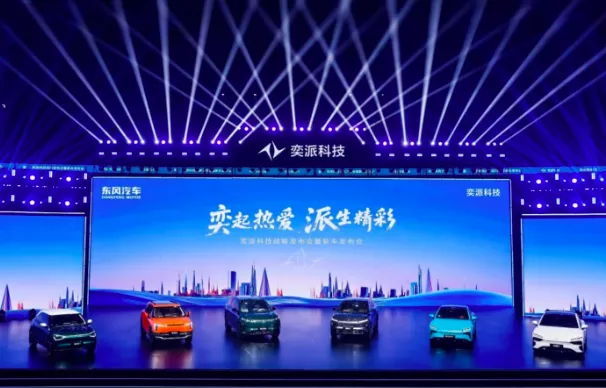
对话东风奕派丨计划形成“双品牌、多品系”战略布局 未来将加速车型出海
Cai Jing Wang· 2025-08-11 15:46
Core Viewpoint - Dongfeng Yipai Automotive Technology Company has officially launched its "Future Wings" strategic plan, focusing on technology, brand, product, and overseas expansion as the four pillars of its development blueprint [1][2]. Group 1: Strategic Overview - The merger of former Dongfeng Nano and Dongfeng Yipai has resulted in the establishment of a new Dongfeng Yipai brand, which aims to implement a "dual brand, multi-series" strategic layout [2]. - By 2028, the product matrix of Yipai Technology is expected to reach 20 models, with a significant focus on products developed in collaboration with Huawei, including the first high-end intelligent full-size SUV set to launch in 2026 [2]. - Yipai Technology plans to invest over 50 billion yuan in R&D during the 14th Five-Year Plan period, establishing six major technology bases to enhance safety and intelligent driving capabilities [2]. Group 2: Overseas Market Strategy - Dongfeng plans to invest substantial resources in overseas markets, employing four core strategies: global product strategy, channel development, localized operations, and marketing innovation [6][9]. - The company aims to launch 30 models specifically for overseas markets by 2027, utilizing a global integrated R&D model to enhance product competitiveness [9]. - Dongfeng has established nearly 400 sales channels overseas, with plans to expand to 800 this year and over 2000 by 2027, focusing on strategic partnerships with leading local dealers [9][11]. Group 3: Collaboration with Huawei - The collaboration with Huawei is structured into three phases, with the current focus on the "DH Project," which emphasizes joint definition, development, co-creation, and marketing [12][14]. - The ultimate goal of the partnership is to create high-quality products that integrate Dongfeng's mechanical craftsmanship with Huawei's intelligent technology, enhancing user experience [14]. - The collaboration has already shown significant market success in previous projects, leveraging Dongfeng's manufacturing expertise and Huawei's strengths in intelligent driving and ICT [12][14]. Group 4: Market Challenges and Responses - The automotive market is currently facing challenges such as price wars and intense competition, which are viewed as necessary phases in industry development [7][14]. - Yipai Technology's strategy is to focus on enhancing the intrinsic value of products and services rather than engaging in price competition [7][14]. - The company is committed to continuous improvement in user experience, operational efficiency, and establishing a rapid response mechanism to address customer feedback [14][17].

泸州老窖(000568) - 000568泸州老窖投资者关系管理信息20250519
2025-05-19 11:15
Group 1: Industry Challenges and Recovery - The liquor industry is currently facing significant challenges due to a consumption environment impact, but there is potential for recovery as economic vitality is released [2][3] - The company believes that the domestic consumption capacity remains strong, supported by a complete industrial system and robust economic resilience [2] Group 2: Market Expansion Strategies - The company has developed the "Bay Area Light" product series to penetrate the Greater Bay Area market and has established strategic partnerships with various commercial organizations [2] - Future work will focus on expanding market presence, enhancing sales team capabilities, and ensuring channel profitability [3] Group 3: Product Development and Consumer Trends - The company is adapting to consumer demographic shifts, with a focus on low-alcohol products, which currently account for nearly 50% of the revenue from Guojiao 1573 [4] - The average age for heavy drinking consumption is around 28 years, with 85% of consumers over 50 preferring stability in their choices [3] Group 4: Brand Building and Marketing - The company has established a clear "dual brand, three product lines, and major products" branding strategy, significantly enhancing brand recognition and value [4] - The company plans to launch a co-branded liquor with "The Three-Body Problem" in June, indicating a focus on innovative marketing strategies [4] Group 5: Financial Performance and Shareholder Returns - The company has set a cash dividend plan for 2024-2026, ensuring that the total cash dividends will not be less than 65%, 70%, and 75% of the net profit attributable to shareholders, respectively, with a minimum of RMB 8.5 billion each year [4] - The company aims to maintain stable revenue growth during the industry adjustment period, with a focus on high-quality development [4] Group 6: Digital Transformation and Operational Efficiency - The company is leading digital transformation in the industry, shifting from a channel-driven strategy to a consumer-focused approach [5] - Emphasis on enhancing product digitalization and operational management capabilities to support precise marketing decisions [5]