国潮出海

Search documents
中国中免20260123
2026-01-26 02:49
Summary of China Duty Free Group's Conference Call Company Overview - **Company**: China Duty Free Group (CDFG) - **Acquisition**: CDFG acquired 100% equity of DFS Macau and retail stores in Hong Kong, along with intangible assets in Greater China, including brand, membership system, IT systems, and intellectual property [2][3][5] Core Points and Arguments Strategic Acquisition - The acquisition aims to optimize business layout, enhance international capabilities, and solidify CDFG's position in the global duty-free industry [2][5] - CDFG established a strategic partnership with LVMH to expand cooperation in product sales, store openings, brand promotion, cultural exchange, tourism services, and customer experience [2][3] Market Expansion - CDFG plans to strengthen overseas expansion, focusing on mature markets (bidding), growth markets (acquisitions like Hong Kong and Macau), and high-potential markets (self-pilot projects in Cambodia, Sri Lanka, and Vietnam) [2][6] - The retail performance in Hong Kong exceeded expectations, particularly in cosmetics, jewelry, watches, and gifts, leading to confidence in future profitability [2][7] Financial Aspects - CDFG's subsidiary, CDF International, acquired DFS's retail stores and intangible assets for up to $395 million [3] - The acquisition is expected to enhance CDFG's backend capabilities and facilitate broader market expansion, especially in Southeast Asia and along the Belt and Road Initiative [2][8] DFS Group Overview - DFS Group, established in 1960, is a leading high-end retail and travel retail operator, collaborating with 1,800 global brands [4] - The acquisition not only focuses on store resources but also on brand value, membership value, and supply chain systems [4][5] Future Plans and Market Strategy - CDFG aims to explore further cooperation opportunities with LVMH in overseas channels and may re-enter previously exited markets [5][10] - The company is optimistic about the retail industry's growth in Hong Kong and Macau, viewing it as a key pillar for future profitability [7][17] Integration and Operational Strategy - CDFG plans to integrate DFS into its existing system, ensuring a smooth transition in supply chain, talent, and channel resources [20][22] - The company will leverage its extensive membership base to enhance revenue and attract high-net-worth customers [9][11] Profitability and Valuation - CDFG's valuation logic is based on market comparisons, with the acquisition price reflecting a protective measure for the company and investors [17] - The expected revenue for the acquired business in 2023 is approximately 6 billion RMB, with a net profit of around 1 billion RMB [17] Cash Utilization and Future Investments - CDFG plans to utilize its ample cash reserves for future investments and acquisitions, aiming to optimize its investment strategy for better performance in the capital market [24] Other Important Insights - CDFG is considering introducing more high-potential Chinese brands into its offerings, particularly in spaces with significant display potential [11][21] - The company is focused on maximizing the value of the acquisition through post-merger integration and synergy effects across various business segments [21][22] This summary encapsulates the key points from the conference call regarding China Duty Free Group's strategic acquisition of DFS and its implications for future growth and market positioning.

中国中免(601888):收购DFS大中华区业务,携手LVMH开启新篇章
Guolian Minsheng Securities· 2026-01-21 11:05
Investment Rating - The report maintains a "Buy" rating for China Duty Free Group (601888.SH) [2] Core Views - The acquisition of DFS's Greater China business marks a new chapter for China Duty Free Group, enhancing its position in the tourism retail market [8] - The transaction involves a cash purchase of up to $395 million for DFS's assets and equity in the Greater China region, which is expected to strengthen the company's service network in Hong Kong and Macau [8] - The partnership with LVMH is anticipated to optimize product structure and service levels, further enhancing the company's competitive edge [8] Financial Forecasts - Projected revenue for 2024 is 56.47 billion yuan, with a decline of 16.4%, followed by a slight decrease to 54.52 billion yuan in 2025, and growth to 62.18 billion yuan in 2026 and 69.63 billion yuan in 2027 [2][9] - Net profit attributable to shareholders is expected to be 4.27 billion yuan in 2024, decreasing by 36.4%, then recovering to 3.88 billion yuan in 2025, and increasing to 5.18 billion yuan in 2026 and 5.82 billion yuan in 2027 [2][9] - Earnings per share (EPS) are forecasted to be 2.06 yuan in 2024, 1.88 yuan in 2025, 2.50 yuan in 2026, and 2.81 yuan in 2027 [2][9] Valuation Metrics - The price-to-earnings (P/E) ratio is projected to be 46 in 2024, increasing to 51 in 2025, and then decreasing to 38 in 2026 and 34 in 2027 [2][9] - The price-to-book (P/B) ratio is expected to be 3.6 in 2024, slightly decreasing to 3.5 in 2025, and further to 3.3 in 2026 and 3.1 in 2027 [2][9]
中国中免拟不超过3.95 亿美元收购 DFS 大中华区旅游零售业务
Bei Jing Shang Bao· 2026-01-20 07:33
Group 1 - China Duty Free Group (CDFG) announced the acquisition of DFS Group's travel retail business in Greater China for up to $395 million in cash, which includes 100% equity of DFS Cotai Limitada and related assets from DFS Singapore and DFS Hong Kong [1] - The acquisition encompasses various assets such as personnel, lease contracts, fixed assets, inventory, and intangible assets including brand ownership and membership systems [1] Group 2 - CDFG signed a strategic cooperation memorandum with LVMH to establish a partnership in retail, aligning with LVMH's current business model [2] - The collaboration aims to leverage the strengths of both companies to deepen cooperation in Greater China, focusing on product sales, store openings, brand promotion, cultural exchange, tourism services, and customer experience [2] - The transaction is subject to customary closing conditions and is expected to be completed in approximately two months, allowing CDFG to expand its service network and enhance its international business platform [2]
昨日盘后利好连发!中国中免收购DFS大中华区零售业务 LVMH集团将认购中免H股股份
Xin Lang Cai Jing· 2026-01-20 06:32
Core Viewpoint - China Duty Free Group (CDFG) has announced an agreement to acquire DFS Group's travel retail business in Hong Kong and Macau, along with intangible assets in Greater China, aiming to enhance its service network and international business expansion [1][2] Group 1: Acquisition Details - The acquisition is expected to be completed in approximately two months, pending customary closing conditions [1] - LVMH Group and Robert Miller's family will participate in CDFG's capital increase by subscribing to newly issued H-shares in Hong Kong, with the subscription amount corresponding to part of the sale price [1] Group 2: Strategic Cooperation - CDFG and LVMH Group have signed a strategic cooperation memorandum to establish partnerships in retail areas where their strategies align [1] - The collaboration aims to leverage each party's strengths to deepen cooperation in Greater China, focusing on product sales, store openings, brand promotion, cultural exchange, tourism services, and customer experience [1] Group 3: Management Perspective - CDFG's General Manager, Chang Zhujun, emphasized that the transaction will expand CDFG's service network, enhance the retail economy in Hong Kong and Macau, and support high-quality development in the region [2] - The acquisition is part of CDFG's strategy to accelerate international business layout and implement the Guangdong-Hong Kong-Macau Greater Bay Area strategy [2]
港股异动 | 中国中免(01880)高开近3% 附属拟收购DFS Cotai Limitada全部已发行股本
智通财经网· 2026-01-20 01:31
智通财经APP获悉,中国中免(01880)高开近3%,截至发稿,涨2.8%,报89.85港元,成交额479.8万港 元。 据此,卖方同意出售,而买方同意购买目标公司DFS Cotai Limitada的全部已发行股本(股份收购),及 DFS香港同意出售,而买方同意透过资产转让方式购买业务(由DFS香港于香港经营的旅游零售业务(包 括大中华区的无形资产))(资产收购,连同股份收购统称为该等收购事项)。 透过该等收购事项,本公司将取得DFS位于香港及澳门的旅游零售店铺,以及在大中华区独家使用的包 括DFS品牌在内的无形资产。此举将进一步拓展本公司于大湾区的服务网络,发挥产业引领作用,不断 整合优质旅游零售网络,并确立本集团于区域旅游零售市场的领先地位,同时依托港澳窗口优势,推动 国货精品出海,打造国潮出海平台及建立国际业务中台。 消息面上,中国中免发布公告,于2026年1月19日,中免国际有限公司(买方)(中国旅游集团中免股份有 限公司(本公司)的间接全资附属公司)与DFS Venture Singapore (Pte) Limited (DFS新加坡)及DFS Group Limited(DFS香港,连同DFS ...
市内免税店国货“潮品”品牌首批名录发布 国货进免税,25个深圳品牌获推介
Shen Zhen Shang Bao· 2025-12-29 03:05
近日,"国货'潮品'进免税品牌推介会"在深圳举办。会上,商务部流通发展司正式公布了首批市内免税 店国货"潮品"品牌推介名录,174个品牌纳入首批推荐名录。荣耀、博士眼镜(300622)、永丰源等25 个深圳品牌成功入选。 将国货"潮品"引入免税渠道,是推动本土品牌全球化的重要举措,具有多重意义。一方面能助力国产品 牌对接国际消费市场,提升品牌全球竞争力展;另一方面也可满足国内消费者对高品质商品的需求,扩 大内需;同时,国货"潮品"出海,能促进中华优秀传统文化的全球传播,实现商业价值与文化价值的双 向赋能。 "国潮"优品走向世界 免税店作为面向国际游客的重要商业窗口,汇聚全球消费者目光。为落实《提振消费专项行动方案》和 《关于完善市内免税店政策的通知》要求,商务部会同文化和旅游部开展了市内免税店国货"潮品"品牌 推介名录征集工作。 记者了解到,本次公布的首批174个品牌,覆盖全国26个省(自治区、直辖市)的19个经营品类,其中 包含45个中华老字号。此举标志着国货品牌规模化、系统化进入免税渠道的政策通道全面打通,为"国 潮"出海搭建了高势能平台。 商务部流通发展司零售业发展处处长任宏伟表示,推动优质国产品牌进入 ...


共拓国潮出海新路径!“国货潮品”进免税品牌推介会在深召开
Sou Hu Cai Jing· 2025-12-25 17:26
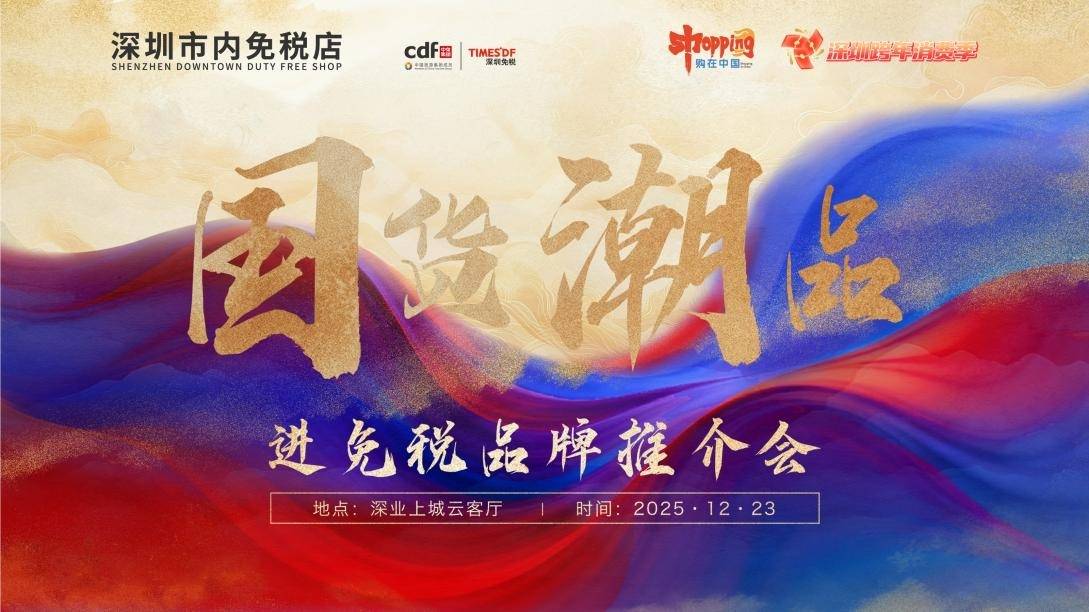
12月23日,"国货潮品"进免税品牌推介会在深圳市华富街道深业上城云客厅及市内免税店举行。活动由商务部流通发展司指导,深圳市商务局等单位共同参 与,汇聚了政府部门、免税企业及国潮品牌代表逾百人。 174个国货"潮品"首批名录发布,政企共探国潮出海新范式 会上正式发布了市内免税店国货"潮品"首批推介名录,共收录174个品牌,覆盖全国26个省市的19个经营品类,其中包含45个中华老字号。该名录旨在为免 税企业采购提供权威指引,助力国货品牌通过免税渠道从"入场"走向"出圈"。 深圳作为全国首批市内免税店政策试点城市,现场分享了以"免税+离境退税+有税"三维模式、"科技之光"国潮场景体验及政企协同引入机制为核心的实践成 果,为行业提供了可复制、可推广的范本。中免集团、荣耀、博士眼镜、刘氏竹编、海鸥手表等企业代表围绕品牌进免税店的模式创新、文化传播与国际拓 展进行了深入交流。 街区赋能与未来窗口:福田华富打造国潮国际"免税+文旅"消费枢纽 作为本次推介会举办地所在街道,华富街道积极联动深圳市内免税店,推动国潮消费与在地文化、社区生活深度融合。2025年,街道与免税店合作推出"暖 冬消费季"主题森活市集,设立国潮专区,引 ...

政策赋能国潮出海 经验引领行业发展——“国货潮品”进免税品牌推介会圆满召开
Sou Hu Cai Jing· 2025-12-24 04:18
Core Viewpoint - The event held on December 23 in Shenzhen aimed to promote domestic brands in duty-free shops, highlighting the collaboration between government and industry to enhance the international presence of Chinese products and stimulate new consumption dynamics in the duty-free sector [3][4]. Group 1: Policy and Brand Promotion - The Ministry of Commerce announced the first batch of 174 domestic brands included in the duty-free shop promotion list, covering 19 product categories and representing 26 provinces, which will serve as a reference for duty-free enterprises in product selection [4]. - The initiative aligns with the "Special Action Plan to Boost Consumption" and aims to empower domestic brands to enter international markets, enhancing their global influence [4][27]. Group 2: Industry Development and Experience Sharing - Shenzhen, as a pilot city for the duty-free shop policy, has developed a three-dimensional operational model combining duty-free, tax refunds, and taxable sales, effectively addressing challenges faced by domestic products in entering duty-free channels [6]. - The event featured representatives from various brands sharing their experiences and innovations, emphasizing the need for high-quality products and services tailored to the duty-free shopping experience [10][13]. Group 3: Cultural and Economic Impact - The promotion of domestic products in duty-free shops is seen as a crucial step in implementing national policies, expanding domestic demand, and enhancing the competitiveness of Chinese brands [27]. - The initiative not only aims to connect domestic products with international markets but also to meet domestic consumer demand for high-quality goods, thereby supporting the strategy to expand domestic consumption [27].
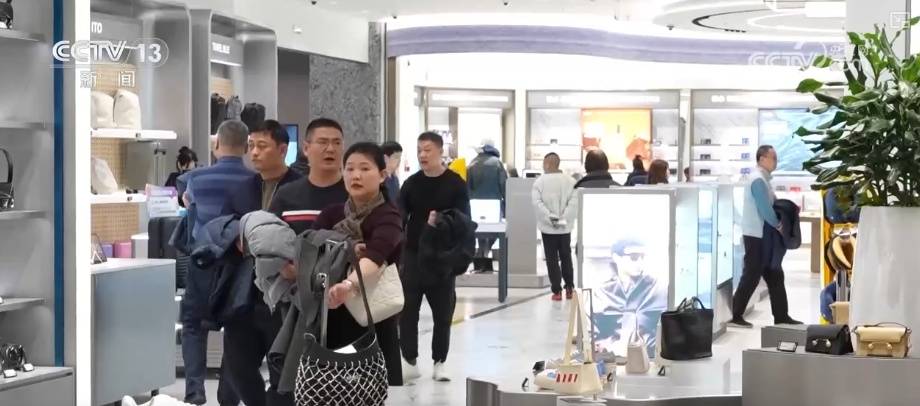
内免税店多地开业 新政“满月”免税行业有了新变化
Zhong Guo Chan Ye Jing Ji Xin Xi Wang· 2025-12-05 00:00
Core Insights - The recent policy changes by the Ministry of Finance, Ministry of Commerce, and other departments aim to enhance the duty-free shopping experience and stimulate consumer spending starting from November 1, 2025 [1] Group 1: Policy Changes and Market Impact - The new duty-free store policy allows for more flexible approval processes, enabling greater autonomy in the establishment and scaling of duty-free shops [2] - The policy simplifies the approval processes for setting up and operating duty-free stores, which is expected to improve efficiency and adapt to local market conditions [2][4] Group 2: Consumer Experience and Product Offerings - Newly opened duty-free stores are incorporating local cultural elements and offering a range of domestic products, including traditional Chinese brands and cultural items [3] - The introduction of a "national trend" section in duty-free stores aims to promote Chinese products and enhance their international competitiveness [4] - The new policy encourages duty-free stores to allocate at least 25% of their sales area to domestic products, further supporting the "going global" strategy for Chinese goods [4] Group 3: Shopping Experience Enhancements - The new regulations include online reservation services for duty-free products, allowing travelers to pre-order items based on their travel itineraries [4] - This initiative aims to improve the shopping experience by ensuring that products are ready for pickup at designated locations, catering to the needs of travelers [4]
政策“满月” 多维度解锁免税行业新变化、新亮点
Sou Hu Cai Jing· 2025-12-02 03:46
Core Viewpoint - The recent policy changes regarding duty-free shops in China aim to enhance consumer spending and support the growth of the duty-free industry, with new stores opening in major cities and a focus on promoting domestic products [1][9]. Group 1: Policy Changes and Industry Impact - The Ministry of Finance, Ministry of Commerce, Ministry of Culture and Tourism, and other departments have issued a notification to improve duty-free shop policies starting November 1, 2025, to boost consumption [1]. - The new policy allows for more autonomy in the establishment and scale of duty-free shops, indicating a shift towards a more market-driven approach [9]. - The approval process for setting up and operating duty-free shops has been simplified, enhancing efficiency and allowing local governments to optimize shop layouts based on regional characteristics [11]. Group 2: New Store Openings - The first city-based duty-free shop in Tianjin has opened in a central commercial area, featuring a mix of duty-free and taxable zones, catering to travelers with outbound tickets [4]. - A new city-based duty-free shop has also opened in Xi'an, incorporating local cultural elements into its design and product offerings, creating a unique shopping experience [7]. Group 3: Promotion of Domestic Products - The new city-based duty-free shops are increasing the availability of domestic products, including traditional Chinese brands and cultural items, to enhance consumer choice [12][14]. - The customs authority has introduced measures to support the sale of domestic products in duty-free shops, with plans to include a wider range of goods such as electronics and health products [16]. - The policy encourages duty-free shops to allocate at least 25% of their sales area to domestic products, aiming to boost the market recognition and international competitiveness of Chinese goods [21]. Group 4: Enhanced Consumer Experience - The new regulations aim to improve the shopping experience by introducing online reservation services for duty-free products, allowing travelers to pre-order items based on their travel schedules [26].