
带病体保险

Search documents
李静:以专病保障与健康管理闭环 推动普惠保险高质量发展
Xin Lang Cai Jing· 2026-01-15 09:27
Core Viewpoint - The essence of insurance is inclusive, and the population with pre-existing conditions is a key focus for inclusive insurance, addressing the protection gap for the 400 million individuals with health issues is essential for the high-quality development of the insurance industry [1][4][12] Policy Support - Various regulatory documents from the China Banking and Insurance Regulatory Commission and the National Financial Regulatory Administration encourage the development of commercial medical insurance targeting individuals with chronic diseases and pre-existing conditions [4][12][13] - The "Healthy China 2030" plan emphasizes the establishment of a multi-tiered medical security system, promoting the development of health commercial insurance and encouraging collaboration between insurance companies and healthcare institutions [4][12][13] Company Initiatives - Since its establishment in 2017, the company has focused on filling gaps in insurance coverage, particularly for underserved populations, and has implemented various mutual insurance plans and specialized disease insurance products [6][14] - The company has launched initiatives such as the "Hepatitis Care" product, which provides comprehensive health management services for chronic liver disease patients, aiming to reduce the incidence of liver cancer and improve patient outcomes [15][16] Project Outcomes - The "Hepatitis Care" product is set to officially launch in May 2025, with preliminary results showing participation from 13,317 patients and the collection of 18.64 million yuan in public welfare funds [16] - The health management program has demonstrated significant adherence, with 82% of insured patients following medical advice and maintaining standardized treatment protocols [16]


市场规模年增50% 水滴保定制37款免健告保险 让带病体“有保可医”
Cai Jing Wang· 2025-12-03 03:24
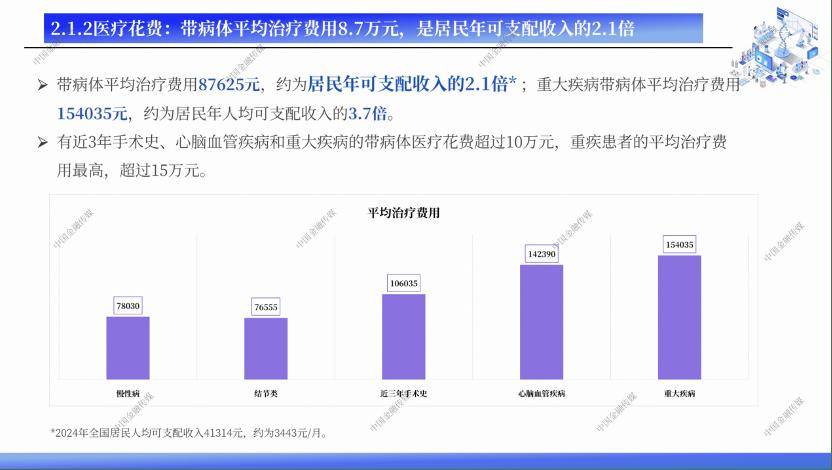
Core Insights - The report indicates a rapid growth in China's chronic illness insurance market, with a market size exceeding 12 billion yuan in 2024, reflecting a 50% year-on-year increase [1] - Waterdrop Insurance plans to launch 214 innovative chronic illness insurance products by 2025, leveraging AI technology to promote inclusivity in insurance coverage [1] Group 1: Market Demand and Challenges - The elderly population in China has reached 310 million, accounting for 22% of the total population, with 75% suffering from at least one chronic disease [2] - The prevalence of chronic diseases among the youth is alarming, with rates of sub-health and chronic diseases being twice that of the elderly [2] - The average treatment cost for chronic illness patients is 87,000 yuan, which is 2.1 times the annual disposable income of residents in 2024, indicating a significant protection gap [2] Group 2: Insurance Accessibility Issues - Nearly 30% of chronic illness patients face rejection for insurance due to inability to pass health disclosures [3] - A significant portion of the population expresses a strong willingness to pay extra premiums for coverage of pre-existing conditions, with an average willingness to pay 4,049 yuan annually [3] - The report highlights the need for government and industry collaboration to enhance the development of chronic illness insurance products [3] Group 3: AI and Product Innovation - Waterdrop Insurance has launched 214 chronic illness insurance products, including 34 that are industry-first innovations, and 37 that support no health disclosures [4] - The application of AI technology has significantly reduced the average processing time for health insurance underwriting by 80% [6] - Waterdrop Insurance has initiated a "Universal Product Alliance" with 18 insurance companies to focus on the insurance needs of chronic illness patients and other specific demographics [6]

近三成带病体因健康告知被拒保 水滴保AI驱动破解投保难题
Sou Hu Cai Jing· 2025-12-03 02:47
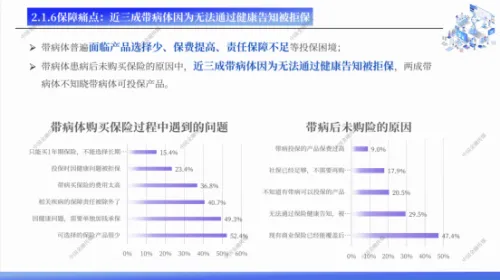
Core Insights - The report indicates a rapid growth in the chronic illness insurance market in China, with the market size surpassing 12 billion yuan in 2024, reflecting a 50% year-on-year increase [1] - Waterdrop Insurance plans to launch 214 innovative chronic illness insurance products by 2025, leveraging AI technology to promote inclusivity in insurance coverage [1] Group 1: Market Demand and Challenges - The elderly population in China has reached 310 million, accounting for 22% of the total population, with 75% suffering from at least one chronic illness [2] - The prevalence of chronic diseases among the youth is alarming, with their rates being twice that of the elderly, highlighting a significant gap in insurance coverage for this demographic [2] - The average treatment cost for chronic patients is 87,000 yuan, which is 2.1 times the national annual disposable income, indicating a substantial protection gap [2] Group 2: Insurance Accessibility Issues - Nearly 30% of chronic illness patients face rejection due to inability to pass health disclosures, with 52.4% feeling there are limited insurance options available [4] - A strong willingness to pay for coverage exists, with 75.4% of respondents willing to pay extra premiums for coverage of pre-existing conditions, averaging 4,049 yuan annually [4] Group 3: AI and Product Innovation - Waterdrop Insurance has launched 214 chronic illness insurance products, including 34 that are industry-firsts, and 37 that allow for coverage without health disclosures [6] - The use of AI and big data is emphasized as crucial for improving underwriting, pricing, and health management capabilities, making risk assessment more accurate [6][8] - The AI underwriting tool "KEYI.AI" significantly reduces the average processing time for health insurance applications by 80%, enhancing user experience [8] Group 4: Collaborative Efforts for Inclusive Insurance - Waterdrop Insurance has initiated a "Inclusive Product Alliance" with 18 insurance companies to focus on the insurance needs of chronic patients, the elderly, and maternal groups [8] - The goal is to create affordable and accessible insurance products that meet the needs of various demographics, ensuring that insurance serves its fundamental purpose of protection [8]
水滴保战略升维:AI重塑服务内核,带病体保险成普惠新引擎
Jing Ji Guan Cha Wang· 2025-11-28 08:49
Core Insights - The Chinese insurance industry is undergoing significant transformation due to economic shifts and demographic changes, with a focus on AI-driven strategies to enhance product offerings and services [1][9][14] Group 1: AI and Product Innovation - Waterdrop Insurance aims to implement a comprehensive AI strategy to upgrade its entire service chain, focusing on providing tailored insurance solutions for individuals with pre-existing conditions [1][2] - The company has launched 214 insurance products for individuals with pre-existing conditions since 2025, with 34 being first-of-their-kind in China, demonstrating a rapid pace of innovation [7][12] - AI and big data are being leveraged to improve underwriting, pricing, and health management capabilities, allowing for more accurate risk assessments and timely services [2][6] Group 2: Market Demand and Consumer Needs - The prevalence of chronic diseases among younger populations is increasing, with the incidence of type 2 diabetes in the 15-39 age group doubling from 1990 to 2021, highlighting a growing market for tailored insurance products [3][5] - 75% of individuals with pre-existing conditions are willing to pay extra premiums for coverage, indicating substantial market potential [3] - Current annual premium spending for individuals with pre-existing conditions is only 3,920.38 yuan, which is 7.23% of the average disposable income of urban residents, suggesting a gap in coverage [5] Group 3: Service Enhancement and User Experience - Waterdrop has developed a multi-faceted user engagement strategy, utilizing various online platforms to reach different consumer segments effectively [7][12] - The company has established a "Help Claim" service that has processed over 200,000 claims, with a claim approval rate of nearly 98%, significantly improving the claims experience for users [13] - AI-driven customer service tools, such as "Help Xiao Hui," provide real-time assistance, enhancing user experience and trust in the insurance process [12][13] Group 4: Strategic Partnerships and Ecosystem Development - Waterdrop has formed a "Universal Product Alliance" with 18 insurance companies to collaboratively address the needs of underserved groups, such as those with pre-existing conditions and the elderly [12] - The focus on ecosystem collaboration aims to reduce innovation costs and accelerate the rollout of inclusive insurance products [12][14] - The shift from product supply to demand insight is seen as a new competitive advantage in the insurance industry, driven by AI and market segmentation [14]
超4成患基础病职场人无法购买合适重疾险 水滴保AI赋能带病保险产品创新
Sou Hu Cai Jing· 2025-10-15 07:03
Core Insights - The article highlights the increasing health burden among modern professionals, with a significant percentage facing health issues that hinder their ability to purchase critical illness insurance [2][5][9] Group 1: Health Status of Professionals - A recent report indicates that over 70% of professionals have three or more health warning signs, with common issues including fatigue, poor sleep, and chronic conditions [5][8] - The report reveals that 37% of professionals face rejection when applying for critical illness insurance, with rejection rates exceeding 40% for those with lung nodules and thyroid diseases [2][11] Group 2: Economic and Health Pressures - Professionals aged 31-40 are under significant financial strain, balancing housing costs and educational expenses for children, with 83% facing multiple financial pressures [5][8] - Even with a monthly income of 20,000 yuan, many professionals can only save enough to cover living expenses for a limited time during family health crises [8] Group 3: Insurance Awareness and Trends - There is a growing recognition of the necessity for commercial health insurance, with 82.3% of professionals acknowledging its importance as a medical safety net [9][11] - The average age of insured professionals is 33, with many opting for online insurance purchases, particularly among higher-income families [9] Group 4: Challenges in Insurance Acquisition - Despite a strong desire to purchase insurance, only 30% of professionals actually do so, with over 40% of those with pre-existing conditions unable to find suitable coverage [11][12] - The insurance market currently exhibits a mismatch between supply and demand, particularly for individuals with existing health issues [11][12] Group 5: Innovations in Insurance Products - Companies like Waterdrop Insurance are focusing on developing insurance products tailored for individuals with pre-existing conditions, utilizing technology to enhance product offerings [12][15] - Waterdrop has launched numerous innovative insurance products, including those that do not require health declarations, significantly lowering barriers to entry for potential policyholders [15]
罕见病商保面临三大难题,谁来给千万患者发“入场券”丨“病有所保”大调研
Di Yi Cai Jing· 2025-09-25 11:45
Core Insights - The commercial health insurance market faces challenges in covering rare disease patients, as the inclusion of this group increases the "outflow" of claims, necessitating a corresponding increase in "inflow" through premium collection [1][3] - The National Healthcare Security Administration reported that there are approximately 100 rare disease drugs in the national medical insurance catalog, with a projected payment of 8.6 billion yuan for these drugs in 2024, representing 7.7% of total drug payments during the agreement period [1][2] - Despite the growing number of rare disease treatments, insurance companies remain cautious in underwriting these patients due to the inherent risks associated with genetic and hereditary conditions [3][4] Group 1: Market Dynamics - Approximately 40 new drugs submitted for commercial insurance in the second half of the year include around half for rare diseases [2] - The commercial health insurance market is evolving, with some insurers beginning to relax underwriting restrictions for pre-existing conditions, yet they still exhibit caution towards rare disease coverage [2][5] - The market for rare disease insurance is limited due to the small patient base and the high variability in treatment costs and risks associated with different rare diseases [4][5] Group 2: Challenges in Coverage - The insurance industry faces "three difficulties" in covering rare diseases: the hereditary nature of many conditions, the predominance of outpatient treatment, and the high costs of self-funded medications [2][4] - Many insurance policies exclude congenital diseases, leading to a lack of coverage for a significant portion of rare disease patients [4][5] - The lack of precise actuarial data on rare diseases complicates risk assessment and pricing for insurers, leading to higher premiums and conservative coverage terms [4][5] Group 3: Patient Experience - Patients with rare diseases often find that even when insurance products are available, the coverage is inadequate, with many facing high out-of-pocket expenses due to high deductibles and limited reimbursement for outpatient treatments [8][9] - A significant drop in reimbursement rates for pre-existing conditions has been reported, with some patients experiencing a reduction from 75% to 20% in coverage [9][10] - The market for rare disease insurance products is hindered by the perception of high risk and the potential for adverse selection, making it difficult for insurers to sustain profitable operations [5][10] Group 4: Regulatory and Market Trends - The integration of commercial insurance with basic medical insurance is seen as a potential solution to enhance coverage for rare diseases, with initiatives like the "dual catalog" negotiations for innovative drugs [10][11] - The lack of a specific rare disease drug catalog from the government has led to confusion and delays in the approval of treatments for rare diseases [11] - The disparity in coverage across different regions and the challenges in accessing outpatient medications remain significant barriers for patients [10][11]

健康险保费规模近万亿,带病人群为何“可保难赔”
Di Yi Cai Jing· 2025-09-01 23:40
Core Insights - The health insurance premium scale in China is approaching 1 trillion yuan, with nearly 1 billion participants in basic medical insurance, indicating a reversal in the previous three years' slowdown in growth [1] - Despite the growth, the market for individuals with pre-existing conditions remains largely excluded, highlighting a significant gap in coverage [1][2] - The health insurance industry is being pressured to transform from insuring healthy individuals to covering those with health issues, with regulatory bodies encouraging innovation in product offerings [2][3] Group 1: Market Dynamics - Approximately 400 million people in China belong to the "sick population," contributing about 60% of medical expenses but only accounting for around 5% of commercial insurance premiums [1][2] - The health insurance market in China has been historically limited in its ability to cover individuals with pre-existing conditions due to a lack of data and experience in risk assessment [3][4] - The market for sick individuals has seen limited growth, with the total premium for sick body insurance remaining around 50 billion yuan, primarily from group insurance and community health plans [4][5] Group 2: Regulatory and Policy Changes - Recent regulatory initiatives have aimed to encourage insurance companies to include elderly individuals and those with chronic conditions in their coverage [2][3] - The insurance industry is gradually moving towards a model that allows for the inclusion of light illness patients and those with manageable chronic conditions [6][7] - Local governments are exploring policy-driven innovations to enhance the availability of insurance products for the sick population [6][8] Group 3: Product Innovation and Challenges - There has been a shift in product offerings, with more insurance products now available for individuals with conditions like lung nodules, reflecting improvements in risk assessment capabilities [5][6] - The evolution of insurance products from short-term to long-term coverage indicates a commitment to managing the risks associated with chronic conditions [5][6] - However, the specific needs of the sick population remain unmet, as many still face challenges in obtaining coverage due to stringent underwriting criteria [5][6] Group 4: Future Directions - The future of sick body insurance will depend on the industry's ability to assess commercial risk and enhance actuarial capabilities [6][7] - The integration of innovative drugs and therapies into insurance coverage remains a challenge, with insurers often lacking precise evaluations of treatment costs and effectiveness [7][8] - The health insurance sector is expected to transition from being a passive payer to an active participant in the healthcare ecosystem, focusing on comprehensive management of patient care [8]
团险赔付率逼近80%,如何为创新药械腾出空间?
Di Yi Cai Jing Zi Xun· 2025-08-31 14:41
Group 1 - The core viewpoint of the article is that after three years of slowdown, the Chinese commercial health insurance market is showing signs of recovery and is expected to surpass the trillion yuan mark this year, but structural transformation is urgently needed from "insuring healthy people" to "insuring people's health" [2][3] - The development of insurance for the "sick population" is crucial for building a multi-tiered medical security system and for the growth of innovative drugs [3] - Shanghai has taken the lead in promoting high-quality development of commercial health insurance with measures that encourage insurance institutions to include elderly individuals and those with pre-existing conditions in their coverage [3] Group 2 - In 2024, individual health insurance products like "Hui Min Bao" and "Million Medical Insurance" contributed nearly 40% of commercial insurance payments for innovative drugs, totaling approximately 4.5 billion yuan, while group insurance accounted for less than 10%, around 1 billion yuan [5][7] - The group insurance market, while larger in absolute scale, has been facing challenges such as a focus on common illnesses rather than major illness reimbursements, leading to a high claims ratio of 70%-80% [5][6] - The annual premium scale of group insurance has exceeded 100 billion yuan, accounting for nearly 30% of the commercial medical insurance market [6] Group 3 - The contribution of group insurance to innovative drug payments is limited, with a significant gap in coverage for special drugs, which are typically high-cost and effective treatments for severe diseases [7] - The group insurance market is characterized by a "20-80 rule," where 20% of large corporate clients pay 80% of the premiums, indicating a strong demand for high-value drugs among these clients [7][9] - The average claims ratio for group insurance is expected to remain high, around 80%, due to rising medical costs and increased health awareness among employees [9] Group 4 - Reform of group insurance is necessary to incorporate innovative drug coverage, as the current model leads to overuse of small medical claims and insufficient protection for major illnesses [10][11] - The commercial health insurance market is entering a phase where individual purchasing power is limited, making it more feasible to upgrade medical coverage based on group insurance rather than relying on individual payments [11]

团险赔付率逼近80%,如何为创新药械腾出空间丨“病有所保”大调研
Di Yi Cai Jing Zi Xun· 2025-08-31 12:32
Core Insights - The Chinese commercial health insurance market is showing signs of recovery after three years of slowdown, with expectations to surpass the trillion yuan mark this year [1] - A structural transformation is necessary, shifting from "insuring healthy people" to "insuring people's health," particularly focusing on the large population with pre-existing conditions or chronic diseases [1] - Shanghai has introduced measures to promote high-quality development of commercial health insurance, encouraging the inclusion of elderly and chronic disease patients in coverage [1] Group 1: Market Dynamics - In the past year, innovative drug companies have expressed interest in expanding their market through group insurance channels, despite the group insurance market being larger but facing challenges such as low reimbursement for common diseases [3][4] - The group insurance market has a significant potential for covering innovative drug costs, with the annual premium scale exceeding 100 billion yuan, accounting for nearly 30% of the commercial medical insurance market [4][5] - The contribution of group insurance to the payment for innovative drugs is currently low, at around 10 billion yuan, indicating a gap in coverage for specialized drugs [5] Group 2: Challenges and Opportunities - The group insurance market is experiencing pressure from rising claims and a slowdown in premium growth, with a compound annual growth rate of about 11% from 2018 to 2023, significantly lower than that of individual insurance products [6][7] - The average claims ratio for group insurance is expected to remain high, around 80%, due to increased healthcare utilization and employee health awareness [8] - There is a pressing need for reform in group insurance products to accommodate innovative drug coverage, as current structures may lead to overuse of benefits for minor ailments [9][10]

“好效保”系列再升级 泰康在线守护全生命周期健康保障
Cai Fu Zai Xian· 2025-08-05 08:27
Group 1 - The core message highlights the importance of insurance in providing financial support and emotional strength to cancer patients, exemplified by H's experience with a rapid claim process that significantly aided her treatment journey [1][2] - The insurance product "Good Effect Insurance · Pink Guardian" launched by Taikang Online specifically addresses the needs of patients with breast cancer and other high-incidence diseases, offering specialized coverage for post-surgery recurrence [1][2] - Taikang Online is expanding its insurance offerings to include tailored plans for various cancers, such as diffuse large B-cell lymphoma, and aims to provide comprehensive health protection for patients with pre-existing conditions [2] Group 2 - Taikang Online has developed a comprehensive insurance product system that covers the entire disease cycle, transitioning from "insuring healthy individuals" to "insuring individuals' health," thereby enhancing the overall health management services provided to consumers [3] - The company is focused on breaking the boundaries of "insurance + health," aiming to deliver a full range of protection services that ensure individuals receive professional care at every stage of their health journey [3]