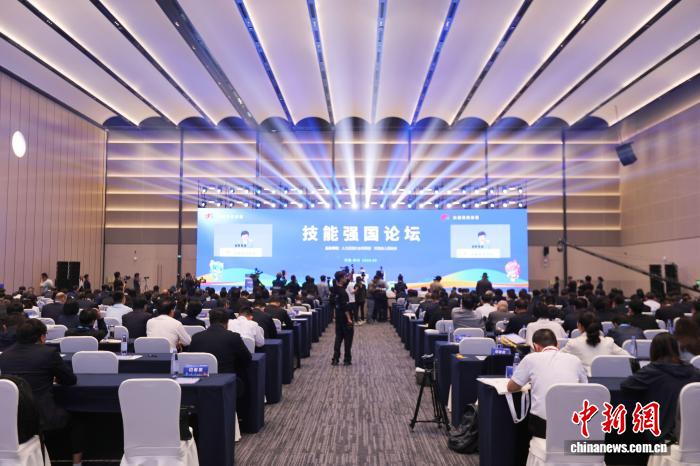
技能人才队伍建设

Search documents
马秀丽委员——推动培养更多“数智工匠”(实干显担当 同心启新程·代表委员履职故事)
Ren Min Ri Bao· 2026-02-24 22:10
Core Insights - The article highlights the importance of skill talent development in the manufacturing sector, emphasizing the need for improved systems and support for skill recognition and career advancement [1][2]. Group 1: Skill Talent Development - The article discusses the busy atmosphere at the Xiaobei River Sock Industry Base in Liaoyang, Liaoning Province, where the focus is on the number of skilled workers and the accessibility of vocational skill recognition and title evaluation [1]. - Ma Xiuli, a national committee member and chief technician at China Weapon Industry Group, has been actively involved in researching and addressing the challenges faced by skilled workers, advocating for improvements in the "New Eight-Level Worker" vocational skill grading system [1][2]. - The article notes that the recruitment of skilled workers has become easier due to local and group talent policies, which have improved both the quantity and quality of talent [2]. Group 2: Digital Skills and Industry Needs - Ma Xiuli emphasizes the urgent need for training digital skills among skilled workers to meet the demands of new production capabilities, suggesting collaboration between vocational schools and enterprises to transform frontline workers into "smart craftsmen" [2]. - The article points out that many private manufacturing enterprises still lack supportive measures for skill title evaluation and recognition, indicating a gap in the industry that needs to be addressed [2]. - The approach taken by Ma Xiuli in her role as a committee member involves engaging with workers and students to identify common issues in skill talent development, aiming to provide practical solutions [3].
“动车医生”董宏涛:给高铁“治病”,为工人“发声”
Xin Lang Cai Jing· 2026-02-19 03:31
Core Viewpoint - The article highlights the contributions of Dong Hongtao, a skilled technician in China's high-speed rail industry, emphasizing his role in improving the "Eight-Level Worker" system and advocating for better treatment and recognition of skilled workers [1][6]. Group 1: Contributions to High-Speed Rail - Dong Hongtao has been instrumental in diagnosing and repairing high-speed trains, earning the nickname "Doctor of High-Speed Trains" due to his extensive experience in troubleshooting complex issues [1][4]. - Since 2010, he has led the "Hongtao Train Difficulties Diagnosis Group," addressing various technical challenges and achieving significant innovations, including 34 national patents [4][8]. - His journey reflects the evolution of China's high-speed rail from reliance on foreign technology to achieving complete autonomy, with the introduction of the "Fuxing" train symbolizing this transition [8]. Group 2: Advocacy for Skilled Workers - Dong has consistently focused on the implementation of the "Eight-Level Worker" system, which provides a clear career progression for skilled workers, enhancing their professional development [6][8]. - His advocacy aims to address issues such as uneven regional coverage and the lack of clear links between skills and compensation, emphasizing the need for a supportive institutional framework for skill development [6][8]. - Dong's personal growth from a basic technician to a senior technician illustrates the potential for skilled workers to advance through knowledge and innovation, encouraging younger generations to pursue technical excellence [6][8].

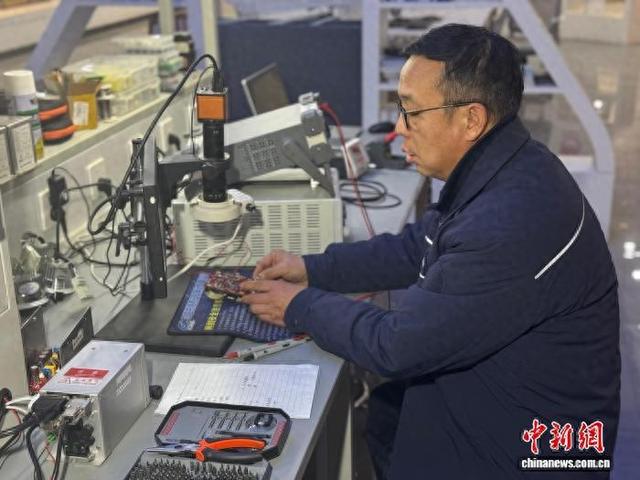
公示中!江苏一所技工学校拟升格为技师学院
Xin Lang Cai Jing· 2026-01-10 05:04
Core Viewpoint - The establishment of Zhangjiagang Technician College from Zhangjiagang Advanced Technical School reflects the increasing emphasis on vocational education and the recognition of skilled talent in modern industrial development [1][3]. Group 1: Institutional Development - Zhangjiagang Advanced Technical School, a national key technical school, has applied to establish Zhangjiagang Technician College, which is currently under public review from January 9 to January 16, 2026 [1][2]. - The application process follows the requirements set by the Jiangsu Province Technician College Establishment Approval Measures, and it has undergone expert evaluation and comprehensive assessment [1][2]. Group 2: Educational Focus - The school offers various programs including Mechanical Manufacturing Technology, Mechatronics, Electrical Operation and Control, and Industrial Robot Application, among others, with Mechanical Processing Technology and Electrical Operation and Control being provincial demonstration programs [2]. - The proposed technician college will combine academic education with vocational skills training, aiming to produce high-level technicians and skilled workers to meet modern production and service needs [2][3]. Group 3: Industry Implications - The rise of technician colleges in Jiangsu indicates a growing recognition of the value of skilled talent, which is essential for industrial development and high-quality growth [3].
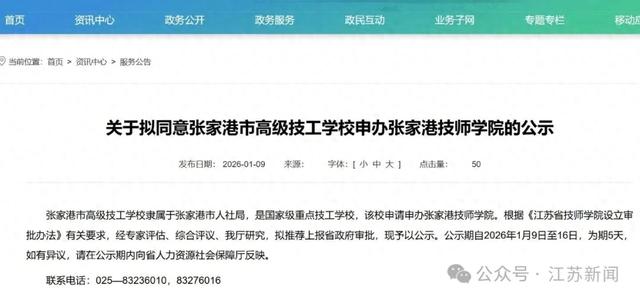
青海省出台《技能人才最低工资集体协商合同示范文本》
Xin Lang Cai Jing· 2025-12-24 19:51
Core Viewpoint - The introduction of the "Minimum Wage Collective Bargaining Contract Model" by Qinghai Province aims to strengthen the construction of skilled talent teams, protect their labor remuneration rights, and stimulate innovation and creativity [1] Group 1: Policy Implementation - The model is developed by the Human Resources and Social Security Department and the Provincial Federation of Trade Unions to guide enterprises and skilled talents in conducting collective negotiations on minimum wage standards [1] - The document adheres to relevant laws and regulations, including the Labor Law, Labor Contract Law, and Trade Union Law, outlining key aspects such as negotiation subjects, procedures, and contract changes [1] Group 2: Key Features - The model emphasizes the importance of skill levels, work performance, and innovative contributions as critical factors for determining and adjusting minimum wage standards, enhancing the incentive for skill value [1] - It is designed to be practical, with a clear structure and explicit clauses, providing useful guidance for enterprises, trade unions, and skilled talents in negotiations [1] Group 3: Objectives and Impact - The document aims to strengthen the protection of skilled talents' labor remuneration rights and promote harmonious and stable labor relations [1] - Its release marks a significant step towards standardizing the collective bargaining mechanism for skilled talent remuneration and enhancing their treatment in Qinghai Province [1]
以赛砺技育匠心
Xin Lang Cai Jing· 2025-12-20 11:52
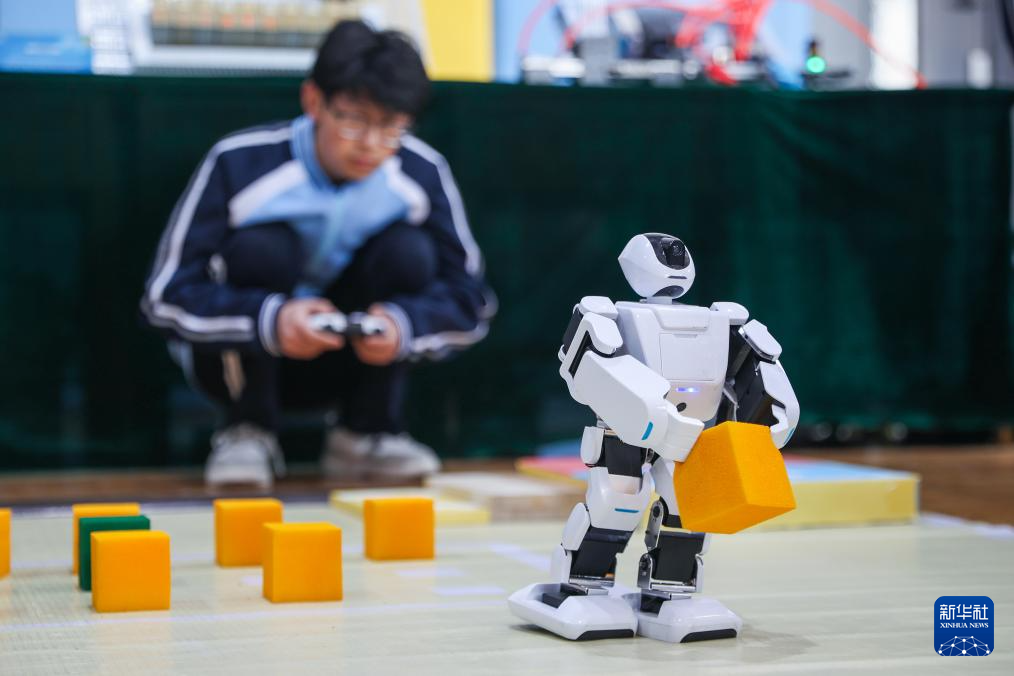
Group 1 - The core viewpoint of the article highlights the ongoing efforts in Rizhao City, Shandong Province, to enhance the skill workforce through various initiatives, including skill training, job practice, and skill competitions [3]. Group 2 - The 14th Skills Cultural Festival was held at Rizhao Technician College, showcasing participants in a service robot project competition [3]. - The initiatives aim to promote employment and entrepreneurship in the region [3].
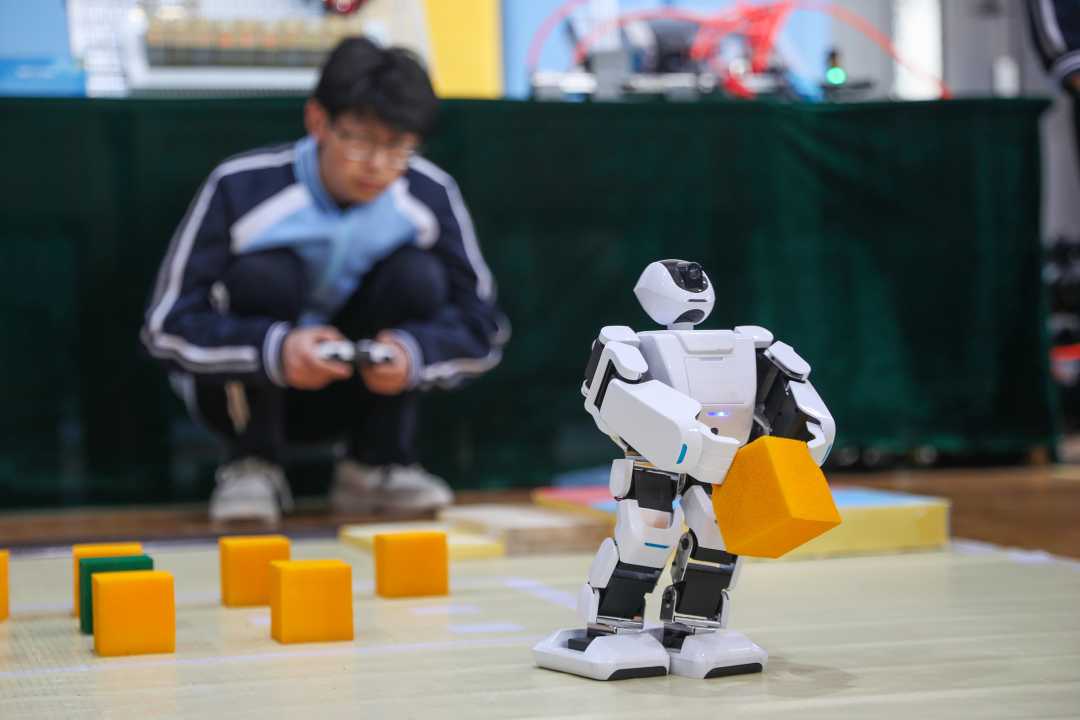
山东日照:以赛砺技育匠心
Xin Hua Wang· 2025-12-19 19:18
Core Viewpoint - The city of Rizhao in Shandong Province is actively promoting the development of skilled talent by utilizing vocational skills competitions as a key method for cultivating high-quality, high-skilled personnel, integrating training, practice, and competitions to enhance employment and entrepreneurship [1]. Group 1 - Rizhao has been focusing on building a skilled workforce through vocational skills competitions [1]. - The approach emphasizes the integration of skills training, job practice, and competitions to foster learning and teaching [1]. - The initiative aims to promote both employment and entrepreneurship among participants [1]. Group 2 - On December 19, participants at the Rizhao Technician College's 14th Skills Culture Festival engaged in various competitions, including service robotics [3]. - Competitions also featured projects such as CNC milling and Rizhao farmer painting [5]. - Additionally, a makeup competition was held as part of the festival [6].
“十四五”期间我国技能人才队伍发展壮大
Ke Ji Ri Bao· 2025-09-28 01:10
Core Insights - The overall employment situation in China during the "14th Five-Year Plan" period is stable, with a cumulative urban new employment of 59.21 million, exceeding the target of 55 million [1] - The Ministry of Human Resources and Social Security is focusing on skill enhancement as a crucial channel for laborers' growth, with over 80 million professional technical personnel and more than 220 million skilled workers in the country [1] - A large-scale vocational skills training initiative has been launched, with over 42 million enterprise employees and over 31 million migrant workers receiving subsidized vocational skills training during the "14th Five-Year Plan" [1] Group 1 - The Ministry of Human Resources and Social Security is establishing a skill talent work system that involves party leadership, government guidance, policy support, enterprise participation, and social involvement [1] - The "Skills China" and "Skills Illuminate the Future" training actions are being implemented to adapt to industrial changes and new technological developments [1] - The introduction of a new "Eight-Level Worker" system aims to enhance the career advancement opportunities for skilled workers, with over 4.4 million people obtaining vocational skill level certificates since the beginning of the "14th Five-Year Plan" [2] Group 2 - The Ministry is promoting a "production-education-evaluation" training model to ensure training effectiveness, closely aligning training content with enterprise needs [2] - The new apprenticeship system is being fully implemented, supporting a dual training approach between enterprises and educational institutions [2] - Future plans for the "15th Five-Year Plan" include strengthening policy support and optimizing the development environment for skill laborers [3]
人社部:十四五”期间累计超3100万人次的农民工接受补贴性职业技能培训
Zhong Guo Xin Wen Wang· 2025-09-26 08:09
Core Points - The Ministry of Human Resources and Social Security reported that during the 14th Five-Year Plan period, over 42 million enterprise employees and over 31 million migrant workers received subsidized vocational skills training [1][2] Group 1: Vocational Skills Training - The implementation of large-scale vocational skills training is a key strategy to strengthen skills talent cultivation, with a focus on lifelong vocational skills training systems and actions like "Skill China" [2][3] - The training model integrates job demand, skills training, skills evaluation, and employment services, ensuring high employment rates for graduates from vocational schools [2] Group 2: Industry-Education-Assessment Ecosystem - The Ministry emphasizes the importance of an integrated skills ecosystem that connects industry, education, and assessment to enhance training effectiveness [3] - The initiative includes a new apprenticeship system and tailored training for digital talent, addressing structural employment issues [3] Group 3: New Eight-Level Worker System - A new "Eight-Level Worker" system has been established to expand career advancement opportunities for skilled workers, allowing for more recognition and higher wages [4] - Over 44 million individuals have obtained vocational skill certificates, with more than 6,000 recognized as top-level technicians [4] Group 4: Recognition and Incentives - The Ministry has increased recognition and rewards for skilled workers, with 60 individuals awarded the China Skill Grand Prize and 588 recognized as national technical experts during the 14th Five-Year Plan [5] - The recent national vocational skills competition attracted 3,420 participants and nearly 200,000 spectators, enhancing societal recognition of skills [5]
第三届全国技能大赛落幕 东道主河南有哪些收获
He Nan Ri Bao· 2025-09-24 23:26
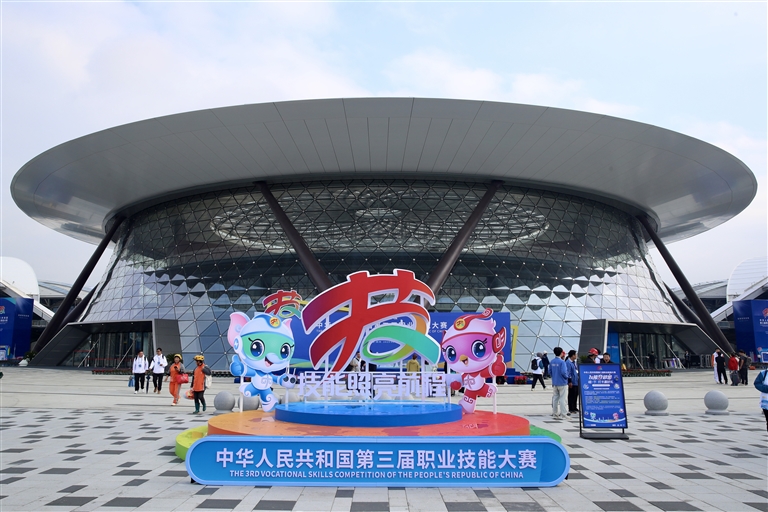
Core Insights - The third National Skills Competition concluded on September 23 in Zhengzhou, featuring 106 competition projects with 3,420 participants and 3,275 judges, attracting 183,000 onsite viewers [4][5] - The event emphasized the theme "Skills Illuminate the Future," showcasing high-level competitions and facilitating experience exchanges among participants [5][6] - A total of 348 participants received gold, silver, and bronze medals across the 106 projects, with additional awards for outstanding contributions and organization [3][5] Event Organization and Impact - The event was organized by Henan province, which implemented a comprehensive and efficient organizational structure involving 44 departments to ensure smooth execution [6][8] - The competition adopted an innovative "technology + skills" model, enhancing the event's quality through smart management systems and extensive volunteer support [6][7] - The competition's scale and standards set new records, providing valuable experience for future high-level events in Henan [8] Skills Development Initiatives - The competition aimed to select urgently needed skilled talents and foster new opportunities for skills training in Henan [4][5] - A collaborative initiative was launched involving over 400 educational institutions and training organizations to promote skills development and evaluation [5] - The event also served as a platform for international cooperation, attracting representatives from global skill organizations and enhancing the visibility of skill talents [8]
全国410家职业技能培训机构在河南共倡“技能照亮前程”
Zhong Guo Xin Wen Wang· 2025-09-21 03:33
Core Points - The "Skills Illuminate the Future" training initiative was launched by 410 vocational training institutions in Henan, marking a new phase in China's vocational skills training efforts [1][3] - The forum highlighted the integration of skills training with industry development, with representatives from 19 provinces signing agreements across key sectors such as advanced manufacturing and digital economy [3][4] - The Ministry of Human Resources and Social Security emphasized the importance of collaboration among government, enterprises, and educational institutions to address employment challenges [3][4] Group 1 - The forum was co-hosted by the Ministry of Human Resources and Social Security and the Henan provincial government, focusing on new job development and the impact of artificial intelligence on employment [3] - The "Henan Initiative" aims to innovate training models, while the "Zhengzhou Initiative" seeks to enhance the credibility of skill evaluations [4] - The shift in China's skills training approach is moving from scale expansion to quality prioritization, supporting industrial upgrades and high-quality economic development [4]