
智慧城市治理

Search documents
深圳首单“治理+保险”解决方案落地
Xin Lang Cai Jing· 2025-12-17 14:19
Core Viewpoint - The collaboration between the Futian District of Shenzhen and China Pacific Insurance aims to innovate housing safety management by integrating public safety insurance with proactive risk management services, transitioning from mere compensation to comprehensive risk management [1][5][10]. Group 1: Housing Safety Insurance - The pilot program in the Bagualing area includes coverage for casualties and property losses due to building collapses, as well as temporary housing for residents, thereby reducing the financial burden on the community [1][7]. - This initiative marks a shift from government-led safety governance to a collaborative model involving government, market participation, and community benefits, enhancing the resilience and sustainability of housing safety management [7][10]. Group 2: Risk Management and Prevention - The insurance model incorporates regular housing inspections to identify and mitigate risks proactively, aiming to reduce the frequency and severity of accidents [2][8]. - Insurance providers will assist in disaster warnings, emergency evacuations, and public safety incident responses, transforming unknown risks into known protections [2][8]. Group 3: Technological Integration - The program will utilize innovative technologies such as thermal imaging drones for efficient and precise housing condition assessments, enhancing the ability to detect risks and improve operational efficiency [3][9]. - A comprehensive "service + technology" risk reduction management mechanism will be established, combining automated monitoring with human oversight for ongoing housing inspections and maintenance [3][9]. Group 4: Market and Government Collaboration - The initiative represents a beneficial exploration of combining government oversight with market forces to reinforce housing safety, addressing the limitations of traditional government-funded renovations [4][10]. - The dual regulatory framework of "administration + market" aims to solidify a safety management baseline that includes both preventive measures and post-incident protections [5][10]. Group 5: Future Development - Shenzhen plans to develop a comprehensive housing safety management system that integrates government guidance, insurance protection, risk prevention, and multi-party collaboration, promoting community safety and urban quality development [11].

深圳发布33项AI城管机会清单 环卫机器人签约1600台
Nan Fang Du Shi Bao· 2025-11-30 11:57
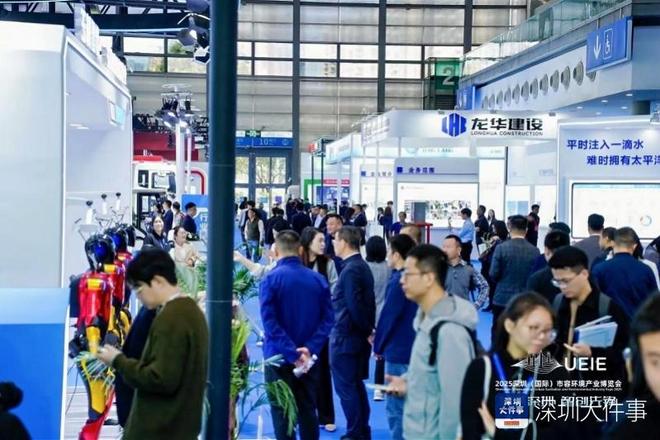
Core Insights - The 2025 Shenzhen (International) Urban Environment Industry Expo and the AI Sanitation Robot Competition successfully concluded, achieving $46 million in international cooperation agreements and 1,600 intended orders for sanitation robots, totaling over 300 million yuan [1][3][5] Group 1: Event Overview - The expo attracted over 150 outstanding enterprises from home and abroad, covering a total exhibition area of 50,000 square meters and drawing more than 30,000 visitors [3] - The event facilitated significant international economic exchanges, connecting resources from countries involved in the Belt and Road Initiative, with eight cooperation agreements signed on-site, amounting to approximately $46 million [3][5] Group 2: Technological Innovations - The expo featured innovative products such as the Deep City AI service robot and the Yuhua Tian Kandelas S300 cleaning robot, showcasing trends in the industry [3] - The event included practical demonstrations of smart city governance, allowing citizens to experience the transition from traditional manual operations to technology-enabled management [8] Group 3: Competition Outcomes - The competition included 88 assessment points, testing the practical capabilities of smart sanitation technologies across various scenarios, with Coolwa Technology winning first place [10][12] - The event highlighted the integration of technology with urban management systems, with multiple awards given for innovative applications and replicable experiences [12] Group 4: Collaborative Opportunities - A list of 33 AI application scenarios in urban management was released, providing enterprises with rich opportunities for technical validation and implementation [7] - The event established a bridge for collaboration between urban service enterprises and sanitation robot companies, facilitating the settlement of four leading sanitation robot companies in Longgang [5][12] Group 5: Experience Sharing and Promotion - Three thematic inspection routes were set up to promote smart governance experiences across regions, allowing participants to observe practical applications in urban management [13] - The event created a complete closed loop of "industry display - practical verification - technology traceability," demonstrating significant collaborative efforts among government, industry, academia, and research [13]


世界市长点赞南京滨水城市治理经验
Ren Min Ri Bao· 2025-11-25 22:56
Group 1: Event Overview - The "2025 World Mayors Dialogue" event opened in Nanjing, focusing on sustainable urban development and sharing governance experiences among cities from various countries [1] - The event is guided by the State Council Information Office and aims to enhance international cooperation and mutual learning among cities [1] Group 2: Cultural Heritage and Urban Vitality - Nanjing's Ming City Wall, a UNESCO-recognized heritage site, is a key example of cultural preservation, with 25.1 kilometers well-preserved and over 600,000 bricks recycled since 2016 [3] - The "micro-renewal" approach in historical districts like Xiaoxihu and Laomendong has successfully retained cultural characteristics while revitalizing the area, earning awards for innovative design [3][4] Group 3: Green Development Initiatives - Nanjing is the only city in the Yangtze River basin where wild Yangtze River dolphins can be observed, with their population nearly doubling to about 65 over the past decade due to conservation efforts [7][8] - The city has restored approximately 1.7 million square meters of green space and 11 kilometers of ecological shoreline, promoting biodiversity and environmental health [8] Group 4: Smart City Governance - Nanjing's "One Network Management" platform enhances urban governance through digital integration, enabling real-time monitoring and decision-making across various sectors [10][11] - The city aims to create a digital governance model that supports sustainable urban development and efficient resource management [11] Group 5: International Collaboration and Consensus - The "Nanjing Consensus on River City Development" was established, emphasizing cooperation to address global challenges such as climate change and cultural heritage preservation [13] - The consensus advocates for sustainable practices, cultural diversity, and equitable urban development, fostering international dialogue and collaboration among river cities [13][14]
数字政通“政通人和,百业具兴——人和大模型2.0行业智能体发布会”圆满召开
Zheng Quan Shi Bao Wang· 2025-11-03 10:57
Core Insights - The release of "Renhe Model 2.0" signifies a major leap for the company from pilot applications of AI technology to a comprehensive promotion of "governance productivity" in smart city management [1][6] - The event highlighted the integration of AI agents in various government sectors, showcasing the practical applications of large model technology in urban governance [1][2] Group 1: Product and Technology Development - "Renhe Model 2.0" utilizes a "data-algorithm-application" matrix to transform business operations from "mouse operations" to "natural language interactions," addressing common pain points in government data applications [2][4] - The technology framework supports rapid deployment, allowing for industry model training within 15 days and application launch within 5 days, enhancing operational efficiency [4] Group 2: Industry Applications - The intelligent agents have been implemented in cities like Beijing, Shenzhen, and Chongqing, effectively converting creative potential into tangible governance productivity [3] - Specific applications include efficient regulation of construction waste, a closed-loop supervision model for administrative law enforcement, and proactive safety systems for urban infrastructure [2][3] Group 3: Collaborative Solutions - The company announced four joint solutions with industry leaders like Huawei and Baidu, marking a new phase in smart city ecosystem collaboration [5][6] - These solutions aim to enhance urban governance capabilities, including a comprehensive monitoring system for low-altitude environments and customizable digital government employees [5][6] Group 4: Strategic Implications - The launch of "Renhe Model 2.0" represents a pivotal moment in the company's evolution, integrating extensive industry knowledge with cutting-edge AI technology to drive business model innovation [6] - The core product, the government AI agent, is expected to provide stable subscription revenue, enhancing the company's profitability and market position in the smart city sector [6]

数字政通发布“人和大模型2.0”行业智能体
Zheng Quan Ri Bao Zhi Sheng· 2025-11-02 09:37
Core Insights - The release of "Renhe Large Model 2.0" industry AI agent marks a significant advancement for the company, transitioning from pilot applications of AI technology to a comprehensive promotion of "governance productivity" in smart city management [1][3] - The new AI agent integrates data, algorithms, and applications, facilitating a paradigm shift from mouse operations to natural language interactions across various business systems [2] Industry Applications - The "Renhe Large Model 2.0" AI agent is designed to address core business challenges in five major industry scenarios, including efficient regulation of construction waste, a new model for law enforcement supervision, proactive safety systems for urban infrastructure, intelligent applications for government hotlines, and low-altitude governance initiatives [2] - The AI agent has already been implemented in multiple cities, including Beijing, Shenzhen, Tianjin, Fujian, Chongqing, and Nanjing, showcasing its capability to transform creative potential into tangible governance productivity [2] Strategic Partnerships - The company has partnered with leading industry players such as Huawei, Baidu, and Hikvision to launch four deeply integrated joint solutions, indicating a new phase in smart city ecosystem collaboration [2] Business Model and Revenue Potential - The introduction of the government AI agent is expected to enhance the company's business model by providing continuous AI computing power, model optimization, and operational services, potentially leading to more stable and sustainable subscription revenue [3] - This development is anticipated to improve the company's profitability and market value, positioning it to capture a larger market share in the smart city sector [3]
数字政通发布新产品“人和大模型2.0”行业智能体
Zhi Tong Cai Jing· 2025-10-31 11:32
Core Viewpoint - Digital Zhengtong (300075.SZ) is set to hold a conference on October 30, 2025, focusing on the launch of the "Renhe Large Model 2.0" industry AI agent, emphasizing the integration of large model technology in smart city governance [1] Group 1: AI Agent Capabilities - The "Renhe Large Model 2.0" industry AI agent includes three foundational AI agents: Intelligent Query Agent, Intelligent Report Agent, and Wukong Brain Agent [1] - The Intelligent Query Agent leverages over 20 years of management experience from more than 5,000 projects, integrating production data and enhancing statistical results through a comprehensive indicator and rule library [1] - The Intelligent Report Agent transforms data into deep insights and decision-making value, creating a knowledge base that covers data indicators, root cause analysis, and management recommendations [2] Group 2: Urban Governance Applications - The Wukong Brain Agent consolidates experience from over 300 city brain projects, enabling intelligent control of urban management through natural language interaction and data insights [2] - The "Renhe Large Model 2.0" industry AI agent drives urban governance from reactive measures to proactive warnings, enhancing efficiency in various sectors such as construction waste management and administrative law enforcement [2] - The initiative aims to develop a proactive protection system for urban lifelines, enabling efficient hazard detection and pipeline service life warnings [2]
数字政通(300075.SZ)发布新产品“人和大模型2.0”行业智能体
智通财经网· 2025-10-31 11:31
Core Insights - Digital Zhengtong (300075.SZ) announced the upcoming release of the "Renhe Large Model 2.0" industry AI agent on October 30, 2025, focusing on the integration of large model technology in smart city governance [1] - The launch signifies a transition from pilot applications of AI technology to a comprehensive promotion of "governance productivity" through the development of a "data algorithm-application" technology matrix [1] Group 1: AI Agent Capabilities - The "Renhe Large Model 2.0" includes three foundational AI agents: Intelligent Query Agent, Intelligent Report Agent, and Wukong Brain Agent [1] - The Intelligent Query Agent leverages over 20 years of management experience from more than 5,000 projects, facilitating rapid data retrieval and precise analysis by constructing a metrics and rules database [2] - The Intelligent Report Agent transforms data into deep insights and decision-making value, creating a comprehensive knowledge base that enables multi-dimensional analysis and customized reporting [2] Group 2: Urban Governance Applications - The Wukong Brain Agent consolidates experience from over 300 city brain projects, enabling intelligent control of urban management through natural language interaction and data insights [2] - The "Renhe Large Model 2.0" also includes industry agents across five key areas of urban governance, shifting from reactive management to proactive warning systems [2] - Specific applications include efficient regulation of construction waste, a closed-loop supervision model for administrative law enforcement, proactive safety management systems, intelligent applications for public service hotlines, and the development of smart low-altitude governance [2]
中瑞地方合作对话会在沪举行
Jie Fang Ri Bao· 2025-08-30 02:19
Core Viewpoint - The China-Switzerland Local Cooperation Dialogue held on August 28 in Shanghai celebrates the 75th anniversary of diplomatic relations between China and Switzerland, focusing on sustainable development cooperation [1] Group 1: Event Overview - The dialogue emphasizes topics such as "green energy transition," "AI empowerment," and "smart city governance" to promote mutual learning and collaboration in sustainable development [1] - The event is co-hosted by the Chinese People's Association for Friendship with Foreign Countries and the Swiss-Chinese Association, with support from the Shanghai People's Association for Friendship with Foreign Countries and the Shanghai Academy of Social Sciences [1] - Notable attendees include Yang Wanming, President of the National Association for Friendship with Foreign Countries, and Chen Jing, President of the Shanghai Association for Friendship with Foreign Countries [1]
探索超大城市现代化治理新路子,“聪明”的武汉,更懂你
Chang Jiang Ri Bao· 2025-08-27 12:25
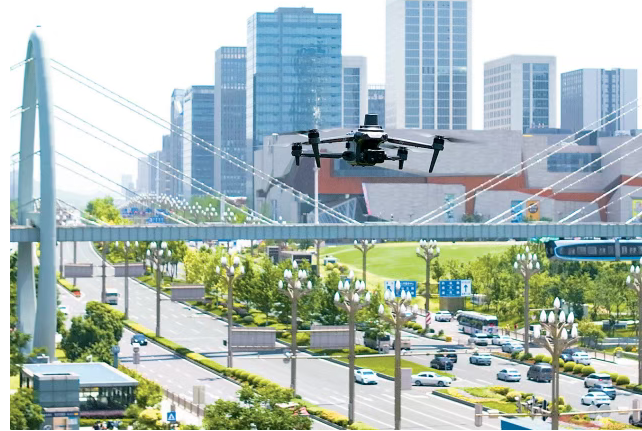
Group 1 - The core viewpoint emphasizes the integration of advanced technologies like drones and AI in urban management to enhance governance efficiency and safety in Wuhan [2][3][5] - The "One Network Management" smart platform consolidates urban operational data, allowing for real-time monitoring and proactive governance, transforming the city's management from passive to active [3][5] - The city has integrated 297 drones and over 1500 urban indicators into its management system, facilitating better decision-making and coordination among various departments [5] Group 2 - Community transformation projects have been initiated to create more engaging and accessible public spaces, encouraging resident participation in community governance [6][7][9] - The integration of professional social workers and volunteers is aimed at enhancing grassroots governance, fostering community involvement, and building a collaborative environment [9][10] - The city is focusing on upgrading old residential areas, implementing targeted renovation strategies, and improving living conditions through infrastructure enhancements [11][12]
广西智慧城市治理有新招
Guang Xi Ri Bao· 2025-08-25 01:57
Core Viewpoint - The introduction of new intelligent inspection robots in Nanning's underground utility tunnels significantly enhances operational efficiency and safety in urban infrastructure maintenance [1][2][4]. Technology Upgrade - The new generation of inspection robots has evolved from simple video recording devices to multifunctional tools capable of environmental perception, automatic inspection, and intelligent alerting [2]. - Equipped with advanced AI recognition systems, these robots can accurately identify pipeline deformations, water leaks, and structural cracks, while also monitoring temperature extremes and potential hazards [2][4]. - The robots operate in dual modes: an automatic mode for continuous 24-hour inspections and a manual mode for remote control in complex scenarios [2][3]. Operational Efficiency - One robot can now complete inspections within a 200-meter radius that previously required two staff members, significantly improving operational efficiency and data reporting [3]. - The robots have demonstrated their effectiveness during adverse weather conditions, such as heavy rainfall, by quickly identifying leaks and alerting staff for prompt action [4]. Scene Adaptation - The development team has addressed challenges such as uneven surfaces and environmental factors by customizing the robots for specific operational scenarios [4]. - The robots are capable of monitoring welding operations continuously, enhancing safety and efficiency compared to traditional manual oversight [4]. Promotion Pathway - Nanning has established five monitoring centers, creating a comprehensive intelligent inspection network across different urban areas [5]. - The city is implementing a three-dimensional inspection model that integrates drone, ground vehicle, and underground robot inspections to enhance urban safety [5][6]. - The modular design of the robots allows for adaptation to various urban infrastructure needs, with plans for gradual expansion to other cities and regions [6]. - The robotic maintenance model is projected to save over 300,000 yuan annually in operational costs for every 10 kilometers of utility tunnels [6].