
基层治理现代化

Search documents
凝心铸魂强引领 精耕善治促发展
Xin Lang Cai Jing· 2026-02-13 19:33
Core Insights - The article emphasizes the transformation and development of social work in Pidu District in 2025, focusing on the integration of industry development and governance through party leadership [3][5][10] Group 1: Industry Development and Governance - The Pidu District Social Work Department has leveraged party leadership to enhance industry governance, transitioning from "tangible coverage" to "effective empowerment" [3][5] - A robust organizational structure has been established, including a party organization framework that covers 95.79% of non-public enterprises, ensuring comprehensive party work and strengthening industry development [5][6] - The district has implemented a classification management system for 124 industry associations, promoting self-discipline and standardized development within key industries like the Douban industry [6][7] Group 2: Grassroots Governance - Pidu focuses on modernizing grassroots governance through a three-tier social work support center system, enhancing community service and governance effectiveness [7][8] - The district has developed standardized operational guidelines and unique regional strategies for social work support centers, ensuring they meet local needs while maintaining a unified framework [8][9] - Over 2,000 governance service projects have been implemented, addressing community needs in areas such as elderly care and convenience services [9][10] Group 3: Integration of Professional Social Work and Volunteer Services - The integration of professional social work and volunteer services has been prioritized, creating a dynamic system that enhances community engagement and service delivery [10][11] - A comprehensive volunteer service management system has been established, resulting in the addition of 47 new volunteer teams and over 8,000 new volunteers, bringing the total to over 210,000 [10][11] - The district has introduced a points-based reward system for volunteer services, fostering community participation and linking various social entities to enhance service effectiveness [11][12]


任城区:“精网微格”助推基层治理提能增效
Qi Lu Wan Bao· 2026-02-03 05:54
Core Viewpoint - The article highlights the innovative grid governance model in Rencheng District, Jining City, emphasizing the integration of refined concepts into grassroots governance to enhance effectiveness and community engagement [1]. Group 1: Systematic Construction - Rencheng District has established a four-level governance framework ("District-Street-Community-Grid") to clarify responsibilities and ensure smooth communication and rapid response [2]. - The grid management framework is designed to be comprehensive, ensuring accountability and effective service delivery through clear delineation of duties and adequate staffing [2]. Group 2: Precise Services - The governance model prioritizes resident needs, shifting from passive responses to proactive service delivery through regular visits and information gathering by grid workers [2]. - An online and offline mechanism has been created for collecting, processing, and responding to community requests, ensuring timely feedback and resolution of issues [2]. Group 3: Normalized Collaboration - The grid system acts as a platform to integrate resources and encourage diverse stakeholder participation in governance, enhancing community engagement [2]. - Strengthening the role of party organizations within the grid and fostering collaboration among various community entities has led to a more cooperative governance environment [2]. Group 4: Overall Impact - The systematic, precise, and normalized grid governance practices have significantly improved the responsiveness, service quality, and governance effectiveness in Rencheng District, enhancing residents' sense of well-being and security [2].
以基层治理现代化助力更高水平平安中国建设
Ren Min Ri Bao· 2026-02-02 03:20
Core Viewpoint - The modernization of grassroots governance is fundamental to national governance modernization, with significant emphasis from leadership on enhancing grassroots governance through party leadership and risk management [1][2]. Group 1: Party Leadership in Grassroots Governance - The leadership of the party is essential for building a safe China, necessitating the integration of party leadership throughout all aspects of grassroots governance [2]. - Enhancing the capabilities of urban and rural grassroots party organizations is crucial for effective governance [2]. - Utilizing innovative party theories to address new challenges and implementing grid-based party governance can improve service delivery and risk management [2]. Group 2: Collaborative Governance - Grassroots governance under party leadership should not be monopolized by party organizations but should involve a collaborative governance framework that includes various stakeholders [3]. - The "Fengqiao Experience" should be promoted to enhance comprehensive social governance and conflict resolution [3]. - Engaging citizens, enterprises, and social organizations in policy-making and evaluation fosters a sense of shared responsibility in governance [3]. Group 3: Legal Framework Enhancement - A strong legal framework is necessary for effective grassroots governance, focusing on risk prevention and conflict resolution [4]. - Developing a comprehensive legal service system that meets the diverse needs of the public is essential [4]. - Promoting legal awareness and education through various channels can help citizens understand and utilize legal resources effectively [4]. Group 4: Technological Empowerment - Technology serves as a powerful engine for enhancing grassroots governance efficiency and quality [5]. - Building integrated online and offline platforms for data sharing can improve governance responsiveness to public needs [5]. - Utilizing advanced technologies like cloud computing and big data for risk monitoring and predictive analysis enhances governance capabilities [5].
内蒙古民政部门今年将做好六方面工作
Xin Lang Cai Jing· 2026-01-30 18:43
Group 1 - The core focus of the news is on the development of civil affairs in Inner Mongolia, emphasizing six key areas for high-quality growth in 2026 [1] - The government aims to enhance the awareness of the Chinese national community and improve services in elderly care, social assistance, and funeral reform [1] - There is a strong emphasis on addressing population aging, with a call to act swiftly to improve elderly care and support systems [1] Group 2 - The initiative to promote common prosperity among all citizens includes strengthening social assistance systems and ensuring that support reaches those in need [2] - The government plans to maintain a reasonable ratio of urban and rural minimum living standards to last year's per capita consumption [2] - Enhancements in child welfare and disability support systems are also highlighted, with a focus on improving the management of subsidies [2] Group 3 - The modernization of grassroots governance is a priority, with efforts to create an efficient social participation system and improve the management of social organizations [3] - The government is committed to strengthening legal frameworks related to civil affairs, including the promotion of charity and funeral management regulations [3] - There is a focus on ensuring 100% transparency in charity organization evaluations and information disclosure [3]
省政协十三届四次会议 举行第二次全体会议
Xin Lang Cai Jing· 2026-01-28 19:57
Group 1 - The second plenary session of the 13th Provincial Political Consultative Conference was held, focusing on high-quality development and modernization [1] - Various committee members presented suggestions on cultural preservation, tourism integration, and economic development strategies [2][3] - Specific recommendations included enhancing cultural services, optimizing talent training systems, and improving the business environment in Guizhou [2][3] Group 2 - Suggestions were made to strengthen brand development and infrastructure for low-altitude economy, aiming to establish Guizhou as a new benchmark in this sector [2] - Emphasis was placed on the development of a multi-faceted childcare service system to support population growth and high-quality development [2] - Recommendations also included fostering cooperation between universities and enhancing management levels to create a positive economic ecosystem [3]
爱心暖流在网格间“精准滴灌”
Xin Lang Cai Jing· 2026-01-26 20:02
Core Viewpoint - The article highlights the significant role of community grid workers in enhancing urban governance and providing essential support to vulnerable groups, such as children from troubled families and elderly individuals living alone [1][2][3]. Group 1: Community Support Initiatives - Community grid worker Xiong Zhiqiang took proactive steps to support a child named Xiao Xin by coordinating with the school for fee reductions and gathering donations for school supplies [2]. - The grid workers also provide emotional support and companionship to vulnerable individuals, exemplified by their regular visits to Xiao Xin and their assistance to an elderly woman, Wang, after her accident [2]. Group 2: Role of Grid Workers - The phrase "find the grid worker for help" has become common among residents, indicating the trust and reliance on these workers for various community issues [3]. - Grid workers serve multiple roles, including information providers, policy promoters, conflict mediators, and safety guardians, addressing public facility issues and neighborhood disputes to maintain community harmony [3]. Group 3: Urban Governance and Community Engagement - The article emphasizes that communities are crucial for urban governance, acting as the final link between the government and the public [3]. - The efforts of grid workers contribute to modernizing grassroots governance, transforming community needs into actionable support, and fostering a sense of warmth and responsibility within the city [3].
以基层善治筑牢青海长治久安基石
Xin Lang Cai Jing· 2026-01-25 20:19
Group 1 - The core viewpoint emphasizes that grassroots governance is the foundation of national governance, and a stable social environment is essential for progress [1] - The 20th Central Committee of the Communist Party of China highlights the importance of social governance in maintaining national security, indicating that issues like conflict resolution and risk prevention are interconnected with national security [1] - Modernizing grassroots governance requires a systematic and holistic approach, integrating traditional wisdom with modern governance concepts to enhance governance effectiveness [1] Group 2 - The leadership of the Communist Party is crucial in guiding social governance, ensuring that political and organizational advantages translate into governance effectiveness [2] - In Qinghai, grassroots party organizations play a pivotal role in social governance, creating a responsibility loop that ensures public safety and governance responsibilities are effectively communicated [2] - Strengthening party leadership is essential to address the increasingly complex risks and challenges faced by society [2] Group 3 - The principle of putting people first is fundamental in social governance, shaping the approach to maintaining national security [3] - Qinghai's social governance practices focus on responding to public needs efficiently, with mechanisms in place to ensure real-time feedback from citizens [3] - Initiatives like "immediate response to complaints" and community engagement enhance the relationship between the party and the public, fostering a sense of shared responsibility for safety and stability [3] Group 4 - A systematic approach is vital for enhancing overall social resilience, addressing complex issues through coordinated safety efforts across various sectors [4] - In the Sanjiangyuan region, innovative ecological protection measures have effectively addressed environmental security issues while promoting sustainable development [4] - Building a comprehensive emergency management system is necessary to improve social governance and ensure proactive risk prevention [4] Group 5 - The problem-oriented approach in social governance focuses on identifying and addressing real issues to prevent them from escalating into national security problems [5] - Localized explorations in Qinghai, such as cultural mediation initiatives, have successfully resolved conflicts among diverse ethnic groups [5] - Establishing a dynamic mechanism for identifying and addressing potential conflicts is crucial for maintaining social stability and national security [5] Group 6 - The emphasis on grassroots governance is essential for ensuring long-term stability and prosperity, with a focus on understanding and responding to community needs [6] - Qinghai's innovative solutions, such as flexible street vendor regulations, demonstrate effective management of urban challenges while supporting local livelihoods [6] - A unified approach from central to local governance is necessary to ensure effective resource allocation and community engagement in governance [6]
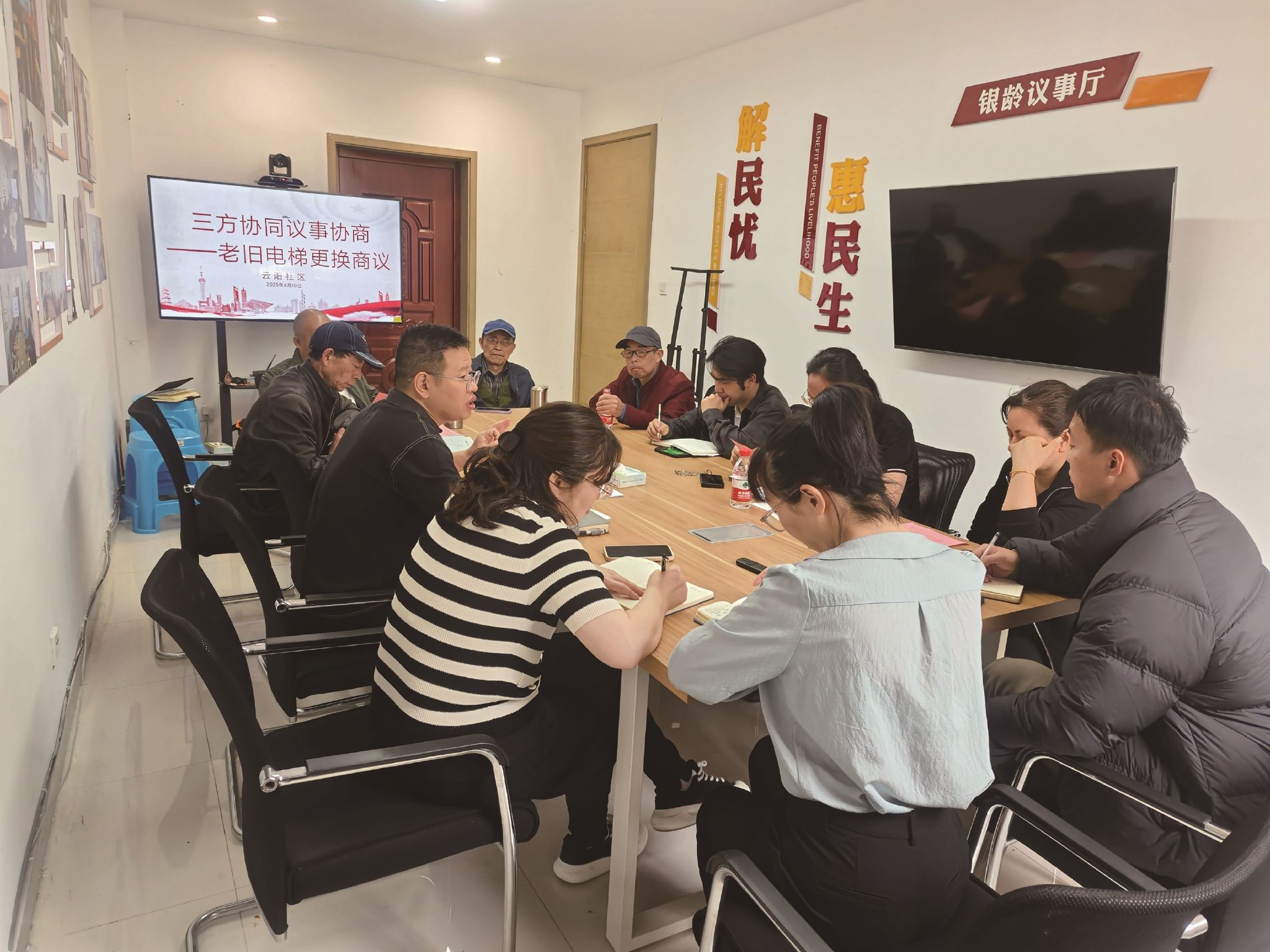
南湖新区构建基层治理现代化“东栅路径”
Xin Lang Cai Jing· 2026-01-22 23:17
Core Viewpoint - The article highlights the successful implementation of a modern grassroots governance system in the South Lake New District, showcasing the "Good Governance East Zha" brand as a replicable model for innovation in grassroots governance [3][4][6]. Group 1: Governance Structure and Innovation - The South Lake New District emphasizes party leadership as the foundation of grassroots governance, establishing a governance organization that is interconnected and comprehensive [4]. - A dual-driven approach of "organizational coverage + work coverage" has been implemented, achieving a 100% work coverage rate in the "Two Enterprises and Three New" party-building initiatives [4]. - The district has formed over 200 joint projects covering livelihood security and grassroots governance through partnerships with 181 organizations, addressing issues of resource fragmentation and insufficient collaboration [4][5]. Group 2: Community Engagement and Services - Ten "East Zha Pioneer 3-Person Teams" have been established to engage with over 300 businesses, resolving more than 100 issues through a model that combines leadership, party members, and social organizations [5]. - The "Red Discussion Hall" initiative encourages party members to engage with the community, addressing practical issues such as elevator replacements and charging station installations [5]. Group 3: Grid-Based Governance - The district has adopted a grid-based approach to governance, enhancing efficiency and resource allocation through the establishment of dedicated grids for 13 key locations [6][7]. - The "Child Safety East Zha" initiative has created the city's first "Worry-Free School Route" and "Happiness Bank" brand, integrating multiple resources for community safety [6]. - A comprehensive market governance strategy has been implemented, resulting in a reduction of various incidents by over 10%, thereby improving governance effectiveness and safety indices [6]. Group 4: Capacity Building and Community Participation - The district has trained 711 governance leaders to enhance their professional skills and has mobilized over 3,400 participants in safety patrols, addressing 1,149 safety hazards [7]. - The establishment of a "Neighboring Residents' Committee Guidance Service Center" has led to the creation of 20 replicable cases, promoting standardized community governance [7]. - New employment groups are being integrated as "flowing probes" and "governance partners," fostering a reciprocal relationship between service and governance [7].
“减”出获得感 激发新动能
Ren Min Ri Bao· 2026-01-19 09:01
Core Viewpoint - The article emphasizes the importance of reducing formalism and bureaucratism to alleviate burdens on grassroots officials, which is crucial for their effectiveness and the overall development of governance [1] Group 1: Implementation and Impact - The initiative to reduce formalism has led to tangible improvements in the efficiency of grassroots governance, with significant reductions in bureaucratic processes and enhanced service delivery [1] - In Hunan's Chenzhou, measures such as the establishment of "zero reception" policies have resulted in an 88.22% year-on-year decrease in public reception expenses from January to September 2025 [2][3] - The article highlights the need for continuous efforts and long-term mechanisms to ensure that the reduction of burdens is sustainable and effective [1][4] Group 2: Challenges and Solutions - The persistence of formalism poses challenges, as new forms of bureaucratic behavior can emerge even after initial reforms [5] - The case of Ningxia illustrates the need for strict oversight and corrective measures to address issues like improper teacher borrowing, leading to the establishment of more robust approval processes [6] - The article advocates for a dual approach of immediate reforms and long-term institutional changes to effectively tackle the root causes of bureaucratic inefficiencies [4][6] Group 3: Empowerment and Modernization - Reducing burdens on grassroots officials should not equate to diminishing their responsibilities; rather, it should enhance their capacity to address real issues effectively [7] - The article discusses the importance of empowering local governance through mechanisms like the "whistle" system in Tianjin, which facilitates collaboration among various departments to solve community problems [8][9] - The modernization of grassroots governance is essential for achieving broader national development goals, emphasizing the need for meticulous and effective local administration [9][10]
“减”出获得感 激发新动能(人民观点)
Ren Min Ri Bao· 2026-01-18 23:47
Core Viewpoint - The article emphasizes the importance of reducing formalism and bureaucratism to alleviate burdens on grassroots officials, which is crucial for their effectiveness and the overall development of governance [1]. Group 1: Implementation and Impact - The implementation of measures to reduce formalism has led to tangible results, such as streamlined meetings and assessments, which have allowed grassroots officials to focus more on practical work [1]. - In Hunan's Chenzhou, the introduction of a "zero reception" policy has significantly reduced public reception costs, with a reported 88.22% decrease in expenses from January to September 2025 [3]. Group 2: Long-term Strategies - The article stresses that addressing formalism is a long-term endeavor that requires establishing effective mechanisms to ensure sustained improvements in grassroots governance [1][4]. - It highlights the need for a combination of immediate corrective actions and long-term institutional reforms to effectively tackle the root causes of formalism [4][5]. Group 3: Empowerment and Resource Allocation - The reduction of burdens on grassroots officials should not equate to a reduction in responsibilities; rather, it should enhance their capabilities and resource access to better address challenges [7]. - The article provides an example from Tianjin's Hongqiao District, where empowering local street offices with coordination authority has led to improved governance and resource mobilization [8][9].