
氢氨醇一体化

Search documents
共探氢能储运与氢氨醇一体化破局之路 | HEFCAC 2025
势银能链· 2026-01-08 08:08
Core Insights - The article discusses the 2025 TrendBank Hydrogen Energy and Fuel Cell Industry Annual Conference, focusing on the development and strategic direction of the hydrogen energy industry, aiming to create a collaborative platform for stakeholders [2][3]. Group 1: Conference Overview - The conference will take place from January 6-8, 2026, in Ningbo, featuring discussions on the hydrogen energy industry's development and strategic layout [2]. - The event is supported by various companies, including Baoshilai New Materials and Kunhua Technology, highlighting the collaborative nature of the industry [2]. Group 2: Industry Statistics - As of now, the number of hydrogen vehicles in China has reached 32,700, primarily concentrated in the southeastern coastal regions, with an operational rate of approximately 25% [5]. - The market share of 210L hydrogen storage bottles has been the highest for three consecutive years, indicating a trend towards larger capacity storage solutions [5]. Group 3: Technological Developments - The hydrogen storage and transportation sector is evolving towards higher pressure and multi-phase storage technologies, with companies like CIMC Hydrogen promoting mid-pressure storage solutions for large-scale renewable hydrogen projects [7]. - Liquid hydrogen technology is being emphasized for its potential in commercial applications, with companies like Zhongke Fuhai leading research and development efforts [9]. Group 4: Infrastructure and Policy Support - The development of hydrogen infrastructure, including hydrogen refueling stations, is critical, with a need for streamlined administrative processes to expedite construction [29]. - The article highlights the importance of government support in technology projects, infrastructure planning, and policy optimization to foster the hydrogen energy sector [19][33]. Group 5: Future Outlook - By the end of November 2025, China's planned production capacity for green methanol, green ammonia, and sustainable aviation fuel is projected to reach 62.64 million tons/year, 26.19 million tons/year, and 14.32 million tons/year, respectively [33]. - The hydrogen energy market is expected to see significant growth driven by technological advancements and supportive policies, positioning it as a core growth area in the renewable energy sector [25][33].

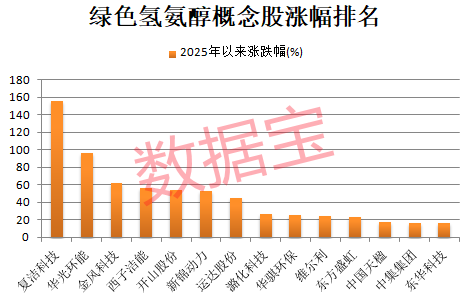
绿色氢氨醇应用空间广阔,6只概念股年内涨幅超50%
Zheng Quan Shi Bao Wang· 2025-12-17 08:11
Core Viewpoint - The world's largest integrated green hydrogen and ammonia project, the Zhongnengjian Songyuan Hydrogen Energy Industrial Park, has officially commenced production in Songyuan City, Jilin Province, with a planned capacity of 3 million kilowatts of renewable energy generation and 800,000 tons of green synthetic ammonia and green methanol [1]. Group 1: Project Overview - The project integrates multiple processes including wind and solar power generation, water electrolysis for hydrogen production, and the synthesis of green ammonia and green methanol [1]. - The project is part of China's 14th Five-Year Plan, which emphasizes the high-quality development of renewable energy and aims to expand the utilization of non-electric applications [1]. Group 2: Market Insights - According to Changjiang Securities, there is significant investment value in the green hydrogen and ammonia industry chain, particularly in applications across chemical, transportation, and metallurgy sectors [1]. - As of December 17, 2023, there are 17 concept stocks in the A-share market related to green hydrogen and ammonia, with a total market capitalization of 281.51 billion yuan [1]. - Six of these concept stocks have seen an increase of over 50% this year, including Fuzhijie Technology, Huaguang Huaneng, Goldwind Technology, Xizi Clean Energy, Kaishan Shares, and Xinjindongli [1].





行业洞察 | 岭上起“金风” ,绿氢逐未来——专访兴安盟经开区管委会主任高天宇
Zhong Guo Jin Rong Xin Xi Wang· 2025-11-22 03:53
Core Viewpoint - Inner Mongolia's Xingan League is emerging as a hub for green hydrogen and methanol production, leveraging its abundant wind energy resources and attracting major companies like China General Nuclear Power Group and Goldwind Technology [2][5]. Group 1: Project Development - The green hydrogen to green methanol project led by Goldwind Technology has garnered significant industry attention even before construction began [5]. - The project is set to commence construction in June 2024, with the first phase expected to be completed by October 2025, which is considered an accelerated timeline for such projects [5][6]. - The project aims to utilize local resources, including corn straw, to produce methanol, enhancing the region's agricultural advantages [7][8]. Group 2: Technological Innovation - The project integrates a technology chain that includes wind power, water electrolysis for hydrogen production, biomass gasification, and methanol synthesis, addressing the instability issues in wind power hydrogen production [9]. - The introduction of a 250,000-ton gasification furnace marks a significant advancement in the industry's scale and industrial production capabilities [9]. Group 3: Economic and Environmental Impact - The project is expected to create job opportunities and stimulate economic growth in the region, aligning with China's dual carbon goals [10]. - The green methanol produced will be utilized by major shipping companies, such as Maersk, for decarbonization efforts in the global shipping industry, showcasing the project's contribution to climate change mitigation [10]. Group 4: Strategic Vision - The Xingan League aims to position itself as a leader in the hydrogen economy by developing a comprehensive industrial ecosystem that includes hydrogen storage, transportation, and utilization [8][10]. - The region's strategy emphasizes vertical integration and resource sharing among enterprises to reduce production costs and foster long-term investment [8].

“绿色石油”时代:全国已规划800+氢氨醇项目,锚定900万吨绿氢产能
Zhong Guo Neng Yuan Wang· 2025-11-17 02:38
Core Insights - The National Energy Administration has identified "expanding non-electric utilization of renewable energy" as a key focus for the 14th Five-Year Plan, emphasizing the development of integrated wind-solar hydrogen, ammonia, and methanol production [1] - The wind-solar hydrogen-ammonia-methanol integration model is seen as a transformative approach to convert unstable green electricity into green hydrogen, which can then be synthesized into storable and transportable green ammonia and methanol, addressing the issue of renewable energy intermittency [2] - As of October 2023, over 800 hydrogen-ammonia-methanol integration projects have been planned in China, with a total planned green hydrogen capacity of nearly 9 million tons per year, positioning China as a global leader in this sector [2] Industry Development - Most of the green hydrogen and methanol projects are concentrated in resource-rich regions such as Northwest, North, and Northeast China, with provinces like Inner Mongolia, Jilin, and Xinjiang actively promoting large-scale development [3] - Notable operational projects include the China Petroleum & Chemical Corporation's green hydrogen demonstration project in Xinjiang and the 100,000-ton green methanol project in Inner Mongolia, among others [3][4] - The industry is witnessing increasing participation from both state-owned enterprises and private companies, creating a competitive landscape [4] Challenges and Future Outlook - The green hydrogen and methanol industry faces challenges such as high production costs, insufficient technological integration, and a lack of standardized systems [6] - Industry experts emphasize the need to reduce investment costs and improve operational rates to enhance competitiveness [6] - Despite current challenges, the market potential for green methanol and ammonia is significant, particularly in the context of low-carbon development trends in shipping and aviation, suggesting a promising long-term outlook for the hydrogen-ammonia-methanol market [6]


9月绿色甲醇/绿氨动态汇总
势银能链· 2025-09-30 03:31
Core Insights - The article highlights significant developments in the green ammonia and green methanol sectors in China, showcasing a total of 10 major advancements in green methanol projects and 8 in hydrogen-ammonia-methanol integration projects in September 2023. This indicates a strong trend towards the collaborative development of the "electric-hydrogen-methanol-ammonia" industry [2]. Green Methanol Project Developments - Huadian's 100,000-ton green methanol project commenced construction on September 21, with a total investment of 3.945 billion yuan, featuring 450 MW wind power generation and 295 MW electrolysis for hydrogen production [4]. - Lanzhou Energy signed an EPC contract for a 300,000-ton green methanol project on September 19, marking a strategic partnership to advance green fuel projects [6]. - Shanghai Port Energy signed two contracts for green methanol supply and service on September 18 and 22, ensuring stable green methanol production from its projects [7]. - China Shipbuilding Technology Corporation announced a significant green methanol sales contract worth approximately $40 million per year, with potential increases based on demand [8]. - Huayi Group's green methanol project received ISCC EU and PLUS certifications, indicating compliance with international sustainability standards [9]. - Chifeng Boyuan's 150,000-ton green methanol project is in preliminary cooperation discussions, focusing on project planning and local collaboration [10]. - Air Liquide's green methanol project in Qingdao received approval for its production base, with a planned annual output of 300,000 tons [11]. - Kantex's 200,000-ton biomass green methanol project is in the initial phase, with a total investment of 1.25 billion yuan [13]. - The coal-based green methanol project by China Coal is advancing with the selection of key technology providers [14]. - The Gansu Zhangye green methanol project is in the bidding phase, with a planned annual output of 100,000 tons [15]. Hydrogen-Ammonia-Methanol Integration Projects - A biomass gasification and green hydrogen project in Gansu is set to produce 2,000 tons of green methanol and 60 tons of green fuel annually [17]. - Huadian's 500,000 kW wind-solar hydrogen integration project in Inner Mongolia has been approved, with a planned annual output of 200,000 tons of green methanol [18][19]. - Goldwind Technology's wind-solar hydrogen integration project aims for an annual output of 100,000 tons of methanol and 40,000 tons of ammonia [20]. - The second phase of the Zhongneng Construction's hydrogen-ammonia integration project has passed feasibility studies and is set to commence construction [21]. - The Fuhai County solar-storage hydrogen integration project has started construction, with a planned annual output of 100,000 tons of synthetic ammonia and methanol [22]. - Goldwind Technology is advancing its fifth hydrogen-ammonia project in Inner Mongolia, with a total investment of 18.92 billion yuan [23]. - The Jixian wind-storage hydrogen integration project has been signed, with a total investment of 6.1 billion yuan and an annual output of 119,000 tons of green methanol [24]. Green Ammonia Developments - Daqing Refining and Chemical's biomass natural gas-derived green ammonia product received ISCC certification, becoming the third company in China to achieve this [28]. - The "Green Port Hydrogen City" project has obtained an international carbon footprint pre-evaluation certificate, indicating its commitment to sustainable practices [29]. - The Ministry of Transport initiated a green ammonia fuel maritime supply chain initiative, aiming to enhance cooperation in the sector [30].

500亿市值风电巨头,豪掷189亿元重押新石油赛道
2 1 Shi Ji Jing Ji Bao Dao· 2025-09-12 04:24
Core Viewpoint - The article discusses the rapid rise of hydrogen and ammonia integration projects in the renewable energy sector, particularly focusing on the significant investment by Goldwind Technology in the Bayannur project, which aims to produce green hydrogen and methanol using wind energy [2][4]. Group 1: Investment and Projects - Goldwind Technology plans to invest approximately 18.92 billion yuan in the Bayannur project, which will have a total capacity of 3 GW of wind power, with over 80% of the generated electricity used for electrolysis to produce green hydrogen [4]. - The Bayannur project aims to produce 600,000 tons of green methanol and 400,000 tons of green ammonia annually [4]. - This project follows Goldwind's previous investment in the Xingan League project, which is recognized as the world's largest wind-to-hydrogen-to-methanol project [2][5]. Group 2: Market Dynamics - As of now, over 800 green hydrogen and methanol projects have been signed or registered in China, with planned total production capacity nearing 60 million tons per year [2]. - The integration of hydrogen and ammonia projects is driven by policy support, advancements in green hydrogen technology, and the market's demand for renewable energy [10][11]. Group 3: Company Performance - Goldwind Technology reported a revenue of 28.54 billion yuan in the first half of the year, marking a year-on-year increase of 41.26%, with a net profit of 1.488 billion yuan, up 7.26% [6]. - The company's order backlog reached 51.81 GW as of June 2025, reflecting a year-on-year growth of 45.58% [6][7]. - Wind turbine manufacturing and sales account for over 76% of Goldwind's revenue, indicating a strong focus on this segment as a growth driver [7]. Group 4: Industry Trends - The renewable energy sector has seen significant investments in hydrogen and ammonia projects, with companies like Envision Energy and Mingyang Group also launching multiple initiatives [11]. - The National Development and Reform Commission has encouraged the large-scale replacement of high-carbon hydrogen with low-carbon hydrogen in various industries, including synthetic ammonia and methanol [10]. - The economic viability of hydrogen and ammonia projects is expected to improve significantly by 2030, with green hydrogen costs projected to drop below 10 yuan per kilogram [12].
500亿市值风电巨头,豪掷189亿元重押新石油赛道
21世纪经济报道· 2025-09-12 04:11
Core Viewpoint - The article discusses the rapid rise of integrated hydrogen and ammonia projects in the renewable energy sector, particularly focusing on the investments made by Goldwind Technology in wind power and green hydrogen production, highlighting the potential of green ammonia and methanol as alternative fuels and chemical feedstocks [2][3][9]. Group 1: Investment Projects - Goldwind Technology plans to invest approximately 18.92 billion yuan in the Bayannur project, which will have a total capacity of 3 GW of wind power, with over 80% of the generated electricity used for electrolysis to produce green hydrogen, resulting in an annual production of 600,000 tons of green methanol and 400,000 tons of green ammonia [3][4]. - The company has previously invested in the Xingan League project, which is recognized as the world's largest wind-to-green methanol project, and is also involved in the largest integrated green hydrogen and methanol project globally, the Zhongnengjian Songyuan Hydrogen Energy Industrial Park [2][3]. Group 2: Market Dynamics - As of now, over 800 green hydrogen and methanol projects have been signed or registered in China, with the planned total production capacity for green methanol projects nearing 60 million tons per year [2][11]. - The demand for renewable energy and the development of green hydrogen technology, along with supportive policies, are driving the growth of hydrogen and methanol integration projects [9][10]. Group 3: Economic Considerations - Despite the promising outlook, the economic viability of hydrogen and methanol production remains a challenge due to high costs associated with green hydrogen production [11]. - Analysts suggest that 2030 will be a critical turning point for hydrogen and methanol integration, with expectations that the cost of green hydrogen will drop below 10 yuan per kilogram, significantly enhancing the economic feasibility of these projects [11].
189亿元投资氢氨醇 风电巨头何以重押“新石油”?
2 1 Shi Ji Jing Ji Bao Dao· 2025-09-11 13:51
Core Viewpoint - The rapid rise of hydrogen and ammonia integration projects is driven by increasing investments in renewable energy, particularly wind and solar, with companies like Goldwind Technology leading the charge in this sector [3][4][7]. Group 1: Investment and Projects - Goldwind Technology plans to invest approximately 18.92 billion yuan in the Bayannur project, which will integrate wind power with hydrogen and methanol production [3][4]. - The company has previously invested in the Inner Mongolia Xingan League project, recognized as the world's largest wind-powered green methanol project, and is involved in the largest green hydrogen and methanol integration project globally [3][4]. - As of now, over 800 green hydrogen and methanol projects have been signed or registered in China, with planned total production capacity nearing 60 million tons per year [3][4]. Group 2: Project Details - The Bayannur project aims to construct 3 GW of wind power, with over 80% of the generated electricity dedicated to producing green hydrogen, resulting in an annual output of 600,000 tons of green methanol and 400,000 tons of green ammonia [4][5]. - The integration of biomass gasification with green hydrogen technology in the Bayannur project is expected to enhance methanol and ammonia production while reducing CO2 emissions [5][6]. - The Xingan League project, which commenced construction in April 2024, has a total investment of 13.665 billion yuan and plans to produce 500,000 tons of green methanol annually [5][6]. Group 3: Economic and Policy Drivers - The growth of hydrogen and ammonia integration projects is supported by government policies encouraging low-carbon hydrogen to replace high-carbon alternatives in various industries [7][8]. - The National Development and Reform Commission has issued guidelines promoting the development of renewable energy hydrogen production, with several pilot projects focusing on green methanol and ammonia [7][8]. - Despite the promising outlook, the economic viability of hydrogen and ammonia projects remains a concern due to high production costs, with expectations that costs will drop below 10 yuan per kilogram by 2030, significantly improving project economics [11].

189亿元投资氢氨醇,风电巨头何以重押“新石油”?
2 1 Shi Ji Jing Ji Bao Dao· 2025-09-11 13:51
Core Viewpoint - The article discusses the significant investment by Goldwind Technology in hydrogen and ammonia projects, highlighting the growing interest in renewable energy sources and the potential of green ammonia and methanol as alternative fuels, often referred to as "new oil" [1][2]. Investment Overview - Goldwind Technology plans to invest approximately 18.92 billion yuan in the Bayannur project, which will include the construction of 3 GW of wind power, with over 80% of the generated electricity used for electrolysis to produce green hydrogen [2][3]. - The Bayannur project aims to produce 600,000 tons of green methanol and 400,000 tons of green ammonia annually [2]. - This investment follows Goldwind's previous involvement in the Xingan League project, which is recognized as the world's largest wind-powered green methanol project [1][3]. Industry Trends - The number of signed and registered green hydrogen and ammonia projects in China has exceeded 800, with planned total production capacity nearing 60 million tons per year [1]. - The rapid rise of hydrogen and ammonia integration projects is driven by policy support, advancements in green hydrogen technology, and the market's demand for renewable energy [5][6]. Economic and Technical Aspects - The Xingan League project, with a total investment of 13.665 billion yuan, is set to produce 500,000 tons of green methanol annually and utilizes advanced biomass gasification technology [3][4]. - The integration of biomass gasification with green hydrogen production is expected to enhance methanol and ammonia yields while reducing carbon emissions [2][3]. Market Dynamics - Goldwind Technology's revenue structure shows that wind turbine manufacturing and sales account for over 76% of its income, indicating a strong focus on expanding into green methanol and ammonia as new growth areas [4]. - The company has secured a long-term supply agreement for green methanol with shipping giant A.P. Moller-Maersk, further solidifying its position in the green fuel market [4]. Future Outlook - The National Development and Reform Commission has encouraged the large-scale replacement of high-carbon hydrogen with low-carbon hydrogen in various sectors, including synthetic ammonia and methanol [5][6]. - The economic viability of hydrogen and ammonia projects is expected to improve significantly by 2030, with projections indicating that green hydrogen costs could drop below 10 yuan per kilogram [7].
全球首次绿氨船舶燃料加注在辽宁大连完成
Zhong Guo Xin Wen Wang· 2025-07-25 09:03
Core Viewpoint - The successful completion of the world's first green ammonia ship fuel bunkering in Dalian marks a significant milestone for the shipping industry, highlighting the potential of green ammonia as a clean energy alternative to traditional fossil fuels [1][2]. Group 1: Green Ammonia Production and Application - Green ammonia is produced using renewable energy sources such as wind and solar power, resulting in a production process with nearly zero carbon emissions [1]. - The green ammonia used in the bunkering was sourced from Inner Mongolia, showcasing the region's capability to produce clean and efficient ship fuel [1]. - The 5500HP ammonia-powered port operation vessel is the first of its kind in China, equipped with a self-developed ammonia dual-fuel engine and a fuel supply system, achieving a maximum ammonia replacement ratio of 91% [1]. Group 2: Industry Potential and Challenges - The northeastern provinces and eastern Inner Mongolia are identified as key areas for large-scale green ammonia production due to their abundant wind, solar, and biomass resources [1][2]. - The current limitation on the application of green ammonia is related to engine technology, with several global companies, including the one mentioned, making significant breakthroughs in ammonia fuel engines and supporting systems [2]. - The successful bunkering is seen as a critical step towards the green and low-carbon transformation of the Chinese shipping industry, providing a zero-emission solution and promoting sustainable development in global shipping [2].