深远海养殖

Search documents
湛江的风与海,都藏在这尾“黄金鱼”里丨家乡的广货
Nan Fang Nong Cun Bao· 2026-02-18 02:05
Core Insights - The article highlights the significance of the golden pomfret, a key seafood product from Zhanjiang, which is renowned for its freshness and quality, making it a popular choice for both locals and tourists [2][28]. Industry Overview - Zhanjiang is strategically located near two major fishing grounds, contributing to its rich seafood resources, particularly the golden pomfret [3][4]. - The city has been a leader in marine aquaculture for 30 consecutive years, with significant advancements in deep-sea farming technologies [11][12]. Product Quality and Processing - The golden pomfret is celebrated for its rich, fatty meat and nutritional value, maintaining its flavor even after freezing [15][16]. - Recent developments in ultra-low temperature preservation technology have enhanced the freshness of the fish during transportation and processing [20][22]. Economic Impact - Zhanjiang is referred to as the "City of Golden Pomfret," with one-third of the national production originating from this region, supporting approximately 100,000 direct and nearly 1 million indirect jobs [31][33]. - The total industrial output value of the golden pomfret industry has exceeded 10 billion yuan [33]. Export Potential - The golden pomfret has gained international recognition, with one-third of its production allocated for export, primarily to Europe, America, and Southeast Asia. The export value for 2024 is projected to be 1.8 times that of 2023 [28][30].


福建大黄鱼“游”出产业新变化
Xin Lang Cai Jing· 2026-02-10 21:07
Core Viewpoint - The yellow croaker industry in Ningde, Fujian, is undergoing significant transformation towards ecological, intelligent, and standardized farming practices, with a focus on deep-sea aquaculture and technological advancements in breeding and processing [2][4][5]. Industry Overview - Ningde is the main production area for yellow croaker in China, contributing 80% of the national output, with an industry chain value exceeding 20 billion yuan [1]. - The sales peak for yellow croaker coincides with the approaching New Year, highlighting its importance in the local economy [1]. Aquaculture Innovations - The transition from nearshore to offshore farming has been implemented, with 592 deep-water anti-wind and wave net cages established since 2025 [3]. - The new deep-sea net cages allow for a lower stocking density of 4 fish per cubic meter, enhancing resilience to environmental conditions and increasing capacity by 15 times compared to traditional cages [2]. Breeding Technology - In 2022, 1.5 billion yellow croaker fry were produced in Ningde, accounting for nearly 70% of the region's total fry output [4]. - The breeding process has been digitized, creating traceable records of fry development, which has improved the quality and marketability of the fry [4]. Processing and Product Development - The processing sector has evolved from fresh fish to advanced products like yellow croaker fillets and fish balls, generating over 300 million yuan in annual revenue for companies like Funing Port Fisheries [5]. - Companies are focusing on full-chain development, utilizing all parts of the fish to enhance value, including creating high-protein fish feed from by-products [5]. Brand and Cultural Development - Ningde is actively promoting the yellow croaker as a cultural symbol through the establishment of cultural experience centers and festivals, aiming to enhance brand recognition and market presence [5].
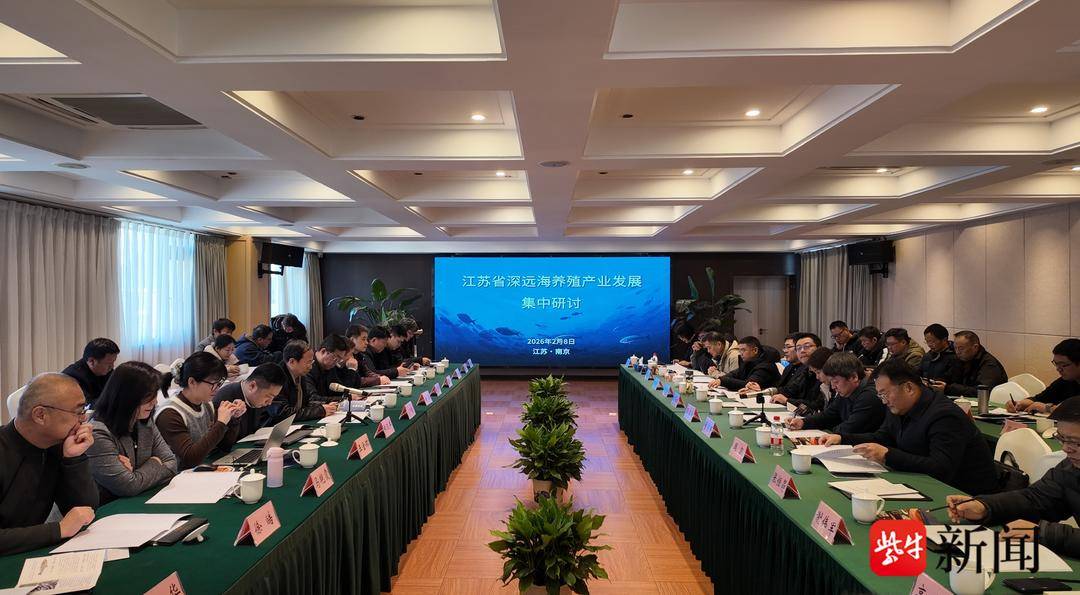
江苏深远海养殖产业发展集中研讨在宁举办,“苏鲲计划”同步发布
Yang Zi Wan Bao Wang· 2026-02-09 13:19
Core Insights - The event titled "Development of Deep-sea Aquaculture Industry in Jiangsu Province" was successfully held in Nanjing, organized by Jiangsu Zhihai Fisheries Co., Ltd. and the East China Sea Fisheries Research Institute, with over 40 representatives from various sectors attending [1][3] Group 1: Industry Development - Deep-sea aquaculture is emphasized as a crucial direction for ensuring national food security and promoting high-quality development in the fisheries sector, supporting the construction of a strong marine nation [3] - The "Sukun" project was launched, focusing on the integration of production and research, utilizing a relay model of land-based facilities and offshore vessels to inject new momentum into Jiangsu's deep-sea aquaculture industry [5] Group 2: Market Trends - In 2025, China's domestic consumption of salmon and trout exceeded 200,000 tons, with imports surpassing 180,000 tons, marking a growth of 33.3% compared to 2024 [6] - The wholesale market price for salmon ranges from 60 to 120 yuan per kilogram, with high-quality salmon stabilizing above 90 yuan per kilogram [6] Group 3: Strategic Initiatives - The "Sukun" plan aims to develop a full industry chain for marine salmon and trout, focusing on aspects such as breeding, cultivation, processing, logistics, branding, and quality evaluation [6] - The event facilitated deep exchanges and cooperation, providing feasible suggestions for the industrialization of Jiangsu's deep-sea aquaculture and promoting practices that support the integration of production and research [8]
宁德市副市长郑忠辉:建议从三方面支持宁德发展深远海养殖
Zhong Guo Fa Zhan Wang· 2026-01-28 06:01
Core Viewpoint - The development of deep-sea aquaculture is a crucial part of the blue grain strategy, with Ningde City in Fujian leveraging its rich marine resources to innovate traditional aquaculture practices and expand into deep-sea farming [1][2]. Group 1: Current Situation and Challenges - Ningde's deep-sea aquaculture faces several challenges, including complex environmental conditions in offshore areas, which increase risks and require high-quality farming facilities and species [2]. - The investment costs for deep-sea aquaculture are substantial, with estimated investments exceeding 10 million yuan (approximately 1.4 million USD) per 10,000 cubic meters of water, and annual rental costs for equipment reaching over 6 million yuan (approximately 840,000 USD) [2]. - Ecological red lines restrict the development of deep-sea aquaculture, as many surrounding marine areas are designated as ecological protection zones, limiting the establishment of new farming facilities [2]. Group 2: Recommendations for Support - It is recommended to increase policy support by establishing special funds for deep-sea aquaculture, providing rental subsidies for large farming facilities, and offering interest subsidies on commercial loans [3]. - Enhancing research and development in deep-sea aquaculture technology is suggested, including collaboration with universities and research institutions to develop resilient fish breeds and high-value species [3]. - Optimizing the management of ecological red lines is advised, with a focus on conducting scientific assessments to allow for controlled ecological impacts in necessary areas for deep-sea aquaculture [3].
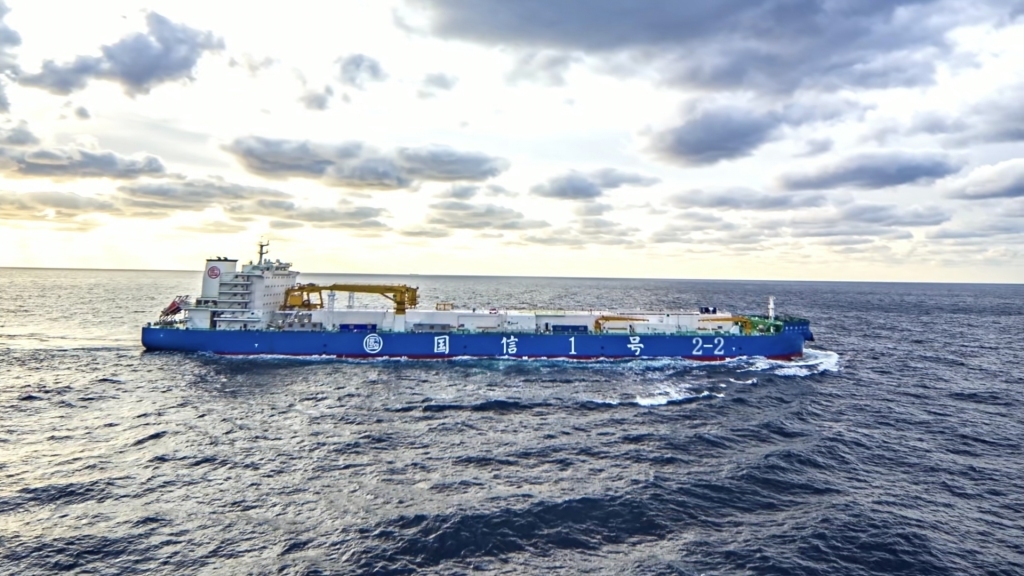
10.7万余尾鲑鳟鱼预计于5月起捕上市,“国信1号2-2”已停泊福建海域
Da Zhong Ri Bao· 2026-01-23 12:12
Core Viewpoint - The "Guoxin 1号2-2" large-scale intelligent aquaculture vessel is making significant progress in the cultivation of salmon trout, with expectations to start harvesting in May 2024, marking a new path for high-quality protein supply in China [6][12]. Group 1: Vessel Specifications and Operations - The "Guoxin 1号2-2" measures 244.9 meters in length and features 15 standard aquaculture chambers, with a total water capacity of nearly 100,000 cubic meters [1]. - The vessel employs a mobile ocean ranching model, allowing it to navigate to optimal environmental conditions for fish growth, specifically suitable for salmon trout in the Fuzhou sea area [3]. - The vessel has completed 2,800 nautical miles of travel and has successfully housed 107,000 salmon trout fry, with over 90% of operations being mechanized and a 45% increase in automation levels [3][8]. Group 2: Technological Innovations - The "Guoxin 1号2-2" incorporates advanced technology, achieving a 20% reduction in labor costs and allowing 30% of aquaculture decisions to be made by intelligent systems [3][9]. - The vessel's design focuses on "suitability for fishing," optimizing aquaculture systems and intelligent management [8]. Group 3: Industry Impact and Future Prospects - The successful cultivation of high-value Atlantic salmon on this vessel represents a significant advancement in deep-sea aquaculture technology in China [8][12]. - The operational model of "Guoxin 1号2-2" is part of a broader strategy that includes the previous vessels "Guoxin 1号" and "Guoxin 1号2-1," indicating a shift towards intelligent, standardized, and industrialized operations in deep-sea aquaculture [12]. - The expected annual production capacity is projected to exceed 10,000 tons, providing a stable supply of high-value fish species, thereby supporting national food security and the "blue granary" initiative [12].
一船启深蓝 一业兴港城
Xin Lang Cai Jing· 2026-01-07 20:19
Core Insights - The launch of the world's first self-propelled closed salmon farming vessel "Suhai No. 1" marks a significant advancement in deep-sea salmon farming, aiming to transform the marine economy of Lianyungang's Ganyu District [1][2] - The vessel can carry 400,000 high-quality salmon fry and is designed to operate in optimal conditions, enhancing the efficiency and safety of salmon farming [2][3] - The project addresses the domestic salmon supply gap, with the market size expected to reach 12.6 billion yuan in 2024, while over 80% of salmon is currently imported [3][4] Group 1: Vessel and Technology - "Suhai No. 1" measures 249.8 meters in length and has a displacement of 132,000 tons, featuring 15 farming compartments with a total underwater farming space of 83,000 cubic meters [2] - The vessel's operational speed can reach 18 km/h, allowing for quick relocation in adverse weather conditions, ensuring a stable environment for salmon growth [2][3] - Advanced technology includes a centralized control system for real-time monitoring of water quality and automated feeding systems, significantly improving farming efficiency [3][6] Group 2: Economic Impact - The annual farming capacity of "Suhai No. 1" is projected to exceed 8,000 tons, which will help stabilize prices and increase the availability of domestic salmon [3][4] - The establishment of a national-level marine ranch demonstration area and a dual-track system combining the vessel and fixed net cages aims to create a scalable model for deep-sea farming [4][5] - Investments in local fishing ports and markets are enhancing infrastructure, with a total investment of 860 million yuan for the construction of a national-level seafood market [4][10] Group 3: Innovation and Research - The Ganyu District is fostering a "smart factory" approach to aquaculture, utilizing AI and IoT technologies to enhance production and reduce risks associated with traditional farming methods [5][6] - Collaborative efforts with national research institutions are leading to breakthroughs in breeding technologies, including the successful artificial breeding of various fish species [7][8] - The establishment of a marine economic innovation center is driving research and development in deep-sea farming equipment and marine biological products [6][8] Group 4: Market Transformation - The integration of e-commerce and live-streaming sales has positioned Ganyu as a leader in seafood e-commerce, with a transaction volume of 23.5 billion yuan in 2024 [10][11] - The transformation of local seafood markets into modern trading hubs reflects a shift towards a more organized and efficient supply chain [10][11] - The development of tourism around seafood and marine activities is diversifying the local economy, moving from a focus solely on aquaculture to a more integrated approach [11]
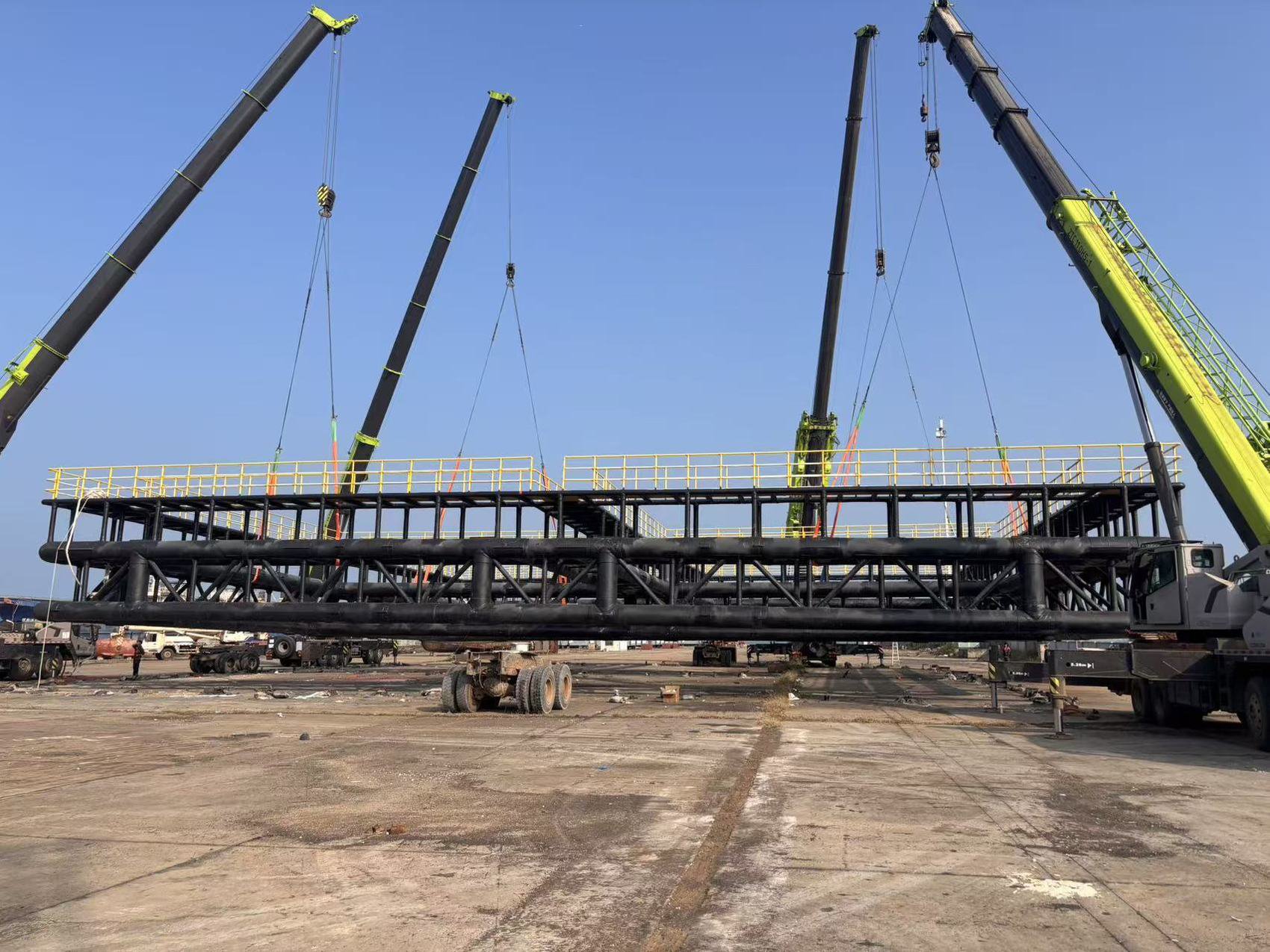
“华蓥造”全球首个大型玄武钢材料深海养殖浮体平台成功下水
Xin Lang Cai Jing· 2025-12-28 10:11
Core Viewpoint - The successful launch of the basalt fiber composite deep-sea aquaculture floating platform in Hainan marks a significant advancement in marine engineering, utilizing basalt fiber as a primary structural material for the first time globally [3]. Group 1: Product and Technology - The floating platform weighs approximately 50 tons, which is only one-third of the weight of traditional steel structures, and features a modular design that allows for prefabrication and assembly [3]. - The platform is designed to operate under extreme conditions, capable of withstanding super typhoon conditions (up to level 17) with a design lifespan exceeding 30 years and minimal maintenance required [3]. - The total volume of the floating platform for aquaculture exceeds 10,000 cubic meters, with an expected annual production of around 150 tons of aquatic products and the capacity to cultivate approximately 80 million high-quality seawater fish fry annually [3]. Group 2: Industry Context and Challenges - Current deep-sea aquaculture facilities predominantly use metal materials, which face severe corrosion issues due to prolonged exposure to high-salinity and high-humidity marine environments, leading to high operational and maintenance costs [4]. - The introduction of basalt fiber, a high-performance green material with excellent corrosion resistance, high strength, and durability, aims to address these challenges and reduce maintenance costs significantly [4]. - The company has developed over 40 related patents and continues to expand the application of basalt fiber composites in marine aquaculture, island bridges, and underwater infrastructure, aiming to establish a design and manufacturing capacity for high-end marine equipment in the future [4].
烟台深远海养殖装备打破渔业养殖海域壁垒,重塑全国海鲜版图
Da Zhong Ri Bao· 2025-12-22 02:25
Core Viewpoint - The development of large-scale deep-sea aquaculture equipment is breaking the geographical barriers of fish farming and reshaping the national seafood landscape in China [1][3]. Group 1: Deep-Sea Aquaculture Equipment - The "Jinghai 002" deep-sea intelligent net cage measures 68 meters in length and width, and 40 meters in height, enclosing 94,000 cubic meters of water, allowing for the cultivation of salmon in suitable winter conditions [2]. - The intelligent monitoring, feeding, and harvesting systems enable a small team of three to four people to manage the equivalent of what would traditionally require 200 people on land [2]. Group 2: Innovative Aquaculture Practices - The company has successfully implemented a "land-sea relay" model for salmon farming, achieving a total production of 2,000 tons in 2023, with 1,500 tons from seawater and 500 tons from land-based recirculating aquaculture [1][3]. - Various fish species are being cultivated using innovative methods, such as the "relay" farming of species like the yellow croaker and southern sea bream, which optimizes growth cycles and reduces environmental pressure on coastal areas [3]. Group 3: Future Development Plans - The company aims to expand its aquaculture scale and contribute to national initiatives like the "Marine Granary" project, while also exploring marine breeding, island tourism, and recreational fishing to achieve integrated development across industries [3].
烟台|烟台深远海养殖装备打破渔业养殖海域壁垒,重塑全国海鲜版图
Da Zhong Ri Bao· 2025-12-22 01:04
Core Viewpoint - Yantai's deep-sea aquaculture equipment is breaking barriers in fish farming, reshaping the national seafood landscape by enabling the cultivation of seafood in a manner similar to greenhouse vegetable farming [1] Group 1: Deep-Sea Aquaculture Innovations - The introduction of the "Jinghai 002" deep-sea intelligent net cage allows for the cultivation of salmon in suitable winter sea conditions, with the potential for fish weights to double by June or July next year, reaching over 4 kilograms [2] - Yantai Jinghai Marine Fisheries has successfully implemented a new "land-sea relay" model for salmon farming, achieving a total salmon production of 2,000 tons this year, including 1,500 tons from seawater and 500 tons from land-based recirculating aquaculture [2][4] - The "Jinghai 002" net cage measures 68 meters in length and width, and 40 meters in height, enclosing 94,000 cubic meters of water, thus overcoming spatial limitations for wintering salmon [2] Group 2: Operational Efficiency and Technology - The use of intelligent monitoring, feeding, and harvesting systems allows a small team of three to four people to manage the equivalent of what would traditionally require 200 people on land [3] - Eight such intelligent net cages have already been deployed by Yantai Jinghai Marine Fisheries, enhancing operational efficiency in deep-sea aquaculture [3] Group 3: Broader Aquaculture Strategies - The company is also innovating with other fish species, such as the breeding of "Yushi Pingyu" and "Zhen Diao," to shorten farming cycles and alleviate nearshore environmental pressures [4] - Seasonal and geographical barriers in aquaculture are being dismantled, with practices like "land-sea relay" and "fish species rotation" being implemented to meet market demands across different regions [4] - The Shandong Province's 14th Five-Year Plan emphasizes the acceleration of deep-sea development, aiming to integrate marine breeding, tourism, and recreational fishing into a cohesive development strategy [4]
牢记嘱托 逐梦深蓝|从“国信1号”到三船联动 “深远海养殖舰队”书写蓝色粮仓新答卷
Yang Guang Wang· 2025-12-11 10:19
Core Viewpoint - The successful operation of the world's first 100,000-ton aquaculture vessel "Guoxin 1" and the launch of two 150,000-ton new vessels signify a breakthrough in deep-sea aquaculture, addressing the challenges of the "unmanned zone" through the integration of technology, capital, and industry [1][3]. Group 1: National Strategy and Industry Response - The initiation of the "Guoxin 1" project aligns with national strategies for food security and the concept of a "big food view," emphasizing the need to source food and protein from the ocean due to limited arable land [3][4]. - The deep sea holds significant biological resources, with China's deep-sea aquaculture water volume reaching 43.98 million cubic meters and an annual output of 390,000 tons, marking a substantial increase since the beginning of the 13th Five-Year Plan [3][4]. Group 2: Technological Innovations and Operational Models - The "Guoxin 1" employs a "mobile aquaculture" model, allowing the vessel to navigate approximately 6,000 nautical miles annually to maintain optimal water temperatures for fish growth [5][6]. - The vessel features 15 closed aquaculture tanks with a total water volume of 90,000 cubic meters, utilizing a self-developed water exchange system to ensure high water quality [5][6]. - Advanced monitoring systems with 2,108 sensors and cameras enable real-time tracking of water temperature, salinity, and fish conditions, facilitating automated management of the aquaculture process [5][6]. Group 3: Product Quality and Market Recognition - The "Yuxianfang" large yellow croaker produced by "Guoxin 1" has gained market and institutional recognition, being the first brand to receive the ASC "gold standard" certification for yellow croaker [6][9]. - The fish are cultivated in pollution-free deep-sea waters, free from antibiotics, and have been recognized as a high-quality product across 23 provinces and for export [6][9]. Group 4: Future Developments and Expansion - Following the success of "Guoxin 1," the company is advancing with two 150,000-ton vessels, "Guoxin 2-1" and "Guoxin 2-2," focusing on high-quality yellow croaker and Atlantic salmon, respectively [7][8]. - The new vessels incorporate over 160 technological breakthroughs, enhancing intelligence, efficiency, sustainability, and intensiveness in aquaculture operations [8][9]. - The establishment of a deep-sea aquaculture fleet capable of producing over 10,000 tons of high-quality fish annually represents a significant step towards transforming China from a "maritime power" to a "maritime strong nation" [9].