大西洋鲑

Search documents
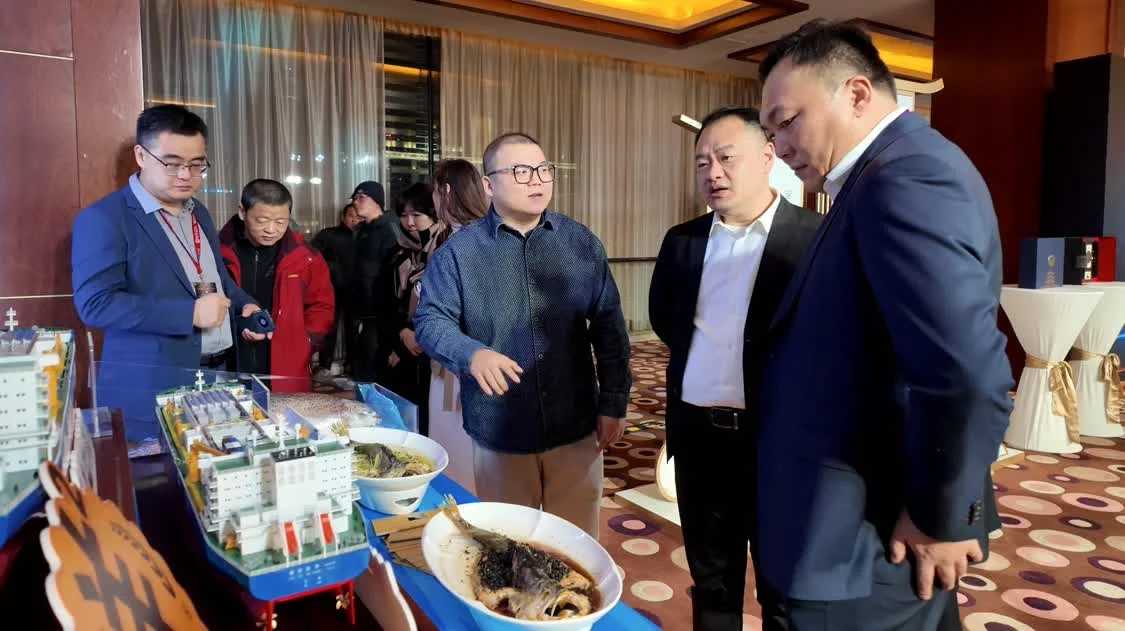
(新春走基层)浙江宁波鼓楼茶话“投资中国”:外企高管展望马年新禧
Zhong Guo Xin Wen Wang· 2026-02-15 06:06
Group 1 - The tea gathering in Ningbo featured over twenty foreign enterprise executives discussing investment opportunities in China, highlighting the favorable business environment in Ningbo [1] - Notable announcements included the plans of Norse company Norktik to increase its production capacity from 2,000 tons last year to a target of 5,000 tons this year, with a long-term goal of reaching 20,000 tons by 2030 [2] - The event underscored the trend of foreign companies reinvesting profits back into Ningbo, with 32 enterprises projected to reinvest $5.7 million in profits in 2025 [4] Group 2 - The executives expressed confidence in Ningbo's business environment, with one stating it ranks among the best in terms of investment opportunities [3] - The local government is focused on rapid project development, emphasizing the importance of timely execution in attracting foreign investment [4] - The gathering concluded with a cultural experience, symbolizing the strong ties and mutual benefits between foreign enterprises and the Ningbo region [3]
10.7万余尾鲑鳟鱼预计于5月起捕上市,“国信1号2-2”已停泊福建海域
Da Zhong Ri Bao· 2026-01-23 12:12
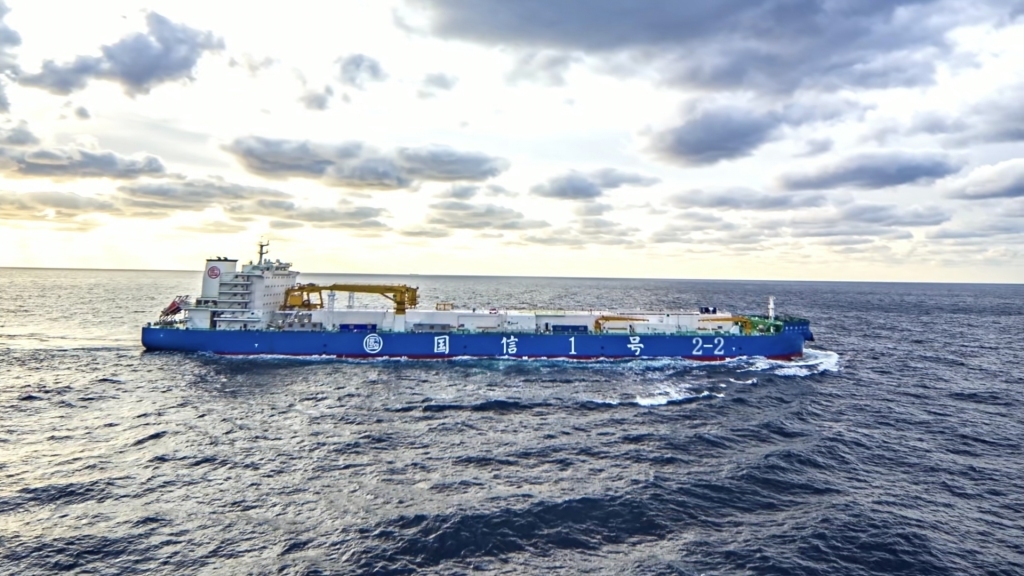
Core Viewpoint - The "Guoxin 1号2-2" large-scale intelligent aquaculture vessel is making significant progress in the cultivation of salmon trout, with expectations to start harvesting in May 2024, marking a new path for high-quality protein supply in China [6][12]. Group 1: Vessel Specifications and Operations - The "Guoxin 1号2-2" measures 244.9 meters in length and features 15 standard aquaculture chambers, with a total water capacity of nearly 100,000 cubic meters [1]. - The vessel employs a mobile ocean ranching model, allowing it to navigate to optimal environmental conditions for fish growth, specifically suitable for salmon trout in the Fuzhou sea area [3]. - The vessel has completed 2,800 nautical miles of travel and has successfully housed 107,000 salmon trout fry, with over 90% of operations being mechanized and a 45% increase in automation levels [3][8]. Group 2: Technological Innovations - The "Guoxin 1号2-2" incorporates advanced technology, achieving a 20% reduction in labor costs and allowing 30% of aquaculture decisions to be made by intelligent systems [3][9]. - The vessel's design focuses on "suitability for fishing," optimizing aquaculture systems and intelligent management [8]. Group 3: Industry Impact and Future Prospects - The successful cultivation of high-value Atlantic salmon on this vessel represents a significant advancement in deep-sea aquaculture technology in China [8][12]. - The operational model of "Guoxin 1号2-2" is part of a broader strategy that includes the previous vessels "Guoxin 1号" and "Guoxin 1号2-1," indicating a shift towards intelligent, standardized, and industrialized operations in deep-sea aquaculture [12]. - The expected annual production capacity is projected to exceed 10,000 tons, providing a stable supply of high-value fish species, thereby supporting national food security and the "blue granary" initiative [12].

中挪携手深化现代渔业合作 北欧大西洋鲑RAS养殖项目在宁波签约
Feng Huang Wang Cai Jing· 2025-12-19 02:30
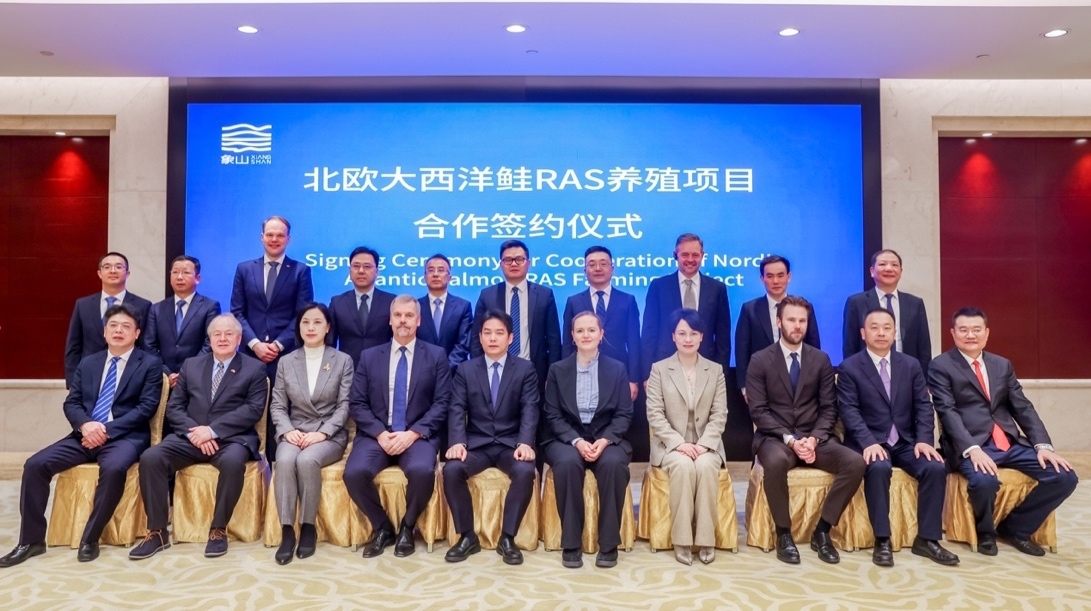
Core Insights - The signing ceremony for the Nordic Atlantic Salmon RAS aquaculture project took place in Ningbo, marking a new phase in capital structure, financial support, and development model for the project [1][6] - The project is China's first large-scale commercial operation of land-based Atlantic salmon aquaculture using RAS (Recirculating Aquaculture System) technology, emphasizing energy conservation, ecological protection, and stable production [1][9] Group 1: Project Overview - The Nordic Atlantic Salmon RAS aquaculture project has been recognized as a significant carrier for promoting modern facility fisheries development and accelerating the transformation of the marine economy in Ningbo [1] - The project aims to provide fresher, safer, and more sustainable Atlantic salmon to the Chinese market while pushing for more efficient and greener aquaculture practices in China [1][3] Group 2: Financial and Collaborative Aspects - The partnership agreement and syndicate financing signed during the ceremony signify a new stage of capital collaboration, financial support, and multi-party cooperation for the project [6] - The project is expected to enhance the domestic supply capacity of high-quality protein, with a planned annual production capacity of 20,000 tons upon completion of all three phases [9] Group 3: Strategic Importance - The project represents a deepening cooperation between Norway and China in green development and modern fisheries, aligning with both countries' goals in food safety, sustainable development, and industrial innovation [3] - The local government has committed to providing comprehensive support to ensure the project's success and aims to develop a leading land-based salmon farming base in Asia [7]

国家开发银行:以高质量金融“护航”青岛高质量发展
Ren Min Wang· 2025-12-18 01:52
Core Viewpoint - The news highlights the significant financial support provided by the National Development Bank (国开行) to facilitate high-quality development in Qingdao, focusing on infrastructure projects, modern industrial systems, and marine economy initiatives. Infrastructure Development - The Qingdao Jiaozhou Bay Second Undersea Tunnel, spanning 17.48 kilometers, has achieved a breakthrough of 3,000 meters in its south line main tunnel construction, addressing the saturation of existing transport links and enhancing connectivity between Qingdao's urban and Huangdao districts [2][3] - The National Development Bank has tailored financing solutions for the tunnel project, providing a total of 2.032 billion yuan in loans to support its construction [2] Marine Economy - The development of a modern marine fishery production park is underway, focusing on the Atlantic salmon industry, which will utilize a land-sea relay model for sustainable aquaculture [4] - The National Development Bank has provided 90 million yuan in new policy financial tools to support the capital needs of this project, facilitating its launch [5] Cultural and Historical Preservation - The Qingdao International Cruise Port area is undergoing transformation to enhance the integration of old and new urban areas, with a focus on preserving historical culture while promoting modern tourism [8] - A total of 310 million yuan in loans and new policy financial tools have been allocated to support the development of the cruise port area [8] Water Resource Management - The completion of the main construction of the Guanlu Reservoir, with a total capacity of 211 million cubic meters, aims to address Qingdao's water scarcity issues and improve water supply security [10][11] - The National Development Bank has issued 3.28 billion yuan in medium to long-term loans and 915 million yuan from the infrastructure investment fund to support the reservoir's construction [11] Future Financial Support - The National Development Bank plans to continue its financial support for Qingdao's innovative industrial systems and marine economy, focusing on key areas such as ecological protection and high-quality development [12]
宁夏贺兰:激活盐碱地资源 发展水产养殖
Xin Hua She· 2025-12-14 02:19
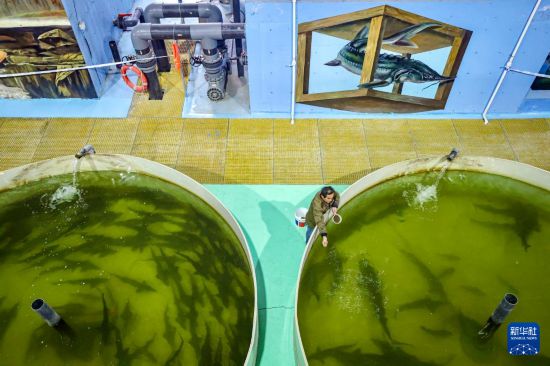
Core Viewpoint - Ningxia Helan County is leveraging saline-alkali land resources to develop aquaculture, utilizing a collaborative platform to enhance agricultural potential and explore innovative methods for land reclamation through fish farming [1][3]. Group 1: Aquaculture Development - The region is establishing factory-based aquaculture facilities and fishing infrastructure, including greenhouses [3]. - Economic fish species such as large yellow croaker, blue crab, yellowfin bream, and Atlantic salmon are being introduced to the local aquaculture industry [3]. Group 2: Innovative Approaches - The initiative aims to explore the "fishing to combat salinity" approach, which seeks to utilize aquaculture as a means to improve saline-alkali land conditions [3].
财界观察 | 国信水产如何闪耀金梧桐?
Xin Lang Cai Jing· 2025-12-13 11:19
Core Insights - The event on December 12 at the Beijing International Hotel marked a significant recognition for Guoxin Aquatic Products, showcasing its deep-sea yellow croaker as a new force in high-end dining [1][3] - The dual recognition from the "Golden Wutong" and "National Brand" awards highlights Guoxin's journey from a quality supplier to a core partner in high-end dining ecosystems [4][6] Industry Recognition - The "Golden Wutong Selected Ingredients" title represents a collective endorsement from top chefs and food critics, affirming Guoxin's products meet the highest culinary standards [4] - The "National Brand" award from CCTV emphasizes Guoxin's innovative "ship-based farming" model, positioning it as a leader in modern marine economy [4][6] Supply Chain Innovation - Guoxin has redefined scarcity in high-end dining through industrialized production via its fleet of large-scale aquaculture vessels, creating a "technological scarcity" [7] - The delivery of the "Guoxin No. 1-2" aquaculture vessel marks the establishment of a scalable operational model, enhancing the efficiency of fish farming [7][9] Quality Assurance - The entire production process, from fry to harvest, is controlled in a closed system, ensuring absolute quality stability and rapid processing times [9] - Third-party testing shows that Guoxin's products exceed industry standards in nutritional content, appealing to high-end chefs focused on health and quality [9] Strategic Importance for Qingdao - Guoxin's success is strategically significant for Qingdao, establishing it as a flagship enterprise in the marine economy and linking it to the national high-end consumer market [10] - The company is not just exporting seafood but also providing a comprehensive marine industry solution, enhancing Qingdao's reputation in the sector [10] Future Business Model - Guoxin's long-term strategy involves a "dual-track" approach, enhancing high-end dining while expanding into more accessible markets [11] - The aim is to make high-quality seafood more affordable for everyday consumers, challenging the perception that premium seafood must be expensive [11]
银川贺兰“十五五”发力冷水鱼全产业链
Zhong Guo Jing Ji Wang· 2025-09-30 03:23
Group 1 - The core focus of Helan County during the 14th Five-Year Plan period is the construction of a comprehensive cold-water fish industry chain, with a total investment exceeding 3 billion yuan [1] - Partnerships have been established with companies such as Hong Kong Huixin and Zhonglian Zhike to develop a high-end cold-water fish breeding base primarily for Atlantic salmon and rainbow trout, aiming for an annual output value of 2.4 billion yuan [1] - Helan County is recognized as a significant aquaculture region, with a projected aquatic product output of 63,500 tons and a value of 940 million yuan in 2024, reflecting a growth rate of 12.7% [1] Group 2 - The county emphasizes the efficient use of water resources, implementing "water rights reform" as a core strategy, which includes technical and mechanism improvements to enhance water efficiency by over 90% [2] - A secondary market for water rights trading has been established, allowing for contract-based water savings and market transactions, resulting in an annual water savings of approximately 30 million cubic meters [2] - Helan County is promoting diversified and efficient development of the water-adapted industry, leveraging saline-alkali land for enhanced productivity [2]
商都郑州跑出开放“加速度”
Zheng Zhou Ri Bao· 2025-09-22 00:53
Core Viewpoint - Zhengzhou is enhancing its international trade capabilities and positioning itself as a hub for global commerce through innovative policies and strategic initiatives aimed at boosting foreign trade and investment [1][2][4]. Group 1: International Trade and Economic Growth - Zhengzhou's foreign trade has shown significant growth, with a total import and export value of 3634.9 billion yuan in the first eight months of the year, representing a year-on-year increase of 27.7% [4]. - The city has successfully attracted foreign investment, with foreign-invested enterprises achieving an import and export value of 779.1 billion yuan in the first half of the year, a year-on-year increase of 83.2% [5]. Group 2: Policy Innovations and Institutional Reforms - Zhengzhou has implemented a series of institutional innovations, with 394 innovation results formed in the past eight years, 14 of which have been replicated nationwide [2][3]. - The city is focusing on optimizing the business environment at ports and enhancing cross-border trade facilitation through new models such as "zone-port integration" [3]. Group 3: Global Connectivity and Partnerships - Zhengzhou has established trade relations with 226 countries and regions, with the EU, ASEAN, Japan, India, and the US being the top five trading partners [7]. - Recent international cooperation initiatives include trade negotiations with Brazil and Chile, and the signing of 13 key cooperation projects during the "Air Silk Road" forum in Kuala Lumpur [7][8]. Group 4: Infrastructure and Logistics Development - The city is enhancing its logistics capabilities with new transportation models that reduce cargo damage and improve transfer efficiency at air cargo stations [2]. - Zhengzhou is actively integrating into global supply chains and enhancing its logistics infrastructure to support its growing trade activities [6].
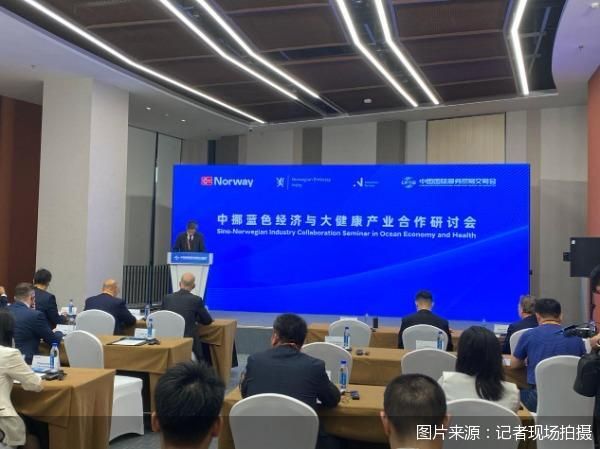
从深海到健康,中挪产业合作迎新机遇
Bei Jing Shang Bao· 2025-09-10 14:22
Group 1: Blue Economy and Health Industry Cooperation - The China-Norway Blue Economy and Health Industry Cooperation Seminar was successfully held during the 2025 China International Service Trade Fair, focusing on themes such as blue economy, marine technology, agricultural technology, health industry, and sustainable development [1] - A cooperation agreement was signed between China Road and Bridge Corporation and Norway's Pure Salmon Technology, expanding collaboration in aquaculture and infrastructure [1][7] Group 2: Service Industry and Trade Growth - The service industry has become a new engine for global economic growth, with its share of global GDP rising to 68% and service trade growth outpacing goods trade, increasing from 20.6% in 2013 to 25% in 2023 [2] - Beijing has implemented over 70 national breakthrough policies and attracted more than 8,000 foreign enterprises, utilizing over $66 billion in foreign investment, accounting for 8.4% of the national total [2][3] Group 3: Nutritional Health Food Market Potential - The nutritional health food industry in China is experiencing high-quality development, with market size growing from 99.3 billion yuan in 2013 to 328.3 billion yuan in 2023, a compound annual growth rate of 13%, and expected to exceed 800 billion yuan by 2027 [4] - In the first half of 2025, China's nutritional health food trade totaled $6.233 billion, with imports reaching $3.981 billion, reflecting a year-on-year growth of 10.3% and 10.5% respectively [4] Group 4: Import Trends and Consumer Demand - Norway ranked 16th among countries exporting nutritional health foods to China in the first half of 2025, with a trade total of $5.616 million, showing a year-on-year decline of 8.1% [4] - The Chinese market for imported cross-border health products has formed five core segments, with Norwegian brands holding significant positions in the cardiovascular and oral beauty sectors [5] Group 5: Green Agriculture and Sustainable Development - China Road and Bridge Corporation aims to establish a "green granary" in collaboration with Pure Salmon Technology, focusing on sustainable aquaculture and infrastructure development [6][8] - The partnership will involve creating a demonstration project for Atlantic salmon aquaculture in China, integrating advanced Norwegian technologies in automated feeding and fish disease diagnosis [8]
2025服贸会|从深海到健康,中挪产业合作迎新机遇
Bei Jing Shang Bao· 2025-09-10 14:05
Group 1: Blue Economy and Health Industry Cooperation - The China-Norway Blue Economy and Health Industry Cooperation Seminar was successfully held during the 2025 China International Service Trade Fair, focusing on themes such as blue economy, marine technology, agricultural technology, health industry, and sustainable development [1] - A cooperation agreement was signed between China Road and Bridge Corporation and Norway's Pure Salmon Technology, expanding collaboration in aquaculture and infrastructure [1][7] Group 2: Service Industry and Trade Growth - The service industry and service trade have become new engines for global economic growth, with the service sector accounting for 68% of global GDP and service trade's share rising from 20.6% in 2013 to 25% in 2023, projected to exceed 40% by 2040 [3] - Beijing has implemented over 70 national breakthrough policies and attracted more than 8,000 foreign enterprises, with actual foreign investment exceeding $66 billion, representing 8.4% of the national total [3][4] Group 3: Nutritional Health Market Potential - The Chinese nutritional health food industry is in a high-quality development phase, with market size growing from 99.3 billion yuan in 2013 to 328.3 billion yuan in 2023, a compound annual growth rate of 13%, and expected to exceed 800 billion yuan by 2027 [5] - In the first half of 2025, China's nutritional health food trade totaled $6.233 billion, with imports reaching $3.981 billion, showing a year-on-year growth of 10.5% [5] Group 4: Cross-Border Health Products and Consumer Demand - The cross-border health product market in China has formed five core segments, with Norwegian brands holding significant positions in the cardiovascular and oral beauty sectors [6] - The health literacy of Chinese consumers is improving, reaching 31.87% in 2024, enhancing awareness of key ingredients like DHA and EPA, which benefits the market for high-quality Norwegian health products [6] Group 5: Green Agriculture and Sustainable Development - The cooperation between China Road and Bridge Corporation and Pure Salmon Technology aims to establish a green aquaculture demonstration project focused on Atlantic salmon, aligning with China's food security strategy [8] - The partnership will leverage Norwegian technology in automated feeding, AI fish disease diagnosis, and intelligent farming platforms, promoting sustainable practices in marine resource utilization [8]