
精深加工

Search documents
福建大黄鱼“游”出产业新变化
Xin Lang Cai Jing· 2026-02-10 21:07
Core Viewpoint - The yellow croaker industry in Ningde, Fujian, is undergoing significant transformation towards ecological, intelligent, and standardized farming practices, with a focus on deep-sea aquaculture and technological advancements in breeding and processing [2][4][5]. Industry Overview - Ningde is the main production area for yellow croaker in China, contributing 80% of the national output, with an industry chain value exceeding 20 billion yuan [1]. - The sales peak for yellow croaker coincides with the approaching New Year, highlighting its importance in the local economy [1]. Aquaculture Innovations - The transition from nearshore to offshore farming has been implemented, with 592 deep-water anti-wind and wave net cages established since 2025 [3]. - The new deep-sea net cages allow for a lower stocking density of 4 fish per cubic meter, enhancing resilience to environmental conditions and increasing capacity by 15 times compared to traditional cages [2]. Breeding Technology - In 2022, 1.5 billion yellow croaker fry were produced in Ningde, accounting for nearly 70% of the region's total fry output [4]. - The breeding process has been digitized, creating traceable records of fry development, which has improved the quality and marketability of the fry [4]. Processing and Product Development - The processing sector has evolved from fresh fish to advanced products like yellow croaker fillets and fish balls, generating over 300 million yuan in annual revenue for companies like Funing Port Fisheries [5]. - Companies are focusing on full-chain development, utilizing all parts of the fish to enhance value, including creating high-protein fish feed from by-products [5]. Brand and Cultural Development - Ningde is actively promoting the yellow croaker as a cultural symbol through the establishment of cultural experience centers and festivals, aiming to enhance brand recognition and market presence [5].
“小丸子”撬动产业“大振兴”
Xin Lang Cai Jing· 2026-01-18 18:29
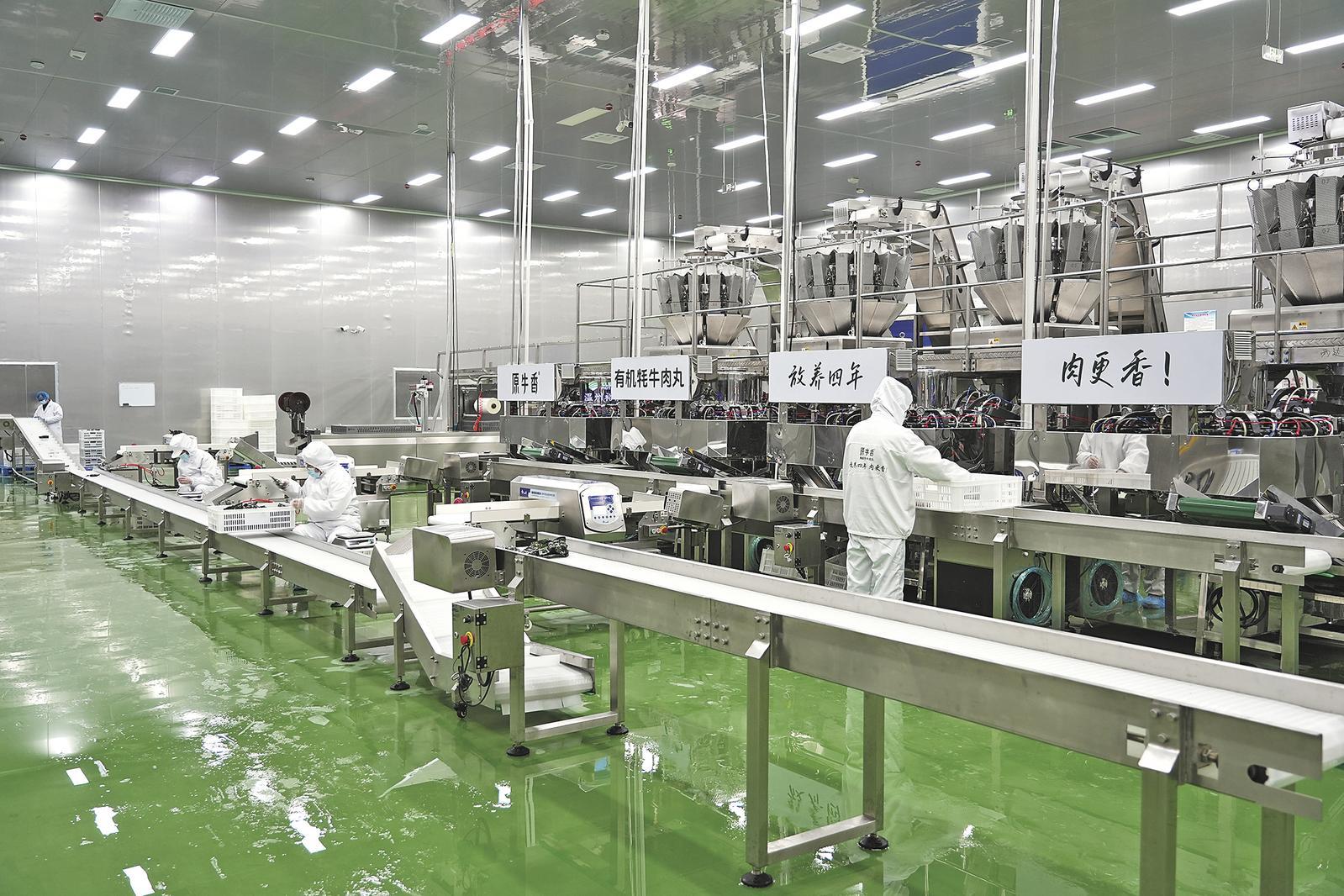
Core Viewpoint - The establishment of the fully automated yak meatball production line by Qinghai Yuan Niu Xiang Food Co., Ltd. marks a significant transformation in the yak industry, shifting from raw material output to brand output, and aims to enhance local employment and economic stability [3][4]. Group 1: Production and Technology - The new production line, with a total investment exceeding 200 million yuan, is the largest yak meatball processing base in Qinghai, capable of producing up to 30 tons per day once fully operational [3][4]. - The production process is highly automated, ensuring that the time from slaughter to finished product does not exceed 4 hours, with rapid freezing to -18°C within 25 minutes to preserve the meat's freshness and nutrition [3]. Group 2: Market Strategy and Sales - The company has established three brand specialty stores and is actively selling on e-commerce platforms, with initial orders exceeding 5 million yuan from regions including Shanghai, Jiangsu, and Guangdong [4]. - The strategy to convert yak meat into meatballs addresses traditional challenges such as poor taste and weak market recognition, allowing for entry into larger markets like hot pot and family dining [4][5]. Group 3: Industry Impact and Future Goals - The project is expected to directly employ over 200 local herders as industrial workers, contributing to their income stability and skill development [3][5]. - The company aims to achieve EU organic certification and develop high-end products for niche markets, while also exploring the high-value utilization of yak by-products [6].

做精做细“牛文章” 审时度势“换打法”
Xin Lang Cai Jing· 2025-12-30 20:11
Core Insights - The beef cattle farming industry in China is experiencing a price recovery, while the dairy farming sector continues to face pressure from low fresh milk purchase prices. Despite these challenges, Xuyi Animal Husbandry Co., Ltd. in Inner Mongolia has shown resilience and growth in output and profits, providing valuable lessons for the industry in cost reduction and efficiency [1][2]. Group 1: Cost Reduction and Efficiency - The company has achieved a record high of 36,000 cattle in total stock, with a projected output value exceeding 1.5 billion yuan and a profit of approximately 50 million yuan for 2024 [2]. - The company focuses on reducing feed costs, which account for over 70% of farming costs. By leasing 10,000 acres of land and signing contracts for 20,000 acres to grow silage corn and alfalfa, the company saves about 200 yuan per ton compared to market prices. This strategy allows the company to save over 25 million yuan annually on feed costs alone [2]. - The company employs scientific and standardized farming practices, including a research team dedicated to improving feeding cycles and beef quality. The organic certification of Angus beef has added value of 1,000 to 1,500 yuan per head [2]. Group 2: Deep Processing and Market Adaptation - The company emphasizes the importance of deep processing to enhance product value and mitigate raw material price fluctuations. This strategy includes transitioning from supplying fresh milk to producing dairy products, which has generated over 8 million yuan in profit [4]. - The company has adopted a flat management structure to reduce administrative costs, with over 90% of employees engaged in production. This approach has led to significant savings in labor costs [4]. - The company has received support from local government policies, including 80 million yuan in special bond funds for dairy product processing facilities, which has strengthened its risk resistance [5]. Group 3: Challenges and Recommendations - Despite good operational performance, the company faces challenges such as financing difficulties due to cautious lending practices from financial institutions. There are calls for enhanced credit insurance support and interest subsidies for farming loans [6]. - Local officials and business leaders have highlighted the need for improved cold chain logistics infrastructure to reduce transportation costs for deep-processed products, which would enhance price competitiveness [6]. - Recommendations include increasing subsidies for feed and farming, lowering the thresholds for policy benefits for dairy processing companies, and supporting local dairy product processing to improve the consumption of fresh milk [7].
云南“十五五”规划建议:做强做优做大资源型产业
Xin Hua Cai Jing· 2025-12-29 05:20
Core Viewpoint - The Yunnan Provincial Party Committee has released recommendations for the 15th Five-Year Plan, emphasizing the strengthening and expansion of resource-based industries through technological advancements and deep processing [1] Group 1: Resource-Based Industries - The plan aims to enhance the position of aluminum, silicon, phosphorus, non-ferrous, and rare metals in the national industrial chain and supply chain [1] - There is a focus on promoting green aluminum towards deep processing and terminal manufacturing, with the goal of establishing a "Green Aluminum Valley" [1] - The initiative includes upgrading the silicon photovoltaic industry and creating major production bases for leading enterprises [1] Group 2: Phosphorus and Non-Ferrous Metals - The development of fine phosphorus chemicals is prioritized, aiming to couple phosphorus resources with new energy battery materials and create a national advanced manufacturing cluster for green phosphorus chemicals [1] - The plan emphasizes the deep processing of non-ferrous metals and the extension of rare metals from materials to devices and equipment, with a focus on building a national advanced manufacturing cluster for rare metals in central Yunnan [1] Group 3: Mineral Resource Exploration and Utilization - A new round of strategic actions for mineral exploration is proposed to promote the exploration, development, and increase of important mineral resources [1] - The plan aims to improve the comprehensive utilization of mineral resources and strengthen the coordinated development of strategic and advantageous minerals [1] - There is an emphasis on the comprehensive utilization of recycled resources such as aluminum, copper, and platinum group metals [1] - The initiative includes the transformation and upgrading of industries such as mining, metallurgy, chemicals, building materials, and light industry [1]
清远“剥衣黄金”闯世界:西牛麻竹笋链动百亿产业
2 1 Shi Ji Jing Ji Bao Dao· 2025-12-23 02:12
Core Viewpoint - The bamboo shoot industry in Yingde has transformed from a low-value raw material market to a high-value, standardized production system, significantly increasing its export and market presence, particularly in Southeast Asia and beyond [1][2][8]. Group 1: Industry Growth and Economic Impact - The export value of the company, Juyuan Zhibao, reached 15 million yuan from January to August this year, marking a 50% increase year-on-year [1]. - By 2025, the total planting area for bamboo shoots in Yingde is expected to reach 863,900 acres, with an annual fresh bamboo shoot output of 1.5353 million tons and an estimated industry output value of 10.965 billion yuan [2]. - The bamboo shoot industry has become a crucial support for rural revitalization, employing nearly 170,000 people in Yingde [2]. Group 2: Standardization and Quality Improvement - The local association has initiated the establishment of eight local group standards, including the "Planting Technical Regulations for Xiniu Bamboo Shoots," to enhance product quality and market competitiveness [3][5]. - The implementation of standardized planting has increased the yield per acre from over 1,000 pounds to 3,000 pounds, achieving a 200% increase [3][4]. Group 3: Processing and Value Addition - The deep processing of bamboo shoots has seen a significant rise, with the output value increasing from 800 million yuan to 2.576 billion yuan between 2022 and 2024, a growth of 222% [7]. - The value of processed bamboo shoots is now 6 to 10 times higher than that of fresh bamboo shoots, showcasing the importance of value addition in the industry [7]. Group 4: Market Expansion and Branding - The region's bamboo shoots have gained recognition as a geographical indication product, with 33 brands, including "Qiaokou" and "Juyuan Zhibao," contributing to a collaborative branding strategy [8]. - The e-commerce sales of bamboo shoot products have surpassed 60 million yuan in 2023, with exports accounting for 92% of total sales [8]. Group 5: Environmental and Innovative Applications - The bamboo industry is expanding into new economic models, such as biodegradable materials for food packaging, with products meeting EU standards and successfully entering international markets [9]. - The integration of agriculture, culture, and tourism is creating new value streams, with projected leisure tourism revenue from the bamboo shoot industry reaching 18.4 million yuan in 2024 [10]. Group 6: Direct Benefits to Farmers - The establishment of a standardized collection network and the implementation of a "quality for price" mechanism have ensured stable and direct benefits for farmers, enhancing their income and livelihood [11].
【省农业农村厅】陕西省现代农业产业园建设成果采访活动启动
Shan Xi Ri Bao· 2025-09-11 00:36
Core Insights - The event "Industrial Revitalization · Park First" was launched on September 8 to showcase the achievements of modern agricultural industrial park construction in Shaanxi Province [1] - The initiative aims to explore replicable and easily promoted models and case studies to enhance the brand influence and construction level of modern agricultural industrial parks [1] Summary by Categories Event Overview - The event is organized by the Shaanxi Modern Agricultural Park Service Center and involves media from both central and provincial levels [1] - Activities include on-site visits and in-depth research to uncover the technological aspects behind smart agriculture, green planting, and deep processing [1] Industry Development - The focus is on how "Agriculture +" can connect industrial chains and enhance value chains, transforming agricultural products into sought-after goods [1] - The event will highlight the effectiveness of income generation for farmers and how industrial parks contribute to local employment and wealth creation [1] Achievements and Future Goals - A representative from the Provincial Department of Agriculture and Rural Affairs stated that the event will comprehensively showcase the practical achievements and valuable experiences of modern agricultural industrial park construction in Shaanxi [1] - Shaanxi has established 13 national modern agricultural industrial parks and 80 provincial modern agricultural industrial parks, demonstrating significant progress in the sector [1]
河北张家口:葡萄甘甜产业香
Jing Ji Ri Bao· 2025-08-16 08:11
Core Viewpoint - Zhangjiakou is rapidly developing its grape and wine industry, integrating various sectors to enhance quality and market appeal [1][4] Group 1: Grape Cultivation - Zhangjiakou has over 135,000 acres of grape cultivation, with 44 licensed wine processing enterprises and an annual processing capacity of 200,000 tons [1] - The Xuanhua District has a historical grape cultivation tradition, with the oldest vines over 600 years old, and has been recognized as a "Globally Important Agricultural Heritage" site [2] - The Jiangjiatun Modern Grape Industrial Park features 15 high-standard greenhouses covering approximately 108 acres, showcasing both traditional and modern cultivation techniques [2][3] Group 2: Scientific Research and Innovation - The Hebei Zhangjiakou National Agricultural Science and Technology Park focuses on technological innovation in the grape industry, housing key laboratories and a unique grape germplasm resource bank [3] - The park has collected 532 grape varieties and promoted 23 superior varieties, enhancing the grape industry in Zhangjiakou and surrounding areas [3] Group 3: Wine Production and Processing - The Changcheng Sanggan Winery integrates grape cultivation, wine research, production, and sales, covering an area of 208,000 square meters with a planting scale of 65,000 acres [4] - The region has established 20 innovation platforms and developed over 500 wine products, with 41 wine processing enterprises achieving an annual production capacity of 150,000 tons [4] Group 4: Tourism and Cultural Integration - The World Wine Window Exhibition Hall in Huailai County offers an immersive experience for visitors, showcasing the history and development of local wine [6] - The local government has developed a comprehensive plan to enhance the integration of grape cultivation and wine production with tourism, aiming to attract over 500,000 visitors and generate 550 million yuan in tourism revenue by 2024 [7]
小麦“变身”600多种产品(深阅读)
Ren Min Ri Bao· 2025-08-15 22:11
Group 1: Agricultural Innovation - The transformation of saline-alkali land in Binzhou has led to the cultivation of high-yield wheat varieties, such as "Yutian Wheat 126," which passed national approval in 2023 [4][6] - The local government and companies are actively promoting salt-alkali resistant seed varieties to enhance agricultural productivity [2][5] - Farmers initially skeptical about new seed varieties have changed their attitudes after witnessing tangible high-yield results, leading to increased adoption of these seeds [5][6] Group 2: Food Processing and Value Addition - Binzhou's wheat can be processed into over 600 products, significantly increasing its economic value from approximately 3,700 yuan per ton to around 9,140 yuan [12] - The company has developed advanced processing techniques that have increased the value of by-products like wheat bran, which now sells for 30,000 yuan per ton compared to 1,800 yuan previously [8][12] - The company has achieved nearly 100% utilization of wheat, saving 500,000 tons of grain annually through efficient processing [13] Group 3: Waste Utilization and Sustainability - The company has developed a method to convert liquid waste from alcohol production into a valuable feed supplement, improving feed efficiency by over 10% and increasing economic benefits for pig farming by over 20% [14][16] - The use of anaerobic fermentation for pig manure treatment has resulted in improved soil quality and crop yields in previously unproductive saline-alkali fields [15][16] - The overall approach emphasizes a circular economy, where waste products are transformed into resources, leading to significant cost savings and environmental benefits [14][16]
赣江观澜:江西小龙虾何以撬动百亿产业?
Zhong Guo Xin Wen Wang· 2025-06-27 22:45
Core Insights - The small lobster industry in Jiangxi has become a significant economic driver, with a total output value of 33 billion yuan and a cultivation area of 2.7 million acres by May 2024 [1] Group 1: Industry Development - Jiangxi's small lobster cultivation has reached an output of 285,000 tons, leveraging high-quality water resources from Poyang Lake and Gan River [1] - The "rice-lobster" co-cultivation model has transformed previously unproductive land into profitable agricultural zones, significantly increasing economic returns [2] - The county of Jishui has established a national demonstration zone and three provincial demonstration zones for "rice-lobster" co-cultivation, covering 48,000 acres and producing over 6,000 tons of lobsters annually [2] Group 2: Processing and E-commerce - The establishment of intelligent processing facilities has enabled the handling of 150 tons of lobsters daily, with an online sales target of 200 million yuan for 2024 [3] - The introduction of a cold chain logistics project in Pengze County aims to enhance the distribution efficiency of fresh lobsters, ensuring delivery to over 95% of regions within 48 hours [3] Group 3: Tourism and Consumption - The development of culinary tourism around lobster has attracted significant foot traffic, with daily visitor numbers exceeding 2,000 at food streets in Yongxiu County [4] - Yongxiu County has launched ten premium tourism routes and issued 400,000 yuan in lobster consumption vouchers to stimulate local economic activity [5] - The integration of lobster farming with tourism and dining experiences has become a new trend, contributing to rural revitalization and economic growth in Jiangxi [5]
金枪鱼吸睛 深圳国际渔业博览会成交近7亿元
Zheng Quan Shi Bao Wang· 2025-05-19 10:26
Group 1 - The 2025 Shenzhen International Fisheries Expo featured 13 deep-sea fishing companies showcasing large bluefin tuna, attracting significant visitor engagement and participation [1][3] - The event included over 10 live fish-cutting shows, enhancing the interactive experience for attendees [3] - A total of 36 public auction sessions were held, resulting in the sale of 1,900 tons of fish with a transaction value of 60 million yuan [6] Group 2 - The expo attracted exhibitors from 20 countries and regions, highlighting various seafood delicacies such as Russian king crab and Argentine red shrimp [6] - Major domestic companies like Zhongshui Fisheries and Zhonglu Ocean participated, showcasing high-quality products and modern fishing achievements [6] - The event facilitated trade negotiations with a total intended transaction value of 12 billion yuan and actual transaction value nearing 700 million yuan, drawing nearly 100,000 visitors [8] Group 3 - Multiple cooperation agreements were signed, including one between the Guangdong Ocean Fisheries Association and Shenzhen Dachanwan Port Investment Development Co., Ltd., aimed at promoting the Shenzhen International Tuna Trading Center project [7]
