能源贸易

Search documents
石油股连涨两日后回调
第一财经· 2026-03-04 07:51
2026.03. 04 但他表示, 特朗普此举或为其他国家提供思路,市场接下来的关注重点可聚焦受影响的中立国家会 否组织护航或提供保险服务 。 本文字数:1377,阅读时长大约2.5分钟 作者 | 第一财经 郭霁莹 连日过热的原油市场出现"降温"迹象。 3月4日,国际油价开盘后震荡走弱。截至13时30分,美国WTI、英国布伦特(Brent)原油期货价 格分别上涨1.3%、1.6%,相较前两个交易日涨幅收窄。 国内A股市场亦受传导。今日开盘后,"三桶油"集体大跌,盘中一度触及跌停,结束此前连续两个交 易日涨停趋势。截至收盘,中国石化跌5.37%,中国海油跌1.29%,中国石油涨0.68%。 另外, 海油工程、 中油工程、通源石油等石油股也集体回调。 消息面上,特朗普当地时间3月3日在社交媒体发帖称,已指示美国国际开发金融公司(DFC)以"非 常合理的价格"为海上贸易提供政治风险保险和财务安全担保,重点覆盖能源贸易。如有必要,美国 海军将尽快开始护送油轮通过霍尔木兹海峡。他强调,"无论如何,美国将确保能源自由流向世 界。" 多名行业人士表示,特朗普此次宣布的新举措,或有助于提振市场信心,但无论是护航还是保险机制 ...


12艘油轮卡半路了!1200万桶俄油漂在海上,有人停买有人不愿多接?
Sou Hu Cai Jing· 2026-02-10 06:16
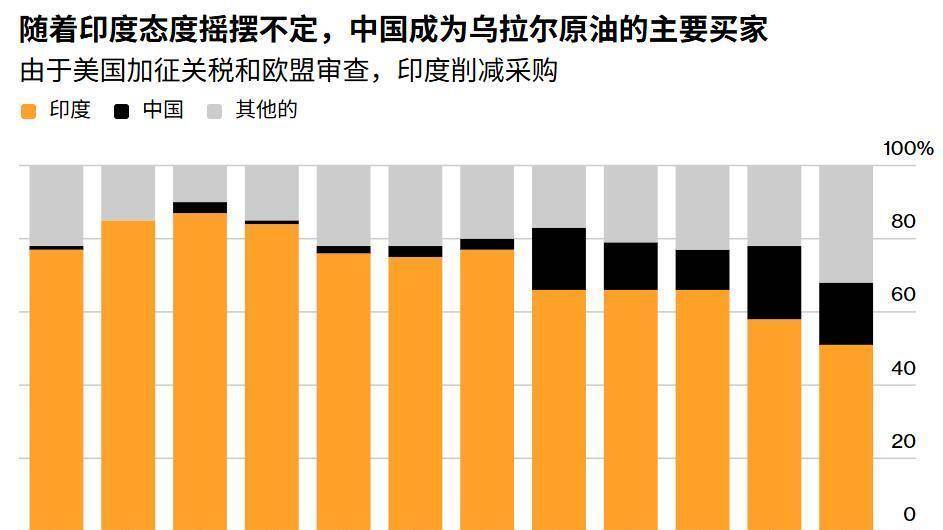
Core Viewpoint - The sudden halt of Indian purchases of Russian Ural crude oil, prompted by a US-India agreement, has left 12 supertankers stranded in the sea with over 12 million barrels of oil, creating a significant disruption in the global energy market [1][4][5]. Group 1: Impact on Indian Oil Imports - Prior to the Ukraine conflict, Russian oil accounted for only 0.2% of India's imports, but surged to 35-40% by mid-2024 due to discounted prices [4]. - By January 2026, India's daily imports from Russia had dropped to 1.2 million barrels, and the new agreement effectively halted all imports [5]. - Indian refiners are now in a dilemma, facing political pressure from the US while needing to meet domestic fuel demands [5]. Group 2: Consequences for Russia - Russia's oil revenues are projected to fall by 34% in 2024, with January 2026 revenues hitting the lowest since summer 2020, necessitating deeper discounts to attract new buyers [6]. - Following the announcement of the US-India agreement, the discount for Ural crude compared to Brent crude widened to about $10 per barrel, making it cheaper than Iranian oil [6]. Group 3: China's Role in the Market - China has increased its imports of Ural crude to 500,000 barrels per day as of January 2026, but this is significantly lower than India's peak of over 2 million barrels per day [7][9]. - Chinese refineries prefer lighter, low-sulfur crude from Russia's Pacific ports, which are more economically viable to process compared to the heavier Ural crude [9]. Group 4: Broader Market Dynamics - Other Asian countries, like Indonesia, have limited demand for Ural crude, making it difficult for Russia to find alternative buyers [10]. - The global oil market is currently oversupplied, with high US shale oil production and mixed OPEC responses to production cuts, leading to a challenging environment for selling discounted oil [10]. Group 5: India's Energy Strategy - India relies on imports for 89% of its oil consumption, and the cessation of Russian oil could lead to increased energy costs [11]. - In the first four months of 2026, India's imports from the US rose to 6.31 million tons, but logistical challenges and compatibility issues with Indian refineries limit the potential to fully replace Russian oil [11].
中方明牌警告美国,特朗普立即改口,不再威胁中俄能源通道
Sou Hu Cai Jing· 2026-01-13 05:41
Group 1 - The core viewpoint of the article is that President Trump's recent statement allowing China to buy as much oil as it wants from Venezuela reflects a complex geopolitical strategy rather than a simple concession [1][3][5] - Trump's shift in attitude is based on a comprehensive understanding of the energy situation in Venezuela, aiming to pave the way for U.S. energy companies to enter the Venezuelan market and maximize profits [3][5] - The U.S. government's previous stance was to limit Venezuela's economic ties with countries like China and Russia, but the underlying logic is more complex, focusing on maintaining U.S. dominance in the energy sector [3][5] Group 2 - The ability of the U.S. to restrict China's energy supply is contingent upon severe strategic conflict, as China has multiple stable energy supply channels [5][7] - Trump's recent statement is not a withdrawal from strategy but a recalibrated approach to maintain stable energy trade while ensuring U.S. interests in Venezuela [5][7] - The article highlights that U.S. energy policy is closely tied to geopolitical strategies, with a focus on Venezuela as a key target for influence [5][7] Group 3 - For China, energy security is both an economic and strategic issue, as establishing stable energy supply systems helps mitigate external intervention risks [7] - China's diplomatic and legal efforts to protect its rights signal that unilateral U.S. control is no longer feasible, providing long-term security for China's energy needs [7] - The article emphasizes the importance of understanding the deeper strategic implications behind the U.S. and China's energy policies, as they shape the future of global political and economic order [7]
特朗普向印度发出新警告:若不限制购买俄石油,美国可能继续加关税
Huan Qiu Shi Bao· 2026-01-06 23:03
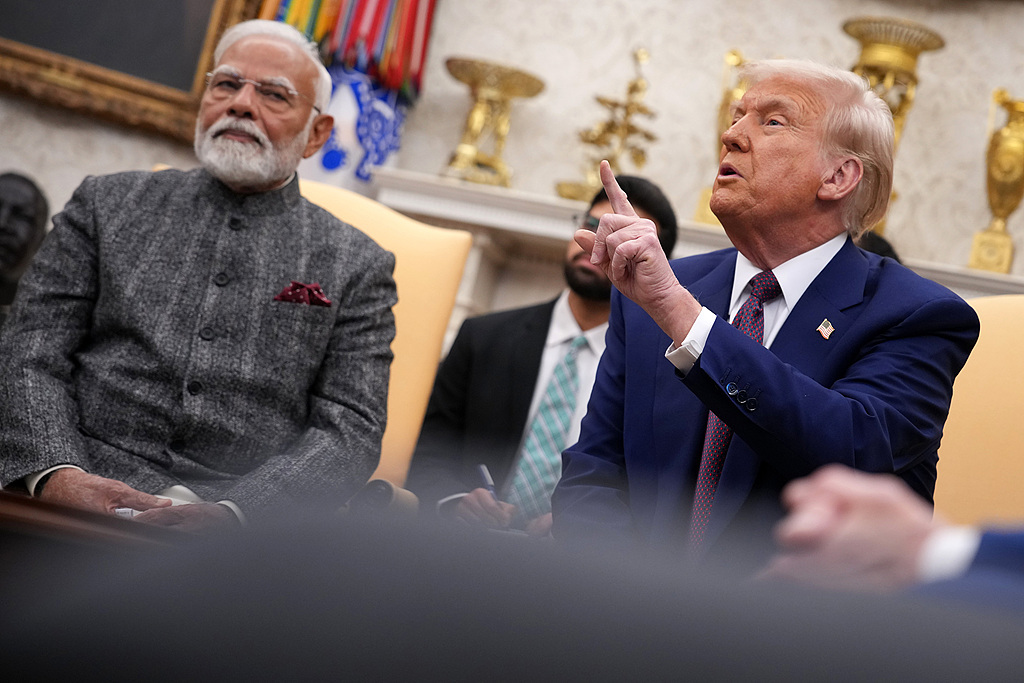
Core Viewpoint - The article discusses a warning issued by U.S. President Trump to India regarding its oil purchases from Russia, indicating potential tariff increases on Indian products if India does not comply with U.S. demands [1][3]. Group 1: U.S.-India Relations - Trump stated that if India does not cooperate on the Russian oil issue, the U.S. may impose tariffs on Indian goods [3]. - The U.S. government plans to increase tariffs on Indian imports of Russian oil, potentially raising the overall tariff rate on Indian goods to 50% by August 2025 [3][4]. - Despite ongoing tensions regarding tariffs, both Trump and Indian Prime Minister Modi emphasized the importance of maintaining a positive bilateral trade relationship during a recent phone call [4]. Group 2: India's Energy Policy - India maintains that its procurement of Russian oil is essential for ensuring national energy security [4]. - The Indian government has expressed that its energy import policies are designed to protect the interests of domestic consumers [4]. - Ongoing negotiations between the U.S. and India aim to address long-standing trade disputes, although these discussions have been complicated by the proposed tariff increases [4].
莫迪临阵倒戈,普京大批油轮就已经掉头向中国港口驶去了,半价石油涌入黄海
Sou Hu Cai Jing· 2025-12-27 10:50
Core Viewpoint - The rapid shift in India's stance towards the West has surprised many, while Russia's swift response to this change has been even more remarkable, as evidenced by the redirection of oil tankers towards China within a month of India's perceived compromise [1][3]. Group 1: Russia's Oil Strategy - Russia has drastically reduced oil prices to $30 to $35 per barrel, significantly lower than the international average of $50 to $60, indicating a desperate attempt to secure buyers amid economic pressure [5][7]. - The decline in Russia's energy exports has been severe, with revenues dropping by over one-third compared to the previous year, highlighting the economic strain on the country [9][11]. - The ongoing military conflict has exacerbated the situation, forcing Russian oil companies to seek buyers in China, even at a loss, to maintain revenue streams [11][13]. Group 2: India's Changing Dynamics - India, once a significant buyer of Russian oil, is expected to reduce imports significantly, with projections indicating a drop below 1 million barrels per day by January 2026 [16][18]. - The shift in India's purchasing behavior is influenced by U.S. sanctions against Russia, prompting the Modi government to align more closely with Western interests [14][16]. - Modi's strategy appears to be aimed at securing Western support in the geopolitical landscape, even at the cost of losing access to cheaper Russian oil [18][22]. Group 3: China's Position - China stands out as the only major economy capable of absorbing the surplus Russian oil, positioning itself as a key player in the energy market amid Western sanctions on Russia [20][24]. - The acquisition of discounted Russian oil is seen as a significant opportunity for China, reinforcing its strategic partnership with Russia while benefiting economically [20][24]. - China's actions reflect a commitment to maintaining energy security and resisting external pressures, showcasing its ability to navigate complex geopolitical dynamics [22][24].
上海液化天然气新站线投产 将同步提升LNG保税加注能力 并为“上海价格”拓展至能源领域创造条件
Jie Fang Ri Bao· 2025-12-14 01:57
Core Viewpoint - The Shanghai LNG station expansion project has officially commenced operations, enhancing the city's natural gas supply capabilities and positioning Shanghai as a global clean energy refueling hub [1][2]. Group 1: Project Overview - The Shanghai LNG station expansion is a key national oil and gas project, part of the "14th Five-Year Plan" for energy development in Shanghai and Zhejiang, located at the Yangshan Deepwater Port [1]. - The project includes the construction of a new 150,000-ton LNG dedicated berth, four new 220,000 cubic meter LNG storage tanks, and a long-distance gas pipeline [1]. - The project has set multiple industry records, including the largest LNG ship unloading dock in China and the fastest construction time for a similar storage tank at 25 months and 5 days [2]. Group 2: Capacity and Supply - The existing Yangshan LNG receiving station has a total liquid storage capacity of 895,000 cubic meters, supplying approximately 50% of Shanghai's natural gas demand [2]. - After the first phase of the expansion, the combined unloading capacity of the Yangshan dual stations will exceed 12 million tons per year, with a storage capacity of nearly 1.8 million cubic meters, effectively doubling emergency supply capabilities [2][3]. Group 3: Regional Impact - The coordinated operation of the Yangshan LNG dual stations will significantly enhance gas source security, peak response, and emergency reserve capabilities in Shanghai and the Yangtze River Delta region [3]. - The project is seen as a crucial achievement in the construction of Shanghai's international shipping center and the integrated development strategy of the Yangtze River Delta [3]. Group 4: Future Developments - The company is in discussions with the National Pipeline Network Group to build a new 35-kilometer gas pipeline to enhance connectivity with the national network [3]. - The company aims to diversify its operations by expanding into resource processing, LNG storage trade, and ship refueling, providing comprehensive energy solutions [3][5]. - The Shanghai LNG receiving station is already equipped with a bonded LNG tank, with a significant increase in reverse refueling business volume expected, reaching 300 million cubic meters in 2024 [4]. Group 5: Trade and Pricing - The dual stations plan to expand LNG transshipment trade and apply to become a natural gas futures delivery warehouse, embedding deeper into the global energy trade chain [5]. - The development of storage, trade, and refueling capabilities at the Shanghai LNG receiving station will support Shanghai's participation in global natural gas trading and create favorable conditions for establishing a "Shanghai price" in the energy sector [5].

“历史性首次”,印度与美国签署!
中国能源报· 2025-11-17 08:53
Core Viewpoint - India has signed a historic agreement with the United States to import approximately 2.2 million tons of liquefied petroleum gas (LPG) annually from the Gulf Coast of the U.S., effective until 2026, marking the first structured procurement contract for U.S. LPG in the Indian market, which accounts for about 10% of India's annual imports [1][3]. Group 1 - The agreement was announced by India's Minister of Petroleum and Natural Gas, Hardeep Singh Puri, highlighting its significance in diversifying India's energy sources [3]. - The procurement volume of 2.2 million tons represents a substantial addition to India's energy imports, reflecting a strategic move towards securing energy supply from the U.S. [3]. - This contract is part of a broader context where the U.S. is attempting to increase its energy exports to India, amidst geopolitical tensions and pressures regarding India's oil imports from Russia [5]. Group 2 - The U.S. has imposed additional tariffs on Indian products, reaching a total tariff rate of 50%, as a response to India's imports of Russian oil, indicating a complex trade relationship [4]. - There are ongoing discussions between U.S. and Indian leaders regarding energy imports, with U.S. President Trump asserting that India would cease purchasing Russian oil, although the Indian government has not confirmed this [4][5]. - The geopolitical landscape is influencing energy procurement strategies, with the U.S. aiming to promote its energy products in international markets while addressing its own national interests [5].

印度与美国签署220万吨液化石油气采购协议
Yang Shi Xin Wen· 2025-11-17 06:29
Group 1 - The Indian government has signed a historic procurement agreement with the United States to import approximately 2.2 million tons of liquefied petroleum gas (LPG) annually from the Gulf Coast, effective until 2026, which represents about 10% of India's annual import volume [2] - This is the first structured procurement contract for U.S. LPG in the Indian market, indicating a significant shift in India's energy sourcing strategy [2] Group 2 - U.S. President Trump signed an executive order imposing an additional 25% tariff on products imported from India, citing India's indirect imports of Russian oil, raising the overall tariff rate to 50% [2] - Trump claimed that Indian Prime Minister Modi assured him that India would stop purchasing Russian oil, although the Indian Foreign Ministry stated that there was no clarity on the discussions between the two leaders [2] - Russian Foreign Minister Lavrov indicated that U.S. pressure on India to cease Russian oil purchases is part of a broader strategy to promote U.S. energy products in international markets [2]

俄石油丢大客户?印度从日进160万桶,降到几乎零怕被美国盯上
Sou Hu Cai Jing· 2025-11-05 11:07
Core Insights - The recent sanctions imposed by the U.S. on two major Russian oil companies have triggered significant volatility in the global energy market, affecting countries' energy security and international relations [1][4][25] Group 1: U.S. Sanctions and Their Impact - The U.S. Treasury announced comprehensive sanctions against Russia's two largest oil companies, Rosneft and Lukoil, which together account for nearly half of Russia's crude oil exports, approximately 3.1 million barrels per day [6][7] - The sanctions freeze these companies' assets in the U.S. and pave the way for secondary sanctions, meaning foreign companies engaging in transactions with them may also face U.S. sanctions [8][10] - The sanctions are expected to increase transaction costs for Russian oil exports due to restrictions on payment, transportation, and insurance, potentially reducing export tax revenues and posing challenges to the Russian economy [17][18] Group 2: India's Energy Dilemma - India, as the largest buyer of Russian oil, faces a critical decision on whether to continue purchasing discounted Russian oil or risk U.S. secondary sanctions [1][11] - Prior to the sanctions, India imported about 1.6 million barrels of oil per day from Russia, accounting for 36% of its total demand, with peak imports reaching 2 million barrels per day [11][13] - Indian refiners are expected to reduce their purchases from Russian companies to nearly zero, which raises concerns about India's energy security and its diplomatic relations with the U.S. [11][13] Group 3: Global Energy Trade Dynamics - The sanctions are likely to lead to profound changes in the global energy trade landscape, prompting countries to diversify their energy supply sources [20][21] - While short-term impacts may be significant, historical trends suggest that market participants will find new ways to cooperate, with Russia potentially seeking new markets and India looking for alternative oil suppliers [18][20] - The situation underscores the close relationship between energy trade and geopolitics, emphasizing the need for countries to prioritize energy security and cooperation in a globalized context [20][21][23]
24小时内,特朗普遭三重打击:印度装傻,中国强硬,俄找到美破绽
Sou Hu Cai Jing· 2025-10-21 04:59
Core Viewpoint - The recent statements by Trump regarding India's cessation of Russian oil purchases and similar demands on China have been met with resistance from both countries, indicating a complex geopolitical landscape in the energy sector [1][3][5]. Group 1: India's Response - India's Ministry of External Affairs did not confirm Trump's claims, emphasizing that its energy decisions prioritize domestic consumer interests [3]. - India's Trade Secretary revealed that there is potential for increasing oil purchases from the U.S. by $14 to $15 billion, but this is contingent on significant price reductions from the U.S. [3][4]. - The increase in Russian oil imports by India has surged from less than 1% to approximately 35% since the onset of the Russia-Ukraine conflict, highlighting the economic rationale behind this shift [4]. Group 2: China's Position - China firmly rejected Trump's demands, asserting that its energy cooperation with Russia is legitimate and part of normal trade practices [3][4]. - The Chinese government criticized the U.S. approach as unilateral bullying and economic coercion, reflecting a broader geopolitical tension [3][7]. - Unlike India, China maintains the ability to make independent decisions based on national interests, allowing it to resist U.S. pressure effectively [9]. Group 3: Russia's Stance - Russia's response to U.S. pressure has been calm, with officials stating that they will continue to cooperate with friendly nations and emphasizing the competitive advantage of Russian energy in the global market [4][5]. - The Russian oil market has seen increased demand, particularly from India, due to lower prices compared to alternatives, which the U.S. struggles to match [4]. Group 4: Broader Geopolitical Implications - The interactions between the U.S., India, China, and Russia reflect a complex geopolitical struggle, with the U.S. attempting to cut off Russian energy revenues while promoting its own energy exports [5][7]. - The situation illustrates the shifting dynamics in global energy markets, where unilateral U.S. dominance appears to be waning [9].