
贸易和投资自由化便利化

Search documents
新华时评:作答时代之问,携手建设亚太共同体
Xin Hua She· 2026-02-12 04:47
Group 1 - The core theme of the APEC meetings is "Building an Asia-Pacific Community and Promoting Common Prosperity," focusing on three priority areas: openness, innovation, and cooperation [1][2] - APEC member economies account for approximately 40% of the global population, over 60% of global economic output, and nearly 50% of trade volume, highlighting the Asia-Pacific region as a key driver of global growth and regional integration [2] - The meetings in Guangzhou resulted in expanded consensus on trade and investment cooperation, deepening the construction of the Asia-Pacific Free Trade Area, enhancing connectivity, strengthening digital economy cooperation, and promoting inclusive development [2][3] Group 2 - APEC emphasizes the need for collective action against protectionism, promoting trade and investment liberalization, and fostering innovation to create new growth points for cooperation [3] - The roadmap for APEC "China Year" includes a clear goal for the leaders' meeting to produce a comprehensive outcome document, exploring pathways for the Asia-Pacific Free Trade Area and connectivity networks, and accelerating transformations in digitalization, intelligence, and sustainability [3] - China's GDP has reached 140 trillion yuan, reflecting a stable and upward economic trajectory, with a commitment to deepening reforms and expanding high-level opening-up, providing new opportunities for Asia-Pacific and global development [3]
中国始终是全球发展的重要机遇
Jing Ji Ri Bao· 2026-01-23 22:19
2025年,中国国内生产总值超140万亿元,按不变价格计算,比上年增长5%。这一成绩来之不易,受到 国际社会普遍肯定。在全球经济复苏乏力、地缘政治冲突加剧、保护主义明显抬头的复杂背景下,中国 以自身稳定发展、持续扩大开放和负责任的大国担当,为全球经济注入了宝贵的确定性,始终是全球发 展的重要机遇。 中国坚定推进制度型开放,持续融入并积极促进经济全球化进程,推动各国在发展中形成更深层次的利 益融合,提升国际社会共同应对全球性挑战的能力。目前,中国已成为150多个国家和地区的主要贸易 伙伴,"十四五"时期对外投资累计为东道国纳税3000多亿美元,直接带动大量就业,促进当地产业发展 和民生改善。 近年来,国际经贸秩序屡遭干扰,全球信心和预期承压。中国作为负责任大国,始终坚定站在多边主义 一边,坚定维护以联合国为核心的国际体系,维护以世界贸易组织为核心的多边贸易体制。中国倡导普 惠包容的经济全球化,不搞"筑墙设垒",多做"铺路架桥",坚定支持贸易和投资自由化便利化,努力推 动发展红利更加公平、更加普遍地惠及各国人民。这一立场和实践,有效对冲了逆全球化思潮,为世界 经济注入了理性力量和稳定预期。 中国经济的稳健增长,是 ...
聚焦中央经济工作会议|我国将深化外商投资促进体制机制改革
Xin Hua She· 2025-12-11 16:00
Group 1 - The core viewpoint of the article emphasizes China's commitment to expanding foreign investment and enhancing cooperation in various fields, as outlined in the Central Economic Work Conference held on December 10-11 [1] - The meeting highlighted specific measures such as "orderly expansion of autonomous opening in the service sector" and "promoting the integration of trade and investment" to signal China's determination to maintain an open economy [1] - The Minister of Commerce, Wang Wentao, stated that foreign-funded enterprises are crucial participants in China's modernization and economic globalization, underscoring the importance of attracting and utilizing foreign investment for high-quality economic development [1] Group 2 - The article discusses the importance of deepening reforms in the foreign investment promotion system as a key focus for steadily expanding institutional openness [2] - Continuous relaxation of foreign investment market access is emphasized, with the goal of eliminating restrictions in the manufacturing sector and expanding pilot openings in telecommunications, healthcare, and education [2] - The article mentions efforts to create a first-class business environment that is market-oriented, law-based, and internationalized, in response to the challenges posed by the international economic environment [2]
何立峰会见世界贸易组织总干事伊维拉时指出 中方坚定支持多边贸易体制 将与各方一道维护开放稳定可预期的国际贸易环境
Xin Hua She· 2025-12-10 04:32
Core Viewpoint - China firmly supports the multilateral trading system centered around the World Trade Organization (WTO) and opposes unilateralism and protectionism [1] Group 1: China's Position - China will actively participate in WTO reforms to promote trade and investment liberalization and facilitation [1] - China aims to work with all parties to maintain an open, stable, and predictable international trade environment [1] Group 2: WTO's Role - The WTO provides stability and resilience for global trade, as acknowledged by the WTO Director-General [1] - There is a call for enhanced dialogue and cooperation among all parties within the WTO framework [1]
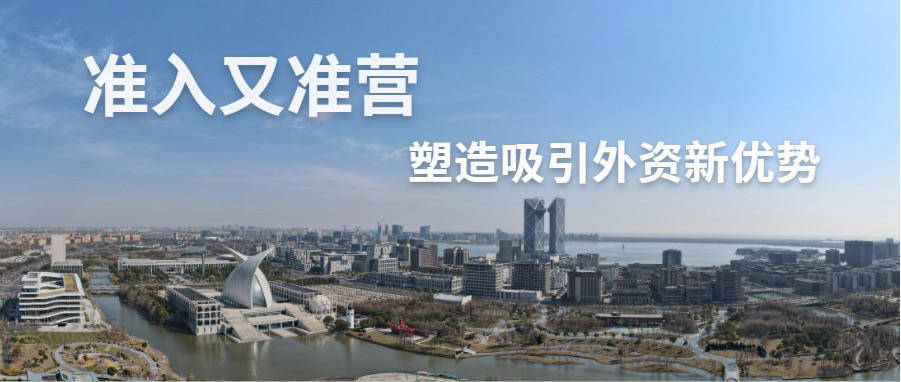
新华鲜报·规划建议新看点丨准入又准营!塑造吸引外资新优势
Xin Hua Wang· 2025-11-22 07:33
Group 1 - The core viewpoint emphasizes the importance of implementing "access and operation" to attract foreign investment, highlighting measures such as reducing the negative list for foreign investment access and promoting efficient and secure cross-border data flow [1][3]. - The article discusses the need to address specific issues in market access, such as localizing licensing and certification, ensuring compliance in cross-border data flow, and maintaining fairness in government procurement and market competition [3]. - Recent improvements in the approval process for qualified foreign investors have been noted, with the China Securities Regulatory Commission approving applications in record time, indicating a potential new norm for foreign investment entry [4]. Group 2 - There is a seamless transition from "access" to "operation" for an increasing number of foreign enterprises, with the removal of restrictions in the manufacturing sector and the expansion of pilot programs in the service industry [5]. - The article highlights the importance of shifting from a government supply-oriented approach to an enterprise demand-oriented approach, enhancing governance transparency and precision [6]. - Various localities are simplifying processes for foreign enterprises, such as business registration and work permits for foreign employees, to create a conducive environment for foreign investment [6].

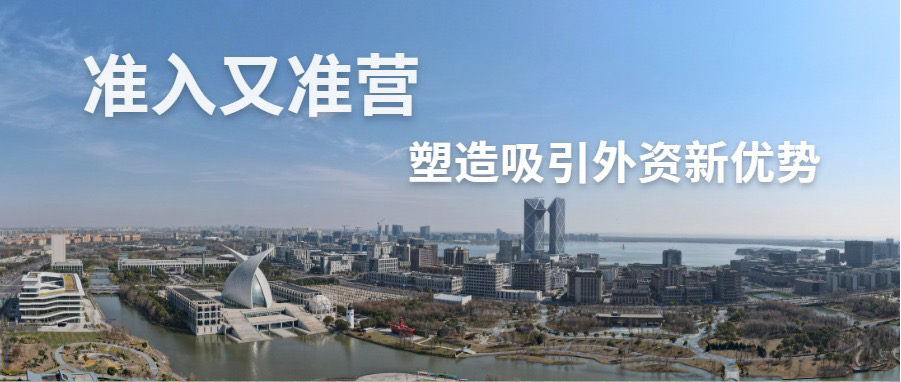
规划建议新看点丨准入又准营!塑造吸引外资新优势
Xin Hua Wang· 2025-11-22 06:01
Group 1 - The core viewpoint emphasizes the need for China to enhance foreign investment attraction by implementing measures such as reducing the negative list for foreign investment access and ensuring national treatment for foreign enterprises [1][2] - The "access and operation" concept is highlighted as crucial for addressing specific issues in market entry, such as localizing licensing and certification, ensuring compliance for data cross-border flow, and maintaining fairness in government procurement and market competition [2][3] - Recent improvements in the approval process for qualified foreign institutional investors have set a new record for efficiency, indicating a shift towards seamless integration from "access" to "operation" for foreign enterprises [3][4] Group 2 - The manufacturing sector has seen the removal of foreign investment restrictions, and there is an expansion of pilot programs in the service industry, alongside efforts to build a unified national market [3] - The focus is on enhancing intellectual property protection through continuous revisions of laws related to trademarks, patents, and unfair competition [3] - Local governments are streamlining processes for foreign enterprises, transitioning from requiring businesses to run around to enabling data and departmental collaboration, thereby simplifying registration and work permit processes for foreign employees [4]
新华鲜报·规划建议新看点|准入又准营!塑造吸引外资新优势
Sou Hu Cai Jing· 2025-11-22 06:00
Core Viewpoint - The article emphasizes the importance of implementing "access and operation" measures to attract foreign investment, highlighting the need to reduce barriers and improve the business environment for foreign enterprises in China [1][3][5]. Group 1: Policy Initiatives - The "14th Five-Year Plan" suggests reducing the negative list for foreign investment access and promoting reinvestment of foreign capital in China [1]. - The government aims to ensure national treatment for foreign enterprises and facilitate efficient, secure cross-border data flow [1][5]. - There is a focus on addressing specific issues in market access, such as local licensing and compliance for data flow, to ease the transition from "access" to "operation" for foreign businesses [3]. Group 2: Regulatory Improvements - Recent improvements in the approval process for qualified foreign investors have significantly increased efficiency, with record approval times for applications [4]. - The removal of restrictions on foreign investment in the manufacturing sector and the expansion of service industry openings are part of the ongoing reforms [5]. - The government is enhancing intellectual property protection through continuous revisions of relevant laws, which is crucial for attracting foreign investment [5]. Group 3: Operational Enhancements - The shift from a government supply-oriented approach to an enterprise demand-oriented approach is essential for improving the investment environment [6]. - Local governments are streamlining processes for foreign enterprises, including simplifying registration and work permit procedures, to facilitate smoother operations [6]. - The establishment of dedicated teams for key foreign investment projects aims to accelerate the implementation of significant foreign investments [6].
盛阅春会见出席2025武汉(汉口北)商品交易会嘉宾
Chang Jiang Ri Bao· 2025-11-20 00:34
Core Points - Wuhan is positioned as a central city in China's central region and a core city in the Yangtze River Economic Belt, focusing on high-level opening up and facilitating trade and investment [1] - The "Han Trade Fair" is highlighted as a significant platform for international economic and trade cooperation, enhancing Wuhan's attractiveness to foreign investment [2] Group 1 - The meeting welcomed guests and emphasized the importance of their support for Wuhan's economic and social development [1] - Wuhan aims to accelerate its development as a national central city and a hub for economic, technological innovation, commerce, logistics, international exchanges, and regional finance [1] - The city is committed to creating a market-oriented, law-based, and international first-class business environment for foreign enterprises [1] Group 2 - Guests expressed gratitude for the invitation to the "Han Trade Fair" and acknowledged Wuhan's vibrant development, market potential, and cultural charm [2] - The "Han Trade Fair" has served as an efficient platform for deepening international economic cooperation over the past decade [2] - There is an expectation to further deepen cooperation with Wuhan in various fields such as economy, technology, and culture [2]
高水平对外开放塑造新动能新优势
Bei Jing Ri Bao Ke Hu Duan· 2025-11-02 22:21
Core Viewpoint - The 20th Central Committee's Fourth Plenary Session outlines a grand blueprint for economic and social development during the "14th Five-Year Plan" period, emphasizing the need for high-level opening up and creating a new situation of win-win cooperation [1] Group 1: High-Level Opening Up - The "14th Five-Year Plan" period has seen historic achievements in high-level opening up, laying a solid foundation for Chinese-style modernization, with the economy growing from 103 trillion yuan in 2020 to approximately 140 trillion yuan, contributing around 30% to global economic growth [2][3] - The scale of China's goods trade has continuously surpassed 5 trillion USD and 6 trillion USD, maintaining the world's largest import and export scale for eight consecutive years, while service trade has exceeded 1 trillion USD for the first time [3] Group 2: International Cooperation - The concept of "mutual benefit and win-win" is essential for addressing global challenges such as climate change and public health, combining national interests with global common interests [2] - China's modernization approach rejects historical paths of colonial expansion, opting instead for peaceful development and open cooperation [2] Group 3: Economic Integration - The Belt and Road Initiative has significantly contributed to global connectivity and cultural exchange, enhancing China's integration with the world economy [4] - China is transitioning from a participant in the global economy to a contributor, creating new opportunities for balanced global economic recovery [4] Group 4: Future Strategies - The focus will be on expanding institutional openness, promoting trade and investment liberalization, and building a strong domestic market to enhance the quality and level of trade and investment cooperation [5][6] - The strategy includes implementing a free trade pilot zone enhancement strategy to create new high grounds for reform and opening up, optimizing regional open layouts, and promoting efficient resource allocation [7][8]
APEC“中国年”将开启 引领亚太共同体开新局
Yang Shi Xin Wen· 2025-11-02 04:38
Core Points - The core message emphasizes China's commitment to fostering an open and inclusive Asia-Pacific economy, as highlighted by President Xi Jinping during the APEC meetings [1][3][4]. Group 1: APEC Meeting Highlights - President Xi announced that China will host the 33rd APEC Leaders' Informal Meeting in Shenzhen, Guangdong, in November next year, marking China's third time as APEC host [1]. - Xi's speeches at the APEC meetings focused on building an open Asia-Pacific economy, proposing five key suggestions to enhance cooperation among member economies [3][4]. - The Asia-Pacific region accounts for one-third of the world's population and over 60% of global economic output, making it a vital growth area [3]. Group 2: Economic Cooperation and Trade - China's trade with APEC economies grew by 2% year-on-year in the first three quarters of this year, reaching 19.41 trillion yuan, which constitutes 57.8% of China's total trade [5]. - China is actively promoting regional economic integration through various trade agreements and initiatives, including the Regional Comprehensive Economic Partnership (RCEP) and the Belt and Road Initiative [7]. - Xi's remarks at the APEC meeting underscored the importance of maintaining open trade and investment, which is crucial for regional peace and development [4][8]. Group 3: Future Outlook - The upcoming APEC meeting in Shenzhen is expected to further enhance regional cooperation and development, providing new opportunities for both Asia-Pacific and global economies [8]. - China's ongoing commitment to high-level opening-up and deep reforms is anticipated to inject vitality into the Asia-Pacific region [8].
