金砖国家

Search documents
俄罗斯驻华大使:俄中树立21世纪大国睦邻友好合作典范
Bei Jing Ri Bao Ke Hu Duan· 2026-02-10 14:35
Core Viewpoint - The strategic partnership between Russia and China has developed over nearly 30 years, establishing a comprehensive cooperation framework that covers almost all possible fields, serving as a model for friendly cooperation between major powers in the 21st century [1] Group 1: Bilateral Relations - The key driver of Russia-China relations is presidential diplomacy, with recent video meetings between the two leaders setting the direction for bilateral cooperation in the coming year [1] - The current state of Russia-China relations is characterized by maturity, stability, and high political mutual trust, with regular dialogues at various levels on important international and regional issues [1] Group 2: Economic Cooperation - Russia-China economic cooperation is rapidly developing, with bilateral trade expected to exceed $200 billion by 2025, making China Russia's largest trading partner and Russia China's fifth largest [2] - Energy cooperation is progressing steadily, with the Power of Siberia gas pipeline operating at full capacity and several joint energy projects being implemented [2] - The mutual visa exemption policy, set to be implemented in 2025, has significantly increased interest among Russian citizens to travel to China, with a nearly 40% increase in the number of Russian citizens visiting China [2] Group 3: Cultural and Human Exchange - The "Year of Cultural Exchange" between Russia and China has seen over 400 activities, including artistic performances and museum exhibitions, aimed at strengthening the public foundation of bilateral relations [2] - Future plans include the "Year of Education" in 2026-2027, which aims to enhance mutual understanding and friendship between the peoples of both countries [2] Group 4: Multilateral Cooperation - Russia and China have successfully co-hosted significant multilateral events, such as the Shanghai Cooperation Organization (SCO) summit, highlighting their collaboration in regional stability and governance [4] - Both countries are committed to maintaining global stability and advocating for a multipolar world through platforms like the United Nations and BRICS [4] Group 5: Legal Framework and Future Prospects - The Treaty of Good-Neighborliness and Friendly Cooperation legally establishes principles that ensure the stability of Russia-China relations, protecting mutual interests and territorial integrity [5] - The year 2026 marks the 30th anniversary of the strategic partnership and the 25th anniversary of the treaty, serving as a significant milestone for the evolution and direction of bilateral cooperation [4][5]
印度正式启动2026年金砖峰会筹备工作
Yang Shi Xin Wen· 2026-01-13 10:22
Core Points - India officially launched the preparation for the 2026 BRICS Summit as it assumes the rotating presidency, marking a significant moment in the development of BRICS, which will celebrate its 20th anniversary in 2026 [1] - BRICS has evolved into an important platform for cooperation among emerging markets and developing economies, expanding its agenda and membership to address changing global circumstances while adhering to a people-centered development philosophy [1] - The logo for the 2026 BRICS Summit features petals in the colors of all member countries, symbolizing unity, diversity, and a strong common goal, reflecting how BRICS draws strength from the collective contributions of its members while respecting their unique identities [1]
这两场战争,美国只要输一场,中国就将在大国博弈中不战而胜!
Sou Hu Cai Jing· 2025-12-30 18:20
Group 1: Historical Context of U.S. Manufacturing - In the 1950s to early 1970s, the U.S. manufacturing sector was thriving, with factories widespread and workers earning enough to support families and buy homes [1] - The U.S. held a dominant position in global manufacturing until competition from post-war Europe, Japan, and South Korea emerged, leading to a decline in U.S. market share [3][5] - The U.S. automotive industry faced significant challenges from Japanese cars, which offered better price-performance ratios, leading to a loss of market share for American manufacturers [5] Group 2: Strategic Shifts in U.S. Industry - The U.S. shifted low-end manufacturing overseas while retaining high-end production, negotiating military protection for oil transactions with Middle Eastern countries [7] - In 1985, the U.S. pressured Japan to appreciate the yen, which led to a prolonged economic downturn in Japan while stabilizing U.S. trade positions [8] - The U.S. benefited from various global crises, including the dissolution of the Soviet Union and the 2008 financial crisis, which reinforced its economic dominance [9] Group 3: China's Rise and Global Dynamics - China's emergence as a global economic power has disrupted U.S. dominance, with the country challenging the existing order and expanding its influence through initiatives like BRICS [13][25] - The U.S. faces difficulties in revitalizing its manufacturing sector due to societal shifts towards consumerism and a reluctance to return to traditional manufacturing jobs [13] Group 4: Current Geopolitical Tensions - The ongoing conflict in Ukraine has strained U.S. resources and alliances, with NATO's support for Ukraine facing challenges as the situation remains unresolved [15][16] - The semiconductor industry is a focal point of U.S.-China tensions, with the U.S. implementing strict export controls to maintain its technological edge [18][19] Group 5: Economic Challenges and Future Outlook - The U.S. national debt has surpassed $35 trillion, projected to reach $37.3 trillion by 2025, raising concerns about fiscal sustainability and potential credit crises [21] - The rise of BRICS and the challenge to the dollar's dominance indicate a shift in global economic power dynamics, with emerging markets seeking alternatives to U.S. financial systems [24][25]


俄外长说俄中协作是全球稳定重要因素
Xin Hua She· 2025-12-11 07:43
Core Viewpoint - The diplomatic cooperation between Russia and China is highlighted as a significant factor for global stability [1] Group 1: Russia-China Relations - Russian Foreign Minister Lavrov emphasized the special significance of the comprehensive strategic partnership between Russia and China in the context of the Greater Eurasian region [1] - The mutual attendance of the leaders of Russia and China at each other's commemorative events for the victory in the World Anti-Fascist War underscores the decisive role both countries played in major historical events of the last century [1] Group 2: Global Influence - The influence of BRICS nations is noted to be increasing, reflecting the cultural and civilizational diversity of the contemporary world [1] - The operational principles of the Shanghai Cooperation Organization are similar to those of BRICS, positioning it as one of the important pillars of a multipolar world order [1]
2025“一带一路”暨金砖国家技能发展与技术创新大赛在鄂尔多斯闭幕
Zhong Guo Xin Wen Wang· 2025-12-09 09:41
Core Insights - The event "2025 Belt and Road Initiative and BRICS Countries Skills Development and Technological Innovation Competition" focused on early childhood care skills and took place in Inner Mongolia [1] - The competition lasted four days and attracted over 1,000 participants from both domestic and international backgrounds [1] - The theme of the competition was "Smart Childcare, Winning the Future," emphasizing practical skills and professional qualities in early childhood care [1] Industry Focus - The competition included four categories: vocational schools, universities, teachers, and international participants, highlighting the diverse talent pool in early childhood education [1] - It aimed to enhance the quality of early childhood care services, particularly for children under three years old, and to promote high-quality development in care standards and techniques [1] - The event served as a platform for international exchange, broadening talent selection channels and improving the quality of industry talent cultivation [1]

尼日利亚外长:尼寻求成为金砖国家正式成员
Xin Hua She· 2025-12-07 13:47
Group 1 - Nigeria's Foreign Minister, Yusuf Tuggar, expressed the country's ambition to become a formal member of the BRICS group in the coming years [1] - By 2050, Nigeria's population is projected to reach 400 million, indicating significant demographic growth and potential market expansion [1] - Nigeria aims to establish relationships with BRICS countries based on mutual benefit and cooperation [1] Group 2 - Nigeria is the most populous country in Africa and one of its most important economies [1] - In January of this year, Nigeria became the ninth BRICS partner country, highlighting its growing international engagement [1]
广州前10月进出口破万亿元
Nan Fang Ri Bao Wang Luo Ban· 2025-11-19 07:34
Group 1 - The total value of foreign trade in Guangzhou reached 1.02 trillion yuan in the first ten months of this year, marking a historical high for the same period, with a year-on-year growth of 12.1% [1] - Exports from Guangzhou amounted to 682.36 billion yuan, showing a year-on-year increase of 20.5%, leading among major foreign trade cities in the country and all 21 cities in Guangdong province [1] - Guangzhou's foreign trade has shown strong resilience and vitality, significantly supporting the overall foreign trade situation in Guangdong province despite complex external environments [1] Group 2 - Guangzhou's foreign trade with other RCEP member countries reached 292.5 billion yuan, a year-on-year increase of 11.6% [2] - Trade with the EU and ASEAN saw significant growth, with values of 182.54 billion yuan and 169.63 billion yuan respectively, reflecting year-on-year increases of 23.9% and 31.1% [2] - The number of enterprises engaged in import and export activities in Guangzhou exceeded 27,000, a year-on-year increase of 12.5%, with private enterprises accounting for 87.3% of this total [2]
马来西亚总理:愿意加入金砖,“如果明天接受我们,我们明天就加入”
Huan Qiu Wang· 2025-10-28 11:23
Core Viewpoint - Malaysia's Prime Minister Anwar expressed the country's readiness to join BRICS immediately if accepted, highlighting Malaysia's interest in becoming a formal member of the group [1][3]. Group 1: Malaysia's Interest in BRICS - Anwar stated that Malaysia is willing to join BRICS "tomorrow" if the group accepts the application [3]. - The Prime Minister's comments were made during an interview at the ASEAN summit, indicating a proactive stance towards international collaboration [3]. Group 2: Support from Other Nations - Brazilian President Lula expressed support for Malaysia's membership in BRICS during his visit to Kuala Lumpur [3]. - China's Foreign Ministry spokesperson acknowledged the importance of BRICS as a platform for emerging markets and developing countries, welcoming Malaysia's interest in joining [3].
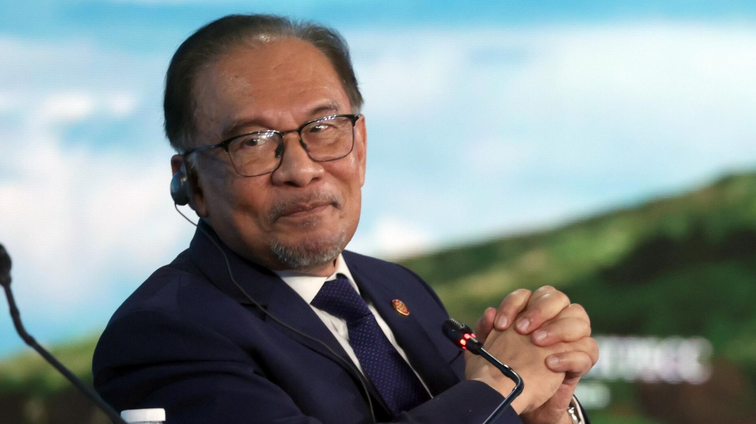
中方是否支持马来西亚加入金砖国家?外交部回应
Jing Ji Guan Cha Wang· 2025-10-28 08:16
Core Viewpoint - The Chinese government supports Malaysia's application to become a formal member of the BRICS group, emphasizing the importance of BRICS as a platform for cooperation among emerging markets and developing countries [1] Group 1 - BRICS is recognized as a significant platform for cooperation among emerging market countries and developing nations, contributing to global multipolarity and the democratization of international relations [1] - The Chinese government welcomes Malaysia and other like-minded partners to participate in BRICS cooperation, aiming to promote a more just and reasonable international order [1]
“中国在推动金砖合作机制方面发挥举足轻重的作用”
人民网-国际频道 原创稿· 2025-10-25 04:35
Core Insights - Jim O'Neill, the former chief economist of Goldman Sachs and the creator of the term "BRICs," emphasizes China's central role in the BRICS mechanism and its influence on global cooperation among emerging markets [1][2][3] Group 1: Development of BRICS - The term "BRICs" was coined in 2001, referring to Brazil, Russia, India, and China, which are expected to significantly impact the global economy [2] - By 2025, BRICS will expand to eleven member countries and ten partner countries, exemplifying cooperation among emerging markets and developing nations [2] - O'Neill highlights that China is the "anchor" of BRICS cooperation, playing a crucial role in fostering collaboration among member states [2] Group 2: China's Economic Influence - O'Neill predicts that China's economic size may match that of the United States within the next decade, positioning China as a de facto leader among global South countries [2] - He notes that while China focuses on its domestic affairs, it advocates for greater representation and influence for global South nations on the international stage [2] Group 3: Currency and Economic Trends - The international status of the renminbi is rising, with an increasing proportion of emerging economies using it [3] - The rapid increase in gold prices reflects a declining trend in the dominance of the US dollar, although the dollar's position is not ending [3] - O'Neill attributes the weakening of the US economy to isolationist tariff policies, which also create opportunities for BRICS countries to expand their influence [3] Group 4: Political Implications - O'Neill acknowledges that the economic power shift has led to significant changes in the 21st-century political landscape, with China playing a vital role in this transformation [3] - He asserts that economic dynamics are driving political changes, positioning China at the center of this narrative [3]