MCP

Search documents
X @Phantom
Phantom· 2026-02-17 21:06
Introducing the Phantom MCP Server 🦞Agents can swap, sign, and manage addresses across all of Phantom's supported chains.Ready to work with Claude, OpenClaw, or any MCP-compatible client. https://t.co/h8DyxS6ROO ...
20cm速递|MCP概念股强势表现!创业板50ETF华夏(159367)上涨0.74%
Xin Lang Cai Jing· 2026-01-29 03:18
Core Viewpoint - MCP concept stocks showed strong performance, with notable increases in various companies following the launch of MCP's first UI extension, "MCPApps," which enhances AI tool integration into interactive interfaces [1] Group 1: MCP Applications and Market Impact - The launch of "MCPApps" allows AI tools to embed dashboards, forms, and charts directly into conversations, moving beyond text-only interactions to a more visual and operational multi-modal workflow [1] - According to Zhongyin Securities, the expansion of MCP application scenarios is expected to improve the development efficiency of AI agents and accelerate their commercialization [1] - The "plug-and-play" feature of MCP is anticipated to significantly enhance the development efficiency of AI agents, facilitating faster commercialization [1] Group 2: Market Performance and Index Characteristics - The ChiNext 50 ETF (159367) rose by 0.74%, with significant gains in stocks such as BlueFocus (+17%), Kunlun Wanwei (+10%), and Wangsu Science & Technology (+9%) [1] - The ChiNext 50 Index focuses on sectors like information technology, new energy, fintech, and pharmaceuticals, primarily consisting of leading technology companies in fields such as optical modules, chips, new energy batteries, and innovative drugs [1] - These sectors align with national policy directions and global technological development trends, showcasing high growth potential and innovation, which are core competitive advantages of the ChiNext 50 Index [1] Group 3: ETF Advantages - The ChiNext 50 ETF (159367) has two main advantages: a 20% price fluctuation limit, providing stronger trading flexibility compared to traditional broad-based indices, and low management fees of 0.15% and custody fees of 0.05%, which effectively reduce investment costs [1]

2026 年的「创业」,就从一个 Skill 开始吧
Founder Park· 2026-01-23 13:31
Core Insights - The article highlights the rising popularity of the Skill concept, which has quickly surpassed other concepts like Agent and MCP, becoming a key feature supported by various products [2] - Skill aims to package expert work SOPs into reusable resource bundles that are easy to share and implement, requiring no coding or complex workflows, thus enabling anyone with a reusable SOP to create their own Skill [3] Group 1: Skill Development and Opportunities - The rapid expansion of the Skill ecosystem is attributed to its simplicity and effectiveness in delivering results, making it accessible for everyone to become a creator [3] - Founder Park, in collaboration with Kouzi, is hosting a Skill recruitment competition to encourage sharing of best SOP practices, promoting the idea of skills as a fluid exchange resource [5] - The competition includes two tracks: Workplace and Marketing, focusing on creating practical Skills that enhance efficiency and reduce workload for professionals [7][10] Group 2: Skill Application Areas - The Workplace track seeks Skills that can transform daily work methodologies and complex processes into reusable capabilities, improving workflow experiences for professionals [7] - The Marketing track aims to develop Skills that enhance the entire content creation and marketing process, ensuring they are adaptable to changes in the content ecosystem [10] - The Financial Analysis track focuses on creating Skills that meet core needs for consistency, auditability, and strong decision support, ensuring compliance and traceability in financial data analysis [11] Group 3: Competition Details and Rewards - Selected Skills will be featured in the Kouzi Skill Store and will receive traffic support to enhance visibility among users [17] - Developers of qualifying Skills will have the opportunity to monetize their creations, with additional rewards such as gift cards for selected entries in the competition [19] - The competition timeline includes a submission period from now until February 9, 2024, with results announced on February 14, 2024 [23]


Skills 即个人资产
3 6 Ke· 2026-01-20 10:49
Core Insights - The concept of "skills" in the AI context has evolved to represent "operational manuals" and "capability plugins" for AI systems, allowing users to streamline repetitive tasks and enhance efficiency [1][7][20] Group 1: Skills and Their Implementation - Skills are unique tools that encapsulate individual needs, enabling users to automate tasks such as writing and data processing [3][4] - Users can create specialized skills by packaging their expertise into AI systems, which can then execute tasks with minimal input [6][12] - The process of "atomizing" core skills into reusable skill packages allows for significant time savings and efficiency gains [7][13] Group 2: Key Components for AI Efficiency - Three essential components for building a digital workforce in 2026 are MCP (Managed Control Protocol), Skills, and Subagents [8][11] - MCP provides AI with access to local data, while Skills define the professional standards and instructions for task execution [9][10] - Subagents enable AI to manage complex tasks by breaking them down into smaller, independent tasks, improving overall workflow management [11][12] Group 3: Market Trends and Future Outlook - The AI agent market is projected to reach $4.71 billion by 2030, with skills packages expected to capture 15% to 20% of this market, indicating rapid growth in this sector [22] - Major tech companies are developing standardized skills to create a competitive advantage, akin to the evolution of USB interfaces [20][21] - The future of AI tools is moving towards "intention-driven" operations, where users can express vague ideas, and the system automatically selects the most appropriate skills to execute tasks [23][24]
Identity for AI Agents - Patrick Riley & Carlos Galan, Auth0
AI Engineer· 2026-01-14 15:03
[music] We're talking today about identity for AI agents and how we authorize uh agents, MCP servers and uh the Um, we launched a new product uh actually this week. So, uh, that made this presentation fun. [laughter] Uh, had a major release just a few days ago um, for several of these features and ging these.Um, um, additionally, I should probably preface by saying a lot of this workshop material has been repurposed and um, our our architect uh, Abbyek, he goes by nicknames Shrek. um kind of prepared a lot ...

一文带你看懂,火爆全网的Skills到底是个啥。
数字生命卡兹克· 2026-01-13 01:05
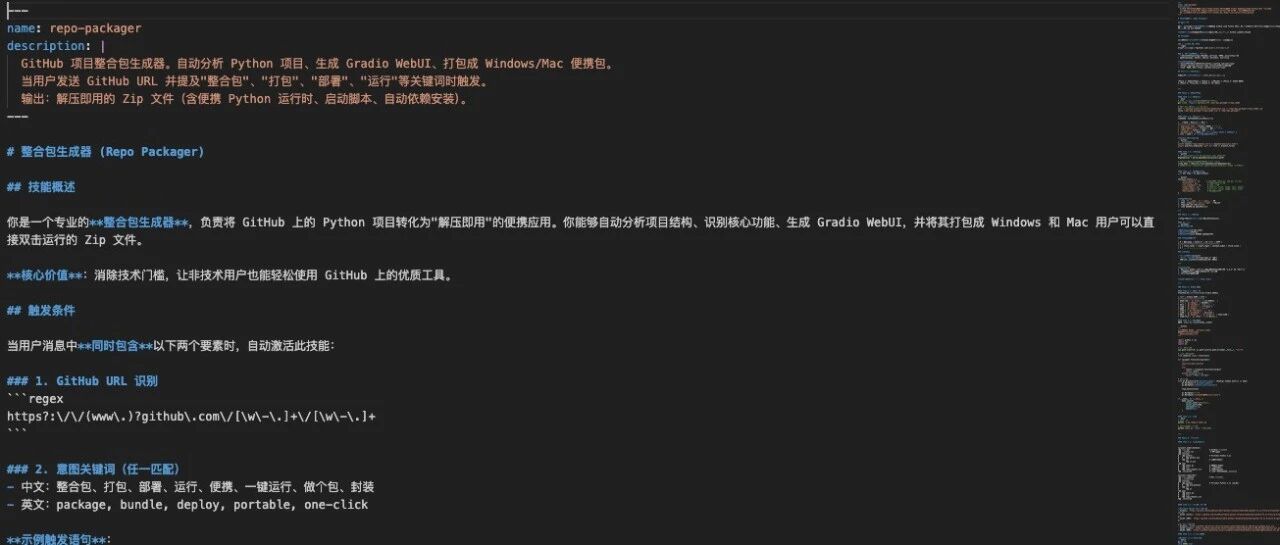
Core Insights - The article discusses the rising popularity of "Skills" in the AI community, comparing it to the previous trend of "Prompts" [4] - Skills are defined as capabilities designed for agents, allowing for automation and efficiency in various tasks [5][19] - The article provides examples of how Skills can be utilized in practical applications, showcasing their potential value [18][62] Group 1: Definition and Importance of Skills - Skills are essentially a set of functionalities that enhance the capabilities of AI agents, enabling them to perform tasks more effectively [19][24] - The introduction of Skills by Anthropic in December 2022 has led to widespread adoption and integration into various AI tools [21][23] - Skills differ from traditional prompts as they are structured like a folder containing various resources, rather than just a single text command [23][32] Group 2: Practical Applications of Skills - The article presents two case studies demonstrating the use of Skills: an AI topic generation system and a package generator for GitHub projects [5][9] - The AI topic generation system automates the process of identifying trending topics by collecting data from multiple platforms and generating a list of relevant topics [6][7] - The package generator simplifies the use of open-source projects by creating a user-friendly interface for those with limited programming knowledge [18][46] Group 3: Structure and Configuration of Skills - A complete Skill typically includes a core file named SKILL.md, which contains essential information and instructions for the AI agent [37][38] - The structure of SKILL.md is crucial, as it defines how the agent will utilize the Skill, including a YAML header and detailed instructions [38][39] - The article emphasizes the importance of clear and concise descriptions in the SKILL.md file to ensure effective communication with the AI agent [39][40] Group 4: Installation and Usage of Skills - Skills can be installed easily through command prompts or by dragging the Skills folder into the appropriate local directory [48][54] - Once installed, Skills can be activated and utilized by the AI agent to perform specific tasks based on user commands [57][58] - The article encourages users to start creating their own Skills to enhance productivity and streamline workflows [62]
Getting started with Codex
OpenAI· 2026-01-12 16:11
Hi, welcome to today's getting started with codec session. I'm Derek >> and I'm Charlie >> and we work with customers to help them get onboarded to Codeex. It's a really exciting time in the AI coding space and it's quickly changing how developers work.So, Codeex is OpenAI's coding agent that developers can use across different surfaces. And we've seen firsthand how developers are delegating routine and time consuming tasks to codeex and spending more time on complex and novel challenges like design and arc ...

豆包手机助手调整权限!AI手机是洪水,但不是猛兽?
3 6 Ke· 2025-12-06 04:21
Core Viewpoint - The emergence of AI Agents, such as Doubao's mobile assistant, is causing significant disruption in the mobile internet ecosystem, raising concerns among internet companies about security and operational integrity [1][3][11] Group 1: AI Agent Functionality and Impact - Doubao's mobile assistant has faced backlash due to its AI capabilities, which require user authorization for operations, leading to restrictions on certain financial apps [1][3] - The GUI-Agent technology aims to streamline user interactions by automating tasks, but it challenges the traditional app entry logic, potentially disrupting existing traffic and monetization strategies [3][4] - The ability of AI Agents to perform tasks without user interaction could lead to a breakdown of the app ecosystem, as users may not engage with advertisements or app interfaces [4][11] Group 2: Fairness and Regulation Concerns - The automated nature of AI Agents raises fairness issues, particularly in competitive environments like gaming, where it could disrupt balance and integrity [5][11] - Internet companies are cautious about AI Agents due to existing risk management systems that do not account for AI-driven task completion, leading to a "rules vacuum" [11][16] Group 3: Future of AI Agents and Internet Services - The relationship between AI Agents and apps is expected to evolve, with potential new frameworks for collaboration, including digital signatures and whitelisting for AI operations [16][19] - As AI technology matures, the interaction model will shift, with users providing direction while AI Agents execute tasks, creating a collaborative structure rather than a competitive one [19][20] - The ongoing "smart assistant war" is anticipated to simplify mobile operations, ultimately transforming how users interact with their devices [20]

Gartner:AI大模型触达天花板,警惕“贴牌智能体”
2 1 Shi Ji Jing Ji Bao Dao· 2025-11-10 14:35
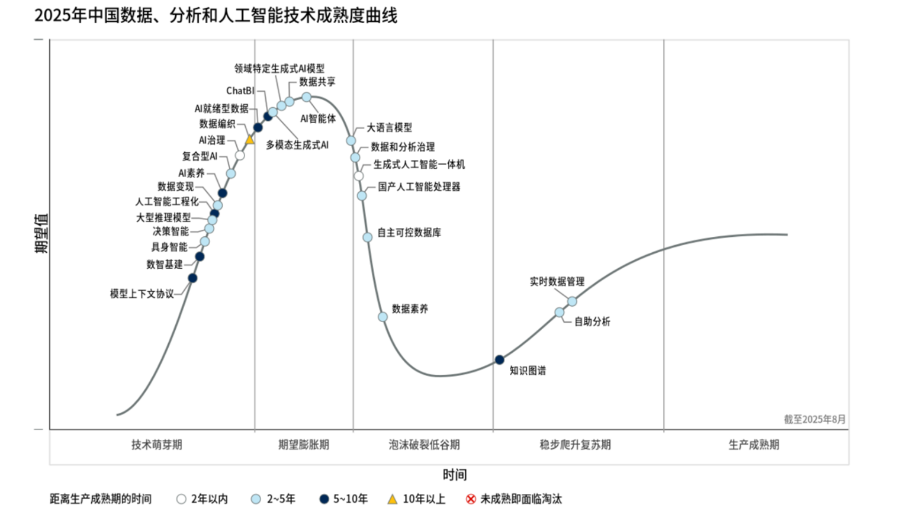
Core Insights - The AI market in China is transitioning from a hype phase to a more rational phase following the "hundred model battle," with generative AI and agent-based AI being the two main themes shaping the current trends [2][4]. Market Trends - The report by Gartner indicates that the previously dominant large language models (LLMs) have peaked and are now entering a phase of declining interest, moving towards a "bubble burst" low point [2]. - By 2027, companies in China that prioritize AI-ready data over generative AI model development are expected to achieve business value that is twice that of their peers [4]. Technology Development - The market response to GPT-5 has been lukewarm, indicating a critical turning point in the development of large language models, as their capabilities appear to have reached a ceiling [5]. - The competition among AI models has intensified, with domestic models like DeepSeek and Qianwen entering the first tier, but the performance differences among top models are minimal [5]. Future Directions - Gartner emphasizes that future AI systems will require a combination of various technologies rather than relying solely on large language models [6]. - The deployment of generative AI in production environments is expected to surge from 8% in 2024 to 40% in 2025, with current estimates suggesting it may have already reached 60% to 70% [6]. Challenges in Traditional Enterprises - Traditional enterprises face significant challenges in AI application, particularly in digital transformation, which can take years to implement [7]. - Internet and high-tech companies are likely to progress faster due to better system architecture and data management practices [7]. Industry Phenomena - There is a prevalent issue of "Agent Washing," where many products falsely claim to be AI agents while remaining basic chatbots [8]. - The evolution of AI agents has gone through three stages: chatbots, assistants, and now AI agents, with many current products still not qualifying as true AI agents [8]. Evaluation Criteria - According to Gartner, true AI agents must possess three key elements: perception of the world, autonomous decision-making, and execution of actions [9]. - Many so-called AI agents still rely on fixed workflows for reliability, indicating a lack of true intelligence [9].
一篇论文,读懂上下文工程的前世今生
3 6 Ke· 2025-11-07 07:11
Core Concept - The article discusses the emerging field of "context engineering," defined as the art and science of providing the right information to prepare for subsequent reasoning, as proposed by Shopify CEO Tobi Lütke and AI expert Andrej Karpathy [1][3]. Summary by Sections What is Context Engineering? - Context engineering addresses the cognitive gap between humans and machines, where human communication is high-entropy and often ambiguous, while machines require low-entropy, clear instructions [3][14]. - The essence of context engineering is to reduce entropy through richer and more effective context, enabling better machine understanding of human intent [3][4]. Evolution of Context Engineering - Context engineering has evolved from a focus on translation (1.0 era, 1990s-2020) to a focus on instruction (2.0 era, 2020-present), with the introduction of large language models allowing for more natural interactions [5][11]. - The transition from context engineering 1.0 to 2.0 reflects a shift in how users interact with machines, moving from structured programming languages to natural language prompts [12][13]. AI Communication Gaps - The article identifies four main deficiencies in AI that contribute to the communication gap: limited sensory perception, restricted understanding capabilities, lack of memory, and scattered attention [14][15]. - These deficiencies necessitate the development of context engineering to facilitate better communication and understanding between humans and AI [15][16]. Framework of Context Engineering - A comprehensive context engineering framework consists of three components: context collection, context management, and context usage [16][24]. - Context collection involves multi-modal and distributed methods to gather information beyond simple text inputs, addressing AI's sensory and memory limitations [18][20]. - Context management focuses on abstracting and structuring high-entropy information into low-entropy formats that AI can understand, enhancing its learning capabilities [23][24]. - Context usage aims to improve AI's attention mechanisms, ensuring relevant information is prioritized during interactions [25][26]. Future of Context Engineering - The article anticipates the evolution of context engineering into 3.0 and 4.0 stages, where AI will achieve human-level and eventually superhuman intelligence, leading to seamless communication without the need for explicit context [30][34]. - Ultimately, the goal of context engineering is to become an invisible infrastructure that enhances AI usability without being a focal point of discussion [35].