
乡村振兴战略

Search documents
一个“公式”精算保洁难度系数
Su Zhou Ri Bao· 2025-07-05 00:30
Core Insights - The article discusses the implementation of a quantitative model to optimize rural living environment management in Wujiang District, which has led to a reduction in management costs and improved resource allocation [1][2] Group 1: Background and Context - Rural living environment improvement is a key component of the rural revitalization strategy, involving various management tasks such as waste clearance and ecological maintenance [1] - Wujiang District is part of the Yangtze River Delta Ecological Green Integrated Development Demonstration Zone, with 186 administrative villages included in the rural environment improvement initiative [1] Group 2: Implementation of the Quantitative Model - A comprehensive coefficient formula was developed using big data to assess the difficulty of cleaning tasks, incorporating seven core factors such as village number, area, household count, and cleaning personnel metrics [1][2] - The model allows for precise identification of high-difficulty areas, aiding in the scientific allocation of cleaning personnel and optimization of maintenance funding [2] Group 3: Results and Impact - Significant cost reductions were observed in various towns; for instance, Qidou Town's management costs decreased from 21.32% to 17.85% of operating income, while Taoyuan Town saw a drop from 28.20% to 19.59% [2] - By the end of 2025, it is projected that the overall improvement costs in the district could be reduced by 26.03 million yuan [2] - The difficulty coefficient assessment facilitates the identification of challenges, enabling better policy formulation and cost reduction strategies [2]
小麦大规模机收需金融机构细致化支持
Zheng Quan Ri Bao· 2025-06-30 05:32
Group 1 - The core viewpoint emphasizes the collaboration of agricultural technology and financial support as dual engines driving efficient agricultural production, particularly in the large-scale mechanized harvesting of wheat [1][2] - The mechanization level of wheat harvesting in China is high, with most areas achieving mechanized harvesting, relying on combine harvesters as the main force [1] - Financial products such as "Agricultural Machinery Loans" and "Summer Harvest Quick Loans" are being innovatively introduced by banks to meet the short, frequent, and urgent funding needs of large-scale wheat harvesting [1][2] Group 2 - The efficient operation of large-scale wheat harvesting depends on the collaboration across the entire industry chain, including research, production, circulation, and services [2] - Banks are encouraged to adopt an industry chain financial approach, providing operational loans to agricultural machinery manufacturers and financing solutions for supporting services like machinery repair and fuel supply [2] - A risk protection mechanism for large-scale wheat harvesting is necessary, with banks collaborating with insurance companies to develop products that combine agricultural machinery operation insurance with credit [2] Group 3 - The transition from traditional farming to smart farming is being facilitated by innovative financial services, which aim to lower the barriers to agricultural machinery usage and promote mechanization [2][3] - Financial institutions are expected to deepen scenario-based services and strengthen ecological layouts to ensure that every loan contributes to a vibrant modern agricultural landscape [3]
果洛州组织企业参加2025外贸优品市州行暨东西部协作沪青优品品牌化研讨会
Sou Hu Cai Jing· 2025-06-29 11:11
Group 1 - The core objective of the meeting was to promote the brand development of local agricultural and livestock products and expand sales channels as part of the rural revitalization strategy [1][5] - The event featured key speakers from various organizations, including Shanghai Consumption Assistance Alliance and major retail groups, who shared insights on market trends and branding strategies for agricultural products [3][5] - Participants recognized the importance of brand building as a pathway to enhance product competitiveness and achieve high-quality development [5][8] Group 2 - The local industrial and commercial bureau emphasized the significance of the seminar as a platform for enhancing brand awareness and connecting with quality resources [5][7] - Future initiatives will focus on cultivating brands for unique products such as yak beef and highland dairy products, utilizing unified standards and marketing strategies to improve market competitiveness [7][8] - A framework agreement was signed between Qinghai Gesanghua Yak Milk Technology Development Co., Ltd. and Shanghai Caiyang Food Co., Ltd. to strengthen collaboration in product development and packaging [10]

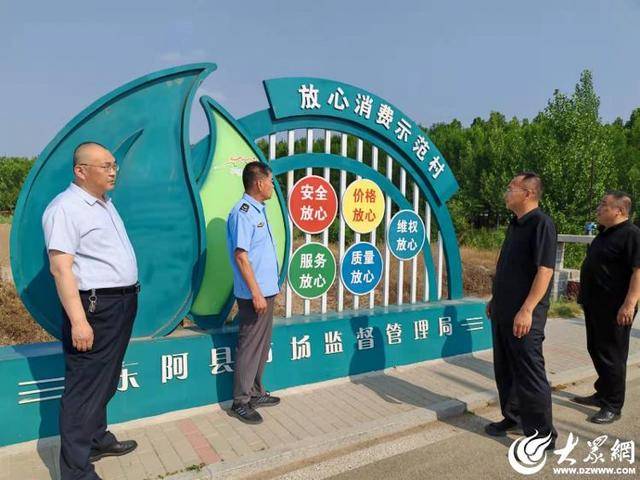
聊城市市场监管局深入开展放心消费进乡村行动
Sou Hu Cai Jing· 2025-06-24 06:01
Core Viewpoint - The initiative "Safe Consumption in Rural Areas" aims to enhance the rural consumption environment, promote quality improvement of local agricultural products, and support rural revitalization strategies [1][3]. Group 1: Action Plans and Goals - The "Three-Year Action Plan for Safe Consumption in Rural Areas" has been issued to ensure that farmers feel a greater sense of gain, happiness, and security in their consumption [3]. - A total of 44 rural areas have been identified to participate in the "Safe Consumption in Rural Areas" initiative, focusing on responsibilities related to safety, quality, measurement, pricing, service, and rights protection [3]. Group 2: Promotion and Awareness - Various channels and methods will be used to promote consumer rights protection laws and enhance rural consumers' self-protection and rights awareness [5]. - The market regulatory bureau plans to continue the "Safe Consumption in Rural Areas" initiative and establish a long-term mechanism for consumer rights protection in rural areas [5].
县域农村消费市场潜力无限值得深耕
Xiao Fei Ri Bao Wang· 2025-06-24 02:57
Core Insights - The recent "618" data from JD.com indicates a significant shift in consumer trends, particularly highlighting the robust consumption vitality in lower-tier markets, with order volume and user numbers in rural areas growing by over 130% and 140% year-on-year respectively [1][2] Group 1: Market Dynamics - The county-level rural areas have become a market with immense consumption potential, driven by a large population base and increasing demand for a variety of products, from daily necessities to higher-quality appliances and digital products [1][2] - The implementation of the rural revitalization strategy has led to substantial changes in rural consumption capabilities, with consumers now seeking quality, brand, and personalization rather than just low-priced goods [2][3] Group 2: E-commerce and Logistics - A significant challenge for rural e-commerce has been the limitations in online shopping due to logistics and delivery issues, particularly the "last mile" problem [2] - Recent efforts by courier platforms to expand rural logistics networks, including the establishment of logistics distribution centers and service points, have greatly enhanced the delivery capabilities, allowing consumers to enjoy a seamless online shopping experience [2][3] Group 3: Business Opportunities - Companies should shift their focus from saturated urban markets to the emerging opportunities in county-level rural areas, which are characterized by unique consumer needs [3] - By developing products and services tailored to rural consumers and improving logistics and after-sales services, businesses can tap into the promising potential of the rural consumption market [3]
培育新型农业人才 赋能农业新质生产力
Xin Hua Ri Bao· 2025-06-19 22:22
Group 1 - The modernization of agriculture and rural areas in China is heavily reliant on technological advancements and talent development, particularly new agricultural talents with innovative thinking and digital literacy [1][2] - New agricultural talents are essential for accelerating the formation of new productive forces in agriculture, which is crucial for the rural revitalization strategy emphasized by the 19th National Congress of the Communist Party of China [2][3] - The integration of digital technologies such as artificial intelligence and the Internet of Things is transforming traditional agricultural practices, necessitating the cultivation of talents who can effectively utilize these technologies [2][3] Group 2 - The development of new productive forces in agriculture is an inherent requirement for agricultural modernization, and educational institutions must adapt to meet these needs [3][4] - The cultivation of new agricultural talents should focus on interdisciplinary approaches, integrating various fields to address key technological challenges in agriculture [4][5] - A collaborative education model involving universities, local governments, and industries is essential for enhancing the quality of new agricultural talent training [5]
守正创新提升巡察监督质效
Zhong Yang Ji Wei Guo Jia Jian Wei Wang Zhan· 2025-06-19 00:57
Group 1 - The essence of inspections is political supervision, emphasizing the need to deepen political inspections with "two safeguards" as the fundamental direction [1] - Inspections should focus on the implementation of important speeches and directives from Xi Jinping, particularly in relation to significant governance issues in specific regions [2][3] - The approach to inspections should be systematic and precise, utilizing various methods to enhance the effectiveness and accuracy of supervision [3] Group 2 - There is a strong emphasis on integrating supervision, rectification, and governance to enhance the effectiveness of inspections [4] - The responsibility for rectification lies with the inspected party organizations, and there is a focus on tracking and evaluating the rectification process [4] - The development of a talent pool for inspection work is crucial, with an emphasis on training and professional development for personnel involved in inspections [5]
姚明:我希望体育老师也值得学生惦记
Zhong Guo Xin Wen Wang· 2025-06-13 01:11
Core Viewpoint - The initiative "Hope Basketball Path" aims to enhance the professional skills and qualities of rural sports teachers, emphasizing the importance of sports education in rural areas and its role in youth development [1][2] Group 1: Program Overview - The "Hope Basketball Path" program is a collaboration between the NBA and the Yao Foundation, focusing on improving basketball teaching skills and professional qualities of sports teachers from rural schools across 15 provinces [1][2] - The program features a dual-track training approach combining "training + teaching support," integrating NBA resources with local philanthropic experience to create a closed-loop ecosystem for rural sports education [1][2] Group 2: Training Content - The training curriculum includes two main modules: "basketball professional skills" and "teacher professional qualities," featuring lectures aligned with national sports education development and practical NBA courses [1][2] - Activities include theoretical and practical training, NBA-style courses, physical training, rehabilitation training, and immersive viewing experiences like the "NBA Wonder Light Show" [1][2] Group 3: Impact and Future Directions - The program has conducted training in 16 provinces and organized nine expert outreach activities, with some coaches obtaining the China Basketball Association E-level coaching certification [2] - Yao Ming emphasizes the need for a multi-dimensional support system for sustainable development in rural sports education, which includes policy support, resource injection, and social attention [2]
深化信用体系建设 践行乡村振兴战略
Xin Hua Ri Bao· 2025-06-13 00:15
Core Viewpoint - The company emphasizes the importance of building a credit system to support rural revitalization and promote inclusive finance, focusing on enhancing financial services for the real economy [1]. Group 1: Credit System Construction - Since 2022, the company has developed targeted credit products like "Grain Farmer Loan" and "Crab Farmer Connection" to support food security and key rural industries [2]. - In 2024, the company plans to enhance the coverage and adaptability of rural inclusive finance by collaborating with local government agencies to build an industry credit system based on credit information from upstream and downstream enterprises [2]. Group 2: Innovation in Financial Products - The company has created over ten multi-dimensional credit scoring models for agricultural entities, facilitating precise credit assessments based on various operational and credit conditions [3]. - New financial products such as "Xingnong E-loan" and "Xingnong Industry Loan" have been introduced to address the needs of modern agricultural operators and ensure financial support for farmers [3]. Group 3: Policy Support for Agriculture - The company employs various monetary policy tools to increase and reduce the cost of inclusive loans for agriculture, addressing the uncertainties in the agricultural sector [4]. - Collaborative efforts with local governments and insurance companies have led to risk-sharing mechanisms that significantly lower financing costs for agricultural entities [4]. - The company is committed to long-term efforts in building a robust credit system to contribute to rural revitalization and agricultural modernization [4].
精准发力拓宽农民增收渠道
Jing Ji Ri Bao· 2025-06-11 22:13
Core Viewpoint - The article emphasizes the importance of increasing farmers' income as a key task in the new era, which is essential for implementing the rural revitalization strategy and promoting comprehensive rural development [1] Group 1: Income Sources and Growth - Farmers' income consists of operational income, wage income, property income, and transfer income, with operational and wage incomes being the primary sources [2] - In 2024, the per capita disposable income of rural residents is projected to reach 23,119 yuan, with wage income accounting for 42.39%, operational income for 33.93%, transfer income for 21.17%, and property income for 2.51% [2] - The per capita disposable income of rural residents is expected to grow by 6.3% year-on-year in 2024, with rural income growth outpacing urban income growth [3] Group 2: Challenges in Income Growth - Challenges include low agricultural production efficiency, particularly in grain production, and a lack of diversification in rural industries [3] - The income gap among rural residents in different regions is gradually narrowing, but issues such as low employment quality and insufficient vocational training hinder wage income growth [3] Group 3: Strategies for Increasing Income - A long-term mechanism to promote farmers' income growth is needed, focusing on stabilizing operational and wage income while enhancing property and transfer incomes [4] - Development of modern agriculture is crucial, including optimizing rural industrial layout and integrating primary, secondary, and tertiary industries [4] - Enhancing farmers' employment and entrepreneurial capabilities through vocational education and support for new agricultural business entities is essential [5] Group 4: Land and Policy Reforms - Addressing the relationship between farmers and land is vital, requiring deeper reforms in land systems to grant farmers more property rights [5] - Implementation of strong agricultural support policies is necessary, including a comprehensive subsidy system and risk management mechanisms for farmers [6][7]