全球贸易

Search documents
加总理表示将加强全球贸易应对美关税威胁
news flash· 2025-07-11 07:47
加拿大总理卡尼10日晚对美国总统特朗普新的关税威胁作出回应,表示将加强与世界各地贸易伙伴的关 系,以应对美方关税威胁。 ...
一银行行长任职资格获批;英皇欠下166亿港元巨债;一项手术被叫停;部分航线登机只需提前15分钟
Jin Rong Jie· 2025-07-09 23:55
Group 1 - Emperor International has incurred a significant debt of HKD 16.6 billion, with loans now overdue [1] - The company reported a substantial loss exceeding HKD 4 billion last year [1] - Emperor International operates across multiple sectors including entertainment, real estate, jewelry, finance, and hospitality, with seven listed companies on the Hong Kong Stock Exchange [1] Group 2 - China's average economic growth rate from 2021 to 2024 is projected to reach 5.5% [2] - The National Development and Reform Commission anticipates that China's economic increment over five years will exceed CNY 35 trillion, contributing around 30% to global economic growth annually [2] - In June, the Consumer Price Index (CPI) rose by 0.1% year-on-year, reversing a previous decline [2] Group 3 - The Chinese automotive market saw retail sales of 10.9 million passenger vehicles in the first half of the year, marking a year-on-year increase of 10.8% [4] - New energy vehicles accounted for 5.468 million units sold, driving significant growth in the market [4] Group 4 - The National Development Bank signed a CNY 2.1 billion loan agreement with the Southern African Development Bank to support infrastructure and other projects in Africa [6] - Several banks have reduced their operating loan interest rates to 3% or below, focusing on small and micro enterprises [7]
警惕全球贸易“逆风”!两大国际机构发声
Zheng Quan Shi Bao· 2025-07-09 10:34
Group 1 - The World Trade Organization (WTO) has revised its global trade outlook from "expansion" to "downward adjustment" due to increasing trade policy activities and geopolitical tensions among major trading partners [1][3] - The WTO report indicates that global trade uncertainty is rising, influenced by regional conflicts and geopolitical tensions, leading to increased volatility and unpredictability in the global trade environment [1][2] - The United Nations Conference on Trade and Development (UNCTAD) reported that while global trade is expected to grow by $300 billion in the first half of the year, it will face significant headwinds in the second half due to U.S. trade policy uncertainties and global geopolitical tensions [1][4] Group 2 - The WTO calls for countries to reduce tariffs and other trade barriers to promote trade liberalization and economic growth, emphasizing the need for transparency in trade policies [2][5] - The WTO's previous forecast in April predicted a 0.2% decline in global goods trade by 2025, with a 2.5% growth expected in 2026, but this outlook has been revised downward due to U.S. tariff policies [2][3] - The global goods trade barometer showed a rise in the index from 102.8 to 103.5, but a decline in new export orders indicates a potential slowdown in trade growth later this year [4][5]
警惕全球贸易“逆风”!两大国际机构发声
证券时报· 2025-07-09 10:29
Core Viewpoint - The World Trade Organization (WTO) has revised its global trade outlook from an expected expansion to a downward adjustment due to increasing trade tensions and geopolitical uncertainties [1][4]. Group 1: Global Trade Assessment - The WTO's latest report indicates a rise in global trade policy activities, with escalating tensions among major trading partners contributing to increased trade uncertainty [1]. - The United Nations Conference on Trade and Development (UNCTAD) forecasts a $300 billion increase in global trade for the first half of the year, but warns of significant obstacles in the second half due to U.S. trade policy uncertainties and geopolitical tensions [1][7]. Group 2: Trade Policy and Measures - Since the beginning of the year, the U.S. has implemented various bilateral and global trade measures, prompting some economies to introduce trade facilitation measures while others have announced retaliatory measures, primarily involving tariff increases [3]. - The WTO calls for countries to reduce tariffs and other trade barriers to promote trade liberalization and economic growth, emphasizing the need for transparency in trade policies [3]. Group 3: Trade Volume Predictions - The WTO's earlier predictions for global trade growth in 2025 and 2026 have been significantly downgraded due to U.S. tariff policies, with expectations for a 0.2% decline in goods trade and a slower growth outlook for services trade [4]. - The WTO's Goods Trade Barometer shows a rise in the global goods trade index from 102.8 to 103.5, but a decline in new export orders indicates a potential slowdown in trade growth later this year [6]. Group 4: Trade Imbalances and Risks - The UNCTAD report highlights a worsening trade imbalance, with the U.S. trade deficit continuing to expand over the past four quarters, raising concerns about the fragmentation risks associated with recent U.S. tariff measures [7]. - The report warns that if U.S. "reciprocal tariffs" are fully implemented or if trade policy uncertainty spreads globally, a contraction in trade could occur [7].


宏观视角:关税再起风波,影响与展望
HTSC· 2025-07-09 09:35
Group 1: Tariff Changes and Impacts - The U.S. has issued tariff notices to 14 countries, affecting approximately 14.2% of U.S. imports, with tariff rates ranging from 25% to 40%[6] - The weighted average tariff level in the U.S. is expected to rise by 5-6 percentage points to around 15-16%, the highest since 1940[5][21] - The tariffs on 15 countries could further increase the effective tariff level by 2-2.5 percentage points, raising the average to approximately 9-10%[7][8] Group 2: Specific Country Tariffs - Japan and South Korea will face tariffs of 25% and 25% respectively, while Vietnam's tariff has been reduced from 46% to 20%[12] - The countries affected by the tariff notices include major Asian economies and some African and Eastern European nations, collectively accounting for 18.4% of U.S. imports in 2024[15] - The tariffs on specific goods from the 232 investigation, such as copper and semiconductors, are likely to be set at 25% and could be finalized by August 2025[16] Group 3: Future Trade Outlook - Global trade growth may significantly decline after July 9, 2025, due to the impact of these tariffs[11] - The potential for additional countries, particularly in Europe, to receive tariff notices remains high, indicating a broader trade conflict[11] - The uncertainty surrounding the tariffs on fentanyl and reciprocal tariffs may lead to further adjustments in trade policies[11]
印尼经济部发言人:与美国之间的讨论仍在进行中,我们将强调印尼是全球贸易的战略性国家。
news flash· 2025-07-09 06:50
印尼经济部发言人:与美国之间的讨论仍在进行中,我们将强调印尼是全球贸易的战略性国家。 ...
贸发会议报告:今年下半年全球贸易或将遭遇更大“逆风”
news flash· 2025-07-09 00:43
Core Insights - The United Nations Conference on Trade and Development (UNCTAD) reported that global trade is expected to grow by $300 billion in the first half of the year, but faces increasing resistance in the second half due to uncertainties in U.S. trade policies and global geopolitical tensions [1] Trade Growth Analysis - Global trade grew approximately 1.5% in the first quarter, with an expected growth of 2% in the second quarter [1] - Price increases are the main driver of the growth in global trade value, while trade volume only increased by 1% [1] - Service trade remains the primary driver of global trade growth, with a 9% increase over the past four quarters [1] Trade Imbalance Concerns - The report indicates a worsening global trade imbalance, with the U.S. trade deficit continuing to expand over the past four quarters [1] - The recent U.S. tariff measures have heightened the risk of trade fragmentation, and potential further unilateral actions by the U.S. could escalate trade tensions and disrupt global supply chain stability [1]
澳洲联储Hauser:重大得宏观挑战正在全球发生。我们正高度、高度关注全球贸易动态。关税对全球经济的影响是深远的,会拖累经济增长。美国关税对澳大利亚得即时影响看似轻微。
news flash· 2025-07-08 23:57
Core Insights - The Reserve Bank of Australia (RBA) is closely monitoring global trade dynamics due to significant macroeconomic challenges occurring worldwide [1] - Tariffs have a profound impact on the global economy and are expected to hinder economic growth [1] - The immediate effect of U.S. tariffs on Australia appears to be minimal [1]
帮主郑重解读:7月9日关税大限最后两天 全球贸易谈判最新博弈进展
Sou Hu Cai Jing· 2025-07-07 03:51
Summary of Key Points Group 1: Countries with Agreements - The UK has successfully negotiated a trade agreement with the US, reducing auto tariffs to 10% and eliminating aerospace tariffs, although steel exports still face a 25% tariff which could double to 50% if negotiations fail [3]. - India is close to finalizing a small trade agreement with an average tariff of 10%, but is insisting on concessions from the US regarding steel and auto tariffs while the US demands further opening of India's agricultural market [3]. - Vietnam has seen a significant reduction in base tariffs from 46% to 20%, but faces a "transshipment trap" where third-party goods routed through Vietnam could incur a 40% penalty, while Vietnam must offer zero tariffs on US goods [3]. Group 2: Ongoing Negotiations - The EU has taken a firm stance, demanding the US lower baseline tariffs starting July 9, particularly on autos and steel/aluminum products, and has prepared a €210 billion retaliation list along with a €95 billion additional tariff plan [4]. - Canada has preemptively canceled its digital services tax to restart negotiations with the US, aiming for an agreement by July 21, although it has not yet budged on the 50% tariff on over-quota steel [4]. - South Korea and Japan are struggling with auto tariffs, with South Korea emphasizing the importance of the auto industry and Japan facing threats of tariffs up to 30%-35% while being pressured to open its agricultural market [4]. Group 3: US Trade Actions - The US has signed 12 trade letters, with new tariffs ranging from 10% to 70% set to take effect on August 1, indicating a complex internal debate on tariff strategies [5]. - The US Agriculture Secretary hinted at potential exemptions for certain agricultural products that cannot be grown in the US, suggesting a strategy to appease developing countries [5]. - The overall situation reflects a global trade chess game, with countries calculating their gains and losses, and the high tariffs potentially impacting the global supply chain and ultimately the US economy [5].

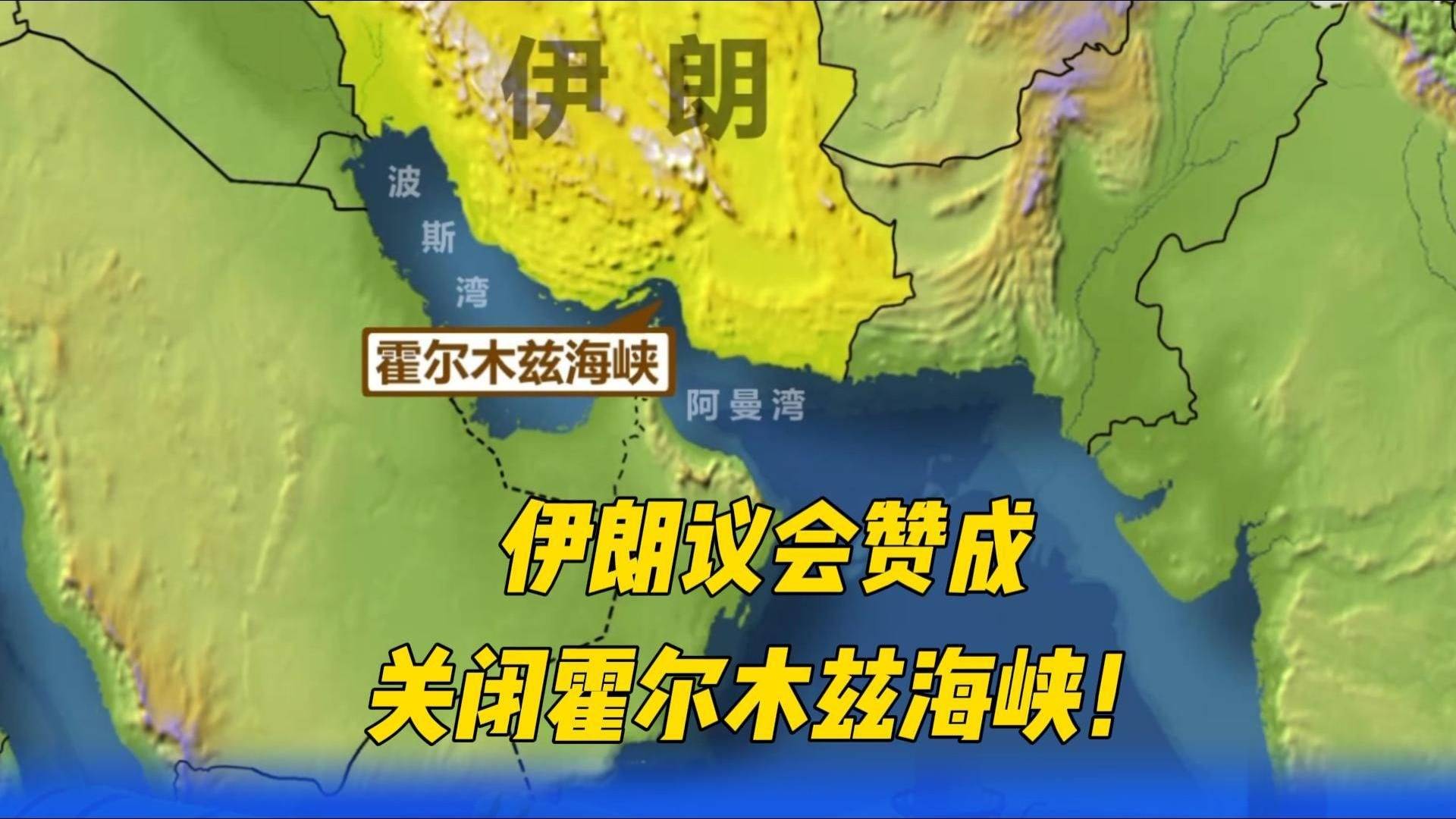
伊朗要关闭“霍尔木兹海峡”?一旦关闭,会对我国能源产生多大影响
Sou Hu Cai Jing· 2025-06-25 08:28
6月22日,美国轰炸完伊朗福尔多和纳坦兹两处地下核设施后,伊朗高调宣布将关闭霍尔木兹海峡。 有专家分析称,如果伊朗关闭霍尔木兹海峡。 油轮将不得不绕行好望角,航程大幅延长约40%,运费也会出现暴涨,涨幅可达400%。 那样的话,将直接影响到进出口商品的价格,增加进口成本,同时还将削弱中国出口商品在国际市场上的价格竞争力。 除了能源产品,中国从该地区进口的其他商品也会因运输通道受阻而受到影响,导致相关原材料和零部件的供应短缺,影响国内相关产业的生产。 不过,央视最新新闻报道,伊朗议会虽然已经赞成关闭霍尔木兹海峡,但最终的决定权还在伊朗最高安全委员会手中。 未来到底关不关闭,还不好说。 消息一经发布,立即引发了全世界关注。 要知道霍尔木兹海峡可谓是全球能源航运的咽喉,封锁后将极大影响全球贸易,尤其对我国的能源安全将产生巨大影响。 数据显示,2024年,我国经由霍尔木兹海峡运输的原油,每天约500万桶,占到我国每年进口量的45%。 一旦海峡关闭,我国从波斯湾地区进口原油的通道将被切断。 那时,国内原油供应将势必减少,在面临较大缺口之际,国内油价自然水涨船高,会影响到每一位开车的人。 另外,霍尔木兹海峡还承担了全球2 ...