区域经济发展

Search documents
青海互助北山特长隧道建成通车
Xin Hua She· 2025-10-01 13:49
Core Points - The G341 Jiaonan to Haiyan Highway, specifically the JX-1 section, has been completed and opened to traffic, marking the operation of the longest tunnel in Qinghai Province, the Huzhu Beishan Tunnel [1] - The Huzhu Beishan Tunnel has a total length of approximately 11.18 kilometers for the left line and 11.13 kilometers for the right line, significantly reducing travel time from over one hour to just ten minutes [1] - The Jiaxi Highway project is part of the Qinghai Province highway network planning, serving as a crucial second channel between Xining and Lanzhou, and enhancing the national highway network [1] Infrastructure Impact - The Jiaxi Highway will connect with the Xihai Chahan Road, establishing a major east-west transportation artery across northern Qinghai Province [2] - The project is expected to optimize the internal road network of the Lanzhou-Xining urban agglomeration and promote regional economic and social development [2] - It will accelerate resource development and transportation in western Qinghai Province, highlighting its significance for the local economy [2]
两条城市快速路今天通车
Bei Jing Wan Bao· 2025-10-01 07:46
Core Points - The completion of the rapid transformation of two major roads in the city enhances commuting efficiency and supports high-quality economic development in the region [1][2][3] Group 1: North Qing Road Transformation - The North Qing Road project, approximately 8.9 kilometers long, significantly improves travel convenience for residents and is a key component of the "one horizontal and one vertical, five connections, five smooth" main road network in the "Huitian" area [1][2] - The road features a dual-layer layout with a "rapid elevated bridge + ground auxiliary road" design, expanding from 4-6 lanes to a dual 6-lane main road and 4-6 lane auxiliary roads [2][3] - This transformation will alleviate traffic pressure between the Fifth and Sixth Ring Roads and enhance connectivity between key functional areas such as Zhongguancun Science City and Yongfeng Industrial Base [2][3] Group 2: Tongma Road Expansion - The Tongma Road project, extending about 6 kilometers, has been upgraded from a dual 2-4 lane road to a dual 10-lane road, enhancing the rapid transportation link between the city sub-center and Yizhuang New City [2][3] - The new road includes a dual system for fast and slow traffic, with the construction of a full interchange bridge on the Jingha Expressway to facilitate smooth traffic flow [3] - The opening of Tongma Road will significantly improve north-south transportation efficiency in the sub-center and contribute to regional collaborative development and economic integration [2][3]
沈佳高铁沈白段正式开通运营 为东北全面振兴注入新动能
Zhong Guo Jing Ji Wang· 2025-09-30 07:19
Core Points - The opening of the Shenyang-Baicheng section of the Shenyang-Jilin high-speed railway marks a significant milestone in the connectivity of Northeast China, enhancing the high-speed rail network and promoting regional economic integration [1][2][7] Group 1: Infrastructure Development - The Shenyang-Baicheng section connects with multiple high-speed rail lines, creating a comprehensive network that facilitates the flow of talent, resources, and technology across the region [2][7] - This high-speed railway serves as a critical support project for establishing 1, 2, and 3-hour travel circles, significantly reducing travel times to key destinations [2][4] Group 2: Economic Impact - The railway's opening is expected to activate the tourism industry by linking major tourist attractions, thereby enhancing consumer spending and economic growth in the region [3][4] - Cities like Tonghua will benefit from improved connectivity, allowing for better integration into the national high-speed rail network and fostering industrial development [5][7] Group 3: Technological Innovation - The construction of the Shenyang-Baicheng section utilized several innovative technologies, showcasing China's advancements in high-speed rail construction [6][7] - Techniques such as automated production platforms and novel construction methods have improved efficiency and reduced material waste, setting a precedent for future projects [6]
2025泰中合作博览会在曼谷举行
人民网-国际频道 原创稿· 2025-09-28 02:59
Core Points - The "2025 Thailand-China Cooperation Expo" was held in Bangkok from September 26 to 28, showcasing the strong friendship and mutual trust between Thailand and China [1] - The event was attended by over 500 representatives from both countries' political and business sectors, including Thailand's Prime Minister and the Chinese Ambassador to Thailand [1] - The Thai government aims to deepen cooperation in infrastructure, green economy, and digital innovation, leveraging the 50th anniversary of diplomatic relations with China [1] - The expo featured participation from over 200 companies from both Thailand and China, with several companies signing cooperation memorandums [1] Industry Insights - The expo highlighted significant achievements in trade, agricultural processing, new energy vehicles, and digital economy between Thailand and China over the past 50 years [1] - The event served as a platform for recruitment and collaboration between educational institutions from both countries, indicating a focus on workforce development and educational exchange [1]


“三路齐发”启新程
Liao Ning Ri Bao· 2025-09-28 01:30
Core Points - Three highways, including the Beijing-Harbin Highway (京哈), Benhuan Wide Highway (本桓宽), and Lingxui Highway (凌绥), officially opened on September 27, marking a significant milestone in transportation infrastructure in Northeast China [1][3][9] - The Beijing-Harbin Highway expansion is a key national project under the "14th Five-Year Plan," representing the first long-distance ten-lane expressway expansion in the country, enhancing logistics and economic development in the Liaoning region [4][11] - The opening of these highways is expected to significantly reduce travel times and logistics costs, facilitating better connectivity for local businesses and enhancing regional economic integration [5][10] Summary by Sections Highway Openings - The three highways were constructed simultaneously, completing a perfect closure of the project that began on August 8, 2022 [3] - The Beijing-Harbin Highway expansion spans 238 kilometers, converting a dual six-lane road into a dual ten-lane road with a design speed of 120 km/h [4] Economic Impact - The opening of the Lingxui Highway allows for a significant reduction in travel time from 10 hours to 3 hours for logistics between key locations, with expected logistics cost reductions of 10% to 15% for export-oriented businesses [5][10] - The Benhuan Wide Highway connects major scenic spots and is anticipated to increase tourist traffic, benefiting local hospitality businesses [7][8] Regional Development - The completion of these highways is seen as a catalyst for economic growth, enhancing the logistics efficiency of cities like Panjin, which is crucial for its role as a petrochemical and fine chemical industry base [9][10] - The provincial transportation department reported that over the past three years, 1,361 kilometers of highways have been constructed, setting a historical record and significantly improving regional connectivity [11]

新疆交通巨变谱写向西开放新篇章
Zhong Guo Xin Wen Wang· 2025-09-24 09:00
Core Viewpoint - The approval of the environmental impact assessment report for the G3033 Kuitun to Dushanzi to Kuqa expressway project marks the initiation of another major infrastructure project in Xinjiang, enhancing connectivity across the Tianshan Mountains [1][2]. Infrastructure Development - Xinjiang's road network has expanded significantly since the founding of New China, with total road mileage surpassing 230,000 kilometers by the end of 2024, representing a nearly 70-fold increase from the initial 3,361 kilometers [5][6]. - The modern transportation infrastructure in Xinjiang has transformed the region, with all prefectures and cities now fully integrated into the expressway era, creating a comprehensive network across 1.66 million square kilometers [6]. - Technological advancements in road construction have addressed various challenges, such as sandstorm resistance and frost heave design, exemplified by the use of grass grid technology on desert roads and the "smart sentinel" system on the G217 Duku Highway [6]. Rail and Air Connectivity - Xinjiang's railway network has reached over 9,557 kilometers, covering more than 80% of county-level administrative regions, with key projects like the Lanzhou-Xinjiang high-speed railway enhancing national connectivity [8]. - The region's rail freight volume reached 237 million tons in 2024, a year-on-year increase of 10.6%, with significant growth in the number of China-Europe (Central Asia) freight trains [9]. - Xinjiang boasts 28 civil airports, ranking high among provinces in China, facilitating rapid air transport and logistics [6]. Economic Transformation - The transportation revolution is reshaping Xinjiang's economic geography, creating a "5-hour economic circle" that connects previously isolated regions and promotes industrial collaboration [9]. - The planned investment in transportation infrastructure for 2025 is set at 80 billion yuan, reflecting a 13.5% increase year-on-year, indicating ongoing commitment to enhancing connectivity [10]. - As a core area of the Silk Road Economic Belt, Xinjiang is developing an open economic structure that integrates land and sea, with projects like the China-Kyrgyzstan-Uzbekistan railway and the China-Pakistan Economic Corridor progressing [10].
重庆城口:交通便利性跃升,西部矿都迎来新机遇
China Post Securities· 2025-09-24 07:43
Economic Overview - Chongqing Chengkou County's GDP for 2024 is projected at 7.588 billion yuan, with a year-on-year growth of 5.1%[2] - The county's per capita GDP is estimated at 38,600 yuan, reflecting a 5.3% increase year-on-year[2] - The urbanization rate in Chengkou County is expected to reach 43.59% by the end of 2024, indicating a steady upward trend[2] Industrial Structure - Chengkou County is rich in mineral resources, particularly barium and manganese, with barium reserves of 65 million tons, the highest in Asia[2] - The agricultural sector benefits from the selenium-rich environment, with organic agriculture and traditional Chinese medicine industries showing strong potential[2] - The industrial output value for 2024 is projected at 1.756 billion yuan, with a year-on-year growth of 11.5%[39] Fiscal Situation - Chengkou County's public budget revenue for 2024 is estimated at 719 million yuan, with a fiscal self-sufficiency rate of 15.86%[41] - The county's total government debt is projected to reach 12.699 billion yuan, with a comprehensive debt ratio of 229.6%, indicating manageable risk levels[50] - Government debt repayment and interest expenses for 2024 are expected to total 452 million yuan[50] Transportation Development - The completion of the G69 highway and other transport projects is anticipated to significantly enhance Chengkou's connectivity, ending its history of lacking direct highway access[33] - Future railway developments, including the Xiyu Railway, are expected to reduce travel time to major cities like Xi'an and Chengdu to 50 and 120 minutes, respectively[33] Recommendations and Risks - The report suggests that Chengkou County should focus on expanding its economic base and improving fiscal health through strategic investments and efficient budget management[68] - Key risks include slower-than-expected economic growth, challenges in industrial upgrading, and ongoing population outflow[71]
宿连航道整治配套新长铁路改建工程正式通车
Xin Hua Wang· 2025-09-23 11:37
Group 1 - The completion of the new Chang Railway reconstruction project, undertaken by China Railway 24th Bureau, marks a significant milestone for the Su-Lian waterway, facilitating its full navigation by the end of October [1] - The Su-Lian waterway project spans approximately 124 kilometers, connecting the Grand Canal in Suqian to the Lianyungang Port, and is crucial for enhancing the comprehensive transportation system in Northern Jiangsu [1][2] - The reconstruction involved complex engineering tasks, including the relocation of railway bridges and the integration of various construction specialties such as tracks, bridges, and communication systems [1] Group 2 - The Su-Lian waterway serves as a vital transportation link for the inland regions of Northern Jiangsu, connecting to Lianyungang Port and facilitating sea-river intermodal transport [2] - Once fully operational, the waterway is expected to become a key channel for material transportation, promoting economic development in the coastal and inland areas [2]
(经济观察)打通区域经济动脉 中老铁路驶向“诗和远方”
Zhong Guo Xin Wen Wang· 2025-09-23 03:43
Core Insights - The China-Laos Railway, operational since December 3, 2021, has transported over 59 million passengers and 67.6 million tons of goods, becoming a vital economic artery for the region [1][2] - The railway connects major tourist cities in Yunnan and Laos, covering over 560 tourist attractions, and has significantly boosted cross-border tourism [2][4] - The introduction of visa-free policies in Laos is expected to further increase passenger flow, with projections indicating a peak in 2024 [2][5] Passenger Transport - Daily international passenger train services have increased from 8 to a maximum of 86 in China and from 4 to 18 in Laos [2] - The railway has become a popular choice for tourists, offering a comfortable and cost-effective alternative to air travel [1][2] Freight Transport - The "Lanmei Express" international freight train has been operational since January 10, 2022, facilitating the transport of tropical fruits to China [4] - Approximately 2,100 refrigerated containers are currently in use, with 413,000 tons of tropical fruits transported into China since the railway's opening [4] - The variety of goods transported has expanded from over 10 types to more than 3,300, enhancing trade connections with ASEAN markets [4][5] Economic Impact - The railway is expected to surpass 5 million tons in cross-border freight transport this year, reflecting its growing significance in regional trade [5] - The seamless integration of the China-Laos Railway with the China-Europe Railway Express enhances trade opportunities across multiple countries [4]

又一只,即将发布!
Zhong Guo Ji Jin Bao· 2025-09-22 15:27
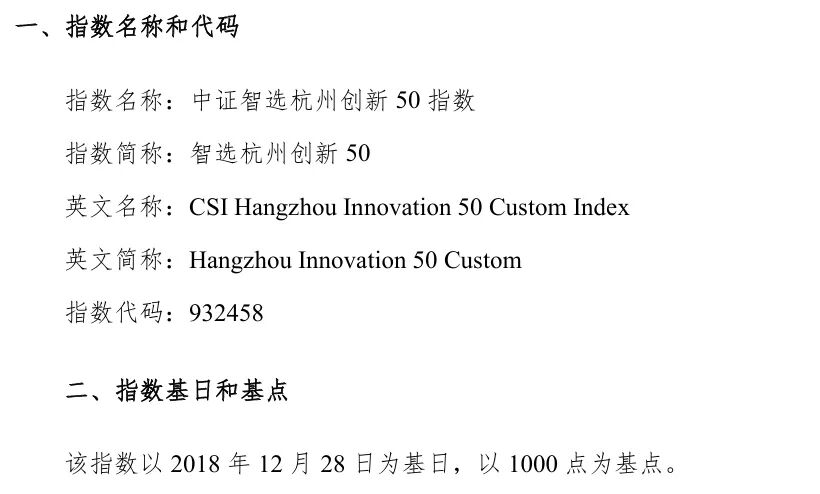
Core Viewpoint - The upcoming launch of the CSI Smart Selection Hangzhou Innovation 50 Index on September 23, 2025, is expected to provide new investment tools for investors focusing on the innovative industries in Hangzhou, with potential for related thematic funds to be reported in the future [1][2][6]. Group 1: Index Details - The CSI Smart Selection Hangzhou Innovation 50 Index will select 50 companies from the information technology, communication, healthcare, and automotive sectors, reflecting the performance of Hangzhou-listed companies with strong market capitalization, profitability, growth potential, and R&D investment [2][3]. - The sample space for the index includes companies listed in both mainland China and Hong Kong, with specific criteria for selection based on investment viability and industry representation [3]. Group 2: Performance Metrics - The index has shown a year-to-date return of 36.24%, with annualized returns of 8.15% over three years and 1.92% over five years, alongside annualized volatility of 27.93% and 26.82% for the same periods [4]. Group 3: Thematic Fund Landscape - There are currently 25 regional thematic funds in the market, with a diverse range of products including both index and actively managed funds, primarily focused on the economically vibrant Yangtze River Delta region [10]. - The Greater Bay Area and Beijing-Tianjin-Hebei regions are also seeing significant fund activity, with various thematic products launched to capture regional growth opportunities [11][12]. Group 4: Fund Performance and Challenges - The overall performance of regional thematic funds has been strong, with only one out of 25 funds showing a slight loss since inception, while actively managed funds have demonstrated notable advantages in returns [14]. - Despite strong performance, regional thematic funds face significant scale challenges, with total assets halved since their inception due to concentrated investment strategies and a lack of sustained marketing efforts [14].