
城市治理

Search documents
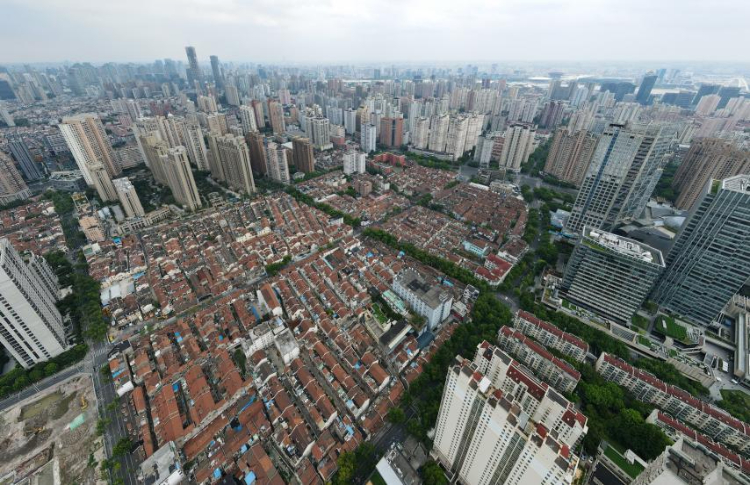
神州答卷|上海下“绣花功夫”攻坚旧区改造
Xin Hua Wang· 2025-12-16 03:05
Core Viewpoint - The article highlights Shanghai's successful initiative to eliminate the "bucket toilet" practice, which has been a significant issue for residents, marking a major step towards modern urban living and improved public health [2][5][24]. Group 1: Historical Context and Challenges - The "bucket toilet" was a common practice for millions of residents in Shanghai, particularly in older neighborhoods where modern sanitation facilities were lacking [2][4]. - In 1990, the average living space per person in Shanghai was only 6.4 square meters, leading to inadequate sanitation solutions [4]. - The city faced significant challenges in upgrading old housing, particularly in densely populated areas with historical buildings that did not accommodate modern plumbing [11][18]. Group 2: Progress and Achievements - By September 2023, Shanghai completed the renovation of the last 6,493 households, effectively ending the "bucket toilet" era [2][7]. - Over 30 years, more than 1.6 million households have transitioned to modern sanitation facilities, showcasing the city's commitment to improving living conditions [5][24]. - The initiative is part of a broader strategy to enhance urban governance and public service, aligning with the principle of "a city built by the people for the people" [19][24]. Group 3: Innovative Solutions and Community Involvement - Shanghai has adopted a "one house, one policy" approach to address the unique challenges of each household during the renovation process [12][19]. - The city has implemented various innovative solutions, such as flexible installation of toilets and utilizing available space creatively to accommodate modern sanitation needs [14][18]. - Community engagement has been crucial, with local leaders actively involving residents in the planning and execution of renovation projects, ensuring that their needs and suggestions are considered [21][23]. Group 4: Future Plans - Shanghai aims to complete the renovation of all non-standard residential buildings by 2032, with significant milestones set for 2025 [23]. - The ongoing efforts reflect a commitment to not only improve living conditions but also to preserve the historical character of neighborhoods while modernizing infrastructure [18][24].

少了“一把盐”的生态损耗,多了共扫门前雪的责任担当
Bei Jing Wan Bao· 2025-12-16 01:55
Group 1 - The core idea of the articles is the shift in Beijing's snow removal strategy, moving away from the use of de-icing agents to more environmentally friendly methods, including small snow removal machinery and manual cleaning [1][2][3] - Beijing has banned the use of de-icing agents in pedestrian paths, parks, and scenic areas, reflecting a change in snow removal philosophy aimed at minimizing environmental impact [1][2] - The city has implemented a precise treatment strategy, allowing for limited use of de-icing agents in critical areas while preserving some snow for aesthetic and ecological benefits [2] Group 2 - Over 86,000 snow removal responsibility segments have been established, engaging government agencies, businesses, and volunteers in snow clearing efforts, showcasing community involvement [3] - A total of 265,000 participants, including sanitation workers and volunteers, have been mobilized for snow removal, highlighting the collective responsibility of citizens [3] - The reduction of de-icing agents is seen as a way to protect the urban ecosystem while ensuring road safety, emphasizing the importance of community support in urban management [3]
且看“两难”变“两全”
Ren Min Ri Bao· 2025-12-15 13:29
城市治理要像绣花一样精细,必须坚持需求导向,加强调查研究、摸清群众急难愁盼,知道该往哪 里"下针"。守护居民头顶安全,陕西西安西何社区干部了解对比多家厂家产品后,为小区安装仰拍摄像 头,全天候重点监测、精准溯源,既不侵犯住户隐私,也有力监督高空抛物行为。为改变禾河路夜市脏 乱差现象,江西吉安庐陵新区规划主题摊位区,新增大容量垃圾桶、独立可冲水卫生间,引入专业管理 公司,为300余家摊位建立一户一档溯源系统,将治理痛点打造为城市名片。群众需求,就是城市治理 的创新源头。对不同群体的具体诉求了解得越深入、越细致,拿出的治理办法就越有针对性、实效性。 贴近一些、多想一层、做细一点,才能推动城市运行不断提质增效。 促被动接受为主动参与,在互动、借力中构建治理共同体。 将实事办好、让难事不难,关键是增强聚合之力,把人民群众的积极性调动起来,激发大家参与城 市治理的热情。天津河北区与辖区医院共建"骑手门诊",为有需要的骑手提供义诊服务;同时,吸纳站 点热心骑手、快递员化身"移动探头",鼓励他们利用出勤时间,随手拍摄反馈街面、楼宇安全隐患,有 效提升治理精度。北京海淀区建立"大家商量着办"议事协商机制,不仅碰撞出解决停车管 ...
规范公园直播,亦是为城市治理赋能
Ren Min Ri Bao· 2025-12-15 03:15
近年来,不少人举起手机、架起三脚架,把镜头对准公园,直播唱歌跳舞,分享见闻和生活点滴。这份 热闹,让公园更显活力与生机,但当扩音器的声音盖过了鸟鸣,镜头挡住了风景,热闹也就变成了喧 闹。 公共空间的珍贵,在于它的开放与平衡:有人拍照,有人散步,有人休憩……一座现代化的城市既是包 容创新的,也是秩序井然的。城市公园既承载着市民对美好生活的向往,也检验着城市治理的水平。 规范公园直播,让表达更有分寸,让热闹不扰清欢,当我们在公园里自觉礼让老人孩童,当直播者主动 避免打扰他人,美美与共,才是城市生活的美好图景,更好彰显出城市治理的能力与城市文明的温度。 对公园公共区域直播行为进行规范,看似是约束,实则是一种精细化管理。时下,密集的公园直播在一 定程度上带来了公共资源被占用、游园环境受破坏等问题。短视频、直播等形式让人们可以更方便地表 达自我、分享美好,记录下城市的生活质感,但周围游客不受打扰、不被摄入镜头的权利同样不容忽 视。 截至2024年底,北京市纳入名录的公园已达1100个。其中,一些公园已发布相关公告规范园区秩序,提 升游客游览体验。 ...
且看“两难”变“两全”(评论员观察)
Ren Min Ri Bao· 2025-12-14 22:30
变被动响应为主动感知,在需求发现上先行一步;促被动接受为主动参与,在互动、借力中构建治理共 同体;统筹当下改和长久立,在探索长效机制过程中夯实治理根基 城市马拉松一开跑,往往对市民出行有干扰。如停赛,众多跑友会失望。怎么办? 江苏南京的做法是:赛前摸排沿线住户出行需求,协调替代交通方案;赛中创新推行"岛式穿越"方法, 设置穿越点,方便群众有序过街;比赛期间地铁延长运营时间、公交增开接驳线。 既保赛事,更保民生,参赛的跑友点赞"像翻开一本立体的城市传记",观赛的市民感慨"跑马没有让城 市停下来"。以赛促治、办赛惠民,城市与人民相互成就,推动形成"办赛—治城—兴业"的良性循环。 城市工作中,往往会面临很多"两难、三难、多难"的现实情况。统揽发展全局、兼顾各方利益,化"两 难"为"两全",可从坚持需求导向、增强聚合之力、树立长效意识三方面下功夫。 促被动接受为主动参与,在互动、借力中构建治理共同体。 将实事办好、让难事不难,关键是增强聚合之力,把人民群众的积极性调动起来,激发大家参与城市治 理的热情。天津河北区与辖区医院共建"骑手门诊",为有需要的骑手提供义诊服务;同时,吸纳站点热 心骑手、快递员化身"移动探头", ...
大国小巷·首善之治|大城善治 全时守护不打烊
Yang Guang Wang· 2025-12-13 05:36
Core Viewpoint - Beijing is redefining urban governance through the use of technology, specifically AI and data, to enhance efficiency and responsiveness in city management [1] Group 1: Urban Governance - The initiative "未诉先办" (preemptive action) is being implemented to modernize grassroots governance in Beijing [1] - The project is supported by the Beijing Municipal Committee of the Communist Party of China and the Central Radio and Television Station, showcasing a commitment to innovative governance [1] Group 2: Technological Empowerment - Technology is being leveraged for comprehensive protection across the city, ensuring both speed and warmth in governance [1] - The micro-video series "大国小巷·首善之治" (Great Nation's Alleys: Prime Governance) aims to address the question of how to advance modern governance at the grassroots level [1]
提升治理效能 建设美好城市
Ren Min Ri Bao· 2025-12-11 22:11
Core Viewpoint - The conference emphasized the need for modern urban governance to evolve from a focus on construction to a model that prioritizes continuous operation and management, integrating various social entities to enhance urban quality and livability [1][2]. Group 1: Urban Development Strategies - Urban high-quality development should transition from "single function" to "human-centered scenarios," highlighting the importance of ongoing management and operation [1]. - The path to urban high-quality development is seen as diverse and integrated, requiring operational thinking to combine spatial, ecological, and industrial resources [1][2]. - The shift from "incremental construction" to "stock activation" is a key challenge in urban governance, focusing on how to activate dormant resources and achieve "shared value" [2]. Group 2: Collaborative Models and Innovations - Poly Development introduced the "All-Domain Scenic City Service" model, which encompasses planning, operation, governance, and ecology, aiming for synergy between urban and scenic functions [2]. - A strategic partnership signing ceremony was held, involving Poly Property and various organizations, to promote an open, collaborative, and win-win industrial ecosystem based on planning, operation, and governance [2]. - The establishment of a smart urban joint laboratory by Poly City Construction Service Co., Ltd. and the Shenzhen Original Metaverse Research Institute aims to support the development and implementation of smart governance technologies for urban digital transformation [2]. Group 3: Policy and Community Engagement - There is a shift from policy guidance to social participation, focusing on enhancing services and creating value, with an emphasis on inclusive development and citizen satisfaction as benchmarks for urban construction [3]. - The modern urban construction landscape is evolving into a tangible reality that prioritizes stock utilization, shared resources, and vitality stimulation [3].

2025社会治理与协同创新城市高质量发展会议召开 提升治理效能 建设美好城市
Ren Min Ri Bao· 2025-12-11 21:57
Core Viewpoint - The conference emphasized the need for modern urban governance to evolve from a focus on construction to a model that prioritizes continuous operation and management, highlighting the importance of integrating various social entities to enhance urban quality of life [1][2]. Group 1: Urban Development Strategies - Urban high-quality development should transition from "single function" to "human-centered scenarios," indicating a shift towards more integrated and sustainable urban planning [1]. - The path to urban high-quality development is seen as diverse and integrated, requiring operational thinking to merge spatial, ecological, and industrial resources [1][2]. - The concept of "value co-creation" is emerging, moving away from one-way management to a more collaborative approach in urban governance [2][3]. Group 2: Collaborative Models and Initiatives - Poly Property introduced the "All-Domain Scenic City Service" model, which encompasses planning, operation, governance, and ecology, aiming to harmonize urban and scenic functions [2]. - A strategic partnership signing ceremony was held, involving Poly Property and various organizations, to foster an open, collaborative, and win-win industrial ecosystem based on forward-looking layouts in planning, operation, and governance [2]. - The establishment of a smart urban joint laboratory by Poly City Construction Service Co., Ltd. and the Shenzhen Original Metaverse Research Institute aims to support the digital transformation and smart construction of cities [2]. Group 3: Policy and Community Engagement - There is a shift from policy-driven initiatives to active social participation, focusing on enhancing services and creating value in urban development [3]. - The exploration of inclusive development paths and the emphasis on citizen satisfaction are becoming key metrics for modern urban construction [3].

中国第一省会,到底“养活”了多少人?
商业洞察· 2025-12-11 09:30
Core Viewpoint - The article emphasizes Guangzhou's unique ability to support a large population and its role as a significant economic hub, highlighting its resilience and capacity to manage a diverse demographic [5][20]. Group 1: Population and Economic Capacity - As of 2024, Guangzhou's registered population is 10.75 million, while the resident population reaches 18.97 million, with actual management exceeding 24 million, comparable to Beijing and Shanghai [7]. - The city accommodates approximately 13.25 million migrant workers daily, reflecting its role as a major employment center [8]. - Guangzhou has 4.2174 million business entities as of October 2025, ranking second among Chinese cities, indicating a strong entrepreneurial environment [8]. Group 2: Foreign Trade Performance - In the first ten months of the year, Guangzhou's total foreign trade reached 1.02 trillion yuan, a year-on-year increase of 12.1%, with exports rising by 20.5%, leading among the top ten foreign trade cities [9]. Group 3: Logistics and Population Management - In the first seven months of the year, Guangzhou processed over 13 billion express deliveries, maintaining the highest volume in the country, significantly surpassing other major cities [12]. - The article suggests that the actual population size of Guangzhou is underestimated, leading to substantial pressure on public services and urban management [13]. Group 4: Economic Behavior of Migrant Workers - Many migrant workers in Guangzhou tend to save on low-end consumption while sending their earnings back home for significant expenses like housing and weddings, indicating a unique economic behavior [15]. Group 5: Urban Challenges and Achievements - Despite its achievements, Guangzhou faces challenges in industrial transformation and urban governance, yet it remains a leading provincial capital with a population burden that exceeds its fiscal capacity [20].

让城市“烟火气”与“秩序感”相融(金台锐评)
Ren Min Ri Bao· 2025-12-10 22:30
Core Viewpoint - The flexible management of street vendors in Xining, Qinghai, has received public praise, highlighting the balance between urban order and the needs of local livelihoods [1] Group 1: Urban Management Innovations - The local authorities have implemented "tidal stalls" and "limited-time outdoor placements" to facilitate harmonious coexistence between law enforcement and street vendors, transforming the traditional adversarial relationship into a cooperative one [1] - The approach reflects a shift in urban governance philosophy, emphasizing the need for innovative management methods that enhance urban vitality while addressing public order [1] Group 2: Community Engagement and Participation - Effective flexible law enforcement requires grassroots engagement and listening to public opinions, as demonstrated by the implementation of the "As I Set Up Stall" model in Ganzhou, Jiangxi, which supports local vendors while balancing community needs [2] - The involvement of community volunteers and the establishment of a "merchant self-discipline alliance" are key strategies to promote collaborative urban management, enhancing both enforcement and community cooperation [2] Group 3: Principles of Flexible Law Enforcement - Emphasizing flexible law enforcement does not mean compromising strict enforcement; rather, it integrates situational considerations into the enforcement process, ensuring that it is both compassionate and effective [3] - The approach aims to achieve a balance between convenience for the public and maintaining order, reflecting a commitment to a people-centered development philosophy [3]