开源模型

Search documents

打破霸主神话,中国AI横扫美国硅谷
Xin Lang Cai Jing· 2025-12-14 17:21
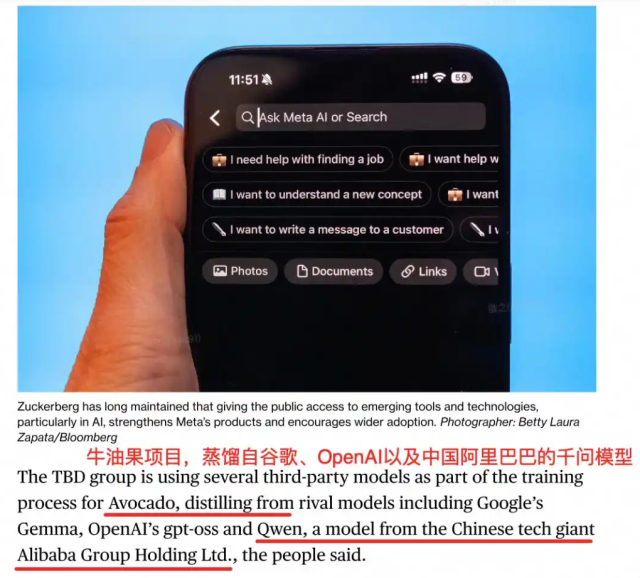
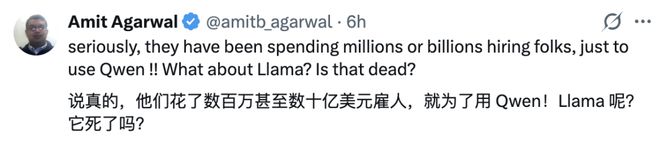
作者:信瀚 AI圈最戏剧性一幕,还是发生了。 你敢信?前一秒还在国会高喊"美国AI要领跑"的扎克伯格,后一秒就让自家千亿级大模型,偷偷给中 国AI"递拜师帖"。 最近,彭博社爆出猛料:硅谷巨头Meta砸了几百亿研发,号称要干翻GPT-5的"牛油果"大模型,居然 被爆"抄中国作业",核心还用了阿里的通义千问来训练。 更离谱的是什么?没要授权!没打招呼!阿里自己都是看新闻才知道。 要知道两年前,Meta的Llama模型还是开源界的神,国内大模型但凡冒头,就被喷"套壳Llama""没自主 技术"。现在风水轮流转,昔日霸主转头偷用中国模型,前一秒骂别人"抄作业",后一秒自己当"伸手 党"。这反转,比AI生成的短剧还荒诞! 但最扎心的是,这事儿它合法。因为阿里千问是开源的,全球谁都能下,现在累计下载量早破7亿次。 可合法不代表合情理啊,Meta用着免费的中国开源模型,转头就把自己的"牛油果"做成闭源收费产 品。 从法律层面Meta没违规,但从伦理层面,这操作很硅谷:拿别人的开源成果,练自家闭源大模型。 一 而更让人唏嘘的是权力交替的现实。 这波操作有多打脸? 咱们扒扒Meta的"黑历史"就懂了。 回顾Meta过去三年的 ...


AI赛道竞争多维深化,生态应用格局加速演进
Huajin Securities· 2025-12-12 08:18
Investment Rating - The industry investment rating is "Outperform the Market" (maintained) [4][10] Core Viewpoints - The AI competition landscape is deepening in multiple dimensions, accelerating the evolution of ecological applications [2] - AI creative and reasoning applications are entering a high growth phase, with programming and role-playing becoming core scenarios [7] - The report highlights the significant user growth and engagement in the AI creative sector, with active users exceeding one million for leading products [7] Summary by Relevant Sections Industry Performance - The relative return over 1 month is -0.86%, over 3 months is -7.8%, and over 12 months is -4.17% [6] - The absolute return over 1 month is -3.01%, over 3 months is -7.71%, and over 12 months is 9.95% [6] AI Creative Sector Insights - In November 2025, over 200 AI creative web products had a total visit count exceeding 27 million, with independent visitors surpassing 7.7 million [7] - Leading products like Jimeng AI and Gaoding AI have over one million active users, with significant growth in independent visitor numbers for Canva and Keling AI [7] - The average usage time for several products exceeds 8 minutes, indicating strong user engagement [7] AI Development Trends - The AI development is entering a "great divergence" phase, with open-source models capturing 30% of traffic globally, and Chinese open-source models leading in specific scenarios [7] - The report notes a shift from generating text to problem-solving capabilities in AI, with programming requests increasing from 11% to over 50% [7] - The multi-model ecosystem is becoming clearer, with closed-source models handling high-value tasks and open-source models focusing on low-cost, high-concurrency needs [7] Investment Recommendations - The report suggests focusing on companies such as BlueFocus, Kunlun Wanwei, Tianyu Digital Science, Yinsai Group, Visual China, and HuiLiang Technology as potential investment opportunities [7]





阿里千问成全球开源模型“新标杆”,Meta新项目被曝蒸馏千问
Xin Lang Cai Jing· 2025-12-11 12:59
Core Insights - Meta plans to launch a new model called "Avocado" in spring 2024, likely in a closed-source format, which has drawn inspiration from various open-source models, including Alibaba's Qwen [1][2] - The shift in Meta's strategy reflects a significant change in CEO Mark Zuckerberg's stance, moving from advocating for U.S. models to adopting insights from strong Chinese open-source models like Qwen [2][3] Group 1: Meta's New Model - Meta's new model "Avocado" is being developed by the newly formed TBD lab team and is expected to distill insights from multiple open-source models, including those from Google and OpenAI [1] - The launch of "Avocado" comes after Meta's Llama4 project faced setbacks, prompting a reevaluation of its approach to model development [2] Group 2: Alibaba's Qwen Model - Alibaba's Qwen model has seen significant success, with its derivative models expected to surpass Llama in number by August 2024 and in global download volume by October 2025 [2][3] - Qwen has been recognized for its performance, recently surpassing competitors like GPT-5 and Claude Opus 4, positioning itself among the top three models globally [3] Group 3: Industry Impact - Qwen's influence extends beyond Alibaba, with major companies like Amazon and Airbnb utilizing it for new business developments, and various institutions leveraging it for technological innovations [3][6] - The rapid growth of Qwen is evidenced by its monthly active users exceeding 30 million within just 23 days of its public testing, marking it as one of the fastest-growing AI applications globally [6]
Meta上亿年薪的研究员们,却在偷师中国开源模型
Guan Cha Zhe Wang· 2025-12-11 10:17
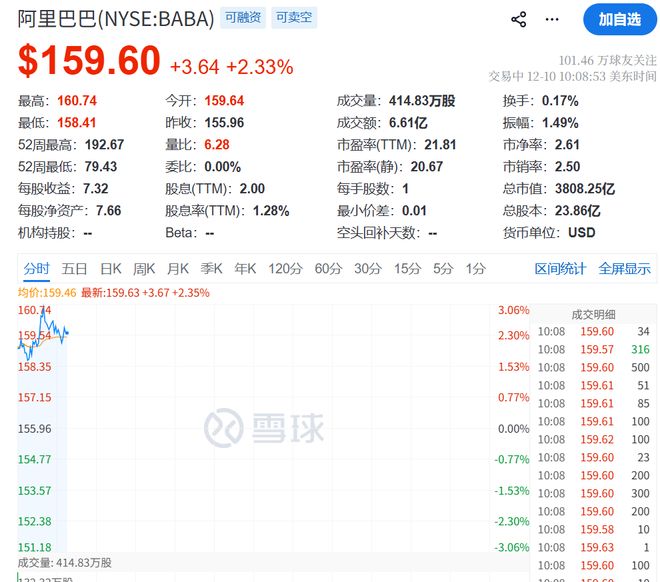
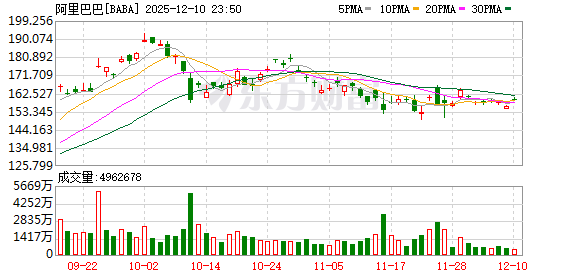
Core Insights - Meta is forming a new team called TBD Lab to develop a closed-source AI model named "Avocado," utilizing third-party models from Google, OpenAI, and Alibaba, with a launch expected in spring 2024 [1] - The rise of Chinese open-source models, such as Alibaba's Qwen, signifies a shift in the competitive landscape, challenging Meta's previous dominance in the open-source AI space [1][4] Group 1: Meta's Strategic Shift - Meta's flagship open-source model, Llama 4, has underperformed, leading to a decline in its status as a leader in the open-source community [2][3] - The release of high-performance models from competitors like DeepSeek and Alibaba has contributed to Meta's loss of dominance, with Llama 4 failing to gain developer approval [3][4] - Meta's recent financial reports show a lack of focus on Llama, indicating a strategic pivot towards new AI initiatives [5] Group 2: Competitive Pressures - The number of derivative models and downloads for Alibaba's Qwen has surpassed those of Meta's Llama, highlighting a significant shift in market leadership [4] - Meta's recruitment of high-profile AI talent, including Alexandr Wang, reflects a desperate attempt to regain competitive ground against rivals like OpenAI [5][6] - The acknowledgment of reliance on Chinese models for training new AI systems represents a significant reversal for Meta, which has previously positioned itself against perceived Chinese technological threats [10][11] Group 3: Market Reactions - Following the news of Meta's new AI strategy, Alibaba's stock saw a pre-market increase of 4%, closing with a 2.53% gain, indicating positive market sentiment towards Chinese AI developments [1] - Analysts have expressed skepticism about Meta's future in AI, contrasting its trajectory with that of Alphabet, suggesting that Meta's strategic direction is now uncertain [10]
智谱正式上线并开源文本转语音模型GLM-TTS
Zheng Quan Shi Bao Wang· 2025-12-11 02:04
人民财讯12月11日电,12月11日,智谱正式发布工业级语音合成系统GLM-TTS,并在Hugging Face和 ModelScope上开放模型权重。GLM-TTS目前已开源,并上线智谱开放平台(bigmodel)、智谱清言、 Z.ai。 ...
阿里巴巴,突发利好!
Zhong Guo Ji Jin Bao· 2025-12-10 15:54
Core Viewpoint - Meta's CEO Mark Zuckerberg is shifting the company's focus towards a profitable AI model, moving away from its previous open-source strategy to a closed-source model, which is expected to be launched in spring next year [5][6]. Group 1: Company Developments - Meta has formed one of the most expensive technology teams in history, with Zuckerberg personally involved in daily operations to drive the development of a new AI model [4]. - The new model, codenamed "Avocado," is likely to be released as a closed-source model, allowing Meta to control its usage and sell licenses, marking a significant departure from its previously promoted open-source strategy [5]. - The company has experienced a strategic shift after the disappointing performance of its open-source model Llama 4, leading to the marginalization of some team members and the recruitment of top AI researchers with lucrative compensation packages [5][6]. Group 2: Competitive Landscape - TBD Lab, the team responsible for training the Avocado model, is utilizing third-party models from competitors, including Google's Gemma, OpenAI's gpt-oss, and Alibaba's Qwen, indicating a strategic pivot towards leveraging Chinese technology [6]. - This shift in strategy reflects a recognition of the advancements made by Chinese companies in the open-source domain, as noted by NVIDIA's CEO Jensen Huang [6].
阿里巴巴 突发利好!
Zhong Guo Ji Jin Bao· 2025-12-10 15:49
Group 1 - Meta's CEO Mark Zuckerberg is personally involved in the development of a new AI model called "Avocado," which is expected to be launched in spring next year and may be offered as a closed-source model [2][3] - This shift towards a closed-source model represents a significant departure from Meta's previous open-source strategy, aligning more closely with competitors like Google and OpenAI [2] - The new AI strategy follows disappointment with the performance of the open-source model Llama 4, leading to a restructuring of the team and the recruitment of top AI researchers with lucrative compensation packages [3] Group 2 - The training of the new model "Avocado" involves using third-party models, including those from Google, OpenAI, and Alibaba's Qwen, indicating a collaborative approach to model development [3] - The use of Chinese technology for training the new model reflects a subtle shift in Zuckerberg's attitude, acknowledging that the U.S. efforts are lagging behind in the open-source domain [4] - Nvidia's CEO Jensen Huang has commented on China's leading position in the open-source field, further emphasizing the competitive landscape [4]
阿里巴巴,突发利好!
中国基金报· 2025-12-10 15:44
Core Viewpoint - The article highlights a significant shift in Meta's strategy towards artificial intelligence, with CEO Mark Zuckerberg focusing on developing a profitable AI model named "Avocado," which is expected to be released in spring next year as a closed-source model, diverging from the company's previous open-source approach [7][8]. Group 1: Meta's AI Strategy - Meta's CEO Mark Zuckerberg has personally intervened in daily operations to steer the company towards a more profitable AI model [7]. - The new model, "Avocado," is anticipated to be launched as a closed-source model, allowing Meta to control its usage and sell access rights, aligning with strategies of competitors like Google and OpenAI [7][8]. - This marks a significant departure from Meta's previously promoted open-source strategy, which allowed external developers to review and build upon the code [8]. Group 2: Team and Development Insights - Meta has formed a high-cost technical team and is concentrating efforts on training the "Avocado" model through a new team called TBD Lab [8]. - TBD Lab is utilizing various third-party models, including those from Google, OpenAI, and Alibaba's Qwen, to enhance the training process for "Avocado" [8]. - Zuckerberg's approach indicates a shift in attitude, recognizing the advancements made by Chinese technology in the open-source domain, as noted by NVIDIA's CEO Jensen Huang [8].

Meta全力转向闭源模型:引入谷歌、OpenAI及阿里技术成果
Xin Lang Cai Jing· 2025-12-10 14:52
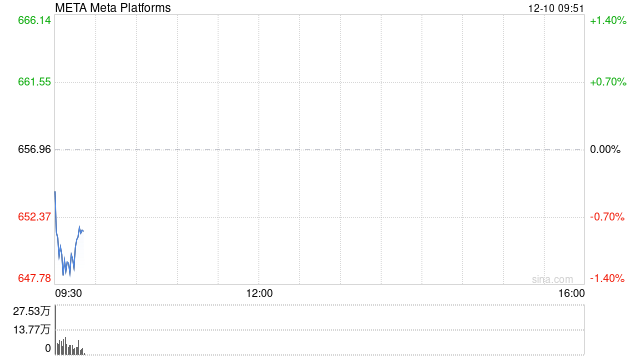
知情人士表示,TBD Lab在Avocado模型的训练过程中,引入了多款第三方模型的技术成果,对包括谷 歌的Gemma模型、OpenAI的gpt-oss,以及阿里巴巴的通义千问(Qwen)模型在内的竞品技术进行了 提炼整合。 Meta的发言人对此事拒绝置评。 据知情人士透露,一款代号为Avocado的全新模型预计将于明年春季正式推出,且大概率会以闭源模式 面市 —— 这种模式下模型可被严格管控,Meta能够通过授权使用的方式进行销售。此举与竞争对手谷 歌(Google)和OpenAI的模型运营策略一致,也标志着Meta彻底背离其多年来标榜的开源战略。开源 模型允许外部开发者与研究人员查看代码,并在此基础上进行二次开发。知情人士补充称,Meta新任 人工智能首席官Alexandr Wang是闭源模型的坚定支持者。 今年早些时候,Meta推出开源模型Llama 4,但这款产品的表现令硅谷业界及扎克伯格本人均倍感失 望,公司的人工智能战略也由此发生重大转向。扎克伯格不仅将该项目的部分核心成员调离核心岗位, 还亲自出面招揽顶尖人工智能研究人才与团队负责人,为部分人选开出了数亿美元的多年期薪酬方案。 其中,Alexan ...