
政府投资基金

Search documents
③精进管理:管理人类型多元化,耐心资本与大胆资本共舞
2 1 Shi Ji Jing Ji Bao Dao· 2026-01-07 14:19
Core Insights - The development of government investment funds is transitioning towards market-oriented and professional management models, with a diversification in the types of fund managers favored by local governments [1][4][10] Group 1: Fund Management Trends - In 2024, brokerage private equity subsidiaries have become increasingly popular among local governments, with firms like CICC Capital and Haitong Kaiyuan actively engaging in regional mother fund businesses [1] - By 2025, bank-affiliated financial asset investment companies (AICs) are expected to accelerate their entry into the equity investment market, becoming regular partners with government investment funds and local state-owned assets [1][6] - The management fee standards for government investment funds are becoming more refined and standardized, with a trend towards market-oriented cost control [2] Group 2: Market Dynamics and Collaborations - The entry of AICs into the equity investment market is closely linked to policy support, with pilot programs expanding to multiple cities [4][6] - Corporate venture capital (CVC) teams are emerging as significant partners for local governments, driven by market demands and the need for business development [7][8] - CVCs have advantages in fundraising, investment strategies, and post-investment management, leading to an increase in collaborations between government investment funds and CVCs [8] Group 3: Investment Strategies and Risk Management - Government investment funds are increasingly adopting a "patient capital" approach, with measures such as lowering return investment ratios and extending fund durations [1][11] - The average return investment multiple requirement for government-guided funds has decreased from 2.6 times in 2017 to 1.31 times in 2024, with some regions allowing ratios below 1 [10] - Policies are being implemented to enhance the due diligence exemption mechanisms, allowing for a higher tolerance for investment losses, with some areas permitting up to 100% loss on individual projects [11][12]

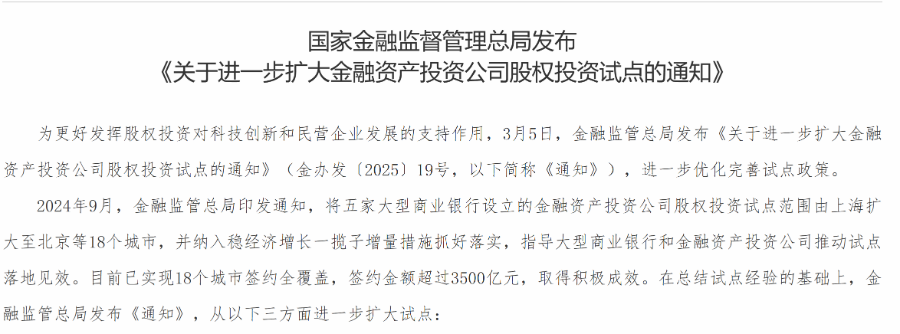
②政策流变:地方响应落地“1号文”,新设基金降速提效
2 1 Shi Ji Jing Ji Bao Dao· 2026-01-07 12:05
Core Viewpoint - The development of government investment funds in China has entered a new phase of high-quality growth, marked by the release of the "Guiding Opinions on Promoting the High-Quality Development of Government Investment Funds" (Document No. 1) by the State Council, which outlines 25 measures across seven areas to enhance the effectiveness and regulation of these funds [1][4]. Group 1: Government Investment Fund Development - The government investment fund industry has evolved through three phases: the exploratory 1.0 era, the flourishing 2.0 era, and now the meticulous 3.0 era [1]. - The "1号文" provides a clear blueprint for the high-quality development of government investment funds, emphasizing the need for alignment with national strategies and industrial upgrades [1][6]. - Local governments are actively responding to the "1号文" by implementing new management measures for government investment funds, integrating central policies with regional realities [1][9]. Group 2: Fund Establishment and Management - The establishment of new government investment funds is slowing down, with a focus shifting towards the integration and efficiency improvement of existing funds [2][12]. - The central government is increasing its oversight and coordination, with several national-level funds being established to activate the market through efficient allocation [3][18]. - The "1号文" emphasizes that government investment funds should not be established for the purpose of attracting investment, and it calls for strict control over the establishment of new funds by county-level governments [7][16]. Group 3: Investment Focus and Strategy - The document categorizes government investment funds into industrial investment funds and venture capital funds, with specific investment focuses outlined for each category [6][7]. - Industrial investment funds are directed towards key links in the industrial chain, while venture capital funds are encouraged to invest early, in smaller amounts, and in hard technology sectors [7][10]. - Local governments are encouraged to manage funds in a coordinated manner to prevent redundant investments and disorderly competition [7][10]. Group 4: Performance and Exit Strategies - The "1号文" calls for a unified approach to government guidance, market-oriented operations, and professional management, with a focus on performance evaluation and accountability [7][11]. - It also encourages the development of private equity secondary market funds and merger funds to broaden exit channels for government investment funds [7][11]. - The integration and optimization of existing funds are prioritized, with local governments urged to enhance the effectiveness of funds that are underperforming due to lack of industrial foundation or resources [11][12]. Group 5: Regional Variations and Future Outlook - Different regions are exploring differentiated management models based on their economic structures and governance traditions, leading to various approaches in fund management [10][11]. - The establishment of national-level funds is more active compared to local funds, with significant capital commitments aimed at supporting strategic industries [18][21]. - The ambitious targets for fund sizes, such as "trillions" or "500 billion," are emerging in official documents, indicating a strong commitment to scaling up investment capabilities [16][17].
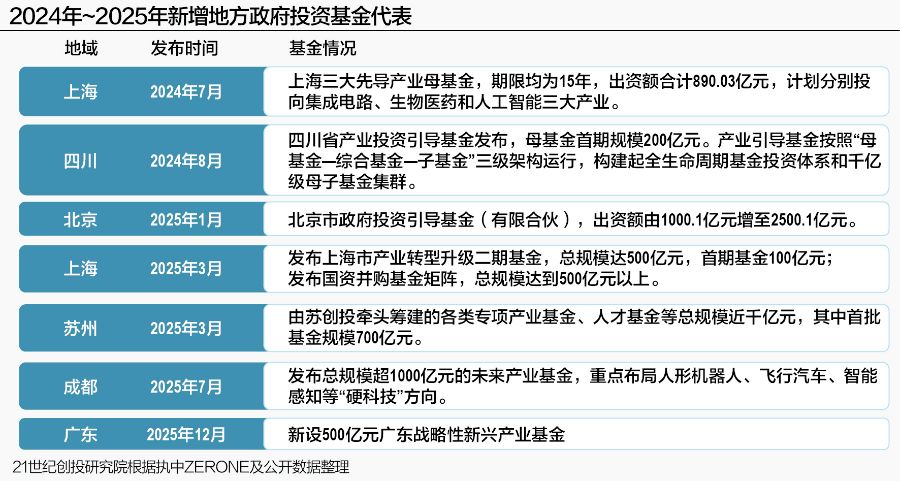
①数据探秘:年度政府投资基金竞争力评价研究核心发现
2 1 Shi Ji Jing Ji Bao Dao· 2026-01-07 12:05
Core Insights - Government investment funds have become a major source of capital in China's private equity investment industry, playing a crucial role in promoting healthy industry development and optimizing traditional industries [1][3] Group 1: Policy and Regulatory Framework - The Chinese government has increased its focus on venture capital and private equity, with the release of the "Guiding Opinions on Promoting the High-Quality Development of Government Investment Funds" on January 7, 2025, which includes 25 measures covering the entire process of fundraising, investment, management, and exit [1][3] - The implementation of the "1号文" has guided local governments in developing investment funds, leading to the establishment of a "1+N" system across various regions [1][3] Group 2: Regional Trends - There is a noticeable decline in the willingness to establish new government investment funds in the central and western regions due to policy constraints and fiscal capacity, while economically active regions like the Yangtze River Delta and the Guangdong-Hong Kong-Macao Greater Bay Area continue to show strong momentum in fund establishment [2][6] Group 3: Fund Management and Investment Strategies - The management model of government investment funds is evolving towards market-oriented and professional approaches, with local governments increasingly seeking suitable general partners (GPs) for long-term cooperation rather than merely increasing the number of partnerships [2][6] - Many regions are lowering the reinvestment ratios and adopting more flexible recognition methods for reinvestment, while also extending fund durations to address the challenges of exit strategies [2][6] Group 4: Fund Performance and Growth - In the first half of 2025, 60 new government investment funds were established, surpassing the total of 55 for the entire year of 2024, with a total scale of 188 billion yuan, indicating a robust growth trend [4][6] - From 2014 to 2024, the number of government-guided funds increased by 1,361, with a compound annual growth rate (CAGR) of 19.85%, and the total scale increased by 31,866 billion yuan, with a CAGR of 35.33% [4][6] Group 5: Investment Focus and Trends - Government investment funds are increasingly focusing on strategic emerging industries such as new-generation information technology, biotechnology, new energy vehicles, and high-end equipment, which are crucial for accelerating the development of new productive forces [6][7] - There is a consensus in the industry to invest early and in smaller amounts, with both national and local government funds providing more guidance and support for early-stage projects [6][7] Group 6: Management Efficiency and Policy Impact - Most government investment funds have established sound systems and operational processes, with effective risk control mechanisms and information technology supporting fund selection and post-investment services [7][8] - Many funds are willing to disclose annual investment numbers and project scales, although they are cautious about revealing actual exit amounts and returns [8]
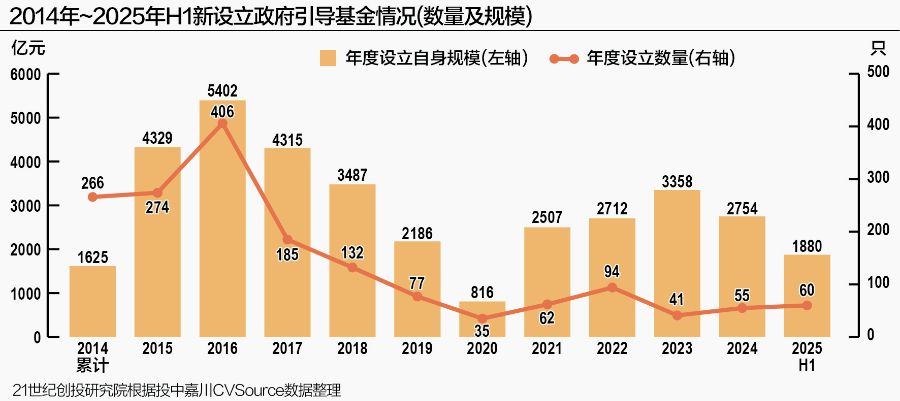
这个省会,出台了产业基金投资尽职合规免责清单
母基金研究中心· 2026-01-07 09:17
Core Viewpoint - Hangzhou is making significant strides in developing its industrial fund system, aiming to enhance its modern industrial framework through the "3+N" industrial fund cluster, which is expected to exceed 500 billion yuan during the 14th Five-Year Plan period [4][11]. Group 1: Implementation Opinions and Mechanisms - The recent implementation opinions emphasize a compliance exemption mechanism for industrial funds, allowing for a higher tolerance of normal investment risks without triggering accountability for typical investment losses [2][3]. - The detailed compliance exemption list outlines specific scenarios and a negative list for applicability, enhancing practical implementation [2]. Group 2: Government Investment Fund Reforms - Recent policies from the State Council highlight the need to optimize the management and evaluation mechanisms of government investment funds, advocating for a tolerance of normal investment risks and a comprehensive evaluation system throughout the fund's lifecycle [3]. - The 2025 guidelines further stress the establishment of a fault-tolerant mechanism to encourage innovation and reduce the fear of accountability among fund managers [3]. Group 3: Fund Structure and Investment Strategies - The "3+N" fund cluster includes three government investment funds and multiple city-owned enterprise funds, which can adopt various investment strategies such as industry mother funds and specialized sub-funds [4][5]. - The return investment ratios for the Hangzhou Science and Technology Fund can be reduced to 1.5 times, while the other two funds can lower their ratios to 1 time, promoting a more favorable investment environment [5]. Group 4: Management Fees and Performance Evaluation - Management fees for the three government investment funds are based on fund size and performance, with a tiered structure that rewards better performance with lower fees [6][7]. - The management fee rates for industry mother funds and sub-funds are set according to market principles, providing a reassuring framework for general partners (GPs) [7]. Group 5: Future Prospects and Strategic Goals - Hangzhou aims to establish itself as a leading hub for artificial intelligence, with plans for an industrial fund exceeding 100 billion yuan dedicated to this sector by 2025 [8]. - The city is also focusing on nurturing emerging industries such as general artificial intelligence and humanoid robotics, indicating a strategic push towards high-potential sectors [9]. Group 6: Historical Context and Ecosystem Development - Hangzhou has a long history of fostering venture capital, with the establishment of its first state-owned venture capital company in 1993, leading to a diverse investment ecosystem [11]. - The city has been proactive in developing mother funds since 2008, positioning itself as a pioneer in this area compared to other regions [11].

2025年中国创投:重拾向上动能,奔赴投资新程
Zheng Quan Shi Bao Wang· 2025-12-31 11:43
Group 1: Industry Recovery and Trends - In 2025, China's venture capital industry emerged from a two-year downturn, showing signs of recovery across the entire investment chain, driven by a combination of funding and project highlights, as well as supportive policies [1] - The year-end activities of venture capitalists indicate a strong return to the industry, fueled by a new wave of technological changes and ongoing policy benefits [1] Group 2: Government Investment Fund Policies - The State Council issued a significant document aimed at promoting the high-quality development of government investment funds, focusing on stricter controls on new fund establishments and optimizing investment policies [2] - Various local governments have responded by issuing supporting policy documents, further regulating the operation of government investment funds to promote high-quality industry development [2] Group 3: Banking Sector Involvement - Since the announcement of expanded pilot programs for bank-affiliated financial asset investment companies (AICs), banks have accelerated their entry into the primary market, with several major banks successfully establishing AICs [3] - As of now, AICs from six major state-owned banks and three national joint-stock banks have been established, with total investments reaching 45.272 billion yuan, a year-on-year increase of approximately 37.7% [3] Group 4: Special Bonds for Government Guidance Funds - Several local governments have issued special bonds to support government guidance funds, breaking the previous norm that prohibited such investments [4] - A total of 52 billion yuan in special bonds have been issued by nine provinces and cities, significantly enhancing the funding pool for the venture capital industry [4] Group 5: Long-Term Government Guidance Funds - New government guidance funds established this year have extended their duration beyond the typical 10 years, with some lasting up to 20 years, providing long-term support for projects [5] - This trend of extending fund durations is expected to create a more patient investment environment, allowing for better exit strategies [5] Group 6: Mergers and Acquisitions - The introduction of policies supporting private equity funds in acquiring listed companies has led to a surge in related acquisition cases, with several venture capital firms actively pursuing stakes in public companies [6][7] - The trend of startups acquiring listed companies is also on the rise, indicating a new strategy for both startups and venture capital firms to explore exit routes [7] Group 7: Domestic PE Firms Acquiring Foreign Brands - Domestic top-tier private equity firms have increasingly acquired the Chinese operations of overseas consumer brands, highlighting a trend of local capital participating in the localization of foreign brands [8] - This trend is driven by the combination of ample funding, local operational expertise, and the stable cash flow of established foreign brands [8] Group 8: Technology Innovation Bonds - The introduction of technology innovation bonds has opened new fundraising channels for venture capital institutions, with several private firms successfully issuing bonds at competitive interest rates [9] - The issuance of these bonds has significantly boosted market confidence and marked a transition towards a more normalized support phase for private venture capital institutions [9] Group 9: Mainland VC/PE Expansion into Hong Kong - Several mainland investment institutions have established offices in Hong Kong, attracted by the region's supportive environment for technological innovation [10] - The Hong Kong government's initiatives, including the establishment of a significant innovation and technology fund, have further encouraged mainland VC/PE firms to expand into the market [10] Group 10: Return of Dollar LPs to China - Multiple venture capital firms have successfully raised dollar-denominated funds, indicating a renewed interest from international investors in the Chinese market [11][12] - The return of dollar LPs coincides with the rapid growth of China's AI industry, highlighting the potential undervaluation of Chinese assets [11][12] Group 11: National Entrepreneurship Investment Fund - The establishment of a "carrier-level" national entrepreneurship investment fund aims to support startups across key economic regions in China, with a focus on early-stage investments [13] - This fund features a long duration of 20 years and aims to provide substantial financial backing to venture capital institutions and startups, enhancing the overall investment landscape [13]






年度盘点丨2025年中国创投:重拾向上动能,奔赴投资新程
Zheng Quan Shi Bao Wang· 2025-12-31 11:43
Group 1 - In 2025, China's venture capital industry emerged from a two-year downturn, showing signs of recovery across the entire "fundraising, investment, management, and exit" chain [1] - The government issued a significant policy document aimed at promoting the high-quality development of government investment funds, focusing on controlling new fund setups and optimizing investment policies [2] - Bank-affiliated financial asset investment companies (AICs) accelerated their entry into the primary market, with a notable increase in capital contributions since the policy announcement [3] Group 2 - Local governments have begun issuing special bonds to support government-guided funds, with a total of 52 billion yuan issued across nine provinces and cities this year [4] - New government-guided funds are being established with extended durations, some lasting up to 20 years, providing long-term support for projects [5] - Venture capital institutions and startups are increasingly acquiring listed companies, indicating a trend towards using public companies as exit strategies [6] Group 3 - Top domestic private equity firms are actively acquiring overseas consumer brands' operations in China, driven by their financial resources and local operational expertise [7] - Venture capital institutions are eagerly issuing technology innovation bonds, with significant interest from private firms leading to successful issuances [8] - Mainland venture capital and private equity firms are establishing offices in Hong Kong, attracted by the region's supportive environment for technology innovation [9][10] Group 4 - Dollar limited partners (LPs) are returning to the Chinese venture capital market, with several firms successfully raising dollar-denominated funds amid a booming AI sector [11] - The National Entrepreneurship Investment Guidance Fund has officially begun investing in three regional funds, marking a strategic deployment in key economic areas [12]
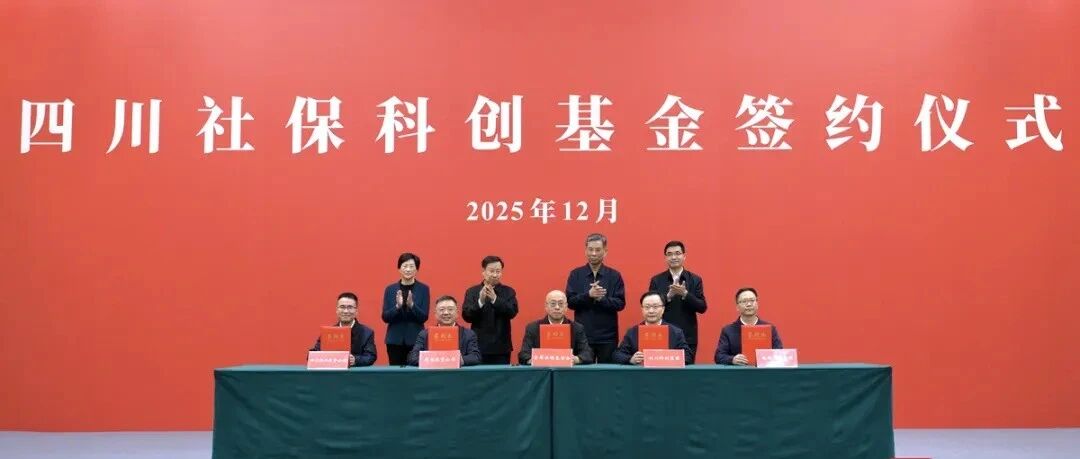
200亿,今年第5个省的社保科创基金来了
母基金研究中心· 2025-12-31 03:47
Core Viewpoint - The establishment of various social security science and technology innovation funds across multiple provinces in China, including Sichuan, Zhejiang, and others, aims to support key industries and technological advancements, with a focus on long-term capital and patient investment strategies [3][6][7]. Group 1: Fund Establishment and Scale - The Sichuan Social Security Science and Technology Innovation Fund has an initial scale of 200 billion yuan, focusing on key industries and technological innovation in the Sichuan and Chengdu-Chongqing economic circle [3][4]. - The Zhejiang Social Security Science and Technology Innovation Fund has a larger initial scale of 500 billion yuan, targeting sectors such as artificial intelligence and biomedicine [5]. - The combined initial scale of social security science and technology innovation funds in five regions, including Zhejiang, Jiangsu, Fujian, Hubei, and Sichuan, has reached 1.6 trillion yuan [6]. Group 2: Long-term Investment Strategies - Sichuan's measures emphasize the importance of "patient capital," which is characterized by long-term support and a high tolerance for risk and failure, aligning with the long growth cycles of technology companies [6][9]. - The government aims to attract social capital by implementing a profit-sharing model between government-guided funds and market-oriented funds, with a focus on long-term investment horizons [8][10]. Group 3: Policy and Regulatory Framework - The Sichuan government has set ambitious targets, including a goal of 4 trillion yuan in fund management scale by 2030, and has introduced specific measures to enhance the investment environment for venture capital [8][10]. - Recent national policies encourage the relaxation of restrictions on government investment funds, promoting a more open and pragmatic approach to fund management and investment [10][12]. - The average return ratio requirement for government-guided funds has decreased significantly, with many funds now allowing for lower return expectations, reflecting a shift towards more flexible investment strategies [11][12]. Group 4: Risk Tolerance and Investment Focus - The Sichuan policy allows for a maximum loss tolerance of 100% for individual projects, indicating a willingness to support high-risk, high-reward investments in emerging technologies [13][14]. - The focus on hard technology investments has shifted the venture capital landscape, necessitating a longer investment horizon and a more patient approach from both general partners (GPs) and limited partners (LPs) [9][10].
山西:更好发挥政府投资基金带动作用
Ren Min Wang· 2025-12-27 04:28
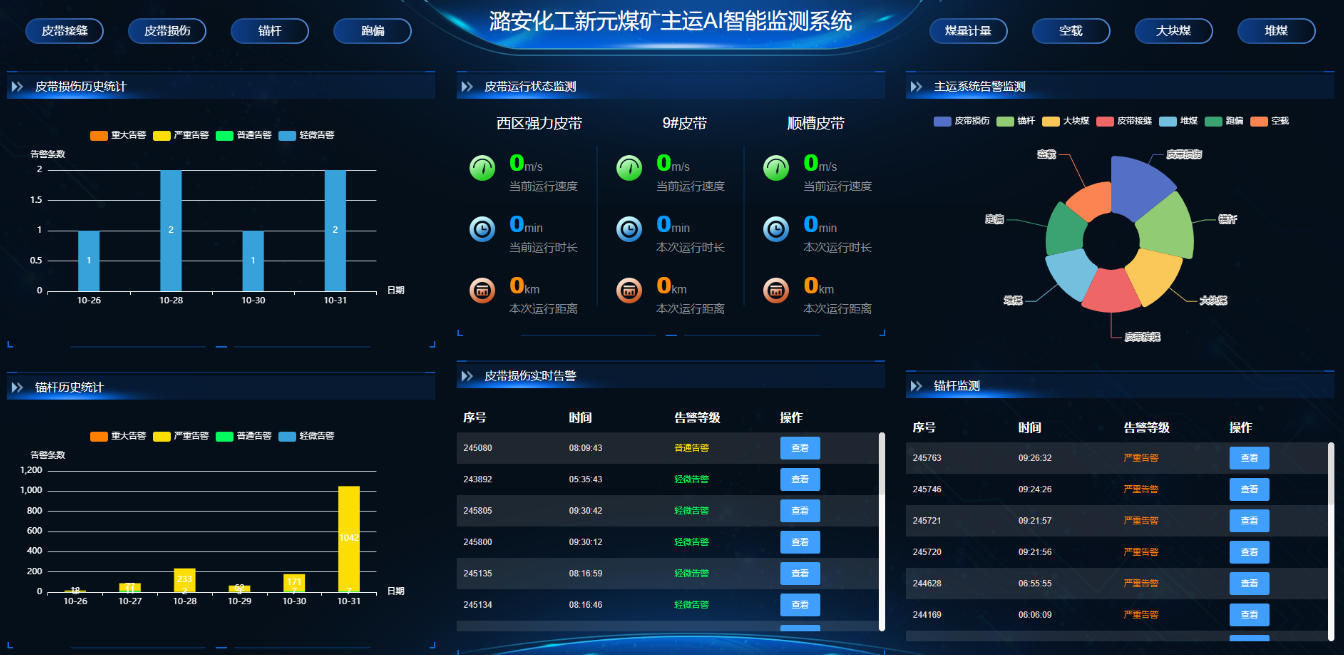
Group 1 - The government investment fund has invested in 248 projects totaling 33.6 billion yuan, focusing on key areas such as high-end equipment manufacturing, biomedicine, wind energy, drones, and semiconductors [1] - The investment strategy emphasizes early-stage, small-scale investments in hard technology to attract more social capital and improve fund utilization efficiency [2] Group 2 - The investment in Anshu Intelligent Technology Co., which developed a mining monitoring system, was facilitated by the Taihang Fund, which invested 8 million yuan for a 26.4% equity stake [7] - The company has transitioned from a single business model to a "soft and hard" collaborative approach, significantly enhancing its operational efficiency and expanding into new markets [6][8] Group 3 - The Taihang Fund has established a pharmaceutical industry development fund, investing 30 million yuan in Xinyu Pharmaceutical, with 95% of the funds allocated for product research and development [12] - The establishment of the "Fund Island" in Jinzhong aims to attract various financial institutions to support the formation of industrial clusters [12][13] Group 4 - The Taihang Fund is innovating investment models such as loan-equity linkage and joint investment, while also adapting its strategies based on market changes [13] - The fund has registered 18 various industry funds and invested in 19 projects, addressing short-term funding needs for over 750 enterprises [13] Group 5 - The Taihang Fund is focused on enhancing governance and operational efficiency, with a strategic plan for 2025 that includes a dual approach of managing provincial government investment and market-oriented business [16] - The fund aims to improve project due diligence and post-investment management capabilities through the establishment of specialized centers [16]
政府投资基金,究竟啥来头?
Xin Lang Cai Jing· 2025-12-25 22:30
□王翱 四川日报全媒体记者 肖莹佩 一天赚20亿元,这么牛,是谁呢?成都交子金控集团下属成都交子中小企业发展基金。 咋赚的呢?近日,沐曦股份登陆科创板,首日股价暴涨693%。凭借此前投中沐曦股份,这只基金 相当于一天挣了20个"小目标"。 不仅如此,在"国产GPU第一股"海光信息、创造"科创板最快过会纪录"的摩尔线程背后,都有成 都政府投资基金的身影,真的是"赢麻了"! 政府投资基金啥来头?简单来说,就是政府掏出真金白银,专注"投小、投早、投长期、投硬科 技",扶持科技企业成长。 这非常重要。试想,你创办了一家科技企业,技术实力很强,信心满满。但研发仪器、实验室, 甚至房租水电气,样样都是钱。还没盈利就要解决开 销问题,怎么办? 贷款融资?很难!一来,拿不出实物抵押;二来,公司没有好看的营收数据,甚至账面上可能还 是亏损状态。现实很残酷,但这就是初创期科技企业的普遍痛点:没有资金,每一秒都是寒冬。 也就是说,成都政府投资基金瞄准的,是要大力发展的重点产业,尤其是潜力赛道的"新物种", 比如商业航天、低空经济、量子科技等。 政府投资入局扶持产业发展,全国有不少成功案例。 最常提起的是合肥。2020年,合肥豪掷7 ...
山东明确两类政府投资基金支持重点
Da Zhong Ri Bao· 2025-12-25 01:02
Group 1 - The Shandong Provincial Government has issued the "Implementation Opinions on Promoting the High-Quality Development of Government Investment Funds," aiming to establish a high-quality development pattern for government investment funds that is appropriately scaled, reasonably laid out, standardized in operation, scientifically efficient, and controllable in risk, to support and guarantee the province's economic and social development [1] - Government investment funds are categorized into industrial investment funds and venture capital funds, with specific functions and support focuses outlined for each type. The emphasis is on cultivating patient capital [1] - Industrial investment funds will focus on major strategies such as the construction of green low-carbon high-quality development pilot zones and ecological protection in the Yellow River Basin, targeting key projects in the "ten strong industries," critical links in industrial chains, and advantageous projects in industrial clusters to accelerate the construction of a modern industrial system [1] Group 2 - Venture capital funds will concentrate on the "ten major innovations," fostering new productive forces tailored to local conditions, with a focus on early, small, long-term, and hard technology investments, particularly in seed and startup phases of technology-driven and innovative projects, as well as projects related to technological talent innovation and entrepreneurship [1] - The typical duration for industrial investment funds is generally no more than 15 years, while venture capital funds may have a higher government contribution ratio and a duration of up to 20 years. The duration limits may be relaxed for projects undergoing listing guidance or during the listing lock-up period [2]