跨周期

Search documents
银行视角看2025Q4货政报告:如何理解央行买卖国债常态化?
Guolian Minsheng Securities· 2026-02-12 10:30
Investment Rating - The report maintains a "Recommended" rating for the industry [1] Core Insights - The People's Bank of China (PBOC) will normalize government bond trading operations, focusing on long-term yield changes and flexibly managing operation scales [7] - As of the end of 2025, the balance of basic currency in China is 39.9 trillion yuan, requiring an annual injection of 3.2 trillion yuan at an 8% growth rate [7] - The PBOC's holdings of government bonds are relatively low at 5.5% of total basic currency, indicating potential for future increases [7] - The average weighted interest rate for new loans in December 2025 was 3.15%, showing a decrease of 10 basis points from September and 13 basis points year-on-year [7] - The excess reserve ratio at the end of 2025 was 1.5%, up 0.4 percentage points year-on-year, indicating a relatively ample reserve situation [7] - The report suggests that the probability of rate cuts or reserve requirement ratio reductions in the first quarter is low due to high capital market activity [7] Summary by Sections Government Bond Trading - The normalization of government bond trading by the PBOC is a long-term trend, initiated in August 2024, with a total purchase of 1 trillion yuan in 2024 and 120 billion yuan in 2025 [7] - The PBOC has net purchased approximately 700 billion yuan of government bonds since 2024, necessitating ongoing operations to maintain scale [7] Loan Interest Rates - The report indicates a gradual slowdown in the downward pressure on new loan interest rates, with a possibility of stabilization or even a rebound in Q1 2026 [7] - The decline in loan interest rates in Q4 2025 was the smallest since 2021, significantly lower than the declines in Q4 of 2023 and 2024 [7] Excess Reserves and Liquidity - The increase in the excess reserve ratio reflects a more relaxed funding environment at the beginning of the year, attributed to the PBOC's monetary policy and fiscal deposits [7] - The report anticipates a return to a more conservative liquidity outlook as the high-interest deposit maturity narrative begins to fade [7]
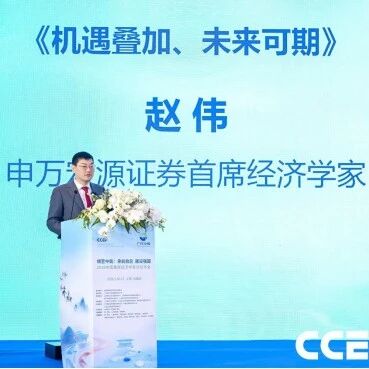
赵伟:机遇叠加、未来可期
申万宏源证券上海北京西路营业部· 2026-01-14 02:07
Economic Outlook - The core theme of the speech is the economic outlook for 2026, emphasizing a "non-typical recovery" and the importance of the "15th Five-Year Plan" as a key period for policy and economic environment understanding [3][4] - The phrase "comprehensive efforts" indicates that policy implementation in development and reform areas will accelerate, while "strategic initiative" suggests an increase in proactive policy measures [3][4] Policy and Market Dynamics - Since 2025, there have been significant reforms aimed at accelerating service trade openness, which may further enhance domestic reform and development [4] - The fiscal policy remains positive, ensuring necessary fiscal spending and debt levels, while monetary policy emphasizes flexible and efficient use of tools like interest rate cuts [5][6] - The "cross-cycle" concept has returned, but it does not imply a reduction in growth stabilization efforts; instead, it indicates a commitment to maintaining strong fiscal policies [5][6] Structural Changes and Recovery - The "post-epidemic scar effect" is weakening, with indicators showing improved mobility and a recovery in certain sectors, suggesting a natural bottoming out of the economy [6][7] - The impact of tariff conflicts on the economy has diminished, with China's export structure improving and high-value-added goods gaining a larger share [7][8] - The recovery in 2026 is characterized by limited volume elasticity, with prices returning to normal levels, leading to a nominal GDP increase from approximately 4% in 2025 to around 5% in 2026 [8][9] Capital Market Insights - The relationship between the ten-year government bond yield and A-share dividend yield reflects market sentiment, which has shifted since 2022 due to concerns about China's long-term economic issues [10][11] - A significant change in investment behavior is noted, with overseas investors showing renewed interest in Chinese assets, driven by a shift in macroeconomic narratives and structural policies aimed at restoring corporate profitability [12][14] - The nominal GDP recovery is expected to continue influencing the "funds rebalancing" process, with the A-share market poised for potential gains as dividend yields align with bond yields [14][15] Currency and Investment Outlook - The worst economic pressures are believed to have passed, with expectations of a gradual appreciation of the RMB by 2-3% annually over the next few years, potentially attracting foreign investment [16][18] - The anticipated currency appreciation, combined with attractive interest rates, may lead to significant changes in foreign investment behavior towards Chinese markets [16][18]

赵伟:机遇叠加、未来可期
申万宏源宏观· 2026-01-13 09:21
Economic Outlook - The core viewpoint emphasizes that 2026 marks the beginning of the "15th Five-Year Plan," which is crucial for understanding future policies and economic environments. The focus will be on "comprehensive efforts" and "strategic initiative" in various sectors [3][4] - "Comprehensive efforts" suggests an acceleration in policy implementation across development and reform areas, while "strategic initiative" indicates an increase in proactive policy measures, particularly in domestic economic management and international trade [3][4] Policy Framework - The central economic work conference has highlighted an increased frequency of terms like "reform" and "opening up," indicating a shift in focus for 2026. The concept of "cross-cycle" has returned, but this does not imply a reduction in growth stabilization efforts [5][6] - Fiscal policy will remain proactive, ensuring necessary spending and debt levels, while monetary policy will emphasize flexibility and efficiency in using tools like interest rate cuts [6][5] Market Dynamics - The analysis of 2025 reveals three significant shifts: the weakening of post-pandemic scars, reduced impact from tariff conflicts, and the establishment of a coherent new policy framework since late 2024 [7][8][9] - The economic recovery in 2026 is characterized as "atypical," with limited volume elasticity and a focus on price normalization, leading to a nominal GDP recovery from approximately 4% in 2025 to around 5% in 2026 [9] Capital Market Insights - The relationship between the ten-year government bond yield and A-share dividend yield illustrates the emotional cycles in the capital market, which have been disrupted since 2022 due to long-term concerns about the Chinese economy [10][11] - Key events influencing market behavior include a policy shift in late 2024 and the introduction of DeepSeek, which has redirected investment thinking from macro to micro perspectives [12][11] Investment Behavior - The new tariff war initiated by the Trump administration has led to a reevaluation of investment strategies, with non-U.S. funds increasingly seeking opportunities in China as the perception of risk shifts [13] - The "anti-involution" policy has gained attention, indicating a structural approach to restoring corporate profitability and nominal GDP growth, which has initiated a domestic "funds rebalancing" process [13] Future Projections - The nominal GDP recovery is expected to continue driving the "funds rebalancing" process into 2026, with a potential rise in bond market interest rates and support for traditional sectors' profitability and valuation [14] - The RMB is anticipated to enter a period of appreciation, with a projected annual increase of 2-3%, which could attract foreign investment and positively impact the stock market [15]
招商证券:12月增量资金有望整体保持平稳净流入 外资活跃度或继续回升
智通财经网· 2025-12-04 13:15
Core Viewpoint - The report from China Merchants Securities indicates that incremental capital is expected to maintain a stable net inflow in December, with foreign capital activity likely to continue to rebound [1][4]. Group 1: Market Style Outlook - The market style is expected to focus on large-cap stocks, with a potential shift from growth to value [2]. - Historical data shows that large-cap styles have outperformed in December, influenced by policy expectations from key domestic meetings and the upcoming annual report preview window [2]. - The central bank's recent monetary policy report suggests a "cross-cycle" approach, indicating that policy support may be more pronounced next year [2]. Group 2: External Factors - The likelihood of a hawkish rate cut by the Federal Reserve in December is high, which may lead to a peak in the US dollar index, reducing external liquidity's impact on the market compared to November [2]. - The demand for foreign capital is expected to increase due to the anticipated strength of the RMB, driven by year-end settlement needs and a peak in the dollar index [2]. Group 3: Fund Flows and Liquidity - December is projected to see stable net inflows of incremental capital, with foreign capital activity expected to rise [4]. - The monetary market's liquidity remained stable in November, supported by the central bank, and is likely to continue being reasonably ample in December [4]. - New equity fund issuance is expected to provide additional capital for sectors like AI and chips, with significant fundraising occurring in early December [2][4]. Group 4: Market Sentiment and Preferences - Market risk appetite has fluctuated, with a shift towards defensive trading characteristics, favoring low-volatility sectors such as banking and textiles [5]. - Defensive sectors have performed well, while previously high-performing sectors like technology and automotive have seen declines [5].

国家发改委:更好发挥政府投资基金跨周期、逆周期调节作用,对评优基金予以优待
Bei Jing Shang Bao· 2025-07-30 03:26
Core Viewpoint - The National Development and Reform Commission (NDRC) is soliciting public opinions on the "Guidelines for the Layout Planning and Investment Direction of Government Investment Funds" and the "Management Measures for Strengthening the Guidance and Evaluation of Government Investment Fund Directions" [1] Group 1 - The "Management Measures for Strengthening the Guidance and Evaluation of Government Investment Fund Directions" outlines three fundamental principles for guiding evaluation management: emphasizing fund positioning, promoting effective market and proactive government integration, and focusing on policy objectives to support major strategies and key areas [3] - The guidelines aim to attract more social capital to support the construction of a modern industrial system, accelerate the cultivation of new productive forces, and promote deep integration of technological and industrial innovation [3] - The guidelines emphasize the importance of long-term investment in certain fields, enhancing the role of funds as long-term and patient capital for cross-cycle and counter-cyclical adjustments [3] Group 2 - The evaluation results of fund directions will be applied, with incentives for top-ranked funds including commendation, demonstration promotion, project recommendations, and resource guarantees [4] - National-level funds are encouraged to collaborate more with local exemplary funds in terms of investment and project funding [4] - For lower-ranked funds, the NDRC and relevant departments will strengthen guidance on investment directions and may implement corrective measures such as interviews, notifications, and warning letters [4]