
无人配送

Search documents
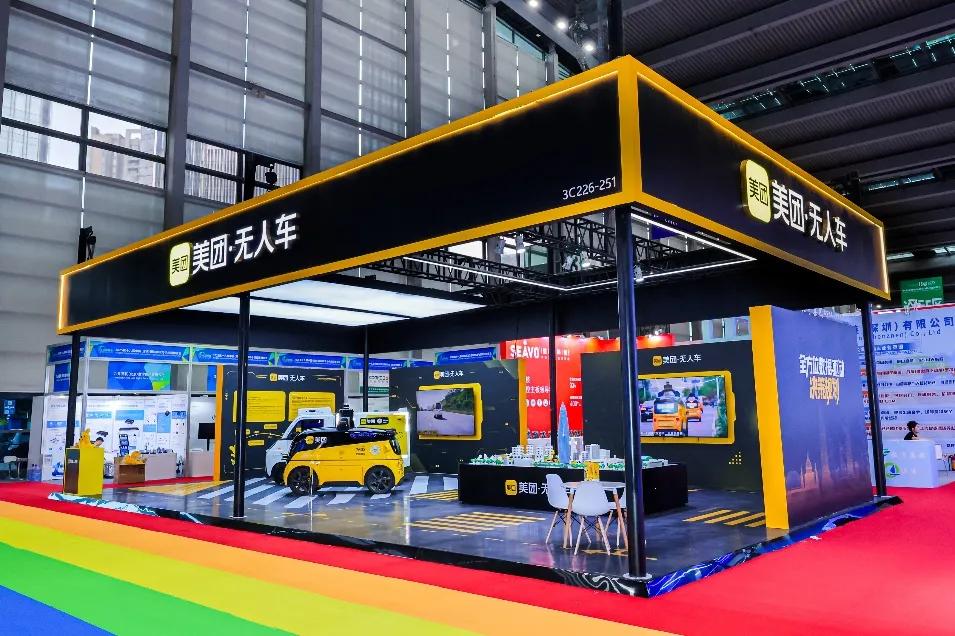
美团新一代无人驾驶微型货车亮相深圳 获批深圳无人城配跨区试点
Cai Jing Wang· 2025-09-26 09:10
Core Insights - The 19th China (Shenzhen) International Logistics and Supply Chain Expo opened on September 25, showcasing Meituan's next-generation unmanned delivery vehicle, marking a significant step in its global expansion strategy [1][6]. Group 1: Product Features and Capabilities - The new unmanned delivery vehicle can handle orders over 30 kilometers, complementing the previous generation's 3 to 5 kilometers range, thus expanding the service radius [2]. - The vehicle is designed with a maximum speed of 71 km/h and a cargo volume of 1840L, capable of carrying approximately 140 boxes of bottled water [2]. - Equipped with a comprehensive sensor suite for 360° perception, the vehicle can navigate complex scenarios such as blind intersections and adverse weather conditions, ensuring safety and reliability [2]. Group 2: Operational Achievements and Network Development - Meituan's unmanned delivery vehicle has been approved for a cross-district pilot in Shenzhen, creating a city-level unmanned delivery network connecting key districts [5]. - Over the past five years of operation in Shenzhen, the unmanned vehicles have alleviated peak delivery pressures and maintained service during extreme weather, completing deliveries even during 118 days of heavy rain in 2024 [5]. - The "human-vehicle collaboration" model has integrated unmanned vehicles into the urban delivery network, contributing to the establishment of a "15-minute convenient living circle" in Shenzhen [5][6]. Group 3: Global Expansion and Future Plans - Meituan's unmanned delivery vehicle has initiated L4 autonomous driving tests in Riyadh, Saudi Arabia, with plans to expand testing to Saudi Arabia and the UAE by the end of 2025 [1][6]. - The ongoing development of autonomous driving technology and favorable policy environments is reshaping urban logistics, with Meituan's practices in Shenzhen providing valuable insights for building smart logistics infrastructure and global business expansion [9].


桐庐打造智慧物流新高地
Hang Zhou Ri Bao· 2025-09-25 03:08
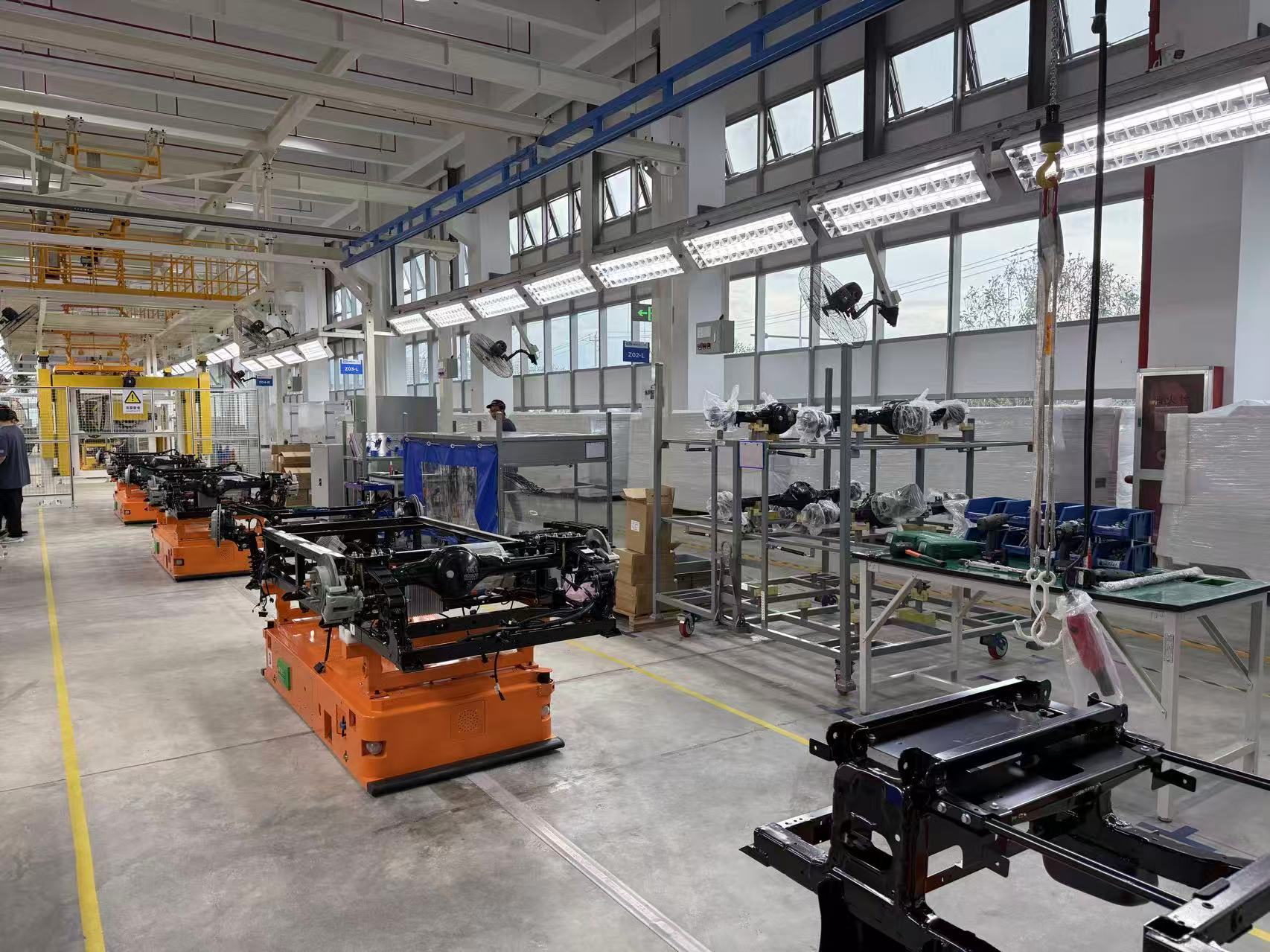
Core Insights - The article highlights the milestone achievement of New Stone Technology in delivering the world's first fleet of 10,000 autonomous delivery vehicles, marking a significant transition from technology validation to large-scale commercial application in the logistics sector [1][2]. Company Overview - New Stone Technology, founded in 2018, aims to popularize autonomous vehicles globally and has achieved rapid growth, including the establishment of the world's first factory with a capacity for 10,000 units in 2019 and obtaining public road testing qualifications for autonomous delivery vehicles in 2021 [1]. - The company has delivered over 1,000 units annually by 2024 and its L4 autonomous vehicles have accumulated over 42 million kilometers in driving distance, covering more than 280 cities across 15 countries and regions [1]. Industry Context - The city of Tonglu, known as the "hometown of private express delivery in China," has a robust logistics infrastructure, with nearly two-thirds of the national express delivery volume (1.1 billion packages) handled by local companies, providing a natural testing ground for autonomous vehicle technology [2]. - The logistics-related industry in Tonglu is projected to generate revenue of 48 billion yuan, contributing to a county GDP exceeding 50.2 billion yuan by 2024 [3]. Strategic Developments - New Stone Technology's headquarters and R&D production base were established in Tonglu, with an expected annual output value of 100 million yuan and a cumulative output value projected to exceed 5 billion yuan within five years [2]. - The company has signed contracts to supply 10,000 autonomous vehicles to major logistics players, enhancing industry collaboration and synergy [2].
新石器完成万台无人车交付 无人配送迎来规模化拐点了吗?
Huan Qiu Wang· 2025-09-25 02:22
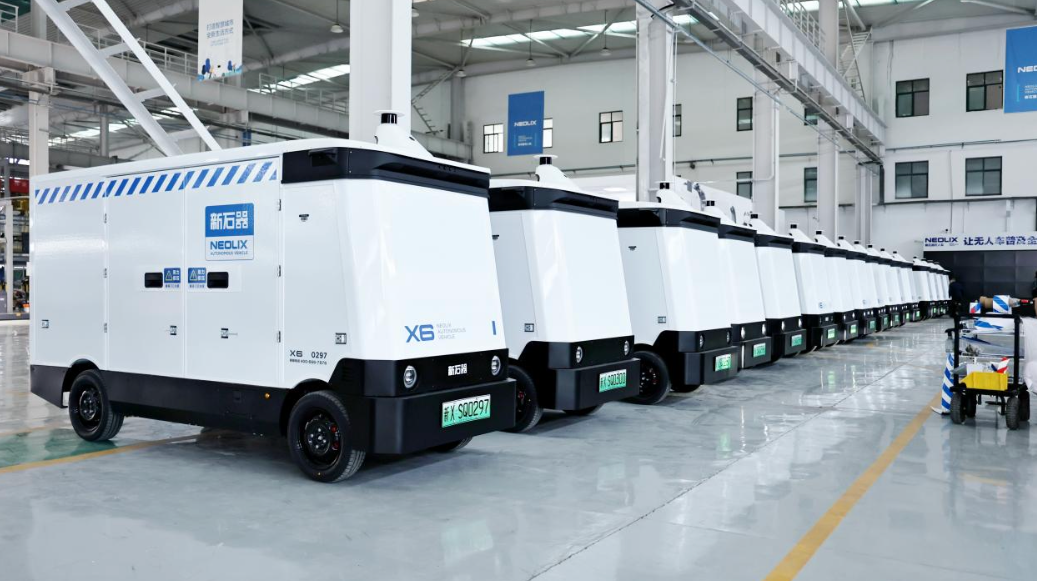
Core Insights - New Stone's unmanned vehicle has achieved a significant milestone with the delivery of its 10,000th vehicle, marking a critical step from technology validation to large-scale deployment within seven years since its establishment in 2018 [1][2] - The company emphasizes safety as a non-negotiable priority, focusing its research and operational efforts on safety through a perception solution that combines vision and laser radar [1][4] Group 1: Production and Delivery - New Stone's monthly sales are approaching 2,000 units, with an expectation to exceed 15,000 units for the year and a projected domestic demand of 40,000 to 50,000 units next year [2][4] - The company has transitioned from a trial phase to commercial operations, with a tenfold increase in delivery speed from 2024 onwards [2][4] Group 2: Market Dynamics - The growth in the unmanned vehicle sector is driven by a combination of technological advancements, market demand, and supportive policies, with key milestones including the open-source Transformer in 2021 and the opening of road rights for unmanned vehicles in Beijing [4][5] - The logistics industry is experiencing a shift towards a price competition phase, but New Stone believes the true business model lies in providing transportation services rather than selling vehicles [5][6] Group 3: Opportunities and Challenges - The company currently derives 70-80% of its sales from the express delivery sector, but non-express scenarios are rapidly emerging, with significant partnerships expanding from pilot projects to large-scale operations [6][7] - The transition from planned logistics to instant logistics presents a substantial market opportunity, potentially expanding the market size from millions to tens of millions of vehicles [6][7] Group 4: Future Outlook - New Stone aims for exponential growth in the unmanned vehicle market, targeting a long-term goal of reaching one million vehicles, contingent on the gradual opening of road rights based on demand [7] - The company faces challenges in global expansion, including local regulations and the need for localized operational teams, which complicates international market entry [6][7]
无人车为快递网点抠出0.1元成本
Di Yi Cai Jing· 2025-09-24 12:35
Core Insights - The rapid adoption of functional unmanned vehicles in the express delivery industry is significantly reducing costs and improving efficiency [1][2] - Unmanned vehicles are reported to lower transportation costs by approximately 0.1 yuan per package compared to human delivery [1] - Monthly sales of unmanned vehicles have surged from 200-300 units at the beginning of the year to nearly 2000 units currently [2] Group 1: Industry Impact - The deployment of unmanned vehicles has transitioned from pilot programs at select locations last year to widespread implementation this year [1] - Unmanned vehicles are being utilized effectively in logistics, with one express delivery point reporting a cost of 0.06 yuan per package for unmanned transport [1] - Major express companies like Zhongtong and Jitu are significantly increasing their fleets of unmanned vehicles, with Zhongtong operating over 2000 units across more than 700 locations [1] Group 2: Company Developments - New Stone Technology has delivered its 10,000th unmanned vehicle, indicating strong growth in production and delivery capabilities [1] - Zhongtong has reported that its unmanned vehicles can handle 200,000 packages daily, showcasing the scale of operations [1] - Jitu plans to add 3000 unmanned vehicles this year, having already deployed 900, up from just 218 at the end of last year [1]

无人车加速落地 为快递网点抠出0.1元成本
Di Yi Cai Jing· 2025-09-24 12:03
Core Insights - The deployment of functional unmanned vehicles is accelerating, with New Stone's unmanned vehicle announcing the delivery of its 10,000th unit, marking a shift from trial runs to widespread adoption in the logistics sector [1][4] Cost Reduction and Efficiency - The Shenzhen Intelligent Connected Transportation Association reported that in September, there were 320 unmanned logistics vehicles operating in Shenzhen, completing 900,000 deliveries and generating approximately 7.6 million yuan in commercial value [2] - Unmanned vehicles have demonstrated higher delivery efficiency, with an average of over 200 packages delivered per vehicle per hour, surpassing traditional delivery vehicles [2] - Cost savings are evident, with one logistics point reporting a cost of 0.06 yuan per package for unmanned vehicle transport, compared to a reduction of about 0.1 yuan per package for human delivery [2] Industry Feedback and Improvement Areas - Despite the benefits, there are areas for improvement in unmanned vehicle technology, such as enhancing smart interaction features for customers to modify delivery details directly on the vehicle [3] - The quality of after-sales service is a significant concern for logistics points, as they prioritize ongoing support over the initial purchase price of the vehicles [3] Rapid Adoption of Unmanned Vehicles - Zhongtong has deployed over 2,000 unmanned vehicles across more than 700 logistics points, achieving a daily delivery capacity of 200,000 packages [4] - Jitu plans to add 3,000 unmanned vehicles this year, having already deployed 900, up from just 218 at the end of last year [4] Pricing Strategies and Market Entry - Several manufacturers have lowered entry barriers by changing pricing models, such as offering subscription services and financing options, making unmanned vehicles more accessible to logistics points [5] - The industry anticipates that by July 2025, approximately 15,000 unmanned delivery vehicles will have been delivered, with over 60% of these deliveries occurring after a significant price drop in the second quarter of 2025 [5] Financing and Cost Trends - The decline in unmanned vehicle prices is linked to increased financing for manufacturers, with New Stone securing 1 billion yuan in funding and other companies like Jiu Si and White Rhino also receiving substantial investments [6] - The prices of key components like lidar and batteries are decreasing, suggesting further potential for cost reductions in unmanned delivery vehicles [6]
无人车加速落地,为快递网点抠出0.1元成本
Di Yi Cai Jing· 2025-09-24 11:39
Core Insights - The rapid adoption of functional unmanned delivery vehicles is significantly enhancing delivery efficiency and reducing costs in the logistics sector [1][2][4][5]. Industry Overview - The Shenzhen Intelligent Connected Transportation Association reported that functional unmanned vehicles have an average delivery volume exceeding 200 items per vehicle per hour, surpassing traditional delivery vehicles [1][5]. - As of September, there were 320 unmanned logistics vehicles operating in Shenzhen, covering a total distance of 230,000 kilometers and completing 900,000 deliveries, generating approximately 7.6 million yuan in commercial value [4]. Company Developments - New Stone Technology announced the delivery of its 10,000th unmanned vehicle, marking a shift from trial operations to accelerated deployment in the current year [2]. - Zhongtong has deployed over 2,000 unmanned vehicles across more than 700 outlets, capable of delivering 200,000 packages daily [7]. - Jitu plans to add 3,000 unmanned vehicles this year, having already deployed 900, a significant increase from 218 at the end of last year [8]. Cost Efficiency - Unmanned vehicles are reported to reduce delivery costs significantly, with one logistics point indicating a cost reduction of approximately 0.1 yuan per item compared to manual delivery [5]. - The cost of operating unmanned vehicles is around 0.06 yuan per item for transporting from primary to secondary logistics points, demonstrating a clear cost advantage [5]. Market Trends - The market for unmanned delivery vehicles is experiencing rapid growth, with monthly sales increasing from 200-300 units at the beginning of the year to nearly 2,000 units currently [8]. - The introduction of flexible payment models, such as subscription services, has lowered the entry barrier for logistics companies, making unmanned vehicles more accessible [10][11]. Technological Advancements - The maturity of autonomous driving technology is facilitating the efficient completion of the "last mile" delivery, which is crucial for enhancing the overall delivery process [6]. - Key components like lidar and batteries are becoming cheaper, indicating potential for further price reductions in unmanned delivery vehicles [12].
新石器完成1万台无人车下线交付
Zhong Guo Qi Che Bao Wang· 2025-09-24 06:33
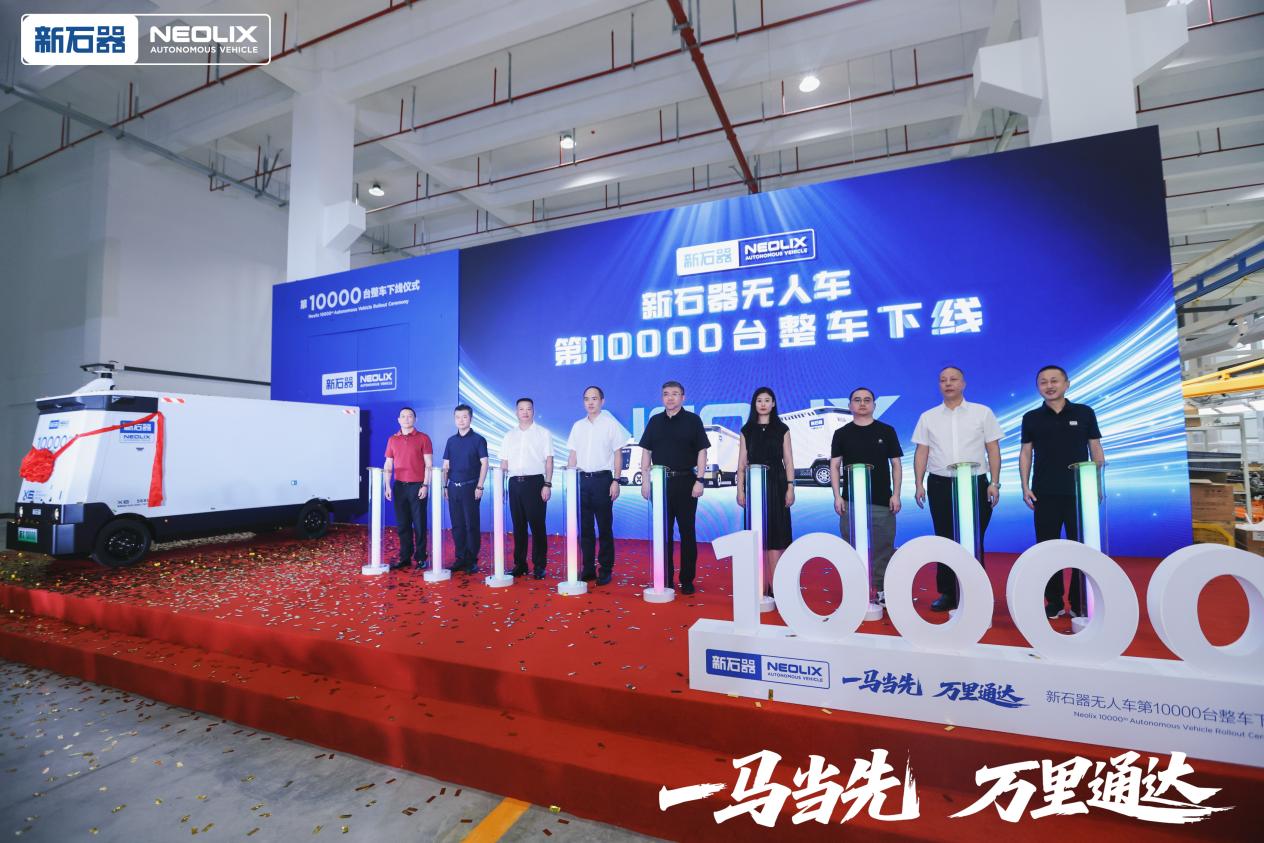
9月23日,无人配送企业新石器无人车宣布,第10000台整车在浙江桐庐正式下线交付。桐庐作为民营快递之乡,聚集了3万多个覆盖全国且走向全球的 快递网点老板,在此设厂能贴近客户获取第一手需求反馈,还能吸引更多产业链上下游企业关注,形成产业集聚效应。 除快递场景外,新石器无人车还加速在即时物流、生鲜配送、医药冷链、团餐运输、社区零售等场景的部署,将成为新的增长驱动力。特别是今年下半 年以来,新石器通过与滴滴货运合作,向实时调度物流延伸。预计到今年底,新石器在快递以外场景的无人车铺设量将达4000至5000台,其中大部分用于实 时物流调度。 余恩源表示,公司原计划今年交付1万台,9-10月已提前一季度完成,剩余季度将保持2000台以上的产能和销量,全年有望突破1.5万台,力争年底现金 流转正,同时为明年国内4-5万台需求做产能准备,预计后年加上海外需求或超10万台。在海外布局上,余恩源强调中国在供应链上具有独特优势,美国等 海外竞品多仅具备算法但不具备供应链,整体成本是中国的10倍以上,目前新石器在中东、欧洲、东南亚等市场无海外竞对,但出海面临地方性法律法规及 本地化等挑战,难度堪比重新创业。 最近广东地区的台风天 ...
无人物流车火了!上市公司纷纷入局
Zheng Quan Shi Bao Wang· 2025-09-24 03:05
Core Insights - The demand for unmanned delivery is increasing due to rising labor costs, with last-mile delivery costs exceeding 30% of total logistics costs [1][2] - The Chinese government has introduced favorable policies to support the commercialization of unmanned logistics vehicles, facilitating their deployment across various sectors [2][4] - The cost of unmanned vehicles is rapidly decreasing, making them more accessible for large-scale applications [3][4] Industry Acceleration - National policies have been implemented to promote unmanned logistics vehicles, including the issuance of "pass permits" and the gradual opening of road rights in various provinces [2] - As of September 2025, over half of China's 3,600 districts and counties support unmanned vehicles on the road, indicating a significant expansion of policy support [2] - The growing market demand, particularly in the pharmaceutical sector, is driving the need for faster delivery methods [2][7] Cost Reduction and Commercialization - The price of unmanned vehicles has dropped significantly, with some models now available for under 20,000 yuan, compared to over 1 million yuan in 2018 [3] - The supply chain for unmanned vehicles includes essential components like smart driving technology and sensors, with prices for these components also decreasing [3] - The reduction in delivery costs is paving the way for broader commercialization of unmanned vehicles [2][3] Strategic Company Initiatives - Companies like Desay SV and Youjia Innovation are entering the unmanned logistics market with differentiated strategies, focusing on low-speed unmanned vehicles and leveraging existing data for algorithm optimization [4][5] - Desay SV has launched its "Chuanxing Zhiyuan" brand, emphasizing the importance of adhering to automotive industry safety standards for large-scale procurement [4] - Youjia Innovation has quickly delivered its unmanned vehicles to clients in the express delivery sector, establishing strategic partnerships with local postal services [5] Commercial Success Stories - The collaboration between Zhongying Pharmaceutical Group and Cainiao has set a benchmark in pharmaceutical delivery, achieving a 50% cost reduction and a 70% efficiency increase through unmanned vehicle deployment [7] - In the express delivery sector, unmanned vehicles have significantly lowered costs, with one logistics hub reporting a 70% reduction in per-package costs [7] Challenges and Future Outlook - Despite rapid growth, the unmanned logistics industry faces challenges related to system integration and balancing costs, performance, and timelines [8] - The potential for unmanned vehicles to replace traditional transport methods is substantial, with an estimated market size of 207.1 billion yuan [9] - Industry experts predict that unmanned delivery will become a standard practice in logistics within the next 3 to 5 years as costs continue to decline and technology advances [9]
新石器无人车创始人兼CEO余恩源:无人车将重构全球物流基础设施
Zheng Quan Ri Bao Wang· 2025-09-24 02:47
本报记者 梁傲男 9月23日,新石器慧通(北京)科技有限公司旗下新石器无人车的第10000台整车在浙江桐庐正式下线交付,不仅标志着全 球首个万台规模的无人配送车队由此诞生,也意味着"无人配送"行业从技术验证步入大规模商业化落地的新时期。 交付现场,新石器无人车创始人兼CEO余恩源在接受《证券日报》记者采访时表示:"年初我们设定的年度目标是交付过 万台,目前进展速度超出预期。今年第四季度,我们将维持每月两千台以上的产能和销量,全年交付量预计突破1.5万台。" "第10000台车下线是新石器迈出的一小步,也是无人配送行业发展的新开始。"余恩源表示,相信无人车未来将重构整个 全球的物流基础设施,为客户更好地降本增效。 在经营层面,他提到,公司计划在未来几个月实现现金流转正,并已开始为明后年的市场爆发做准备。"明年仅国内市场 需求预计就将达到4万至5万台,后年全球需求有望突破10万台。我们正积极扩产桐庐等工厂的产能,并与多家主机厂协同合 作,强化生态能力,以应对即将到来的需求增长。" 有分析认为,一万辆的交付量不仅验证了企业技术的可靠性与可扩展性,还显著降低运营成本,提升商业可行性,加速盈 利进程,强化市场信心并吸引 ...
物流无人车商业化提速 多方合力破解运输降本“最后一公里”
Zheng Quan Shi Bao· 2025-09-23 18:13
Core Insights - The demand for unmanned delivery is increasing due to rising labor costs, with last-mile delivery costs exceeding 30% of total logistics costs [1][2] - Government policies are facilitating the commercialization of unmanned vehicles, with over half of China's districts supporting their road usage by September 2025 [2][8] - The cost of unmanned vehicles is rapidly decreasing, making them more accessible for large-scale applications [3][4] Industry Acceleration - National policies have been introduced to support unmanned logistics vehicles, including the "Notice on Conducting Pilot Work for Intelligent Connected Vehicles" [2] - As of September 2025, over 1,900 out of 3,600 districts in China have allowed unmanned vehicles on the road, indicating a significant expansion of policy support [2] - The increasing demand for timely delivery in sectors like pharmaceuticals is driving the need for unmanned delivery solutions [2][7] Cost Reduction and Commercialization - The price of unmanned vehicles has dropped significantly, with some models now available for under 20,000 yuan, compared to over 1 million yuan in 2018 [3][4] - The supply chain for unmanned vehicles is becoming more cost-effective, with components like lidar and cameras seeing substantial price reductions [3] - The reduction in delivery costs is paving the way for broader commercialization of unmanned vehicles [4][8] Strategic Moves by Listed Companies - Companies like Desay SV and Youjia Innovation are entering the unmanned logistics market with differentiated strategies [4][5] - Desay SV launched its "Chuanxing Zhiyuan" brand, focusing on low-speed unmanned vehicles with innovative features [4] - Youjia Innovation's "Xiaozhu Unmanned Vehicle" is designed for logistics scenarios, leveraging data from previous operations for optimization [5][6] Commercial Success Stories - Partnerships between companies like Zhongying Pharmaceutical Group and Cainiao have demonstrated the effectiveness of unmanned delivery, achieving a 50% reduction in delivery costs and a 70% increase in efficiency [7] - In the express delivery sector, unmanned vehicles have reduced costs by 70%, with per-package costs dropping to 0.1 yuan [7] - By September 2025, Cainiao's unmanned vehicles are expected to cover 25 provinces and over 1,900 districts in China [7] Challenges and Future Outlook - The unmanned vehicle industry faces challenges related to system integration and balancing costs, performance, and cycles [8] - Low-speed unmanned vehicles can address last-mile delivery issues while also enhancing autonomous driving algorithms through data feedback [8] - The logistics unmanned vehicle market has the potential to replace 4.44 million commercial vehicles annually, with a corresponding market size of 207.1 billion yuan [8]