自动驾驶

Search documents
滴滴:4508亿规模下的盈利隐忧与全球化赌局
Xin Lang Cai Jing· 2026-03-19 09:33
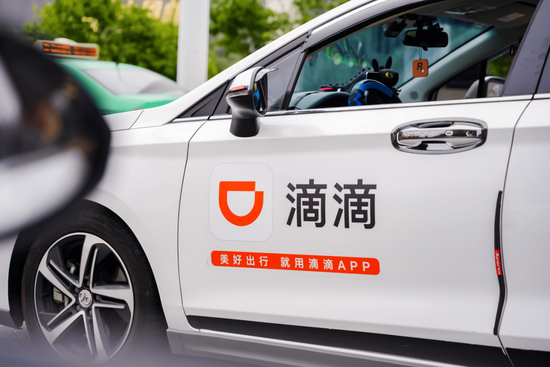
Core Insights - Didi achieved a total order volume of 18.24 billion and a total transaction value of 450.8 billion in 2025, demonstrating its dominance in the global mobility market [1][13] - Domestic business has shown double-digit growth for 12 consecutive quarters, while international market orders surged by 24.7%, indicating a strategic focus on "stabilizing domestic, expanding internationally, and investing in technology" [1][13] - However, the company faced a decline in net profit by over 20% year-on-year, with international business losses expanding to 6.05 billion, and sales expenses increasing by 46.1% [1][13] Financial Performance - Didi's financial report for 2025 shows a stark contrast: a net profit of 0.992 billion, recovering from a loss of 0.973 billion in the first nine months, but the quality of profit is declining [3][16] - The quarterly profit fluctuations reveal a "roller coaster" trend, with a net profit of 1.463 billion in Q3, but a subsequent adjusted EBITA loss of 2.115 billion in Q4, marking the highest quarterly loss since 2022 [3][16] - Domestic business contributed 75% of total order volume, but its profit contribution is being eroded by international expansion, with domestic adjusted EBITA at 12.35 billion and international losses at 6.05 billion [3][16] Growth and Profitability Discrepancy - Despite continuous double-digit growth in domestic orders, profit margins slowed in Q4 due to short-term factors like holiday subsidies and equipment investments [4][17] - The international business is caught in a cycle where larger scale leads to greater losses, with Q4 overseas GTV increasing by 47.1% but order volume only growing by 24.5% [5][17] Strategic Challenges - The decline in profitability quality reflects a clash of strategic choices, operational models, and external environments [7][19] - The domestic market is facing growth bottlenecks, with increasing pressure on monetization and user retention, leading to a potential loss of drivers due to rising costs [7][19] - The international expansion strategy is heavily reliant on subsidies, with local competition intensifying, particularly in markets like Brazil and Mexico [7][19] Future Outlook - Didi plans to adjust its strategy for 2026, focusing on balancing domestic stability, controlling international expansion, and improving efficiency [10][22] - The company aims to shift from increasing commission rates to expanding value-added services, with expectations of maintaining around 10% growth in domestic orders and adjusted EBITA potentially exceeding 15 billion [10][22] - For international markets, Didi intends to reduce reliance on subsidies and enhance local operations, with a target to narrow international losses to within 4 billion [10][22] Strategic Investments - Didi's investments in autonomous driving and new energy are consuming significant cash flow, with R&D spending reaching 8.4 billion in 2025 [8][20] - The focus will shift towards commercializing autonomous driving and collaborating with vehicle manufacturers to reduce costs and secure government subsidies [11][23] - The core logic for improving profitability in 2026 hinges on releasing domestic profits and narrowing international losses, with a potential net profit growth of 15-20% if targets are met [12][24]


无人驾驶出行来了,彻底引爆北上广深
盐财经· 2026-03-19 09:29
Core Viewpoint - The article highlights the significant advancements in the autonomous driving sector, particularly focusing on the commercialization of Robotaxi services by Xiaoma Zhixing, marking a pivotal shift from technology to practical application in daily life [4][8]. Group 1: Commercialization and Profitability - Xiaoma Zhixing achieved single-vehicle operational profitability in Guangzhou in November 2025 and replicated this success in Shenzhen in February 2026, with an average net income of 338 yuan per vehicle per day and 23 orders per vehicle daily [3][4]. - The transition to profitability indicates that Robotaxi services are moving towards large-scale commercial operations, becoming increasingly relevant to everyday life [4][16]. - The company plans to expand its Robotaxi fleet to 1,159 vehicles by the end of December 2025, which is still limited compared to the 100,000 to 200,000 ride-hailing vehicles in major Chinese cities [18]. Group 2: Technological Advancements - Xiaoma Zhixing's seventh-generation Robotaxi has seen a 70% reduction in the cost of its autonomous driving suite compared to the sixth generation, with the cost of onboard computing units decreasing by 80% and LiDAR costs dropping by 68% [15][30]. - The shift in technology from mimicking human drivers to using self-developed world models for reinforcement learning has allowed the company to enhance its autonomous driving capabilities significantly [29][30]. Group 3: Government Support and Policy Innovation - The local government in Nansha, Guangzhou, has played a crucial role in supporting Xiaoma Zhixing by providing a conducive environment for testing and commercializing autonomous vehicles [38][42]. - Nansha has implemented policies that allow for the full-scale testing of intelligent connected vehicles, making it one of the first regions in China to do so [43][46]. - The region's proactive approach has enabled over 60% of users to utilize Xiaoma Zhixing's Robotaxi services for commuting between homes, workplaces, and key transportation hubs [46]. Group 4: Future Challenges and Considerations - Despite the advancements, the industry faces challenges such as the impact on traditional driving jobs, legal frameworks for traffic accidents, and insurance claims that currently assume human drivers [47]. - Recommendations have been made to establish a controlled deployment mechanism for autonomous vehicles and to create new job opportunities to mitigate the impact on displaced workers [47].

对话英伟达业务副总裁:机器人的“ChatGPT时刻”正在到来
第一财经· 2026-03-19 09:21
Core Viewpoint - Nvidia is expanding its business beyond GPUs, positioning itself as a comprehensive provider of AI infrastructure, including data center accelerators, hardware, and software solutions for physical AI applications like robotics and autonomous driving [3][4]. Group 1: Product Expansion - At the GTC conference, Nvidia introduced a variety of products, including data center accelerators, networking products, and open-source models, indicating a shift towards a broader AI infrastructure role [3]. - The introduction of the Groq 3 and Groq 3 LPX chips, which enhance the performance of Nvidia's Rubin platform, signifies a diversification in Nvidia's product offerings beyond traditional GPUs [7]. - The Groq 3 LPX chip can increase inference throughput by 35 times per megawatt when used with Rubin CPU and GPU, showcasing significant performance improvements [7]. Group 2: Chip Heterogeneity - Nvidia's strategy includes integrating LPU (Language Processing Unit) technology with GPUs to address the growing demand for faster inference speeds in large models, indicating a trend towards chip heterogeneity in AI workloads [10][11]. - Ian Buck emphasized that while GPUs will continue to dominate current AI applications, the combination of LPU and GPU will be crucial for next-generation AI workloads, particularly those involving trillion-parameter models [10]. - The industry is moving towards a heterogeneous computing environment, where different types of chips are needed for various workloads, as highlighted by AMD's collaboration with Meta to design semi-custom chips [10][11]. Group 3: Physical AI Development - Nvidia is making significant strides in physical AI, launching the Isaac simulation framework and the Cosmos model for robotics, which aims to unify synthetic world generation and physical AI reasoning [15][18]. - The company is focusing on open-source technologies to foster collaboration in the development of physical AI, as it believes that no single company can achieve this alone [15][19]. - Rev Lebaredian noted that the challenges in robotics are multifaceted, requiring advancements in hardware and software to make robots more functional and accessible [19].

小马智行交付超百辆第七代无人车,已接入如祺出行平台并运营
第一财经网· 2026-03-19 08:21
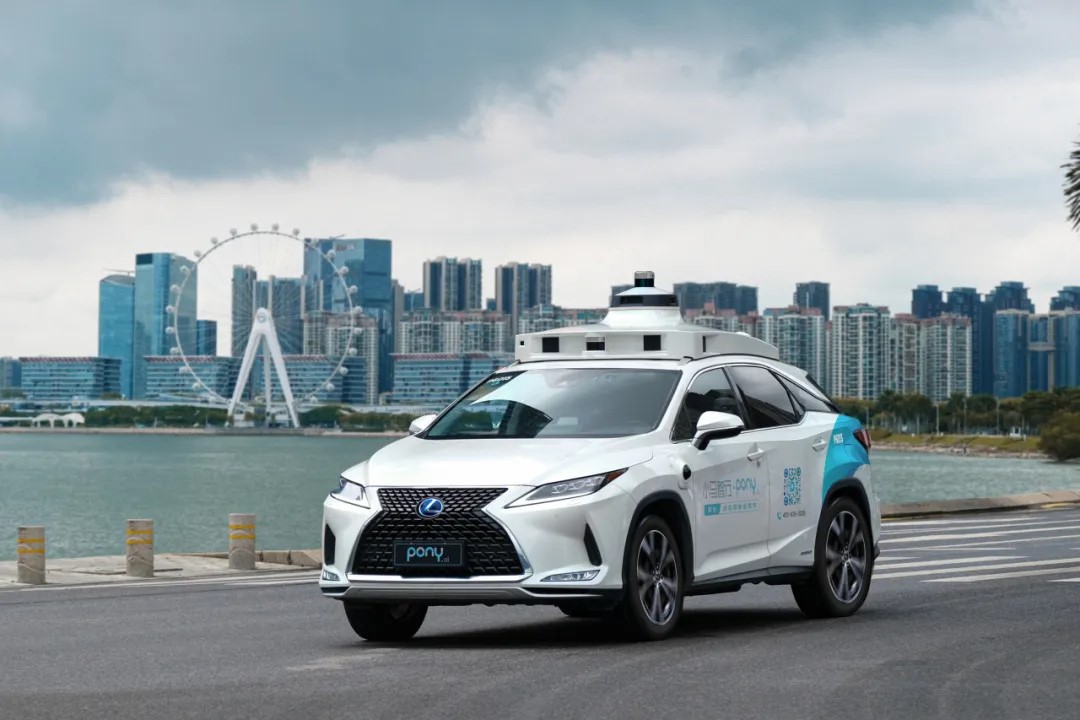
Core Insights - Pony.ai officially delivered over 100 units of the seventh-generation autonomous driving system-equipped GAC Aion Robotaxi to Qiji Mobility, marking the commencement of operations on the Qiji platform and a deepened strategic partnership for a larger Robotaxi fleet [2] Group 1: Company Developments - Pony.ai has achieved dual listing on the Hong Kong and US stock markets, with its seventh-generation Robotaxi becoming a core support for commercialization due to technological breakthroughs [2] - The new Robotaxi model utilizes automotive-grade components with a design lifespan of 600,000 kilometers, and the cost of the autonomous driving kit has decreased by 70% compared to the previous generation [2] - The company has achieved positive operating profitability for single vehicles in Guangzhou and Shenzhen [2] Group 2: Industry Context - Qiji Mobility is focused on the mobility technology sector, showing strong growth in performance and a reduction in losses [2] - Following the addition of new vehicles, Qiji's Robotaxi fleet in the Guangdong-Hong Kong-Macao Greater Bay Area has increased to approximately 600 units, maintaining its leading position in regional autonomous driving mobility services [2] - The collaboration continues the "technology + operation" synergy model, with Pony.ai concentrating on core technology development and iteration, while Qiji Mobility manages fleet asset ownership, dispatch operations, and safety assurance [2]
对话英伟达业务副总裁:机器人的“ChatGPT时刻”正在到来
Di Yi Cai Jing· 2026-03-19 07:15
Core Insights - Understanding Nvidia today is more complex than ever, but the company's role in shaping the future of AI is significant and warrants exploration [1][2] Group 1: Product Expansion and AI Infrastructure - Nvidia's product offerings have expanded significantly, including data center accelerators, racks, networking products, and various open-source models, indicating a shift towards being a comprehensive AI infrastructure provider [1] - The introduction of the LPU (Language Processing Unit) alongside GPUs marks a diversification in Nvidia's data center accelerator products, with the Groq 3 and Groq 3 LPX chips enhancing performance [3][4] - The Groq 3 LPX chip can increase inference throughput by 35 times when used with Rubin CPU and GPU, showcasing the potential of combining different chip types to meet diverse computational needs [3] Group 2: Heterogeneous Computing and Market Dynamics - The integration of LPU into Nvidia's product lineup is a strategic response to the challenges posed by ASICs, as the company aims to address the evolving demands of AI workloads [3][6] - Ian Buck emphasizes the importance of balancing specific computational needs with platform programmability, suggesting that while ASICs can be tailored for specific tasks, they may limit future optimizations [7][8] - The trend towards heterogeneous computing is evident, with other companies like AMD also exploring custom chip designs to meet the diverse requirements of AI workloads [6] Group 3: Physical AI and Robotics - Nvidia has made significant strides in the physical AI domain, launching the Isaac simulation framework and various open-source models to support the development and deployment of robots [10][14] - The Cosmos model serves as a foundational framework for generating synthetic worlds and simulating physical AI, highlighting the company's commitment to open-source collaboration in advancing robotics [10][14] - Rev Lebaredian notes that while challenges in autonomous driving have shifted to engineering, general robotics still faces significant hurdles, including the need for improved physical components and programming efficiency [15]

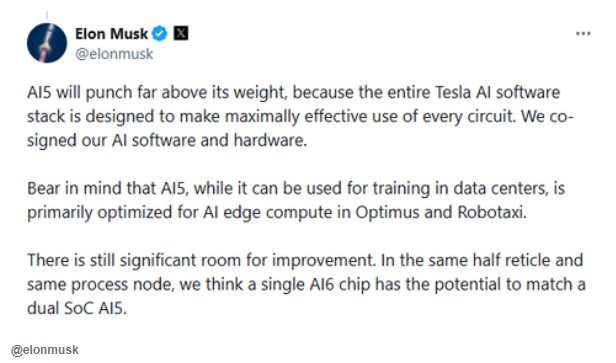
马斯克:对黄仁勋深感钦佩 SpaceX AI与特斯拉(TSLA.US)将持续大规模采购英伟达(NVDA.US)芯片
智通财经网· 2026-03-19 06:23
Group 1 - Elon Musk announced that SpaceX AI and Tesla (TSLA.US) will continue to make large-scale purchases of NVIDIA (NVDA.US) chips [1] - Tesla is developing its fifth-generation AI chip aimed at achieving full autonomous driving, which will power its autonomous driving system [1] - The AI5 chip is primarily optimized for AI edge computing support for the Optimus humanoid robot and Robotaxi autonomous vehicles, despite its capability for data center model training [1] Group 2 - Musk indicated that there is significant optimization potential for the AI5 chip, with expectations that the performance of a single AI6 chip could reach the level of a dual-core AI5 system under the same design and manufacturing process [1] - Tesla plans to widely roll out an updated version of its full self-driving (supervised version) software in the coming weeks [1] - SpaceX acquired xAI through an all-stock transaction, occurring ahead of a potential large-scale IPO later this year, marking the first time Musk referred to the merged entity as "SpaceX AI" [2]

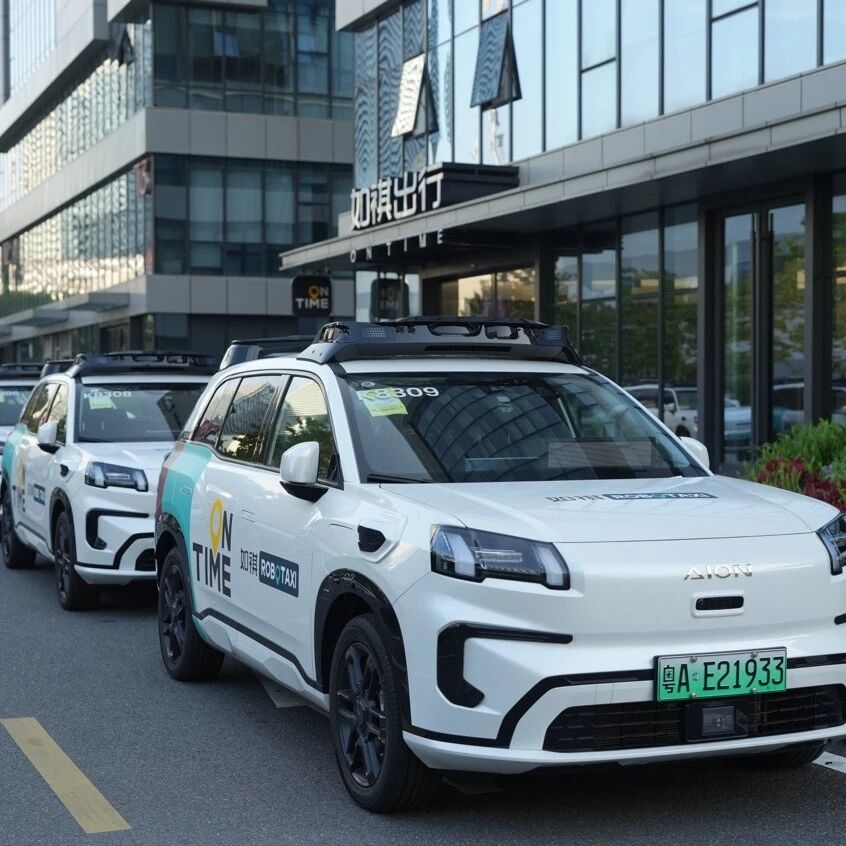
小马智行与如祺出行共建Robotaxi车队 首批交付超百辆第七代无人车
Zheng Quan Ri Bao· 2026-03-19 05:42
Core Insights - The delivery of over 100 units of the new GAC Aion Robotaxi equipped with Pony.ai's seventh-generation autonomous driving system marks a significant step towards the marketization of Robotaxi services, providing a replicable model for "technology + operation" collaboration in the industry [1][2] - Pony.ai and Ruqi Mobility are deepening their strategic partnership to build a larger Robotaxi fleet and enhance operational efficiency across a broader range [1][2] Group 1 - The seventh-generation Robotaxi features enhanced safety, cost control, and user experience, with a total cost reduction of 70% compared to the previous generation [2] - The vehicle is designed for a lifespan of 600,000 kilometers and includes features such as Bluetooth unlocking, voice interaction, online music, and pre-conditioning of the cabin, improving passenger comfort [2] - The seventh-generation Robotaxi has achieved operational profitability in Guangzhou and Shenzhen, indicating strong commercial potential [2] Group 2 - The collaboration between Pony.ai and Ruqi Mobility has been ongoing since 2022, with successful joint operations in Guangzhou, leading to valuable experience in collaboration [2] - The upgrade of this partnership signifies a transition for the autonomous driving industry from technology validation to large-scale market operations, reflecting both companies' confidence and long-term commitment to the future of autonomous driving [2]
马斯克称SpaceX AI和特斯拉将继续大规模订购英伟达芯片
Xin Lang Cai Jing· 2026-03-19 02:45
Group 1 - Elon Musk announced that SpaceX AI and Tesla are expected to continue large-scale orders of Nvidia chips [1][3] - SpaceX acquired xAI through an all-stock transaction, preparing for a potential large IPO later this year, marking the first time Musk referred to the merged entity as SpaceX AI [1][3] - Tesla is designing its fifth-generation AI chips to power its autonomous driving ambitions, which will support the full self-driving software [1][3] Group 2 - The AI5 chips are optimized primarily for humanoid robots like Optimus and AI edge computing for Robotaxi, although they can also be used for training in data centers [1][3] - Tesla is expected to widely release an update for its full self-driving (supervised) software in the coming weeks [4] - The Terafab project for manufacturing AI chips by Tesla is set to launch within seven days [2][5]
小马智行与如祺出行共建Robotaxi车队,首批交付超百辆第七代无人车
IPO早知道· 2026-03-19 02:18
Core Viewpoint - The collaboration model of "technology + operations" is a significant innovation for the marketization of Robotaxi on a large scale [3]. Group 1: Delivery and Collaboration - On March 19, the company Xiaoma Zhixing delivered over 100 units of the new GAC Aion Robotaxi equipped with its seventh-generation autonomous driving system to Ruqi Mobility, marking a key step towards the marketization of Robotaxi [3]. - Xiaoma Zhixing and Ruqi Mobility will deepen their strategic cooperation to build a larger Robotaxi fleet and efficiently conduct broader operations [3]. - This delivery provides a replicable model for the collaborative development of "technology + operations" in the industry [3]. Group 2: Technological Advancements and User Experience - The seventh-generation Robotaxi features enhanced safety performance, cost control, and user experience, with a total cost reduction of 70% compared to the previous generation [5]. - The vehicle supports various user-friendly features such as Bluetooth unlocking, voice interaction, online music, and pre-conditioning of air conditioning, significantly improving passenger comfort [5]. - The optimized acceleration and deceleration control reduces bumps during travel, lowering the risk of motion sickness for passengers [5]. Group 3: Commercial Viability and Market Expansion - The seventh-generation Robotaxi has achieved profitability in single-vehicle operations in first-tier cities like Guangzhou and Shenzhen, indicating a promising commercial outlook [5]. - The long-standing partnership between Xiaoma Zhixing and Ruqi Mobility, which began in 2022, has led to successful regular operations of Robotaxi in Guangzhou, accumulating valuable collaborative experience [5]. - The upgrade of this cooperation signifies a transition from the technical validation phase to large-scale market operations in the autonomous driving industry, reflecting both parties' confidence and long-term commitment to the future of autonomous driving [5].
汽车早餐 | 国家发改委推出新一批重大外资项目;吉利汽车2025年核心归母净利润同比增36%;奇瑞汽车2025年营收超3000亿元
Zhong Guo Qi Che Bao Wang· 2026-03-19 01:50
Group 1: Domestic News - The National Development and Reform Commission has launched a new batch of 13 major foreign investment projects with a planned investment of $13.4 billion, focusing on manufacturing sectors such as electronics, chemicals, automotive, and electrical machinery [2] - Shanghai has recognized 30 new regional headquarters of multinational companies and 15 foreign research and development centers, primarily in key industries like biomedicine, integrated circuits, high-end equipment, automotive, and fashion consumer goods [3] - Chongqing has established the first mandatory insurance mechanism for low-altitude economy, providing risk coverage of 42.6 million yuan for 194 drones operated by Aerospace Technology Group [4] Group 2: Automotive Industry - The China Passenger Car Association reported that from March 1 to 15, retail sales of passenger cars in China reached 561,000 units, a year-on-year decline of 21%, while retail sales of new energy vehicles during the same period were 285,000 units, down 28% year-on-year [5] - Chery Automobile announced a total revenue of 300.29 billion yuan for 2025, with a year-on-year growth of 11.3% and a net profit of 19.51 billion yuan, reflecting a net profit margin increase from 5.3% to 6.5% [12] - Geely Automobile reported a total revenue of 345.2 billion yuan for 2025, a year-on-year increase of 25%, with a core net profit of 14.41 billion yuan, marking a 36% growth [13] - Zotye Automobile's wholly-owned subsidiary, Zhejiang Shenkang Automotive Body Mould Co., has resumed production, although the company faces significant financial pressure and uncertainty regarding the full recovery of its vehicle business [11] Group 3: Technology and Innovation - Xiaomi's ultra-strong steel, with a strength of 2200 MPa, has won the "Science and Technology Innovation Achievement First Prize" from the China Association for the Promotion of Industry-Academia-Research Cooperation, and is now in mass production for new models [14] - GAC Toyota has initiated its first large-scale OTA upgrade for the Platinum 3X model, available for all owners free of charge [15] - The new automotive brand AISTALAND, created by Huawei and GAC, was officially announced, emphasizing the integration of AI in automotive travel [16]