Autonomous vehicles

Search documents
Think It's Too Late to Buy This Leading Tech Stock? Here's the Biggest Reason Why There's Still Time.
The Motley Fool· 2025-08-26 15:40
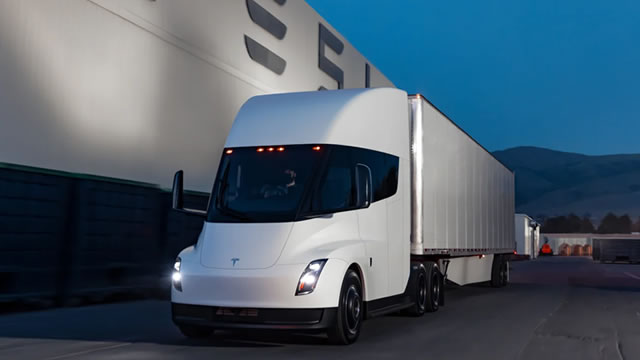
Core Viewpoint - Tesla's robotaxi business and full self-driving (FSD) software represent a natural evolution in the automotive industry, rather than a desperate attempt to save a declining business [1][6]. Group 1: Stock Performance and Market Position - Tesla's stock has seen a decline in 2025, despite generating significant returns over the past decade, leading to concerns that it may be too late for new investors [2]. - The decline in electric vehicle (EV) sales growth, margins, and market share has raised questions about Tesla's future performance [2][3]. Group 2: Robotaxi Business as an Industry Evolution - The robotaxi business should not be viewed merely as a solution to current challenges but as an inevitable progression within the EV industry, supported by substantial investments from other automakers and tech companies in autonomous vehicles [3][6]. - The economic advantages of EVs, such as lower running costs compared to internal combustion engine vehicles, make them ideally suited for constant use in commercial applications like robotaxis [4]. Group 3: Future Outlook - Tesla is well-positioned to capitalize on the commercialization of robotaxis and FSD software, suggesting that there may still be opportunities for investors to engage with Tesla's future performance [6].



Trade Tracker: The Investment Committee share their latest moves
CNBC Television· 2025-08-22 17:14
Investment Opportunities & Strategies - The market presents opportunities to deploy capital during periods of weakness, particularly in long-tailed AI themes where the industry is still in early stages [2][5] - Adjacent plays to hyperscalers, such as Arista Networks, are attractive for increasing allocation [5] - Pullbacks in stocks like Eaton, which is up almost 20% in the last year but down 10% in the last month, present buying opportunities in the power sector, driven by data center growth [7][8] - Uber is seen as a long-term investment with potential to break $100, driven by profitability, share buybacks, and the potential to become a super app [16][18] Company Specific Analysis - Meta is considered a top pick, with a pullback presenting a buying opportunity; one firm bought another 1% stake [2] - Eaton is a $68 billion company based out of Ireland, is a power play benefiting from the expected 160% increase in power needs driven by AI workflows by 2030 [9] - Oracle is considered a key player in the infrastructure build-out for artificial intelligence [14] - Uber's platform is viewed as an ultimate platform, with beta testing in various cities being accretive for the stock [24] - JP Morgan's stock grew to 6% of a portfolio, exceeding the 5% max weighting target, leading to profit-taking and reallocation into Meta [27] Market Trends & Dynamics - There's froth in the market, with outperformance in areas like the Ark Innovation ETF, Super High Beta ETF, and quantum computing ETF [3] - Data centers are a significant area of investment, expected to hit $1 trillion in CapEx in the next year or two [9] - Autonomous driving is finally taking off after a long period of development, with Waymo being a clear leader [22][23]


Could Uber Become a Trillion-Dollar Company One Day?
The Motley Fool· 2025-08-22 11:45
Core Insights - Uber Technologies has evolved from a cash-burning ride-hailing startup to a powerful transport infrastructure company, diversifying its services to include mobility, delivery, and freight, while improving profitability and pursuing autonomy and advertising [1][4][5] Current Position - In 2024, Uber generated $44 billion in revenue with gross bookings of $162.8 billion across its various business segments, achieving adjusted EBITDA of $6.5 billion and consistent GAAP profits for the first time in 2023 and 2024 [4][5] Market Potential - Uber's addressable market is estimated to be in the trillions, with the global taxi and ride-hailing industry projected to reach $712 billion by 2033 and food delivery expected to exceed $2 trillion by 2030 [7][8] Economic Factors - Current ride-hailing margins are constrained by driver costs, but the introduction of autonomous vehicles could significantly increase Uber's take rate and unit margins, while advertising is already on a $1.5 billion annual run rate [9][10] Growth Requirements - To achieve a $1 trillion market cap, Uber would need to grow its annual net income to $40 billion to $50 billion, which requires a sevenfold increase in profits over the next decade [10][11] Strategic Levers - Uber can pursue several strategies to enhance its profit profile, including the adoption of autonomous vehicles, expanding advertising revenue, diversifying delivery services beyond restaurants, and maintaining operational discipline [12][15]

Micron Trades Near 52-Week High: Is the Stock Still Worth Buying?
ZACKS· 2025-08-20 14:06
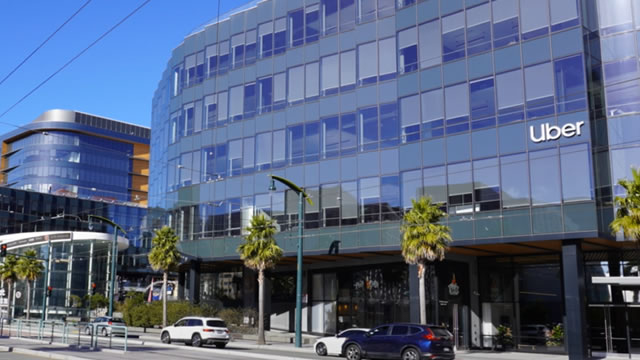
Core Viewpoint - Micron Technology, Inc. has demonstrated significant stock performance, trading near its 52-week high, reflecting strong investor confidence and robust fundamentals [1][4]. Stock Performance - Year-to-date, Micron shares have increased by 45%, outperforming the Zacks Computer and Technology sector's gain of 13.8% [2]. - Major competitors like Advanced Micro Devices, NVIDIA, and Broadcom have seen stock increases of 37.2%, 31.1%, and 27.2%, respectively [2]. Growth Drivers - Micron is positioned at the forefront of transformative tech trends, including artificial intelligence (AI), high-performance data centers, autonomous vehicles, and industrial IoT, which are expected to drive sustainable long-term growth [5]. - The demand for advanced memory solutions, particularly DRAM and NAND, is surging due to the acceleration of AI adoption [5]. - Micron's diversification strategy has shifted focus from volatile consumer electronics to more stable sectors like automotive and enterprise IT, enhancing revenue stability [6]. Product Demand and Innovation - The company is experiencing strong demand for its high-bandwidth memory (HBM) products, particularly the HBM3E, which is noted for its energy efficiency and bandwidth suitable for AI workloads [7]. - Micron's role as a core HBM supplier for NVIDIA's upcoming GPUs indicates deep integration within the AI supply chain [7]. - The establishment of a new HBM advanced packaging facility in Singapore, set to launch in 2026, highlights Micron's commitment to scaling production for AI-driven markets [7]. Valuation and Investment Case - Micron's stock trades at a price-to-sales (P/S) ratio of 2.79, significantly lower than the sector average of 6.74, making it an attractive option for long-term investors [9][13]. - Compared to peers like Advanced Micro Devices, NVIDIA, and Broadcom, which have P/S multiples of 7.4, 18.87, and 19.07 respectively, Micron's relative valuation supports a buy case [16]. Future Outlook - The Zacks Consensus Estimate predicts a revenue increase of 47% for fiscal 2025 and 34% for fiscal 2026, with EPS expected to improve by 518% and 62% for the same periods [10]. - Micron's fundamentals remain strong, and its established position in the AI-driven memory market suggests compelling long-term growth potential [18].

Why Is Everyone Talking About Lyft?
The Motley Fool· 2025-08-14 19:05
Core Viewpoint - Lyft is experiencing a significant turnaround, showcasing strong financial performance and operational efficiency, which is attracting investor interest [1][2][15]. Financial Performance - Lyft reported gross bookings of $4.5 billion, an increase of 12% year over year, and revenue of $1.6 billion, up 11% year over year [9]. - The company achieved a net income of $40.3 million, a substantial rise from $5 million a year ago [9]. - Adjusted EBITDA reached $129.4 million, reflecting a 26% increase with a margin of 2.9% [9]. - Free cash flow for the quarter was $329.4 million, totaling nearly $1 billion over the last 12 months [9]. Business Model and Strategy - Lyft operates a two-sided marketplace connecting riders and drivers, primarily earning revenue through ride commissions [3]. - The company maintains an asset-light model, which minimizes capital needs but increases competition for riders and drivers [3]. - Lyft's narrower focus on mobility services and specific regions (U.S., Canada, and parts of Europe) allows for operational specialization and marketing clarity [4][5]. Operational Improvements - The incentive cost per ride decreased from $1.82 in Q2 2023 to $1.03 in the latest quarter, indicating improved cost management [7]. - Lyft's transition to a profitable business model is crucial in the current higher-interest-rate environment, allowing for funding of future initiatives without relying on debt [8][10]. Growth Opportunities - Lyft plans to expand into the European market through the acquisition of Freenow, potentially accessing 180 cities and broadening its market reach [12]. - The company aims to enhance customer wallet share by increasing ride frequency, expanding its advertising business, and forming new partnerships [13]. - Opportunities in autonomous vehicles through partnerships with companies like Baidu and Benteler Mobility could further drive growth without heavy infrastructure investment [14]. Investor Implications - Lyft's focus on operational efficiency and sustainable growth positions it as a viable alternative to Uber in the ride-hailing industry [15][16]. - While it may not surpass Uber in market share soon, Lyft's disciplined approach and niche ownership could yield solid returns for patient investors [16].


Lucid CEO: We're 'in a good place' with sourcing raw materials
CNBC Television· 2025-08-06 15:36
Financial Performance - Lucid achieved its sixth consecutive record quarter in deliveries and record production in Q2 [2] - Trade policies and tariffs negatively impacted Lucid's gross margin in Q2, but the company expects it to even out for the remainder of the year [2] - Lucid's adjusted IBITDA is negative $632 million, with $4.86 billion in liquidity, expected to last until the second half of next year [8][9] Supply Chain & Raw Materials - Lucid overcame challenges related to magnet availability in Q2, securing licenses for rare earth materials for the remainder of the year [3][5] - Lucid is diversifying its raw material sourcing, including changing magnet chemistry, exploring alternative rare earth sources, and sourcing from different markets [5] - While still utilizing a global supply chain, Lucid sources a small percentage of parts for Gravity and Air from China [12][13] - Lucid is increasing its resilience by sourcing battery cells from the US, with the majority coming from the new Panasonic plant in Kansas [14] - Lucid has also secured deals with graphite suppliers to ensure raw material availability for battery cell production [15] Partnerships & Future Plans - Lucid is partnering with Uber and Neuro to develop autonomous vehicles, with plans to roll them out starting in late 2026 [6][7] - Lucid is confident in its ability to integrate autonomous driving technology into its vehicles, particularly the Gravity model [7] Capital & Funding - Lucid is funded until the second half of next year and will opportunistically raise capital if needed [9][10]


Uber CEO Dara Khosrowshahi on Q2 results: Very excited about the growth and profitability of company
CNBC Television· 2025-08-06 12:07
Financial Performance - Uber reported earnings of $063 per share, matching estimates, with revenue of $1265 billion, exceeding expectations [1] - The company authorized a $20 billion share buyback [1] - Trip growth reached 18%, totaling 33 billion trips, and gross bookings grew by 18% in constant currency, amounting to $47 billion [3] - EBITDA increased by 35% to $21 billion, marking a record for the company [3] - Free cash flow in the past year amounted to $85 billion [4] Market Trends and Consumer Behavior - Consumer demand remains strong in both mobility and delivery sectors in the US [5] - Uber is modulating insurance cost increases and passing savings onto consumers, which doesn't affect profitability [6] - In the US, trip growth accelerated in July compared to Q2, and Q3 trip growth in the US mobility sector is expected to be faster than Q2 [7] - Uber employs a barbell strategy, offering savings to price-sensitive consumers while also catering to the premium demographic [9] - Premium business is up over $10 billion, with 30% growth, and the reserve business is up 50% [11] Autonomous Technology and Competition - The Baidu deal is primarily focused on autonomous technology, aiming to tap into a $1 trillion total addressable market (TAM) [12] - Uber is collaborating with Waymo in Austin and Atlanta, with Waymo in Atlanta being busier than 99% of drivers in Atlanta [13] - Tesla is viewed as both a potential competitor and partner in the autonomous vehicle market [15]

Amazon Expands Auto Push to Take eBay Motors' Turf
PYMNTS.com· 2025-08-05 00:38
Core Insights - Amazon has launched a platform for selling used vehicles, starting with Hyundai dealers in Los Angeles, and plans to expand to more brands and cities in the future [1][2][4] Group 1: Amazon Autos Platform - Consumers can now browse, compare, and purchase used and certified preowned Hyundai vehicles directly on Amazon, with a 3-day, 300-mile return policy and a minimum 30-day, 1,000-mile limited warranty [2] - The program builds on Amazon's existing relationship with Hyundai, which was the first car manufacturer to allow Amazon to sell its cars directly [3][4] Group 2: Market Expansion and Strategy - The service is set to expand to 130 U.S. cities, with additional used car options being introduced in Los Angeles and other cities in the future [4] - JPMorgan analyst Rajat Gupta views this initiative as a new lead generation channel for car dealers, indicating minimal risk of disintermediation due to franchise regulations and the complexities of used car sourcing [4][5] Group 3: Dealer Relationships - Dealers are expected to maintain customer relationships during the vehicle handoff, as Amazon's model allows them to focus on in-person interactions [5] - There is skepticism regarding dealers listing their inventory without guaranteed finance and insurance commissions, which could impact the platform's success [5] Group 4: Related Partnerships - Hyundai has also partnered with Avride to develop autonomous vehicles, which may complement Amazon's automotive initiatives by exploring autonomous delivery services [6]

X @Tesla Owners Silicon Valley
Tesla Owners Silicon Valley· 2025-08-04 17:06
Safety & Technology - Autopilot makes Tesla vehicles 10x safer than the average US driver [1] - Fully autonomous vehicles are expected to save many lives [1]
Pushed To The Brink, Tesla Is Gambling On A Make-Or-Break Reboot
Benzinga· 2025-07-30 15:17
Core Insights - Tesla Inc. is currently facing significant challenges, including increased competition in the EV market, a decline in global EV demand, and distractions from CEO Elon Musk, which have led to shrinking sales and underperformance in stock value compared to the broader tech market [1][2]. Group 1: Tesla's Comeback Strategy - Tesla's comeback plan includes three high-risk, high-reward initiatives: the rollout of Robotaxis in Texas, the introduction of a budget EV priced around $25,000, and enhanced AI integration through its xAI division [3]. - A $16.5 billion chip deal with Samsung is a key component of this strategy, aimed at bolstering Tesla's ambitions in autonomous vehicles and AI technology [3][4]. Group 2: Market Reactions - Tesla bulls are increasing their leveraged exposure through products like the Direxion Daily TSLA Bull 2X Shares, betting on the success of the new initiatives to drive growth [5]. - Conversely, skeptics remain unconvinced, viewing the new plans as lacking operational substance, with some opting for the Direxion Daily TSLA Bear 1X Shares to hedge against potential declines [6].