
元宇宙

Search documents
经济大省新亮点|聚焦19条标志性产业链 山东塑造工业发展新动能
Xin Hua She· 2025-07-31 02:41
Group 1 - Shandong Province is implementing a "chain leader system" focusing on 19 key industrial chains to promote the integration of industrial, supply, and innovation chains, resulting in significant growth in sectors such as automotive (16.2%), rail and shipbuilding (21.1%), and electronics (21.9%) in the first half of the year [1][3] - The number of enterprises involved in these key industrial chains exceeds 36,000, accounting for over 90% of the province's total [3] - Shandong has introduced over 20 supportive policies across various industries, including artificial intelligence and modern medicine, to enhance the development of these industrial chains [3][6] Group 2 - The textile industry chain, led by Lutai Textile Co., is innovating with self-cleaning fabrics and cross-border knitting, establishing a comprehensive innovation chain from fiber to finished garments [6][7] - Shandong has initiated 1,762 provincial-level technology innovation projects, resulting in the creation of 7,074 new technologies, products, and processes, fostering a collaborative innovation environment among enterprises [7] - The local shipbuilding industry has seen a 50 percentage point increase in local supply rates for engine crankshafts, with overall local supply rates reaching 89% [6][7] Group 3 - The lithium battery industry cluster in Zaozhuang has achieved significant production capacities, including 160,000 tons of positive materials and 32 GWh of battery cells [12] - Qingdao's instrument and meter industry has developed a robust ecosystem with over 250 large-scale enterprises and 1,000 technology-based companies, supported by leading "chain master" enterprises [12][13] - Shandong has established six national advanced manufacturing clusters and 23 characteristic industrial clusters for small and medium-sized enterprises, ranking among the top in the country [13]

AI眼镜多重要?扎克伯格:没有它,你连认知都会落后
Sou Hu Cai Jing· 2025-07-31 02:12
Core Viewpoint - Meta CEO Mark Zuckerberg emphasized the importance of AI glasses as the primary means for users to interact with AI in the future, suggesting that those without AI glasses will be at a disadvantage [2]. Group 1: AI Glasses Development - Zuckerberg believes that glasses will become the ideal medium for AI, allowing AI to see and hear what users do throughout the day and communicate with them [2]. - The addition of display features to these glasses will unlock more value, whether through broader holographic views like Meta's next-generation Orion AR glasses or smaller display screens in everyday AI glasses [2]. - The sales revenue of the Ray-Ban Meta glasses has more than doubled year-on-year, indicating strong market demand for such wearable devices [2]. Group 2: Future of Consumer AI Devices - Zuckerberg acknowledged that future consumer AI devices may not necessarily take the form of glasses, citing OpenAI's acquisition of Jonathan Ive's company to create new consumer devices for AI interaction [3]. - Other startups are exploring various forms of AI devices, including AI pins and pendant devices, but glasses currently seem the most reasonable due to user familiarity and social acceptance [3]. - Despite the potential for other forms of devices, Zuckerberg remains confident that glasses will become mainstream, serving as an ideal medium for merging the real and digital worlds, with AI accelerating this process [3].


扎克伯格:AI眼镜将成为未来认知必需品,元宇宙愿景加速实现
Sou Hu Cai Jing· 2025-07-31 01:00
Core Viewpoint - Meta's recent earnings report exceeded expectations, leading to a significant stock price increase of 10% in after-hours trading, driven by strong revenue, robust guidance, and an upward revision of capital expenditure [1] Group 1: Earnings Report and Market Reaction - Meta reported better-than-expected revenue for Q2, which positively impacted its stock performance [1] - The company raised its lower limit for annual capital expenditures, indicating confidence in future growth [1] Group 2: Vision for AI and Smart Glasses - CEO Mark Zuckerberg emphasized the importance of AI glasses, suggesting that individuals without them may face cognitive disadvantages compared to those who possess them [3] - Zuckerberg described AI glasses as an ideal form of artificial intelligence, capable of interacting with users in real-time and merging the physical and digital worlds [3] - The vision for the metaverse is closely tied to the development of AI technologies, which are expected to accelerate this integration [3] Group 3: Future of Superintelligence - The concept of personal superintelligence is highlighted as a transformative force that could enhance human capabilities and creativity [5] - Meta aims to empower individuals with personal superintelligence, allowing them to pursue their aspirations and improve the world [5] - The company believes that the benefits of superintelligence should be widely shared, while also acknowledging the need to address potential security concerns [6] Group 4: Technological Integration and Societal Impact - The intersection of technology and lifestyle is a focal point for Meta, with expectations that productivity software usage will decline while creative and social engagement will rise [6] - Personal devices like AI glasses are anticipated to become primary computing tools, enhancing user interaction and understanding of their environment [6] - The future trajectory of superintelligence is seen as critical, determining whether it will empower individuals or replace traditional jobs [6]

扎克伯格豪赌AI见效!Meta(META.US)Q2业绩亮眼,Q3指引超预期
智通财经网· 2025-07-30 23:53
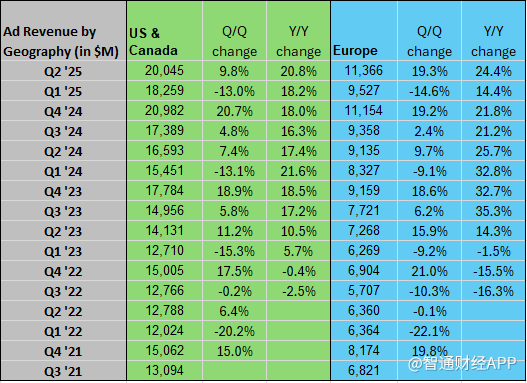
Core Viewpoint - Meta Platforms reported strong Q2 revenue and provided optimistic Q3 guidance, indicating robust growth in its advertising business, which supports significant investments in artificial intelligence [1][2] Financial Performance - Q2 revenue reached $47.52 billion, a 22% year-over-year increase, exceeding market expectations; diluted earnings per share were $7.14, up 38% year-over-year, also surpassing forecasts [1] - For Q3, Meta expects revenue between $47 billion and $50.5 billion, with the midpoint exceeding analyst expectations of $46.2 billion [1] Investment in AI - Meta is increasing its capital expenditure forecast for 2025, driven by ongoing investments in talent, infrastructure, data centers, and energy to remain competitive in the AI race; projected spending for this year is between $66 billion and $72 billion [1] - The company anticipates that costs will continue to rise, particularly in infrastructure and employee compensation [1][4] Advertising Revenue Growth - Meta's advertising revenue showed significant growth across regions, with notable increases in the U.S., Canada, and Europe [3] - The average revenue per person (ARPPU) and daily active people (DAP) metrics indicate a positive trend in user engagement and monetization [6] AI Strategy and Market Position - CEO Mark Zuckerberg is investing heavily in new data centers and attracting top AI researchers with substantial compensation packages; the internal AI division has been restructured to focus on developing human-level AI capabilities [4] - Meta's advertising business has benefited from improvements in AI, which have enhanced the efficiency and revenue of its advertising system [5] Competitive Landscape - Competitors like Alphabet are also increasing their investments in AI, reflecting a broader trend in the industry where companies are racing to capitalize on AI advancements [7] - The competitive dynamics in AI are likened to historical tech races, but with a faster pace due to the nature of AI development [7]
脸书母公司Meta第二季度净利润增长36% 股价大涨9%
Feng Huang Wang· 2025-07-30 23:31
凤凰网科技讯 北京时间7月31日,脸书母公司Meta(NASDAQ: META)今天发布了截至6月30日的2025财 年第二季度财报。财报显示,Meta第二季度总营收为475.16亿美元,较上年同期的390.71亿美元增长 22%;净利润为183.37亿美元,较上年同期的134.65亿美元增长36%,其中元宇宙业务营业亏损45.30亿 美元。 股价表现: Meta第二季度营收和每股收益均超出分析师预期,对于第三季度的营收展望也超出预期,推动股价在 盘后上涨近9%。 Meta周三在纳斯达克交易所的开盘价为708.09美元。截至周三收盘,Meta股价下跌4.79美元,报收于 695.21美元,跌幅为0.68%。截至发稿,Meta股价在盘后交易中上涨62.05美元至757.27美元,涨幅为 8.93%。过去52周,Meta股价最高为747.90美元,最低为450.80美元。 第二季度运营要点: ——2025年6月,应用家族日活跃用户(DAP)平均值为34.8亿人,同比增长6%; ——应用家族上的广告展现量同比增长11%,每条广告的平均价格同比增长9%。 第二季度财务业绩: ——总营收为475.16亿美元,较上年同期 ...
毫微上涨10.1%,报7.52美元/股,总市值1.77亿美元
Jin Rong Jie· 2025-07-30 15:18
Core Viewpoint - The company, Haowei (NA), experienced a significant stock price increase of 10.1% on July 30, reaching $7.52 per share, with a total market capitalization of $177 million [1] Financial Performance - As of December 31, 2024, Haowei reported total revenue of 40.60 million RMB, a year-on-year decrease of 48.18% [1] - The net profit attributable to the parent company was -113 million RMB, showing a year-on-year increase of 55.23% [1] Company Overview - Haowei Laboratory Limited is a foreign holding company registered in the Cayman Islands, primarily operated by its domestic entity, Zhejiang Haowei Technology Co., Ltd. [1] - Zhejiang Haowei Technology Co., Ltd. focuses on providing infrastructure support for the metaverse, developing high-throughput memory chips, high-performance computing chips, and distributed computing solutions [1] - The company's products are applicable in data centers, supercomputing, and artificial intelligence, empowering various application scenarios within the metaverse [1] - In 2019, the company validated its HBM2D memory technology and developed its unique compute-storage integrated FPU chip architecture [1] - In 2020, based on the FPU architecture, the company was the first to mass-produce the Cuckoo 1.0 dedicated computing chip [1] - Currently, the company continues to iterate its products technologically, expanding from specialized markets to general markets, aiming to provide computing power for a future intelligent digital society [1] - The company is committed to offering high-bandwidth, high-performance dedicated processor chips and solutions for distributed computing, core networks, artificial intelligence, high-performance computing, and video encoding/decoding in the metaverse ecosystem [1]

毫微上涨3.99%,报7.102美元/股,总市值1.67亿美元
Jin Rong Jie· 2025-07-30 13:40
Core Insights - The company, 毫微 (NA), experienced a stock price increase of 3.99% on July 30, closing at $7.102 per share with a total market capitalization of $16.7 million [1] - Financial data indicates that for the year ending December 31, 2024, the company's total revenue is projected to be 40.596 million RMB, representing a year-on-year decrease of 48.18%, while the net profit attributable to the parent company is expected to be -113 million RMB, showing a year-on-year increase of 55.23% [1] Company Overview - 毫微实验室有限公司 is a Cayman Islands-registered holding company primarily operated by its domestic subsidiary, 浙江毫微科技有限公司 [1] - 浙江毫微科技有限公司 focuses on providing infrastructure support for the metaverse, developing high-throughput memory chips, high-performance computing chips, and distributed computing solutions [1] - The company's products are applicable in data centers, supercomputing, and artificial intelligence, empowering various application scenarios within the metaverse [1] Technological Development - The company validated its HBM2D memory technology in 2019 and developed a unique compute-storage integrated FPU chip architecture [1] - In 2020, it became the first to mass-produce the Cuckoo 1.0 dedicated computing chip based on the FPU architecture [1] - Currently, the company is iterating its products technologically, expanding from specialized markets to general markets, aiming to provide computing power for a future intelligent digital society [1] Market Positioning - The company is committed to offering high-bandwidth, high-performance dedicated processor chips and solutions for distributed computing, core networks, artificial intelligence, high-performance computing, and video encoding/decoding in the metaverse ecosystem [1]
天娱数科股价下跌1.64% 公司称生产经营秩序正常
Jin Rong Jie· 2025-07-30 13:30
Group 1 - The stock price of Tianyu Digital Technology closed at 6.60 yuan on July 30, down 0.11 yuan, representing a decline of 1.64% [1] - The trading volume on that day was 700,690 hands, with a transaction amount of 463 million yuan [1] - Tianyu Digital Technology operates in the internet services industry, focusing on digital entertainment and digital marketing, with a registered location in Liaoning [1] Group 2 - The company is involved in emerging technology fields such as virtual digital humans and the metaverse [1] - On July 30, the company stated on its interactive platform that its production and operation order is normal, and its business structure is becoming increasingly rational, indicating overall positive development [1] - The company plans to further strengthen its operations and management to promote long-term value and profit growth [1] Group 3 - On July 30, the net outflow of main funds was 70.54 million yuan, accounting for 0.66% of the circulating market value [1]

把握趋势:小游戏出海的黄金时代——2025年度游戏商务大会圆满举办
Sou Hu Cai Jing· 2025-07-30 12:42
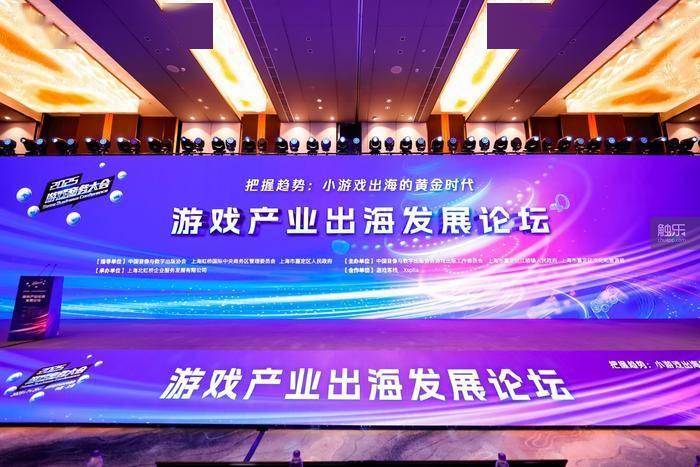
Core Viewpoint - The 2025 Game Business Conference held in Shanghai aims to deepen the internationalization of the gaming industry, promoting resource complementarity and collaboration between domestic and international markets [1][3]. Group 1: Conference Overview - The conference featured key leaders from various organizations, including the Shanghai Municipal Propaganda Department and the China Audio-Video and Digital Publishing Association, along with representatives from gaming companies and investment institutions [3][4]. - The event included four main parts: the Game Industry Overseas Development Forum, New Game Appreciation and Overseas Traffic Conference, New Product and IP Exchange Meeting, and a showcase of third-party services for overseas expansion [3][4]. Group 2: Industry Insights - In the first half of 2025, China's self-developed games generated actual sales revenue of $9.501 billion in overseas markets, marking an 11.07% year-on-year increase, with mini-games becoming a core growth engine [4][19]. - Three key characteristics of mini-games going overseas were identified: lightweight forms meeting fragmented demand, technological empowerment through AIGC, and social-driven traffic growth [4][5]. Group 3: Strategic Recommendations - To ensure sustainable development of China's gaming industry abroad, three recommendations were made: expanding into emerging markets, diversifying product types, and fostering a cooperative win-win ecosystem [5][9]. Group 4: Regional Development Initiatives - The Shanghai Hongqiao International Central Business District is focusing on building a comprehensive service system for overseas expansion, enhancing public services, and facilitating cross-border flow of innovative elements [7][11]. - The North Hongqiao Business District has seen significant growth in its gaming industry, with over 160 gaming companies established and revenue exceeding $5 billion in 2024 [42]. Group 5: Globalization Research Findings - The report on the globalization of the Chinese gaming industry indicated that by 2024, the overseas sales revenue of self-developed games would account for 33.62% of total sales, with major investment destinations being Finland, Israel, Japan, and the United States [19][21]. Group 6: Mini-Game Service Platform - A new "Mini-Game Service Platform" was launched to assist domestic gaming companies in expanding into overseas mini-game markets, aiming to break down information barriers and enhance resource integration [17][42].
美银揭示Roblox(RBLX.US)五大护城河,爆款游戏验证平台可持续增长能力
智通财经网· 2025-07-30 08:12
Core Viewpoint - Bank of America has significantly raised the target price for Roblox (RBLX.US) from $103 to $133, maintaining a "Buy" rating, citing the success of the game "Grow a Garden" (GAG) as a key driver for this adjustment [1][4]. Strategic Goals - Roblox aims to capture 10% of the global gaming industry, with Q2 bookings expected to exceed previous forecasts, driven by a 30% year-over-year growth prediction [2]. - The management's strategy focuses on expanding the platform beyond its teenage social scene into a broader gaming ecosystem, leveraging innovative features like GAG [2]. Financial Forecasts - For Q3, Roblox's bookings are projected to grow by 23% year-over-year, with potential for significant upside if actual growth approaches the upper limits of buyer forecasts [3]. - EBITDA margins are expected to improve, potentially surpassing the mid-20% range, supported by ongoing cost leverage in IT and services [3]. Growth Framework - The previous growth framework of a minimum 20% compound annual growth rate is being reconsidered due to the unexpected success of GAG, with a general consensus among investors that growth expectations may need to be adjusted upward [4]. - The target price increase to $133 reflects anticipated improvements in profit margins and optimistic projections for free cash flow yields [4]. Cost Structure - Roblox is demonstrating a clear path to optimizing operational efficiency, with operating expense growth expected to remain below revenue growth [5]. - The platform's low barriers for developers to create content are enhancing user engagement and long-term monetization potential [5]. Long-term Potential - Roblox's long-term value is supported by five core advantages: innovative features like GAG, a thriving developer ecosystem, global expansion, continuous technological improvements, and its leadership position in the metaverse [6]. - The company is at a critical juncture for strategic transformation and valuation reconstruction, moving beyond its initial identity as a teenage social platform [6][7].
