雷朋Meta眼镜

Search documents
无视元宇宙巨亏!Meta激进布局AI,Q4财报传递关键信号:高投入=高增长?
Zhi Tong Cai Jing· 2026-01-29 00:26
Core Insights - Meta Platforms reported Q4 and full-year results for FY2025, significantly exceeding Wall Street expectations, driven by AI-enhanced advertising efficiency [1] - The company achieved Q4 revenue of $59.89 billion, a 24% year-over-year increase, with EPS of $8.88, surpassing the consensus estimate of $8.21 [1] - For the full year, Meta's revenue exceeded $200 billion for the first time, reaching $200.97 billion, with capital expenditures of $72.2 billion [1] Financial Performance - Daily Active Users (DAU) for Meta's Family of Apps rose to 3.58 billion, a 7% year-over-year increase, while ad impressions grew by 18% and unit prices increased by 6% [1] - Meta's CEO, Mark Zuckerberg, emphasized the company's transition towards a "super-intelligent" era, integrating generative AI into advertising systems and wearable devices [1] Capital Expenditure and Future Outlook - Meta's capital expenditure guidance for 2026 is projected to be between $115 billion and $135 billion, significantly higher than the market expectation of approximately $110.6 billion [2] - The funds will primarily support the expansion of large-scale data centers and high-performance chip procurement for AI model training and inference [2] - Zuckerberg has committed to investing $600 billion in the U.S. by 2028 for AI technology, infrastructure, and workforce expansion [2] Challenges and Market Reactions - Concerns persist among investors regarding the tangible returns from Meta's substantial investments, particularly in AI capabilities compared to competitors [3] - The Reality Labs division reported an operating loss of $6.02 billion in Q4, with total annual losses nearing $19.2 billion, indicating ongoing high investment with low returns [3] - Despite concerns over high spending, Meta's stock rose over 7% in after-hours trading due to strong revenue performance and optimistic guidance for 2026 [4]

无视元宇宙巨亏!Meta(META.US)激进布局AI,Q4财报传递关键信号:高投入=高增长?
Zhi Tong Cai Jing· 2026-01-28 23:53
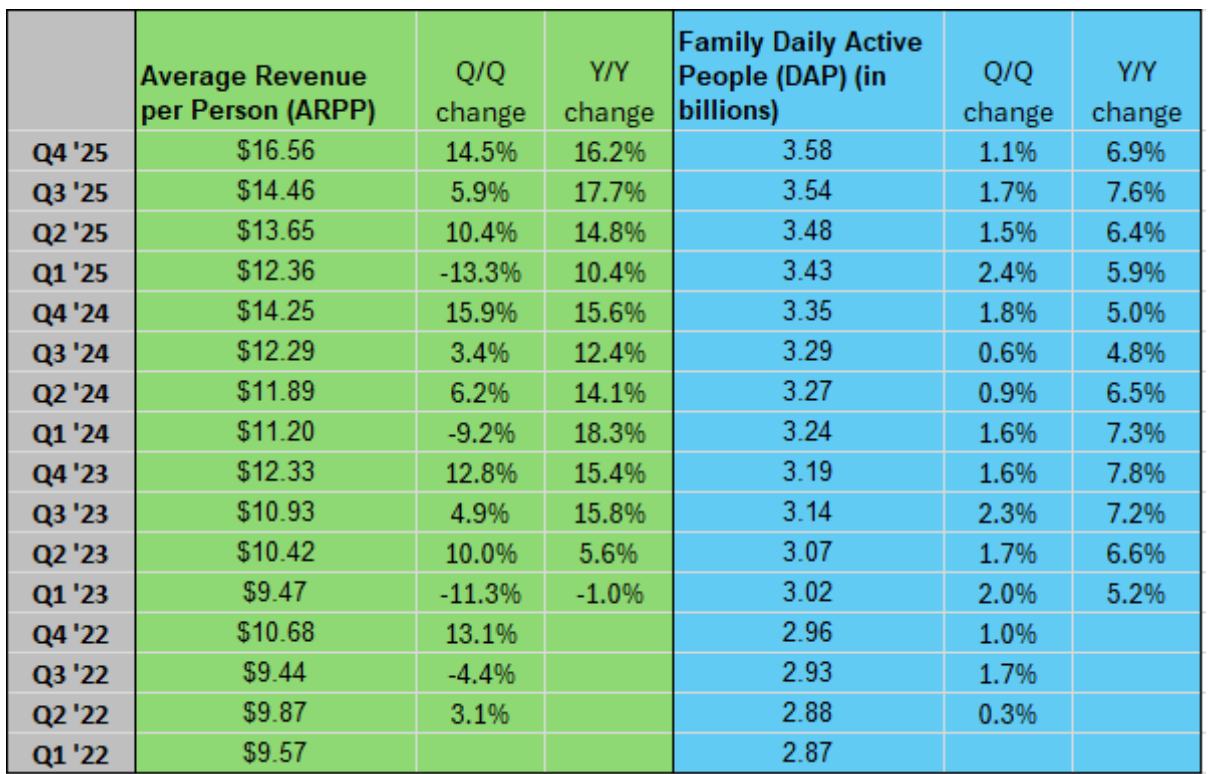
Core Insights - Meta Platforms reported Q4 and full-year results for FY2025, exceeding Wall Street expectations with Q4 revenue of $59.89 billion, a 24% year-over-year increase, and EPS of $8.88, surpassing the consensus estimate of $8.21 [1] - The company achieved a full-year revenue of $200.97 billion for 2025, marking its first time surpassing the $200 billion threshold, with capital expenditures reaching $72.2 billion [1] Financial Performance - Average Revenue Per Person (ARPPU) for Q4 2025 was $16.56, reflecting a 14.5% quarter-over-quarter increase and a 16.2% year-over-year increase [2] - Daily Active People (DAP) across Meta's family of apps reached 3.58 billion, a 7% year-over-year growth, with ad impressions increasing by 18% and unit prices rising by 6% [2] Strategic Initiatives - CEO Mark Zuckerberg emphasized the transition towards a "super-intelligent" era, integrating generative AI into advertising systems and wearable devices, aiming to convert technological investments into revenue growth [5] - The strategy includes "front-loading" computing capabilities to prepare for achieving superintelligence, a theoretical milestone where AI surpasses human-level performance [5] Operating Expenses - Operating expenses for Q4 2025 included $17.134 billion in Research and Development, a 40.7% year-over-year increase, and $3.410 billion in Marketing and Sales, a 5.2% year-over-year increase [6] - The company anticipates capital expenditures to rise significantly in 2026, projected between $115 billion and $135 billion, exceeding market expectations of approximately $110.6 billion [6][7] AI and Infrastructure Investments - Investments will primarily focus on expanding large-scale data centers and procuring high-end computing chips to support AI model training and inference needs [7] - Zuckerberg has committed to investing $600 billion in the U.S. by 2028 to support AI technology, infrastructure, and workforce expansion [7] Reality Labs Performance - The Reality Labs division reported an operating loss of $6.02 billion in Q4, with total annual losses nearing $19.2 billion, indicating ongoing high investment with low returns [8] - Despite generating $955 million in sales during Q4, the division continues to face significant losses, with expectations of similar challenges in 2026 [8] Market Reaction - Following the earnings report, Meta's stock rose over 7% in after-hours trading, driven by strong revenue performance and optimistic guidance for continued operating profit growth in 2026 [8] - The company is currently in a "profit-fueled computing power" cycle, leveraging cash flow from its core advertising business to keep pace with the AI wave [8]

1月14日主题复盘 | 全市场成交近4万亿,AI应用持续大涨,AI医疗、数据中心等也表现不俗
Xuan Gu Bao· 2026-01-14 09:09
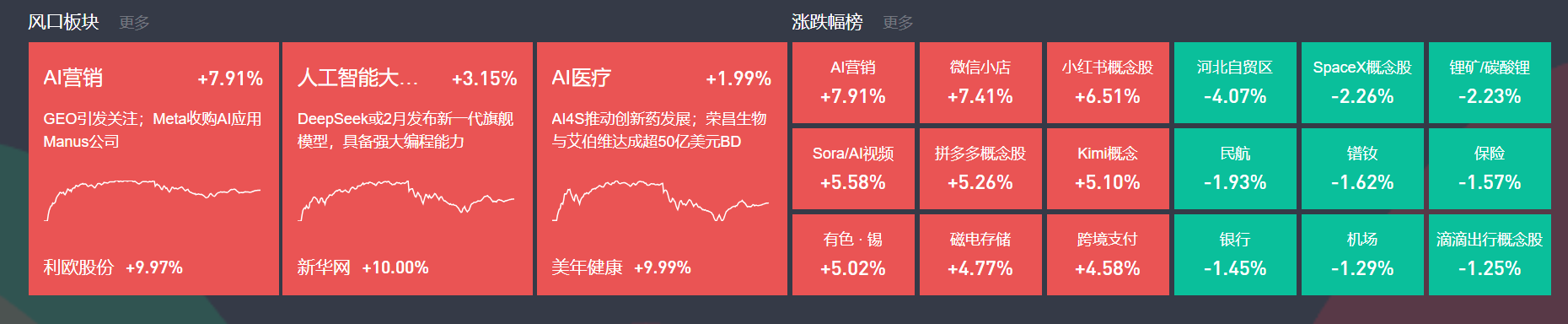
Market Overview - The market experienced fluctuations with mixed performance across the three major indices, with a total trading volume reaching nearly 4 trillion, setting a new historical high [1] - AI application sectors, particularly AI marketing and AI healthcare, showed strong performance, with several stocks hitting the daily limit [1][7] - Conversely, lithium mining stocks declined, with Zhongmin Resources dropping over 7%, and financial stocks like China Pacific Insurance fell by more than 3% [1] AI Marketing - The AI marketing sector continued to surge, with stocks such as Liou Co., Shenguang Group, Tianxiao, and People's Daily hitting the daily limit [4][5] - Liou Co. achieved a 9.97% increase, marking its sixth consecutive day of gains, with a market cap of 580.88 billion [5] - Long-term projections suggest the global GEO market could reach $11.2 billion by 2025 and potentially $100 billion by 2030, indicating a shift towards new business models in advertising [6] AI Healthcare - The AI healthcare sector also saw significant gains, with Meinian Health achieving a fourth consecutive limit-up, and other companies like International Medicine and New Mileage also performing well [7][8] - Meinian Health's stock rose by 9.99%, with a market cap of 315.75 billion, driven by advancements in AI health management [8] - Analysts predict that by 2026, AI healthcare will experience a fundamental shift, with clearer payment structures and stronger commercialization potential [9] Cloud Computing Data Centers - The cloud computing data center sector experienced a notable rise, with companies like Dazhi Technology, Huasheng Tiancheng, and Jerey Co. hitting the daily limit [10][11] - Alibaba Cloud aims to capture 80% of the incremental AI cloud market in China by 2026, indicating aggressive growth plans [11] - The demand for AI data centers is expected to accelerate due to increasing usage of tokens by major domestic companies and the maturation of domestic GPU manufacturers [12] Smart Glasses - The smart glasses sector showed positive performance, with companies like Liding Optoelectronics and Doctor Glasses experiencing significant stock increases [13][15] - Meta's strong sales of Ray-Ban Meta glasses have prompted discussions about increasing production capacity significantly by 2026 [14] - Analysts believe that the integration of generative AI will transform smart glasses into more interactive devices, potentially making them a mainstream consumer product [15]


【大涨解读】智能眼镜:Meta计划推动AI眼镜翻倍产能,全球其他巨头也加速布局,有望加速推动其成为AI时代的操作系统入口
Xuan Gu Bao· 2026-01-14 02:37
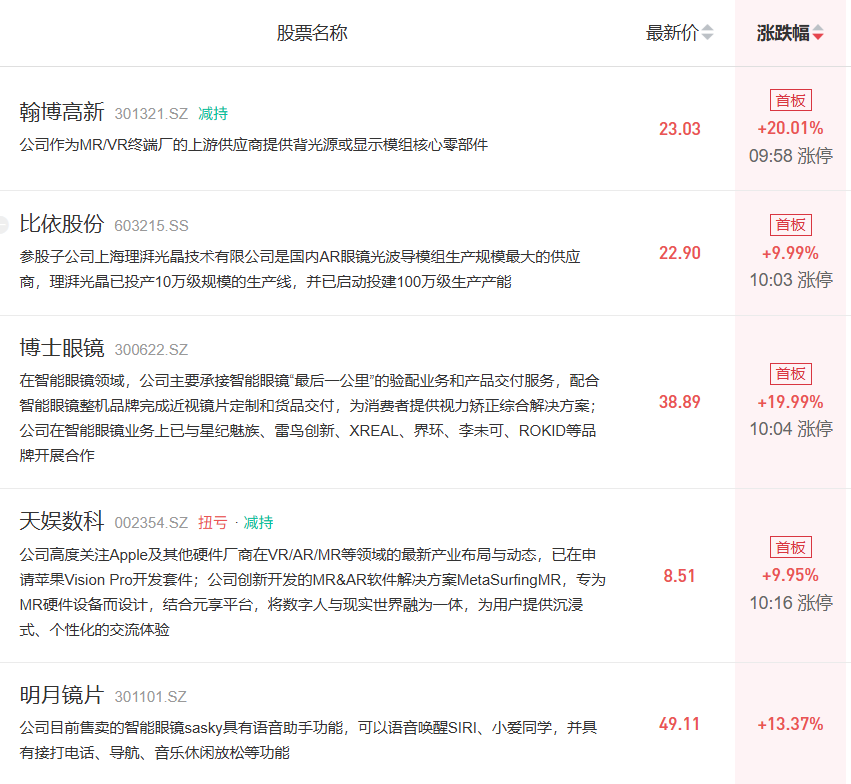
Market Overview - On January 14, the AI glasses sector experienced a collective surge, with companies like Hanbo High-tech, Biyi Co., and Doctor Glasses hitting the daily limit up, while other firms such as Mingyue Lens and Rainbow Technology also saw significant gains [1] Company Highlights - Hanbo High-tech (301321.SZ) saw its stock price rise to 23.03, an increase of 20.01%, as it provides core components for MR/R terminal manufacturers [2] - Biyi Co. (603215.SS) reached a price of 22.90, up by 9.99%, with its subsidiary being the largest domestic producer of AR glasses waveguide modules, having launched a production line with a capacity of 100,000 units [2] - Doctor Glasses (300622.SZ) reported a stock price of 38.89, increasing by 19.99%, focusing on the last-mile fitting services for smart glasses and collaborating with various brands [2] - Mingyue Lens (301101.SZ) offers smart glasses with voice assistant features, achieving a price of 49.11, up by 13.37% [2] Industry Events - On January 13, Bloomberg reported that Meta suggested EssilorLuxottica SA increase its annual production capacity to 20 million units or more by the end of 2026, with discussions for further expansion to 30 million units if demand remains strong [3] - Major tech companies like Apple, Google, and ByteDance are accelerating their investments in the AI glasses market, with Apple planning to unveil Apple Glasses at WWDC 2026 and ByteDance expected to release its first AI glasses in Q1 2026 [3] Institutional Insights - The AI glasses market is projected to become a high-volume product, with global sales expected to reach 90 million units by 2030, reflecting a compound annual growth rate (CAGR) of 97.42% over six years [4] - The core innovation in AI glasses is driven by generative AI, transforming them from expensive accessories to interactive smart devices, with prices dropping to the consumer-friendly range of around 1,500 yuan [5] - The industry is entering a rapid growth phase, addressing previous issues of high pricing and limited functionality, with over 80% penetration of features like AI dialogue and AR navigation [5]





Meta眼镜卖太好了,计划产能翻倍应对需求激增
Hua Er Jie Jian Wen· 2026-01-13 23:37
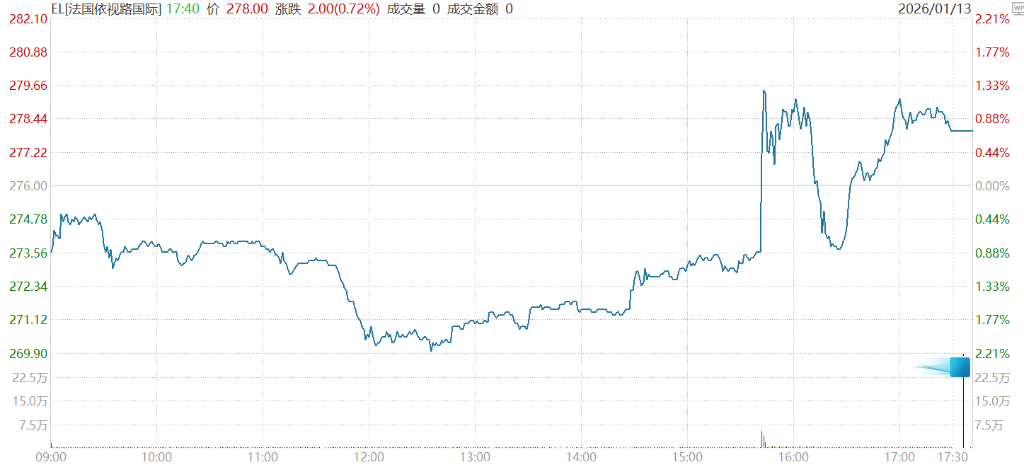
Core Viewpoint - Meta is experiencing strong sales momentum for its Ray-Ban Meta glasses and is planning to increase production capacity to meet demand, suggesting a shift in focus towards augmented reality technology and away from virtual reality investments [1][4][8]. Group 1: Production Capacity Expansion - Meta has advised EssilorLuxottica to increase annual production capacity to 20 million units or more by the end of 2026 due to strong sales of Ray-Ban Meta glasses [1]. - Discussions are ongoing about potentially expanding capacity to over 30 million units if demand remains robust [2]. - EssilorLuxottica is nearing its current production target of 10 million units by the end of 2026, indicating a need for expansion to meet rising demand [5]. Group 2: Strategic Shift and Workforce Changes - Meta is restructuring its Reality Labs division, planning to cut over 1,000 jobs, which represents about 10% of the division's workforce, to redirect resources towards AI wearable devices [4][7]. - The company aims to make its metaverse investments more sustainable by shifting focus from fully immersive VR headsets to smart glasses and other mobile devices [7]. - Meta's Reality Labs has incurred over $70 billion in losses since early 2021, prompting the need for a strategic pivot [7]. Group 3: Financial Implications and Market Position - Analysts expect that the gross margin for Ray-Ban Meta smart glasses will be significantly lower than EssilorLuxottica's overall product line, but increased sales and improved component costs may alleviate some financial pressure [5]. - EssilorLuxottica's strong manufacturing capabilities and retail presence provide a substantial platform for Meta to enhance its position in the smart glasses market [5][6]. - Meta's recent acquisition of approximately 3% of EssilorLuxottica's shares strengthens its connection to the manufacturing and retail network [7].

苹果、谷歌和 Meta 正在努力完善一款科幻小工具:通用翻译器
3 6 Ke· 2025-10-15 09:06
Core Insights - The article discusses the emergence of real-time translation technology, particularly through Apple's new AirPods Pro 3, which features a translation function that converts languages like French, German, Portuguese, and Spanish into English [2][4]. - This technology is part of a broader trend in the tech industry, with companies like Google and Meta also developing similar capabilities, indicating a competitive landscape for real-time translation solutions [4][6]. Group 1: Apple's Real-Time Translation Feature - Apple's AirPods Pro 3, priced at $249, includes a real-time translation feature that allows users to hear translations in English while conversing in other languages [2]. - The translation function is expected to be available in future models, including AirPods 4 and updates for AirPods Pro 2 [2]. - Analysts view this feature as a significant advancement in Apple's artificial intelligence strategy, potentially driving users to upgrade their devices [2][6]. Group 2: Competitive Landscape - Google has introduced a "voice translation" feature in its Pixel 10 phone, which translates spoken language during calls while preserving the speaker's tone [4]. - Meta's Ray-Ban smart glasses are set to include translation capabilities, allowing users to see transcriptions of conversations in real-time [4]. - OpenAI's ChatGPT has also integrated translation features, showcasing the growing importance of real-time translation in the tech sector [5]. Group 3: Market Dynamics - The market for dedicated translation devices has seen growth, with products priced under several hundred dollars offering built-in translation capabilities [7]. - Apple shipped approximately 18 million wireless earphones in the first quarter, indicating a significant market presence that could enhance access to translation technology [7]. - Companies like Pocketalk and Vasco Electronics emphasize their focus on accuracy and language expertise, suggesting that dedicated devices may offer superior translation compared to smartphone-based solutions [7][8]. Group 4: Future Implications - The rise of real-time translation technology may reshape the translation industry, with a study indicating that 98% of translation jobs overlap with tasks that AI can perform [6]. - The potential applications of this technology extend beyond tourism, with significant implications for sectors like education and healthcare, where privacy and security are paramount [8][9].
【财报季】Meta一夜暴涨千亿,盘后狂拉10%!下一波红利风暴要来了?
老徐抓AI趋势· 2025-08-03 01:00
Core Viewpoint - Meta's latest quarterly earnings report exceeded expectations, leading to a significant increase in stock price and positive market sentiment [2][3]. Financial Performance - Q2 revenue reached $47.52 billion, surpassing analyst expectations of $44.83 billion, with a year-over-year growth of 22% [5]. - Earnings per share for Q2 were $7.14, exceeding the forecast of $5.89, marking a 38% year-over-year increase [5]. - For Q3, Meta projects revenue between $47 billion and $50.5 billion, above analyst estimates of $46.2 billion, indicating a year-over-year growth of 17%-24% [5]. - Total operating expenses for Q2 were $27.1 billion, a 12% increase from the previous year, reflecting effective cost control alongside revenue growth [14]. AI Impact on Efficiency - AI has significantly improved the efficiency and revenue of Meta's advertising system, with ad conversion rates increasing by approximately 5% on Instagram and 3% on Facebook [5]. - The introduction of AI-driven advertising models has led to a 5% increase in time spent on Facebook and a 6% increase on Instagram [5]. AI Development and Investment Outlook - Meta is building a team focused on developing superintelligent AI, with expectations of significant advancements in the coming years [7]. - The company anticipates a substantial increase in capital expenditures for AI infrastructure, projecting 2025 expenditures between $66 billion and $72 billion [9]. - Meta's AI systems are expected to drive long-term growth, with a focus on optimizing advertising and enhancing user engagement [11]. Regional Performance - Revenue from the U.S. and Canada was $20.37 billion, accounting for 42.9% of total revenue, with a 15% year-over-year growth [15][17]. - The Asia-Pacific region showed the strongest growth, with revenue of $11.53 billion, reflecting a 29% year-over-year increase [15][17]. - European revenue reached $9.37 billion, growing 18% year-over-year, indicating a recovery in the digital advertising market [22]. User Engagement and Product Innovation - Meta's monthly active users for its AI features exceeded 1 billion, indicating strong engagement with AI-driven tools [11]. - The introduction of ads in Threads and WhatsApp is expected to gradually contribute to revenue growth, although initial supply levels are anticipated to be low [11]. Strategic Focus and Future Directions - Meta's strategic priorities include optimizing advertising systems, expanding into international markets, and maintaining high levels of investment in technology innovation [28]. - The company aims to leverage its AI capabilities to enhance user experience and operational efficiency, with a focus on long-term growth and sustainability [29].

AI产业速递:MetaFY25Q2收入利润再超预期,AI生态加速构建
Changjiang Securities· 2025-08-01 02:35
Investment Rating - The industry investment rating is "Positive" and maintained [7] Core Insights - Meta's Q2 2025 financial report exceeded market expectations with revenue of $47.52 billion, a year-on-year increase of 22%, and net profit of $18.34 billion, up 36% year-on-year [2][4] - Capital expenditures for Q2 2025 reached $17.01 billion, reflecting a significant year-on-year increase of 101% [2][4] - The report highlights a robust AI application landscape, indicating a closed loop of investment, model development, application, and monetization is accelerating [2][4] Summary by Sections Financial Performance - Meta achieved Q2 2025 revenue of $47.52 billion, surpassing Bloomberg's consensus estimate of $44.83 billion [2][4] - Net profit for the same period was $18.34 billion, exceeding the expected $15.17 billion [2][4] - Capital expenditures were reported at $17.01 billion, marking a 101% increase year-on-year [2][4] Business Segments - The application family segment generated $47.1 billion in revenue, a 22% increase year-on-year, with advertising revenue at $46.6 billion, up 21% [10] - The Reality Labs segment reported revenue of $370 million, a 5% increase, driven by sales of AI glasses [10] Future Guidance - Projected Q3 2025 revenue is expected to be between $47.5 billion and $50.5 billion, representing a year-on-year growth of 17% to 24% [10] - Total expenditures for 2025 are anticipated to be between $114 billion and $118 billion, a year-on-year increase of 20% to 24% [10] - Capital expenditures for 2025 are forecasted to be between $66 billion and $72 billion, slightly above previous estimates [10] AI Ecosystem Development - Meta is expanding its AI-driven advertising models across new platforms, enhancing performance metrics with a 5% increase in Instagram and a 3% increase in Facebook ad conversion rates [10] - The company is actively recruiting top AI talent and has established the Meta Super Intelligence Labs to accelerate AI model and product development [10] - The report emphasizes the high demand for AI applications and the potential for significant investment opportunities in AI agents and cloud service providers [10]
AI眼镜多重要?扎克伯格:没有它,你连认知都会落后
Sou Hu Cai Jing· 2025-07-31 02:12
Core Viewpoint - Meta CEO Mark Zuckerberg emphasized the importance of AI glasses as the primary means for users to interact with AI in the future, suggesting that those without AI glasses will be at a disadvantage [2]. Group 1: AI Glasses Development - Zuckerberg believes that glasses will become the ideal medium for AI, allowing AI to see and hear what users do throughout the day and communicate with them [2]. - The addition of display features to these glasses will unlock more value, whether through broader holographic views like Meta's next-generation Orion AR glasses or smaller display screens in everyday AI glasses [2]. - The sales revenue of the Ray-Ban Meta glasses has more than doubled year-on-year, indicating strong market demand for such wearable devices [2]. Group 2: Future of Consumer AI Devices - Zuckerberg acknowledged that future consumer AI devices may not necessarily take the form of glasses, citing OpenAI's acquisition of Jonathan Ive's company to create new consumer devices for AI interaction [3]. - Other startups are exploring various forms of AI devices, including AI pins and pendant devices, but glasses currently seem the most reasonable due to user familiarity and social acceptance [3]. - Despite the potential for other forms of devices, Zuckerberg remains confident that glasses will become mainstream, serving as an ideal medium for merging the real and digital worlds, with AI accelerating this process [3].