通用人工智能(AGI)

Search documents
清华系国产算力软件企业清程极智再获过亿融资
Bei Jing Ri Bao Ke Hu Duan· 2025-07-14 10:21
Core Insights - Tsinghua-affiliated AI company Qingcheng Jizhi has recently completed over 100 million yuan in financing, less than six months after its previous round [1] - The latest funding round was led by a well-known industry player, with participation from various notable investment institutions [1] Company Overview - Qingcheng Jizhi focuses on developing intelligent computing system software, acting as a crucial bridge between intelligent computing and AI applications [1] - The company's software efficiently links underlying hardware computing power with upper-layer AI model training, inference, and application needs, facilitating seamless collaboration among different hardware devices [1] Technological Advancements - The company has achieved significant improvements in training efficiency for domestic chips, which will enhance the utilization and performance of domestic computing resources while reducing costs for enterprises [2] - Qingcheng Jizhi's "Bagualu" high-performance large model training system has been validated on multiple large-scale domestic computing clusters, showing notable acceleration in training tasks for dense models and mixed expert models [2] - The "Chitu" inference engine, developed by Qingcheng Jizhi, is optimized for domestic computing, offering low latency, high throughput, and low memory usage, thus meeting diverse intelligent computing needs [3] Strategic Collaborations - The company collaborates with Tsinghua University to optimize key aspects of model algorithms and system design, enhancing the overall efficiency of large model training [2] - The open-source Chitu inference engine project aims to accelerate the establishment of a complete ecosystem comprising domestic intelligent computing chips, system software, and large models [3]
微软以Maia 280开启新局对垒英伟达,Meta/微美全息开源联动引领AI创新
Zhong Guo Chan Ye Jing Ji Xin Xi Wang· 2025-07-14 03:32
Group 1 - Microsoft has delayed the launch of its self-developed AI chip Braga to 2026 due to design issues, and will introduce a transitional product, Maia 280, which is expected to improve performance by 30% [1][2] - The delay of the Braga chip has also pushed back the release of subsequent chips, Braga-R and Clea, raising concerns that these products may be outdated upon release and struggle to compete with NVIDIA's latest AI chips [2][4] - Microsoft aims to reduce its reliance on NVIDIA's expensive AI chips and has been embedding AI technology into its products through early collaboration with OpenAI [4][5] Group 2 - NVIDIA has seen a tenfold increase in annual sales over the past three years, driven by the AI boom, and is expected to maintain an average annual growth rate of 32% over the next three years [5][7] - NVIDIA's market capitalization is approaching $4 trillion, solidifying its position as a leader in the AI chip market, while companies like Meta and Amazon are working to develop their own chips to reduce dependence on NVIDIA [7][8] - Meta is facing unprecedented challenges and opportunities in the AI wave, investing heavily in AI research and development, with the Llama series models being a significant outcome [8][10] Group 3 - Meta's Llama models still show a significant performance gap compared to advanced models like OpenAI's GPT-4o, prompting Zuckerberg to initiate a "superintelligence team" to attract top talent and overcome current technological bottlenecks [10] - Microsoft is adjusting its ambitious strategy in light of delays in internal AI chip development, shifting towards a more pragmatic and iterative design approach to maintain competitiveness with NVIDIA [10][12] - WIMI is seeking to leverage the growing demand for AI services by establishing a quantum research center in collaboration with universities and research institutions, focusing on quantum computing and edge chips [12][13]




AGI没那么快降临:不能持续学习,AI没法全面取代白领
3 6 Ke· 2025-07-13 23:23
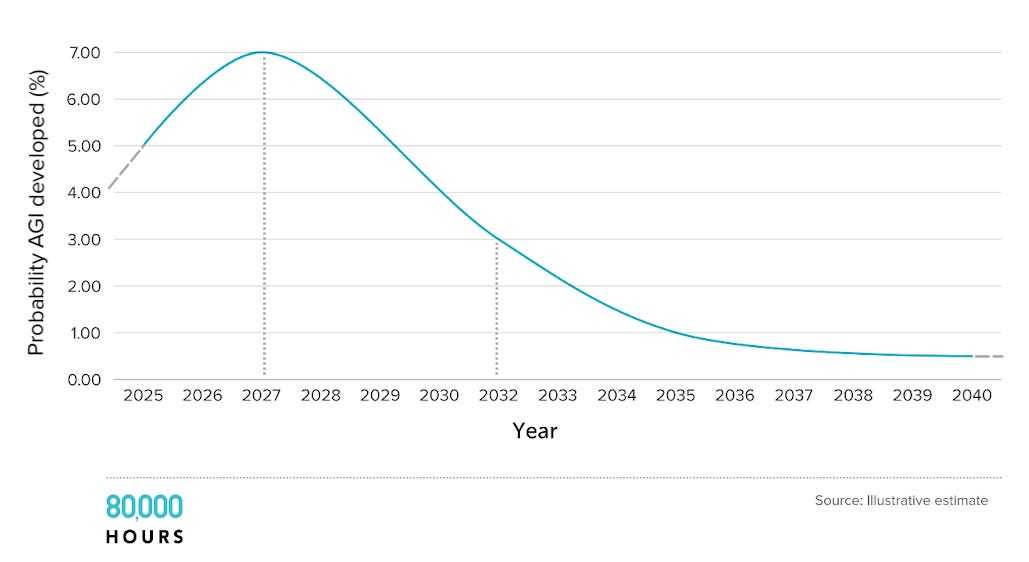
Group 1 - The article discusses the limitations of current AI models, particularly their lack of continuous learning capabilities, which is seen as a significant barrier to achieving Artificial General Intelligence (AGI) [1][6][10] - The author predicts that while short-term changes in AI capabilities may be limited, the probability of a significant breakthrough in intelligence within the next ten years is increasing [1][10][20] - The article emphasizes that human-like continuous learning is essential for AI to reach its full potential, and without this capability, AI will struggle to replace human workers in many tasks [6][10][18] Group 2 - The author expresses skepticism about the timeline for achieving reliable computer operation AI, suggesting that current models are not yet capable of performing complex tasks autonomously [12][13][14] - Predictions are made for the future capabilities of AI, including the potential for AI to handle small business tax operations by 2028 and to achieve human-like learning abilities by 2032 [17][18][19] - The article concludes with a warning that the next decade will be crucial for AI development, with the potential for significant advancements or stagnation depending on breakthroughs in algorithms and learning capabilities [22]
DeepSeek 复盘:128 天后,为什么用户流量一直在下跌?
Founder Park· 2025-07-12 20:19
Core Insights - The article reveals a fundamental challenge faced by the AI industry: the scarcity of computational resources [1] - It analyzes the contrasting strategies of DeepSeek and Anthropic in navigating this challenge [4][42] - The report emphasizes the importance of balancing technological breakthroughs and commercial success within limited computational resources [58] Group 1: AI Service Pricing Dynamics - AI service pricing is fundamentally a trade-off among three performance metrics: latency, throughput, and context window [2][3] - Adjusting these three parameters allows service providers to achieve any price level, making simple price comparisons less meaningful [30] - DeepSeek's extreme configuration sacrifices user experience for low pricing and maximized R&D resources [4][39] Group 2: DeepSeek's Market Performance - After the initial launch, DeepSeek experienced a significant drop in its own platform's user base, with a 29% decrease in monthly active users [15][12] - In contrast, the usage of DeepSeek models on third-party platforms surged nearly 20 times, indicating a shift in user preference [16][20] - The low pricing strategy of DeepSeek, at $0.55 per million tokens for input and $2.19 for output, initially attracted users but could not sustain long-term engagement [6][7] Group 3: Token Economics - Tokens are the fundamental units in AI, and their pricing is influenced by the service provider's ability to manage latency, throughput, and context window [21][22] - DeepSeek's official service has become less competitive in terms of latency compared to other providers, leading to a decline in its market share [33] - The context window offered by DeepSeek is the smallest among major providers, limiting its effectiveness in applications requiring extensive memory [34] Group 4: Anthropic's Resource Constraints - Anthropic faces similar computational resource challenges, particularly after the success of its programming tools, which increased demand for resources [44][45] - The API output speed of Anthropic's Claude has decreased by 30%, reflecting the strain on its computational resources [45] - Anthropic is actively seeking additional computational resources through partnerships with Amazon and Google [46][48] Group 5: Industry Trends and Future Outlook - The rise of inference cloud services and AI-driven applications is reshaping the competitive landscape, with a shift towards direct token sales rather than subscription models [51] - The article suggests that as affordable computational resources become more available, the long-tail market for AI services will continue to grow [52] - The ongoing price war among AI service providers is merely a surface-level issue; the deeper challenge lies in achieving technological advancements within resource constraints [58]

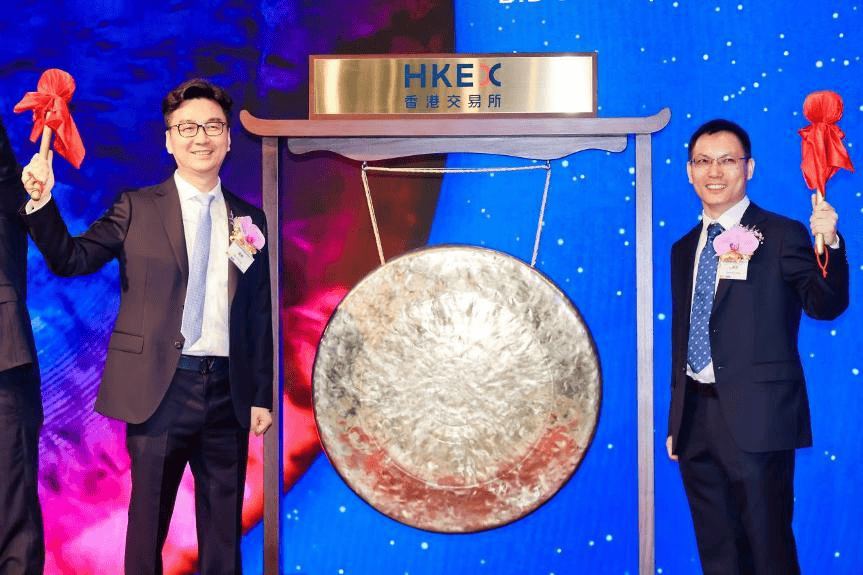
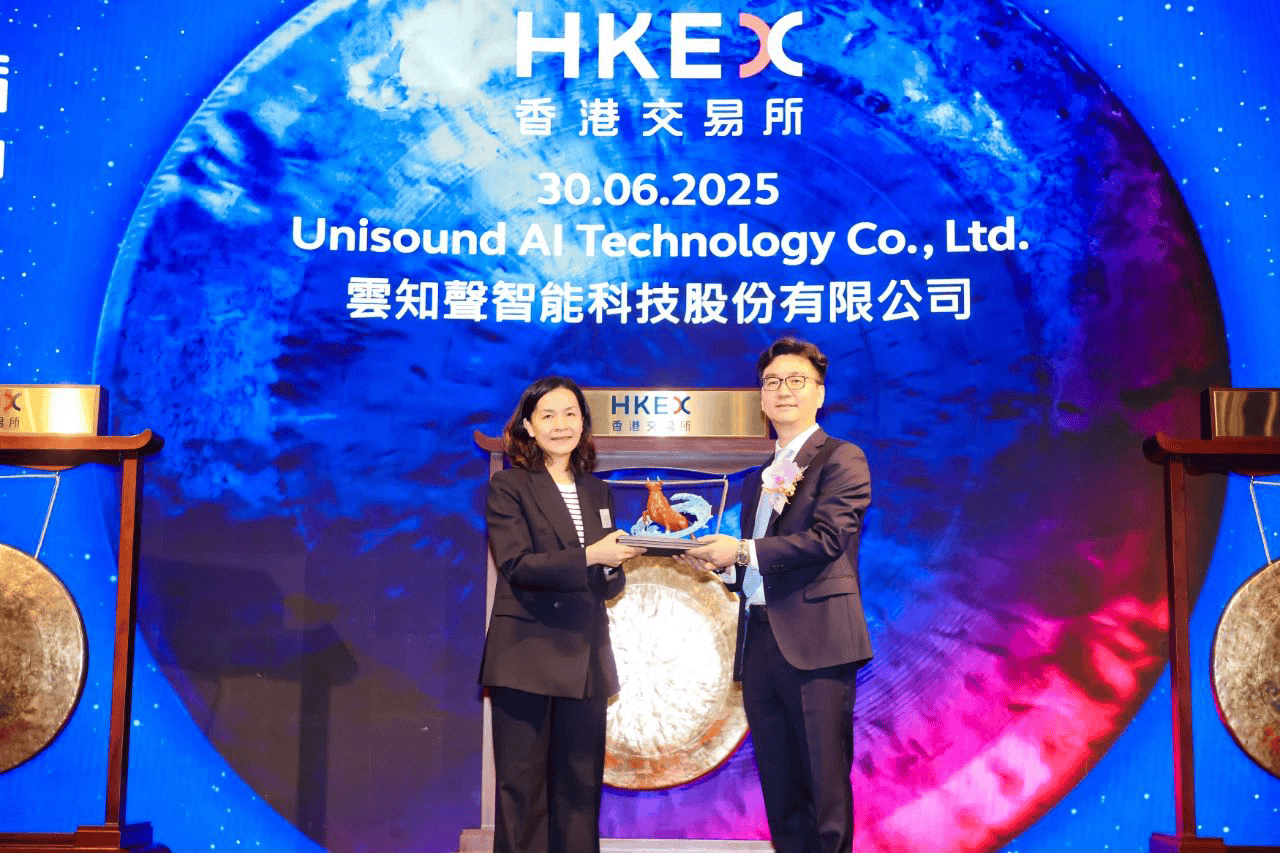
云知声上市成港股AGI第一股,开启商业化新征程
Sou Hu Cai Jing· 2025-07-10 09:47
Core Viewpoint - CloudWalk Technology Co., Ltd. (stock code: 9678.HK) has successfully gone public, becoming the first company in the Hong Kong stock market to focus on General Artificial Intelligence (AGI) as its main business, with a market capitalization exceeding HKD 23 billion in its first week of trading [1][2]. Financial Performance - The company issued 1.561 million shares at an IPO price of HKD 205 per share, raising a net amount of approximately HKD 206 million [3]. - In its first week, the stock price peaked at HKD 338.6, closing at HKD 329.4, representing a 60.6% increase from the issue price, with a total market capitalization of HKD 233.7 billion [2][3]. Technological Investment - Despite rapid expansion, the company maintains a high level of investment in R&D, with projected R&D expenses of HKD 280 million in 2024, accounting for over 30% of revenue [5]. - The company's computing power has reached 184 PFLOPS, enabling real-time training and inference of large models with hundreds of billions of parameters [5]. Commercial Strategy - The company employs a "lighthouse customer" strategy, deeply binding with industry leaders such as Gree, Ping An Technology, and Xiamen Metro, increasing its customer base in lifestyle scenarios to 411 and covering over 500 medical institutions [7]. - The average revenue per project has increased by 38% year-on-year, reflecting a strategic shift towards high-value customers and improved project quality [7]. - The revenue share from end-users has decreased from 52.7% in 2022 to 44.9% in 2024, while the share from system integrators/agents has risen to 55.1%, indicating a flexible market expansion strategy through ecosystem collaboration [7]. Future Plans - The company plans to use the net proceeds from the IPO for four main areas: investment in core technology R&D such as Atlas AI infrastructure, expansion into vertical industry applications like smart healthcare and transportation, acceleration of international expansion focusing on emerging markets in Southeast Asia and the Middle East, and strategic partnerships along with operational funding [7].
Grok 4强势发布!马斯克:它是在所有学科同时达到博士后水平的唯一存在
Sou Hu Cai Jing· 2025-07-10 07:11
Core Viewpoint - The release of Grok 4 by xAI marks a significant advancement in AI capabilities, with claims of achieving postdoctoral-level proficiency across multiple disciplines, potentially leading to groundbreaking scientific discoveries within the year [2][8]. Group 1: Product Details - Grok 4 is available in two subscription versions: Grok 4 at $30/month and Grok 4 Heavy at $300/month, with the latter's annual fee exceeding 20,000 RMB [4][5]. - Grok 4 Heavy scored 44.4% in the Human Last Exam (HLE), outperforming the previous top model, Gemini 2.5 Pro, which scored 26.9% [5][8]. Group 2: Performance and Testing - Grok 4 excelled in the HLE test, which spans 100 disciplines and includes 2,500 doctoral-level questions, indicating a significant breakthrough in complex knowledge systems and deep thinking capabilities [8]. - The model has achieved top scores in various prestigious tests, including HMMT, USAMO, and GPQA, and received a perfect score in the AIME25 [13][14]. Group 3: Technological Advancements - The training volume from Grok 2 to Grok 4 increased by 100 times, with enhanced training efficiency through data selection and algorithm optimization [9]. - Grok 4's reasoning ability improved by 10 times compared to its predecessor, aided by the use of the world's top supercomputing clusters and increased reinforcement learning investments [9]. Group 4: Future Developments - xAI plans to release additional models, including a coding model in August, a multi-model agent in September, and a video generation model in October, focusing on enhancing visual capabilities [19][20].

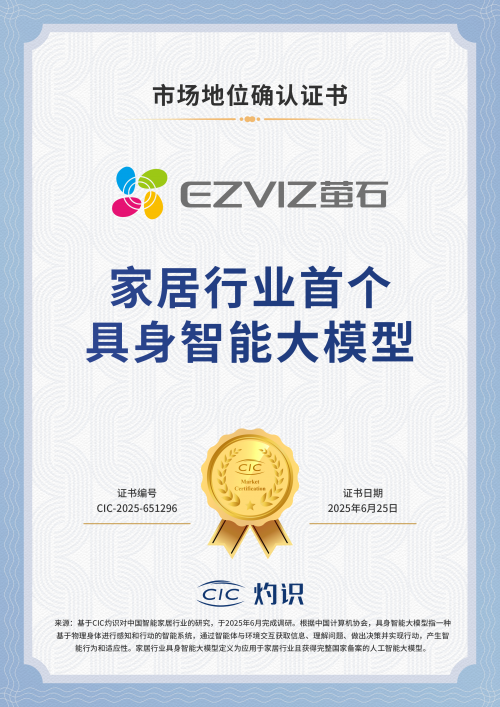
家居行业首个具身智能大模型!萤石蓝海大模型获CIC灼识咨询权威市场地位确认
Zhong Guo Chan Ye Jing Ji Xin Xi Wang· 2025-07-09 13:27
Core Insights - The "Yingstone Blue Ocean Model" has officially received the certification as the "first embodied intelligent large model in the home furnishing industry" from the renowned consulting firm CIC Zhaoshi [1][3] - The model is defined as an artificial intelligence large model specifically applied to the home furnishing industry and has received full national registration [3] Group 1: Model Characteristics - The Yingstone Blue Ocean Model focuses on embodied intelligence, emphasizing continuous interaction with the physical environment for learning, understanding, and decision-making [3][5] - It has established a complete technical hierarchy from L0 (basic perception) to L4 (embodied intelligent agent), aiming to create true spatial-level intelligent interaction capabilities [5] - The model addresses the shortcomings of general large models in home scenarios, such as inefficient interaction with physical devices and lack of "embodied memory" [5][7] Group 2: Technological Advancements - The model has evolved to version 2.0, enhancing perception, understanding, and memory capabilities through multi-dimensional integration, modal expansion, and specialized memory [5][7] - It covers 1,200 common home targets across various scenarios and recognizes over 7,100 bird species and 36 dangerous animals [7] - The model supports mixed understanding of multi-modal signals, enabling real-time scene recognition, such as identifying a specific person based on clothing and context [7] Group 3: Market Impact - The certification of the model marks a significant recognition of its technological direction and provides strategic backing for the smart upgrade of the home furnishing industry [8] - The Yingstone cloud platform has gathered over 360,000 developer clients, with applications extending beyond home scenarios to retail, agriculture, and education [8] - The model's introduction signifies the formal entry of embodied intelligence technology into the core of home furnishing scenarios, influencing the broader developer ecosystem [8]
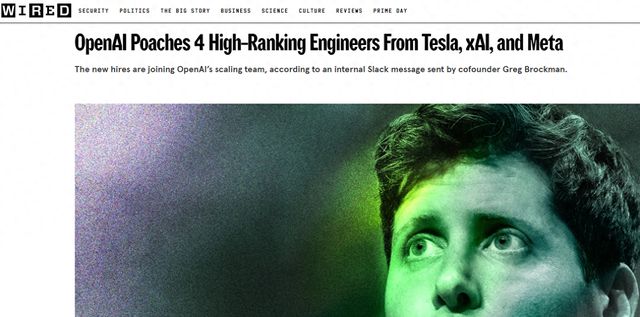
OpenAI连挖特斯拉、xAI和Meta四员大将,AI人才争夺战一触即发
Huan Qiu Wang Zi Xun· 2025-07-09 08:25
Core Insights - OpenAI has successfully recruited four top engineers and researchers from Tesla, xAI, and Meta, focusing on building the infrastructure for Artificial General Intelligence (AGI) [1][4] - This recruitment is seen as a counteraction to Meta's recent talent acquisition efforts, which have included hiring at least seven core researchers from OpenAI [4] - The ongoing competition in the AI industry is characterized as a "power war, chip war, and data center war," where the ability to train more powerful models at lower costs will define the rules of the AGI era [4] Group 1 - The new members joining OpenAI include David Lau, Uday Ruddarraju, Mike Dalton, and Angela Fan, each with significant experience in AI and infrastructure [4] - OpenAI CEO Sam Altman has indicated that the company will adjust the salary structure for researchers to remain competitive in the talent market [4] - The recruitment of these engineers is part of a broader trend of talent movement within the AI industry, reflecting the high stakes involved in developing advanced AI technologies [4]
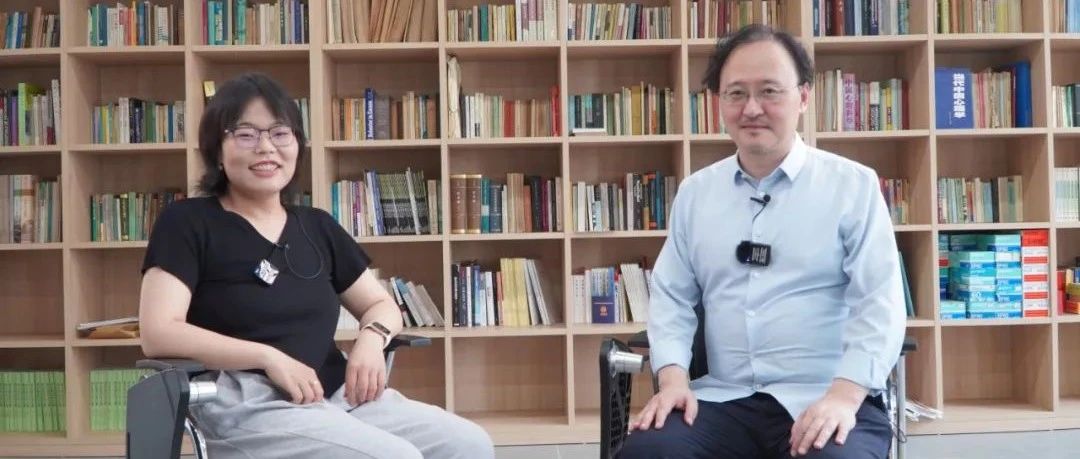
为什么 AI 搞不定体力活——对话清华大学刘嘉:这才是生物智能最难攻克的“万里长征” | 万有引力
AI科技大本营· 2025-07-09 07:59
Core Viewpoint - The article discusses the evolution of artificial intelligence (AI) and its intersection with brain science, emphasizing the importance of large models and the historical context of AI development, particularly during its "winters" and the lessons learned from past mistakes [5][18][27]. Group 1: Historical Context of AI - AI experienced significant downturns, known as "AI winters," particularly from the late 1990s to the early 2000s, which led to a lack of interest and investment in the field [2][3]. - Key figures in AI, such as Marvin Minsky, expressed skepticism about the future of AI during these downturns, influencing others like Liu Jia to pivot towards brain science instead [3][14]. - The resurgence of AI began around 2016 with breakthroughs like AlphaGo, prompting a renewed interest in the intersection of brain science and AI [3][14]. Group 2: Lessons from AI Development - Liu Jia reflects on his two-decade absence from AI, realizing that significant advancements in neural networks occurred during this time, which he missed [14][15]. - The article highlights the importance of understanding the "first principles" of AI, particularly the necessity of large models for achieving intelligence [22][27]. - Liu Jia emphasizes that the evolution of AI should not only focus on increasing model size but also on enhancing the complexity of neural networks, drawing parallels with biological evolution [24][25]. Group 3: Current Trends and Future Directions - The article discusses the current landscape of AI, where large models dominate, and the importance of scaling laws in AI development [27][30]. - It notes the competitive nature of the AI industry, where advancements can lead to rapid obsolescence of existing models and companies [36][39]. - The article suggests that future AI development should integrate insights from brain science to create more sophisticated neural networks, moving beyond traditional models [25][50].
云知声上市港股最新涨幅60.6%,首周市值破230亿获资本青睐
Sou Hu Cai Jing· 2025-07-09 06:52
Core Insights - Yunzhisheng has officially listed on the Hong Kong Stock Exchange, becoming the first general artificial intelligence (AGI) company to do so, with an initial share price of HKD 205 and a first-day closing price of HKD 296.4, representing a 44.59% increase [1] - The company's stock price reached a high of HKD 338.6 within the first week, closing at HKD 329.4, marking a 60.6% increase from the initial price, with a market capitalization exceeding HKD 233.7 billion [1] Company Background - Founded in 2012, Yunzhisheng has focused on technology as its core driver, being one of the first to apply deep learning algorithms in commercial voice recognition [2] - The company has received investments from notable institutions such as Lenovo Ventures and has developed a strategic focus on the medical and IoT sectors since 2014 [2] Financial Performance - According to the prospectus, Yunzhisheng's revenue is projected to grow from CNY 601 million in 2022 to CNY 939 million in 2024, with a compound annual growth rate (CAGR) exceeding 25% [5] - The company ranks as the fourth largest AI solution provider in China, holding a market share of 0.6%, with strong performances in both consumer and medical AI solutions [5] Technology and Commercialization - Yunzhisheng has established a commercial closed-loop model that integrates technology research and development, scene implementation, and data feedback [6] - The company has launched several products, including the UniOne AI voice chip in 2018 and the "Shanhai" large model in 2023, adapting to the needs of the generative AI era [6][8] Market Strategy - The company's strategy of aligning technology with market demands has allowed it to build unique advantages in niche areas, enhancing user experience and operational efficiency in consumer applications [8] - In the medical sector, its diagnostic assistance systems are implemented in over 800 hospitals nationwide, improving diagnostic efficiency [8]