区块链

Search documents
第一创业的前世今生:2025年三季度营收行业第30,净利润行业第33,低于行业平均水平
Xin Lang Cai Jing· 2025-10-31 18:07
Core Viewpoint - First Capital Securities Co., Ltd. is a comprehensive securities company established in 1998, focusing on fixed income and asset management, with a notable presence in the industry [1] Group 1: Business Performance - As of Q3 2025, First Capital's revenue reached 2.985 billion yuan, ranking 30th in the industry, significantly lower than the top two firms, CITIC Securities at 55.815 billion yuan and Guotai Junan at 45.892 billion yuan [2] - The net profit for the same period was 830 million yuan, placing the company 33rd in the industry, again trailing behind CITIC Securities at 23.916 billion yuan and Guotai Junan at 23.059 billion yuan [2] Group 2: Financial Ratios - The debt-to-asset ratio for Q3 2025 was 58.03%, an increase from 56.75% year-on-year, which is below the industry average of 68.82%, indicating good debt repayment capability [3] - The gross profit margin for Q3 2025 was 35.78%, up from 32.64% year-on-year, but still below the industry average of 42.78%, suggesting room for improvement in profitability [3] Group 3: Executive Compensation - The salary of the President, Wang Fang, was 3.0053 million yuan in 2024, a slight decrease from 3.0054 million yuan in 2023 [4] Group 4: Shareholder Information - As of September 30, 2025, the number of A-share shareholders decreased by 1.95% to 242,700, while the average number of circulating A-shares held per account increased by 1.99% to 17,300 [5] - Institutional holdings include significant increases in shares held by various ETFs, indicating a growing interest in the company [5] Group 5: Business Highlights - First Capital is recognized for its strengths in fixed income and asset management, with notable achievements in ESG and FOF advantages, as well as improvements in debt underwriting rankings [5] - The company is expected to achieve net profits of 1 billion yuan, 1.2 billion yuan, and 1.4 billion yuan for 2025, 2026, and 2027 respectively, reflecting year-on-year growth rates of 14%, 18%, and 15% [6]


加纳网络安全法面临公众强烈抗议
Shang Wu Bu Wang Zhan· 2025-10-31 16:40
(原标题:加纳网络安全法面临公众强烈抗议) 据"非洲简报"网10月30日报道,加纳网络安全局(CSA)因一项拟议的2020年《网络安全法》修正 案而受到越来越多的公众批评,该修正案将大幅扩大其权力。该局表示,这些修改对于加强国家网络安 全韧性是必要的,但批评者认为此举可能导致国家权力过度控制,并可能抑制创新。 为预防和应对网络威胁,2020年,加纳网络安全局(CSA)成立,在加纳的网络安全战略中发挥着 核心作用。目前提交议会审议的修正案旨在赋予该监管机构新的执法和资金权力。该提案包括成立一个 由国家通信管理局、加纳央行和金融情报中心组成的联合网络安全委员会,根据拟法案的第20B条, CSA局长、副局长和授权官员将在总检察长的授权下,在网络犯罪调查期间获得逮捕、搜查和扣押资产 的权力。该法案还授权CSA追回网络犯罪所得,赋予通信部长指定关键信息基础设施(CII)的权力, 其中包括国防、金融、公用事业和应急服务。 该法案的支持者认为,它将有助于更快地应对网络犯罪。但民间团体和技术专家则对可能存在的权 力过度扩张表示担忧,他们警告说,CSA扩大职权范围,制定人工智能和区块链等新兴技术的标准,可 能会扼杀创新、阻碍投 ...
AI不是万能药!对话唐彬:支付玩AI 先过数字化这关
Bei Jing Shang Bao· 2025-10-31 16:22
Core Insights - The payment industry is undergoing a structural transformation from "payment tools" to "transaction services" as domestic competition intensifies and overseas opportunities emerge [1][6] - The future of payment methods is expected to evolve significantly, potentially leading to the disappearance of the "payment" phase, while the value of transaction services will be amplified [1][6] Domestic Market Dynamics - The domestic payment market has transitioned from "land grabbing" to a phase of "fine cultivation," with mobile payment penetration nearing saturation [2] - Companies are increasingly focusing on "intelligent solutions" as a key strategy to navigate the competitive landscape, with risk control being particularly crucial [2] - AI-driven risk control systems are seen as essential for cost reduction and efficiency improvement in payment processing [2] AI and Digital Transformation - AI is not a panacea; its successful application in the payment sector requires a solid digital foundation within companies [2][3] - The impact of AI varies across different roles, with traditional entry-level programming jobs at risk of replacement, while experienced and creative talents will be empowered [3] International Expansion Strategies - The overseas strategy of payment companies like Yibao Payment is to follow Chinese enterprises expanding abroad, providing comprehensive services including payment settlement and value-added services [4][5] - Local market adaptation is critical for successful international operations, with a dual strategy of obtaining licenses and forming partnerships to comply with local regulations [4][5] Future Outlook - The payment industry is expected to shift from being payment companies to transaction service providers, driven by technological advancements such as AI and blockchain [6] - The focus will be on integrating deeply into the global industrial ecosystem and enhancing transaction services, rather than merely competing on technology or channels [6]
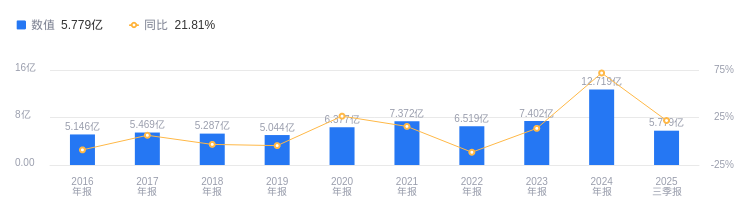
辉煌科技的前世今生:2025年三季度营收5.78亿低于行业均值,净利润1.63亿排名行业15/36
Xin Lang Zheng Quan· 2025-10-31 15:38
Core Viewpoint - Huiguang Technology is a significant player in the high-end rail transit equipment sector in China, showcasing strong R&D capabilities and technical advantages [1] Group 1: Business Performance - For Q3 2025, Huiguang Technology reported revenue of 578 million, ranking 27th among 36 companies in the industry, while the industry leader, ZTE Corporation, achieved revenue of 100.52 billion [2] - The company's net profit for the same period was 163 million, placing it 15th in the industry, with the top performer, Zhongji Xuchuang, reporting a net profit of 7.57 billion [2] Group 2: Financial Ratios - As of Q3 2025, Huiguang Technology's debt-to-asset ratio was 24.33%, an increase from 22.11% year-on-year, which is below the industry average of 38.12%, indicating lower debt pressure [3] - The gross profit margin for Q3 2025 was 54.39%, slightly up from 54.09% year-on-year, significantly higher than the industry average of 30.08%, reflecting strong profitability [3] Group 3: Executive Compensation - Chairman Li Haiying's compensation for 2024 was 1.8146 million, an increase of 944,600 from 2023 [4] - General Manager Xie Chunsheng received 2.0646 million in 2024, up by 800,000 from the previous year [4] Group 4: Shareholder Information - As of September 30, 2025, the number of A-share shareholders decreased by 0.64% to 41,600, while the average number of circulating A-shares held per account increased by 0.64% to 8,355.35 [5]

恒月控股进一步购入约6.12个单位的比特币 斥资约524.2万港元
Zhi Tong Cai Jing· 2025-10-31 14:45
Core Viewpoint - The company, Hengyue Holdings, has acquired approximately 6.12 units of Bitcoin for about HKD 5.242 million (approximately USD 672,000), indicating a strategic move to diversify its investment portfolio and embrace the growing trend of cryptocurrency adoption in the business world [1][2] Group 1: Investment Details - The acquisition of Bitcoin was funded entirely by the company's available cash reserves, with settlement occurring immediately after each purchase order is completed [1] - The board believes that Bitcoin, as the largest and most established cryptocurrency, serves as a reliable store of value and has significant appreciation potential [1] Group 2: Strategic Rationale - The board has noted the increasing prevalence of cryptocurrencies and aims to enhance shareholder value through this investment in Bitcoin [2] - This move is seen as a symbolic step for the company in adapting to the evolving global financial landscape, particularly in light of unprecedented fiscal stimulus measures and increased money supply by central banks [1]
恒月控股(01723)进一步购入约6.12个单位的比特币 斥资约524.2万港元
智通财经网· 2025-10-31 14:42
Core Viewpoint - The company, Hengyue Holdings, has acquired approximately 6.12 units of Bitcoin for about HKD 5.242 million (approximately USD 672,000), indicating a strategic move to diversify its investment portfolio and embrace cryptocurrency as a reliable store of value [1][2] Group 1 - The acquisition of Bitcoin was funded entirely by the company's available cash reserves, with the settlement occurring immediately after each purchase order is completed [1] - The board believes that the growing popularity of cryptocurrencies, particularly Bitcoin, presents significant appreciation potential, especially in light of global economic uncertainties and increased monetary supply from central banks [1] - This investment is seen as a symbolic step for the company in adapting to the evolving global financial landscape, aiming to enhance asset value and diversify its investment portfolio [1] Group 2 - The board acknowledges the potential for significant price volatility in cryptocurrencies but remains confident that investing in Bitcoin, the largest cryptocurrency by market capitalization, will enhance long-term shareholder value [2] - This move is intended to demonstrate the company's commitment to technological innovation and readiness to enter the blockchain industry [2]
AI不是万能药!对话唐彬:支付玩AI,先过数字化这关
Bei Jing Shang Bao· 2025-10-31 14:37
Core Insights - The payment industry is undergoing a structural transformation from "payment tools" to "transaction services" as domestic competition intensifies and overseas opportunities emerge [1][6] - The future of payment methods is expected to evolve significantly, potentially leading to the disappearance of the "payment" phase, while the value of transaction services will be amplified [1][6] Domestic Market Dynamics - The domestic payment market has entered a phase of "refined cultivation" after years of rapid expansion, with a saturation in mobile payment penetration [2] - Companies are increasingly focusing on "intelligent solutions" to drive growth, with risk control being a critical area for efficiency improvements [2][4] - AI-driven risk control systems are seen as essential for cost reduction and efficiency enhancement, with significant financial implications for transaction volumes [2] AI and Digital Transformation - AI is viewed as an extension of digital upgrades, and its effective application requires a solid digital foundation within companies [2][3] - The impact of AI varies across different roles, with traditional entry-level programming jobs at risk of replacement, while experienced and creative talents will be empowered [3] International Expansion Strategies - The overseas strategy of payment companies like Yibao Payment is to follow Chinese enterprises as they expand globally, providing comprehensive payment and value-added services [4][5] - Local market adaptation is crucial for successful international operations, with a dual strategy of obtaining licenses and forming partnerships to meet regulatory requirements [4][5] Future Outlook - The payment industry is expected to transition from being payment companies to transaction service providers, driven by technological advancements such as AI and blockchain [6] - The evolution of the industry will focus on integrating transaction services into global industrial ecosystems, emphasizing safety, convenience, and equality in global transactions [6]
Federated(FHI) - 2025 Q3 - Earnings Call Transcript
2025-10-31 14:00
Financial Data and Key Metrics Changes - The company ended Q3 2025 with record assets under management of $871 billion, an increase driven by gains from money market and equity strategies [4] - Total revenue for Q3 increased by $44.6 million or 10% compared to the prior quarter, with contributions from higher money market assets and equity assets [15] - Operating expenses rose by $32.2 million or 10% from the prior quarter, primarily due to higher distribution expenses [15] Business Line Data and Key Metrics Changes - Equity assets increased by $5.7 billion, or 6%, from the prior quarter, despite slightly negative net sales of $130 million [4] - Fixed income assets reached a record high of $101.8 billion, with total net sales improving by $4.1 billion in Q3 [7] - Alternative private markets saw a decrease of about $1.7 billion in assets, mainly due to real estate fund transactions [8] Market Data and Key Metrics Changes - Money market assets increased by $18 billion to reach $653 billion, with money market fund assets rising by 5% to $492.7 billion [12] - The company's estimate of money market mutual fund market share remained at about 7.11% at the end of Q3 [15] Company Strategy and Development Direction - The company is actively developing MDT distribution opportunities outside of the U.S., with strong interest from institutions and intermediaries [5] - The acquisition of FCP, a U.S.-based real estate investment manager, is expected to facilitate entry into the U.S. real estate market [10] - The company is committed to digital asset initiatives, including tokenized money market funds and participation in blockchain technology projects [13][14] Management's Comments on Operating Environment and Future Outlook - Management expressed optimism regarding the MDT franchise, highlighting a strong pipeline of new RFPs and growing momentum [19] - The institutional pipeline is described as very strong, with over $2 billion expected to fund in the near term [22] - Management anticipates that expenses will rise in line with revenue growth, particularly due to the FCP acquisition and ongoing investments in digital assets [21] Other Important Information - The company paused its open market share repurchase during negotiations with FCP but plans to resume in Q4 [17] - Cash and investments at the end of Q3 were $647 million, with expectations to use a portion for the FCP acquisition [16] Q&A Session Summary Question: MDT franchise growth potential - Management indicated enthusiasm and optimism regarding the MDT franchise, with net sales of about $660 million through October 24 and a strong global pipeline [18][19] Question: Expense trajectory over the next year - Management expects expenses to rise due to the FCP acquisition and ongoing initiatives, but anticipates that these will be accompanied by revenue growth [20][21] Question: Institutional investor allocations and opportunities - The institutional pipeline is strong, with various mandates won across different countries, and about two-thirds expected to fund in Q4 [22][23]

王江撰文!详解“十五五”时期加快建设金融强国7方面主要任务
券商中国· 2025-10-31 09:08
Core Viewpoint - Accelerating the construction of a financial power is essential for achieving a modern socialist strong country, promoting high-quality development, and balancing development and security [1] Group 1: Key Features and Tasks of Building a Financial Power - The main features of building a financial power include six key financial elements: strong currency, strong central bank, strong financial institutions, strong international financial center, strong financial regulation, and strong financial talent [2] - The path to building a financial power is characterized by a unique Chinese financial development approach, with the construction of a modern financial system being a key task [2][3] Group 2: Specific Tasks for the 14th Five-Year Plan - Seven main tasks for the 14th Five-Year Plan include improving the central bank system, enhancing financial support for key areas, promoting stable capital market development, optimizing financial institutions and infrastructure, building an international financial center, improving financial regulatory capabilities, and strengthening financial legal construction [4][5][6][7][8][9] Group 3: Financial System and Cultural Support - A scientific and stable financial regulation system, a reasonable financial market structure, and a diverse financial product and service system are necessary for building a financial power [3] - The construction of a unique Chinese financial culture, emphasizing legal and moral governance, is crucial for supporting the financial power [3]