洗钱

Search documents
内地卖淫团伙头目向境外汇款,被瑞银前高管私吞1.3亿港元,“在伦敦买楼,还登记了6辆豪车”!法院判了
新浪财经· 2025-09-05 10:13
Core Viewpoint - The case involves UBS AG's former executive Sun Jianrong, who was convicted of money laundering and contempt of court for embezzling over HKD 130 million from clients, leading to a prison sentence of ten years and six months, along with a lifetime ban from the financial industry [2][3]. Group 1: Embezzlement Details - Sun Jianrong embezzled funds from clients, specifically a couple named Yu Quanli and Lou Xiaojie, between November 2016 and February 2018, transferring a total of 1.3 billion RMB into various bank accounts, including 5 million RMB directly into his own account [2][3]. - The funds were disguised through fake transaction documents and monthly statements that mimicked UBS's official formats, misleading the clients into believing their money was secure [2][3]. Group 2: Discovery of Fraud - The fraud was uncovered in June 2018 when a new advisor took over the couple's accounts and found discrepancies, revealing that over 100 million HKD was missing from the accounts [3]. - Investigations showed that the embezzled funds were funneled into Sun's controlled accounts at HSBC and Hang Seng Bank, and he used the money to purchase properties in London and luxury cars [3]. Group 3: Criminal Background of Victims - The plaintiffs, Yu Quanli and Lou Xiaojie, were identified as involved in organized illegal activities, specifically a prostitution ring in Nanjing, which raised questions about the source of the funds [5][7]. - Yu Quanli was convicted in 2020 for operating a large-scale prostitution ring and sentenced to 15 years in prison, which further complicated the legal proceedings regarding the embezzled funds [7].


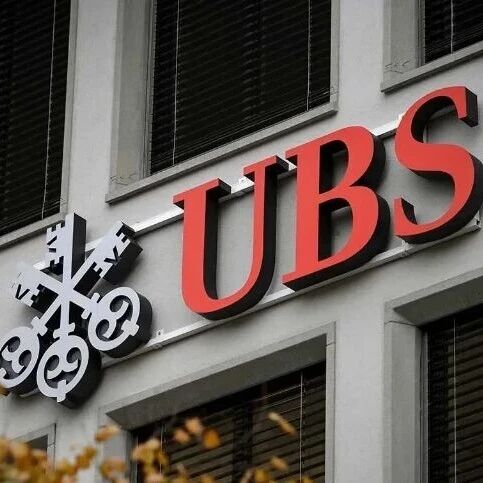
内地卖淫团伙头目向境外汇款,被瑞银前高管私吞1.3亿港元
Mei Ri Jing Ji Xin Wen· 2025-09-05 08:03
Core Points - UBS AG's former executive Sun Jianrong was convicted of money laundering and contempt of court, receiving a sentence of ten years and six months in prison for embezzling over HK$130 million from mainland clients [1][2][3] - The Hong Kong Securities and Futures Commission has permanently banned Sun from returning to the financial industry [1] Group 1: Embezzlement Details - Sun Jianrong misappropriated funds from clients, specifically the couple Yu Quanli and Lou Xiaojie, transferring a total of 1.3 billion RMB (approximately HK$1.5 billion) into various mainland bank accounts, including a direct transfer of 5 million RMB to his own account [2][3] - To deceive the clients, Sun provided forged bank statements and transfer requests, making it appear that the funds were in transit [2][3] Group 2: Misuse of Funds - Investigations revealed that the embezzled funds were funneled into Sun's controlled bank accounts, with significant amounts in various currencies, including HK$50.62 million and US$515,000 [3] - Sun used the misappropriated funds to purchase four properties in London and two in mainland China, totaling approximately HK$29 million, and acquired six luxury cars [3] Group 3: Criminal Background of Victims - The plaintiffs, Yu Quanli and Lou Xiaojie, were identified as individuals involved in organized illegal activities, specifically a prostitution ring in Nanjing, which raises questions about the source of the funds [4][6] - Yu Quanli was convicted in 2020 for running a large-scale prostitution operation and sentenced to 15 years in prison [6]
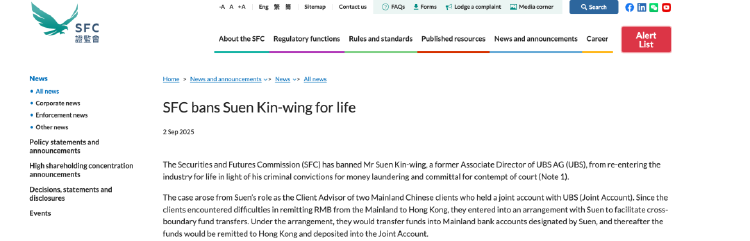
内地卖淫团伙头目向境外汇款,被瑞银前高管私吞1.3亿港元,“在伦敦买楼,还登记了6辆豪车”!法院判了
Mei Ri Jing Ji Xin Wen· 2025-09-05 05:49
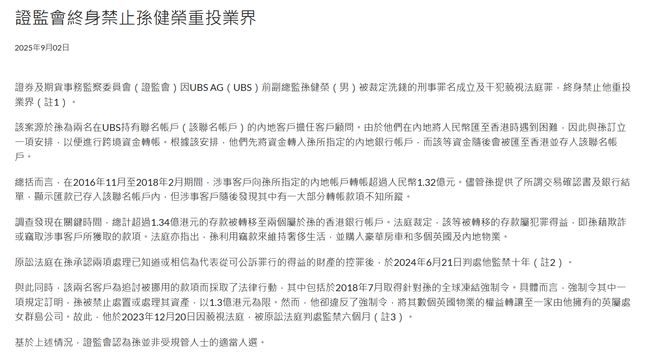
Core Points - UBS Group's former deputy director, Sun Jianrong, was convicted of money laundering and contempt of court, receiving a sentence of ten years and six months in prison, along with a lifetime ban from the financial industry in Hong Kong [1][2] Group 1: Case Details - Sun Jianrong misappropriated over HK$130 million from clients, specifically the couple Yu Quanli and Lou Xiaojie, between November 2016 and February 2018, using fake documents to deceive them [1][2] - The funds were transferred to 29 different bank accounts, with a notable transfer of RMB 5 million directly into Sun's own account [1][2] - The investigation revealed that the misappropriated funds were funneled into two Hong Kong bank accounts controlled by Sun, with significant amounts in various currencies [2] Group 2: Victim Background - The plaintiffs, Yu Quanli and Lou Xiaojie, were identified as not being ordinary individuals, with the court suggesting that the funds likely originated from organized illegal activities, specifically a prostitution ring [3][4] - Yu Quanli was later convicted in 2020 for running a large-scale prostitution operation in Nanjing, receiving a 15-year prison sentence [7] Group 3: Legal Proceedings - The court found overwhelming evidence against Sun Jianrong, including his admission of using the misappropriated funds for personal investments and purchases [5] - The court ruled that the plaintiffs' claims for fraud and unjust enrichment were valid, despite the illegal nature of the funds involved [7][8]

“黑吃黑”?瑞银前副总监私吞卖淫团伙头目1.3亿港元
Xin Lang Cai Jing· 2025-09-04 00:39
Core Viewpoint - The case involves former UBS executive Sun Jianrong, who was convicted of money laundering and contempt of court, resulting in a lifetime ban from the financial industry by the Hong Kong Securities and Futures Commission (SFC) [1][11][14]. Group 1: Case Background - Sun Jianrong was employed at UBS from December 2013 until his resignation in June 2018, previously working at HSBC [4]. - The fraudulent activities occurred between 2016 and 2018, where Sun misled clients into transferring a total of 134 million HKD (approximately 17.2 million USD) under the pretense of facilitating cross-border remittances [1][5][10]. - The victims of this fraud were identified as individuals involved in illegal activities, specifically a prostitution ring [2][12]. Group 2: Fraud Mechanism - Sun Jianrong instructed clients to transfer funds to various designated accounts, claiming these funds would be deposited into their UBS joint account, which was later found to be false [5][6]. - He provided clients with forged bank statements to support his claims of successful transactions, which were later disproven during an investigation [6][10]. Group 3: Legal Proceedings and Consequences - On June 21, 2024, the Hong Kong High Court found Sun guilty of two counts of money laundering, sentencing him to 10 years in prison [11][14]. - The SFC deemed Sun unsuitable for re-entry into the financial industry, issuing a lifetime ban on September 2, 2025 [1][14]. - The court acknowledged the complexity of the laundering scheme and the significant amount involved, which had international implications [13][14].
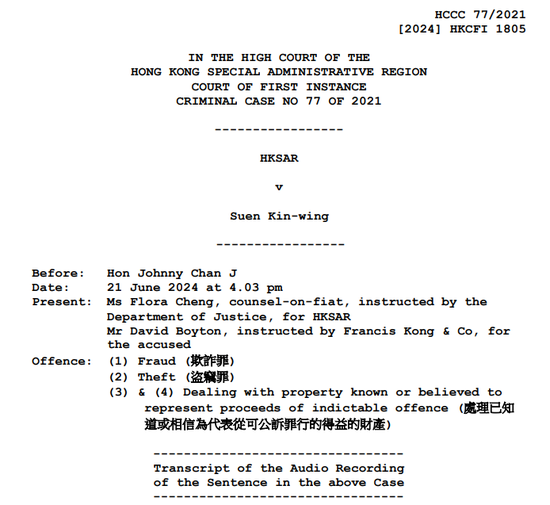
瑞银前副总监吞1.3亿赃款,猎物竟是南京卖淫团伙头目
Xin Lang Cai Jing· 2025-09-03 09:04
Core Viewpoint - UBS AG's former vice president, Sun Jianrong, was convicted of money laundering and contempt of court for embezzling over HKD 130 million from mainland clients, resulting in a total sentence of 10 years and 6 months in prison [1][8]. Group 1: Case Background - Sun Jianrong was assigned as a personal client advisor to a couple who moved from Nanjing to Hong Kong and opened a joint account at UBS in 2014 [3]. - The couple's account balance reached as high as USD 8.949 million during their interactions with Sun [3]. - The scheme began when the couple requested a more convenient way to transfer money from mainland China to Hong Kong, leading Sun to propose a fraudulent transfer method [3][5]. Group 2: Fraudulent Activities - Over 18 months, Sun Jianrong facilitated the transfer of HKD 130 million through 37 transactions across 14 different dates, with some funds directly deposited into his personal account [6]. - To maintain the illusion of legitimacy, Sun provided fake transfer requests and forged bank statements mimicking UBS's official documents [6][7]. - The fraud was uncovered when a new advisor took over the couple's account and revealed discrepancies in the account balance [6]. Group 3: Asset Misappropriation - Sun Jianrong converted the embezzled funds into tangible assets, purchasing four properties in London and two in mainland China, totaling HKD 29 million [7]. - He also acquired six luxury cars, despite reporting only HKD 4.067 million in income from 2014 to 2018, which was insufficient to support his lavish lifestyle [7]. Group 4: Legal Proceedings - The court sentenced Sun to 10 years for money laundering and an additional 6 months for contempt of court due to asset transfer attempts during legal proceedings [8][9]. - The judge emphasized Sun's awareness of the legal implications of his actions, rejecting his defense arguments as contradictory to the facts [9]. - Currently, Sun's properties and luxury vehicles have been seized, and efforts to recover losses for the victims are ongoing [10].
美国财政部对俄、吉多家实体和个人实施制裁
Shang Wu Bu Wang Zhan· 2025-08-23 16:53
Group 1 - The U.S. Department of the Treasury's Office of Foreign Assets Control (OFAC) has imposed new sanctions on cryptocurrency exchanges Garantex Europe OU and Grinex, along with associated entities and individuals from Russia and Kyrgyzstan, for alleged involvement in money laundering and servicing cybercrime networks [1] - Garantex has been accused of providing services to ransomware operators since 2019, processing illegal transactions exceeding $100 million, and after losing its Estonian license in 2022, it has been operating from Moscow and St. Petersburg [1] - A joint law enforcement operation by the U.S., Germany, and Finland on March 6, 2025, resulted in the seizure of Garantex's servers, confiscation of its domain, and freezing of over $26 million in cryptocurrency assets [1] Group 2 - Grinex is identified as a new platform created by Garantex employees to evade sanctions, utilizing a stablecoin A7A5 pegged to the Russian ruble to transfer customer assets [1] - The entity Old Vector, registered in Kyrgyzstan, is designated as the nominal issuer of the A7A5 stablecoin, with Russian companies A7, A71, A7 Agent, and Moldovan businessman Ilan Shor's associated PSB Bank involved in the project [1] - InDeFi Bank and Exved exchange are accused of assisting Russia in evading sanctions through cryptocurrency for cross-border settlements [1] Group 3 - All sanctioned parties have had their U.S. assets frozen, and U.S. citizens and entities are prohibited from engaging in transactions with them, facing civil or criminal penalties for violations [1] - The co-founder of Garantex, Sergey Mendeleev, along with other key members, has been placed on a wanted list by U.S. authorities [2]
继高盛之后,摩根大通(JPM.US)同意向马来西亚支付3.3亿美元以了结1MDB欺诈案
智通财经网· 2025-08-22 13:27
Group 1 - Morgan Stanley has agreed to pay 1.4 billion ringgit (approximately 330 million USD) to Malaysia to settle all claims related to 1MDB, a sovereign wealth fund at the center of a major financial fraud scandal [1][2] - The settlement will eliminate all risks associated with the scandal for Morgan Stanley, which was exposed in 2015 [1] - In 2020, Goldman Sachs reached a 3.9 billion USD settlement with Malaysia over allegations of misleading investors during a bond sale that raised 6.5 billion USD for the fund [1] Group 2 - The U.S. Department of Justice has identified that 450 million USD from 1MDB was misappropriated [1] - On the same day, the Swiss Justice Minister imposed a fine of 3 million Swiss francs (approximately 3.7 million USD) on Morgan Stanley for failing to take necessary organizational measures to prevent money laundering related to misappropriated funds from 1MDB [1] - Since 2009, hundreds of millions of dollars have flowed out of the 1MDB entity until the scandal was revealed in 2015 [2]

高价收购银行卡:“洗钱”的隐秘角落
Bei Jing Shang Bao· 2025-08-19 15:35
Core Viewpoint - The article highlights the illegal trade of bank cards, which poses significant risks as these cards are often used for money laundering and fraud activities. The allure of quick financial gain through renting or selling bank cards is overshadowed by the potential legal consequences for individuals involved in such transactions [1][3][4]. Group 1: Illegal Activities and Risks - The illegal acquisition and rental of bank cards are prevalent on social media platforms, with intermediaries enticing cardholders with offers of high prices for their cards [3][4]. - Intermediaries often set specific criteria for the bank cards they acquire, focusing on non-counter transaction limits and foreign exchange capabilities, which facilitate large-scale fund transfers and illegal activities [5][6]. - The actions of these intermediaries are classified as typical criminal activities, contributing to serious disruptions in financial order and public safety [4][6]. Group 2: Financial Implications - The price for buying out a bank card can reach up to 6,000 yuan, with intermediaries offering short-term rental options based on transaction limits [3][5]. - Cards with higher non-counter transaction limits are prioritized for use in large fund transfers, while others may serve as intermediaries for fund distribution [6][7]. - The ability to conduct foreign exchange transactions is also a critical factor, as it allows for the accumulation of significant amounts of foreign currency through multiple acquired cards [5][7]. Group 3: Regulatory Response - Regulatory authorities have intensified efforts to combat the illegal trade of bank cards, launching nationwide operations to crack down on such activities [8]. - Recent cases illustrate a lack of awareness among individuals regarding the legal repercussions of participating in the illegal bank card market, leading to criminal charges against those involved [9][10]. - Recommendations for improving regulatory measures include enhancing real-time monitoring of social media for illegal activities and implementing educational programs to inform potential offenders about the risks and legal consequences of selling or renting bank cards [10][11].

600万骗贷链条大起底:从资质造假到POS机套现,数十名涉案者终领刑责
Xin Lang Cai Jing· 2025-08-12 00:06
Core Viewpoint - A recent case in Kunshan, Jiangsu Province, highlights a fraudulent scheme involving the use of POS machines to illegally cash out loans, with the total amount involved exceeding 6 million yuan [1][4]. Group 1: Fraudulent Scheme Details - The criminal gang designed a comprehensive path for fraud, including "packaging qualifications, obtaining credit, and cashing out" [1][3]. - They targeted individuals without loan qualifications, creating fake employment and income documents to present them as high-income earners to banks [3]. - Once loans were approved, intermediaries used POS machines to fabricate transactions, allowing them to cash out the loan funds illegally [3][5]. Group 2: Financial Impact and Legal Consequences - The case involved over 37 suspects, with the total amount of fraudulent loans traced back from 183,000 yuan to over 6 million yuan [5]. - Key intermediaries earned illegal profits, with one individual helping to transfer over 300,000 yuan and profiting around 60,000 yuan [3][5]. - The court sentenced the main perpetrators to prison terms ranging from three to six years for illegal business operations and money laundering [7]. Group 3: Regulatory and Preventive Measures - The case has prompted the judiciary to issue recommendations to financial institutions to enhance their loan approval processes and risk assessments [7][10]. - Recent regulations have been established to restrict the use of POS machines for cash transactions, aiming to curb such fraudulent activities [10][11]. - The rise of illegal cash-out schemes poses significant risks to the financial system, necessitating stricter oversight and compliance measures [9][10].

包装高收入群体骗取银行消费贷!数十人被判刑
券商中国· 2025-08-10 10:21
Core Viewpoint - The article discusses a significant case of loan fraud involving a criminal gang that fabricated high-income profiles to obtain bank credit loans, resulting in over 6 million yuan in fraudulent loans and multiple convictions for loan fraud and related crimes [1][2]. Group 1: Case Details - In November 2020, a fraud gang "packaged" individuals without loan qualifications as high-income earners to secure personal credit loans from banks [2]. - The gang utilized POS machines to create fictitious transactions, allowing them to cash out the loans, with key individuals profiting from the scheme [2]. - A total of 52 individuals involved in the loan fraud chain were sentenced to prison terms ranging from 11 years to 7 months for their roles in the fraud [2]. Group 2: Financial Tracking and Analysis - The prosecution employed big data techniques to trace the flow of funds, expanding the investigation from one suspect to 37 individuals and increasing the tracked fraudulent amount from 183,000 yuan to over 6 million yuan [3]. - The investigation utilized bank loan data and POS transaction records to build a financial flow analysis model, identifying various roles in the fraud scheme [3]. Group 3: Legal Implications and Charges - The case raised legal debates regarding the classification of crimes, with the prosecution determining that the actions of certain individuals primarily involved downstream cashing out rather than direct involvement in the initial fraud [4]. - The prosecution proposed charges of illegal business operations and money laundering against key suspects, with recommendations for lighter sentences for lesser offenders [5]. - The prosecution also issued recommendations to financial institutions to improve credit loan approval processes and risk assessment mechanisms to prevent similar frauds in the future [5]. Group 4: Systematic Approach to Fraud Prevention - The article emphasizes the connection between illegal cashing out via POS machines and broader financial fraud, advocating for a comprehensive approach to tackle financial crimes through data integration and multi-dimensional analysis [5]. - The prosecution aims to shift from individual case handling to systemic governance, enhancing the effectiveness of combating financial fraud across the entire chain of criminal activities [5].